Exploring Intent-Driven Intelligent Interaction: Divergent Paths from Anoma to TG Bots and Future Prospects
TechFlow Selected TechFlow Selected
Exploring Intent-Driven Intelligent Interaction: Divergent Paths from Anoma to TG Bots and Future Prospects
This article will combine an understanding of Anoma and TG Bot's approach to intents to deeply explore the evolution, interaction paradigms, current state, and trends of the intent concept.
 Navigating Web3 tides with focused insights
Author: Xuanrui | 0xDragon888
Summary (TL;DR)
(1) Understanding Intent: Top-down Anoma vs. Bottom-up TG Bot
(2) Deepening Intent: AI is the New UI: Complex Commands vs. Simple Intent
(3) Navigating Intent: The Evolution of the Concept of Intent, Interaction Paradigms, Current State, and Trends
(4) Guiding Intent: Challenges and Outlook for Intelligent Web3 Interactions
In June, Paradigm published an article titled "Intent-Based Architectures and Their Risks" on its official website, bringing the concept of Intent to the public for the first time. Protocols and infrastructure related to intent have since developed rapidly, becoming an unavoidable topic in the crypto world at the July ETHCC conference.
Intent is not a new concept. As Mindao, founder of DForce, put it: "The crypto industry has always trended toward extreme abstraction and automation of operations—from aggregators, CEXs, contract wallets, cross-chain DeFi—all doing this work, along with Chainlink and recent automation middleware, and now Telegram bots."
Yet intent brings new changes. Previously, product interaction was central; in the AGI era, human-machine interaction takes center stage. AI/LLMs (large language models) hold even greater potential to enhance crypto interactions.
01 Top-Down Anoma vs. Bottom-Up Unibot
Over the past half-year, protocols, projects, and infrastructures related to intent have gained increasing popularity. Rather than mechanically explaining concepts, here we explore two excellent examples that offer insight through partial observation.
Among numerous intent-related projects, one stands out: the Anoma Foundation, which raised $25 million in its third round of funding in May 2023. Amid widespread homogenization among Layer1s, Anoma Foundation has attracted $57.8 million across three funding rounds for its intent-centric architecture—Anoma (a full-stack Dapp framework) and Namada (a privacy-focused Layer1)—ranking seventh among unfunded Layer1/Layer2 projects by total funding.
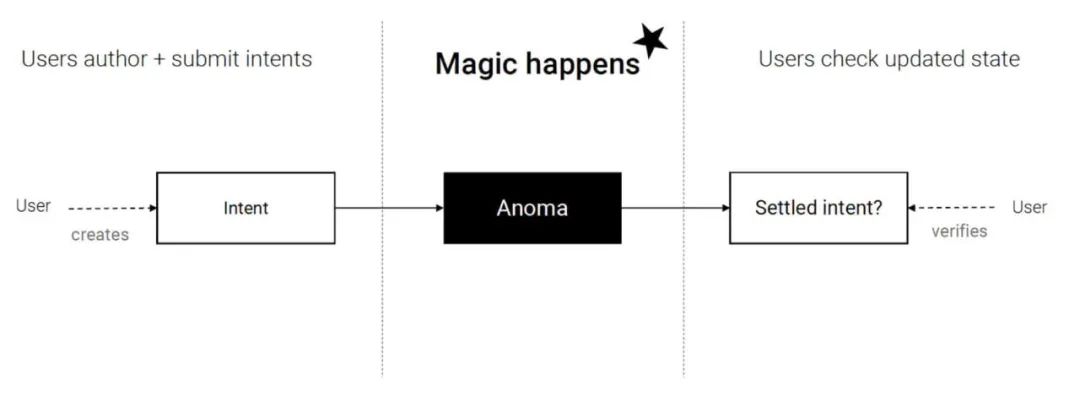
Reflecting on Anoma's public presentation at EthCC, founder Adrian Brink highlighted Anoma’s magic lies in starting every interaction with intent. Users express their intents, which are processed through the Black-box Architecture (Anoma’s "black box," also known as the Magic Happens box). This "magic box" enables core transaction flows based on intent:
-
User Interaction: Users can send transparent, private, or protected intents to Anoma’s intent gossip layer (the black box architecture).
-
Intent Collection & Matching: Solvers within the black box collect intents and perform balanced state transitions to match counterparties.
-
Transaction Processing: Matched transactions are submitted to an encrypted mempool; validators send blocks proposed by proposers to the execution layer, where they are executed and validated before updating the state root.
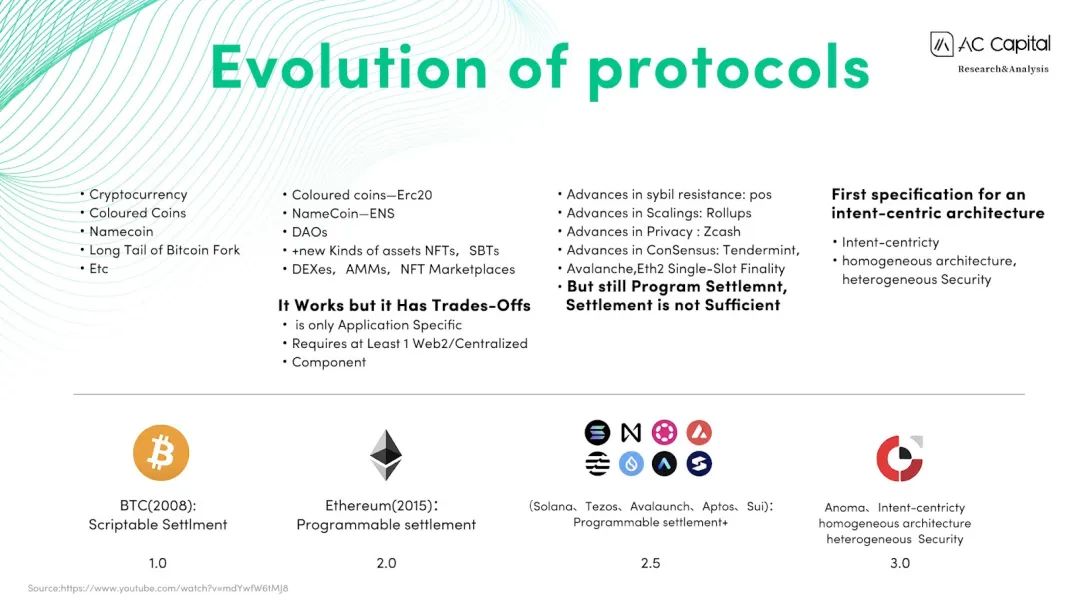
Beneath this novel form of interaction, the Anoma team identified fundamental pain points in blockchain protocol design. Tracing back from Bitcoin’s scriptable settlement (first generation) to Ethereum’s programmable settlement (second generation), current application protocols still rely on at least one Web2 component due to architectural limitations, making counterparty discovery and resolution impossible. Anoma positions its intent-centric architecture as the third evolution in Dapp frameworks, allowing users to define desired end states and enabling efficient, customizable private transactions at the intent level—a new era for intent-centric Dapp architectures.
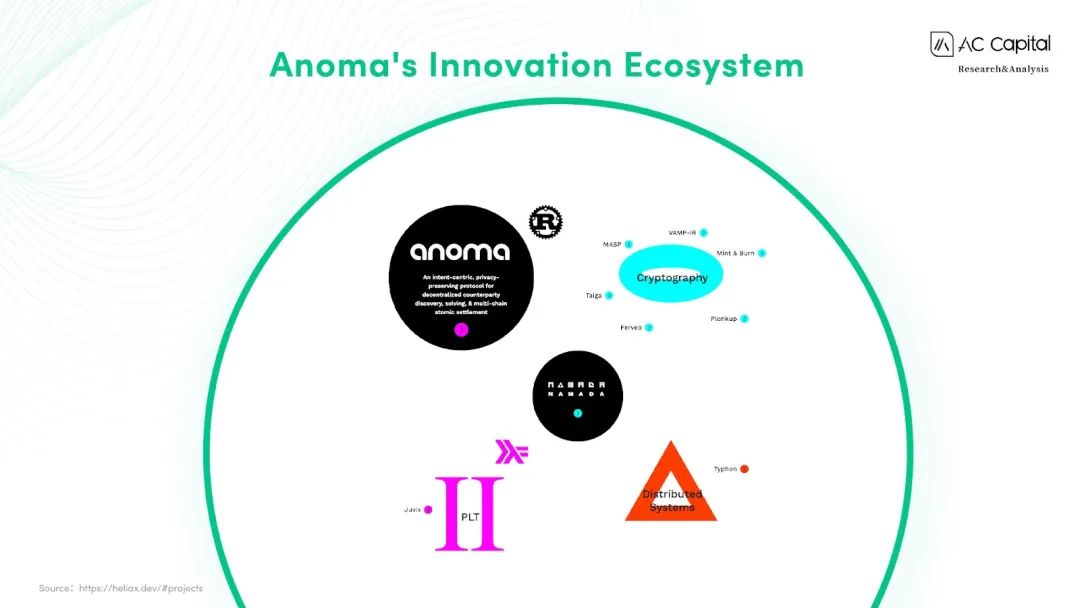
Despite strong funding and innovative architecture, Anoma is currently being built by Heliax, a 37-member interdisciplinary development team. Though progress has been slow over two years, a complete innovation ecosystem has taken shape:
-
Anoma: A universal, intent-centric Dapp architecture modularly deployable on L1, L1.5, or L2, and embeddable into various EVM frameworks;
-
Namada: A privacy-focused settlement Layer1 for the Anoma ecosystem using PoS, enabling asset-agnostic interchain privacy, with future compatibility planned for Ethereum and IBC chains;
-
AnomaVM: Simplifies DApp development on Anoma using Juvix (an intent-centric programming language) and VampIR (a circuit programming language);
-
Typhon: Improved consensus mechanism based on Cosmos' Tendermint;
-
Taiga: Provides a unified execution environment with composable privacy, defining three types of intents: transparent, shielded, and private.
While institutions like CMCC Global, Electric Capital, and Delphi Digital enthusiastically support Anoma, seeing vast potential in intent-centric architecture, top-down Anoma remains largely foundational without exciting real-world applications yet; in contrast, TG Bots are unlocking practical imagination in niche intent scenarios through automated on-chain trading tools.
Unibot is a Telegram-based trading bot (TG Bot) that allows users to automate DEX trades via Telegram, offering features such as sniper buys, copy trading, DEX limit orders, privacy, and MEV resistance. By replacing Uniswap’s cumbersome interface with intent-driven design, Unibot delivers a more convenient DeFi interaction experience. Unibot has also inspired a wave of similar clones, with the overall TG Bot sector approaching a market cap of nearly $200 million.
Top-down Anoma represents innovation; bottom-up TG Bot signifies transformation. Anoma starts from an intent-based foundational architecture but progresses slowly. While TG Bots provide a new on-chain interaction interface, they lack intelligence and carry significant security risks.
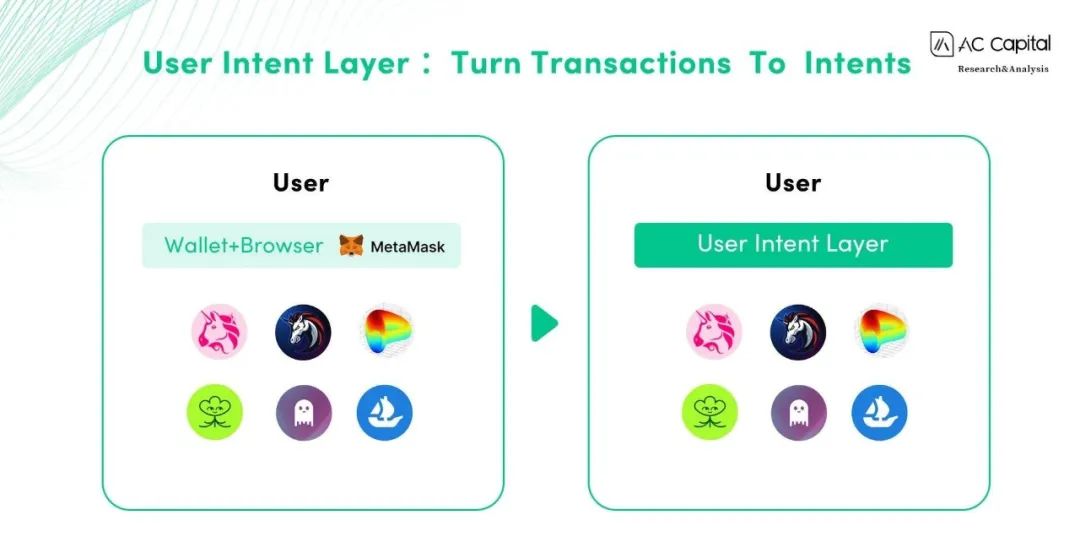
Though taking different paths, both aim for the same goal—simplifying user interaction and introducing a new programmable, customizable user interface—the User Intent Layer, allowing users to bypass complex on-chain interactions by defining transaction states based on intent.
02 AI is the New UI: Command Interaction vs. Intent Interaction
With these two use cases, we’ve gained a basic understanding of intent. Now let’s explore the deeper change AI brings to the crypto world—the transformation of user interfaces.
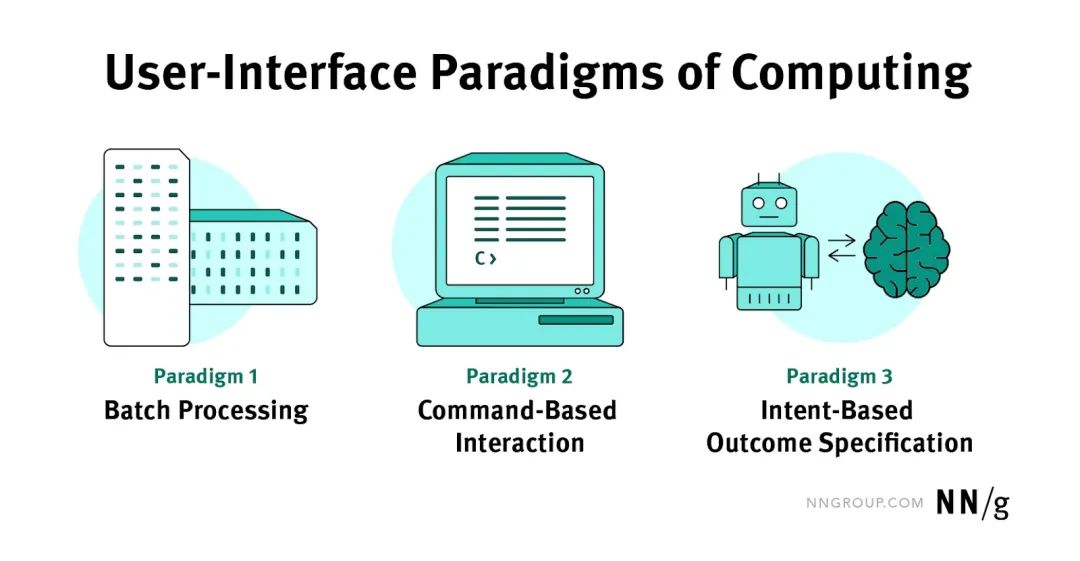
AI paradigms are introducing the third major user interface paradigm in computing history—one where users tell computers what they want, rather than how to do it.
-
Paradigm One: Batch Processing.
-
Paradigm Two: Command-Based Interaction Design.
-
Paradigm Three: Result Specification Based on Intent.
Each revolutionary shift in interaction patterns throughout history has given rise to entirely new business models. Generative AI powered by LLMs is transforming human-computer interaction—replacing traditional software UIs with chat windows like ChatGPT. This unprecedented interaction model opens a new chapter for crypto: LLM + crypto introduces intent-based interaction. Through identifying and articulating user intent, LLMs have the potential to make blockchain interactions significantly smarter.
03 The Evolution of Intent: Concepts, Interaction Paradigms, Current Status, and Trends
After deeply understanding the AI-driven intelligence trend behind intent, let’s further examine the conceptual evolution of intent. Intent is not new—it has existed since the Web2 era. With the rise of search engines like Google, users could input their intent, and the engine would return relevant results satisfying that intent.
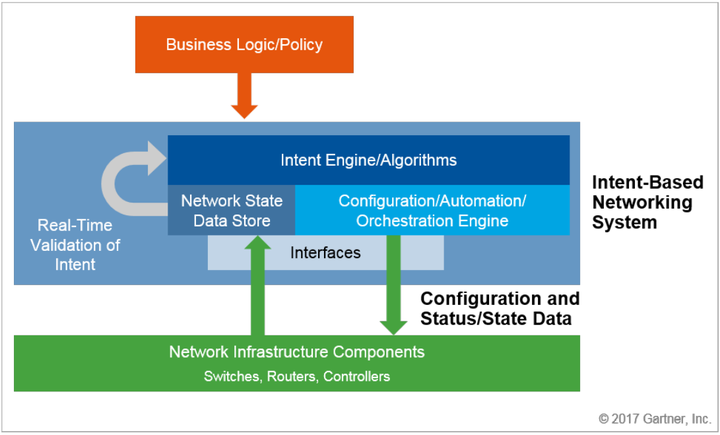
With the emergence of e-commerce platforms like Amazon and eBay, intent-based architectures underwent a major shift: users could now express purchase intent, and the platform handled logistics. In early 2017, Gartner released a report titled “Innovation Insight: Intent-Based Networking Systems,” formally introducing the concept of Intent-Based Networking (IBN). The key to IBN is providing users with an interface where they simply express what they want, and the platform manages all operational details.
Intent-Based Networking represents the trend toward automation and intelligence in Web2 networking. In 2017, Andrew Lerner, Research Vice President at Gartner, stated that IBN would be the next milestone in networking.
In the transition from Web2 to Web3, the concept of intent in Web3 isn’t clearly defined, but there are some shared understandings:
-
Definition by Paradigm: Intent is a set of declarative constraints allowing users to delegate transaction creation to a specialized network of third-party participants while retaining full control over the process.
-
Definition by Anoma, the intent-based底层 Dapp architecture: Intent is a message sent by users expressing custom preferences—an expression of constraints on what the system can do, not the specific execution path.
-
Definition by Propellerheads, an intent-based交易 infrastructure: Intent is part of a transaction requiring external help—outsourcing difficult components to third parties to simplify complex transactions.
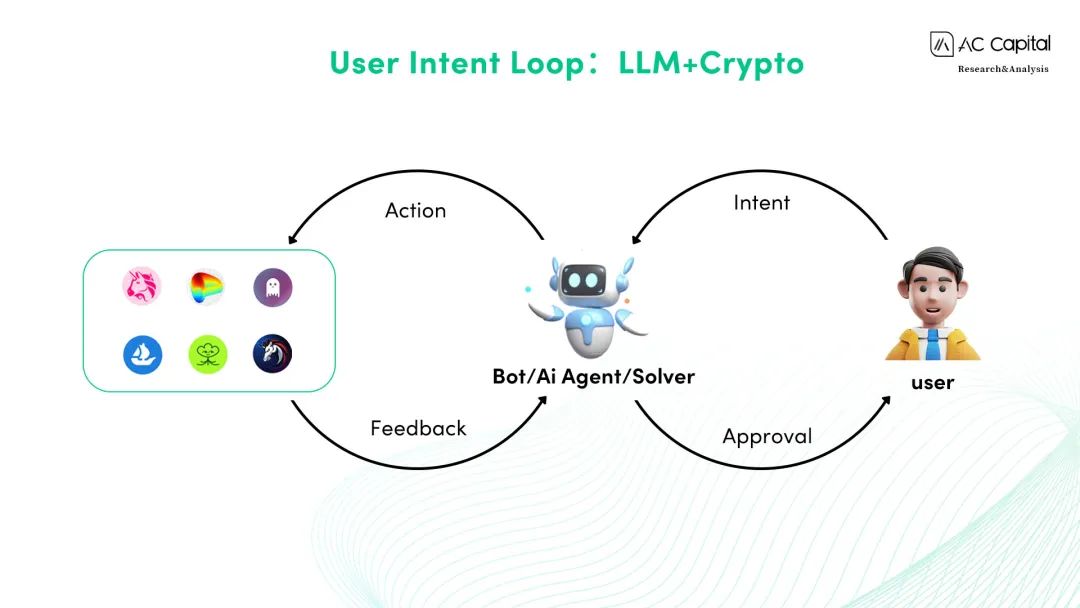
In real-world Web3 intent-based交易 use cases, users create intents off-chain and outsource them to solvers, encapsulating the complexity of blockchain interactions while preserving full on-chain control—significantly lowering the barrier to on-chain interaction.

Intent also brings the LLM architectural philosophy—intent-centric, placing user intent at the center. Currently, intent-centric crypto protocols and infrastructures sit between users and crypto, leveraging LLMs to deliver better on-chain interaction experiences.
LLM + Crypto introduces a new human-computer interaction paradigm, directly converting user intent into smart contract calls. Users only need to express intent—like using Apple’s Siri—and robots/AI agents/third-party solvers complete complex on-chain operations. In the future, intent-driven intelligent Web3 interactions have the potential to drastically reduce the complexity of on-chain interactions.
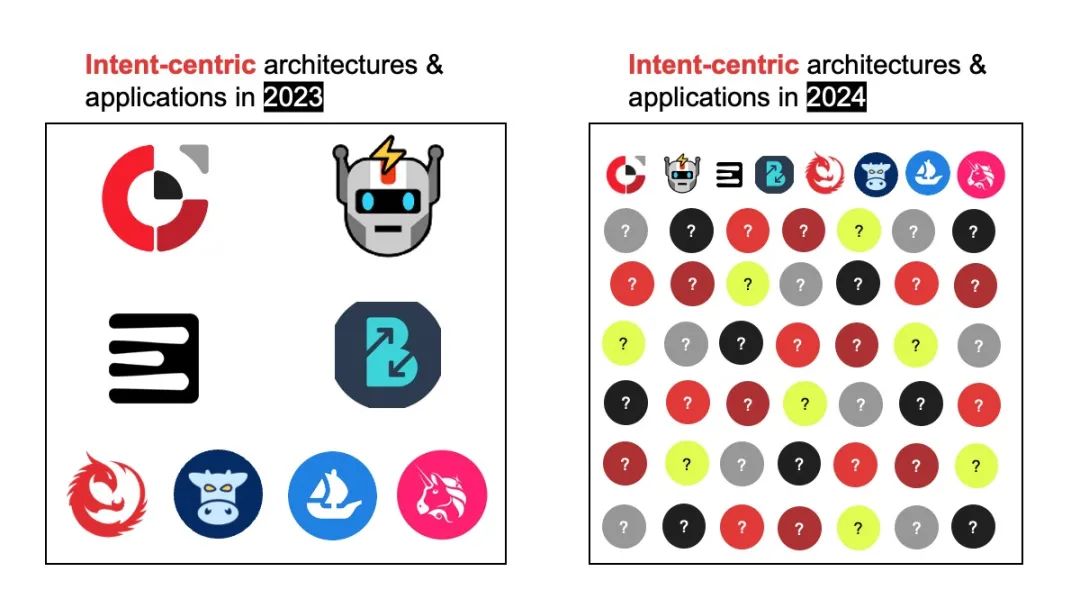
AI is the New UI. More and more Web3 projects are exploring the magic of intent, whether intent-based Dapps or underlying intent architectures, each unlocking intent’s potential from different angles. We attempt to organize this fast-moving field and categorize it into four major categories from an interaction perspective, tracking the latest developments and trends:

Infrastructure: (Intent-Centric Architecture Layer)
-
DappOS: The first intent-centric Web3 operating protocol, building a middleware layer between users and blockchain infrastructure (public chains, cross-chain bridges, etc.), enabling seamless, invisible product interactions. DappOS recently launched version V2;
-
Flashbots 2.0 SUAVE: SUAVE is an independent, plug-and-play modular full-chain MEV ordering layer. Preferences (SUAVE’s core concept) resemble intents—both allow regular users to customize transactions and achieve optimal execution. Flashbots plans to launch SUAVE Centauri in Q4 2023;
-
Anoma: A general-purpose, intent-centric Dapp architecture modularly deployable on L1, L1.5, or L2, and embeddable into various EVM frameworks. The latest update: Namada, Anoma’s privacy settlement Layer1, is preparing to release testnet v0.22.0;
-
Cow Protocol: CoW Protocol builds a foundational settlement network for traders and solvers. In July, it launched Cow Hooks, a new intent system enabling customized DeFi operations. As of August, CoW Protocol had processed $1.05B in total trading volume and generated $5.3M in revenue.
Supporting Infrastructure: (Infrastructure related to intent and account abstraction wallets)
-
ERC-4337: User Operations (UserOps) in ERC-4337 represent user intent—including gas token selection, payment method, login mode—replacing the current transaction mempool and enabling account abstraction to improve wallet UX.
-
Infrastructure related to account abstraction: Bundler infrastructure (StackUp, Blocknative, Alchemy Rundler, AA-Bundler, Infinitism Bundler), Wallet SDKs (Safe, ZeroDev, Biconomy);
-
Infrastructure related to intent: Juvix (intent-based programming language), Seaport (open-source NFT trading protocol), Gelato (Web3 automation layer providing smart contract execution services), okcontract (low-level intent automation tool), Delegatable (smart contract delegation tool), Hyper Oracle (off-chain automation service), symmio (intent-based on-chain derivatives trading framework).
Enterprise Applications: (Integrated intent infrastructure for Dapps, APIs, modular intent layers, domain-specific solvers)
-
Solver API for trading: PropelleHeads;
-
Intent API: EnsoFinance;
-
Intent-based交易 infrastructure: Bob the Solver, Brink;
-
Composable intent tools: Essential.
Consumer Applications: (Smart interfaces for user interaction—wallets, DEXs, Web3 AI Agents, intelligent search engines)
-
Wallets: Safe, Bitconomy, Argent, Ambire, Sequence, Versa, A3SProtocol;
-
DEXs: CowSwap, Paraswap, Uniswap, 1inch, BananaHq, basedmarkets;
-
Intelligent Frontends: Unibot, Dora, Web3 Analytics, kaito.ai.
Intent-based architectures, supporting infrastructure, and enterprise applications (listed but not elaborated due to space constraints) aim to solve underlying technical challenges. However, infrastructure cannot be built overnight. The real excitement lies in consumer-facing trends—evolving wallets, DEXs, and other interaction entry points reveal the true potential of intelligent interaction.
Wallet Intelligence: ERC-4337 introduces a new UserOps (user intent) layer—users express intent, and bundlers convert these into executable signed transactions. Over recent months, the number of ERC-4337 users has surged. Modular smart account providers like ZeroDev, Biconomy, and Safe have strong incentives to drive AA + intent adoption. AA + intent holds the potential to catalyze the arrival of smart contract wallets (SCWs).

DEX Architecture Shift: Intent-based trading aims to improve capital efficiency and user experience. CoW Hooks enables chaining complex actions—trading, bridging, staking, deposits—while UniswapX allows users to sign intents off-chain for matching and on-chain settlement. Similar intent-based DEXs like BananaHq, Brink, and basedmarkets are growing in number. A new narrative around intent-based RFQ (SYMMIO) is emerging. As more DEXs and aggregators shift toward intent-based architectures, the DEX landscape is undergoing massive transformation.

Intelligent Interaction Entry Points: Similar to how TG Bots transform Web3 front-end interfaces, these entry points focus on understanding user intent and systematically converting it into automated, actionable tasks. Beyond trading bots, Web3 AI Agents and intelligent Web3 search engines are making Web3 interactions increasingly intelligent.
04 Challenges and Outlook for Intelligent Web3 Interactions
Historically, poor Web3 product interaction experiences have hindered mass adoption, though on-chain wealth effects masked many product flaws. Today, liquidity and user attention are fragmented, and on-chain liquidity is scarce.
At July’s ETHCC conference, developers widely discussed the future of intent-centric systems and how to enable smarter DApp interactions in Web3. Yet, intent-centric applications still face significant hurdles:
-
Lack of intent-specific programming languages (e.g., Juvix)
-
Lack of suitable intent architectures (e.g., Anoma)
-
Lack of domain-specific solvers (e.g., Bob The Solver)
-
Intent implementations remain centralized and closed (e.g., CowSwap)
-
Lack of frontend intent recognition parsers (e.g., Unibot)
-
Lack of composable intent implementation (e.g., Brink)
-
Security risks associated with intent (as noted in the Paradigm paper)
Despite challenges, hope remains. As intent-centric protocols emerge, Web3 holds the potential to evolve friendlier, smarter interfaces—enabling one-stop interaction with mainstream apps like Uniswap, Blur, and Aave, as simple as hailing an Uber. This is Web3 Dapps’ real chance to outperform Web2 in user experience.
More importantly, combining visions from Anoma, Flashbots SUAVE, and DappOS, on-chain Web3 interactions will become increasingly intelligent, customizable, and fair. Placing intent at the center returns agency to users. Ordinary users can leverage third-party bots/solvers to execute customized trades (fee optimization, slippage control, privacy, cross-chain, MEV mitigation, or other goals). In the future, users won’t be passive participants or victims exploited by MEV searchers and validators—but true masters of on-chain activity.
Looking ahead to the future of intelligent Web3 interactions—whether through account abstraction, chain abstraction, or intent—Web3 is finally prioritizing user experience. The dawn of intelligent interaction is about to illuminate the dark forest.
Acknowledgments
Special thanks to Web3 Analytics, Crypto V, Haotian, Jason Chen, Luke, Grace Deng, SixSix.eth, POOR DAO, #017, armonio.eth, and Kiwibig.eth for their valuable discussions, feedback, and insights on this article.
Join TechFlow official community to stay tuned
Telegram:https://t.me/TechFlowDaily
X (Twitter):https://x.com/TechFlowPost
X (Twitter) EN:https://x.com/BlockFlow_News
 AC Capital