How does Intent-based decentralization simplify operations and eliminate complexity?
TechFlow Selected TechFlow Selected
How does Intent-based decentralization simplify operations and eliminate complexity?
Why "intent" is the superpower of crypto life?
 Navigating Web3 tides with focused insights
Author: Rishabh Nagar
Translation: Felix, PANews
Right now, doing anything on-chain feels like assembling IKEA furniture—too many steps, confusing instructions, and a high risk of messing it up. It gets even messier when you have to switch between different blockchains. You need to remember every step, watch out for scams, calculate fees, and not lose your sanity in the process.
Now imagine you didn’t have to manually perform all those operations across chains—buying, swapping, sending tokens via bridges, farming yields, then swapping back into your favorite cryptocurrency. Instead, you just state what you want, and magically, everything gets done securely and smoothly. That’s exactly what “intents” aim to achieve.
Why Are Intents Important in Crypto?
Intents are like digital wishes. They help users accomplish what they want online—like sending money or voting—directly and automatically. In crypto, understanding intents is crucial because they allow users to control their actions without relying on intermediaries or corporations. This makes things faster, cheaper, and more secure.
Imagine you want to send a letter to a friend. Traditionally, you hand it to a mail carrier who might first take it to a central office before someone else delivers it. That’s how most tech systems work today.
But what if pressing one button instantly delivered your letter directly into your friend’s hands? That’s what decentralized intents look like—bypassing middlemen to do what you want, directly, securely, and quickly. It matters because you no longer have to worry about interference, delays, or lost messages.
Introduction to Intent-Centric Decentralization
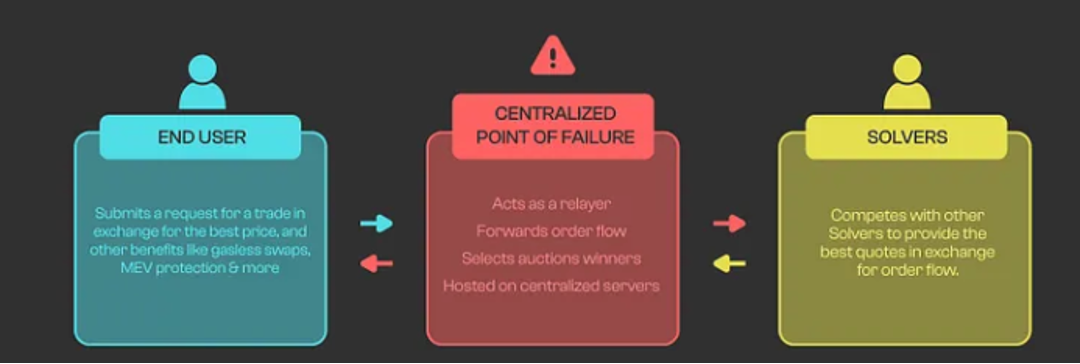
An intent represents the core goal a person wants to achieve—whether it's a simple asset transfer or a complex sequence of coordinated transactions. Traditionally, these intents are managed through centralized systems, but blockchain technology increasingly enables decentralized execution.
For example, consider the intent to participate in a vote within a decentralized autonomous organization (DAO). In a traditional setup, this requires interacting with a centralized platform where votes could be manipulated, delayed, or even censored. In contrast, in a decentralized system, the intent is expressed via smart contracts that automatically collect votes, tally results, and enact decisions—all without needing a central authority.
This shift toward decentralized intent fulfillment is significant. It reduces reliance on centralized intermediaries, giving users greater control, transparency, and security over their actions. It enables systems that fulfill intents directly, without unnecessary barriers or third-party interference.
Source: Paraswap
Intents in Decentralized Applications
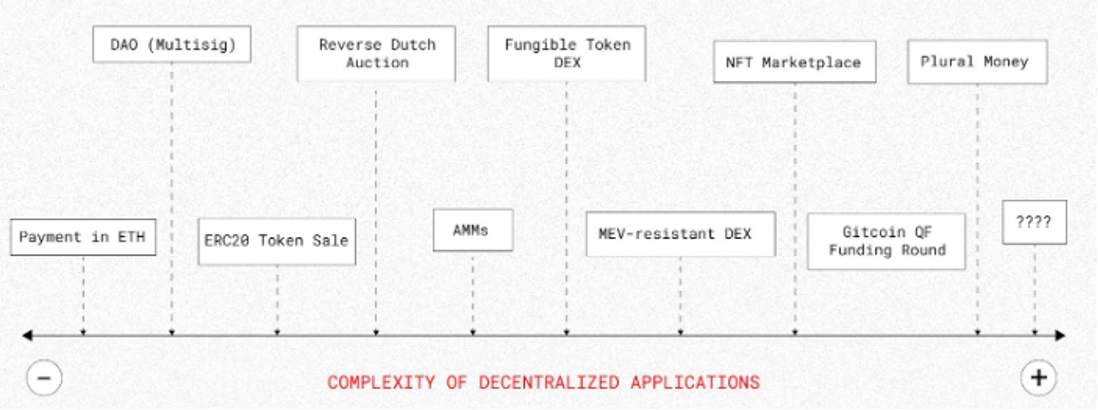
In the decentralized world, intents can be simple or complex. A simple intent might resemble executing a trade on a DEX, where the user’s desire to swap one cryptocurrency for another is processed directly on-chain and automatically completed once conditions are met.
However, intents can also be highly complex. Imagine a scenario where a user wants to optimize their portfolio across multiple decentralized finance (DeFi) platforms, balancing yield farming, liquidity provision, and automated trading strategies. This involves not just one action, but a series of coordinated interactions with various protocols—each with unique requirements and risks. Here, the intent is multifaceted and requires sophisticated mechanisms to ensure efficient fulfillment.
In such cases, decentralized mechanisms like smart contracts, oracles, and decentralized or off-chain solvers come into play, executing complex intents in a trustless and transparent manner. Such tasks would be impossible in traditional systems without centralized control.
Source: Anoma
What Is Chain-Agnostic, and Why Do We Need It for Intents?
Chain-agnostic means you can do what you want on any blockchain. Think of using the internet—you don’t care which Wi-Fi network you’re connected to; you just want to send a message or watch a video.
In crypto, intents act as your digital instructions or wishes. For them to work seamlessly across different blockchains, a chain-agnostic approach is essential. This way, you can easily and securely fulfill your intents on any blockchain without needing to understand or worry about their differences.
Intent-Centric Chain-Agnosticism
Intent-Centric Models in Today’s Ecosystems
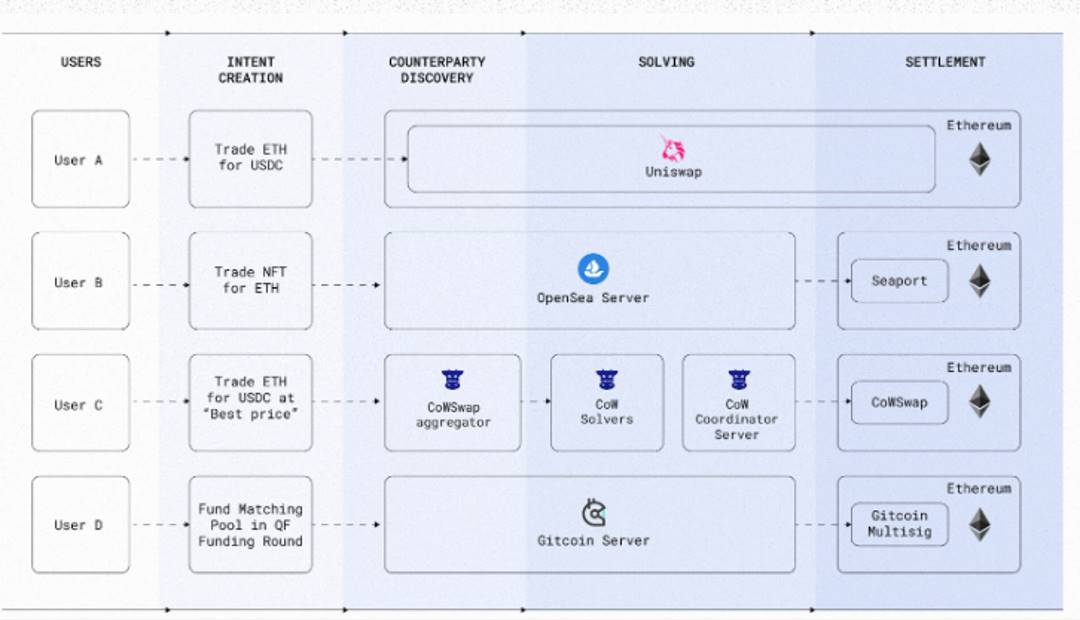
Across various blockchain ecosystems, intent-centric models are emerging as a way to simplify user interactions and improve dApp efficiency. For instance, in ecosystems like Ethereum, intents are typically handled through smart contracts that manage everything from DeFi trades to NFT transactions. These systems are designed so that once a user expresses an intent, the underlying infrastructure handles the rest—finding counterparties, executing transactions, and recording them on-chain.
In other ecosystems like Polkadot or Cosmos, intent-driven architectures are being explored to leverage their native interoperability features. In Polkadot, for example, intents can be realized across different parachains, enabling users to interact with various dApps without worrying about underlying technical differences between chains. Similarly, Cosmos is experimenting with cross-chain intent fulfillment, allowing users to initiate an operation on one chain and complete it on another while maintaining high levels of security and decentralization.
Source: Anoma
The Need for a Chain-Agnostic Framework
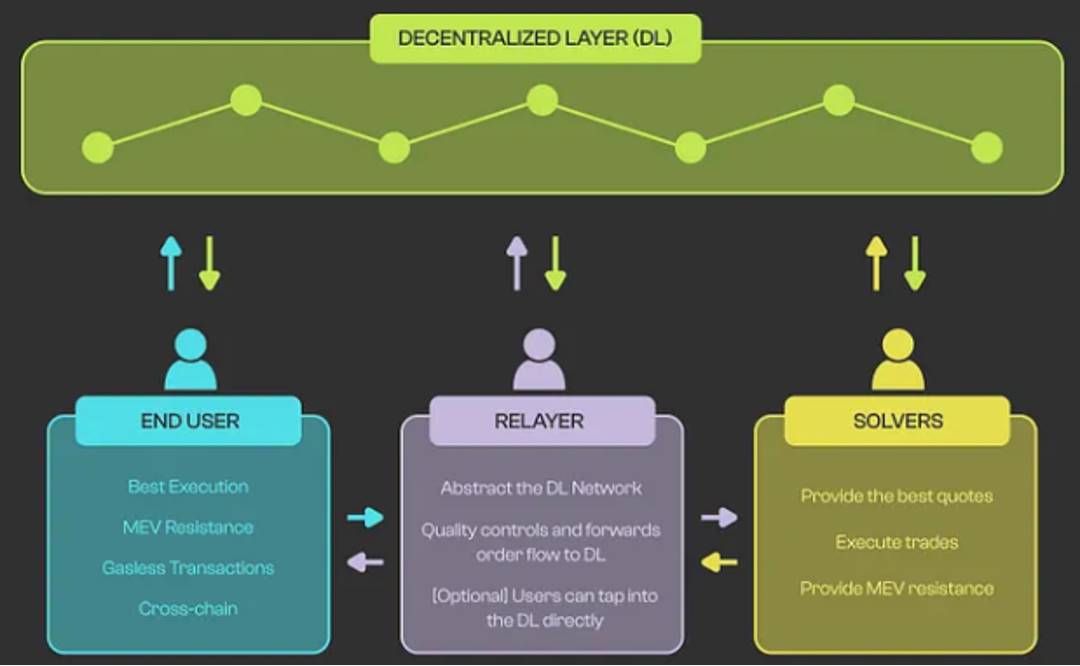
Despite these advances, current ecosystems remain largely fragmented, with most intents tied to specific blockchains. This fragmentation leads to inefficiencies. A chain-agnostic framework aims to overcome these challenges by providing a unified system where intents can be expressed, processed, and fulfilled on any blockchain, regardless of its underlying architecture.
In a chain-agnostic model, intents are universal expressions not limited to any single application or chain. For example, a user might express the intent to trade tokens, and the network will handle this intent in the most efficient way possible—whether the transaction occurs on Ethereum, Binance Smart Chain, or another blockchain. This approach not only simplifies the user experience but also enhances interoperability and composability among dApps across different chains.
Source: Paraswap
Building a Chain-Agnostic Architecture
Creating an intent-centric, chain-agnostic architecture requires several key components:
-
Universal Intents: Intents must be designed to be flexible and adaptable, executable on any blockchain without modification.
-
Decentralized Counterparty Discovery: The system must include a decentralized mechanism for identifying counterparties capable of fulfilling intents, regardless of which chain they operate on.
-
Cross-Chain Solvers: Solvers responsible for executing intents must operate across multiple blockchains, determining the optimal path based on speed, cost, and security.
-
Universal Settlement: Finally, the outcome of fulfilled intents must be recorded in a way recognized by all blockchains, ensuring user actions are verified and secured.
What Technical Components Enable Decentralized Intents?
Core Components:
-
Universal Intents: These are adaptive building blocks that allow users to express desired outcomes within decentralized systems.
-
Solver Mechanisms: Decentralized agents interpret and execute these intents, working across different blockchains to achieve user goals—whether simple token swaps or complex operations. Think of solvers as digital personal assistants that listen to your wishes (intents) and find the best way to fulfill them across multiple chains.
-
Counterparty Discovery: In a multi-chain ecosystem, a decentralized process for finding entities that can match and fulfill intents is critical, ensuring correct counterparties are identified without centralized control.
Challenges in Mempool Decentralization
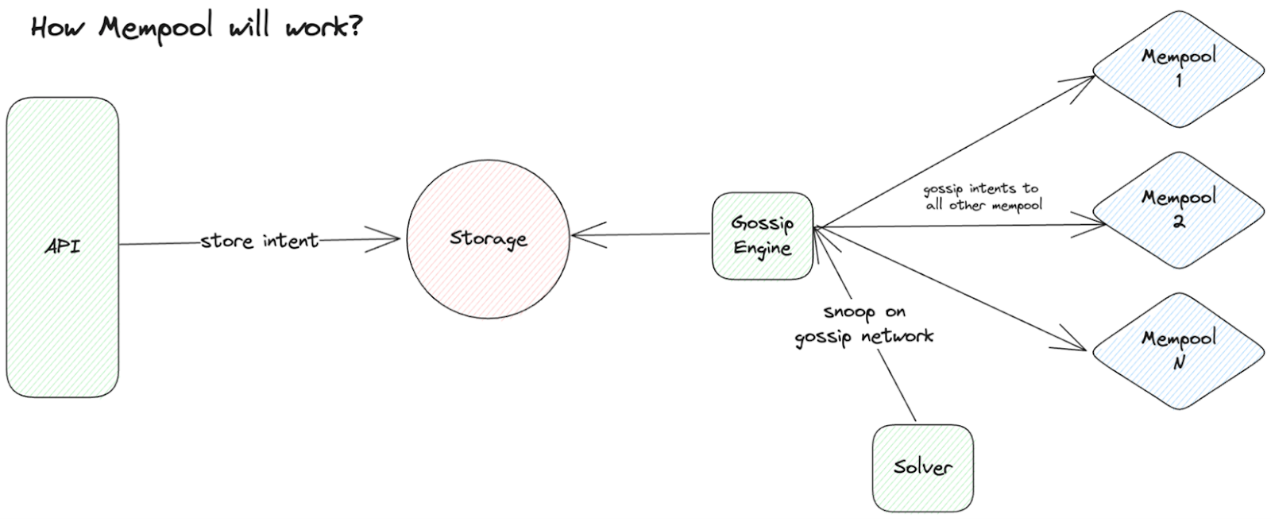
Open vs. Closed Mempools Across Chains: Open mempools allow any solver to access and process intents, increasing transparency but also introducing risks like frontrunning. Closed mempools offer higher security at the expense of decentralization. The challenge lies in balancing openness and security to ensure fair and efficient intent processing across blockchains. When everyone sees what’s happening, there’s a risk someone might exploit your idea before you act. Closed mempools are like private messages—more secure but less transparent.
Source: Ethresearch
How Does Ethereum Handle Intents?
This section focuses on a concrete case study: ERC-4337, a new standard on Ethereum that transforms how user accounts and intents are managed. It aims to give users greater flexibility and security by enabling smart contract wallets to independently execute complex operations.
Overview of ERC-4337
ERC-4337 introduces an account abstraction system on Ethereum, designed to make smart contract wallets (SCWs) more independent and powerful. This new standard allows users to perform complex operations through their wallets without relying on externally owned accounts (EOAs), addressing a major limitation in Ethereum’s current design.
Key Features:
User Operations (UserOps): ERC-4337 replaces traditional transactions with UserOps—signed user actions specifying the intended operation. Multiple UserOps are collected into a separate mempool and bundled together by specialized entities called bundlers. These bundles are then processed as single transactions, improving efficiency.
Censorship Resistance: ERC-4337 is built to be as decentralized as possible. Its permissionless participation ensures no single entity can censor or manipulate UserOps. If all bundlers refuse to process a UserOp, the system’s open nature encourages new bundlers to join the network and capture potential profits, preventing systemic vulnerability.
Security Measures: To prevent abuse and attacks, ERC-4337 enforces several rules:
-
Gas Usage Limits: By limiting gas usage during the UserOp validation phase, bundlers are protected from denial-of-service attacks.
-
Validation Rules: To prevent unfair invalidation of operations, ERC-4337 separates the validation phase from execution. As long as the account state remains unchanged, a validated operation stays valid.
-
Reputation System: Bundlers use a reputation system to manage entities requiring relaxed validation rules, ensuring such entities cannot easily disrupt the network.
The Importance of a Unified Mempool
ERC-4337 emphasizes the need for a unified mempool where all bundlers follow the same rules. This uniformity prevents mempool fragmentation, where differing rules could lead to smaller, isolated pools more vulnerable to censorship and attacks. Consistent rule sets across all bundlers ensure a stronger, more resilient network—similar to how multiple Ethereum clients adhere to the same protocol rules.
Challenges and Solutions
-
Risk of Fragmentation: If different bundlers apply varying rules, the network could fragment, resulting in smaller, less secure mempools. ERC-4337 addresses this by establishing comprehensive test suites and reference implementations to ensure all bundlers operate compatibly and securely.
-
Security Exceptions: While ERC-4337 sets strict rules, exceptions are allowed in certain cases. Bundlers may participate in alternative mempools with different rules as long as they maintain security and compatibility with the main network. This flexibility supports innovation while preserving overall system integrity.
The Future of Intent-Centric Decentralization
The future of intent-centric decentralization lies in overcoming current limitations in blockchain infrastructure and broader ecosystems. As intents evolve from traditional transaction-based systems toward declarative, user-centered models, they hold immense potential to improve user experience, reduce inefficiencies, and enhance privacy.
Focus Areas:
-
Cross-Chain Interoperability: Future developments must enable intents to operate seamlessly across multiple blockchains, leveraging each chain’s strengths while maintaining user control and asset custody.
-
Decentralized Infrastructure: The design of intent pools—whether permissioned or permissionless—will play a crucial role. Decentralized approaches that allow open access while ensuring security and trust are essential for scaling intent-based applications.
-
Mitigating Centralization Risks: As intent adoption grows—especially with standards like ERC-4337—there’s a risk that intent execution becomes dominated by a few entities. The ecosystem must foster competition and innovation to prevent monopolies and ensure fair execution.
Challenges:
-
Trust and Transparency: Developers must carefully balance privacy and security with transparency, ensuring users can trust the systems handling their intents without compromising core decentralization principles.
-
Research and Innovation: The field is still nascent. Ongoing research is vital to address the complexities of intent expression, execution, and integration across domains. Emerging projects like Anoma, SUAVE, and Portikus are laying the groundwork, but much work remains.
-
Despite the challenges, intent-centric decentralization will make blockchains more accessible, secure, and user-friendly—ultimately empowering everyone to effortlessly realize their digital aspirations.
Join TechFlow official community to stay tuned
Telegram:https://t.me/TechFlowDaily
X (Twitter):https://x.com/TechFlowPost
X (Twitter) EN:https://x.com/BlockFlow_News