Deep Dive with Pantera Founder: From Buying BTC at $65 to Today, the Crypto Revolution Is Only 15% Complete
TechFlow Selected TechFlow Selected
Deep Dive with Pantera Founder: From Buying BTC at $65 to Today, the Crypto Revolution Is Only 15% Complete
"We will experience a major bull market, followed by a bear market, and August 2025 should be the peak of this cycle."
 Navigating Web3 tides with focused insights
Source: Bankless
Compiled by: Yuliya, PANews
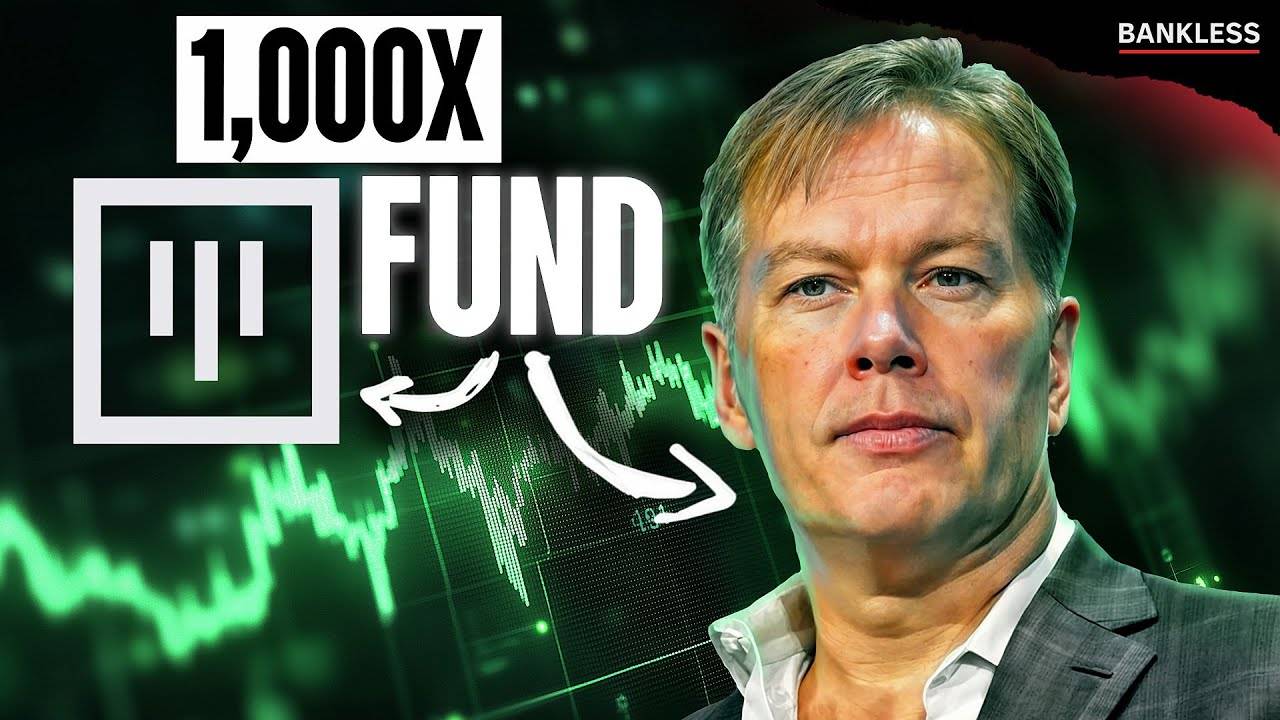
Finding the next "Bitcoin" in the cryptocurrency market is a dream for many investors. As one of the most influential investment firms in the industry, Pantera Capital purchased Bitcoin at $65 in 2013 and has since achieved fund returns exceeding 100x. In this episode of the Bankless podcast, founder Dan Morehead shares how he identifies assets with asymmetric return potential and offers deep insights into the future of the crypto market. PANews has transcribed and compiled the podcast.
Bitcoin Investment in 2013
Bankless: Let's talk about that famous email on July 5, 2013. You recommended buying Bitcoin at $65 and planned to invest in 30,000 BTC. Can you share your thinking at the time?
Dan Morehead: It started in March 2013. Two friends of mine—Pete Briger (co-CEO of Fortress) and Mike Novogratz (founder of Galaxy Digital)—approached me to discuss Bitcoin. (We all came from Goldman Sachs, and they later founded Fortress Investment Group.) Actually, my younger brother had introduced Bitcoin to me earlier, but I didn’t pay much attention back then.
A brief meeting with Pete and Mike unexpectedly turned into a four-hour deep discussion. The concept of Bitcoin opened my eyes. Later, I accepted Pete’s invitation and worked at their office for six full years.
Bankless: You mentioned it was an asymmetric trade opportunity. Could you explain that further?
Dan Morehead: During my macro trading days at Tiger Management, I learned one thing: look for opportunities where potential gains far outweigh the risks. While investing always carries risk, the key is identifying assets capable of delivering massive returns.
For example, before investing in Bitcoin, we held Tesla stock. Interestingly, Tesla and Bitcoin were priced similarly around 2013. Ultimately, we made a bold decision—to sell all our Tesla shares and go all-in on Bitcoin.
Bankless: You said Bitcoin is like a “serial killer.” What do you mean by that?
Dan Morehead: In tech, we often use “category killer” to describe disruptive innovations. Bitcoin goes further—it’s a “serial killer,” because it doesn't just disrupt one sector; it will reshape multiple industries. But this process is gradual.
For instance, while blockchain technology already shows advantages in certain areas, challenging payment giants like Visa and Mastercard might still take another decade. Just like the internet—which is now 50 years old—Bitcoin is still in its “adolescence.”
Bankless: After so many years of market ups and downs, has your view on Bitcoin changed?
Dan Morehead: Despite Bitcoin’s incredible rise, I still see it as an asymmetric opportunity. We’ve experienced three drawdowns of over 85%, yet each time it reached new highs. In traditional investing, it’s hard to find such an asset.
That’s why since 2013, I’ve focused almost entirely on the crypto market. We’re still in the early stages of this financial revolution, and there are still huge opportunities ahead.
Asymmetric Investment Opportunities
Bankless: Between 2013 and 2015, you bought 2% of the world’s Bitcoin supply. Many investors wish they’d bought Bitcoin earlier and could recognize such asymmetric return opportunities. How did you build that conviction? Some might say it was just luck—what do you think?
Dan Morehead: I appreciate your use of the word “pattern,” because it truly is pattern recognition. I’ve been working on Wall Street for 36 years, starting in 1987. I’ve lived through the savings and loan crisis, the financial crisis, invested in commodities in the 1980s, emerging markets in the 1990s. These experiences gave me an edge when investing in crypto compared to younger investors—I felt I’d seen similar situations before.
Let me give a few examples:
-
I worked on the GSCI (Goldman Sachs Commodity Index) at Goldman Sachs. Today, commodities are a recognized asset class.
-
In the 1990s, I invested in emerging markets, which are now a standard asset class.
-
In 2006–2007, Pantera launched the first Western fund investing in GCC countries (UAE and Saudi Arabia). Back then, many thought it was crazy, but today the Middle East is a completely normal investment destination.
-
I invested in Russia during Gorbachev’s era and participated in the privatization of Gazprom.
Bankless: So you've consistently sought out these frontier investment opportunities?
Dan Morehead: Yes, we’ve always looked for non-mainstream or unconventional opportunities. In 2000, we even launched a fund to invest in farmland in Argentina after its second-to-last crisis.
Now, what’s fascinating about blockchain is that it remains a frontier asset class. That’s unusual—a $3 trillion market cap asset still considered frontier. I’ve never seen anything like it.
In a memo I wrote over several months afterward, I listed various blockchain use cases:
-
Competing with gold (this is already happening)
-
Eventually competing with Visa and Mastercard
-
Competing with remittance companies that charge high fees to immigrants, while Bitcoin enables low-cost cross-border transfers
When you add up all these use cases, you realize crypto’s ultimate value will be far higher than today’s levels. That’s why we’re so bullish on this space.
The Experience of Buying Bitcoin in 2013
Bankless: Can you describe what it was like to buy large amounts of Bitcoin in 2013? I remember buying crypto for the first time in 2014—it felt sketchy, opening accounts across multiple exchanges with poorly designed websites. For many investors, these are real barriers. How did you build confidence in such an environment?
Dan Morehead: Trading conditions were indeed primitive back then. Platforms like localbitcoins.com required in-person trades, which carried too much risk—we never considered them. Ironically, that was one of the most mainstream methods at the time.
We initially planned to launch the fund through a major public company. We completed system testing, but the company ultimately pulled out. By then, Bitcoin had already dropped 50%, so we quickly pivoted to launching independently under the Pantera brand.
Bankless: What difficulties did you face during actual purchases?
Dan Morehead: I remember starting over the Independence Day weekend. We first tried a small platform—later identified as Coinbase. We found they only allowed $300 worth of Bitcoin per day, while we wanted to invest millions. At the time, Coinbase had just one employee; it took four days to reply to our email. At that pace, completing our purchase would have taken nearly 20 years.
Eventually, we turned to Bitstamp in Slovenia. When wiring funds via bank transfer, the branch manager asked detailed questions about Bitcoin, spending an hour trying to understand it. Honestly, even I was worried about fund safety at the time. Interestingly, we later became a major shareholder in Bitstamp, and I served as Chairman for 6–8 years (PANews note: LinkedIn shows he served as Bitstamp Chairman from 2014 to 2018).
Bankless: You mentioned visiting many exchanges, including Mt. Gox?
Dan Morehead: During that period, I believed it was important to personally visit exchanges. I flew to Tokyo specifically to meet with two executives from Mt. Gox. Though I stayed only two days, their behavior made me deeply uneasy. Their explanations lacked logic, giving off either incompetence or fraudulent intent. We decided not to work with them—a decision later proven correct.
Institutional Adoption Status
Bankless: You said you did 170 investor meetings and only raised $1 million. At that time, Bitcoin was seen as a “mysterious internet currency” or even a “tool for drug deals.” How did you pitch it to investors? How did those meetings go?
Dan Morehead: If you want outsized returns, you can’t follow the crowd or invest in projects tracked by 20 analysts at every Wall Street firm. That’s why we emphasized “making alternative investments more alternative” in our investor letters.
This mindset stems from my hedge fund experience starting in 1991. Back then, hedge funds were truly alternative investments. Now, they’ve become a multi-trillion-dollar mainstream industry with highly similar strategies across firms. This history reinforced my belief that blockchain should be a core part of portfolios—it still maintains genuine alternative characteristics.
Interestingly, those 170 meetings actually happened in 2016, three years after 2013. That was during the crypto “winter,” when Bitcoin prices crashed 90%. The prevailing narrative was “blockchain matters, not Bitcoin,” and almost no one believed in public chains or Bitcoin as an asset.
Bankless: Has this kind of market downturn happened multiple times?
Dan Morehead: Bitcoin has already gone through three cycles of 85% drawdowns. In the first cycle, we began investing at $65, saw prices rise to $1,000, then collapse. From 2014 to 2017, it remained depressed.
During that tough period, despite little interest in the space, our team kept working daily. The 2016 fundraising effort illustrates this well—170 meetings yielded only $1 million, resulting in just $170,000 in management fees for the entire year.
Even today, although our fundraising has improved, frankly, it feels like we’re still at the starting line. Institutional investors remain extremely cautious—most either allocate nothing or only minimal amounts.
Bankless: Have your messaging on crypto and blockchain changed between 2013, 2016, and now?
Dan Morehead: My core views have remained consistent, probably because they’ve stood the test of time. When I explain Bitcoin’s fixed supply and immunity to fiat inflation, people often ask, “Isn’t that just like gold?” My answer: It’s more like investing in gold in 1000 BC. Gold has served humanity for 5,000 years, but in the digital age, we need a new version—digital gold.
This enduring belief is why I’ve stayed passionate since 2013: I firmly believe Bitcoin will gradually replace physical gold, reform cross-border remittances, and revolutionize payment systems like Visa and Mastercard. Of course, this takes time—possibly 20 years—not overnight.
I’m so confident because blockchain’s development is an unstoppable trend. Implementation may take longer than expected, and some startups may run out of funding along the way. But certain changes are inevitable: Five years from now, it won’t still be acceptable for immigrant workers to pay a month’s salary in remittance fees, nor will paying 3% credit card fees be normal.
Whether this transformation takes 10 years or 1–2 years, I can’t predict exactly. But precisely because I’m certain these changes will happen, I’ll continue holding and investing in this space.
Global Adoption of Cryptocurrency
Bankless: Many people see Bitcoin double this year and feel they’ve “missed it,” thinking it’s too late to buy. How do you view Bitcoin’s upside and the broader crypto asset class? In terms of global adoption, are we at 20% or 50%?
Dan Morehead: For any ordinary asset, if it doubles in a year, you probably shouldn’t buy, as it may be overvalued. But Bitcoin is different. Pantera’s Bitcoin Fund has delivered an 89% annualized return over 11 years—essentially doubling every year on average. A simple investment logic applies: if it doubles again, you make 100%.
However, there’s a crucial investment principle: your exposure should be limited to an amount whose loss—even up to 85%—won’t impact household stability. Simply put, don’t bet your marriage on this asset class. As long as you size your investment accordingly, you can confidently hold long-term.
Bankless: So how much more upside do you see for Bitcoin?
Dan Morehead: Bitcoin has grown significantly—we can’t expect another 1000x, as that would consume all Earth’s energy. But a 10x increase to a $15 trillion market cap is entirely possible, especially compared to the global $500 trillion financial asset base.
I won’t speculate 50 years out, but within our current investment horizon—say 5–10 years—a 10x rise from current levels is perfectly reasonable and wouldn’t seem crazy or overvalued.
Bankless: In terms of adoption, where are we now?
Dan Morehead: I believe we’re still in the early stage. Approximately 300 million people globally own crypto. While this number is hard to measure precisely, and many holders haven’t actively used it yet.
From a technology adoption perspective: using Bitcoin requires only a smartphone, and currently 4 billion people own smartphones. Innovative projects like KaiOS, which we’re engaging with, are bringing these capabilities to feature phones. Assuming smartphone users grow from 4 billion to 5 billion over the next decade, most of these users could eventually use digital currencies on their phones.
Consider this: half the world uses Facebook to share photos. If photo sharing is that popular, digital currency will be even more so. I believe 3 billion crypto users within a decade is entirely conceivable. Once adoption begins, more use cases will emerge, and people will integrate it more into daily life.
Overall, I estimate we’ve completed only about 15% of this blockchain revolution. Not only is participation still relatively low, but existing users haven’t fully tapped its potential either.
Bitcoin’s “Escape Velocity”
Bankless: In 2013, people feared governments would ban Bitcoin. In 2024, the situation is completely different. Has Bitcoin reached “escape velocity”?
Dan Morehead: Yes, Bitcoin has achieved escape velocity—it won’t go backward.
In 2013, media coverage was mostly negative, focusing on Silk Road, ignoring positive impacts. Although the U.S. once banned gold ownership, today 50 million Americans already hold crypto.
Bankless: How does this shift affect the political landscape?
Dan Morehead: There’s an interesting phenomenon here. Most Americans are under 40, yet over the past three years, 90% of wealth created by Federal Reserve and congressional monetary policy flowed to those over 70. This is effectively a massive wealth transfer from younger to older generations.
And young people love crypto—and they vote. We’ve observed a stunning shift in voting behavior among under-40 voters compared to the 2020 presidential election. The term “young Republican” hasn’t been heard in years.
Trump expressed strong support for crypto in May this year. All his cabinet nominees are pro-crypto, and he even plans to appoint a crypto envoy. I believe when someone writes a PhD thesis on this election, they’ll identify crypto as a pivotal factor in changing the outcome.
Bankless: Is this shift visible at the congressional level too?
Dan Morehead: Yes, many anti-crypto senators and congressmen have lost their seats. According to sources I’ve read:
-
House of Representatives: 274 in favor, 122 opposed
-
Senate: 20 in favor, 12 opposed
I predict that in four years, anti-crypto lawmakers may no longer exist in Congress, as it simply isn’t a smart position. They’ll either change views or lose re-election in 2026 midterms or 2028 general elections.
It’s strange seeing Democrats shift toward anti-crypto positions. I keep wondering if I’m missing some strategic calculation, because this clearly seems like a losing strategy.
U.S. Government’s Shift on Crypto
Bankless: In 2025, for the first time, we’ll have a pro-crypto executive branch and Congress. After SEC crackdowns under Biden, what impact will a crypto-friendly White House bring—especially regarding establishing a strategic Bitcoin reserve?
Dan Morehead: The executive branch can directly decide to stop selling seized Bitcoin—that’s within their authority. We participated in the U.S. Marshals’ first Bitcoin auction back in 2013–2014.
The U.S. government now holds 1% of all Bitcoin. Stopping sales would have a significant impact, as Bitcoin’s circulating supply is limited and many holders never sell.
Bankless: Senator Lummis mentioned accumulating a reserve of 1 million Bitcoin. Do you think retaining the current 200,000 and building custody infrastructure is feasible?
Dan Morehead: That’s very likely. Halting government transfers and sales of Bitcoin would positively impact the market. Removing a seller naturally helps prices rise.
As the issuer of the world’s reserve currency, the U.S. can’t hold other nations’ currencies like others do. Storing gold at Fort Knox is becoming outdated. The U.S. should increase holdings of digital gold and could even consider selling physical gold.
Singapore has held crypto for 5–7 years—this isn’t a radical idea.
Bankless: This issue seems increasingly partisan.
Dan Morehead: Yes, it’s strange. As Ro Khanna said, it’s like cell phones—why make it a partisan issue? In fact, Democrats should be more supportive, as Bitcoin represents progressive ideals.
Global Bitcoin Reserve Race
Bankless: Suppose Trump preserves the U.S.’s existing 200,000 Bitcoin (~1% of global supply) and publicly announces it. China also holds ~200,000 seized Bitcoin—how do you think they’ll respond? Will other countries start secretly accumulating?
Dan Morehead: A strategic Bitcoin arms race could last 10 years. Both the U.S. and China may maintain 1% of global Bitcoin reserves.
The irony: Why would countries competing with the U.S. store all their wealth in dollars and U.S. Treasuries? Under the U.S. sanction regime, their transactions can be monitored.
For nations opposed to the West, storing part of their wealth in Bitcoin is an obvious choice. Neutral countries will do the same—just like holding gold—because Bitcoin offers an alternative outside the dollar system.
Bankless: Bipartisan support for stablecoin legislation could help maintain the dollar’s reserve status. Will these bills pass?
Dan Morehead: As Bismarck said: “There are two things you should never watch being made—laws and sausages.” I don’t pay much attention to Congress; it’s a machine too complex to understand or influence.
Institutional Adoption of Crypto
Bankless: 2024 saw major breakthroughs in institutional adoption—Larry Fink admitted he was wrong about Bitcoin in 2021. ETF products achieved remarkable success. Compared to 2022, when Mike Novogratz predicted a “wave of institutional investors,” that wave finally arrived. So how advanced is institutional adoption now? Where are we in the journey?
Dan Morehead: The industry has faced significant setbacks:
-
Collapses of FTX, BlockFi, Celsius, Terra Luna
-
GBTC’s persistent discount
-
SEC lawsuits against Coinbase, Ripple, and others
These events dampened institutional enthusiasm. Imagine a public pension fund manager trying to propose Bitcoin investment to a state legislature under such conditions.
But people may not realize how fast things can change. If by 2025 we have a pro-crypto Congress, president, and at least neutral regulators, everything could transform overnight. That’s why we’re now seeing price surges and massive inflows into ETFs.
On ETFs—this is a major breakthrough. Eleven years ago, we launched America’s first crypto fund as a Cayman Islands hedge fund, assuming ETF approval would take years. Turns out, the wait was far longer than expected.
Bankless: Can you share specific data on these inflows?
Dan Morehead: Current inflow figures:
-
Bitcoin ETFs: $35 billion net inflows
-
ETF-like products (e.g., MicroStrategy): $18 billion
-
Total inflows into ETF or ETF-like products exceed $50 billion
An interesting comparison:
-
Net inflows into all global gold ETFs during the same period: zero
-
Capital is shifting from traditional gold to digital gold (Bitcoin)
Bankless: While seeing people like Larry Fink change their stance is encouraging, institutions like Vanguard still prohibit ETFs or crypto assets in their ecosystem. So what’s the real extent of institutional adoption today?
Dan Morehead: Here’s a compelling point: many say Bitcoin is a bubble, but the median institutional holding is zero—how can it be a bubble? Most institutional investors—insurers, pension funds, endowments—have virtually zero direct blockchain exposure. They may indirectly invest through broad venture funds, but direct investment is nearly nonexistent.
That’s why I remain extremely bullish on the future. We’re just getting started. Seeing giants like BlackRock openly supporting crypto, building excellent blockchain teams, and institutions like Fidelity—engaged since 2014—is incredibly helpful.
Previously, many institutions used compliance as an excuse not to invest. But now, with BlackRock and Fidelity offering highly regulated, high-quality products, that excuse no longer holds. Even Vanguard’s stance may become unsustainable as the market evolves.
Bankless: So there’s still a chance to get ahead of institutional investors in crypto?
Dan Morehead: Absolutely. The opportunity still exists to get in before institutions.
Crypto Market Cycles
Bankless: You’ve lived through multiple cycles. Bitcoin has just hit a new high of $100,000—we’re clearly in a bull market. Will the crypto market continue following the four-year cycle? Conventional wisdom links it to Bitcoin halving, while others tie it to global liquidity—bull runs occur when fiat liquidity is abundant, peaking before correcting. Will this four-year cycle persist?
Dan Morehead: Yes, I believe this cyclical pattern will continue.
Bankless: Is that your base case? Don’t you believe in super-cycle theories or the possibility of breaking this pattern?
Dan Morehead: Let me explain with an analogy. In college, a professor wrote “A Random Walk Down Wall Street,” arguing markets are always efficient. Buffett once said something profound: “The difference between always efficient and often efficient is worth $80 billion.”
My view on halving cycles has evolved:
-
Initially, like many, I doubted—if everyone knows the halving is coming, shouldn’t it already be priced in?
-
After experiencing the 2013 and 2016 halvings, I fully believe in the pattern’s validity
Why is halving so important? Start with miner behavior:
-
Miners sell nearly all Bitcoin earned to cover operating costs
-
Like copper mining—if half the copper mines shut down, copper prices must rise
-
Bitcoin halving creates the same effect—every four years, supply halves. With steady demand, prices naturally rise
However, the cycle is evolving:
-
Volatility is gradually decreasing. The first halving reduced supply by 15% of circulating coins
-
With larger circulation, the next halving’s impact drops to one-third
-
By 2136’s final halving, the effect will be negligible
Our data analysis reveals a clear pattern:
-
Halving effects begin 400 days before the actual event
-
Peak occurs 480 days after halving
-
This pattern has remained remarkably accurate
Two years ago, when Bitcoin was at $17,700, we predicted it would reach $28,000 at halving and peak at $117,000—480 days post-halving (August next year). Our bottom prediction was almost exact in timing.
During the last halving, we tweeted monthly price predictions for 2020. We forecasted $62,964 on August 15, 2020—and it hit that number exactly that day.
Therefore, I still believe this cycle will continue. We’ll see a major bull run, followed by a bear market. The only difference is that after three 85% drawdowns over the past 12 years, the next correction might only be 50–60%, at least for Bitcoin. Smaller coins may still see greater volatility.
Bull Market Outlook for 2025
Bankless: Following the four-year cycle, does this mean 2025 will be a bull market, with a downturn starting in 2026?
Dan Morehead: Yes, that’s my expectation. The halving date is April 19 this year, and the peak of this cycle should come in August 2025.
Bankless: Everything seems to be aligning—feels almost too straightforward?
Dan Morehead: I know it sounds a bit absurd, but we’ve discussed this for 12 years. We’ve long predicted volatility would gradually decline—the previous halving cycles were more extreme, this one will be milder. Beyond halving, political and macroeconomic conditions are also aligning favorably for crypto. So I’m quite optimistic about 2025.
Bankless: What’s your view on the macroeconomic outlook? Will it help or hurt crypto? Does Bitcoin influence macro, or vice versa?
Dan Morehead: Usually, we discuss macro impacting Bitcoin. From a macro standpoint, I’m skeptical about Fed rate cuts. In December 2021, the federal funds rate was zero, and the 10-year yield was 1.3%. I predicted both would rise to 5% and stay there for years. To this day, I stand by that view.
Why? Look at current economic conditions:
-
The economy is booming—airports are packed, a clear sign
-
Unemployment is at historic lows
-
Wage inflation remains high
-
Stock markets keep hitting new highs
Under these conditions, expecting Fed rate cuts seems unreasonable.
The real federal funds rate is only 80 basis points above core inflation—hardly restrictive. Historically, it averages 140 bps higher, so current policy is only slightly tight.
More concerning is the fiscal picture:
-
Even at peak economic performance, the U.S. runs a $2 trillion deficit
-
Full employment and record highs in indicators, yet no fiscal balance
-
This signals deeper problems when the economy eventually turns
Macro Environment & Crypto
Bankless: Persistent U.S. deficits, money printing, and rate cut expectations—what do these macro signals imply? Do they suggest rising commodity and digital asset prices?
Dan Morehead: The U.S. has developed an addiction to money printing. This trend existed pre-pandemic, but fiscal constraints vanished entirely afterward. Direct cash handouts to citizens fueled inflation and price increases.
Current fiscal conditions are alarming:
-
The U.S. runs record deficits even during its best economic times
-
Interest payments now exceed military spending
-
The government finances via adjustable-rate instruments, increasing future fiscal risk
-
Rates are expected to remain at 5% or higher
This means we’ll need ever-higher rates to refinance all debt—an extremely costly burden.
While I don’t focus heavily on fiscal or macro research, one thing I’m certain of: I’d rather hold Bitcoin than dollars.
Bankless: You mentioned commodities. Now gold hits new highs, Bitcoin hits new highs, stocks hit new highs, real estate hits new highs—how do we interpret this?
Dan Morehead: The key is reframing the perspective:
-
These assets aren’t truly “rising”—fiat currencies are depreciating
-
Focus instead on Bitcoin’s relative price versus gold, stocks, real estate
-
The ratio of various assets to the dollar clearly shows the dollar’s decline
Given current fiscal conditions, holding fiat makes little sense. Even former crypto skeptic Ray Dalio now recommends holding gold and Bitcoin as hedges against potential debt crises.
This shift in elite investor sentiment matters because money is fundamentally a consensus technology. Changing views among top investors signal growing market recognition of digital assets. Deep liquidity-driven consensus is critical for the development of a new currency.
RWA Tokenization Trend
Bankless: RWA tokenization seems primarily aimed at institutions. Will all assets eventually move on-chain? Are we on an S-curve from stablecoins to Treasuries, then to stocks and bonds?
Dan Morehead: This is indeed the long-awaited “killer app” in blockchain. Early investments were premature, but now results are finally emerging. Stablecoins, for example, unlock new value for traditional financial instruments on blockchain. Projects like Ondo are opening U.S. financial markets to more people.
The significance of moving Treasuries onto blockchain is greater than it appears. Of the world’s 8 billion people, most live outside the U.S. and desire access to dollar assets and U.S. Treasuries—but traditional channels make this difficult.
Even for U.S. citizens, the current system has clear flaws. For example, transferring from a Treasury Direct account to a brokerage can take up to a year. Such inefficiency highlights the need for blockchain.
Bankless: Wait, really? I didn’t know that.
Dan Morehead: Yes, piles of withdrawal requests sit unprocessed with government staff, taking a full year to move your 90-day Treasury from the government to Merrill Lynch. If anything proves the need for blockchain and RWA tokenization, this is it. You think buying directly from the government is smarter, only to have your funds locked for a year.
Another great example is Figure Markets—they’ve already processed $10 billion in mortgages on blockchain. Traditional mortgage markets take 55 days from loan origination to settlement, with numerous intermediaries adding cost at each step. Blockchain can dramatically improve efficiency.
Not all assets are suitable for tokenization. Hedge funds and private equity funds for accredited investors already operate efficiently and don’t urgently need on-chain migration.
But for assets like Treasuries, blockchain offers an ideal solution. It allows broader investment participation and gives the U.S. government an expanded financing channel. Through blockchain, they can easily promote Treasuries to billions of global smartphone users—benefiting all parties.
AI and Crypto Convergence
Bankless: AI and crypto are converging in unique ways. What’s your view on the intersection of crypto and AI? Are you tracking any AI-related projects?
Dan Morehead: The convergence of blockchain and AI is inevitable. Fundamentally, AI has massive societal impact—decentralized, open AI benefits everyone more than privately controlled models. We’ve already invested in projects in this space, such as Sahara and other decentralized AI initiatives.
A notable trend: existing AI models have already consumed nearly all free internet content. Next-generation models require access to paid datasets, and blockchain excels at providing incentive mechanisms to solve this problem.
Regarding AI agents using money—they clearly can’t open traditional bank accounts. When machine agents interact, they must use some form of digital currency. Programmable money (like Ethereum) appears the most natural choice. While alternatives outside blockchain may exist, blockchain offers the most comprehensive solution.
Long-term, AI may struggle to function without blockchain. These fields are already intersecting meaningfully, and over the next 5–10 years, we’ll likely see deeper integration.
Finding the Next Bitcoin
Bankless: Pantera’s original Bitcoin fund returned 130,000%. Was that a once-in-a-generation return? Do you believe similar opportunities will exist for investors in the coming decades?
Dan Morehead: Blockchain technology is at a critical stage of development, making it a highly promising career path for young people. Even if one eventually transitions to traditional industries, the experience gained in blockchain will be a valuable professional asset. This career choice has asymmetric payoff characteristics: high upside, manageable downside.
Current monetary and regulatory environments create significant headwinds for younger generations. High barriers in real estate, inflation pressures, and other factors make traditional wealth-building paths increasingly difficult. In contrast, blockchain offers a relatively fair competitive environment for the younger generation.
For young investors, consider the following investment strategies:
-
Diversify portfolios to avoid over-concentration in a single crypto asset
-
Emphasize risk management and adjust allocation based on personal financial circumstances
-
Leverage generational differences in perception to identify investment opportunities
-
Adopt disciplined approaches like dollar-cost averaging
It’s important to adjust strategies as one progresses through life stages. For those married, with mortgages, etc., high-risk asset allocations should be moderated to match personal risk tolerance.
Join TechFlow official community to stay tuned
Telegram:https://t.me/TechFlowDaily
X (Twitter):https://x.com/TechFlowPost
X (Twitter) EN:https://x.com/BlockFlow_News
 Bankless