Podcast Notes | Interview with Pantera Fund Manager: How TON Became Our Largest Investment?
TechFlow Selected TechFlow Selected
Podcast Notes | Interview with Pantera Fund Manager: How TON Became Our Largest Investment?
TON has three main verticals: community, gaming, and payments and stablecoins. These areas form TON's investment thesis, and value accrual is crucial when assessing the importance of the TON token.
 Navigating Web3 tides with focused insights
Compiled & Translated: TechFlow
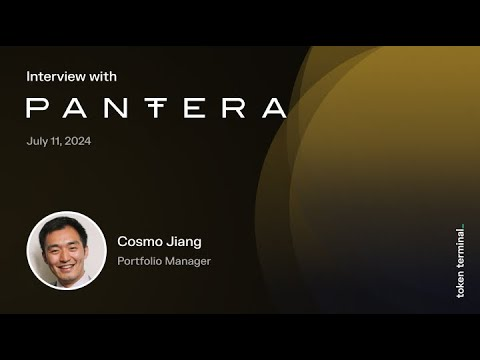
Guest: Cosmo Jiang, Portfolio Manager at Pantera Capital
Host: Oskari Tempakka, Host of Fundamentals Podcast
Podcast Source: Token Terminal
Original Title: TON: Pantera's Largest Investment Ever | Interview With Cosmo Jiang
Release Date: July 11, 2024
Background Information
In this episode, Cosmo Jiang, Portfolio Manager at Pantera Capital, joins Token Terminal to discuss the details behind Pantera’s largest investment to date—the investment in The Open Network (TON), a Layer 1 blockchain originally designed by Telegram.
The podcast explores Pantera’s long-term, fundamentals-based investment approach and outlines their typical deal sourcing and due diligence process. It delves into the factors that helped build Pantera’s confidence in making its biggest investment so far, including the strategic partnership between Telegram and TON, TON’s unique advantage in attracting the first billion users to cryptocurrency, the importance of a thriving developer ecosystem, the impressive traction seen from mini-games on TON, and the growth of stablecoins on the network.
The discussion also covers Pantera’s bull case for TON, risks and unquantifiable factors related to the investment, and how Pantera supports post-investment growth for TON.
Meet Cosmo Jiang
-
Cosmo Jiang is a Portfolio Manager at Pantera Capital, focusing on consumer internet investments and leading the firm’s liquid token strategy. He works closely with founder Dan Morehead.
-
He views tokens as a new form of capital formation capable of aligning incentives among employees, management teams, token holders, and users. Firmly believing in the disruptive potential of digital assets and cryptocurrencies against traditional internet giants, he has fully committed himself to this space.
Pantera Overview
-
Founded in 2003 by Dan Morehead, former macro head at Tiger Management, Pantera initially operated as a macro-focused fund. In 2013, it pivoted entirely to blockchain, becoming the first U.S.-based institutional investment firm dedicated solely to blockchain. Pantera’s first Bitcoin fund delivered a 1000x return, greatly satisfying early investors.
-
Jiang joined Pantera last year after founding his own digital asset hedge fund, Nova River, which aimed to apply rigorous fundamental analysis from traditional finance to the crypto space.
-
Jiang emphasizes that Pantera’s investment philosophy centers on long-term bets on the future of the digital asset industry, compounding capital over years of industry growth. He also stresses the importance of educating investors about fundamental investing and scaling this strategy, both critical to their success and broader industry development.
How TON Entered Pantera’s Radar
-
Jiang noted that Telegram is the world’s third-largest messaging app, behind only Facebook Messenger and WhatsApp. As an internet investor, he observed that messaging apps have extremely high user retention but face challenges in monetization—mainly because message content is private, making targeted advertising difficult.
-
The TON network was originally developed by Telegram, but due to SEC litigation, Telegram had to abandon the project and hand it back to the community. Despite this, TON has undergone multiple iterations and developments over the past few years.
-
Jiang pointed out that in September last year, TON and Telegram established a new strategic partnership, integrating the TON wallet directly into the Telegram app and allowing users to pay for ads and receive in-app ad revenue sharing via TON. This made the relationship between TON and Telegram much more concrete and tangible.
-
Jiang believes this partnership combines TON’s ecosystem with Telegram’s 900 million monthly active users (MAUs), offering massive potential to significantly expand TON’s distribution and usage as a blockchain.
Telegram and TON’s Strategic Partnership
Oskari asked whether the strategic partnership between TON and Telegram was the main reason Pantera started researching TON deeply, or if they were already seeing some initial metrics and activity on the TON network.
-
Jiang responded that yes, it was indeed this strategic partnership that prompted them to take TON seriously. They had always known about the connection between TON and Telegram, but it wasn’t until last year that the relationship became clear and signaled potentially significant progress.
-
Jiang explained that Pantera had been tracking TON’s history, and their biggest question was why these changes were happening now. Many Web 2.0 platforms have attempted to enter blockchain half-heartedly and failed. Pantera’s due diligence focused on understanding the nature and motivations behind the Telegram-TON relationship.
-
Earlier this year, Telegram launched its built-in TON wallet, giving Pantera visible evidence of real progress. TON’s success is crucial to Telegram’s sustainability as a private company. Because Telegram emphasizes data privacy and user sovereignty, it cannot rely on advertising for monetization, and its subscription model hasn’t gained enough traction.
-
Therefore, Jiang believes Telegram’s only sustainable monetization path may be through cryptocurrency and TON distribution.
-
Jiang also noted that while Telegram might go public—a positive for TON—it could ultimately avoid an IPO if TON succeeds, better aligning with its principles of user sovereignty and data privacy. Once Pantera understood this alignment, they realized that Telegram needs TON’s success not just economically, but strategically.
Pantera’s Due Diligence Process
Oskari asked about Pantera Capital’s typical discovery and due diligence process, particularly regarding liquid tokens.
-
Jiang stated they focus on investing in blockchain businesses and protocols with product-market fit, strong growth prospects, excellent management teams, and the ability to create and capture economic value. In early stages, they prioritize team strength, clarity of vision, and communication skills—critical for building initial products and achieving product-market fit. As companies mature, they shift focus to the product itself, competitive advantages, and profitability plans.
-
Jiang explained that their process mirrors traditional asset class due diligence: speaking with customers and competitors, analyzing competitive landscapes, assessing services and added value, and translating insights into financial models. They write detailed investment memos and actively manage portfolio construction.
-
For TON specifically, given its maturity and trackable fundamental data, they focused heavily on KPIs like transaction volume, user count, and usage—all fed into financial models to ensure decisions were grounded in solid fundamentals.
-
Jiang emphasized that due diligence isn’t just number crunching—it also involves understanding human dynamics and team collaboration, which ultimately translate into financial outcomes. By tracking data, they ensure narrative aligns with fundamental reality to make informed investment decisions.
Oskari summarized that it’s a balance of qualitative and quantitative analysis, especially important in an emerging industry where there are no perfect historical parallels.
-
Jiang added that fundamental investing goes beyond numbers—it includes understanding human interaction and cooperation. This holistic approach enabled them to conduct deep research on TON and conclude it was a highly exciting investment opportunity.
Building Conviction in the TON Investment
Oskari asked about the foundation of Pantera Capital’s conviction in investing in TON.
-
Jiang highlighted the key question: Can TON scale from its current ~1 million monthly active users (MAUs) to the next billion? This is a massive challenge, given the crypto space currently has only tens of millions of users. Jiang believes TON can achieve this based on several factors:
-
Telegram’s User Base: Pantera analyzed Telegram’s user growth history and demographics, comparing them with potential blockchain adopters. While TON’s current penetration within Telegram is low, it has grown from 1 million to 4 million MAUs. They studied how TON could increase adoption among Telegram users and identified potential drivers and strategies.
-
User Monetization: Pantera explored monetization models across both crypto and non-crypto applications, including DeFi, transaction fees, payment alternatives, and advertising/business models from social media and Web 2.0. They built reasonable assumptions around TON’s monetization potential.
-
Competitive Dynamics: Through conversations with developer teams, they assessed TON’s ecosystem strengths and weaknesses and ways to boost developer adoption, recognizing that developer uptake eventually drives user adoption.
-
By combining user growth, monetization potential, and competitive dynamics, Pantera built a model projecting TON’s valuation and price targets.
Oskari summarized that TON’s key advantage lies in its tight integration with Telegram—a massive existing community actively adopting blockchain technology, rather than trying to build a new one from scratch like most blockchain projects.
Telegram vs. Other Community Platforms
Oskari asked Jiang why he believes Telegram has an edge over other community platforms in successfully integrating blockchain into the user experience.
-
First, Jiang emphasized the Telegram-TON relationship, which was central to their due diligence. He pointed out that Telegram is currently the only major social platform with a coherent blockchain strategy. Others—like Facebook (which exited under pressure), WeChat (restricted by China’s regulations), and Google (failed in social experiments)—lack such initiatives. Based in Dubai, Telegram operates free from U.S. and Chinese regulatory constraints, giving it more flexibility in blockchain innovation.
-
Second, Jiang noted that Telegram lacks legacy business models to disrupt and faces less regulatory pressure than platforms based in the U.S. or China. This allows greater freedom in experimenting with and implementing blockchain strategies. Moreover, Telegram already has a large user base, providing a solid foundation for its blockchain ambitions.
-
Strategically, Jiang believes Telegram’s founding ethos—user sovereignty and data privacy—aligns closely with blockchain’s core philosophy. This philosophical consistency makes Telegram’s move into blockchain feel natural and authentic.
-
From a community perspective, Jiang observed that while TON’s current developer and crypto-native community is small, the entire crypto space is still in its infancy. Rather than starting from zero, TON already boasts 2–5 million daily active users—an important head start toward reaching a billion. Given the low overall crypto penetration, this early-stage size isn’t a major disadvantage.
Playing Games on TON
Oskari mentioned that although Telegram isn’t aggressively promoting features like wallet integration, these features are easy to set up and offer a smooth user experience.
-
Jiang agreed, noting that the ideal end-user experience is one where users don’t even realize they’re using blockchain. Many crypto teams today focus too much on complex technical improvements, neglecting what users truly care about: whether the product is easy and enjoyable to use. TON prioritizes user interface over showcasing blockchain tech—a key differentiator from other blockchain projects.
Regarding gaming, Oskari noted that while there’s long been speculation about games bringing in the first billion crypto users, no breakthrough success has emerged—until recently, when simple mini-games on TON began showing promising trends.
-
Jiang believes past blockchain games overly emphasized "play-to-earn" models, which are unsustainable because they rely on constant new value inflows (players spending money and time), rather than generating intrinsic value. Future blockchain games must focus on gameplay enjoyment to attract players willing to invest resources—not just chase profits.
-
Games on TON have already seen notable success. For example, Notcoin, Telegram’s first game, reached 10 million daily active users within months—far surpassing Axie Infinity, previously the most successful blockchain game. Another hit, Hamster Combat, achieved 200 million unique users and 40 million daily active users.
-
-
Jiang attributes this success largely to TON’s seamless user experience. Users can easily open these mini-games directly within Telegram, and messaging apps are among the most frequently opened applications. This convenience and high-frequency access allow TON to leverage Telegram’s vast user base for rapid game adoption.
Notcoin and Hamster Combat: The Popularity of Tap-to-Earn Games
-
Jiang noted that while these games may seem simplistic or even silly—Hamster Combat is literally a clicker game—tap-to-earn games are actually one of the most popular global game categories. They grow rapidly and require minimal cognitive effort, allowing users to enjoy gameplay without heavy mental investment.
-
Jiang emphasized that while TON’s current games may appear basic and immature, such simple formats hold immense global significance—even outside crypto. The popularity of tap games demonstrates their vast market potential and demand.
Oskari added that a key advantage of tap games is they don’t interfere with other user activities. These games fit perfectly within messaging apps—users can open them during idle moments while waiting for replies, perform quick actions, then return to chatting.
-
Jiang further explained that this is exactly where mini-apps shine inside messaging platforms. Users can seamlessly switch between chatting and gaming, staying continuously engaged within the app. This frictionless experience dramatically increases user stickiness, enabling TON-based games to acquire users rapidly.
Payments and Stablecoins on TON
Oskari mentioned that TON can attract not only developers through gaming but also transition into financial services via payments and stablecoins. One of TON’s goals is to put USDT (Tether) in every user’s pocket—and they’ve already made progress in this area.
-
Jiang pointed out that TON’s adoption rate for stablecoins is astonishing. Around $600 million worth of USDT has already been issued on TON, growing rapidly each month. In fact, TON is the fastest-growing blockchain in Tether’s history for USDT adoption—despite Tether only launching on TON in April this year.
-
Jiang further explained that for a blockchain to succeed, it needs foundational primitives—and stablecoins are the most critical. Stablecoins fueled Ethereum’s DeFi growth, as users wanted non-volatile assets for transactions and settlements. TON already shows strong promise in this area.
-
Beyond stablecoins, Jiang mentioned other essential primitives like exchanges and cross-chain bridges. While TON’s bridge infrastructure is still nascent, major bridge integrations may be announced soon, further accelerating TON’s development.
-
On the importance of payments, Jiang stated that payments are central to everyday life. Over the past two decades, user acquisition relied heavily on social networks, but recently the most successful growth engines have been fintech platforms like Venmo and PayPal—because they offer peer-to-peer and daily-use payment functions critical to users’ lives.
-
The beauty of blockchain payments is that they are global, permissionless, and frictionless from day one. Unlike traditional finance—for instance, sending money to a grandmother in China, which is costly, slow, and error-prone—blockchain payments settle instantly without friction.
Oskari concluded that once TON overcomes current bottlenecks like cross-chain bridging, its powerful distribution channels will unlock fully, and future data will be extremely compelling.
TON’s Value Accrual and Investment Potential
Oskari noted that TON has three main verticals: community, gaming, and payments/stablecoins. These form the investment thesis, and value accrual is crucial when evaluating the importance of the TON token.
-
Jiang explained that the TON token is similar to other Layer 1 tokens—it’s a gas token used for all transactions on the TON blockchain. Currently, each transaction costs about 2 cents, with half the fee burned.
-
This mechanism resembles Ethereum’s, though Ethereum burns a larger proportion. Burning part of transaction fees helps reduce token supply, increasing value for remaining holders. Jiang emphasized he typically thinks in terms of earnings per share—or value per token. As supply decreases due to burning, if total system value remains constant, each token becomes more valuable. This is TON’s value accrual mechanism.
-
To drive value growth, increased transactions and economic activity are needed. More activity means more token burns and higher per-token value. Thus, TON’s value accrual depends on vibrant economic activity within its ecosystem.
Risks and the “Unanalyzable”
-
Jiang noted that many people are confused about the Telegram-TON relationship. After deep research, they found Telegram’s strategic intent behind TON to be very clear. Telegram can earn TON tokens by hitting certain milestones over the next five years—a strong alignment of economic and philosophical incentives that gives Pantera greater confidence.
Another question is: Why would TON succeed more than apps built on EVM or Solana?
-
Jiang explained that the TON wallet is a new tab within the Telegram app—offering a huge UX advantage. Every extra click causes user drop-off, so TON’s single-click access is vastly superior to multi-step processes required by other apps.
-
TON is still very early. When they first researched it, it didn’t even have stablecoins. Much infrastructure—cross-chain bridges, developer tools—is still being built. Investors need faith in this future potential.
-
TON is neither EVM-compatible nor written in Rust—it uses FunC, a variant of C. While many developers know C, few crypto developers are familiar with it, potentially limiting developer attraction.
-
Scaling from a few million to hundreds of millions of users requires immense execution and coordination—posing significant operational risk.
Market Opportunity and Valuation Potential
-
Jiang believes the core of any L1 blockchain is serving as a settlement layer for transactions, with value determined by how much economic activity it can attract.
-
User Growth: Telegram could reach 1.5 billion users in the coming years (currently 900 million). If TON captures one-third of that, it could have around 500 million users.
-
ARPU (Average Revenue Per User): At $10 ARPU, 500 million users would generate $5 billion in annual revenue.
-
Payment settlement networks are high-margin businesses, nearly 100% margin, warranting high P/E multiples.
-
Valuation Calculation: $5 billion revenue × 30x P/E = $150 billion market cap.
-
Token Price: With ~5 billion TON tokens in circulation, this implies a potential token price of $30.
Supporting TON’s Growth
Jiang detailed how they, as long-term investors, actively support the growth and development of TON (The Open Network). Key points include:
1. Role of a Long-Term Investor
a. Active Involvement
Jiang emphasized that as long-term investors, they are not passive capital providers but actively involved in the management and development of portfolio companies. At every stage, they collaborate closely with leadership teams, offering advice and support.
b. Education and Guidance
As a major player in the industry, they feel responsible for educating outsiders and guiding internal development. They leverage their perspective and experience to help companies identify and respond to market and competitive shifts.
2. Providing Multifaceted Support
a. Talent and Resources
Pantera has diverse expertise and resources across domains—including its portfolio company network, service provider relationships, token economics specialists, in-house legal counsel, capital markets, and marketing. They tailor support based on each company’s specific needs at different stages.
b. Investor Perspective
Management teams often focus on day-to-day execution and may overlook broader industry trends or competitive changes. Investors help highlight these shifts and provide strategic guidance. Additionally, especially in early-stage crypto, teams tend to prioritize technology and product, sometimes neglecting capital markets and commercialization. Investors bring expertise here, helping ensure feasibility in both business and capital markets.
3. Concrete Actions
a. Improving Developer Experience
They work closely with the TON team to improve developer documentation and ensure tool usability. They gather feedback from apps across the TON ecosystem to understand what’s working and what needs improvement.
b. Gathering and Relaying Feedback
They act as the eyes and ears of developers, collecting feedback and regularly communicating it to the TON Foundation to guide product development.
4. Supporting Risk Mitigation
a. Enhancing Developer Experience
By improving documentation and tools, they aim to attract more developers to the TON ecosystem.
b. Market and Capital Support
They help the TON team better understand investor expectations, ensuring products are not only technically sound but also viable in business and capital markets.
Conclusion and Outlook
-
Jiang emphasized that Pantera Capital’s investment strategy consistently revolves around fundamental, rigorous principles. They focus on startups and protocols with high potential that demonstrate product-market fit, capacity to generate economic surplus, strong growth prospects, trustworthy teams, and the ability to capture a meaningful share of that surplus.
-
Jiang detailed how they actively support TON’s development—improving developer experience, gathering feedback, and providing expertise in capital markets and commercialization. They believe TON has enormous potential and are committed to helping it achieve long-term success.
-
Pantera Capital invests across the crypto landscape—from applications to infrastructure. They hold specific views on various sectors, though Jiang personally leans toward application-layer investments.
-
Jiang highlighted several areas he sees as high-potential:
-
Block Space: The largest market, including blockchains like TON, Ethereum, and Solana, whose core business is selling block space.
-
Decentralized Finance (DeFi): Especially projects using token incentives to drive real-world behaviors and business models.
-
AI and Crypto Intersection: Though not yet profitable, this space holds massive future earning potential. Blockchain can uniquely support AI use cases and accelerate AI adoption.
-
-
Jiang stressed the importance of fundamental analysis. When selecting investments, they always prioritize projects that create economic value and show strong growth potential.
-
Pantera Capital remains open to any high-potential opportunity in the crypto space, continuously seeking new investments to drive industry advancement.
Join TechFlow official community to stay tuned
Telegram:https://t.me/TechFlowDaily
X (Twitter):https://x.com/TechFlowPost
X (Twitter) EN:https://x.com/BlockFlow_News
 深潮TechFlow