Uncovering the Founder of Pantera: The Legendary 1,000x Return from Buying Bitcoin at $65
TechFlow Selected TechFlow Selected
Uncovering the Founder of Pantera: The Legendary 1,000x Return from Buying Bitcoin at $65
"I earn $100 for every meeting, just to convince people to buy Bitcoin."
 Navigating Web3 tides with focused insights
By Leo Schwartz, Fortune Magazine
Translated by Luffy, Foresight News
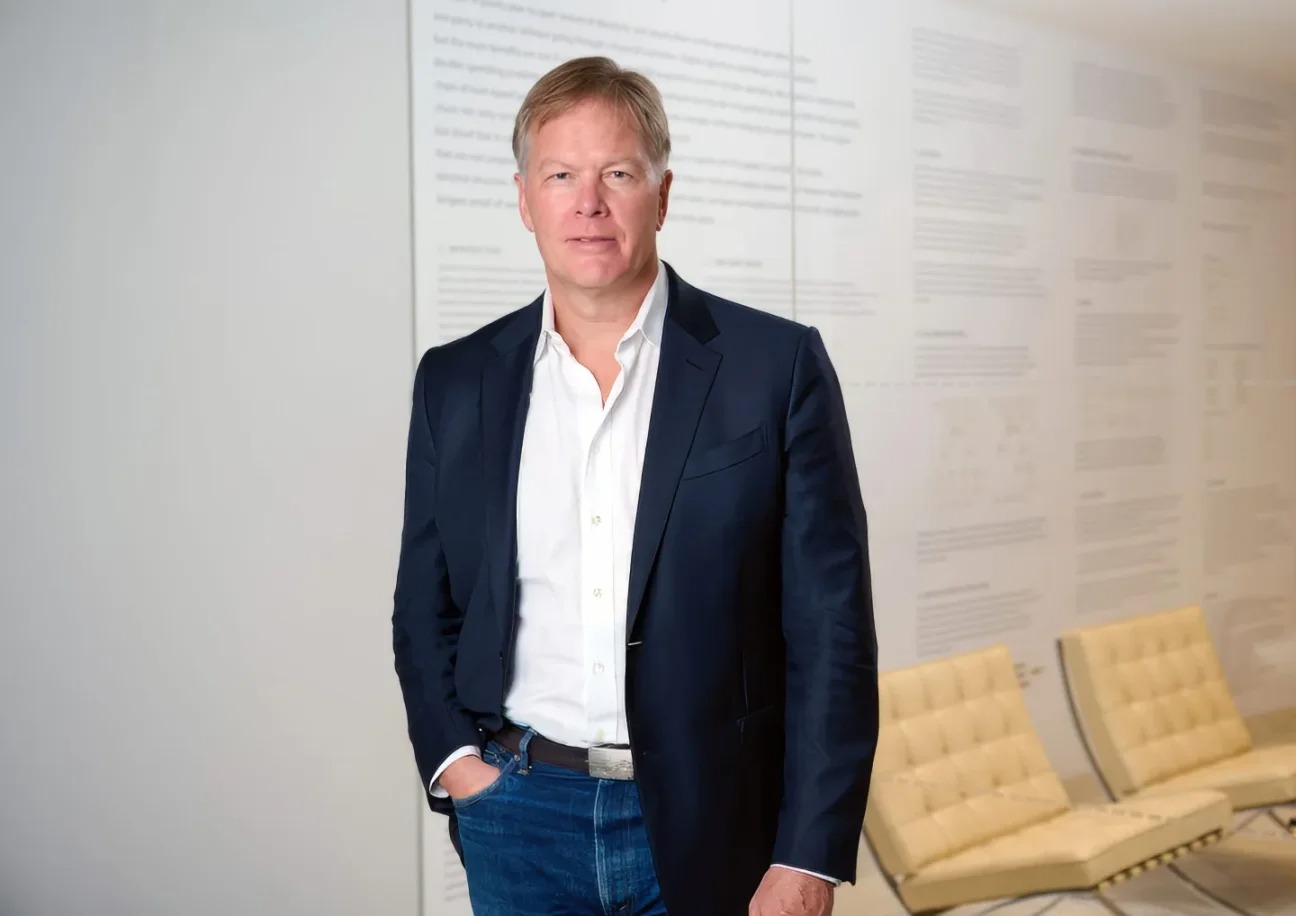
Dan Morehead, Founder of Pantera Capital
In 2016, Dan Morehead embarked on a global tour to spread the "gospel" of Bitcoin. The former Goldman Sachs and Tiger Management trader had been utterly captivated by Bitcoin a few years earlier, firmly believing it would reshape the global economy. His conviction in the currency was so strong that he returned from semi-retirement to transform his hedge fund, Pantera Capital, into one of the world's first Bitcoin funds.
The new venture launched in 2013 with strong initial momentum, backed by two Princeton alumni, Pete Briger and Mike Novogratz, both from private equity giant Fortress Investment Group. The trio watched joyfully as Bitcoin purchased by Pantera at an initial price of $65 surged to over $1,000 by year-end. But then disaster struck: hackers looted Mt. Gox, the dominant exchange in the nascent cryptocurrency industry, causing Bitcoin’s price to plummet by 85%. "People would say, 'Aren’t you the guy doing that dead Bitcoin thing?'" Morehead recalls. "It’s still alive!" he always replied.
During his 2016 Bitcoin evangelism tour, Morehead scheduled 170 meetings. Each time he walked into a potential investor's office, he spent an hour arguing why this new asset was the most compelling opportunity. The result: he raised only $1 million for a struggling fund. Worse, Morehead’s own travel expenses totaled around $17,000. "I made $100 per meeting just to convince people to buy Bitcoin," he told Fortune.
Less than a decade later, as Bitcoin approaches $120,000, Morehead’s early struggles have become part of founder lore—akin to Steve Jobs and Steve Wozniak tinkering in Jobs’ parents’ garage to create Apple, or Warren Buffett and Charlie Munger discussing stock picks over dinner in Omaha.
Today, Pantera manages over $4 billion in assets across various crypto funds, holding digital assets including Bitcoin and Ethereum, and investments in companies like Circle (which went public in June) and Bitstamp (acquired by Robinhood for $200 million earlier this year). Yet in the fiercely competitive crypto venture space, the firm stands out due to its "first-mover" status: it is a renowned bridge between conservative traditional finance and the once-rebellious crypto world. At its core, Morehead remains a low-key doer in an industry full of larger-than-life characters.
"I’m stubborn, and I fully believe (Bitcoin) will change the world," Morehead told Fortune. "That’s why I kept going."
The Wild Ride of Bitcoin
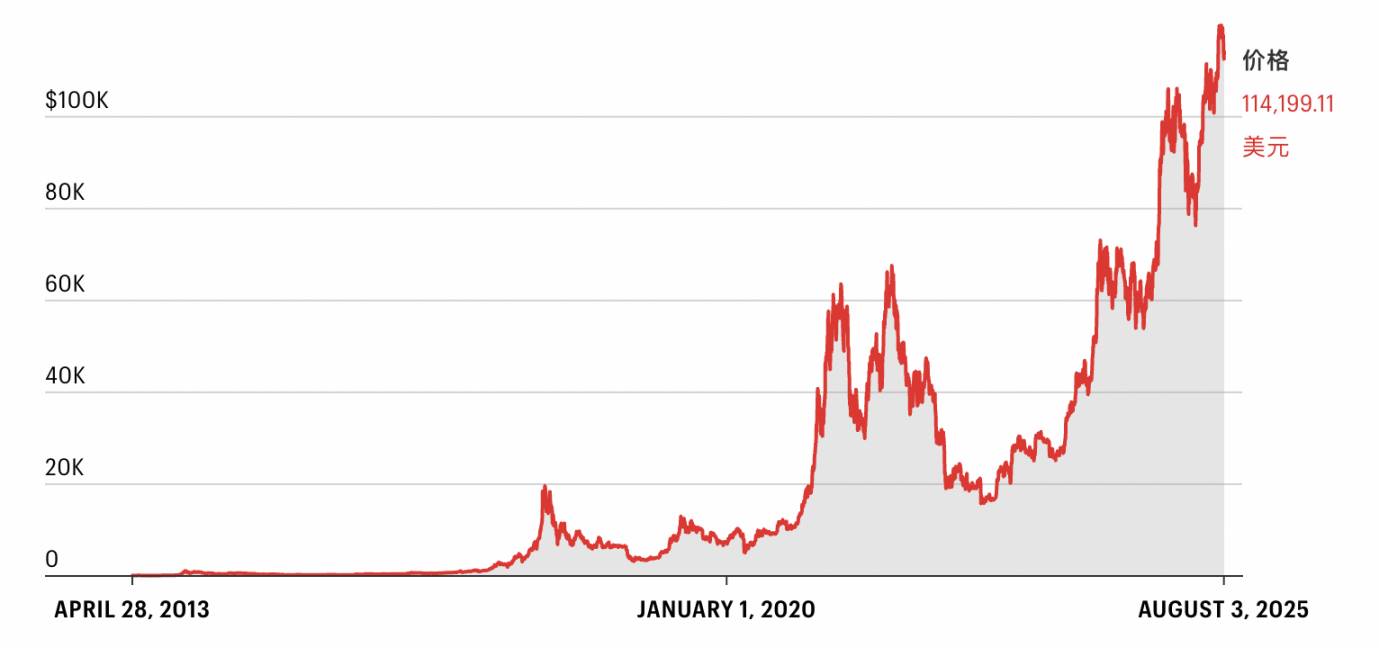
Bitcoin price performance since 2013. Source: CoinGecko
The Princeton "Mafia"
In the days before Wall Street penetrated the blockchain space, Morehead stood out in the chaotic early world of cryptocurrency. A dual-sport athlete at Princeton (football and heavyweight rowing), he still carries broad shoulders and a square jawline—a stark contrast to the skinny, eccentric figures who lived online. Instead, Morehead came from traditional finance, and still dresses in suits today.
Prior to discovering Bitcoin, Morehead already had a long trading career. After working at Goldman Sachs and Tiger Fund, he founded his own hedge fund, Pantera, which collapsed during the 2008 financial crisis. Around that time, a mysterious figure named Satoshi Nakamoto released a white paper online, introducing Bitcoin to the world.
In 2011, Morehead first heard about Bitcoin from his brother and vaguely knew that his Princeton classmate Gavin Andresen ran a website where users could earn five Bitcoins by solving CAPTCHAs (worth about $575,000 today). He didn’t pay much attention—until years later, when another classmate, Briger, invited him for coffee at Fortress Investment’s San Francisco office to discuss crypto, with Novogratz joining remotely. "From that moment on, I was hooked on Bitcoin," Morehead said.
Tech has its famous "mafias"—like the PayPal Mafia that went on to dominate the next generation of startups. In crypto, the "mafia" isn’t tied to a company but a university: Princeton has spawned some of the industry’s most influential figures. Briger and Novogratz are both key supporters of Pantera. Morehead even moved into spare space at Fortress’s San Francisco office. Briger maintains quiet influence in crypto and recently joined the board of Strategy, Michael Saylor’s $100-billion Bitcoin-holding company. Novogratz founded Galaxy, now one of the largest crypto conglomerates. Another classmate, Joe Lubin, became co-founder of Ethereum.
But in 2013, the idea that Ivy League grads active in high-end fields like private equity and macro trading would care about Bitcoin still sounded absurd. Briger told Fortune he first learned about Bitcoin from Argentine entrepreneur and early crypto enthusiast Wences Casares, with whom he shared a room at a Young Presidents’ Organization retreat in the San Juan Islands. Briger quickly saw the potential to disrupt global payment systems—a belief he still holds, despite thinking Bitcoin is still in its infancy. He compares Bitcoin’s promise to the internet, which enabled new forms of information sharing. "It’s tragic that the movement of money hasn’t kept up," he said.
After sharing the idea with Novogratz, they believed Morehead, with his foreign exchange market experience, was the right leader. When Morehead decided to dedicate the rest of his financial career to crypto, he repositioned Pantera as a Bitcoin fund open to outside investors. Both Briger and Novogratz joined as limited partners; Fortress Investment, venture firms Benchmark and Ribbit participated as general partners (later exiting). Julian Robertson, his mentor from Tiger Fund and legendary investor, also invested in a later fund.
Pantera’s Rebirth
In the noisy early days of cryptocurrency, entrepreneurs faced extreme market volatility—making today’s swings look mild. But according to Novogratz, the biggest problem wasn't price swings, but simply being unable to buy Bitcoin.
He once approached Coinbase, then just a year old, wanting to buy 30,000 Bitcoins worth about $2 million at the time. A pop-up window informed him his limit was $50. After consulting with Olaf Carlson-Wee, Coinbase’s first employee and later a prominent figure in crypto, the company raised his limit to $300.
Yet Morehead’s most admirable achievement may have been persevering through the 2013–2016 downturn. During those years, Bitcoin languished, ignored beyond a closed circle of blockchain enthusiasts. "During the quiet years for crypto, Dan was out there hustling," Novogratz told Fortune.
There were bright moments too, including three annual conferences Morehead hosted at his Lake Tahoe home. Once, Jesse Powell, founder of exchange Kraken, declined Morehead’s chartered private jet and drove instead. "Back then, several key figures in the Bitcoin community were flying together, and he worried that if the plane crashed, Bitcoin would die with them," Morehead recalled.
Unlike many peers, Morehead never positioned himself as a "Bitcoin maximalist" (someone who believes no other cryptocurrencies should exist). After acquiring 2% of the world’s Bitcoin supply, Pantera became an early investor in Ripple Labs, issuer of the cryptocurrency XRP. "My view was that Bitcoin is clearly the most important," Morehead said, "but there isn’t just one internet company."
According to Morehead, 86% of Pantera’s venture investments have turned a profit—an astonishing figure given that the vast majority of venture-backed startups fail. Crypto may be more forgiving: many projects hold cryptocurrencies, meaning investment value often persists even if the startup’s product fails.
Morehead now spends half the year in Puerto Rico, a growing crypto hub. Joey Krug, a former Pantera partner now at Peter Thiel’s Founders Fund, had moved there, prompting Morehead to follow. He estimates 1,000 blockchain entrepreneurs live on the island, though they’ve drawn scrutiny for driving up real estate prices. Morehead was investigated by the Senate Finance Committee over allegations that by relocating there, he improperly avoided federal taxes on over $850 million in capital gains from Pantera. Earlier this year, he told The New York Times he believes he "acted appropriately on taxes," but declined further comment to Fortune.
The Future of Bitcoin
Morehead acknowledges rampant gambling behavior in the crypto industry and says Pantera does not invest in meme coins like many VCs. But he argues this shouldn’t overshadow blockchain’s grand ambition to reshape global finance. "It’s absurd to try to destroy the entire blockchain industry because of some side antics," he said. "The GameStop incident doesn’t mean the entire U.S. stock market is flawed."
Pantera continues expanding, including raising a fifth venture fund targeting $1 billion. Morehead said fundraising will close after completing investments from the fourth fund later this year. Pantera is also entering the hot field of corporate digital asset treasuries, where public companies add crypto to their balance sheets.
But Bitcoin remains central to Pantera’s strategy. By the end of last year, its Bitcoin fund had delivered a 1,000x return, with cumulative returns exceeding 130,000%. When asked about Bitcoin’s future price, Morehead gives the same answer: double within a year. This simple model has largely worked, though he admits growth momentum may be slowing. He believes Bitcoin will rise another order of magnitude, approaching $1 million—though this would likely be the final 10x surge.
If Bitcoin never reaches that milestone, Morehead is prepared to face criticism. After all, in 2016, he was defending $500 Bitcoin. Less than a decade later, he feels he’s only just begun. "I believe the vast majority of institutions are only starting to believe in Bitcoin," he told Fortune. "We still have decades ahead."
Join TechFlow official community to stay tuned
Telegram:https://t.me/TechFlowDaily
X (Twitter):https://x.com/TechFlowPost
X (Twitter) EN:https://x.com/BlockFlow_News
 @FortuneMagazine