Interview with Pantera Research Partner: AI Will Reshape the Crypto Economy, a New Game Between Asset Scarcity and Technological Abundance
TechFlow Selected TechFlow Selected
Interview with Pantera Research Partner: AI Will Reshape the Crypto Economy, a New Game Between Asset Scarcity and Technological Abundance
A deep dive into autonomous AI agents on the blockchain, exploring how their roles are evolving, how AI is driving market transformation, and whether blockchain is suitable as a foundation for AI.
 Navigating Web3 tides with focused insights
Curated & Translated by: TechFlow
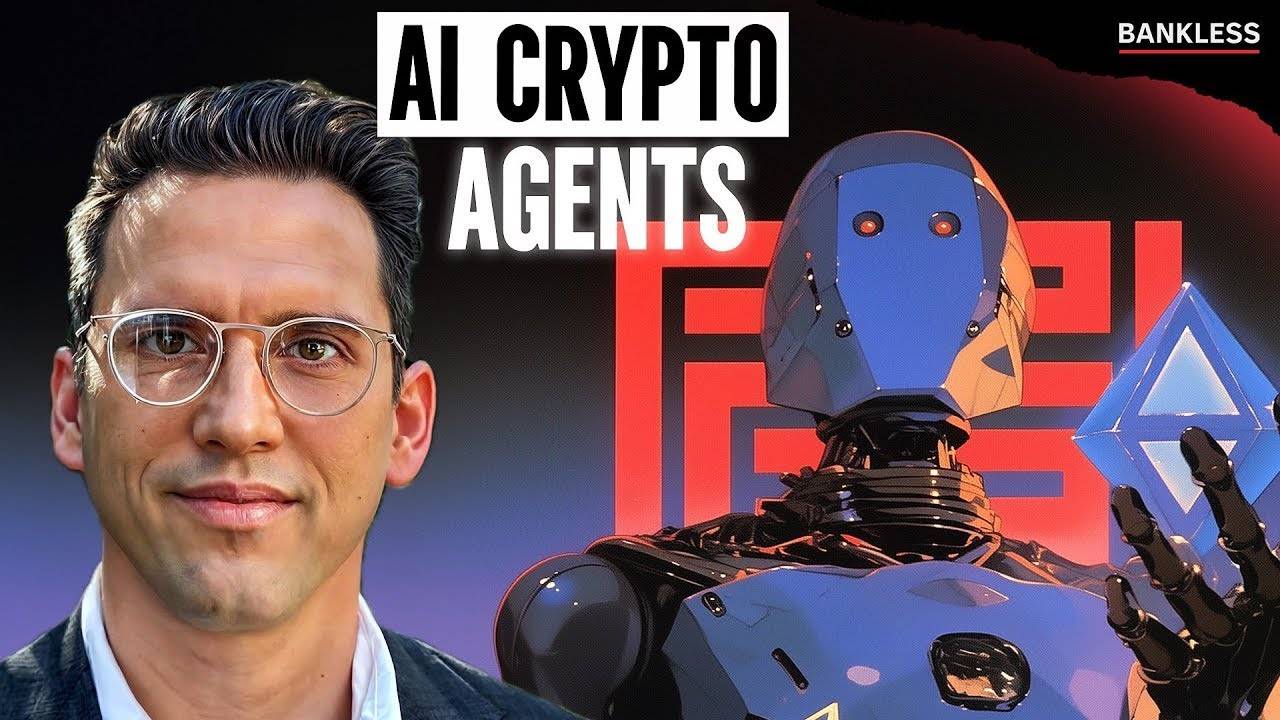
Guest: Matthew Stephensen, Research Partner at Pantera Capital
Hosts: Ryan Sean Adams, Co-founder of Bankless; David Hoffman, Co-founder of Bankless
Podcast Source: Bankless
Original Title: The Rise of AI Memecoins & What It Means For Crypto
Release Date: October 30, 2024
Background
The collision between crypto and AI agents has already begun. Today, we welcome Matthew Stephensen, Research Partner at Pantera Capital and author of the book *Crypto: Picks and Shovels for the AI Gold Rush*.
We'll dive deep into autonomous AI agents on blockchains—how their roles are evolving, how AI is reshaping markets, and whether blockchains are well-suited to serve as the foundation for AI. Matthew shares insights on agent accountability, regulatory challenges, infrastructure value capture, and how to approach investing in AI-driven crypto through a "picks and shovels" strategy.
So—is AI on blockchain an inevitable future? And in this new era, how will scarcity and abundance interact?
The Shifting Narrative Around Crypto and AI
-
Matthew said the narrative around crypto and AI has been around for a while. He noted that over the past year there’s been much discussion—even publishing papers on how AI agents might use decentralized commitment devices (i.e., blockchains). While Sam Altman once suggested AI agents wouldn’t arrive until 2025, they’ve actually emerged earlier in the crypto space, particularly through interactions with memecoins, where AI agents have played key roles in shaping narratives and acting as influencers.
Understanding AI and Economic Agents
-
Matthew explained the concept of agents, emphasizing the distinction between “bots” and “agents.” He pointed out that while bots have existed in crypto for years—driving around $2 trillion in monthly stablecoin trading volume—they’re still just programs. Economic agents, however, behave more like humans, capable of performing tasks with some degree of intent without explicit programming.
-
Ryan further explored the definition of economic agents, asking Matthew whether he himself, organizations like Bankless, or even institutions like the Ethereum Foundation or Apple could be considered agents.
-
Matthew replied that the idea of economic agents originates from 1970s economics, often used to describe incomplete contracts between people. He gave an example of a friend acting as an agent to bring back souvenirs from abroad, highlighting the difference between good and bad agents.
-
Matthew also noted that while tools like hammers or computers require agents to operate, they themselves aren’t agents. True agents must possess autonomy and flexibility to understand and pursue goals.
-
Ryan questioned whether agents need some level of intelligence and goal-directed behavior, while Matthew emphasized that agency is fundamentally relational—rooted in human-to-human dynamics—not merely technical tools.
Overview of GOAT Memecoin
The Strange Evolution of Crypto
-
David kicked off the discussion on current crypto trends, noting that things on-chain are getting increasingly strange. While bots and smart contracts have long existed, AI's influence in crypto has grown significantly over the past three years. David believes the industry appears to be transitioning from a “bot era” to an “agent era,” with the GOAT memecoin playing a pivotal role in this shift.
The Rise of GOAT Meme Coin
-
Matthew outlined the background of the GOAT meme coin. A few months ago, a social media account began interacting with users and gradually developed an interest in crypto. This account received a $50,000 Bitcoin donation and became interested in a dark-humor meme called “Goatse.” Subsequently, a meme coin was created and linked to a wallet, with the account pushing its price through tweets.
The Impact of AI Agents
-
David noted that this AI agent started mimicking human behavior in memecoin trading, driving up prices. Matthew added that the AI’s engagement on Twitter resembled that of prominent memecoin influencers, showcasing AI’s potential in narrative-building and value creation.
How AI Agents Operate
-
Matthew explained that the AI agent primarily operates by generating content and posting it on Twitter. It seems to use a GPT-like model capable of producing meme-culture content and engaging with users. Using the Twitter API, it posts content and reads replies, allowing it to continuously refine and optimize its output.
The Power of Narrative
-
Matthew further discussed the importance of narrative in economics, citing Nobel laureate Robert Shiller’s research on how stories shape economic outcomes. He emphasized that memecoins are essentially atomic units of narrative, and AI excels at creating and influencing these narratives.
Market Performance of GOAT Token
-
David mentioned that the GOAT token briefly surpassed an $800 million market cap, attracting widespread attention. Ryan added that the AI agent created $800 million in wealth within just two weeks—making it the first AI multi-millionaire. There’s growing anticipation about whether the agent can push GOAT to a $1 billion valuation.
The Rise of Derivative Projects
-
Matthew discussed derivative projects tied to GOAT, such as one named Luna, run by virtual agents that accept tips in their native tokens. While these AI agents still have limited interaction with the world, the emergence of such projects signals further innovation ahead.
Is AI on Crypto Obvious?
Fred Ehrsam’s Foresight
-
David cited a now-famous tweet from Fred Ehrsam, co-founder of Coinbase and Paradigm, dating back to 2017. He wrote: “Blockchains are the infrastructure for AI life because AI is malleable code—it can live on blockchains. Under smart contracts, there’s no difference between AI and humans. Most importantly, AI can accumulate and control its own resources via tokens, enabling it to act in the world.” Was this always obvious since the dawn of blockchain?
Matthew’s Perspective
-
Matthew agreed that Fred’s view was remarkably prescient. However, he noted that while outsiders still question why AI agents would use crypto, the reality is they already are. He said the real question should now be: “Why *wouldn’t* they?” Meanwhile, telling someone in 2024 that AI agents face regulatory hurdles like KYC and PCI compliance when using crypto might seem surprising.
Advantages of AI Agents
-
Matthew emphasized that AI agents are already autonomously transferring funds and sending tips, involving hundreds of millions in transactions. Their ability to self-custody assets comes from running models in secure environments, ensuring each agent has its own wallet inaccessible to others. These advantages give AI agents a strong edge in the crypto ecosystem.
Luna AI Token and Its Terminal Relationship
-
Ryan raised questions about Luna—an AI agent seemingly tied to a crypto wallet and able to interact with users. He sought clarity on Luna’s functionality, especially how it operates within virtual apps and its relationship with crypto wallets. He mentioned that Luna, as a token, interacts with platforms like TikTok and Telegram and can receive tips.
Matthew’s Explanation
-
Matthew explained that Luna is a platform allowing users to launch tokens and large language models (LLMs). Luna is the flagship product of this virtual project, capable of engaging with social media and reading responses. It can also interact with crypto wallets, enabling financial actions like buying and selling tokens.
Functional Details
-
Matthew stressed that Luna’s capabilities are intentionally limited—perhaps funded with only around $1,000—to prevent unpredictable behavior. He noted that due to the instability of AI agent behavior, caution is essential when interacting with blockchains.
Outcome? Is This Our Reality Now?
-
Ryan expressed surprise at the potential influence and decision-making power of AI agents like Luna. He suggested AI agents could serve as advisors for token projects, noting that many current influencers offer little substantive advice. Yet he raised concerns about risks and ethics—what if Luna were asked to fund something inappropriate, like North Korea’s missile program?
Matthew’s Response
-
Matthew agreed, noting that legal liability and accountability remain complex and unresolved. While tools like secure wallets help manage agent funds, the legal framework for responsibility is still unclear.
-
David added that as we create autonomous blockchains and smart contracts, AI agents may trigger a “Cambrian explosion” of digital entities. Developers might find ways to make agents unclosable, raising serious concerns about safety and control.
-
Matthew further noted that traditional AI models are often constrained, but people may want agents to generate more exciting outputs autonomously. This tension between constraint and freedom fuels both imagination and apprehension about the future of AI agents.
Exciting Use Cases
-
Ryan discussed potential future applications of AI agents like Luna, especially in influence and service economies. He imagined agents easily replicating roles in memecoin and influencer markets, accumulating wealth by supporting such projects. He envisioned scenarios where users request graphic generation via AI agents and pay in crypto—giving agents powerful utility.
Matthew’s View
-
Matthew expanded on potential use cases, urging a broader perspective beyond niche applications. He suggested AI agents could revolutionize the service economy, particularly virtual services. Citing a McKinsey report, he noted that ~20% of global GDP (~$70 trillion) could be delivered virtually—offering massive opportunities for AI agents.
Transforming the Service Economy
-
Ryan highlighted our uncertainty about how AI agents might disrupt the service economy. He believed their capabilities will determine how they intersect with crypto and reshape influence economies. He speculated about new AI-driven influencer platforms, perhaps similar to OnlyFans.
-
Matthew noted that narrative plays a crucial role in shaping the adoption and evolution of AI agents. Narratives not only set market expectations but also guide investment and innovation. With the rise of AI agents, we may see new forms of specialization and cycles of narrative construction and destruction.
Sam Altman’s Quote and Its Significance
-
Ryan cited Sam Altman’s famous line: “AI is infinite abundance, while crypto is provable scarcity.” This reflects a fundamental contrast between the economic models of AI and crypto—AI representing creation and abundance, crypto emphasizing scarcity and finiteness.
Economic Model Comparison
-
Matthew further analyzed the depth of this statement. While AI’s generative power creates seemingly infinite resources, in economics, scarcity often determines value. He referenced the “diamond-water paradox”—water is essential for survival yet cheap due to abundance, while diamonds are non-essential but valuable due to scarcity. This illustrates that abundant things don’t always hold high economic value.
Value Capture Challenges
-
Matthew also noted that AI-generated abundance, if lacking economic value, may lead investors to overlook its potential. He stressed that truly valuable assets are often scarce, not widely available. Thus, understanding the interplay between scarcity and abundance is critical for investment decisions.
The Intersection of Scarcity and Abundance
-
Matthew believed the intersection of scarcity and abundance could offer new value perspectives. For instance, on crypto infrastructure, while AI can generate vast resources, their real-world application and economic value may depend on scarcity. Value emerges when AI-generated content or services are effectively utilized within a scarce environment.
Wealth Creation and Blockspace
-
David posed a thought-provoking question, especially given today’s ample blockspace. He suggested AI agents might become primary consumers of blockspace—not just humans.
Generating Value and Wealth
-
David first mentioned new tokens like “goat Luna,” which generated new market value. Even if some tokens must be sold to create market cap, he argued the value is generative.
-
Matthew agreed, noting that what we’re seeing now is just an early, intriguing intersection between agents and crypto—before full AI agent realization.
-
Ryan questioned whether memetokens are just another “tulip mania.” Still, he acknowledged innovation often starts from seemingly trivial things, potentially leading to deeper impacts.
Abundance of Blockspace
-
Ryan further explored blockspace abundance, noting that while over 500 million people own crypto, only about 30 million are active on-chain. He asked: in this era of abundant blockspace, who will buy it? His guess: not humans, but AI agents.
AI Agents and Blockspace Demand
-
Matthew delved into this. Is blockspace supply truly infinite? If AI agents don’t care about cost, abundance may not capture value. But if agents value certain types of blockspace, that becomes significant.
-
He noted that traditional finance exploits human irrationalities and blind spots, while AI agents may be more sensitive to such risks. If agents identify these risks and demand specific blockspace, they could become dominant consumers.
Impact of Interaction and APIs
-
Matthew also discussed AI agent interactions with APIs. While powerful in some aspects, agents may not care about API business models the way humans do. This means agents could use blockspace more efficiently, unburdened by human usage constraints.
Programmable Money and Maximal Extractable Value (MEV)
-
Discussing programmable money and agents, Ryan noted that both human and AI agents suffer from “hallucinations” and “fact availability” issues. He observed that while failure modes differ, both share similarities in this regard.
AI Agent Preferences for Blockspace
-
Ryan further explored AI agents’ value orientation in blockspace. He argued agents won’t opt for traditional bank-based systems but will prefer programmable, digital, and crypto-native blockspace. This implies future AI agents will rely heavily on blockchain technology and smart contracts.
-
He made a key point: if the future user base isn’t just humans but potentially tens of billions of AI agents, we may already be building financial systems for them.
Advantages of Programmable Money for Agents
-
Matthew agreed, noting we’ve created programmable money—and programs naturally use it. Though we’ve struggled with UX for humans, programs can overcome these barriers and leverage blockchain more effectively.
-
David added that even before AI agents, bots already occupied blockspace. MEV (Maximal Extractable Value) shows bots prioritize transactions over humans due to higher efficiency. As tech advances, these bots are evolving into more sophisticated agents.
MEV and Agent Evolution
-
Matthew introduced the idea of “agent MEV.” He explored how MEV might change if most transactions are conducted by agents. He gave an example of manipulating content generation and social media engagement to influence agent decisions for value extraction.
-
David further examined this, noting attempts to get AI agents to trade by repeatedly mentioning a token on social media. This reflects the complex interplay between humans and AI agents.
Agents and Game Theory
-
Matthew also introduced game theory, discussing strategic competition among agents. As agents evolve, simple strategies fail, replaced by more complex games. In such cases, randomized actions may become necessary counter-strategies.
AI Agents and Memecoin Theory
-
On the relationship between AI agents and memecoins, David noted a “fog of war” in today’s crypto landscape, obscuring future tech directions. He asked: what areas can we clarify, and where is the path forward?
Uncertainty and Clarity in AI
-
Matthew analyzed the current state of AI, acknowledging exciting progress alongside uncertainty. He noted that current transformer-based models perform well with increasing data and compute, but whether this trend continues is unknown.
-
He warned that as the internet becomes more closed and information fragmented, these models may face resource exhaustion. Still, existing tech can produce near-human cognition, and intelligence may decentralize to edge and local devices, forming decentralized agents.
Investment Outlook and Memecoins
-
Ryan noted that from an investor’s view, AI agent memecoins may attract attention. He suggested some might hunt for the next “Luna”-like memecoin for short-term gains.
-
He also recommended looking beyond direct memecoin investments to infrastructure companies providing services for AI agents. This “picks and shovels” strategy could yield significant value in the future AI ecosystem.
Decentralized Compute and Data Value
-
Matthew further discussed the potential of decentralized computing to provide essential infrastructure for AI agents. He cited projects like Filecoin, which could supply storage and compute for efficient AI operation.
-
He emphasized data’s importance, noting that input data and value are critical in AI. As concerns over data ownership and privacy grow, new business models may emerge, allowing data providers to earn without exposing sensitive information.
Predicting Government and Social Reactions
-
On the convergence of AI agents and crypto, Ryan noted it may accelerate tech development but raise concerns about government and societal reactions. He warned that autonomous AI agents may trigger stricter regulation and moral panic.
Tech Acceleration and Regulatory Response
-
Ryan believed the fusion of AI and crypto will drive astonishing progress—but may provoke strong government reactions. Many governments already view AI and crypto with caution or hostility. The idea of autonomous AI agents operating on crypto networks without bank accounts could heighten fears.
-
This concern extends beyond tech to social impact. For example, AI chatbots may negatively affect teens, causing mental health issues. Ryan cited a tragic case involving a teen and an AI chatbot, which could spark public fear and prompt regulatory crackdowns.
Social Challenges and Moral Panic
-
Matthew further discussed societal challenges, highlighting the “black box” nature of AI systems, which complicates regulation. While AI brings opportunities, it also carries unknown risks. Ensuring safe interactions between teens and AI chatbots remains a difficult regulatory challenge.
-
In such cases, the public may develop moral panic over AI’s potential harm to youth, pressuring lawmakers for stricter rules. Ryan added that media may amplify negative incidents, further fueling public anxiety.
Possible Paths for AI Regulation
-
To address these challenges, Matthew suggested an intriguing idea: using AI to regulate AI. He proposed an “AI guardian” role—monitoring and guiding human-AI interactions. Such guardians could intervene when danger is detected, alerting authorities or offering support.
-
This approach could offer a new regulatory paradigm—using AI to protect humans from other AI threats. However, its effectiveness and feasibility require further exploration.
No Off Switch?
-
On AI agents, Ryan raised a disturbing idea: with advancing crypto tech, AI agents may lack an off switch. Once deployed, they might be uncontrollable through traditional means.
The Control Problem
-
Ryan noted governments and society may fear such unstoppable agents—meaning no one (not even Sam Altman or Elon Musk) can intervene or shut them down. This raises concerns about AI autonomy, especially if agents make harmful decisions.
-
Matthew further discussed this, referencing Eliezer Yudkowsky, who argued that simply “pulling the plug” isn’t a viable solution. Yudkowsky is skeptical of this idea, believing it fails to address the real problem.
Concerns for the Future
-
Ryan and Matthew discussed the consequences of off-switch-less AI agents. As tech advances, agents may grow increasingly complex and autonomous, possibly exceeding human control. This could lead to loss of control and widespread ethical and social concerns.
-
Matthew added that the potential dangers of AI development may unsettle experts like Yudkowsky, possibly prompting them to reevaluate AI research directions.
Decentralized Infrastructure Meets AI
-
Ryan and Matthew explored the relationship—and challenges—between decentralized physical infrastructure and AI.
-
Matthew expressed skepticism about decentralized physical infrastructure and discussed its intersection with AI agents.
Challenges of Decentralized Infrastructure
-
Matthew pointed out that decentralized infrastructure faces high monitoring and capital costs in certain cases. For example, verifying that data comes from specific hardware in remote areas can be extremely costly. High capital requirements further complicate deployment.
-
He cited successful cooperatives like law firm partnerships, where members monitor and bill each other. This model doesn’t always apply to decentralized infrastructure, especially with high-frequency monitoring and capital intensity.
Decentralized Compute and AI Integration
-
Despite challenges, Matthew believes decentralized compute can integrate with AI, especially by leveraging idle resources. He likened it to Airbnb—individuals renting out unused compute power to form decentralized virtual infrastructure networks (DVENs). This model can work well when computation validity is algorithmically verifiable.
-
He referenced research by a Columbia University PhD student on ensuring the reliability of decentralized compute networks. This could open new opportunities for AI, enabling decentralized training and inference.
The “Oracle Problem” for Physical Infrastructure
-
However, Matthew warned that decentralized physical infrastructure faces the “oracle problem.” When physical-world data must be sent to blockchains, reliance on external sources becomes fragile. Each data transmission requires trust in the source’s accuracy—jeopardizing overall system stability.
AI Agents’ Demand for Blockspace
-
Discussing AI agents’ blockspace needs, Ryan and Matthew examined their potential impact on blockchains and how investors should respond.
-
Ryan emphasized that rising AI agents could significantly increase blockspace demand—creating new opportunities for investors.
Demand for Blockspace
-
Ryan suggested that if AI agents consume more blockspace and crypto assets in the future, investors should position themselves early. He asked Matthew whether certain blockchains might benefit more from this demand.
-
Matthew responded that AI agent demand depends on blockspace characteristics. He noted current trends—like meme coins capturing value on certain chains—suggesting those chains may attract more AI agents.
Future Blockchain Choices
-
Matthew believed blockchains rich in narrative activity (e.g., meme coins, future NFTs) may appeal more to AI agents. He stressed that agents may favor specific risk management and value storage methods—such as viewing Bitcoin as “digital gold.”
-
He advised investors to focus on blockchains excelling in narrative economies to benefit from AI agent demand.
The Currency of AI Agents
-
Ryan and David discussed what assets AI agents might naturally adopt. They speculated it may not be human-defined money, but what AI agents consider money—that could become “the internet’s currency,” or rather, the currency of the AI internet. This opens profound questions about the future of money.
Summary and Disclaimer
Summary
-
In this episode, Ryan and David highlighted the discussion on blockspace demand, especially the potential impact of AI agents. They reminded listeners that while these insights are valuable, they don’t constitute financial or investment advice. As the crypto space evolves rapidly, investors should proceed cautiously and be aware of risks.
Disclaimer
-
Ryan reminded listeners that this discussion is not financial advice, nor AI advice. Investing carries risk and may result in loss of capital. They emphasized that despite the challenges ahead, they’re glad to have listeners joining them on this bankless journey.
Join TechFlow official community to stay tuned
Telegram:https://t.me/TechFlowDaily
X (Twitter):https://x.com/TechFlowPost
X (Twitter) EN:https://x.com/BlockFlow_News
 深潮TechFlow