CMC Research Head: The time for institutions to join the FOMO is now—ignoring Bitcoin may no longer be an option
TechFlow Selected TechFlow Selected
CMC Research Head: The time for institutions to join the FOMO is now—ignoring Bitcoin may no longer be an option
Institutions that once ignored Bitcoin may start to FOMO, reversing their previous stance and entering the market.
 Navigating Web3 tides with focused insights
* This article is exclusively authorized by CoinMarketCap for publication by TechFlow
On November 5, the United States re-elected Donald Trump as president. As a pro-crypto politician, Trump pledged to reduce regulation and accelerate Bitcoin's growth—after which Bitcoin hit a record high of $89,915 on November 12.
Bitcoin (BTC) has surged 114% year-to-date. The data sends a clear message: institutions that once ignored Bitcoin and missed out on this massive opportunity may now begin FOMOing—shifting their stance and entering the market. The question is no longer whether Bitcoin belongs in institutional portfolios, but rather: can you afford not to include it? From regulatory breakthroughs and ETF approvals to the ongoing development of Bitcoin’s infrastructure, the narrative has changed. Institutional FOMO could become the primary driver behind Bitcoin’s next price surge.
From Illicit to Institutional: The Stamp of Regulatory Approval
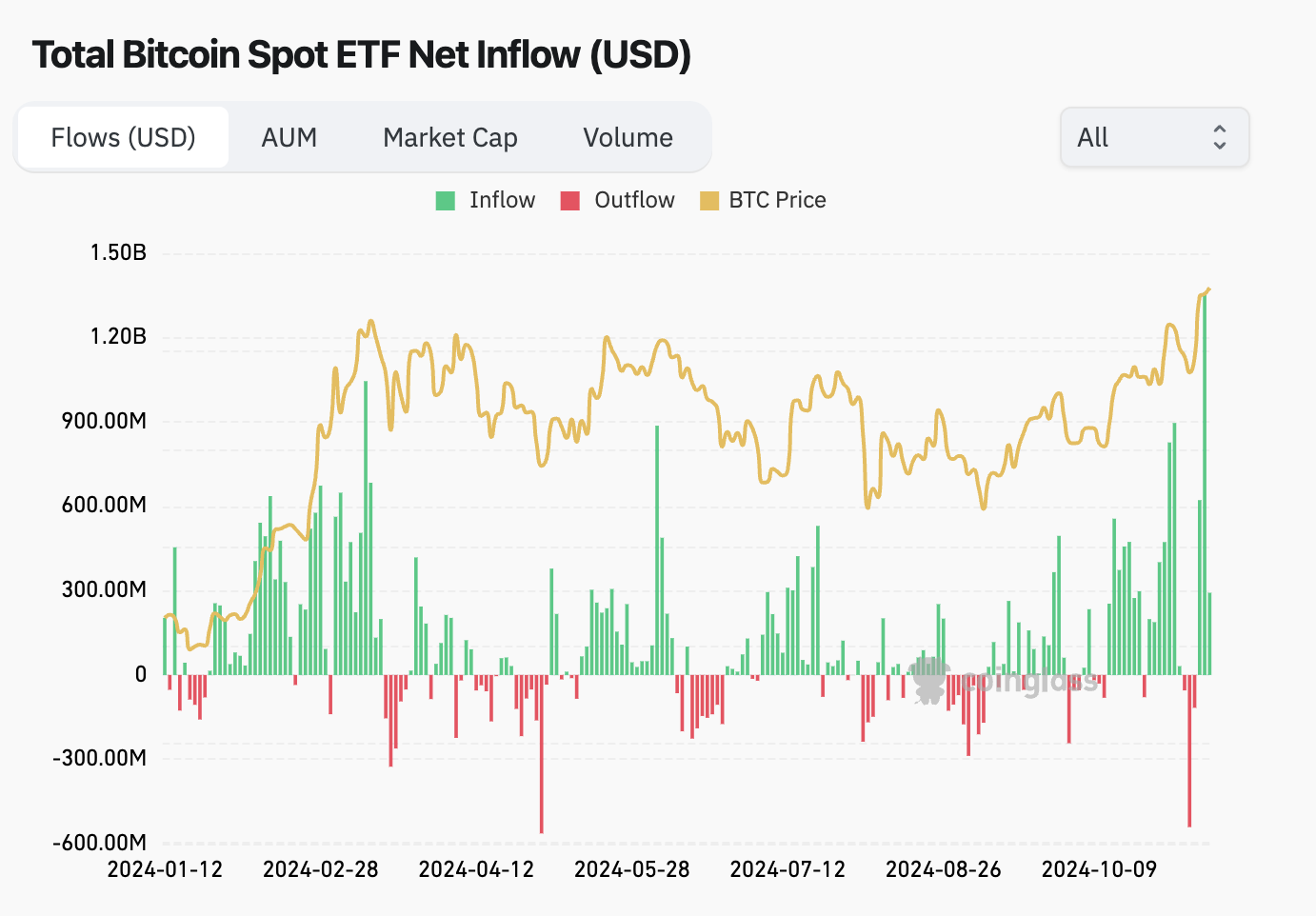
One of the main reasons institutions have avoided Bitcoin was its lack of perceived legitimacy. However, recent regulatory approval of Bitcoin ETFs has fundamentally shifted this view. Institutional interest in Bitcoin is also clearly rising—BlackRock’s iShares Bitcoin Trust (IBIT) remains the top product in terms of inflows among new launches.
Beyond the U.S., global markets for digital asset ETFs are expanding. Products launched and maturing in regions such as Hong Kong, Australia, Canada, and Europe have solidified Bitcoin’s position within regulated global markets. Each ETF provides a framework that elevates Bitcoin from a speculative asset to an officially recognized asset class.
Debunking the Intrinsic Value Argument
For years, critics have claimed Bitcoin lacks intrinsic value. Yet substantial investments in research and educational resources across the blockchain industry have gradually led institutions to accept Bitcoin’s evolving role. Publications, think tanks, and education centers are deepening understanding of Bitcoin’s potential. More institutions now recognize BTC’s “digital gold” properties and use it as a hedge against inflation and traditional market volatility. Blockchain’s on-chain transparency offers advantages unmatched by traditional Wall Street assets—every transaction is visible and traceable, providing a level of transparency absent in many conventional investments.
The New Frontier: Digital Gold and Payment Functionality
Bitcoin’s role in the financial ecosystem has far surpassed that of a purely speculative asset. With advancements in Bitcoin’s infrastructure—including Layer 2 solutions and the Lightning Network—its capabilities as both a store of value and medium of exchange have been enhanced.
Additionally, two key developments in Bitcoin’s ecosystem in 2024—BTCFi and the inscriptions/runes trend—highlight Bitcoin’s expanding utility. BTCFi, in particular, represents a new class of financial products built around Bitcoin, directly linking DeFi functionality to BTC. It enables the issuance and transfer of fungible and non-fungible assets on the Bitcoin network, either via the Bitcoin mainnet or its Layer-2 solutions. This broader usability strengthens Bitcoin’s appeal as an innovative asset with real-world applications, aligning with both retail and institutional interests.
Volatility Concerns? Comparing Bitcoin with Tech Stocks and Traditional Assets
Bitcoin’s volatility remains a concern, but recent data paints a more nuanced picture. When comparing Bitcoin’s volatility and returns with those of tech stocks, Bitcoin appears more stable than commonly perceived.
Sharpe Ratio Comparison: Bitcoin vs. Traditional Assets (5-Year Timeframe)
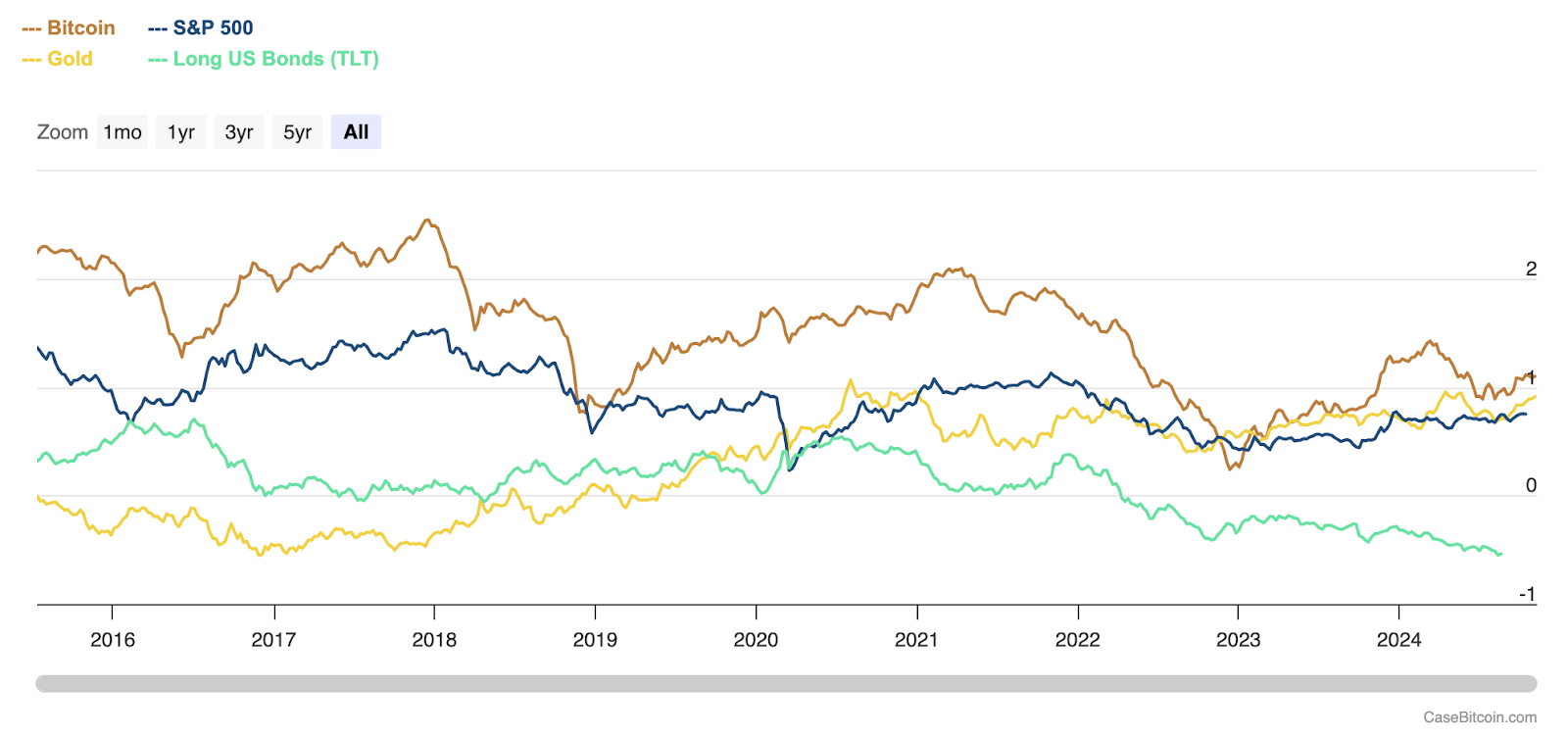
Charts comparing Bitcoin’s price performance with traditional assets show that as Bitcoin evolves into a financial instrument, its volatility levels appear increasingly attractive. Moreover, its risk-adjusted returns—measured by the Sharpe ratio—typically outperform traditional assets. In today’s market environment, marked by macroeconomic challenges and geopolitical uncertainty, finding assets with such return potential is becoming increasingly difficult.
Bitcoin’s price volatility is increasingly seen not as a drawback, but as an opportunity—one that offers portfolio diversification benefits unmatched by traditional assets.
Institutional Accessibility: Growing Entry Pathways to the Market
The excuse that institutions face difficulty accessing Bitcoin no longer holds.
First, institutions can now directly hold Bitcoin through institutional custody solutions. Companies like Coinbase Custody and Fidelity Digital Assets have significantly expanded their institutional custody services, offering secure storage options tailored to institutional needs. These custodial services meet regulatory standards, reducing institutional concerns about the risks of storing digital assets.
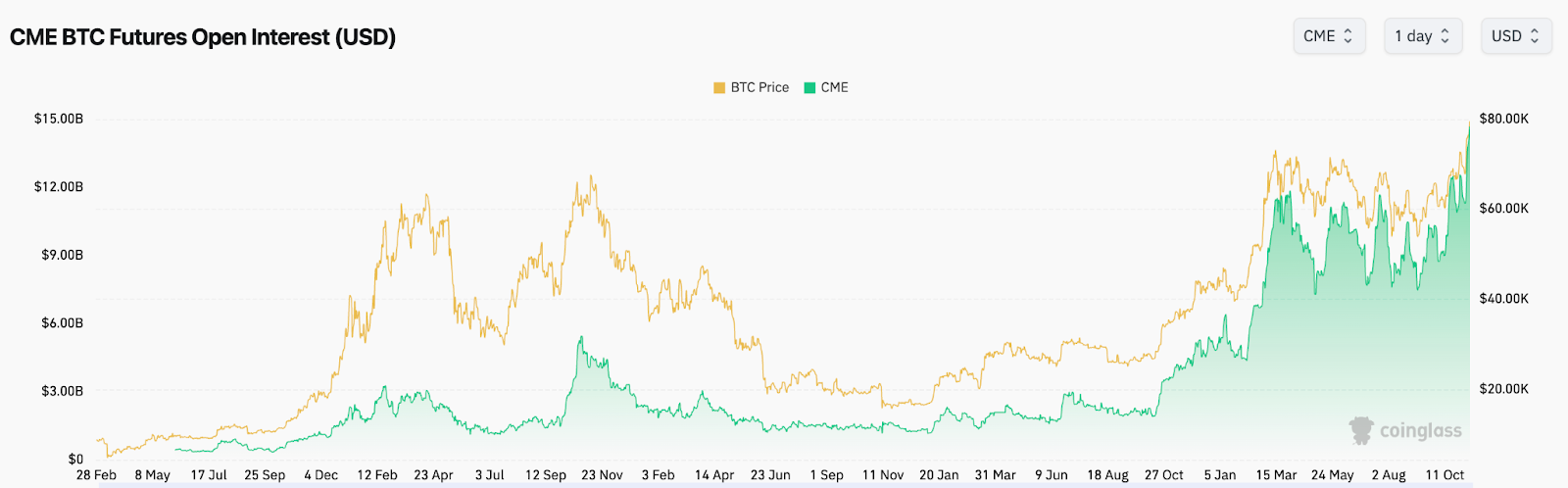
Second, institutions can invest via Bitcoin derivatives. The Bitcoin futures market is now fully institutionalized—CME’s Bitcoin futures open interest recently hit a record high of $14.6 billion. Institutional investors now have ample tools to hedge or speculate within regulated environments, while both long and short products offer strategic flexibility.
Third, institutions can invest through ETFs. Spot Bitcoin ETFs have now been approved in the U.S., Hong Kong, Canada, Australia, and European markets, providing simplified and regulated access. From large asset management firms to consumer-facing investment platforms, these vehicles meet diverse investor demands.
Reassessing Institutional Stance: Can You Still Confidently Reject Bitcoin?
Institutional portfolios have long avoided Bitcoin due to concerns over legitimacy, intrinsic value, accessibility, and volatility. But these arguments have been systematically addressed. ETFs have institutionalized Bitcoin; research and education have broadened recognition of its value; custody solutions and financial products have improved accessibility; comparative data confirms its viability as a high-return asset.
The ultimate question is: do the old reasons for rejecting Bitcoin still hold? We’ve reached a watershed moment—those institutions entering now will become key drivers of Bitcoin’s next upward move, while those holding out will remain on the sidelines, missing a critical opportunity to get onboard.
Bitcoin’s journey from fringe asset to institutional-grade investment has been fueled by rapid growth, robust infrastructure, and increasing real-world applications. As sovereign wealth funds, pension funds, major banks, and institutional investors consider their next steps, ignoring Bitcoin may no longer be an option. The era of institutional FOMO has arrived: embrace this shift, or risk being left behind by the market.
Institutional FOMO: The Driving Force Behind Bitcoin’s Next Rally?
As Bitcoin gains legitimacy, strengthens its infrastructure, and expands market access, growing institutional interest is triggering a FOMO-like phenomenon. When institutions enter, they often do so at scale—and that could drive significant upward pressure on Bitcoin’s price.
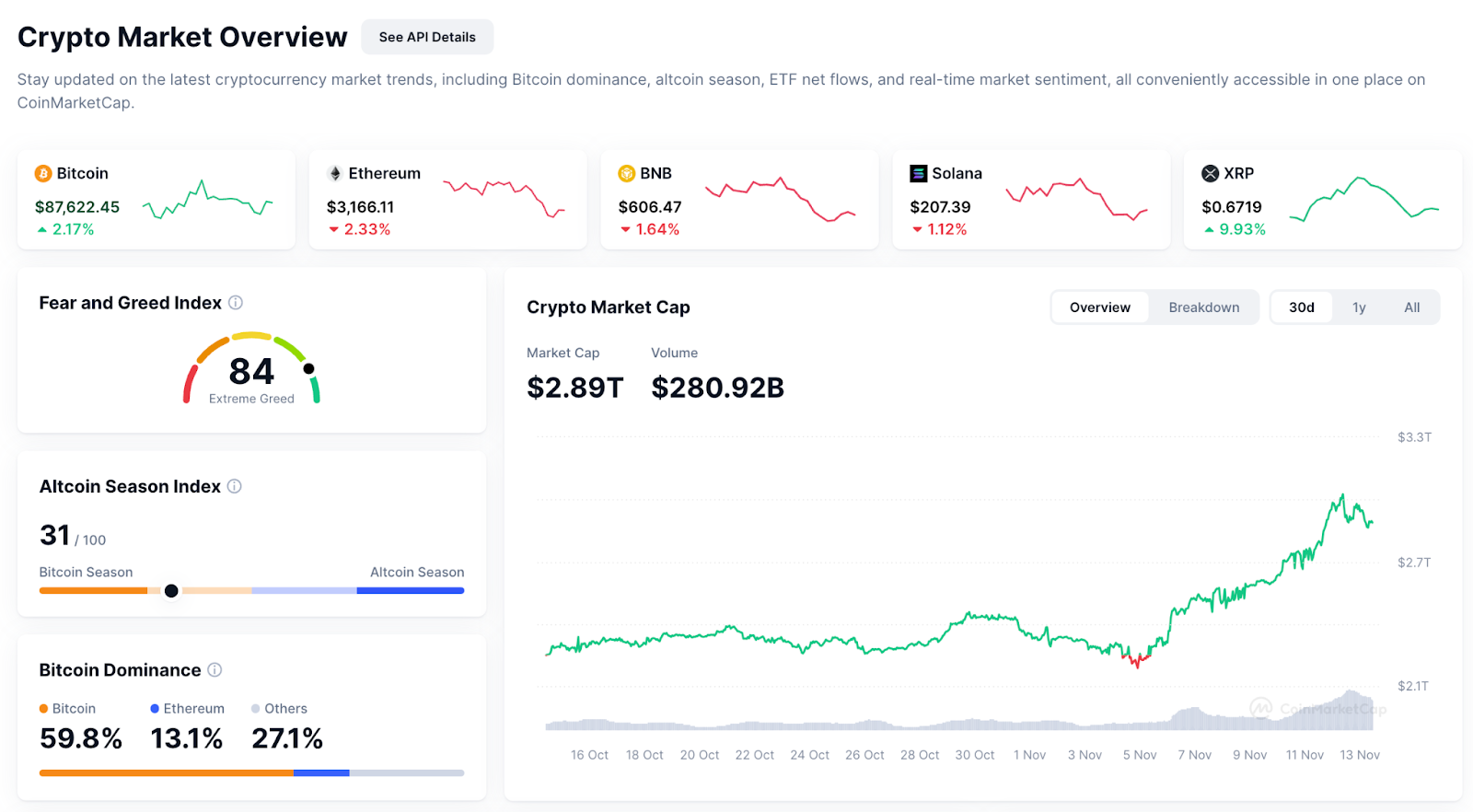
Historically, Bitcoin’s halving cycles correlate with price increases. A potential rebound could push Bitcoin above $100,000, possibly by year-end. With new administrative policies taking effect in January, further regulatory clarity may catalyze participation from sovereign funds, pension funds, major banks, and other institutional investors.
Join TechFlow official community to stay tuned
Telegram:https://t.me/TechFlowDaily
X (Twitter):https://x.com/TechFlowPost
X (Twitter) EN:https://x.com/BlockFlow_News
 @AliceCrypto3