ZuConnect Innovation Journey: Prelude to a Shift in Mindset
TechFlow Selected TechFlow Selected
ZuConnect Innovation Journey: Prelude to a Shift in Mindset
How to balance openness and community quality?
 Navigating Web3 tides with focused insights
Author: @ivyFanshao
ZuConnect is back, and I can hear the prelude to a shift in thinking.
Held two weeks before DevConnect, ZuConnect was an extension of Zuzalu—an ephemeral pop-up city. The participant profile could be summarized as a diverse, high-caliber community of 300 people from varied nationalities and industries. Bringing such a group together in Istanbul—a beautiful yet complex city—naturally creates magical chemistry. The participants and location themselves were already excellent raw materials, requiring little additional refinement.
Below are some observations from a participant's perspective.
- Understanding the World Through Diverse Perspectives
On this trip, I intentionally interviewed seven friends from different countries (Argentina, Bolivia, Ghana, Vietnam, Turkey, Serbia, Switzerland) through the lens of payments and finance, aiming to write a geographical study on crypto adoption.
Two stood out particularly. Both had previously launched crypto wallet startups in Argentina and Ghana, respectively, and later transitioned into education—running offline developer communities or online Spanish-language courses. Clearly well-trained in critical thinking or holding advanced degrees, when I asked them to outline their local economic/financial systems, they began with broad geopolitical contexts and gradually unpacked topics like foreign exchange and financial infrastructure, presenting a tightly structured logic of "phenomenon → problem → solution." When they showed me local payment tools commonly used (like Belo and USSD mobile money), I was repeatedly stunned—my imagination of the world was being rewritten. No matter how limited the resources or underdeveloped the infrastructure, every region has its own remarkably ingenious ways of solving problems. One cannot help but marvel at human resilience and the wisdom sparked by adversity—people will always find a way forward.
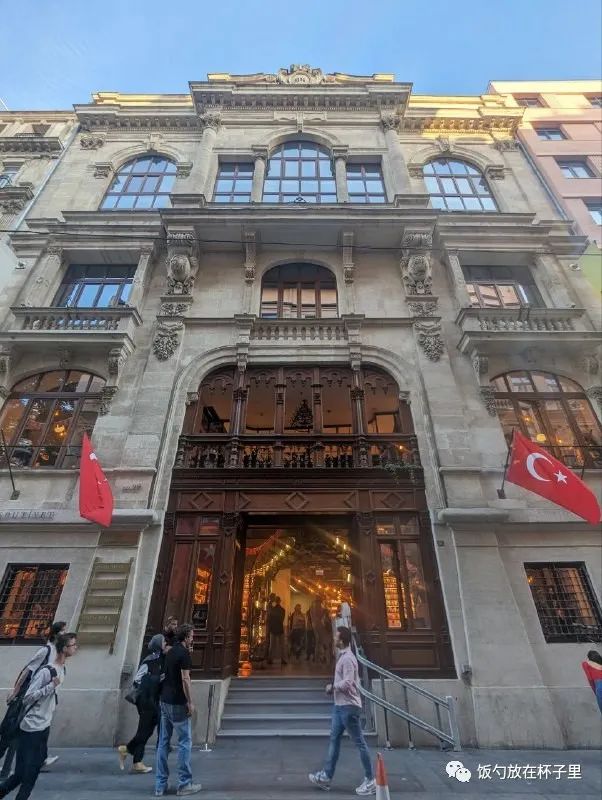
Image: ZuConnect venue—a five-story mixed-use building (bookstore + restaurant + co-working space)
- The East-West Education Divide: Static Closed Input vs. Dynamic Socratic Dialogue
My first cultural shock came during a forest hike with five zuzalians from different countries and professions—one researching biotech longevity, others passionate about philosophy and archaeology, or working on privacy projects. Their conversations were dense, frequent, mutually stimulating, and seemingly endless. They ranged from UFOs and Area 51 conspiracies to biotechnology, clone humans, politics, Bob Dylan, archaeology, data privacy, and how human societies function. With each new perspective, the dialogue evolved, growing more energizing as it progressed. Of the five in the car, three had no mobile data—and it didn’t matter at all. They could go nearly the entire day without touching their phones, fully engaged with each other. I struggled repeatedly to resist pulling out my phone to check feeds and fill mental gaps. By day’s end, my phone still had 70% battery left.
Another intellectual jolt came during a global workshop discussing how to design crypto products for Ethiopia, Argentina, and Turkey. The attendees’ backgrounds resembled a United Nations: Middle East, South Africa, West Africa, Latin America, Turkey, Eastern Europe, UK—and I was the only East Asian present. What struck me most was that participants confidently and logically voiced strong opinions even without full context, naturally entering a debate-driven learning mode. Meanwhile, I realized my mind was filled with information—but no viewpoints. I could only express ideas after carefully preparing them in advance; I couldn’t think aloud or engage in real-time, multi-round dialogues. This wasn’t about language—it was about lacking training in thought itself.
For example, when discussing Africa’s development, a participant from Ghana said: “They don't care about democracy, but basic life quality, including food, drink, living shelter. Humans must survive.” He also expressed approval of China’s rise model.
This immediately triggered widespread follow-up questions. Someone cited a Turkish economist’s view: For prosperity, citizens need “inclusive institutions” to create a virtuous cycle of “innovation, economic expansion, and broader property rights.”
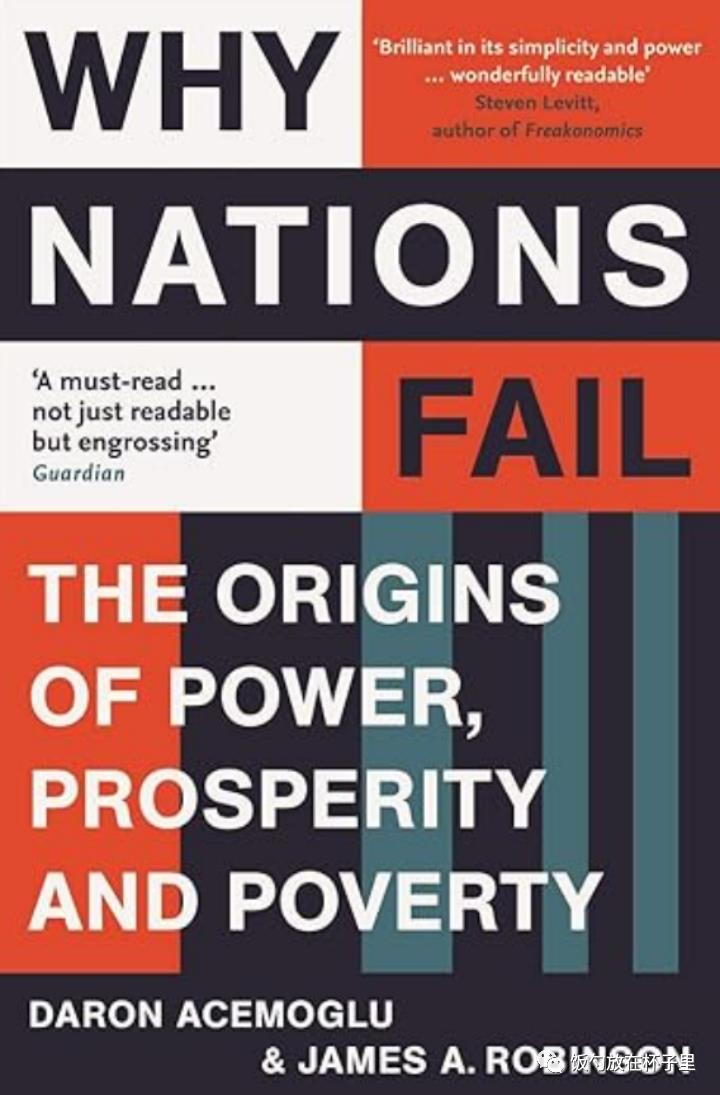
Source: Why Nations Fail (Daron Acemoğlu): The Origins of Power, Prosperity, And Poverty
Depth of knowledge about Africa didn’t stop anyone from forming and sharing strong views—the conversation flow gradually revealed each person’s logical and dialectical thinking process. Had time allowed, they might have continued questioning and exploring indefinitely. To my dismay, I found myself utterly lacking in dialectics. Like Gimmy and Gu Mao have described, when faced with conversational or debate-style exchanges, I often go silent.
- Discovering Blind Spots Through Diverse Lenses
When the topic shifted to “useful products and success stories,” people brought up a company I hadn’t expected: Binance.
Participants from Africa, Vietnam, and Latin America highlighted Binance’s strengths—they noted the company invested heavily in regional insights and pragmatically delivered products people actually needed, rather than promoting abstract concepts users didn’t care about. This created a win-win: platforms earned trading fees, while users gained financial freedom.
"People don't care about self-custodial, they don't give you a shxx"
"People care about how to transfer money cross-aboard easily."
An Argentine participant pointed out that Binance sold hope and dreams—for instance, one ad said, “Earn salary as a kindergarten teacher by day, earn trading income as a crypto trader by night, 7x24.” It marketed an appealing idea: ordinary people in regular jobs could become traders and make money too.
Image: Binance ad—Argentine entrepreneur contributing to financial freedom in Latin America via Binance P2P
A participant from Africa emphasized that Binance focused on local needs—property ownership and financial freedom—conducting extensive education and outreach. In Nigeria, for example, they taught locals practical ways to achieve financial autonomy in the post-pandemic economic downturn. Telegram community moderators often say: Your money won’t disappear.
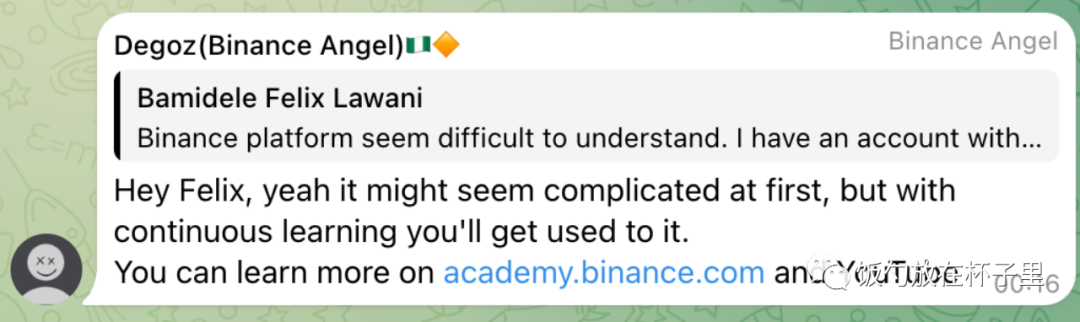
Image: Binance’s local community ambassadors are called “Binance Angels,” not “Ambassadors”—a subtle but powerful nuance, evoking a sense of divine salvation.
As others discussed Binance’s success, I once again felt the weight of linguistic bias. People from the Middle East, South Africa, West Africa, and Latin America had deeply studied Binance’s achievements, yet the Chinese-speaking world has barely analyzed or reported on this industry-wide printing press (prior to CZ stepping down as CEO)—which is deeply strange. A key reason may be “native language bias”: we see Binance as a domestic exchange and CZ, with his Chinese heritage, as somewhat one of us—thus treating him with a “level gaze.” We tend to study those we look up to, while ignoring those we see as equals or beneath us. Hence, Binance became the elephant in the room that we overlooked.
- Insight: How Is Self-Discovery Possible?
In consumer society, people care about others’ opinions and act to conform to social norms—everyone is subject to some degree of discipline. Discipline acts like a stone pressing down on a sapling. Only when the stone is removed can the young tree grow into its true shape—that is the process of self-discovery. When a community is inclusive and diverse enough, you no longer feel like a freak; you feel safe, free to do things you’ve always wanted but never dared, even finding others who join and embrace your quirks. You feel seen, your identity affirmed. The role of experimental communities is to remove that disciplinary stone, allowing human nature to grow freely, encouraging everyone to leverage their skills and passions for greater impact. Looking back months later at my experience in Shanhaiwu that August, I finally recognized that “removal of the stone” process.
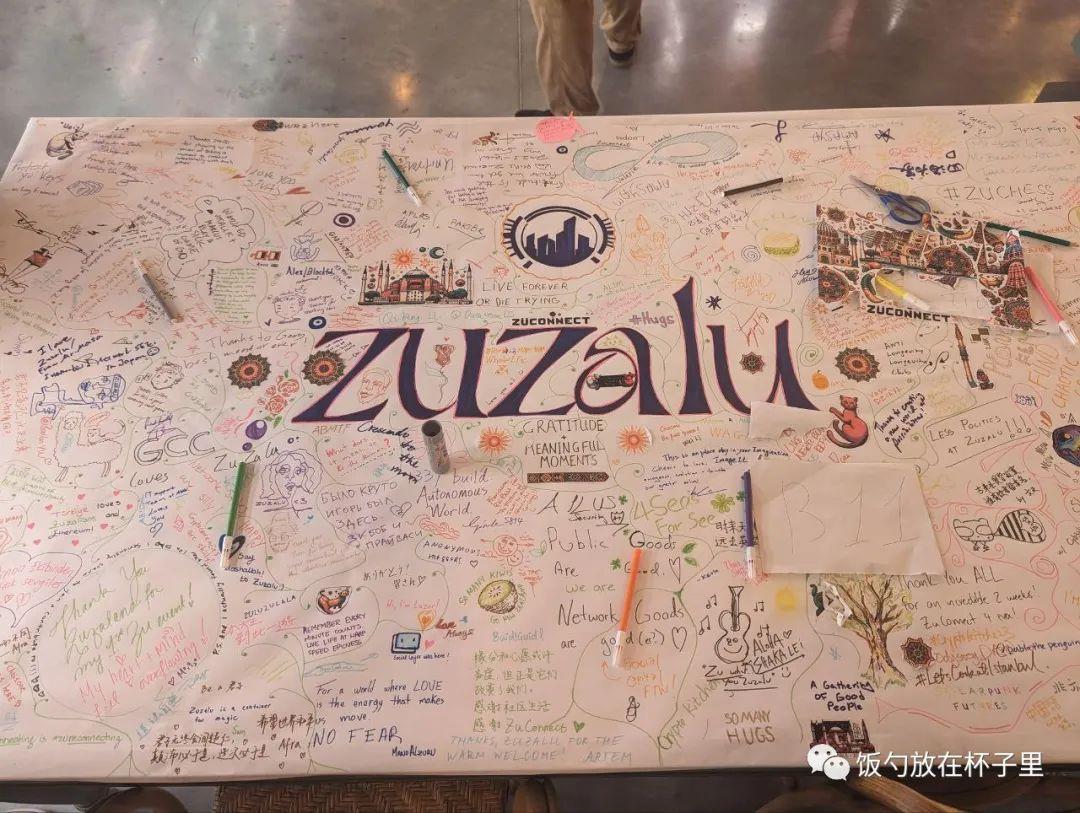
Image: Collaborative canvas by zuzalians
ZuConnect gave me more opportunities to initiate “insightful discussions,” learning from Gary and Chance how to think through writing—practices that help clarify thoughts, turning vague feelings and ideas into coherent, structured text.
Pop-up Cities Are Not New—How to Balance Openness and Community Quality?
Withdrawing into the mountains for two weeks of closed-door discussion isn’t new—the Bohemian Club has been doing it since 1872.
The Bohemian Club, based in San Francisco, holds a two-week summer camp every mid-July at the Bohemian Grove in Monte Rio, California. Members conduct Masonic-style secret rituals and discuss major economic and political issues. The club strictly forbids members from disclosing discussion topics or activities. Former U.S. President Herbert Hoover once called it “the greatest men’s party on Earth.” It was founded in 1872.
Yin Ge, Official Account: Intellectual honesty
Billions S07E08 The Owl—Bohemian Club, a must-watch episode
At the ZuConnect governance meeting, participant selection criteria became a central and controversial topic. In truth, if we truly begin filtering for elites, the community risks becoming indistinguishable from the Bohemian Club. Yet high-quality communities inevitably involve high barriers—selection reduces entropy, while “permissionless” access increases it, heading in the opposite direction. How should openness and community quality be balanced? Perhaps we cannot pursue both contradictory goals within a single community—but we can have many pop-up cities scattered across the spectrum, each reaching toward one extreme.
Join TechFlow official community to stay tuned
Telegram:https://t.me/TechFlowDaily
X (Twitter):https://x.com/TechFlowPost
X (Twitter) EN:https://x.com/BlockFlow_News
 @ivyFanshao