Interview with Houston Harpp: How to Easily Create Compelling Web3 Products?
TechFlow Selected TechFlow Selected
Interview with Houston Harpp: How to Easily Create Compelling Web3 Products?
By using the product I was personally responsible for designing, I truly understood the complexity of cryptocurrency trading and the essence of similar products.
 Navigating Web3 tides with focused insights
Author: Yujing
Houston Harpp, founder of 021 and product designer, has a frontend development background and over 15 years of professional experience. He specializes in building initial MVPs for early-stage startups and providing ongoing support, with expertise in designing user interfaces for mobile and web applications. His design philosophy centers on emotional resonance and user satisfaction, characterized by refined craftsmanship and minimalist aesthetics.
Prior to this, he led the design team at Coinbase Wallet, making significant contributions to enhancing the security and accessibility of web3 wallets. Before joining Coinbase, he served as Head of Design at BitPay, advancing innovation in blockchain-based payments.
Before diving into various Web3 projects, Houston worked as an independent designer, creating products for startups, venture capital firms, agencies, and enterprises including IBM, CDC, Spark Capital, Turner Broadcasting, and Georgia Institute of Technology.
In this episode of Moonshot Mafia, we welcome Houston Harpp from BitPay and Coinbase Wallet to discuss his insights on Web3 product design and share personal experiences navigating the highs and lows of the cryptocurrency world.

1. A Crypto Product Designer’s Journey
By using the very products I helped design, I truly grasped the complexity of crypto transactions and the essence of such tools.
Harry Zhang:Could you briefly introduce your experience in Web3 and product design so far?
Houston Harpp:
It all started around 2009 when I was working in general tech. I first did some projects at CDC, then became a consultant at IBM, and also spent time in the broadcasting industry. These experiences sparked my deep interest in internet technologies.
In 2014, I collaborated with an organization on startup projects in New York, which gave me profound insight into how startups operate. After that, I began exploring cryptocurrency and engaging with various fintech companies in the crypto space. Eventually, inspired by a friend, I joined BitPay, a local Atlanta company. At the time, BitPay was a key player in Bitcoin payment processing.
When I first joined BitPay, however, I knew almost nothing about Bitcoin—how it worked, fintech, or even banking. Everything was completely unfamiliar to me, but it was during those years at BitPay that I gained invaluable learning experiences.
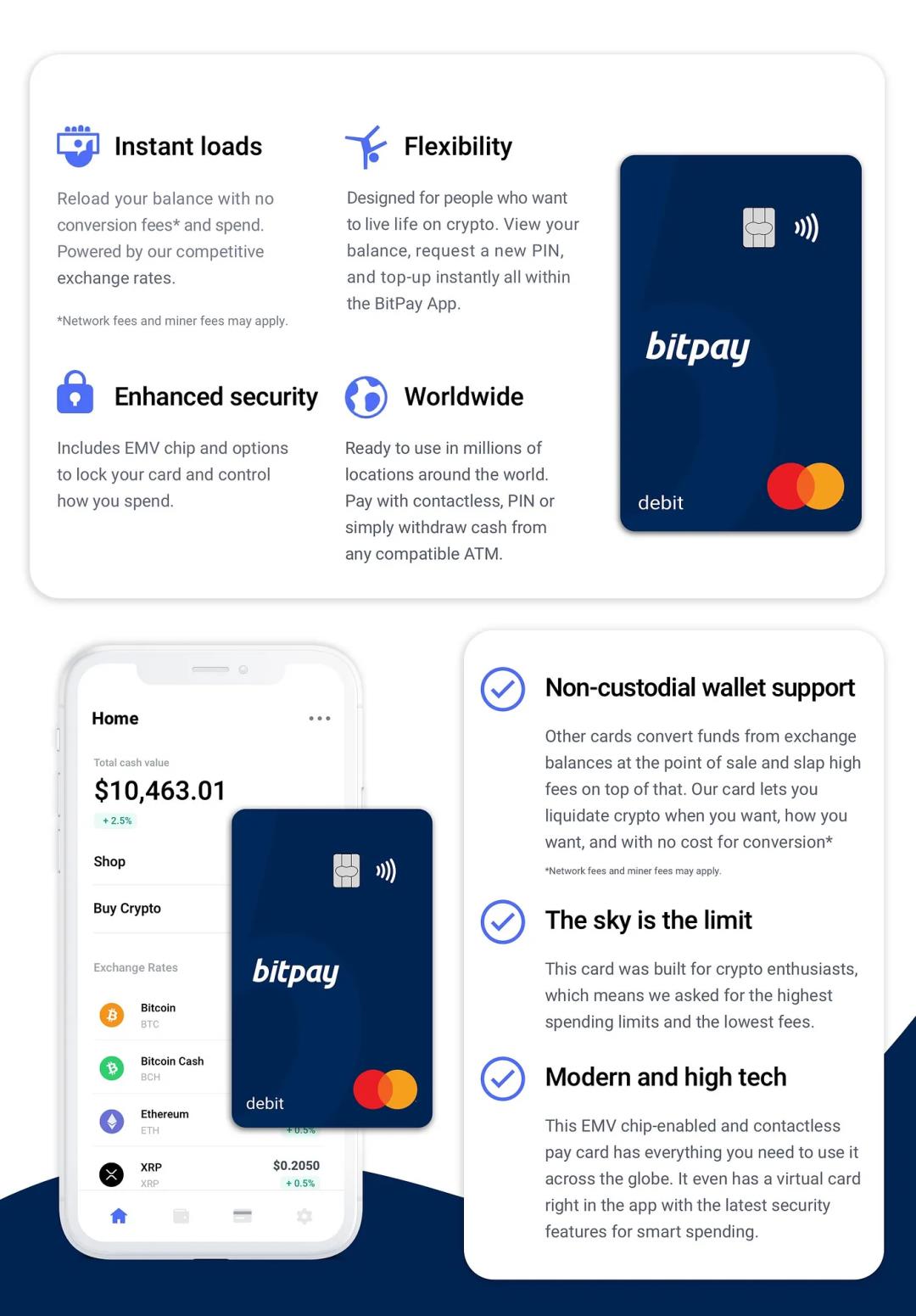
My primary task was developing an open-source wallet called Copay. Following that, I built other payment tools like cryptocurrency invoices and debit cards. In fact, BitPay became the first company to issue a crypto-linked debit card. I stayed at BitPay for seven years, from 2015 to 2021.
After 2021, I moved to Coinbase, where I led the design of a new wallet extension—the company's first ground-up product, which laid the foundation for a redesigned mobile wallet. Later, I also contributed to wallet security design.
Harry Zhang:I remember back in 2015, the crypto ecosystem was still in its infancy. What gave you the conviction to go all-in on crypto so early?
Houston Harpp:
First, I believe that as a product builder, I should be a user of the product myself. When I entered crypto, I was completely new—I didn’t even know how to get Bitcoin. So my only path forward was to start learning and using these tools firsthand.
Second, Bitcoin’s price at the time was quite low—around $200 compared to today. It wasn’t a massive investment, so taking some risk felt worthwhile.
For these reasons, I didn’t just approach it from an investment perspective—I dove in practically. By using the products I was responsible for designing, I truly understood the complexity of crypto transactions and the core nature of these tools.

2. Milestones in the Evolution of the Industry
Only time will tell. For now, there’s still much work ahead.
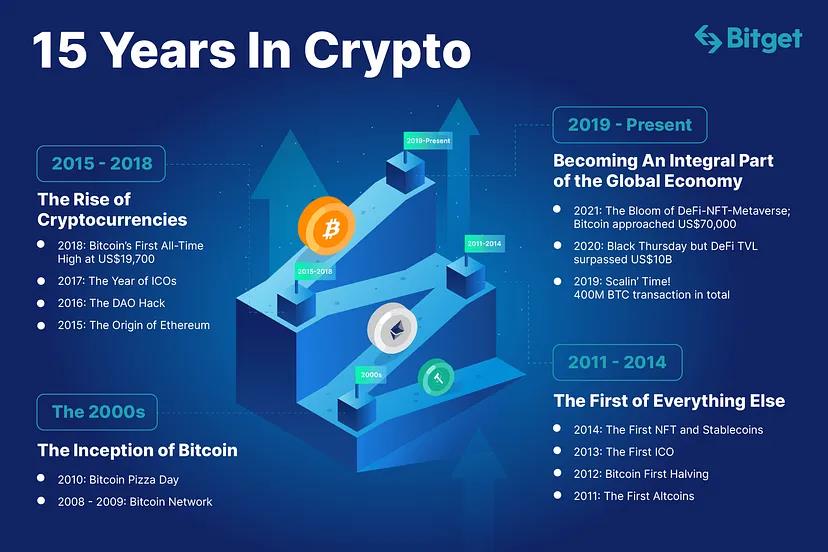
Harry Zhang:From your perspective, how has the industry evolved between 2014 and 2023? What major milestones or shifts have you observed during your tenure?
Houston Harpp:
Today we see many improvements, but like any emerging field, everything felt very primitive in the early days.
First, blockchain wasn’t fast. While it might have seemed quick for early adopters, as more people joined, scalability became a real challenge—speed, efficiency, privacy, and other core issues demanded solutions. Over time, we’ve seen various Layer 1 blockchains emerge to address what Bitcoin alone couldn’t solve.
Additionally, user expectations keep evolving. Every year brings new users into crypto, each with different levels of familiarity with Web2 (traditional internet). These include investors, early adopters, and newcomers exploring for the first time. For example, a young person encountering blockchain for the first time faces different challenges than someone who’s spent decades in traditional finance—they may struggle to understand how blockchain works at all.
Overall, both blockchain technology and its user base continue to evolve. Each year brings new expectations and a desire to build a better environment. Since I entered the space, I’ve seen the overall landscape improve significantly—blockchains are faster, more sophisticated, and there are more tokens than ever before. I believe many more use cases remain to be discovered. There’s still much to do, but at least we’re moving forward steadily.
Harry Zhang:How do you compare the current bear market sentiment with previous ones (2015, 2017, 2021)?
Houston Harpp:
I think macroeconomic factors beyond Web3’s control are among the biggest drivers of the current bear market.
The feeling is similar to past bear markets—typically after a surge of new users enters, negative events occur: exchange hacks, critical bugs, or large-scale frauds. These incidents can shift public perception. Some people say, “Wait, this tech isn’t fully ready yet,” and pause their investments. Right now, we seem to be going through something similar—just on a larger scale—causing many in the industry to hold back.
So personally, I think once macro conditions improve, we’ll likely see Web3 naturally and organically rebound to pre-2022 levels. But only time will tell. For now, there’s still a lot of work to do. Like any technology, when the next version is ready and people are ready, they’ll fall in love again and transform past efforts into something entirely new.
Harry Zhang:What’s your take on claims that crypto is dying?
Houston Harpp:
If crypto were destined to fail, it would have stopped long ago. But history shows otherwise—crypto has demonstrated remarkable resilience over nearly a decade. Like many other technologies, crypto exists and will continue to exist, much like personal computers that have evolved over decades. From clunky desktops to today’s sleek mobile devices, the journey continues. I believe the internet is undergoing a similar transformation. We’re not there yet, but once we hit that iPhone-like inflection point for Web3 and decentralized identity, we’ll enter a new era—an entirely new internet.
Harry Zhang:What motivated you to specialize in Web3 application and product design? How do you balance security, privacy, and delightful UX in Web3 products?
Houston Harpp:
I’ve always enjoyed studying new technologies and finding efficient ways to improve everyday tasks. Historically, inventions like the Gutenberg press unlocked infinite possibilities, and communication tools like the telephone delivered dramatically better experiences. That’s how I view blockchain applications.
When I entered the space around 2015, most products were only partially designed—often cobbled together by engineers without thoughtful UX. Using them sometimes required being a scientist. My instinct was that this was an opportunity to simplify—to make complex technology accessible. That belief has guided my entire product design philosophy.
My approach is to deeply understand how the technology works, then build bridges for average users. For example, most people are familiar with POS machines at grocery stores—they provide fast, frictionless payment. My question is: how can we bring that same seamless experience online, but even better?
That’s the magic of software—you can iterate endlessly. Along the way, you face challenges: security, privacy, reliability, and smooth UX. You keep refining them—even if the first version feels clunky, it gets better over time.
3. Formal Education vs. Self-Learning
Explore as many knowledge paths as possible.
Harry Zhang:How has self-learning contributed to your success? What advice do you have for those entering new fields?
Houston Harpp:
Formal education provides foundational knowledge, but I believe the ability to learn and explore new things ultimately depends on the individual. In tech, cutting-edge developments often aren’t taught in universities—you learn them by reading books, talking to others, or experimenting with tools. It’s a constant process of trial and error.
For me, freeCodeCamp was just one of many resources I used to learn programming. I took multiple paths to teach myself. While university courses require completing certain assignments, that doesn’t stop you from exploring other areas. I love self-learning. Even when focused on one domain, learning diverse subjects adds flexibility and depth.
I strongly agree with David Epstein’s argument in *Range*—specialization isn’t the only path to success. He uses Roger Federer as an example: Federer played multiple sports growing up, which enhanced his coordination and athleticism.
I see learning similarly. Knowledge from one area can unexpectedly benefit another later on. Therefore, I encourage everyone to self-learn and find their own methods—explore as many knowledge paths as possible. Some prefer books, others visual learning—lectures, conferences, interactive classes, or videos. The key is finding what works for you and maintaining a lifelong learning mindset.

4. The Core of Crypto Product Design
Design priorities depend on the company’s stage.
Harry Zhang:Why does design matter in crypto? How does it affect how users interact with blockchain apps?
Houston Harpp:
Design is about shaping the end-user experience with blockchain technology. Without it, the experience becomes overly technical and cumbersome—accessible only to engineers and niche users.
Sometimes I hear colleagues ask: “How can we improve this? How do we make it easier?” I find that reflection fascinating—it often happens before users voice complaints. This is where design comes in—it acts as a bridge between users and engineering, humanizing complex technology. To us, design is about solving problems. If people can’t use our product well, we haven’t solved anything.
But design isn’t just functional—it should also delight users. People only switch to a new product when the experience is meaningfully better. Design gives us the chance to deliver extraordinary experiences.
When both aspects are met, you don’t just solve problems—you elevate the entire experience.
Harry Zhang:I believe design is crucial for any product. In your view, what defines a well-designed product?
Houston Harpp:
A great product must be meaningful and intuitive. Intuitive means users understand how it works without lengthy explanations—like a door handle, where the action is self-evident.
Also, I believe digital products should be simple. Too many choices confuse users. Simplicity reduces friction and frustration, especially when completing tasks quickly. Minimalism is therefore essential.
Beyond function, we aim to create satisfying, enjoyable experiences. For example, if you enjoy coffee or tea, you appreciate the design of the mug handle or kettle spout—they enhance pleasure. You could just pour hot water into a jar, but that’s not the experience you want. As designers, my job is to uncover what delights users and amplify that in the product.
Harry Zhang:How did you ensure Coinbase Wallet served both beginners unfamiliar with wallets and advanced users managing multiple wallets across ecosystems?
Houston Harpp:
I believe the first step in product design is establishing clear, structured user-friendly principles that guide development and ensure consistent usability under any circumstances.
Coinbase prioritizes user experience and aims to lead in UX design, rooted in clearly defined user-centric principles. For any company, the first step in serving users is defining a principle that remains consistently user-friendly—clear enough to justify every future design decision.
For example, small details discovered during design can be codified into these principles. Coinbase has explicitly defined them and uses them to close gaps, ensuring users always benefit from clear, controlled, and secure experiences.
Harry Zhang:What common practices did you apply at Coinbase and BitPay to optimize UX and arrive at versions users loved?
Houston Harpp:
Privacy and security are fundamental to survival in crypto—that’s a core tenet at BitPay. In every iteration, we prioritized protecting privacy, ensuring security, and earning user trust.
For instance, in Coinbase Wallet, we make sure users know exactly which DApp they’re interacting with to prevent risks. We highlight the DApp’s URL so users can verify legitimacy before transacting. These details must be anticipated and visualized so users understand potential consequences. When signing an Ethereum transaction, users should know what they’re giving up and gaining—not just blindly sign.
Another example is BitPay’s swipe-to-confirm payment interface, designed to prevent accidental large Bitcoin transfers. It forces users to confirm intent, reducing losses from misclicks.
Ultimately, privacy and security must be central to design, ensuring users can trust and safely use crypto products. This requires empathy, deep UX thinking, and embedding these values into every detail.
Harry Zhang:When designing interfaces and apps for BitPay and Coinbase Wallet—especially for blockchain newcomers—what were the main considerations and challenges? How did you balance decentralization, privacy, and security while simplifying the experience for new users?
Houston Harpp:
Let’s consider the actual blockchain wallet experience.
Our team spent extensive time realizing a key truth: when people open a new bank account today, they immediately accept they don’t hold custody. They have access, but the bank holds the funds. With blockchain wallets, we wanted to make clear from day one: this is different. This is where you fully control your assets. We needed to teach users how to manage private keys, why securing and backing them up matters, and assure them they can always recover access.
I believe this creates a powerful "Aha moment." When users try something new, they initially interpret it through old mental models until they fully embrace the new paradigm. It’s challenging. Early on, many expected Bitcoin to act as custodian—but it doesn’t. To help users realize they truly control access to their assets, we had to communicate this upfront. All wallet products must be designed this way.
To me, this is the essence of Web3. These pivotal moments remind us how carefully we must design to convey that Web3 works differently.
Harry Zhang:For builders aiming to create revolutionary killer apps in Web3 and onboard the mainstream, how should they approach design? Should they focus on continuous iteration, invest heavily in aligning with Web3’s vision, or—as you emphasized—prioritize simple, delightful user experiences?
Houston Harpp:
Great question. Design focus depends entirely on the company’s stage. Different phases demand different priorities.
In the early stage—when exploring product-market fit—your focus should be on functionality. When building an MVP, prioritize listening to users, building community, and gathering rapid feedback. At this point, visual polish and interaction details aren’t top priorities. Your goal is to discover what truly matters to users—even if the experience feels rough.
Next, during the development and iteration phase—what I call the growth stage—your focus shifts to aligning UX with core principles: privacy, security, simplicity. Continuous iteration is key, though it may mean suboptimal UX temporarily. The value lies in learning and improving rapidly.
Finally, in the maturity stage—after achieving strong product-market fit and deep user understanding—you can optimize for excellence. Now, refine visuals and UI to surpass competitors. This is when designers truly shine and deliver exceptional aesthetics.
Design goals and priorities shift across stages. Maturity is when design flourishes and delivers standout visuals—but getting there takes time. Focusing too much on polished UX too early can waste valuable resources.

5. Emerging Trends in Web3
I remain excited about payments.
Harry Zhang:As a veteran, pioneer, and designer in crypto, what emerging trends or technologies excite you right now?
Houston Harpp:
Several clear trends have emerged recently, two of which stand out.
First is artificial intelligence. Its potential within blockchain applications is substantial. It raises many challenges—not just for designers, but for the entire industry. Figuring out how to harness AI effectively in blockchain contexts is an exciting frontier.
The second key trend is Web3 messaging. Today we have many tools: WhatsApp, Telegram, Signal, Apple Messages, SMS. If we can unify them using blockchain to enhance privacy and security, that’s a huge opportunity. As designers, we can create richer, more empowering experiences in this space.
Beyond that, I remain optimistic about payments—a use case with untapped potential. From how people pay online, to streamlining processes and enabling seamless connections, there’s much to solve and learn along the way.

Join TechFlow official community to stay tuned
Telegram:https://t.me/TechFlowDaily
X (Twitter):https://x.com/TechFlowPost
X (Twitter) EN:https://x.com/BlockFlow_News
 @buildmoonshot