








Once laughed at as crazy—now studying him frame by frame: Sun Yuchen’s decade-long逆袭 (comeback) and the rise of “Sun Studies”
TechFlow Selected TechFlow Selected
Once laughed at as crazy—now studying him frame by frame: Sun Yuchen’s decade-long逆袭 (comeback) and the rise of “Sun Studies”
You don’t necessarily have to like him, but it’s hard to deny that he is someone who thinks seriously.
 Navigating Web3 tides with focused insights
Sun Xue has gone viral.
At the start of 2026, a nearly decade-old book suddenly surged onto WeChat Reading’s trending list—*This World Is Both Cruel and Tender*, authored by Justin Sun.
Almost simultaneously, “Sun Xue” began trending across domestic and international social platforms. As the internet puts it: “In the past, people scoffed at him; today, they’re trying to study him frame-by-frame.”
When exactly did Brother Sun’s public image undergo this reversal? Was it over a decade ago, when he was among the first to invest in BTC and Tesla? Was it two years ago, when he publicly showcased Xiaomi’s robotic dog and placed a heavy bet on Xiaomi? Or was it last year, after returning from space, when he orchestrated the rally for TRON and $HTX…?
Yes—and no. This collective shift feels more like a resurgence of era-specific sentiment: as certainty recedes and upward mobility grows increasingly ambiguous, people are turning back to examine those who not only survived chaos—but thrived within it.
The rise of “Sun Xue” itself is a signal.
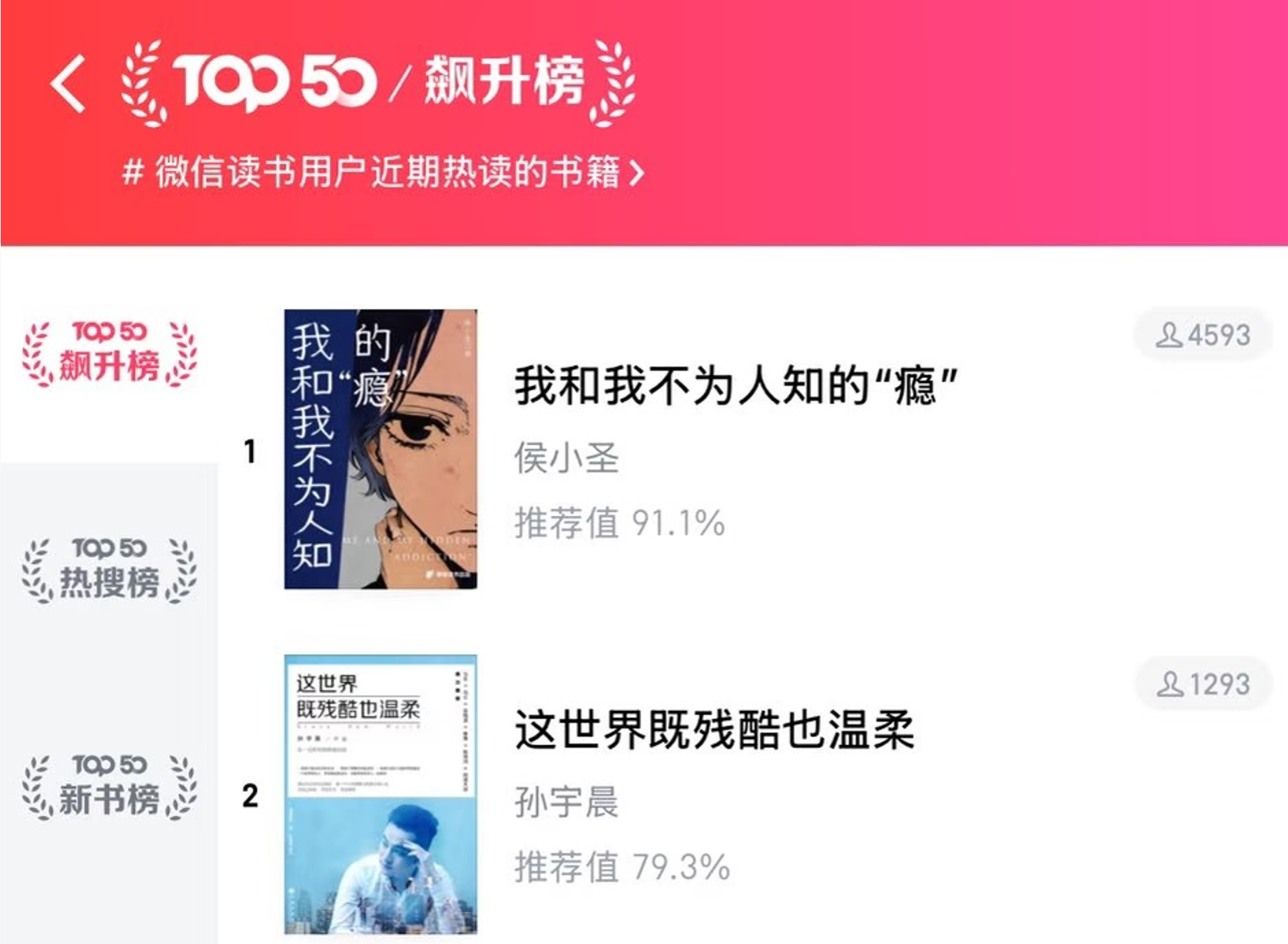
*This World Is Both Cruel and Tender* ranks #2 on WeChat Reading’s Rising Chart
The Essence of Sun Xue Is Winning
Some jokingly call Justin Sun the “undying phoenix of crypto”; others dissect his journey as an “extreme wealth-building methodology”; still others seek, amid his controversies and comebacks, a replicable survival logic.
Through wave after wave of discussion, dissection, and reinterpretation, “Sun Xue” gradually took shape.
Even Justin Sun himself joined the conversation. On social media, he wrote: “The essence of Sun Xue is winning—you *will* become a winner, no matter where you are on Earth, no matter which era you live in, no matter your family background.”
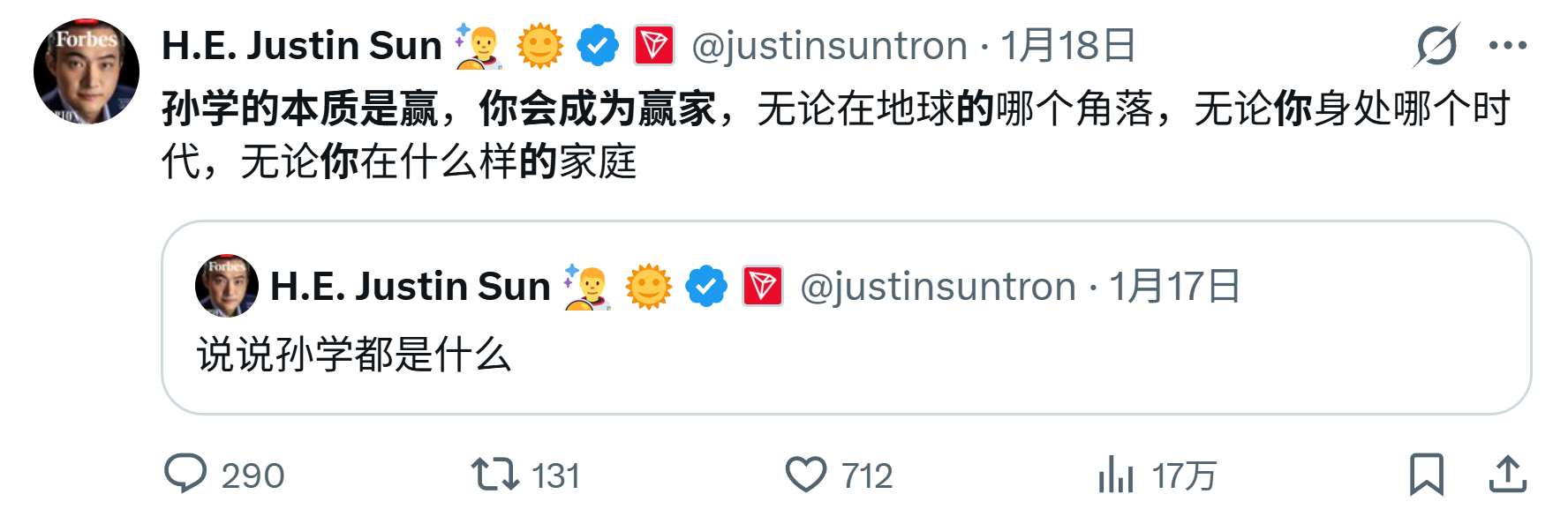
Justin Sun’s social media post on “Sun Xue”
If we focus solely on outcomes, we easily overlook one crucial fact: Justin Sun did not enter the crypto world from a position of safety.
Coming from an ordinary background, he gained admission to Peking University through an essay competition. Thereafter, nearly every pivotal decision he made involved high-risk bets—studying abroad in the U.S., launching a startup upon returning home, going all-in on crypto. None were “safe” choices.
Especially after entering crypto, he faced no tailwind.
Sudden regulatory shifts, violent industry cycles, project skepticism, and sustained public scrutiny—many of these inflection points would have prompted most people to quietly step aside and preserve their existing gains.
But Justin Sun never left the table.
Even during phases widely perceived as most unfavorable, he kept pushing forward—continuing to build projects, expanding ecosystems, and maintaining visibility. Among these actions, the most controversial—and symbolically significant—was his entry into Huobi HTX.
This brings us to Justin Sun’s investment philosophy.
Do What Is Right From the Future’s Perspective
In conventional business textbooks, investment revolves around asset allocation, risk hedging, and capital preservation or appreciation. In the Sun Xue framework, however, the true essence of investment lies in understanding the future, grasping the future, and focusing relentlessly on the future.
In 2013, he leveraged heavily and went all-in on Bitcoin; when Tesla’s market cap stood below $4 billion, he bet big on its stock, pushing his personal net worth past $10 million.
In 2014, he advocated that people under 30 should avoid buying property, cars, or getting married—instead channeling nearly all their time, money, and energy into self-improvement, personal growth, and spiritual freedom. Even across decades, this philosophy remains razor-sharp.
In 2016, he became China’s “first knowledge-based internet celebrity of the post-90s generation.”
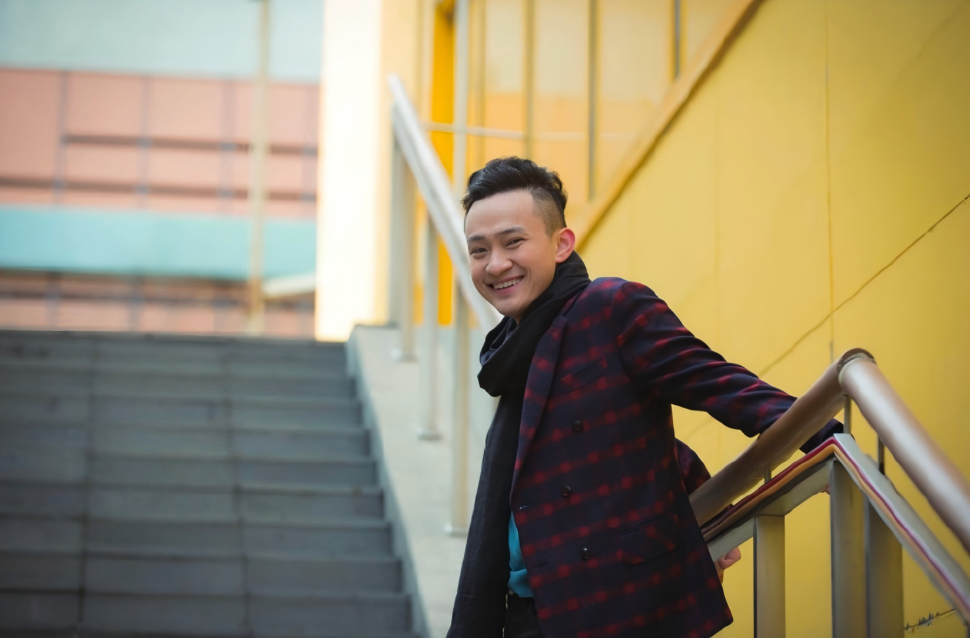
Young Justin Sun in *This World Is Both Cruel and Tender*
After entering crypto, he consistently seized narrative leadership: founding the TRON public blockchain (2017); acquiring Steemit, a phenomenally popular decentralized social platform (2020); purchasing Picasso’s *Reclining Nude with Necklace* and minting it as an NFT (2021); entering Huobi (2022); building the Dominica Metaverse (2023); launching the HTX DAO and proposing the concept of a “People’s Exchange” (2024); deepening collaboration with the Trump family, developing stablecoins like USD1, and launching Sun Wukong—a Chinese-language decentralized derivatives exchange (2025). From DeFi and NFTs to metaverse, RWA, and stablecoins, his technology may not always be the strongest—but he ensures the market knows he’s consistently working on what’s most cutting-edge and groundbreaking.
Justin Sun says: “Don’t let current存量 (existing assets) constrain you—keep your eyes firmly fixed on增量 (new growth), and do what is right from the future’s perspective.” And he truly lives by that principle.
In Justin Sun’s view, Huobi isn’t merely an exchange—it’s a strategic chessboard capable of hosting innovation and ecosystem experiments. Here, he continues practicing “doing what is right from the future’s perspective,” demonstrating to markets and users alike that sustained positioning and long-term commitment outperform short-term conservatism.
Hence, Huobi’s achievements today come as no surprise: over 55 million cumulative registered users globally; 6 million new registrations in 2025 alone; and approximately $3.3 trillion in annual trading volume… New and existing users—including institutional clients—are returning en masse.
Entering the new year, Justin Sun has sent another “winner” signal: staying physically active, focusing on AI and space exploration, embracing spatial computing, and pursuing what genuinely interests him.
A Dimensional Attack by an Alien
At this year’s World Economic Forum in Davos, Elon Musk was asked, “Do extraterrestrials exist on Earth?” He laughed and replied: “If anyone actually knew about aliens, it might just be me.” Then added, “I might *be* that alien.”
Of course, it was a joke—but jokes land because they contain a kernel of truth.
In ultra-frontier domains like space, energy, and artificial intelligence, Musk already occupies a vantage point far beyond most people’s comprehension. His worldview simply doesn’t fully align with that of “Earthlings.”
Interestingly, a similar metaphor appears in narratives surrounding Justin Sun.
Ten years ago, Sun said: “As technology matures, humanity can evolve into extraterrestrials—and achieve our goals through dimensional attacks.”
The concept of “dimensional attack” originates from Liu Cixin’s sci-fi novel *The Three-Body Problem*, describing how aliens use a “two-dimensional foil” to collapse the solar system from three dimensions down to two. In business, a dimensional attack means breaking free from an industry’s existing competitive dimensions and reshaping market structure by rewriting the rules.
This “alien-style dimensional attack” manifests in Sun’s case via two meals—one costing $4.56 million: the Warren Buffett charity lunch; the other, $6.2 million: a banana.
In 2019, Sun set a record price bidding for the Buffett lunch, sparking global astonishment. To mainstream finance, Buffett embodies value, rationality, and long-termism; to crypto circles, Sun represents boldness, speed, and virality. By forcibly inserting the marginal crypto narrative into Buffett’s central stage, the clash itself became content.
The same logic becomes even more vivid in the “priceless banana” incident.
Maurizio Cattelan’s artwork *Comedian*—a banana taped to a wall—was itself an absurdist deconstruction of “value” within the art world. When Sun purchased it for RMB 45 million and ate it publicly, he pushed that deconstruction to its extreme.
He deeply understands crypto’s foundational logic: in cryptocurrency and meme culture, value doesn’t reside in the object itself—but in the consensus and attention it commands. He knew full well—he wasn’t buying art; he was buying a ticket to global headlines.
The banana disappeared—but the symbol “Justin Sun ate a $6.2 million banana” endured. He reduced an elite, insular circle of art critics and collectors into a mass entertainment topic—even uncles on street corners could chime in.
This is Justin Sun’s brand of “dimensional attack.”
While most remain trapped by face-saving, rules, and traditional value judgments, he operates like an “alien,” guided by one simple algorithm: where there’s attention, there’s value. In the age of attention economics, this blunt, straightforward approach proves remarkably effective.
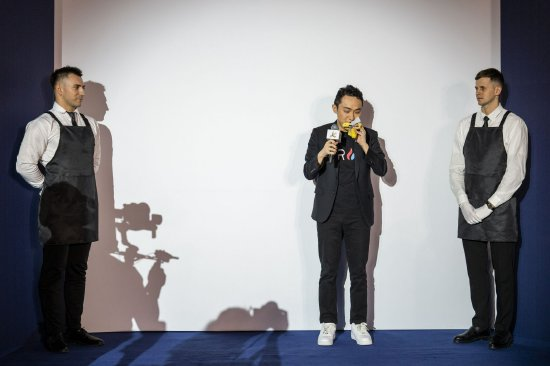
Justin Sun purchased *Comedian* for RMB 45 million and ate it publicly
The Cost of Stability
In recent years, for many young people, “passing civil service exams and landing a stable job” has been packaged as an almost morally correct choice: stable employment, stable income, stable career paths. It signals predictability—and social validation.
Yet ten years ago, Justin Sun sharply argued: “Stability” is not only a false proposition—it often delivers devastating blows to those who rely on it for growth. He declared: “I’d rather die freely foraging in the wilderness than eke out a caged existence in comfort.” Then plunged headlong into a path of “wild, untamed growth.”
Thus, we see the Justin Sun who decisively went global in 2017; the Justin Sun who remained center-stage despite enduring relentless public scrutiny; the Justin Sun who publicly pursued debt collection against Hong Kong trust firm FDT; the youngest ethnic Chinese astronaut, Justin Sun; the Justin Sun who shared drinks and conversation with the U.S. President…
The wilder the terrain, the larger the stage.
Through lived experience, Justin Sun proves that young people must discard the pursuit of “stability,” ignore the confusion and resistance around them, and courageously embrace uncertainty—because uncertainty is the essential incubator for financial freedom. And financial freedom means never compromising your values for money—whether by selling your time, attention, emotions, or dignity.
“Sun Xue” does not stand alone.
It resonates strongly with Yukichi Fukuzawa’s assertion that “civilization is the liberation of individuality”: only after achieving spiritual independence do social status and wealth acquire meaning. It also echoes the repeated emphasis in *Atlas Shrugged*: only those willing to shoulder responsibility earn the right to speak of freedom.
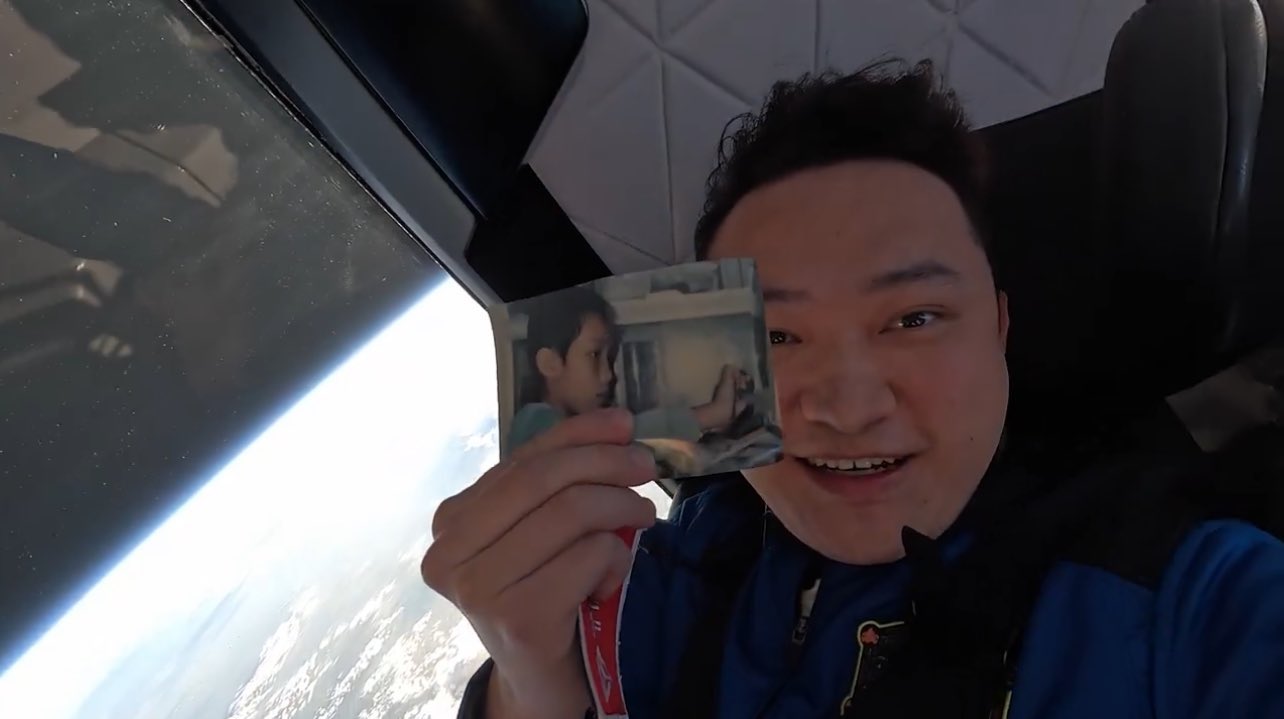
Justin Sun poses with a childhood photo after returning from space
Unyielding Resilience Is the Final Moat
In all discussions of “Sun Xue,” one point is most frequently overlooked: his methodology can be imitated, his narrative copied—but the psychological architecture enabling him to hold firm in extremis is virtually impossible to transplant.
After founding TRON, challenges cascaded: sudden regulatory shifts, cyclical industry collapses, project skepticism, and prolonged media siege. Yet he didn’t go silent. Instead, he posted daily progress updates on social media—even if just a few lines. Who remembers his late-night Huobi onboarding diaries? He simply compressed all pressure into his body—and reverse-engineered it into sharper, fiercer momentum.
Even “Ying Zeng,” the rumored former girlfriend dubbed the “Chief Disciple of Sun Xue” in online lore, assessed him thus: “During the time we were together, I never saw him lose emotional control—not even for a single second… What attracted me was his near-obsessive, unwavering willpower—and his extraordinary vitality, bursting forth even in utter despair.”
“Sun Xue” is, in essence, an extremely lucid realism:
The world is cruel because it bears no responsibility for anyone’s emotions;
The world is tender because it still rewards those who understand its rules—and willingly accept their consequences.
We sincerely hope that those who’ve long mocked Justin Sun will one day listen carefully as he thoroughly unpacks a complex issue—watching him dissect reality and place long-term bets with sober clarity.
You don’t have to like him—but you’ll find it hard to deny: he is a serious thinker.
Join TechFlow official community to stay tuned
Telegram:https://t.me/TechFlowDaily
X (Twitter):https://x.com/TechFlowPost
X (Twitter) EN:https://x.com/BlockFlow_News


