Why Did Gold-Farming Studios Keep World of Warcraft Alive—Yet “Killed” All Web3 Games?
TechFlow Selected TechFlow Selected
Why Did Gold-Farming Studios Keep World of Warcraft Alive—Yet “Killed” All Web3 Games?
What makes World of Warcraft great is precisely that its most important elements can never be sold.
 Navigating Web3 tides with focused insights
By Lao Bai
A while back, I tweeted about how my son had been frantically topping up Roblox to buy Robux and stealing other players’ items—a phenomenon that made me remark how Roblox’s monetization dwarfs Genshin Impact’s gacha system and Pop Mart’s blind boxes. I called it the “true god of pay-to-win,” and the post resonated widely with many readers—becoming one of my highest-traffic articles recently.
The next day, a thought struck me: Why does Roblox—a game notorious for its aggressive monetization—appear to have no “gold-farming studios”? Or, even if such studios exist, why do they barely impact the game’s lifecycle? Coincidentally, @j0hnwang recently resurfaced an earlier article he’d written about Roblox, addressing precisely this question. I’d bookmarked it before, so I reread it.
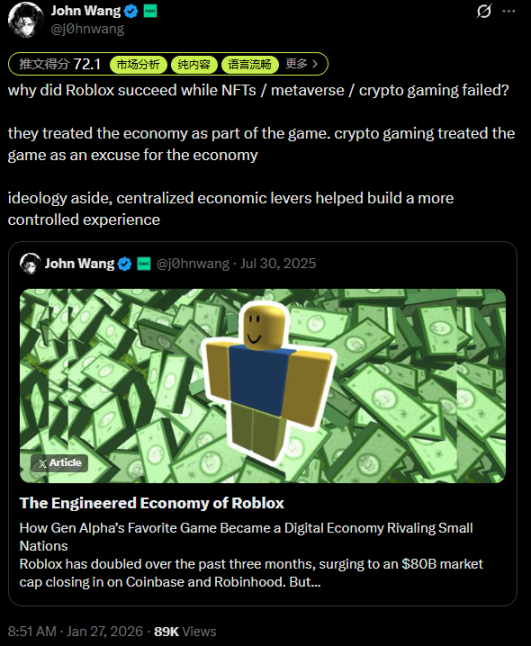
John’s view is that Roblox treats its economy as an integral part of gameplay, whereas crypto games treat gameplay as merely a façade for their economic systems—and believe centralized economic mechanisms help create more controllable player experiences.
That makes sense. The lack of fun in Web3 games has long been criticized, yet this latest wave of Web3 games has significantly improved playability and adopted highly centralized economic controls—yet nothing has changed. There must be other underlying reasons.
Then I recalled World of Warcraft and Kaito. On the day X suspended Kaito’s API, I posted the following:
Once behavior becomes scalable, it inevitably becomes industrialized.
From the “Chinese Farmers” of Web2 WoW, to Web3 X2Earn scripts and gold-farming studios, and now to mouth-clicking (“mouth-lu”)—the logical next step is inevitably AI-powered mass account creation and multi-account mouth-clicking matrices.
So mouth-clicking wasn’t broken by savvy retail investors or KOLs—it was broken by its own “replicability.” And this isn’t just Kaito’s problem; it’s essentially the inevitable fate of all incentive systems.
So what’s the secret behind WoW and Roblox? Why can’t studios kill them? Why, after Chinese Farmers first appeared on the US server, did WoW gold inflation cause widespread player complaints—at first—only for players to gradually accept it and ultimately integrate it into the game’s stable in-game ecology?
There must be something Web3 games lack—something far beyond just centralized economic design.
First, let’s examine World of Warcraft
I. Gold Is Not the “Endgame Value”
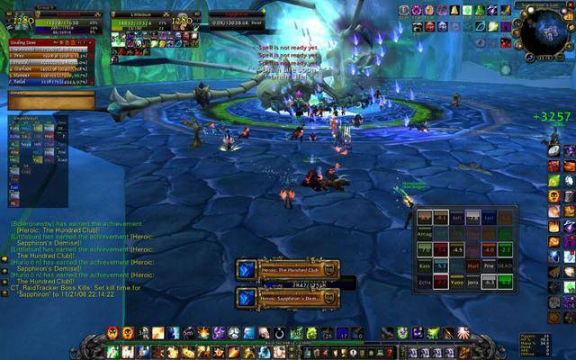
Any veteran WoW player knows gold bears little relation to your in-game identity or status. Achievements, rankings, reputations—none of these can be directly purchased with gold. When a top-tier item drops in a dungeon, it’s either rolled for or auctioned via DKP (Dragon Kill Points), where contribution determines bidding rights. And the final looter’s item is soulbound—non-transferable and non-sellable.
So gold saves time at best—it doesn’t fast-track you to core-player status. Many domestic Web2 browser games did exactly the opposite: RMB-spending whales dominated instantly, a dynamic eerily similar to today’s Web3 games.
At its core, in WoW, everything “meaningful”—top-tier gear, achievements, titles, raid contributions—cannot be bought directly with gold. So although gold farming itself is scalable—and thus gave rise to the first wave of industrialized Chinese Farmers—it never dominates the core gameplay experience. In other words, this “industrialization” remains confined to the game’s periphery.
II. Official Policy: “Absorption, Not Confrontation”
After gold-farming studios emerged, Blizzard implemented several moves—retrospectively brilliant:
- Official control: Players may buy gold with real money—but pricing is system-regulated, and there’s no free financial exit. This transformed the black market into an official exchange;
- Added friction: Daily/weekly quests, cooldowns, and other time-gated mechanics ensure that no matter how many accounts you run or how high their levels, you still wait—diluting industrial advantages;
- Expanded “meaningful things” gold can’t buy: Guilds, raids, social reputation—leading later to “gold raids” (GKPs) and guild-based progression. Yet first kills of major raids were always achieved by elite guilds—not gold raids. Thus, gold farming remains forever a “second-class citizen” in WoW.
As for Roblox, the logic differs slightly
I. Encouraging Creativity Over Repetitive Labor
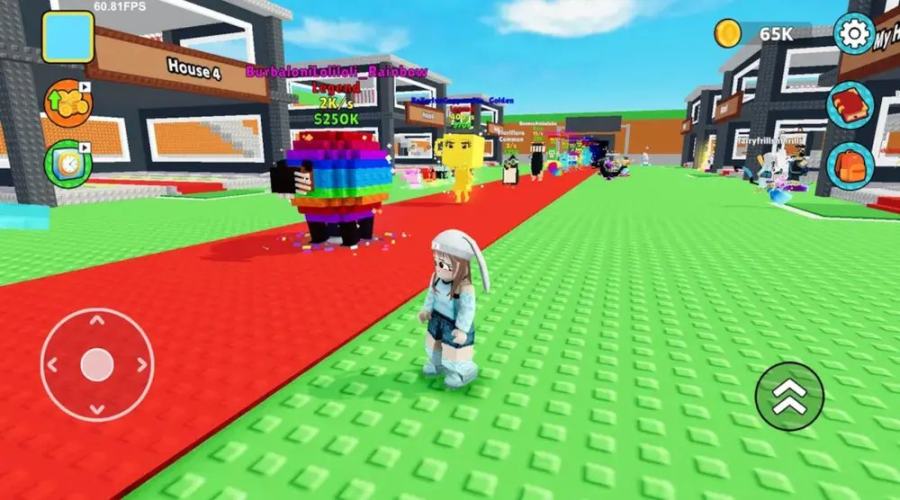
As noted in my earlier Roblox article (citing the same source), the most profitable activities in Roblox aren’t repetitive resource-grinding—they yield minimal returns.
Real profits come from map creation, gameplay design, and community management.
These are hard for studios to scale. No amount of grinding produces a kid-friendly game mode—though with AI, perhaps even “mass-produced design” is now possible.
II. Closed-loop internal economy, restricted asset convertibility
This aligns somewhat with John’s point: buying Robux with a credit card is seamless—but converting Robux back to cash is clunky, delayed, and lossy in exchange rate. Arbitrage and “brick-moving” strategies simply don’t work here.
Moreover, Roblox’s revenue flows mostly to platform fees, top creators, and in-game consumption—a closed-loop economy with little spillover.
Of course, both WoW and Roblox share two foundational pillars: fun + massive player bases. That’s indisputable.
So what’s the real reason behind Web3 games’ collective collapse?
Setting aside “fun” as a factor, perhaps the original design intent of blockchain games doomed them from the start.
Nearly all blockchain games permit both “repetitive actions” and “freely withdrawable assets.”
In an era where Web2 game design is mature, this inevitably transforms the end-user base into capital + bots—not humans.
In other words, once “Play” and “Earn” are linked, this outcome is unavoidable.
Whether it’s Play-to-Earn, Move-to-Earn, or Play & Earn—the variations are superficial; the core remains unchanged.
It resembles an impossible triangle for games: among fun, profitability for speculators, and scalability for studios—you can only achieve two of the three.
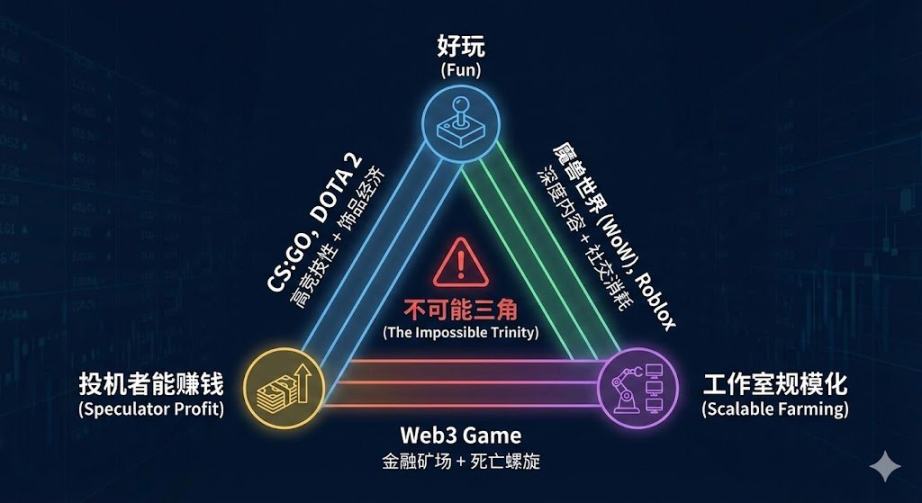
From this perspective, Web3 games fail not due to team quality or funding size—but because, at their very DNA level, they cannot be “fun.”
Could WoW go on-chain? Would it make sense?
Back when blockchain games were booming, we often fantasized: What if WoW went on-chain?
Not just the game—but its entire economy: gold, items, mounts—all tokenized, freely tradable, freely withdrawable, fully financialized.
Now, looking back, that idea was naive. Doing so would inevitably destroy WoW.
WoW’s foundational axioms:
- Meaning cannot be traded: The most valuable things—top-tier gear, achievements, titles—are almost all soulbound, non-transferable, representing *what you’ve done*, not *what you own*;
- Progress ≠ wealth: Your time investment, skill, and teamwork define your standing; gold merely adds comfort—it cannot bridge class divides;
- Players aren’t asset owners but role-players: “This gear I earned / won via DKP,” “Our guild achieved the world’s first boss kill,” “This character is ten years of my life”—once it becomes “I bought this / invested in this,” your emotionally bonded avatar degrades into mere skin for an asset account.
If anything truly deserves on-chain representation in WoW, it’s these intangibles: proof of a boss’s first kill, guild history, timestamped achievements, records of world events—on-chain not assets or value, but memory and trace.
WoW’s greatness lies precisely in the fact that its most important elements can *never* be sold.
From this vantage point, “blockchain games must die.”
And it’s not just blockchain games. We once treated blockchain like a hammer—seeing every problem as a nail to strike. But countless things in this world need no “financialization.” Their purpose is to be experienced, remembered, and told.
Join TechFlow official community to stay tuned
Telegram:https://t.me/TechFlowDaily
X (Twitter):https://x.com/TechFlowPost
X (Twitter) EN:https://x.com/BlockFlow_News
 Lao Bai