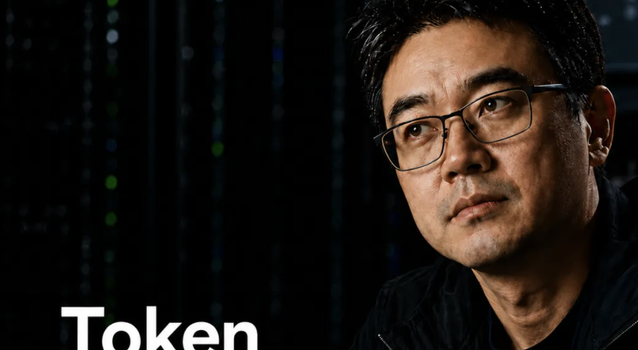
Interview with Bitget’s Product Lead: What Is the UEX That Bitget Aims to Build in an Era of Zero-Sum Competition?
TechFlow Selected TechFlow Selected
Interview with Bitget’s Product Lead: What Is the UEX That Bitget Aims to Build in an Era of Zero-Sum Competition?
Bitget views compliance capabilities, underlying infrastructure, product integration capabilities, and AI + Trading as key pillars for future competition, aiming to build the next-generation integrated trading platform amid the ongoing convergence of crypto and traditional finance.
 Navigating Web3 tides with focused insights
In this exclusive interview, we spoke with KH, Bitget’s Head of Product, about the exchange’s strategic initiatives and product evolution in the traditional finance (TradFi) space over the past year.
As user demand shifts from single crypto assets to broader asset allocation—and as real-world assets (RWA) and on-chain trading infrastructure mature—crypto exchanges now possess the practical conditions to integrate traditional assets such as equities, forex, precious metals, and commodities onto their platforms. Bitget has progressively rolled out on-chain trading capabilities, equity perpetual contracts, and CFDs via integration with MT5—establishing a multi-layered Unified Exchange (UEX) covering spot, derivatives, and RWA.
Operationally, Bitget entered the RWA space through its partnership with Ondo. Leveraging its on-chain trading infrastructure and 1inch liquidity, Bitget enabled seamless trading of over 200 RWA tokens and captured significant early market share. Meanwhile, its CFD offering—settled in stablecoins, backed by top-tier market makers, and available 24/7—delivers differentiated advantages over traditional brokers.
The interview also elaborated on Bitget’s long-term vision for the UEX: centered on a unified account, integrating centralized exchanges (CEX), decentralized exchanges (DEX), and TradFi to enable cross-asset trading, margin reuse, and higher capital efficiency. Overall, Bitget views regulatory compliance, underlying infrastructure, product integration capability, and AI + Trading as key competitive pillars—aiming to build the next-generation integrated trading platform amid the ongoing convergence of crypto and traditional finance.
Guest comments do not reflect WuShuo’s views and do not constitute investment advice. Please strictly adhere to local laws and regulations.
Why is Bitget accelerating the integration of TradFi assets? How has its product evolved step by step?
KH: There are two core reasons. First, we believe the crypto industry is entering a new phase where solutions like RWA are maturing. Second, users’ asset needs have naturally expanded—from purely CEX-based crypto assets to include DEX and TradFi assets. For CEXs, introducing richer asset classes helps smooth crypto’s pronounced bull-and-bear cycles and offers users more diversified and flexible portfolio options.
In terms of product rollout, we’ve advanced this line steadily over roughly one year. It began with on-chain trading-related products, followed by early launches of equity token perpetual contracts. In Q4 last year, we introduced CFDs; these became fully accessible to all users in January this year—a deliberate, phased progression.
Execution challenges were equally substantial. For instance, with on-chain trading, we were among the first to enable seamless trading of the full range of on-chain assets within our CEX account system while bridging the DEX trading experience. Then, in Q3 last year, we became one of the earliest CEXs to integrate Ondo-issued RWA tokens—leveraging our on-chain trading capabilities to connect over 200 RWA instruments, unlocking a new growth vector for on-chain trading. These capabilities weren’t fully pre-planned but evolved iteratively in response to market dynamics and user feedback. In hindsight, it was precisely this market-aligned, incremental product iteration that allowed us to seize fresh opportunities amid challenges.
Why did TradFi only begin rolling out en masse recently? What role did regulatory barriers play?
KH: From our own experience, the reason TradFi products began concentrating around 2025 stems less from exchange intent alone and more from the maturity of the entire ecosystem—not just isolated players. Take on-chain trading and Ondo’s RWA, for example: As an issuer, Ondo has resolved numerous critical issues—including underlying asset compliance, token issuance, and regulatory structuring—enabling exchanges to participate within compliant frameworks. This reflects increasingly clear division of labor across the value chain.
Similarly, for CFDs, MT5 is already a highly mature and mainstream platform in the CFD market, offering complete trading systems and technical capabilities. Our task was to secure appropriate licenses under compliance requirements and deeply integrate with MT5. This process spanned nearly the entire last year—and made it abundantly clear how rapidly both exchange capabilities and collaboration with traditional financial technology providers have improved. Back in 2021 or 2022, many institutions lacked sufficient regulatory awareness, execution capacity, or resource commitment to deliver such initiatives effectively.
What problems does Bitget’s recent major TradFi upgrade aim to solve?
KH: The February upgrade represents a systemic rearchitecture—not merely adding new products—of our TradFi product line. We’ve consolidated CFDs, on-exchange perpetual contracts, and RWA-related tokens under a unified TradFi asset framework for streamlined presentation and navigation.
This milestone builds upon over a year of continuous development and iteration. At this stage, we consider our TradFi product suite relatively complete: whether spot tokens or various derivatives, trading functionality, depth, and comprehensiveness have all matured significantly.
We’ve also observed that many exchanges are launching TradFi-related offerings—but inconsistent definitions and usage of “TradFi” cause user confusion. One goal of our effort is thus to help users better understand and engage with the TradFi market. “TradFi” stands for Traditional Finance—a broad category of assets—and we aim to define and guide users more accurately.
Moreover, in terms of overall coverage, Bitget’s TradFi product line ranks among the most systematic and comprehensive across all major exchanges. Now is therefore the right moment to clearly communicate a shift to users: Bitget has consistently evolved its products along the UEX strategy—our platform is no longer just a “Crypto trading app,” but a truly unified trading system integrating crypto and traditional financial assets.
Internally, we refer to this version as the “Super Version”—signifying the platform’s entry into its next evolutionary stage. With this update, users immediately notice the change upon opening the app: TradFi is no longer buried in secondary or tertiary menus, but occupies a top-level navigation entry alongside Crypto—guaranteeing millions of new monthly impressions. We believe we’re the first major exchange to take this step.
Upon entering the TradFi Hub, users can access spot, perpetual contracts, and CFDs related to TradFi assets—all in one place. Much like Alibaba prominently featured food delivery at the most visible location in the Taobao app to signal its serious entry into that sector, this redesign conveys TradFi’s strategic importance internally—and our confidence in being fully prepared at the product level. At the time, it also served as an invitation to users: to explore richer portfolio diversification and global asset allocation via Bitget’s UEX.
What is the relationship between UEX and TradFi? Where does this strategy stand today?
KH: UEX is a long-term vision we introduced in H2 last year—our conception of the “next-generation exchange.” It transcends the distinction between centralized or decentralized crypto exchanges; we believe even traditional brokers are evolving toward UEX. Its defining features are a unified account and stablecoin settlement—empowering users to trade global mainstream assets (crypto, TradFi, and even DEX assets) on a single platform.
This concept was initially abstract, but has grown increasingly concrete as foundational capabilities matured. Last year, our on-chain trading product achieved integration between CEX and DEX within the crypto ecosystem. Today, with the TradFi product line maturing, crypto–TradFi integration has materialized into tangible, user-perceivable products. UEX is no longer theoretical—it’s embodied in the real-world experience of “one platform, one account, multiple asset classes.”
Strategically, UEX isn’t a short-term target for 2026 alone, but a three-to-five-year horizon. Right now, our priority is solidifying product infrastructure and user experience—not chasing aggressive growth metrics.
Market feedback has broadly exceeded expectations. Equity contract volumes launched in Q3/Q4 continued rising, exceeding $15 billion per quarter; Ondo-related RWA token monthly volume surpassed $1 billion—with Bitget once capturing ~90% of Ondo RWA trading volume. TradFi CFDs, launched in January, achieved over $4 billion daily volume amid precious metals price surges. These figures validate our direction—but even so, our current top priority remains refining core infrastructure and holistic experience to lay the groundwork for UEX’s long-term evolution.
Where does Bitget’s CFD offering hold advantages over traditional brokers? How do you prioritize asset expansion?
KH: The traditional CFD market is already highly mature. Our core advantage here isn’t simply “rebuilding from scratch,” but deep integration within a compliant framework. We invested considerable time securing necessary licenses and directly integrating with MT5—the world’s leading multi-asset CFD platform—giving us stable, battle-tested underlying trading infrastructure.
A second distinct advantage is settlement. Unlike traditional FX brokers, we support USDT and other stablecoins—a natural advantage inherited from our CEX roots—dramatically lowering deposit/withdrawal friction. We’ll gradually add more settlement currencies.
A third advantage lies in trading experience—especially liquidity and spreads. Our current spread levels match industry-leading CFD standards and surpass those of other MT5-integrated exchanges. Furthermore, Bitget’s long-standing CEX strengths—including localized operations, 24/7 customer support, robust risk control and fund security systems, and consistent product iteration (market data, news, AI-assisted tools)—collectively form a comprehensive edge in user trust and experience.
For asset selection, we adopt a pragmatic approach. Currently, ~80% of trading volume concentrates on gold, silver, and major indices—so our near-term focus prioritizes these mainstream categories: precious metals, forex, indices, and select commodities. While there’s genuine demand for long-tail assets like global equities, compliance and execution hurdles remain high, and actual trading volume is limited. Hence, our strategy is to first concentrate on top-tier assets, then gradually assess expansion to additional categories—only after ensuring compliance and product quality.
Who drives TradFi trading volume—crypto users or new users?
KH: Currently, both user types coexist and jointly fuel growth.
The first group comprises “overlapping users.” Take CFDs: MT5 already hosts a massive user base, a sizable portion of which overlaps heavily with crypto markets. These users already trade across multiple platforms; when they discover they can trade both TradFi and crypto on one platform—and settle in stablecoins—the conversion barrier is extremely low, requiring no extra education. They’re the easiest cohort to onboard.
The second group consists of traditional traders. Compared to many smaller FX brokers, Bitget offers superior scale, financial strength, product experience, and security—making trust easier to establish. These users prioritize platform stability and reliability, but their conversion takes longer, relying on sustained product refinement and marketing efforts. They remain in the gradual onboarding phase.
Additionally, some volume comes from Bitget’s existing user base. During active precious metals rallies (e.g., gold/silver), these users quickly adopt TradFi products. Thus, the current picture is clear: overlapping MT5/crypto users, plus existing Bitget users drawn in by market momentum, collectively drive the bulk of TradFi trading volume.
What are the real challenges for CFDs during high-volatility events?
KH: High volatility presents both opportunity and challenge. CFDs represent a highly mature market with daily turnover in the trillions of dollars—its core requirement is a stable, reliable liquidity infrastructure. Accordingly, from day one, we chose deep MT5 integration and partnered with top-tier market makers across the liquidity spectrum—ensuring sufficient depth and stability during both normal and extreme market conditions.
Practically, our spread levels and liquidity performance during high-volatility periods now match top-tier CFD industry benchmarks—this is the foundational capability we aimed to achieve.
Yet the true challenge extends beyond mere “integration.” A superficial, physical-level embedding—like dropping a page into the app—may be fast to implement but yields a fragmented experience. What matters more is understanding CFD-specific characteristics and absorbing proven practices from mature markets.
The greater difficulty lies in experiential fusion. Crypto and traditional traders differ markedly in habits, workflows, and priorities. Delivering a consistent, intuitive cross-asset trading experience that satisfies both groups is a long-term engineering effort. This “inclusive integration” in UX design—beyond high-volatility resilience—is where we invest sustained effort and refinement.
Why does Bitget offer both perpetual contracts and CFDs for gold?
KH: Gold serves as the ideal candidate for dual offerings because it’s inherently liquid—and caters to two entirely distinct user needs, demanding different product formats.
First, CFDs. The CFD market is highly mature, and gold remains one of its most liquid, highest-weighted core assets. Both traditional CFD users and crypto-overlapping traders are deeply familiar with gold CFDs—whose liquidity, leverage, and fee structures have been rigorously validated over time. By integrating CFDs, we bring this proven, stable capability to Bitget.
Second, gold/silver token perpetual contracts (e.g., XAU, XAG) and ~40 stock token perpetual contracts already live on our platform. These resonate most with crypto users: account structure, margin mechanics, and trading experience mirror crypto trading almost identically. Users trade via unified accounts, use cross-margin or portfolio margin, and enjoy higher leverage on select popular assets—feeling instantly at home.
Positioning-wise, the two contracts serve different audiences. Perpetuals let crypto users expand into traditional assets—gold or equities—within their familiar trading framework. Moreover, as an endogenous market, users can construct cross-asset strategies under a unified account—for instance, holding Bitcoin and equity positions simultaneously, or using crypto as collateral for traditional asset trades. This flexibility is the fundamental rationale for maintaining both contracts in parallel.
How do stock contracts achieve 24/7 trading? How are pricing and risk management addressed?
KH: Supporting traditional assets like stocks via perpetual contracts poses two core challenges: first, aligning crypto’s native 24/7 operation with traditional assets’ limited hours; second, adapting complex corporate actions (e.g., stock splits, dividends) into contract and system logic.
Regarding continuous trading: Traditional equity markets operate primarily 5×24, with insufficient overnight liquidity—and truly active hours are even shorter. So we distinguish between trading and non-trading hours. For instance, during weekends—when spot markets and index prices are inactive—we deploy an internal pricing mechanism to sustain trading.
Users care most about fair, reasonable pricing. To address this, we cap non-trading-hour price movements relative to Friday’s closing price; at re-opening, we apply risk pre-processing mechanisms to mitigate gap-related liquidations or abnormal volatility. Overall, TradFi stock-like instruments exhibit relatively controlled volatility under normal conditions.
Longer term, as trading activity grows, the market itself may develop effective pricing. Even more intriguingly, during off-hours—like weekends—when traditional markets are dormant, crypto platforms might pioneer a credible reference pricing market—an exciting prospect for the whole industry.
Why did Bitget rapidly capture early RWA market share? What decisive factors contributed?
KH: Looking back, two key elements drove our success. First: timing and foundational capability. We were among the earliest CEXs to integrate Ondo—and already possessed a relatively mature on-chain trading infrastructure. Since Ondo’s liquidity flows through 1inch, it aligned seamlessly with our on-chain architecture, enabling smooth product launch. After initial integration, users could trade over 200 equity-token-style RWA assets directly from their Bitget spot accounts. We continuously optimized experience—maintaining zero-fee policies, achieving >99% order fill rates, and leveraging Ondo’s mechanisms to effectively transmit traditional market liquidity and price depth onto-chain. These were vital foundations for user retention.
Second: market cycle and user returns amplifying each other. Our product launched around Q3 last year, when the platform’s largest position was in silver-related ETFs priced near $30—later surging to nearly $110. At that time, convenient crypto-native silver trading tools were scarce; we provided exactly the right entry point, allowing users to capitalize on the rally and generate clear wealth effects.
Additionally, with Google launching Gemini, many users grew bullish on Google and AI-related sectors—actively allocating into stock-linked RWA tokens—further enriching RWA trading scenarios. Infrastructure readiness, perfect timing, and tangible user gains converged to drive sustained trading and user accumulation on Bitget. By December last year, we commanded nearly 90% of Ondo’s market volume.
What critical capabilities remain missing for UEX to fully materialize?
KH: Asset onboarding is just the first step. We’ve achieved CEX–DEX integration and crypto–TradFi integration—but this mainly ensures assets are “tradable.” True UEX must unify these capabilities at the account level: enabling one account to trade global mainstream assets.
For professional traders, the core need is capital efficiency—and more granular margin and risk management. Significant optimization remains here. For instance, some stock-linked RWA tokens aren’t yet integrated into the unified account system or fully embedded in the unified margin logic—preventing them from participating in Bitget’s existing financial products (e.g., staking, lending, yield farming).
These are the key capabilities needing progressive integration. Only when assets aren’t just tradable—but efficiently utilized within a unified account, contributing to margin calculations, risk management, and capital reuse—will users truly feel the value of “full integration.” Completing this full stack—from asset unification to capital efficiency to unified risk and margin systems—is the most time-intensive part of scaling UEX broadly.
In an era of saturated competition, what is Bitget’s core competitive advantage?
KH: Expanding into TradFi and other asset classes is precisely how we break free from saturated competition. When users can allocate across assets on one platform, they can swiftly pivot to alternative assets if one underperforms.
Of course, UEX is a macro trend—we observe other exchanges moving similarly. In competition, brand and customer service matter, but the deepest advantage lies in the foundational platform capabilities built over years as a CEX: high-performance trading systems, mature risk control and clearing infrastructure, globally localized operations and user support—and especially fund security and system stability during extreme market conditions. These require long-term investment and cannot be replicated quickly.
Second is product capability. Compared to single-product platforms, comprehensive ones like Bitget have greater scope for product integration and iterative enhancement. For example, we’ve long believed in the synergy of trading and AI—and continue investing here. From early-stage trading aids and information retrieval to future automated, intelligent trading paradigms, AI has the potential to reshape the entire trading experience—a long-term advantage we aim to cultivate.
Third is compliance capability—a longer-term but critically important differentiator. Compliance is a core strategic pillar this year, and we’re actively advancing partnerships and licensing progress with major global regulators. Over the long run, compliance will become a vital moat determining platform sustainability.
Overall, Bitget’s competitiveness doesn’t stem from any single factor—but from the convergence of platform infrastructure, product integration and innovation, sustained investment in emerging technologies like AI, and systematic compliance construction.
Over the next few years, will exchanges and traditional brokers compete—or collaborate?
KH: The overarching context is bidirectional convergence: every platform is becoming a UEX. On one hand, crypto exchanges are adding TradFi assets; on the other, more traditional brokers are embracing crypto and stablecoins. I view this as a positive signal—because starting points, capability architectures, and strengths differ fundamentally.
Our core advantage is crypto-native DNA. Blockchain and crypto technical capabilities, trading systems, and mental models are embedded in our platform’s genes. To date, crypto has demonstrated clear generational advantages over traditional finance—particularly in high-performance trading, frictionless settlement, and token programmability/composability. This generational gap will persist.
At the product level, we lean more strongly toward user-centricity—refining experiences more aggressively. Intensifying competition pushes platforms to excel—even more—to retain users. From this perspective, fierce competition isn’t detrimental; rather, it drives industry-wide evolution and enhances user experience.
Simultaneously, collaboration with traditional brokers is unavoidable. Traditional institutions possess deep expertise in liquidity channels, product mechanisms, and fundamental research—areas from which we must learn and draw inspiration. Unlike crypto’s heavy reliance on community and social media for information, traditional finance operates with an entirely distinct research and information methodology.
Overall, the coming years will likely feature “coexistence of competition and collaboration”—not simple replacement or opposition.
Join TechFlow official community to stay tuned
Telegram:https://t.me/TechFlowDaily
X (Twitter):https://x.com/TechFlowPost
X (Twitter) EN:https://x.com/BlockFlow_News
 吴说区块链
吴说区块链