








He exposed the dark secrets of Southeast Asia’s cryptocurrency scam parks—and then escaped with his life.
TechFlow Selected TechFlow Selected
He exposed the dark secrets of Southeast Asia’s cryptocurrency scam parks—and then escaped with his life.
A whistleblower trapped in a scam compound resolves to expose the perpetrators’ crimes and fights for survival to escape.
 Navigating Web3 tides with focused insights
By Andy Greenberg, WIRED
Translated by Luffy, Foresight News
A Distress Call from the Golden Triangle
It was a beautiful June night in New York when I received my first email from this source, who asked me to call him Red Bull. At that moment, he was 8,000 miles away—in what felt like hell on earth.
After a summer shower, a rainbow arched over Brooklyn’s streets, and my two children splashed in the rooftop kiddie pool of our apartment building. The sun had just set, and—like most 21st-century parents—I was immersed in app after app on my phone.
The email had no subject line and came from the encrypted email service Proton Mail. I opened it.
“Hello, I am currently working inside a large cryptocurrency scam operation—the so-called ‘pig butchering’ scam—in the Golden Triangle region,” it began. “I am a computer engineer forced to sign a contract and work here.”
“I have collected core evidence of this entire scam process, documenting every step,” it continued. “I am still inside the compound, so I cannot risk exposing my true identity. But I want to help shut this place down.”
I only vaguely knew the Golden Triangle as a lawless jungle zone in Southeast Asia. But as a journalist who has covered cryptocurrency crime for 15 years, I understood that these scams—now widely known as “pig butchering,” where scammers lure victims with romance and promises of high investment returns, then steal their life savings—have become the world’s most profitable form of cybercrime, generating hundreds of billions of dollars annually.
Today, this sprawling criminal industry operates across scam compounds in Myanmar, Cambodia, and Laos, sustained by hundreds of thousands of forced laborers trafficked from the poorest regions of Asia and Africa to serve criminal syndicates. What emerges is a self-perpetuating, ever-expanding global financial funnel that traps people on both ends: victims who lose everything, and compound workers enslaved in brutal conditions.
I’d read countless harrowing reports about these compounds: workers beaten, shocked with electric batons, starved, even murdered by their captors. Most of those stories came from the rare survivors who escaped or were rescued by law enforcement. But I had never encountered someone still inside a scam compound who voluntarily stepped forward as a whistleblower—a true insider.
I couldn’t yet be sure whether this self-proclaimed source was real. Still, I replied, asking him to switch from email to the encrypted messaging app Signal—and to enable its “disappearing messages” feature to better conceal his trail.
He responded instantly, telling me to wait two hours before contacting him again.
Red Bull Trapped Inside the Compound
That night, after the kids were asleep, my phone buzzed repeatedly with Signal notifications. First came meticulously organized files: a flowchart, followed by a written guide detailing the full scam process at the compound in northern Laos. (I later learned that “Golden Triangle”—a term Americans once used for massive opium and heroin production zones—is now primarily used to refer to a city-sized “economic special zone” in Laos bordering Myanmar and Thailand, largely controlled by Chinese business interests.) These documents laid out every operational detail: creating fake Facebook and Instagram accounts; hiring models and using AI deepfake tools to fabricate convincing romantic personas; luring victims into “investing” on fraudulent trading platforms they recommend. They even noted a small gong placed in the office—struck each time someone successfully scammed a victim.
Before I could fully absorb these exhaustive materials, my plan for a quiet Saturday evening with my wife was interrupted just past midnight—my phone rang.
I answered the Signal voice call. A polite Indian accent came through: “Hello.”
“What should I call you?” I asked.
“Brother, you can call me whatever you like—it doesn’t matter,” the voice replied with a shy chuckle.
I insisted on a name—even one he made up on the spot.
“You can call me Red Bull,” he said. Months later, he told me he was looking at an empty Red Bull energy drink can during our call.
Red Bull said he’d previously contacted U.S. and Indian law enforcement agencies, Interpol, and left voicemails with several media outlets’ tip lines—but I was the only one who responded. He asked me to tell him more about myself, but after I’d spoken just two sentences about my reporting on cryptocurrency crime, he cut me off.
“Then you’re the person I can trust with everything,” he said urgently. “You’ll help expose all this, right?”
Caught off guard, I told him he’d need to tell me who he was first.
For the next few minutes, Red Bull answered my questions cautiously. He withheld his real name, saying only that he was from India—and that most of the forced laborers at the compound were from India, Pakistan, or Ethiopia.
He said he was in his early twenties and held a degree in computer engineering. Like most of his colleagues, Red Bull had been lured there by a fake job posting promising an IT manager position at an office in Laos. Upon arrival, his passport was confiscated. He was forced to share a dormitory room with five other men, working overnight shifts—15 consecutive hours—timed precisely to coincide with daytime hours for their targets: Indian-American victims. (I later learned this practice of matching scammers with ethnically similar victims is common, designed to build trust and avoid language barriers.)
Red Bull’s situation wasn’t as brutally extreme as the modern-day slavery I’d read about before—it resembled, instead, a grotesque parody of a corporate sales department. In theory, the compound incentivized employees with commissions, fostering the illusion that “hard work leads to riches.” In reality, workers remained perpetually indebted, effectively enslaved. Red Bull told me his base monthly salary was 3,500 RMB—about $500—but nearly all of it was deducted in fines, most commonly for failing to meet minimum “initial contact” quotas with victims. In the end, he earned virtually nothing, surviving solely on cafeteria food—mostly rice and vegetables—that he said tasted strangely chemical.
He was bound by a one-year contract, initially believing he’d be allowed to leave upon its completion. He told me he hadn’t successfully scammed anyone yet—only barely meeting the minimum required number of fake conversations. That meant he’d remain a prisoner here unless he fled, served out his contract, or paid thousands of dollars he didn’t have to buy his freedom.
Red Bull said he’d heard of coworkers being beaten and shocked with electric batons for infractions—and of one female employee he believed had been trafficked into sexual slavery. Others had simply vanished without explanation. “If they find out I’m talking to you—if they know I’m opposing them—they’ll kill me outright,” he said. “But I’ve sworn to myself that no matter whether I survive, I will stop this scam.”
Gathering Evidence From the Lion’s Den
Then Red Bull explained the urgent purpose of this call: he’d learned the compound was running a scam targeting an Indian-American man who’d already been scammed at least once—and was now being manipulated by one of Red Bull’s colleagues. The victim’s cryptocurrency wallet provider appeared to suspect fraud and had frozen his account. So the compound planned to send a courier to collect six-figure cash the victim intended to pay.
The pickup was scheduled for three or four days later—and the victim lived just a few hours’ drive from me. Red Bull explained that if I acted quickly, I could alert law enforcement and help set up a sting to arrest the courier. Beyond this lead, he also hoped I could connect him with an FBI agent as a future point of contact, while continuing to collaborate with me as his source. Our call lasted just ten minutes.
Impatiently, Red Bull said he’d send details via Signal—then hung up. Seconds later, he sent screenshots of internal compound chat logs, transcripts of his colleague’s conversations with the victim, and further details about the sting operation he wanted me to arrange.
My mind reeled. After a brief pause, I unexpectedly called Red Bull back on Signal—and turned on video. I wanted to see who I was speaking with.

This image, captured during Red Bull’s first video call with WIRED from a hotel room, shows the view from a Signal video call.
Red Bull answered the video call. He was lean and handsome, with wavy hair and a neatly trimmed beard. He offered a faint smile, seemingly unconcerned about revealing his face. At my request, he panned the camera to show an empty hotel room. He explained he’d risked checking into a hotel adjacent to the office compound to find a safe place to talk with me. Outside the window loomed ugly concrete buildings, a parking lot, a construction site, and a few palm trees.
At my urging, he went outside and showed me the Chinese signage above the building’s entrance. Though I knew little about the Golden Triangle, everything I saw confirmed it was unmistakably there.
Finally, Red Bull showed me his work ID, bearing the Chinese name assigned to him by the compound: Ma Chao. He explained that no one in the office knew each other’s real names.
I began to believe Red Bull was telling the truth—that he truly was a whistleblower inside a Laotian scam compound. I told him I’d consider all his requests but would need to work carefully and patiently with him to minimize his risk.
“I trust you—I’ll follow your lead on everything,” he replied at 1:33 a.m. “Have a good night.”
At 4 a.m., I was still lying awake, turning over how to handle this eager new source who seemed determined to entrust me with his life.
After sleeping a few hours, I texted Erin West, a prosecutor in California—or, as I learned during our call later that day, a former prosecutor. In late 2024, deeply disillusioned by the U.S. government’s inaction against the rampant pig-butcher scam epidemic, she retired early from her role as deputy district attorney and now runs her own anti-scam nonprofit, Operation Shamrock, full-time.
I asked West whom I should contact in law enforcement to assist with Red Bull’s proposed sting. To my surprise, West expressed far more enthusiasm than expected for the story Red Bull hoped I’d write. “This is huge,” West said. “Finally, an insider is stepping forward to share this information and expose the inner workings of the scam operation in full.”
But she quickly dismissed the idea of a sting. She said there was no time to organize one—and that arresting a low-level courier wouldn’t constitute the kind of major victory Red Bull envisioned. She explained such couriers were mostly freelancers operating at a lower tier than Red Bull himself, with no access to valuable intelligence.
More importantly, either staging a sting or contacting victims directly through Red Bull to warn them risked alerting the compound to an internal leak—and that trail could ultimately lead back to Red Bull, putting him in mortal danger. It simply wasn’t worth exposing him to save a six-figure scam—or arrest a courier.
Within less than 24 hours of connecting with Red Bull, I’d decided: to protect him, I would stand by—even as this six-figure scam unfolded.
West also told me she didn’t think handing Red Bull over to the FBI was advisable. She said if he became a law enforcement asset, the FBI or Interpol would almost certainly order him to cease contact with me—or any other journalist. And any information he provided to federal authorities would likely yield results far below his expectations: perhaps only absentia criminal charges against mid-level bosses. “If he thinks the FBI and Interpol are going to march into Laos and shut down this compound, that’s impossible. No one’s coming to rescue him.”
She argued that rather than pursuing prosecution against this single compound, a more valuable approach would be to use all the information Red Bull could provide to tell a broader story: reconstructing the true reality of pig-butcher compounds—their operations, mechanics, and scale. Survivors had described these before, but—as far as West knew—no insider had ever leaked files and evidence in real time with such granularity.
West told me that since the Trump administration eliminated funding for humanitarian organizations in the region through USAID, estimating the human trafficking scale behind these compounds had grown increasingly difficult. “The Trump administration’s rise cost us all our local eyes and ears,” West said.
All this enabled criminal syndicates to continue stealing wealth from our generation through this system of slavery—growing, as West put it, to dominate an entire region of the world. “The heart of this story is how we’ve allowed these criminals to take root in Southeast Asia like a festering cancer,” West said, “and how this erodes trust between people.”
I told Red Bull that, for his safety, we couldn’t proceed with the sting. I also explained that if he wanted to remain my source, he might need to temporarily suspend contact with law enforcement. Unexpectedly, he accepted this decisively. “Okay, let’s do it your way,” he said.
Soon, Red Bull and I established a regular communication rhythm: daily calls each morning New York time—around 10 p.m. in Laos—when he’d just wake up and had half an hour to walk outside his dorm before heading to the cafeteria for dinner. After that meal, he’d begin roughly 15 hours of work, with only two brief meal breaks.
In our earliest calls, he spent much of his time proposing increasingly risky methods of evidence collection: wearing hidden cameras or microphones; installing remote desktop software so I could view his screen in real time; volunteering to install spyware on his team leader’s laptop—his leader, also an Indian national, wore aviator sunglasses and a short beard and went by the alias “Amani”; even planning to infiltrate the laptop of Amani’s boss, nicknamed “50k”—a short, stocky Chinese man in tight pants with a chest tattoo Red Bull had never clearly seen. He believed this spyware might help us gather communications between 50k and his superior, “Alang”—whom Red Bull had never met in person.
For each bold idea, I consulted colleagues and professionals—and got the same answer every time: covert camera work required professional training; the software Red Bull wanted to install on office computers would leave traceable footprints. In short, these approaches carried an extremely high risk of discovery—and death.
Ultimately, we settled on a far simpler method: during work hours, he’d log into Signal on his office computer to send me messages and materials—setting the app’s disappearing messages feature to five minutes to hide his tracks. Sometimes, to cover his activity and avoid detection, he started calling me “Uncle,” pretending he was just chatting with family.
We also devised a code phrase: one side would message “Red,” the other would reply “Bull”—confirming the account hadn’t been compromised. Red Bull even figured out how to rename and change the icon of the Signal app on his computer to make it look like a desktop shortcut for a hard drive.

He began sending me photos, screenshots, and videos nonstop: an Excel spreadsheet and a photo of a whiteboard tracking his team’s progress—next to many members’ nicknames, dollar amounts in the thousands marked as scam proceeds; a traditional Chinese ceremonial drum standing in the office, struck whenever someone scammed over $100,000; page after page of WhatsApp group chats where Red Bull’s colleagues posted scam “wins” alongside victims’ desperate replies: “I’ve always dreamed of having a girlfriend like you—and getting married,” “Why aren’t you replying to me?”, “I’ll keep praying for your mom,” “Please, help me get my money back,” “?????”, “😭”. One video showed a victim sobbing in his car after losing six figures; he’d sent the clip to his scammer—perhaps hoping to evoke guilt—but instead, it circulated among staff as a joke.
Every employee had to report daily progress: how many “initial contacts” they’d initiated, how many “deep conversations”—those potentially leading to scams—they’d conducted. Their group chats overflowed with coded language: “acquiring new clients” meant luring new targets; “re-investing” referred to victims falling for scams again. Each team had performance targets—usually around $1 million per month. Hitting targets earned employees weekend days off, snacks in the office, or even invitations to parties at nearby clubs. (Red Bull said bosses held private gatherings behind drawn curtains in VIP rooms.) Missing targets brought scolding, fines, and forced seven-day workweeks.

A whiteboard in the office records scam proceeds, alongside employees’ aliases and team names. Provided by Red Bull.
Each employee also had to post a mandatory daily schedule—not reflecting their actual night-shift life under fluorescent lights, sending messages on Facebook and Instagram, but the fabricated routine of the wealthy single woman they impersonated: “7 a.m. Mindful yoga and meditation,” “9:30 a.m. Self-care and vacation planning,” “2:30 p.m. Dentist appointment,” “6 p.m. Dinner and chat with Mom.”
Sometimes during voice calls, Red Bull asked me to turn on screen recording. Then he’d walk into the cafeteria, pretending to speak with “Uncle,” surreptitiously filming his surroundings. I felt as though I were touring the building alongside him: a brightly lit lobby, stairwells, rows of South Asian and African men with blank expressions lining up for meals. Once, he even filmed inside the office—a vast beige room where I saw row after row of desks topped with red, yellow, and green flags representing each team’s scam performance.
A few days later, Red Bull and I upgraded our cover story: I became his secret girlfriend—so if his Signal usage was discovered, he’d have a plausible explanation. Our messages filled with heart emojis, terms of endearment like “darling,” and closing lines like “Miss you.” Eventually, our chat logs grew indistinguishable from the fake romance scams his team ran daily. But soon, we found the ruse too awkward and abandoned it.
Once, just as I was about to sleep, Red Bull sent an unusually tender farewell message: “Good night! 🌙 Rest well—you’ve done enough today. Let your mind go blank, and greet tomorrow with fresh ideas and steady strength.”
Though the wording felt slightly stiff, I had to admit the thoughtfulness moved me. In fact, I’d been under immense pressure since our first contact—barely sleeping at all.
During our call the next morning, Red Bull explained the role of AI chat tools like ChatGPT and DeepSeek in the compound’s scam operations: workers were trained to use these tools to refine scripts and manipulate emotions—always ready with endless sweet talk.
He admitted without hesitation that the previous night’s goodnight message had been copied directly from ChatGPT. “Everyone here does this—they teach us exactly this way,” he said.
I couldn’t help laughing—how easily a kind phrase from a stranger halfway across the globe could stir emotion.
From Village Boy in India to Anti-Scam Whistleblower
Each day, during Red Bull’s brief walk from dorm to office, I asked not only about his safety and evidence-gathering strategies—but also how he’d fallen into this scam compound, and why he was so determined to expose it all. In fragmented conversations or longer texts, he shared the story of his 23 years.
Red Bull told me he was born in a mountain village in the disputed Jammu and Kashmir region along the India-Pakistan border, the eighth of eight children in a Muslim family. His father was a schoolteacher who sometimes worked as a construction laborer, and together with his mother, raised dairy cows and sold ghee to scrape by.
In the early 2000s, when Red Bull was still a child, his family often fled their village to seek refuge in northern Kashmir to escape intermittent conflict between the Indian army and Pakistan-backed militias. Muslim men in that region were sometimes forcibly conscripted to fight or transport supplies for Pakistan-backed armed groups—and subsequently branded terrorists and killed by Indian forces.
After hostilities subsided, Red Bull’s parents sent him to live with his grandparents in Rajouri, a city four hours away by car, hoping this exceptionally bright and curious boy would receive a better education. He told me his grandparents were strict. Besides studying, he chopped firewood and hauled water; his school was six miles away, requiring a daily walk. His shoes wore out, his feet blistered, and he tied a rope around his waist as a makeshift belt.
Even so, he said, he maintained a stubborn optimism. “I kept telling myself: even if things don’t work out today, they’ll get better tomorrow,” he wrote in a text.
At age 15, his grandparents placed him with two teachers, who let him live with them in exchange for domestic work to cover his tuition. Every morning before dawn, he woke to clean the house and wash dishes before heading to school.
He recalled one day watching, mesmerized, as the family’s eldest son played the latest FIFA game on their computer—the first time Red Bull had ever seen one. The next second, he was scolded and ordered back to work. That moment sparked an obsession with computers. “I felt ashamed, disrespected—because I wasn’t even allowed to touch the machine,” Red Bull wrote. “I told myself: someday, I will be the master of this machine.”
After suffering an especially humiliating scolding, Red Bull decided to run away. Early the next morning, while the family slept, he left and made his way to the city, taking odd jobs: cleaning houses, doing construction work, harvesting rice. For a time, he even sold Ayurvedic medicine door-to-door. At night, he studied alone in a rented room. In 2021, he passed the entrance exam for the Government Polytechnic College in Srinagar—the region’s largest city—and enrolled in computer science.
During college, Kashmir’s winters were bitterly cold. He slept in rooms without proper bedding and often went hungry. A friend taught him how to create Facebook pages for businesses—or trade Facebook pages like real estate developers flipping properties. Experimenting on school computers, he quickly earned about $200, which he used to buy a secondhand Dell laptop—the most precious thing he’d ever owned, transforming his life.
After three years of study, part-time work, and sending money home, he finally earned his computer engineering degree—the first person from his village to achieve such advanced technical education. During this time, he developed a stubborn, even angry resolve: to forge his own path in life, entirely on his own terms.
“My parents always urged me to be patient and strong—their words gave me some inner strength, but this battle of life has always been mine alone,” he wrote. “No one truly understands me—but I’ve never stopped fighting fate.”
A Job Search Journey Into Hell
Soon after graduating, Red Bull was earning solid income—up to $1,000 a month—building Facebook pages and websites. But he harbored bigger ambitions: working in artificial intelligence or biomedical fields, or becoming a white-hat hacker in cybersecurity. (Mr. Robot remained his favorite show.) He dreamed of studying abroad—but couldn’t afford it, and student loan applications were rejected.
With no choice, he decided to work for a year or two to save money. A college friend told him someone in Laos could arrange a good job. Red Bull began communicating with an intermediary named Ajaz, who claimed to know a recruiter who could land him an IT manager position at a Laos office, paying around $1,700 a month. To Red Bull, that enticing salary meant he might only need to work a year before returning to school.
Ajaz instructed Red Bull to fly to Bangkok, then call the recruiter from the airport. Red Bull boarded the plane—without knowing his employer’s industry, only that his job involved assisting with computer management. He remembered the excitement of his first international trip filling him with anticipation as he flew over the Indian Ocean at night, dreaming of his future.
The next morning in Bangkok, he dialed the recruiter’s number. A man from East Africa answered curtly, ordering him to board a 12-hour bus to Chiang Mai, then take a taxi to the Laos border. When Red Bull arrived at the border, he took a selfie outside immigration and sent it to the recruiter. Minutes later, an immigration officer emerged, waving the very same selfie—clearly forwarded by the recruiter—and demanded 500 Thai baht (about $15). Red Bull paid, the officer stamped his passport, and directed him to the Mekong River, where a waiting boat ferried him across the river south of the tri-border junction of Thailand, Laos, and Myanmar—the Golden Triangle.
As the boat entered Laos, a young Chinese man on the opposite bank showed Red Bull the same selfie. Without a word, he seized Red Bull’s passport, handed it to the immigration officer, and slipped him some Chinese yuan. Moments later, the passport was returned, stamped with a visa.
The Chinese man stuffed the passport into his pocket and told Red Bull to wait for the East African recruiter. Then he walked away with Red Bull’s passport.
An hour later, the recruiter arrived in a white van and drove Red Bull to a hotel in northern Laos, where he’d spend the night. Lying on the bed in the empty hotel room, his thoughts raced with anxiety and anticipation about his first formal job interview the next day. He still had no inkling of the trap he’d fallen into.
The next morning, he was taken to an office—a gray concrete building nestled amid lush mountains in northern Laos, surrounded by other drab structures. Nervously seated at a desk, Red Bull underwent typing and English tests administered by a Chinese man and a translator—he passed both easily. They told him he’d been hired, then asked how familiar he was with social networks like Facebook, Instagram, and LinkedIn.
Red Bull enthusiastically answered all questions. Finally, they asked whether he understood the nature of his upcoming work. “Am I the IT manager?” he asked. They replied no—and this time, used no euphemisms: he would be a “scammer.”
Only then did Red Bull grasp his predicament—and panic set in. The Chinese boss told him he must start work immediately. To buy time, he pleaded desperately to rest at the hotel for one more night before beginning. The boss agreed.
That night in the hotel room, Red Bull frantically searched online for information about Golden Triangle scam compounds. Only then did he realize how deep his trap was: it was too late. He saw thousands of Indians just like him—lured, imprisoned, stripped of passports, with no chance of escape. Amid this nauseating epiphany, his parents called on video, asking whether he’d landed the IT manager job. Swallowing shame and regret, he lied, smiled, and accepted their congratulations.

Color-coded flags in each team’s work area indicate whether scam performance targets have been met. Provided by Red Bull.

A traditional Chinese ceremonial drum stands in the office—struck whenever an employee scams over $100,000. Provided by Red Bull.
Over the next few days, with almost no onboarding training, he was thrust into the scam operation’s machinery. He later learned the compound’s name: Boshang Scam Compound. He was trained to create fake accounts, given scam scripts, and began working overnight shifts—manually sending hundreds of opening messages nightly to lure new victims. After work, he returned to his top bunk in a six-man dorm—smaller than the hotel room he’d stayed in on arrival, with a toilet in the corner.
But he said he resolved from the outset to fight fate again. He realized he understood computers better than most colleagues—and even better than the bosses, who seemed to know only how to use social media, AI tools, and cryptocurrencies. Within days, he began imagining how to quietly gather compound information using his technical skills—and somehow expose it.
Red Bull gradually realized there were surprisingly few obstacles to leaking the compound’s secrets. During work hours, team leaders confiscated employees’ personal phones and locked them in boxes—and strictly forbade taking work devices outside the office. But beyond that, surveillance of employees and their personal phones was oddly lax.
To Red Bull, bosses seemed to rely primarily on fear and despair to control trafficked victims—and most colleagues appeared to have lost all hope of resistance. “They tell themselves survival is the only goal—and suppress all human qualities,” Red Bull wrote. “Empathy, guilt—even memories of who they once were.”
His ability to hold onto hope stemmed partly from feeling different from others. “Most people lack the skills, tools—or even the inner strength to resist from within,” he wrote. “But I can navigate this system, observe, collect evidence: names, scripts, tactics, connections.”
Yet sometimes I still couldn’t understand what gave Red Bull the courage to contact me—and risk his life—rather than simply endure his contract. “Perhaps for justice, perhaps for conscience,” he replied. “If there is a God, I hope He sees everything I’m doing. If not, at least I know I’ve held onto my humanity in this place trying to turn people into devils.”
Mounting Danger, Exposure Risks, and Desperate Escape Plans
As Red Bull sent me more and more material, I increasingly sensed danger closing in on him. One day, he told me his team leader Amani questioned him calmly—but threateningly—about why he spent so long outside the office yet acquired so few new “clients.” Amani even implied that beatings or electric shocks might improve his productivity.
Almost simultaneously, Red Bull said new surveillance cameras had been installed in the office—even on the ceiling above and behind his desk. I told him to stop contacting me from the office immediately—the risk was now too great. My editors reached a firmer conclusion: I must halt all interviews with Red Bull until he gained his freedom.
By then, Red Bull had sent me 25 scam scripts and guides in Chinese and English. These documents dissected the scam process with unprecedented detail: lists of opening lines; tutorials on handling video-call requests—including how to stall until deepfake video models were ready; techniques for complaining about cautious financial institutions to prevent victims from heeding warnings from their own banks.
Perhaps the materials he’d already sent me were enough. Following my editors’ advice, I told Red Bull it was time to stop. “Okay, then,” he said—agreeing, as always, without hesitation.
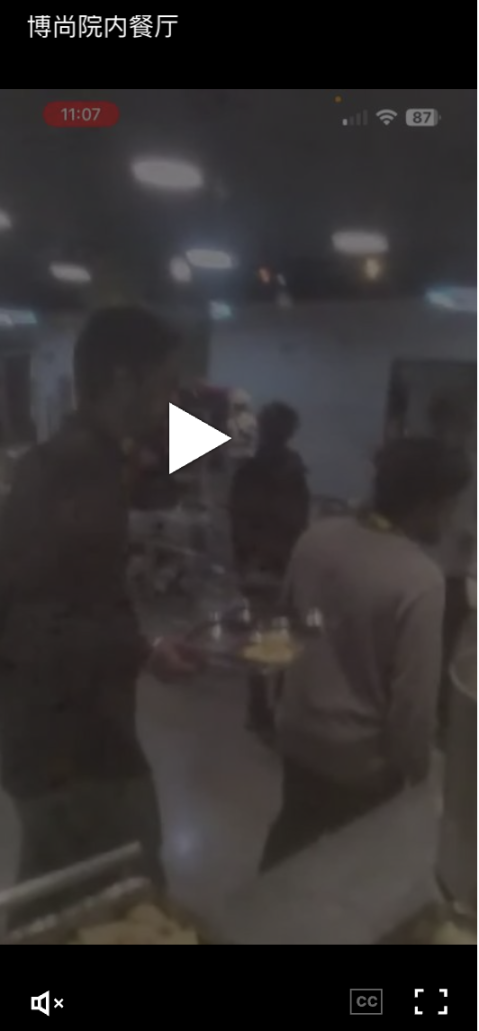
A secretly recorded video via Signal showing the interior of the Boshang scam compound’s cafeteria. Red Bull said the food tasted strangely chemical. Employees were barred from the cafeteria for violations—even minor ones like arriving late to work or being absent from roll call in the dorm.
I told him he should now focus on surviving the remaining six months of his contract as safely as possible—and contact me once he was free. But Red Bull, once again, had already thought ahead. He told me that if the interviews ended now, he would leave immediately.
He shared a long-planned escape scheme: forging a letter from Indian police claiming he was under investigation in Jammu and Kashmir. He’d tell his supervisor that failure to return would endanger not only himself and his family—but ultimately implicate the entire compound. He’d beg his boss to let him go home for two weeks to resolve the matter—and promise to return. He said the boss might believe the story and grant his request.
I thought the plan was unworkable—and told him so outright: I warned that compound managers might detect the forgery and punish him. But after discouraging one risky scheme after another, he seemed unusually fixated on this one. I asked him to wait while I tried connecting him with someone more familiar with escape strategies from these compounds—like “W,” a Southeast Asian activist I knew, experienced in helping political refugees flee the region.
Just as Red Bull entered the office lobby, he suddenly switched to cover mode. “It’s okay, Uncle—you don’t need to worry,” he said, passing security guards. “Everything will be fine, okay?” Then he hung up.
In our routine calls, Red Bull also mentioned another possible path to freedom: paying about $3,400 to buy his release and return home. He just needed to figure out how to raise the money.
A flood of thoughts rushed through my head. First, a flicker of hope—for Red Bull—and a desire to help him repay this ransom. But immediately, I realized WIRED could never pay a source this way—or worse, fund a ransom payment to a human-trafficking criminal syndicate. Such an act would violate journalistic ethics. Paying sources is typically considered corrupt behavior that creates conflicts of interest—and sets an unforgivable precedent. I told Red Bull this, and he quickly replied that he “fully understood” and had never asked me—or WIRED—to pay.
Even so, the mere suggestion of ransom planted a dark, lingering doubt: What if Red Bull was deceiving me? Initially, after seeing enough evidence confirming he was who he claimed to be—a real victim trapped in a terrifying Laotian scam compound—I’d set aside my doubts. Now, nearly two weeks into our relationship, this unsettling possibility haunted me: What if he truly was an insider—but this entire story had been a scam from the start? Just thinking about it felt like betraying all the trust he’d placed in me.
I decided to set that suspicion aside—acknowledging he might have ulterior motives, but choosing instead to believe his intentions were sincere.
Meanwhile, a few days later, he brought up the forged-document idea again, and I reiterated my suggestion to wait for help from someone like W—rather than risking the plan. But I could feel his determination hardening day by day. “I have no other choice,” he said. “I’ll take it one step at a time.”
Plan Exposed, Capture, Ransom, and Confession in Desperation
Just a few days later, on a Saturday afternoon, I unexpectedly received an email—from the same Proton Mail address Red Bull had first used to contact me. Since switching to Signal, he hadn’t used this account. Like the first email, this one had no subject line.
I opened it—and fear instantly gripped me, leaving my mind blank.
“They’ve caught me—now they’ve taken everything from my phone,” it read. “They beat me, and now they might kill me.”
Red Bull had executed his forged Indian police document plan—and the worst-case scenario appeared to have unfolded.
I suppressed my panic, racing through possible options. I texted my editors and W, hoping they might have ideas. Fifteen minutes after my first message, I received another email from Red Bull—more coherent than the first: “I’m trapped—with no way out. They’ve taken my personal phone and ID,” it read. “If you have any way to help, please do.”
Meanwhile, W replied on Signal. We spoke on the phone, urgently discussing ways to increase Red Bull’s chances of survival. I didn’t know how Red Bull had sent the emails—but W warned me replying would be dangerous. His bosses already knew he’d lied to them about escaping. But as far as they knew, they hadn’t yet discovered he’d been communicating with a journalist and leaking compound secrets.
If they found out, they would unquestionably kill him. “The methods would be extremely cruel,” W said. “He has zero chance of leaving this place alive.” He advised me to wait for Red Bull to update me on his situation—and how to communicate safely—before acting.
After a torturous 24 hours, I finally received another email from Red Bull—a long, rambling, emotionally raw passage.
“Last night they beat me—I’m still starving, haven’t eaten anything. They froze my card, took my personal phone and everything. Today they’ll decide what to do with me. The Indian team leader and everyone sat in front of me, asking if I knew who they were—then beat me again, and brought me back to the office. Today I must confess everything I’ve done is fake—I must admit my mistakes. I can’t escape here. I have no money—not even enough to walk out the main gate. I’m contacting you using the office computer. If you have any way to help, email me—I’ll check. Tell W to contact me by email. They keep torturing me—after bringing me back to the office, I can only use the office computer. Have a good night.”
Before I could reply, a Signal message arrived: “Red.”
“Bull,” I replied.
He quickly messaged back—this time briefly: he’d been locked in a room, and his captors demanded 20,000 RMB (about $2,800) to release him.
In this life-or-death crisis, I couldn’t help wondering whether this was the final act of the scam I’d suspected earlier: drawing in a journalist, making him responsible for a source’s safety—and then demanding ransom to save him.
Regardless, my editors had made it unequivocally clear that neither WIRED nor I could pay Red Bull—or his captors—any ransom. In fact, they were more suspicious than ever that he might be deceiving me. Yet I still felt the more likely truth was that this nightmare was entirely real.
Red Bull appeared to have regained his phone—likely so he could contact people to raise ransom—but I judged calling him too risky. Instead, I texted him, suggesting he try reaching W to see who could help him escape. W had extensive experience with such situations—and if Red Bull were monitored, being caught speaking with an activist would be safer than speaking with a journalist.
I also told Red Bull that although I felt profound anguish over what he was enduring, I couldn’t pay his ransom—just as I couldn’t pay his earlier “buyout” fee.
“Okay,” Red Bull wrote. “I understand.” He asked me to tell W to contact him, and I agreed.
I watched him set Signal’s disappearing messages to delete after just five seconds—a telling sign of how intensely he feared surveillance.
He sent a thumbs-up emoji—and the message vanished.
Over the next few days, I contacted everyone I thought might help Red Bull—even potential ransom payers: Erin West, W, and the head of W’s nonprofit. But each refused—either fearing they’d fuel the human-trafficking trade, doubting Red Bull’s story was genuine, or both.
Though West had shown tremendous enthusiasm when Red Bull first came forward, she now said this sounded like a human-trafficking scam she’d heard of elsewhere—one where fake victims demand fake ransoms. W spoke with Red Bull multiple times on Signal voice calls—but was overwhelmed by his state of extreme panic, and found his urgent demands for ransom (with promises of repayment later) highly suspicious. “This sounds exactly like the ‘give me one Bitcoin, I’ll give you two’ scam,” W later told me.
Still, I felt ethically obligated to believe everything Red Bull said—presuming it was all true—and do everything possible within journalistic ethics to help him escape.
On the third day of his ransom kidnapping, things seemed to shift slightly. I could clearly sense surveillance had eased—perhaps because his captors were growing impatient. I decided to risk a phone call. “Things aren’t going well,” he said in his usual understated tone, speaking softly, pressing the phone tightly to his ear. He said he had a fever, had been beaten multiple times—slapped, kicked—and forced to confess to forging the Indian police document. Once, his boss mixed a white powder into a glass of water and forced him to drink it. Afterwards, he became unusually talkative and confident—but soon broke out in red rashes across his skin. He said he was sometimes sent back to the dorm to sleep—but hadn’t eaten in days and had been deprived of water for extended periods.
He’d written to Indian embassies and consulates across Southeast Asia—but none replied. “No one will help me—I don’t know why.” Minutes into the call, his voice cracked—and for the first time, I heard him express self-pity in muffled sobs.
But then he took a deep breath and quickly composed himself. “I want to cry,” he said. “But let’s see how things go first.”
On the fourth day after his failed escape attempt and ransom demand, Red Bull texted me that conditions inside the compound had changed. Everything was eerily quiet—no one summoned him to the office. After asking colleagues, he learned rumors were circulating that Laotian police planned a raid on the compound. Their Chinese bosses had received internal warnings and begun operating discreetly.
The next day, rumors of the raid persisted—and Red Bull received a hopeful message from the Indian Embassy in Laos: “Please provide copies of your passport and work ID,” it read. “The embassy will take necessary action to mount a rescue.”
Salvation seemed within reach. But the following days passed with no action. The embassy stopped replying to Red Bull’s messages. Late one night, after multiple attempts, I finally reached an Indian embassy official. He seemed completely unaware of the person we described—then repeated vague governmental assurances about mounting a rescue before hanging up.
As days passed with no definitive response from the Indian government, no police raid, and no one willing to pay his ransom, Red Bull seemed to sink into fatalism. One morning, I woke to a series of messages from him—confessional in tone, as if fearing he might die imprisoned and wanting to atone for his sins.
“I want to be honest about something. When I first contacted you, I said I’d never scammed anyone—that wasn’t entirely true,” he wrote. “The truth is, my Chinese boss forced me to bring two people into the scam. I didn’t do it willingly—and feel guilty about it every day. That’s why I want to tell you the full truth now.”
Later, he shared more details about the two victims. From one, he’d stolen $504; from the other, about $11,000. He gave me both names. I tried contacting them—but couldn’t locate one, and the other never replied. Under the compound’s incentive structure, Red Bull should have earned a commission from the $11,000 scam. But he said he’d never received any reward beyond his meager base salary.
Later, I revisited the photo of the office whiteboard Red Bull had sent earlier. Clearly visible was the Chinese name assigned to him by the compound: “Ma Chao”—alongside the $504 amount. I’d overlooked it entirely at the time—and he’d never tried to hide it.
“I entrust you with my most truthful story,” Red Bull wrote in his confession’s closing. “This is the complete truth.”
Ten disorienting days later, Red Bull told me he and his colleagues were ordered to pack up. Office computers were boxed and moved to the dorms. All employees were relocated to a new building several hundred feet away—and told to continue working from temporary dorm rooms instead of returning to the office. According to rumors, the police raid was finally imminent.
Red Bull said he’d been treated like an animal during this period—ostracized by fellow employees: no bedding, sometimes sleeping on the floor, fed only when someone remembered—and often given spoiled leftovers. He’d lost weight, ached all over, had a fever, and felt flu-like.
Yet even so, Red Bull hadn’t given up—still thinking about gathering more evidence.
During the office shutdown, work devices were permitted in dorms. The compound’s lax security made Red Bull realize this was an opportunity. One day, while a roommate slept, he found the man’s work phone.
He’d previously glimpsed the roommate entering his password from behind—and now swiftly unlocked the device. Then Red Bull used WhatsApp’s “Linked Devices” feature to pair his personal phone with the work phone, gaining access to the compound’s internal communications. Using this access, he screen-recorded himself meticulously scrolling through months of internal chat logs—and every screenshot of conversations with victims posted by colleagues.
Another day, he discovered his own work phone in another dorm—untouched since his failed escape attempt. Again, he used WhatsApp linking to access its messages from his personal phone. Then he screen-recorded himself scrolling through chat logs. These videos documented the compound’s daily operations over three months. Red Bull sent me clips—but the full videos totaled nearly 10GB, far exceeding his mobile data limits for sending.

Miraculous Escape, Return Home
A week later—after he and his colleagues moved to the new building—Red Bull sent me a series of dramatically different short videos: one showed dozens of South Asian men lined up outside a high-rise building, facing Laotian police officers in khaki and black uniforms; another showed a group of similarly situated people sitting in rows in a lobby. Red Bull told me the police raid had finally happened—shutting down scam compounds that hadn’t evacuated the old office area like his bosses had. These videos were now circulating among employees who’d narrowly avoided the crackdown.
While other scam compounds struggled to adapt to new temporary workspaces, Red Bull had clearly endured weeks in hell. He pleaded desperately with his boss to let him go—arguing he was useless to them. He had no money, and clearly no one was willing to pay his ransom. In this already overcrowded temporary building, he was just dead weight—wasting space.
Shocking as it was, his boss agreed. They didn’t kill him—they told him he could leave.
To cover travel costs home, Red Bull borrowed a few hundred dollars from his brother. Then he wrote to an Indian acquaintance at another scam compound nearby, saying he was returning home to visit family—but would come back soon. He proposed that if the acquaintance sent him money for a plane ticket, he’d split the recruitment referral fee upon his return. Soon, hundreds more dollars appeared in his account. Red Bull had scammed a scammer—and found his way home.
In late July, Red Bull’s team leader Amani intercepted him outside the dorm and returned his passport, telling him he could go. Red Bull said most of his belongings—including his shoes—were still in the dorm, and he now wore only flip-flops.
Amani shrugged, saying he didn’t care. Meanwhile, 50k himself sat in an Audi, waiting to drive Red Bull to the Golden Triangle border. From there, he’d be on his own. Wearing flip-flops, Red Bull climbed into the back seat—and drove away.
Later, after finally escaping, Red Bull remained deeply wounded by this final humiliation—as if it hurt more than all the slaps, kicks, drugging, and starvation he’d endured. “I never imagined they’d treat me this way,” he wrote in a text, adding a crying emoji. “They wouldn’t even let me put on my own shoes.”
In the days after being dropped at the border, Red Bull traveled by bus, train, and eventually booked an absurdly cheap flight with no fewer than five layovers—finally returning to India. En route home to his village, he began sending me WhatsApp screen recordings he’d smuggled out hidden on his phone.
These files ultimately became the most valuable and unique materials he provided me. A WIRED reporter team later compiled them into a 4,200-page PDF of screenshots and shared it with experts studying scam compounds. We found the file detailed life inside the compound, listing every successful scam over those months—and clearly revealing the scale and hierarchical structure of this operation. It also exposed the mundane, daily existence of the forced laborers carrying out these scams: their routines, fines and punishments, and the Orwellian rhetoric bosses used to manipulate, deceive, and control them.
Ultimately, no one provided Red Bull the escape assistance he needed—not the human rights organizations I contacted, not the Indian government that promised rescue but delivered nothing, not WIRED. Red Bull saved himself. And even without external support—trapped in utter desperation—he gathered this material and handed it to me: the most explosive data evidence yet.
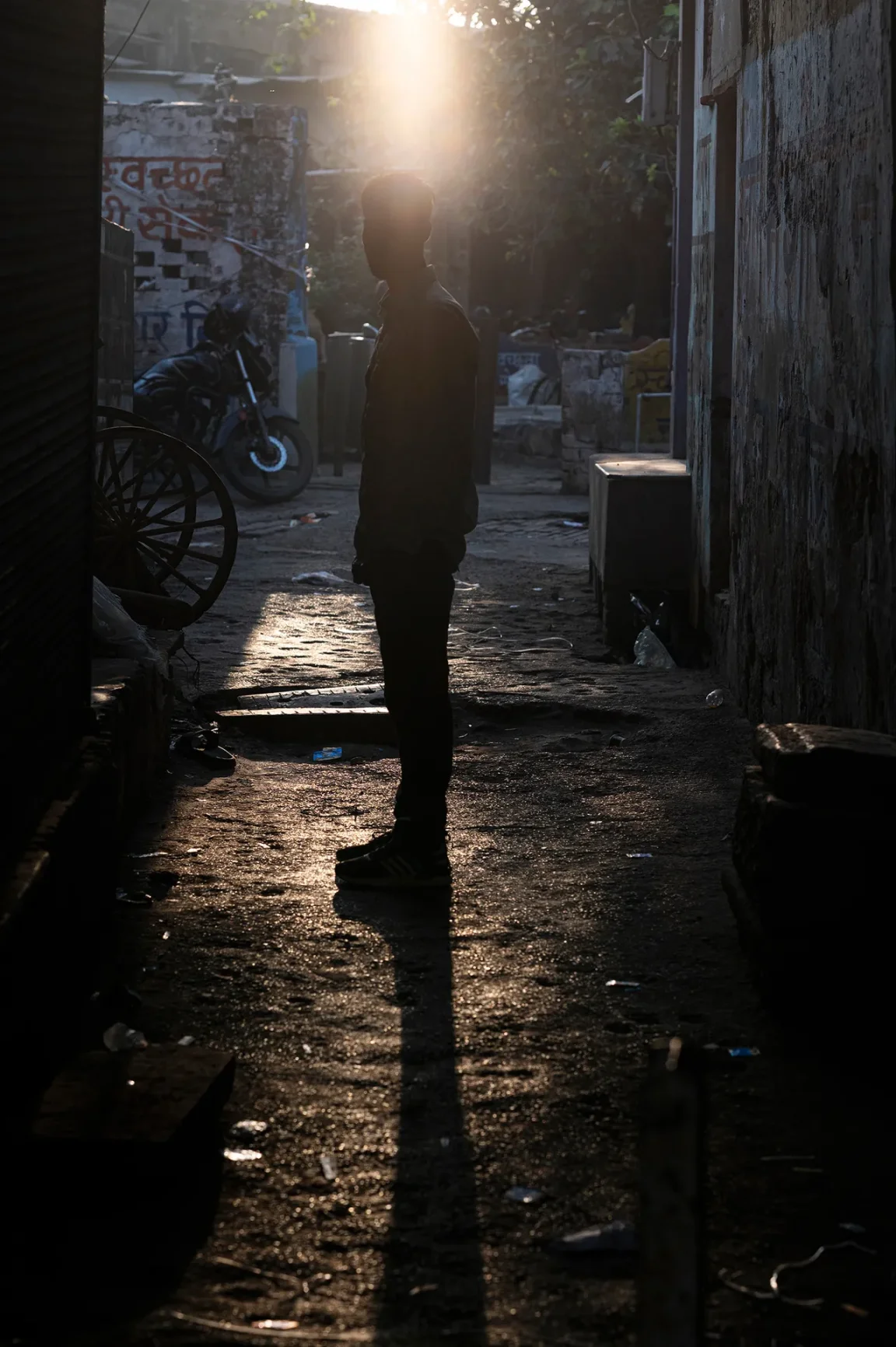
Red Bull has returned to his home country, India.
Red Bull’s hands aren’t clean. He admitted to scamming two innocent people under duress. Yet despite my doubts—and those of others I tried to enlist to help him—his original intent as a whistleblower proved pure.
There’s now no question: Red Bull is real.
On a quiet backstreet in an Indian city, I waited alone—surrounded by dozens of Hanuman langurs, some lounging lazily, others grooming each other, still others leaping across balconies and power lines. Then the monkeys scattered into trees and rooftops—and a white SUV rounded the corner, driving down the street and stopping in front of me.
The door opened, and Red Bull stepped out—wearing the same shy smile he’d flashed during our first Signal video call. He looked smaller and frailer than I’d imagined—but far more vibrant than on screen, dressed in a flannel button-down shirt and sporting a fresh haircut. As he walked toward me, his smile widened, losing its restraint—and I extended my hand, shaking his firmly.
Now finally free, Red Bull allowed me to reveal his real name: Mohammad Muzahir.

Mohammad Muzahir—aka Red Bull—sitting in the car after his first in-person meeting with a WIRED journalist in India.
“I’m so happy to meet you. I’ve been looking forward to this day—to sit face-to-face and share everything,” Muzahir said as I helped him check into a hotel and we rode together in the SUV to my accommodation. “I’m absolutely overwhelmed with excitement.”
The three months between Muzahir’s escape and this meeting hadn’t been easy. He was nearly penniless—and could no longer focus on building websites and Facebook pages as before. He didn’t even own a laptop. To survive, he’d worked as a waiter and construction laborer. Beyond working, applying for overseas jobs and universities (so far unsuccessfully), Muzahir spent hours each day researching scam compounds on his phone—its front and back screens cracked, its display filled with garbled, glitching lines.
In his research, Muzahir discovered that most men arrested in the raid had later been returned to the Golden Triangle. He believed the police operation was merely performative—inflicting almost no real damage on local scam compounds. He also learned his former employer, the Boshang Scam Compound, had relocated to Cambodia—taking many of his former colleagues with it.
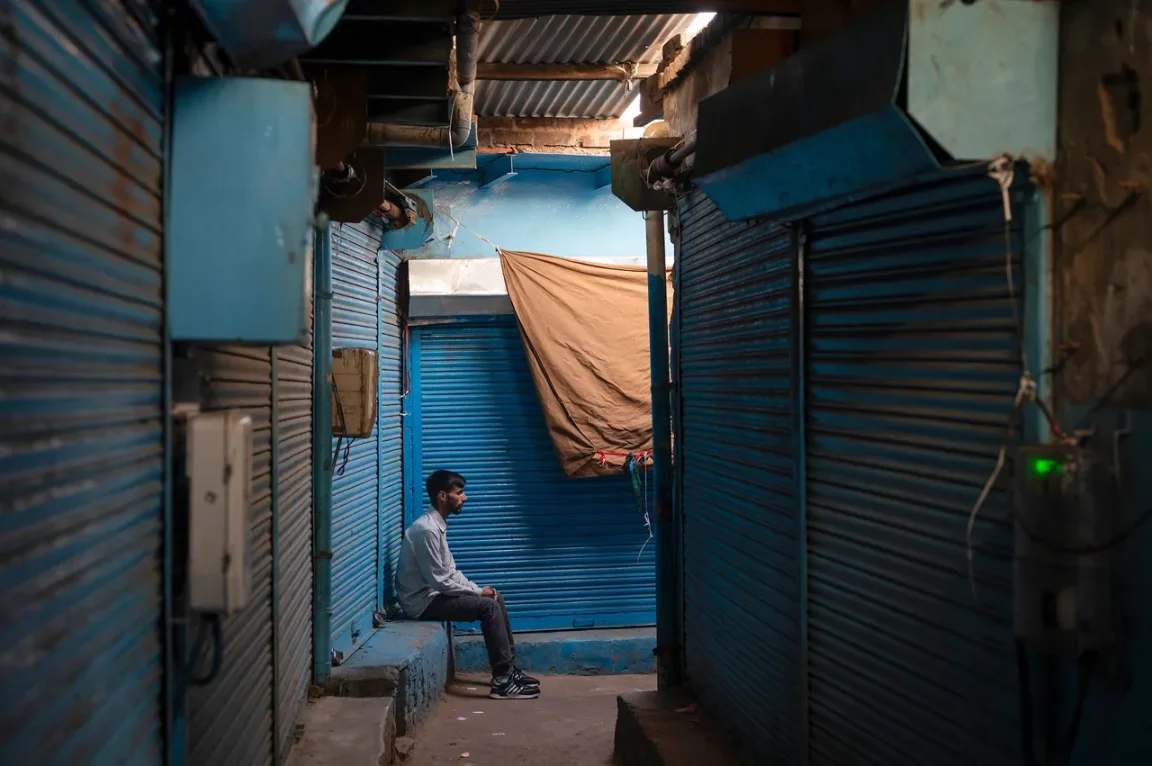
Muzahir remains deeply guilty about colleagues he left behind in the compound—and tormented by having scammed two people. Photo by Saumya Khandelwal.
In an empty lounge in the basement of my hotel, we sat down—and Muzahir told me he slept only three or four hours each night. What kept him awake was the knowledge that the scam compound he’d escaped—and dozens like it—continued operating in Southeast Asia’s lawless zones, even expanding globally. He couldn’t stop thinking about the colleagues he’d left behind. He also suffered deep guilt over scamming two people—even though he reminded himself it was a price he’d had to pay before becoming a whistleblower. He dreamed of earning enough money to compensate them. “Honestly, this story doesn’t have a happy ending,” he said.
Having endured repeated betrayals—and having worked in a compound whose business model was mass betrayal—Muzahir’s biggest problem now was his inability to trust anyone. Even when I tried introducing him to human rights NGOs and survivor groups, he resisted fiercely. “These people just waste time—offering false hope,” he’d written in a text. “I’ll never trust anyone easily again.”
Somehow, I’d become the exception to this near-universal distrust. But now that we’d finally met, I felt compelled to confess to Muzahir: I’d doubted him too—even during his most desperate moments, foolishly worrying he might be deceiving me.
To my relief, he simply smiled. “You did the right thing,” Muzahir said. He pointed out that if I’d paid his buyout fee—or even his ransom—he’d have left the compound early, missing the chance to record and share the compound’s complete WhatsApp conversation archive.
Muzahir now urgently wants WIRED to publish our full analytical report on these materials. I’d cautioned him that publishing the report could provoke retaliation from Chinese mafia groups in India—even if he left the country as planned, he might still be at risk. We could anonymize his identity—but his team was small, and even without publishing this detailed account of his experience, his former bosses would likely identify him instantly as the leaker.
Muzahir replied that he was willing to accept this risk—including revealing his real name—to ensure his story reached the public. After everything he’d endured, Muzahir retained his idealism: he hoped his experience would serve not only as a warning—but also inspire others like him.
In that moment, as he explained this decision, I saw more clearly than ever the force driving him to risk everything: he wasn’t just speaking to me—but to everyone who might choose to resist or blow the whistle within the rapidly growing scam-compound industry; to the global power structures enabling it; to survivors; and to the hundreds of thousands trapped in this modern slavery system, silenced and unheard.
“If someone sees my story, maybe more Red Bulls will step forward and speak,” Muzahir said, with his characteristic shy smile. “When there are countless Red Bulls speaking up across the world, everything will get better.”
Join TechFlow official community to stay tuned
Telegram:https://t.me/TechFlowDaily
X (Twitter):https://x.com/TechFlowPost
X (Twitter) EN:https://x.com/BlockFlow_News
 @WIRED






