Crypto ATMs become new tool for scams: 28,000 locations across the U.S. steal $240 million in six months
TechFlow Selected TechFlow Selected
Crypto ATMs become new tool for scams: 28,000 locations across the U.S. steal $240 million in six months
Elderly people are prime targets for scammers at cryptocurrency ATMs.
 Navigating Web3 tides with focused insights
By Cameron Fozi, Chloe Rosenberg and Reeno Hashimoto, The New York Times
Translated by Chopper, Foresight News
Cryptocurrency ATMs scattered across convenience stores and gas stations—seemingly convenient cash-to-digital currency terminals—have become lucrative traps targeting the elderly. Behind each deposit that vanishes lies a meticulously orchestrated scam.
Mary Handeland, a real estate agent from Grafton, Wisconsin, met a match on a dating app last year. The man introduced himself as Mike, an engineer at a Texas-based defense contractor.
After two months of text messages and phone calls, 71-year-old Handeland received a confession of love from Mike. Soon after, he asked her for money.
Handeland was instructed to deposit cash into devices known as "cryptocurrency ATMs." These self-service kiosks are commonly found in grocery stores, gas stations, and tobacco shops. They resemble traditional ATMs but convert cash into cryptocurrency.
Starting in October of last year, Handeland deposited $98,300 through 19 separate transactions into these machines. In the end, all the money disappeared, Mike vanished, and the entire identity turned out to be fabricated from the beginning.
"I still don't know what came over me," said Handeland. "That sense of being manipulated—it felt like I was caught in some kind of vortex."
Handeland's experience has brought cryptocurrency ATMs into the spotlight. While these machines have rapidly proliferated across the U.S., they are now under close scrutiny for being exploited in scams. According to data from the U.S. Treasury Department’s Financial Crimes Enforcement Network, there are at least 28,000 cryptocurrency ATM locations nationwide—more than double the number of Wells Fargo ATMs.

Mary Handeland deposited $98,300 into cryptocurrency ATMs across 19 transactions—and lost it all
Self-service terminals operated by companies such as Bitcoin Depot, CoinFlip, and Athena Bitcoin allow people to exchange cash for cryptocurrency in physical locations. After users deposit cash, operators transfer an equivalent amount of cryptocurrency into their digital wallets, charging a transaction fee.
But law enforcement agencies say these kiosks have become breeding grounds for financial crime. Last year, the FBI’s Internet Crime Complaint Center received nearly 11,000 complaints related to these devices, with total losses amounting to $246.7 million. The FBI estimates that losses from cryptocurrency ATM scams reached approximately $240 million in the first seven months of this year alone.
The cryptocurrency industry has long been plagued by scandals involving money laundering and fraud, and crimes tied to ATMs represent just one facet. However, Aidan Larkin, CEO of asset-tracking firm Asset Reality, pointed out that these devices are particularly dangerous due to their accessibility and their targeting of vulnerable populations.
"For victims who are less tech-savvy and lack experience with digital technology, cryptocurrency ATMs are the easiest way for scammers to extract their assets," he said.
Data from cryptocurrency analytics firm TRM Labs shows that from 2024 through the first half of 2025, the proportion of illicit transactions involving cryptocurrency ATMs was more than 17 times the average rate across the broader cryptocurrency industry.
Since Bitcoin’s creation in 2009, these machines began appearing in cafes, convenience stores, and gas stations. Bitcoin Depot was founded in 2016 by Brandon Mintz, shortly after he graduated from college. He once stated that his goal was to build a network of cryptocurrency ATMs to help unbanked individuals or those unable to access other channels gain entry to Bitcoin.
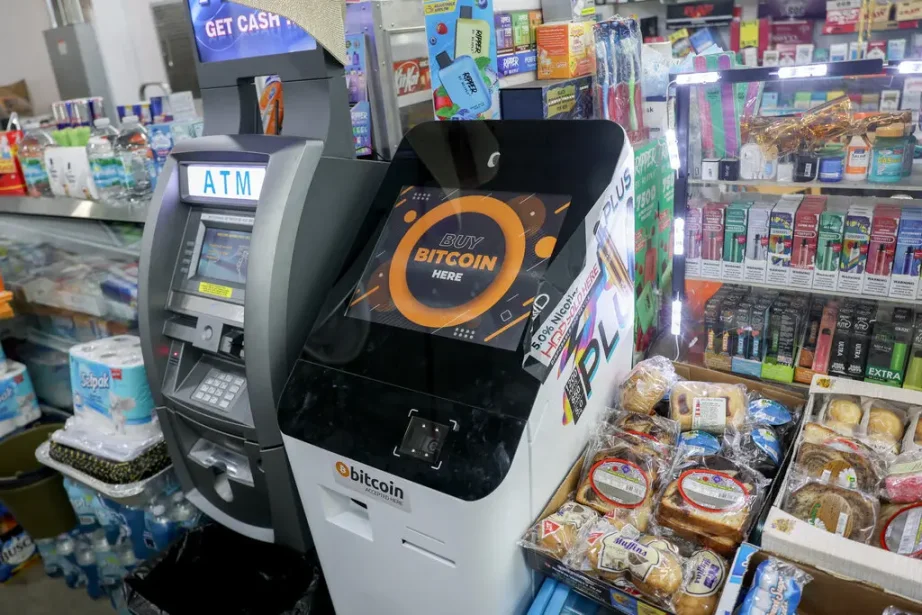
A Bitcoin ATM inside a convenience store in Miami. According to U.S. Treasury data, cryptocurrency ATM operators are present in at least 28,000 locations
In 2023, Bitcoin Depot went public through a merger with a special purpose acquisition company (SPAC). The company says it now operates over 9,000 ATMs, making it the largest cryptocurrency ATM network in North America. Since its founding, it has processed 4 million transactions totaling $3.3 billion.
However, law enforcement warns that once cash is converted into cryptocurrency via these machines, scammers can quickly move the funds to jurisdictions beyond the reach of U.S. authorities, making recovery nearly impossible for victims.
Over a dozen states, including California and Illinois, have begun restricting the use of cryptocurrency ATMs, with some imposing caps on transaction limits and operator fees.
When California debated whether to regulate cryptocurrency ATMs in 2023, Alexander Gammelgard, then president of the California Police Chiefs Association, warned state lawmakers about the dangers posed by these devices in a letter supporting regulatory proposals.
He wrote: "These machines enable international criminal organizations to steal money from California residents without involving any bank or financial institution—entities that could otherwise assist law enforcement in catching criminals and recovering stolen assets."
Later that year, California passed a series of regulations limiting daily individual transactions via cryptocurrency ATMs to $1,000 and capping fees at $5 or 15% of the transaction amount, whichever is higher.
Many cryptocurrency ATM operators say scam-related transactions make up only a tiny fraction of their business. Chris Ryan, chief legal officer at Bitcoin Depot, told Texas lawmakers this year that fraudulent transactions account for 2% to 3% of the company’s total U.S. transactions. In a statement, the company said consumer protection is its top priority and that it maintains one of the most comprehensive compliance programs in the industry.
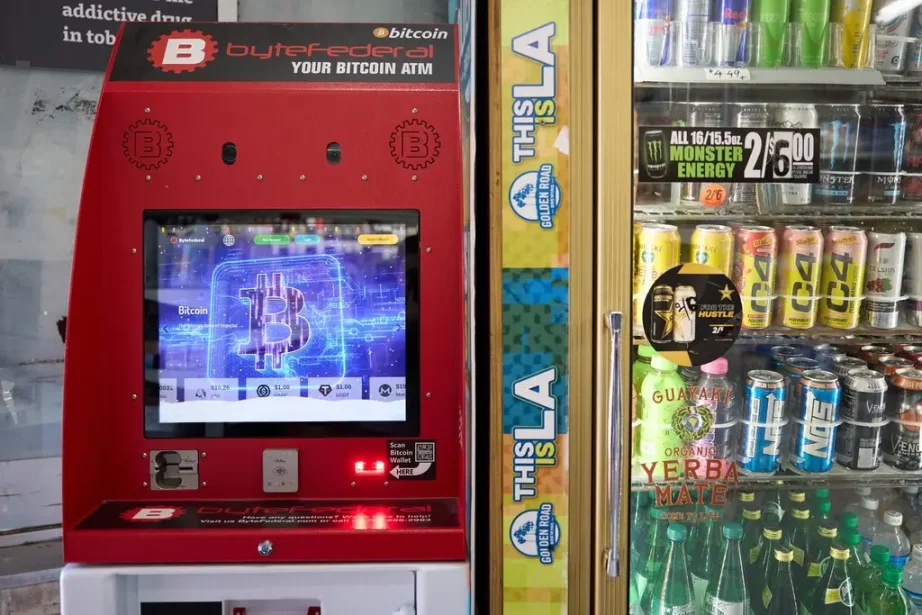
Byte Federal, which operates more than 1,200 cryptocurrency ATMs, said that between July 2024 and the first half of 2025, transactions by scam victims made up just 1.2% of its volume. The company’s CEO, Paul Tarantino, said the firm proactively calls registered users aged 60 and older to warn them of potential scams, successfully preventing over 80% of suspicious transactions.
Paul Tarantino, CEO of cryptocurrency ATM operator Byte Federal, says the company calls customers aged 60 and above upon registration to alert them to possible scams
Many cryptocurrency ATM operators also post anti-scam warnings on their machines, requiring users to confirm that funds are being sent to their own cryptocurrency wallets rather than someone else’s. They also say they cooperate with law enforcement.
Sung Choi, COO of Coinme—a Seattle-based company that provides software for ATMs—said the firm continuously improves its ability to detect and block potentially fraudulent transactions, but scammers still find ways to bypass safeguards.
"No matter how hard we try, scammers are extremely sophisticated and seem to always stay one step ahead," said Sung Choi.
Athena Bitcoin says it works diligently to prevent fraud but cannot control user decisions, just as banks aren’t responsible for how customers use cash after withdrawing it. CoinFlip says it is committed to anti-fraud efforts and maintains high standards of compliance and transparency.
For victims lured into using these machines, the consequences can be devastating. In 2022, Connie Ruth Morris, a retired nurse from Amarillo, Texas, joined an online fan group for Brazilian actor and singer Daniel Boaventura and began receiving text messages from someone claiming to be Boaventura.
After several days of messaging, the man professed love to 72-year-old Morris and asked her to send money via cryptocurrency ATMs to help him pay off personal debts so they could buy property together.
Morris, married for over 45 years, agreed. She said she deposited around $300,000 through cryptocurrency ATMs over roughly six months and also mailed four iPhones and a $200 gift card.
In May 2023, Morris told her husband she planned to leave him and be with Boaventura. Her son told her she had been scammed.
By then, most of the family’s savings had been wiped out. Morris and her husband later divorced.
"I was so brainwashed that I had completely disconnected from reality," she said. "Before, I could always help my children and grandchildren. Now, I can’t."
Join TechFlow official community to stay tuned
Telegram:https://t.me/TechFlowDaily
X (Twitter):https://x.com/TechFlowPost
X (Twitter) EN:https://x.com/BlockFlow_News
 @nytimes