The person who exited at the NFT peak is now the most secretive winner behind OpenClaw.
TechFlow Selected TechFlow Selected
The person who exited at the NFT peak is now the most secretive winner behind OpenClaw.
A true expert never picks and chooses—every bite delivers the meat.
 Navigating Web3 tides with focused insights
Author: David, TechFlow
OpenClaw has gone viral—but the company quietly cashing in on this wave is one you’ve probably never heard of:
OpenRouter.
To use OpenClaw, you need to integrate various AI models to get work done—Claude, GPT, DeepSeek—each with its own pricing and API. OpenRouter bundles these models together, enabling unified access through a single interface—and pockets the margin.
The person behind this business is Alex Atallah. His company recently raised $40 million in a Series A round led by a16z, valuing it at $500 million.
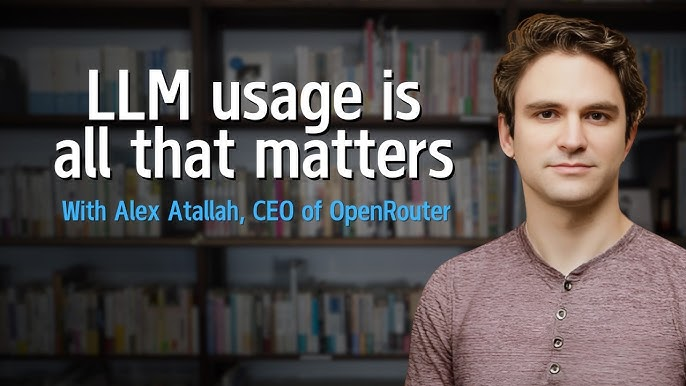
You may not know this either: his previous startup was OpenSea—the world’s largest NFT marketplace—which once hit a peak valuation exceeding $13 billion.
Yet he chose to exit just as NFTs were at their hottest—months before the NFT market crashed.
Now, he’s profiting again—in this latest AI boom.
From Liquidity Aggregation to Large-Model Aggregation
Alex Atallah graduated from Stanford’s Computer Science Department.
In 2018, he co-founded OpenSea with Devin Finzer. Their mission was simple: provide a marketplace where people could buy and sell NFTs minted by others—taking a 2.5% fee per transaction.
OpenSea didn’t mint NFTs or trade them speculatively—it merely provided shelf space and aggregated liquidity.
When the NFT boom hit in 2021, breakout collections like Bored Ape Yacht Club evolved into cultural icons. At its peak, OpenSea’s monthly trading volume exceeded $5 billion. Forbes estimated Atallah and Finzer’s combined net worth at $2.2 billion.
In July 2022, Atallah stepped down as CTO, stating he wanted to “build something new from scratch.”
What followed is well known: the NFT market collapsed, plunging the industry into a deep freeze—and OpenSea’s own business fell into disarray. Yet someone always pays the bill for the feast—and Alex exited just before the music stopped.
In 2023, he launched OpenRouter. In one sentence:
A large-model aggregation and routing platform—exposing APIs from hundreds of models behind a single unified interface, charging developers a 5% fee per call.
You might ask: Why not call models directly via OpenAI, Anthropic, Google, or DeepSeek?
You certainly can.
But today, few rely on just one model: Claude for coding, Gemini for research, DeepSeek for cost-sensitive tasks—each requiring separate registration, top-ups, and incompatible API formats...
Not to mention many users in China can’t even connect directly to Claude or GPT APIs.
Hence OpenRouter represents the path of least resistance: one interface, 500+ models, standardized formats, automatic switching—“one key to rule them all.”
You may not have noticed while using OpenClaw, but the default provider (API provider) in its configuration file used to be OpenRouter.
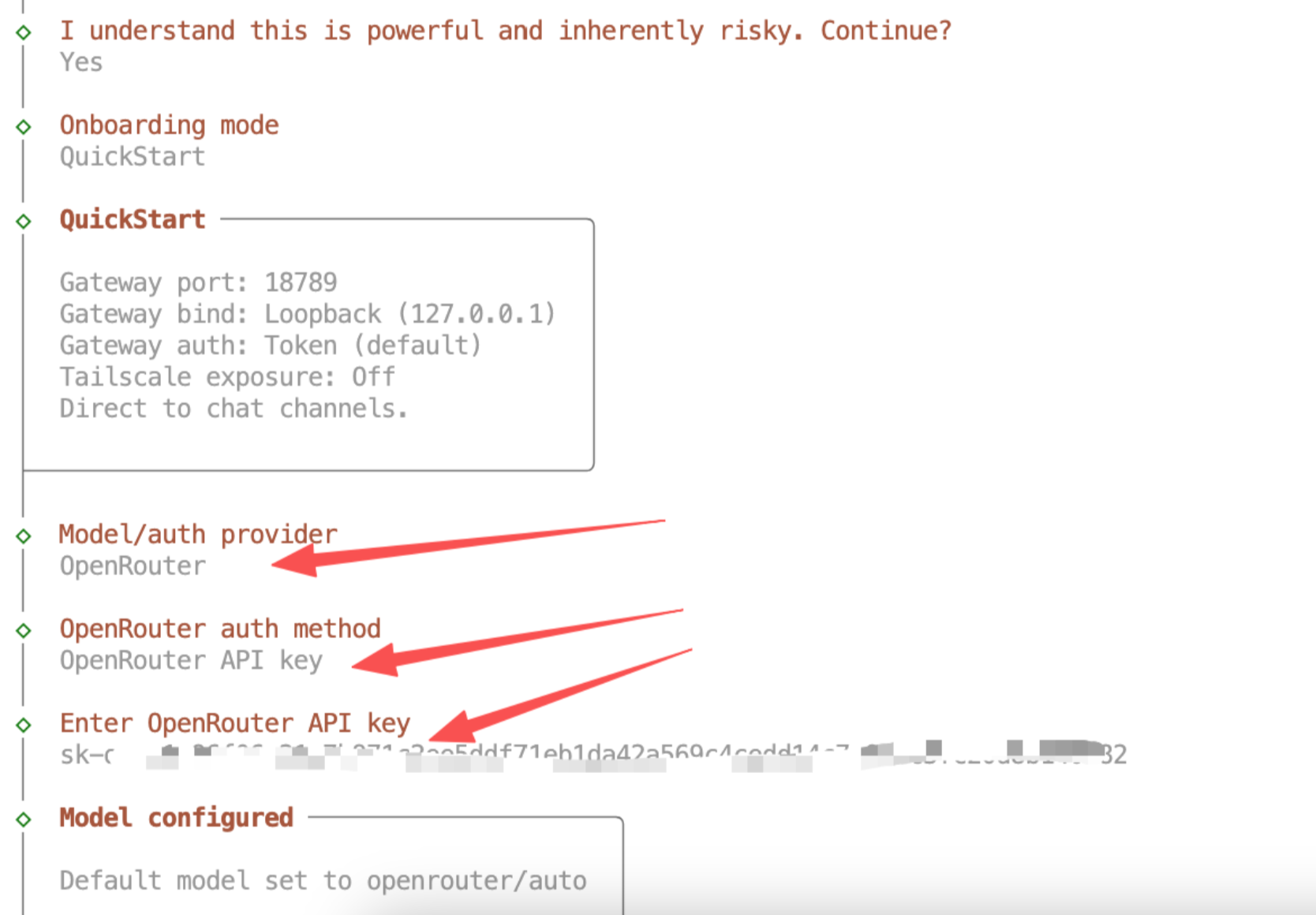
Image source: Zhihu user Feng, “Alchemy Practitioner”
When you invoke Claude or DeepSeek, your request first hits OpenRouter—then gets forwarded to the respective model vendor. Even OpenClaw’s documentation states:
“If the system doesn’t recognize your API key format, it defaults to OpenRouter.”
How fast has this business grown?
In October 2024, $800,000 flowed through OpenRouter monthly. By May 2025, that figure had surged to $8 million.
Seven months—tenfold growth.
Annually, over $100 million flows through its systems. Taking its 5% cut yields $5 million in revenue—with fewer than ten employees.
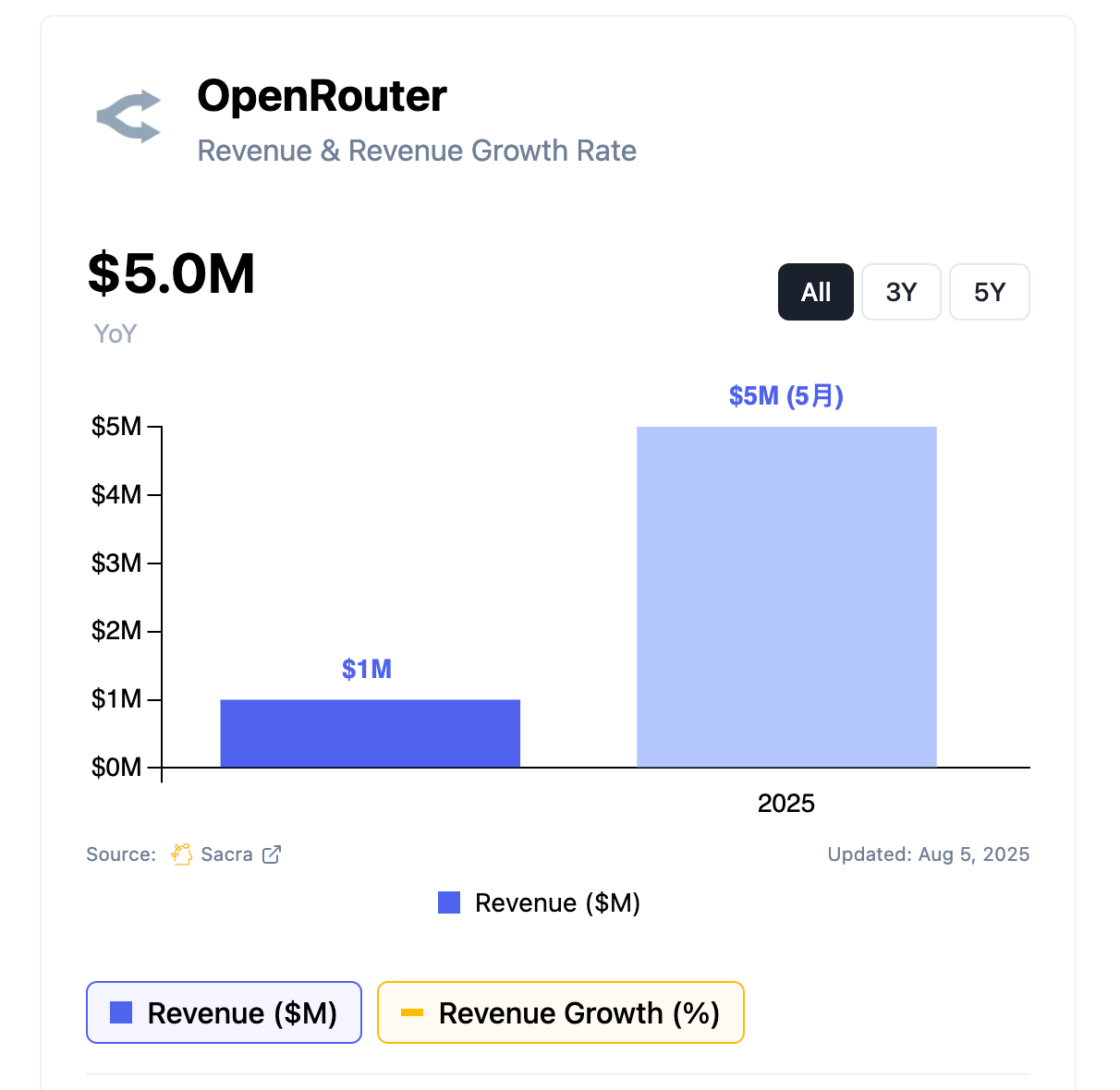
Image source: sacra.com
a16z built an entire industry report around OpenRouter’s data titled The State of AI: 100 Trillion Tokens; Stripe even built a custom billing system for it.
And with OpenClaw’s explosive popularity this year, more developers and enthusiasts have flooded in—experimenting wildly and burning tokens at scale—necessitating frequent calls across diverse large models. This has fully ignited OpenRouter’s business.
Moreover, a16z led its funding round—assigning it a $500 million valuation.
Once again, the “shovel seller” has become the shovel seller.
Different Hype Cycles, Same Model
Look closely at Alex’s two ventures—their structures are identical.
OpenSea didn’t mint NFTs. It aggregated NFTs minted by others onto a single platform, enabling buyers and sellers to transact—and took a 2.5% cut. OpenRouter doesn’t train models. It aggregates models trained by others onto a single platform, enabling developers to call them—and takes a 5% cut.
This approach appears to be his comfort zone. Whether in NFTs or AI, both markets share striking structural similarities:
Supply is extremely fragmented; demand-side users don’t know where to find supply—and he stands in the middle as the shelf.
How fragmented were NFTs in 2021? Dozens of blockchains, hundreds of projects, tens of thousands of new collections daily. If you wanted to buy a Bored Ape, you couldn’t possibly visit every project’s website individually. OpenSea gathered them all—so you could browse and buy, and counterparties could list and sell.
How fragmented are large models in 2025? OpenAI, Anthropic, Google, Meta, DeepSeek, Mistral, 01.ai… Just mainstream players number over a dozen—plus hundreds more from open-source communities.
Claude excels at coding today; Gemini’s new version dominates search tomorrow; DeepSeek slashes prices by half the day after. Every switch means rewriting integrations.
Atallah himself captured this logic perfectly:
“OpenSea consolidated highly fragmented inventory into one place. Today’s AI landscape looks remarkably similar.”
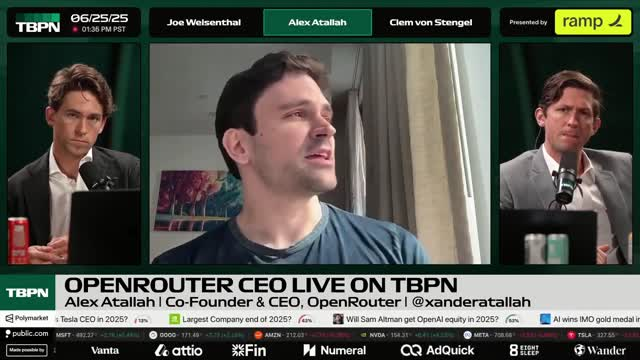
He doesn’t need to predict which NFT will appreciate—or which model will win. He only needs to know one thing: the more fragmented the supply, the more valuable the middleman.
Interestingly, consider the timing.
When he left in July 2022, OpenSea’s valuation remained high—NFT monthly trading volume had dipped from its peak, but no one foresaw collapse. He said he wanted to “build something new from zero”—and six months later, ChatGPT launched, ushering in the large-model era.
Did he see it coming—or was it luck?
I don’t know. But one thing is certain:
When he registered OpenRouter in early 2023, AI large-model routing platforms barely existed. By the time everyone realized they needed a unified interface, he was already there.
Last time, he did exactly the same in the NFT space—by the time the crowd rushed in, he’d already built the largest platform.
Does It Matter What’s “Hot”?
In every hype cycle, most people ask: What will go viral?
In 2021: Which NFT will pump? In 2024: Which meme coin will 100x? In 2025: Which AI app will break out? In 2026: What can we do with crayfish?
Atallah’s question may differ. I suspect his mental model is: Regardless of what catches fire, where will the money flow?
These two questions seem similar—but represent fundamentally different bets.
Betting on what will go viral requires getting one prediction right: BAYC will pump, PEPE will 100x, some AI product will be the next ChatGPT. Get it right—you’re rich. Get it wrong—you’re broke. Most people’s experience lands in the latter camp.
Betting on where money flows requires no such predictions. When NFTs surged, transactions happened on OpenSea—and he collected fees. As the large-model war intensifies, developers need a unified interface to rapidly switch between models—and OpenRouter gets busier.
Don’t bet on who wins—bet that the war will last.
Looking back, across every cycle and industry, those who earned the most were almost always platforms occupying this exact position.
Gold prospectors come and go—but water sellers keep collecting.
Yet calling this “selling water” or “selling shovels” isn’t quite enough. Plenty of shovel sellers failed. Atallah did something more precise: he consistently positioned himself at the aggregation layer.
Not just any tool collects tolls—you must be the one consolidating fragmented supply. The more fragmented the supply—and the higher the switching costs—the more pricing power the aggregation layer commands.
This also explains why he entered both markets so early: aggregation businesses have a defining trait—
The first mover signs up the supply; latecomers struggle to catch up.
So what sets Atallah apart? I’d summarize it in two sentences:
First: Don’t guess who’ll win—just find the intersection everyone must pass through. Second: Build that intersection before anyone realizes they need it.
Truly Exceptional People Don’t Pick the Table
Right now, two voices dominate my circle.
One says AI Agents are toys—OpenClaw does nothing but burn tokens. Another claims this is yet another AI hype bubble—forgotten within three months.
Both views may be correct.
But for someone like Alex Atallah, it doesn’t matter.
Whether OpenClaw is useful or not—he’s still collecting fees. If you uninstall it today because you think crayfish are boring, the tokens you burned over the past two weeks have already passed through his hands.
Some called NFTs dirty, Ponzi-like, fraudulent—and he built a $13.3 billion company on it. Some call AI Agents a bubble, pure hype, lacking a real business model—and he’s built a $500 million company on it...
Truly exceptional people don’t need us to respect their chosen arena.
He profited from the NFT table. He’s profiting from the AI table. What the next table will be—no one knows.
But I’d bet he’ll be collecting tickets at the door.
Join TechFlow official community to stay tuned
Telegram:https://t.me/TechFlowDaily
X (Twitter):https://x.com/TechFlowPost
X (Twitter) EN:https://x.com/BlockFlow_News
 深潮TechFlow