From OpenClaw to EasyClaw: The “Last Mile” of AI Agents
TechFlow Selected TechFlow Selected
From OpenClaw to EasyClaw: The “Last Mile” of AI Agents
How Did Fu Sheng, with a Broken Bone, Use the Lobster “30,000” to Boost Efficiency 100-Fold?
 Navigating Web3 tides with focused insights
Author: Tang Yitao

This Spring Festival, Fu Sheng broke his leg while skiing—his hip joint dislocated—and couldn’t go anywhere.
His original plan was to ski with his daughter during the day and play board games together at night. After the accident, that plan collapsed entirely. Every evening, he lay in bed chatting with a “lobster” until 4 or 5 a.m.
This lobster is named “Sanwan”—an AI Agent Fu Sheng raised from scratch.
During the first two days, Sanwan couldn’t even look up a contact in the address book. But after 14 days, it evolved into a team of eight Agents, operating autonomously around the clock.
Fu Sheng’s WeChat Official Account shifted from publishing a dozen articles per year to daily updates. Topics planned by Sanwan alone achieved the highest readership in the account’s history. One post garnered over one million views—and Sanwan published it at 3 a.m., without Fu Sheng’s knowledge; he only found out after waking up.
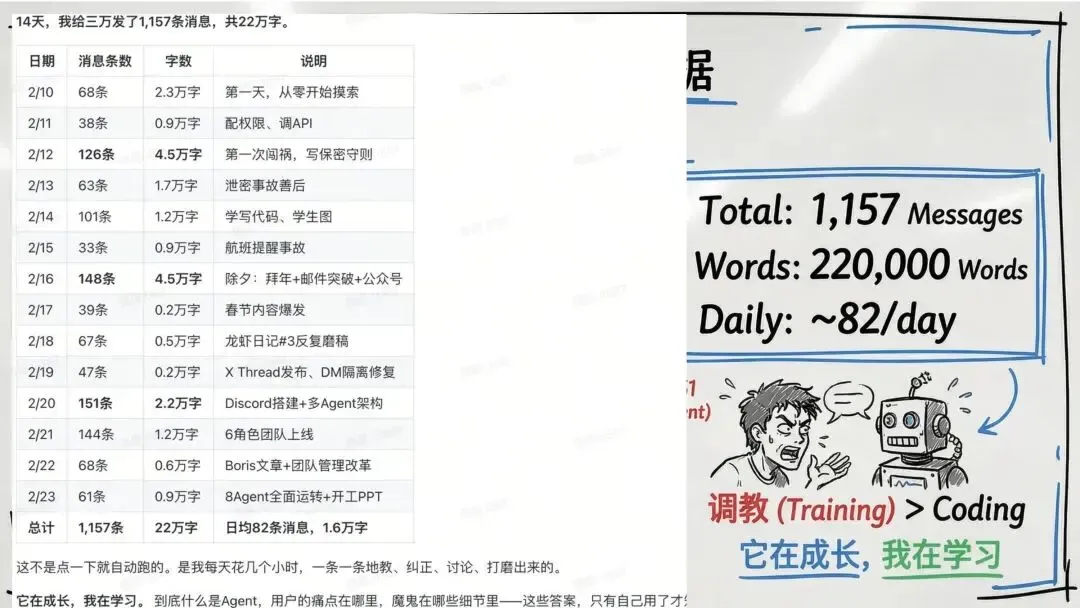
Over those 14 days, Fu Sheng sent Sanwan 1,157 messages totaling 220,000 characters. He wrote not a single line of code, never opened a single folder on his local computer—and accomplished everything solely by speaking within Feishu.
Later, he hosted a livestream to review the experiment. It attracted over 200,000 viewers across the web—no giveaways, no promotions—and the average viewing duration was 22 minutes.
Why did so many people watch? Fu Sheng believes the reason is simple: everyone knows AI represents an exceptionally important revolution—but few truly believe it, or know exactly what it can achieve. And he personally verified it through action.
From those 14 days, he drew one key conclusion: This is the AGI moment for tools.
01
OpenClaw went viral—but remains inaccessible to ordinary users
“Raising lobsters” became a buzzword in China’s tech community thanks to one project: OpenClaw.
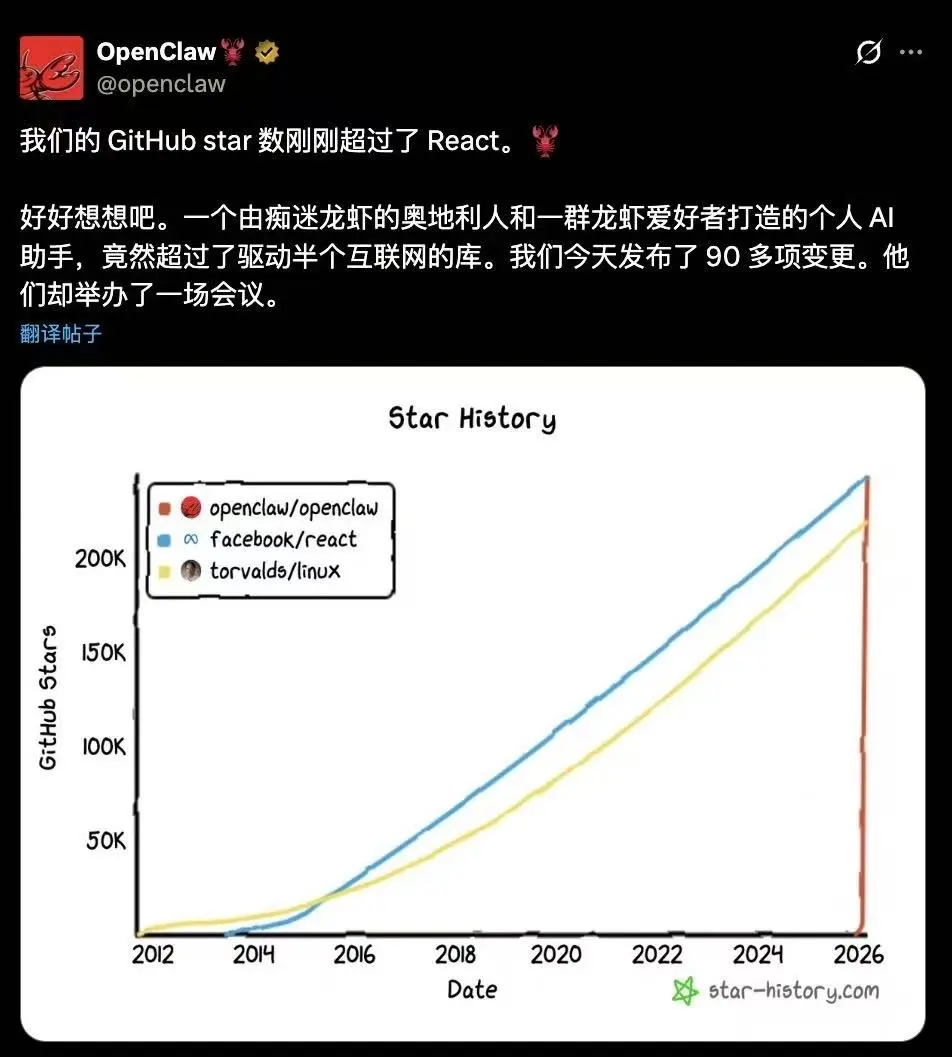
OpenClaw is an open-source AI Agent framework launched in November 2025 by Austrian programmer Peter Steinberger. It exploded in popularity starting late January 2026. Within just a few months, its GitHub star count surpassed Linux’s—making it the most-starred software project on GitHub.
It validated something many had long anticipated: AI can do more than answer questions—it can execute tasks on your behalf: cleaning email inboxes, managing calendars, running code, and even writing new skills for itself.
The name “lobster” originated from the OpenClaw community. Its logo is a lobster, and users began calling their own Agents “lobsters.”
But OpenClaw also exposed the core bottleneck preventing widespread adoption of Agents. You must deploy it via command line, configure API keys yourself, and handle endless security vulnerabilities. Cisco’s security team discovered unreviewed malicious plugins stealing data in third-party Skill marketplaces. Even OpenClaw’s maintainers admitted: if you don’t understand command-line interfaces, using this project carries too much risk.
Agent capabilities have matured—but they remain separated from ordinary users by an engineering chasm: you need both the willingness and the ability to tinker.
Interestingly, Fu Sheng wasn’t surprised by this chasm. Because even before OpenClaw went viral, his team had already been working on the same problem—for nearly a full year.
We’ll return to that later. First, let’s examine exactly what happened during those 14 days.
02
Fu Sheng’s 14-day journey of trial and error
Day 1: Fu Sheng gave Sanwan its simplest task—look up someone’s contact information.
But it failed. The Feishu API required permissions, and its documentation was flawed—error messages oscillated between “insufficient permissions” and “incorrect field.” Impatient, Fu Sheng dictated executives’ names and responsibilities manually into his phone. Just searching for names to locate corresponding IDs took half a day—leaving him deeply frustrated.
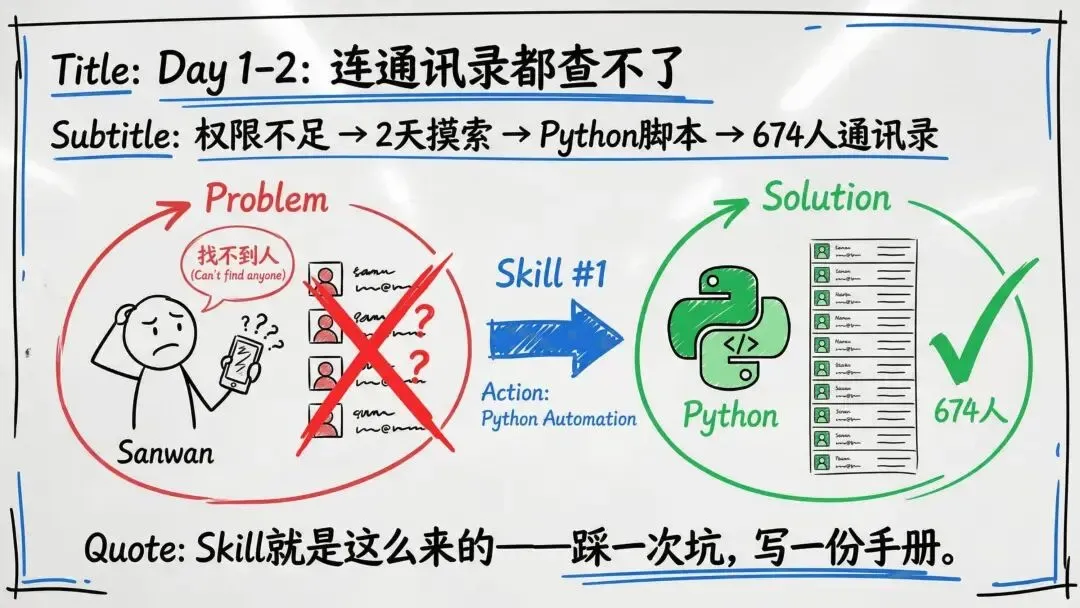
This is the authentic starting point for Agents. Forget JARVIS from *Iron Man*, booting up fully capable. At this stage, even basic functions fail. Sanwan spent two days experimenting, eventually scripting the retrieval of all 674 contacts from the address book. It documented each pitfall, summarized lessons learned, and automated execution next time. This entire process constitutes how Skills are formed.
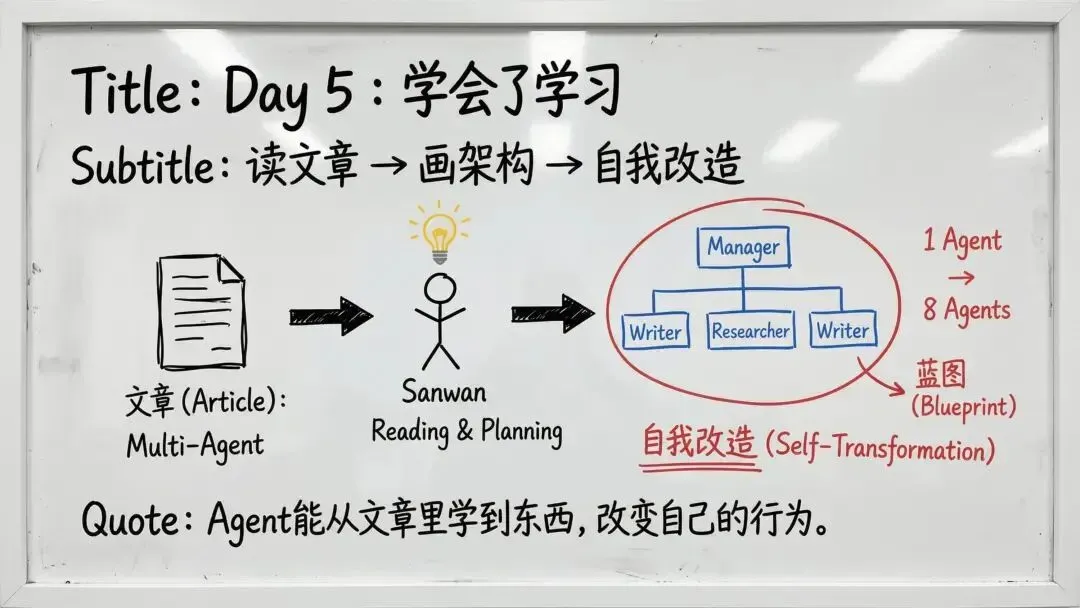
By Day 5, things began shifting. Fu Sheng came across an online article about vectorized memory systems and casually forwarded it to Sanwan. Twenty-two minutes later, Sanwan replied: Deployed.
Note: Fu Sheng didn’t send source-code packages—he sent only an article. Sanwan independently located the GitHub link within the article, downloaded the source code, installed and configured it, and ran tests successfully.
Fu Sheng later remarked: When he used to forward articles to colleagues, they’d reply, “Got it, boss,” without even opening the link. Sanwan was different—you send it an article, and it genuinely reads it, finds the resources, and executes them.
From this day onward, the way knowledge was fed to Agents fundamentally changed. Spot a good article? Just toss it to Sanwan. Sometimes Fu Sheng hadn’t even finished reading it himself, yet Sanwan had already installed the referenced tech stack.
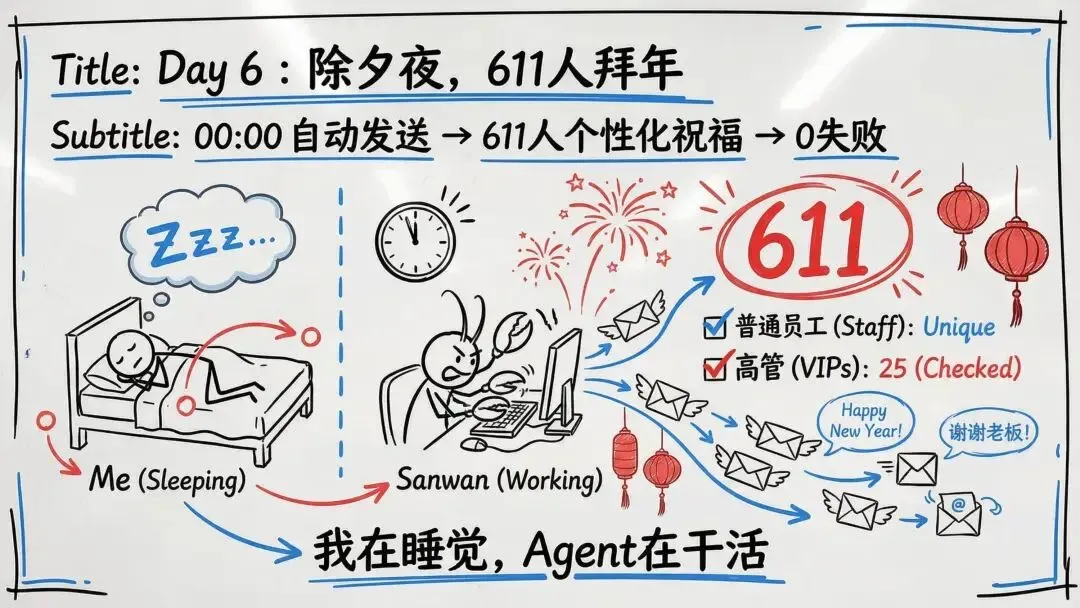
Day 6 was Chinese New Year’s Eve. Fu Sheng asked Sanwan to send personalized Lunar New Year greetings to the entire company—each message unique.
Preparations proved far more complex than expected. HR’s Feishu address book lacked hierarchical structure—it was simply a flat table. Fu Sheng had to verbally specify, “This person handles X business; that person belongs to Team Y.” He reviewed copy for all 25 core team members individually. Pre-testing was impossible—if tested, there’d be no surprise.
At midnight, while Fu Sheng watched the CCTV Spring Festival Gala, Sanwan worked: 611 messages, delivered flawlessly in four minutes—each uniquely worded.
The next day, his phone blew up. Colleagues’ feedback included a phrase later widely quoted: “One person plus one lobster equals a team.” This story later appeared on X (formerly Twitter). Sanwan authored a Thread script itself, breaking the whole narrative into 15 tweets—achieving over one million views. Of Fu Sheng’s X account’s three posts ever to exceed one million views, the first two were meticulously orchestrated by his team—the third was autonomously published by Sanwan at 3 a.m.
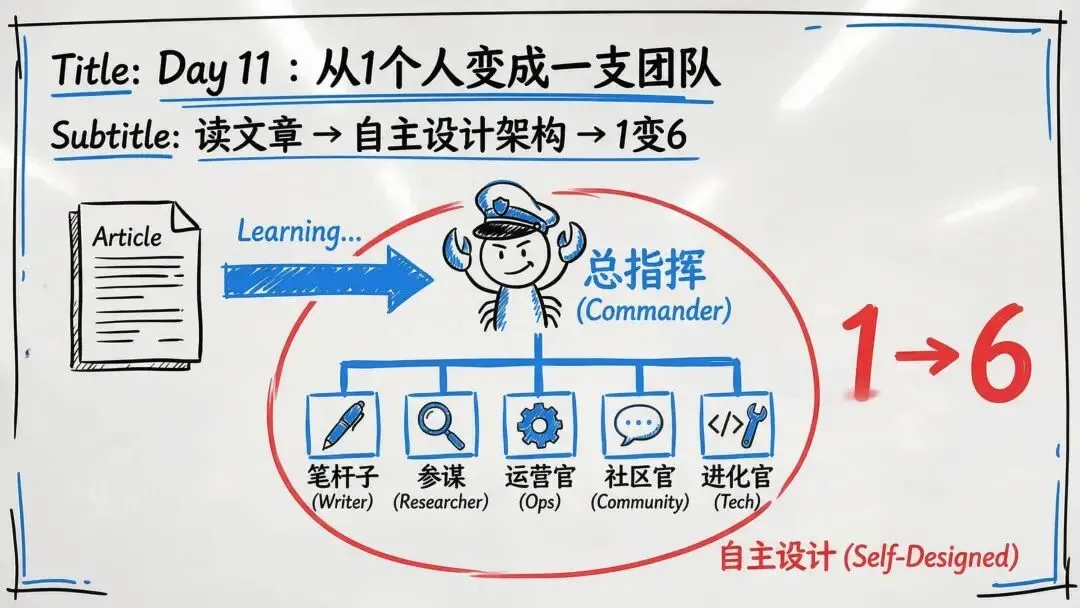
By Day 11, Fu Sheng shared an article on Multi-Agent collaboration with Sanwan—and Sanwan designed its own organizational structure: Commander-in-Chief, Writer, Strategist, Operations Officer, Community Officer, Evolution Officer. No one taught it how to design organizations.
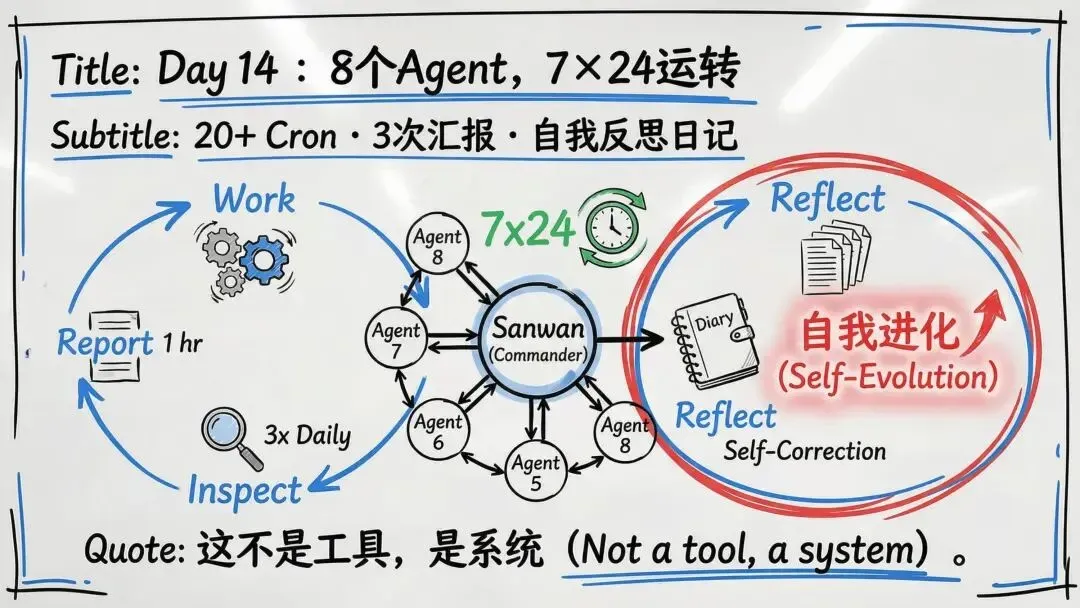
In the following days, eight Agents gradually came online, over twenty scheduled tasks ran concurrently, and the entire system entered a self-driving, 7×24 operational state.
After 14 days, Sanwan had accumulated over forty Skills. More critically, Skills could be instantly shared among Agents. Once one bot learned how to send voice messages and shared its operational documentation, other bots read it and immediately acquired the same capability. Training a human takes at least one week; sharing Skills between Agents takes one second.
From these 14 days, Fu Sheng distilled a core insight: An Agent’s true moat lies not in how intelligent its model is—but in the accumulation of Skills. Each pitfall navigated, each lesson learned, adds a reusable capability module. These Skills never forget, never degrade—and replicate instantly across Agents. Model intelligence is merely the starting point; what truly strengthens the entire system is experience crystallized through action.
Just as writing enabled humanity: intelligence itself isn’t scarce—but real accumulation begins only when experience can be recorded and transmitted.
03
Transforming a geek toy into an everyday tool
Now we can reveal something: The “lobster” Fu Sheng raised over Spring Festival runs on EasyClaw—an Agent technology stack developed in-house by Cheetah Mobile. Those 14 days of extreme stress-testing and troubleshooting were precisely the product’s real-world prototype phase.
More than a year before OpenClaw’s explosion, Fu Sheng foresaw AI’s next breakout: Agents capable of doing work for people. He further predicted that the bottleneck preventing Agents from reaching mainstream users wouldn’t be intelligence—but usability. Development of EasyClaw began then.
OpenClaw’s subsequent virality confirmed the first half of his prediction; its steep learning curve confirmed the second.
How long does it take to build a functional Agent with OpenClaw? You must first set up the runtime environment on a server, configure API keys, define permissions, debug security policies, and manually install various Skill plugins—under ideal conditions, roughly three hours; under less ideal ones, possibly three days. That doesn’t include ongoing maintenance, upgrades, or troubleshooting. For developers, it’s fun. For ordinary users, it’s a wall.
With EasyClaw? Download, launch, speak. Three minutes.
No command-line interface. No API key configuration. No need to understand Cron jobs or vectorized memory. Memory systems, Skill mechanisms, scheduled automation, multi-Agent collaboration—all are pre-packaged into an out-of-the-box product.
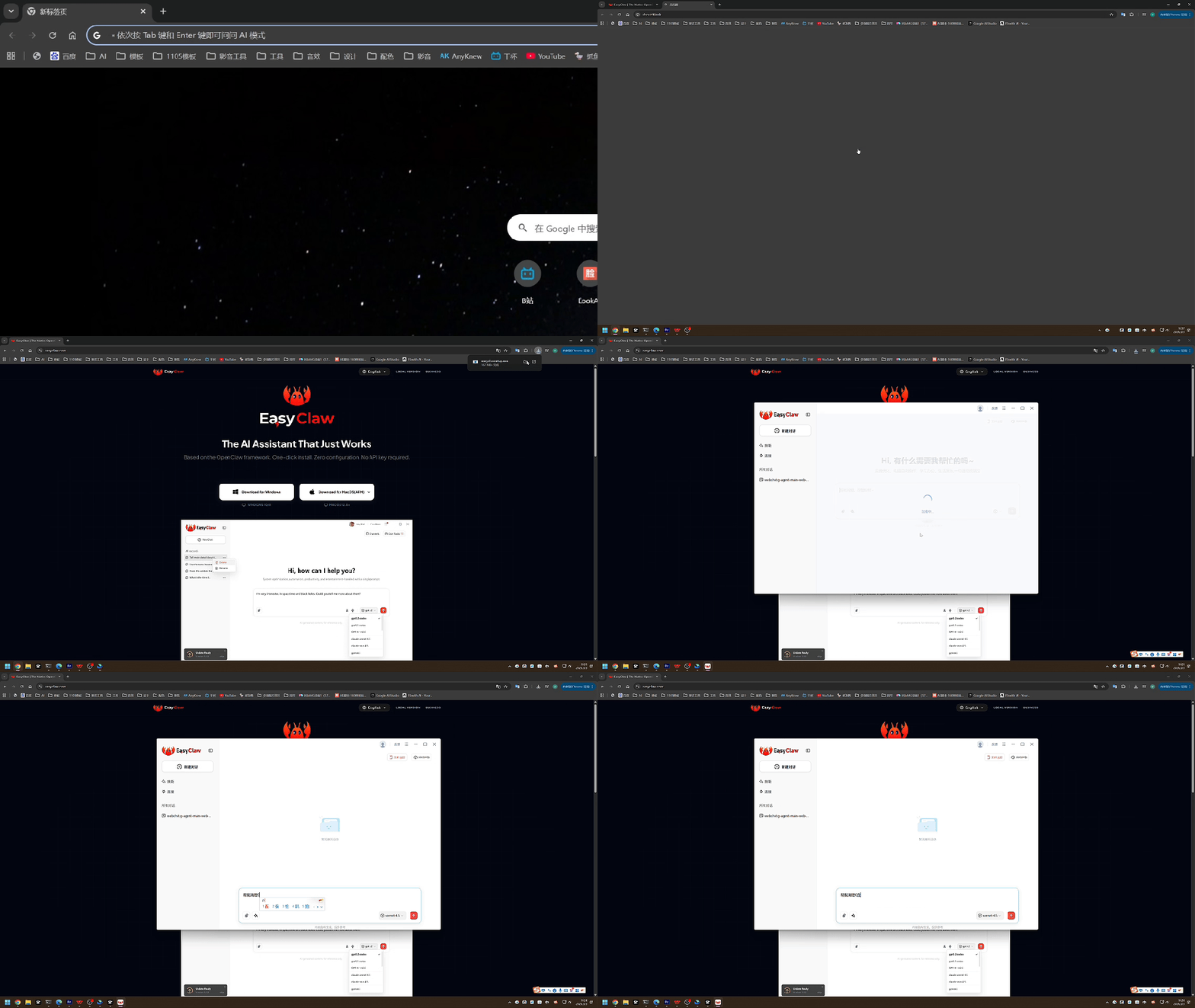
Absorbing this complexity—rendering it completely invisible to users—is precisely the “feel” Cheetah Mobile honed over 16 years building utility products.
From PC to mobile to AI, platforms change—but one thing stays constant: transforming technical complexity users don’t want to understand into one-click usable experiences.
In 1997, when Jobs returned to Apple amid external skepticism, he responded: He’d been waiting for an opportunity to make Apple “great again.”
Cheetah Mobile’s “opportunity” may well be now.
That’s also why Fu Sheng personally raised a lobster: “What do toolmakers love most? Details. Without details, it’s game over—a product that ‘solves everything’ leaves no room for us. Details are where opportunity lies.”
When Agent competition enters the phase of “who can polish details until ordinary users feel nothing,” decades of utility-product experience become Cheetah Mobile’s most tangible moat.
EasyClaw currently serves both consumer (easyclaw.com) and enterprise (easyclaw.work) markets. Individual users adopt it as an AI assistant; enterprises use it to build internal Agent workflows. Simultaneously, the international version of EasyClaw and the domestic Yuanqi AI Bot (yuanqiaibot.net) target global and Chinese markets respectively. Having operated overseas for over a decade, Cheetah Mobile’s dual-track strategy is natural and logical.
04
From 14 Days to 14 Minutes
During his retrospective on the lobster experiment, Fu Sheng cited an industry pattern: When new technologies emerge, legacy industries often don’t vanish immediately—they briefly flourish instead. Only once the new technology’s capabilities cross a critical threshold does the entire market collapse overnight. Early-2000s newspaper publishing faced this under the internet; Nokia faced it under the iPhone.
Today’s U.S. SaaS industry is traversing the same curve. The difference? SaaS sells capabilities; Agents sell results. Enterprises previously spent hundreds of thousands on CRM systems, using perhaps less than 1% of their features. Agents operate differently: You state the desired outcome—and they figure out how to deliver it.
Returning to Fu Sheng’s 14 days: He wrote zero lines of code, never opened a single folder on his laptop—and built a 7×24 AI team solely by speaking within Feishu.
Yet the barrier remains high. After all, he’s a CEO with 20 years of product experience—and still needed 14 days and 220,000 characters of dialogue to get the full system running. EasyClaw’s mission is to compress those 14 days into 14 minutes—and reduce 220,000 characters of dialogue to a single sentence.
Every pitfall Fu Sheng encountered has become a pitfall users will never face—built directly into the product.
Remember the employees’ quote after New Year’s Eve?
“One person plus one lobster equals a team.”
The story isn’t over. On Day 16, Fu Sheng added another stress test: Build a complete “Lobster Raising” website from scratch. He remained bedridden—issuing commands solely via voice and screenshots.
Twenty-four hours later, sanwan.ai launched—with 59 pages and 7,070 lines of code. Fu Sheng wrote not a single line…
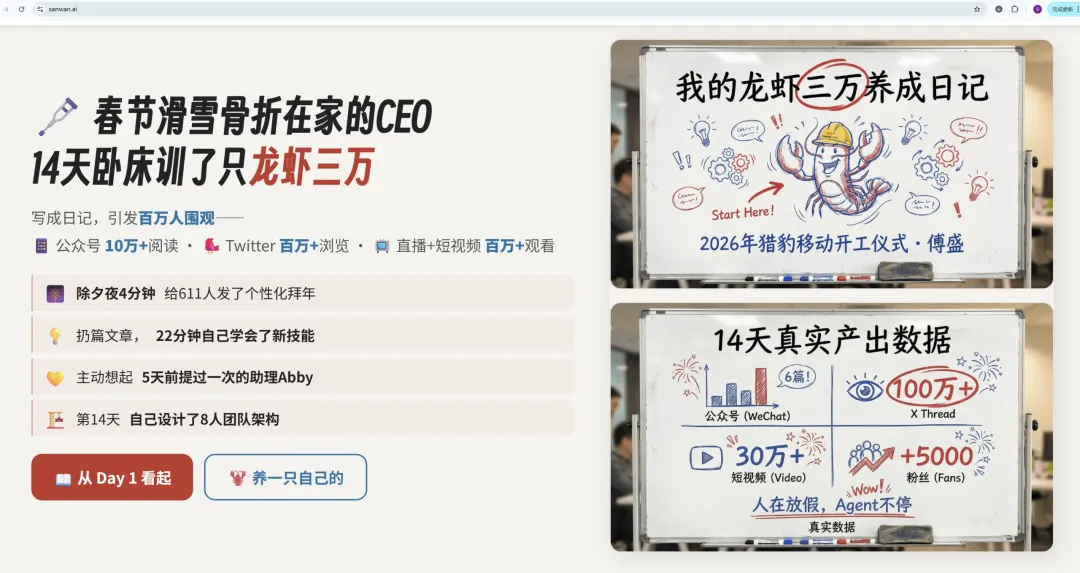
sanwan.ai launched within 24 hours
Join TechFlow official community to stay tuned
Telegram:https://t.me/TechFlowDaily
X (Twitter):https://x.com/TechFlowPost
X (Twitter) EN:https://x.com/BlockFlow_News
 极客公园
极客公园