From “Fragmented Entry Points” to “One Account”: Gate TradFi Makes Global Asset Allocation Accessible
TechFlow Selected TechFlow Selected
From “Fragmented Entry Points” to “One Account”: Gate TradFi Makes Global Asset Allocation Accessible
One account, access to everything.
 Navigating Web3 tides with focused insights
Author: TechFlow
Introduction
For today’s centralized exchanges (CEXs), the absence of traditional finance (TradFi) offerings already signals backwardness.
This is not alarmist rhetoric.
Amid macro-level interest rate shifts, geopolitical tensions, and heightened risk-aversion sentiment, assets historically associated with traditional finance—gold, U.S. equities, crude oil, foreign exchange (FX), and indices—are increasingly entering traders’ field of vision.
Attention has shifted—but users still face a high-friction trading infrastructure:
U.S. equities are traded via brokers; gold, on precious metals platforms; FX, through FX brokers; and crypto, on exchanges… Each institution operates under its own time zones, geographical restrictions, and cost structures—and each asset class maintains its own account system, settlement rules, and access barriers.
Turning to the crypto world: although it offers 7×24 liquidity, users must still contend with currency conversion, deposits/withdrawals, and cross-chain transfers.
Beneath these complications lie real time and capital costs. Traders increasingly demand a “comprehensive” platform.
For CEXs that have recognized the reality that “a singular crypto narrative can no longer sustainably attract users,” becoming this platform equates to seizing the lifeline for growth in the next phase.
Hence, we observe nearly every familiar CEX—including Binance and Kraken—has already taken steps into TradFi.
With the赛道 crowded, standing out demands genuine capability. Yet many have nonetheless noticed Gate’s emergence in TradFi:
On June 1, 2026, Gate announced the launch of Gate Stocks—a real-stock trading service integrated with the regulated broker Alpaca, enabling users to trade over 10,000 equities and ETFs directly on-platform using USDT, with a minimum order size of just 0.01 share. The service currently supports extended 16×5 trading hours (including pre-market and after-hours), significantly bridging crypto and traditional financial markets.
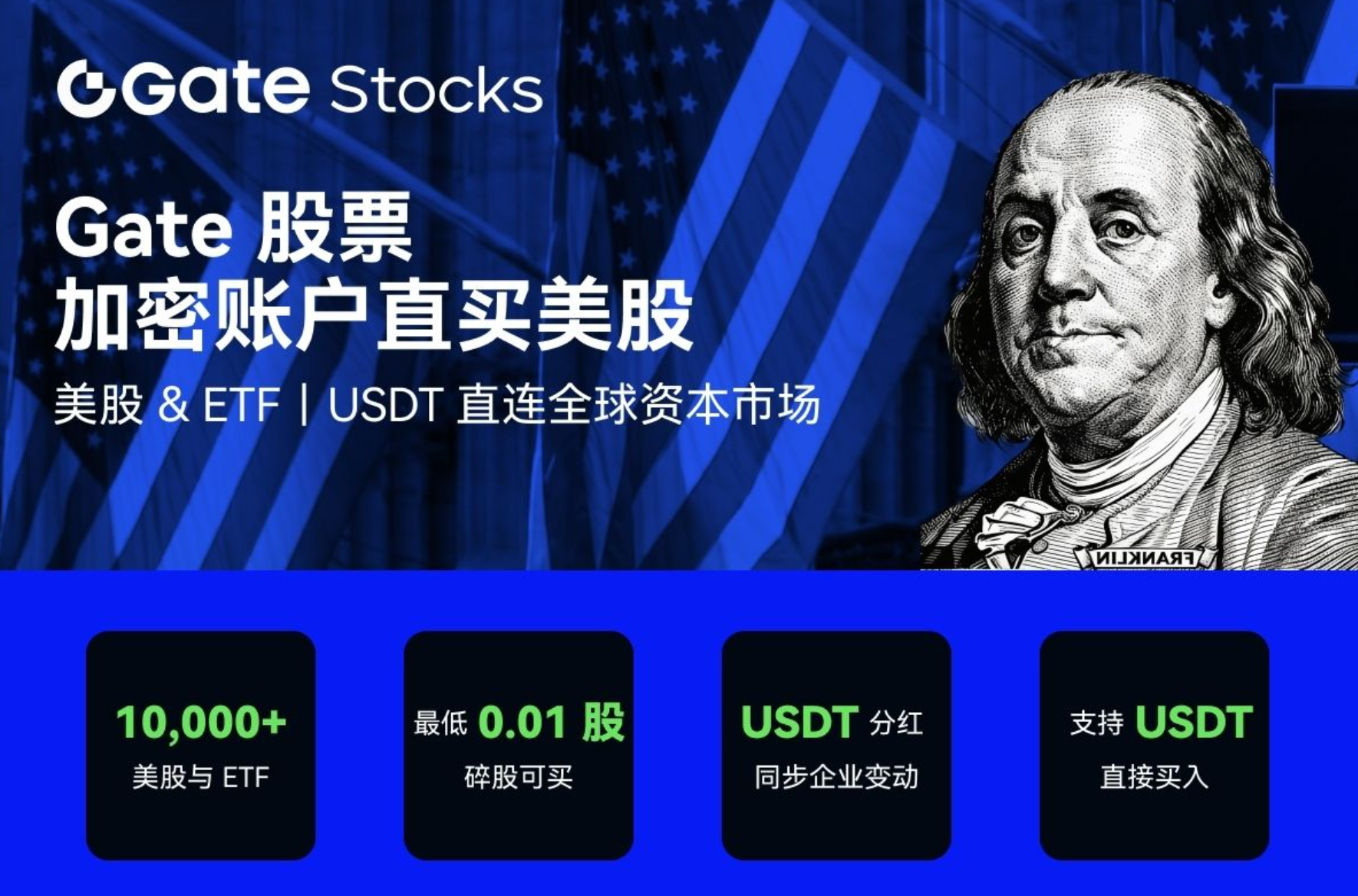
△ Source: Twitter @Gate_zh
Prior official data shows that Gate’s TradFi CFD business achieved a single-day trading volume exceeding $30 billion.
As product capabilities continue to advance—and amid consistently high trading activity—what kind of unified global asset market gateway is Gate TradFi reconstructing?
This story begins with Gate’s support for over 10,000 TradFi assets.
Part 1: From U.S. Equities to Gold—Both Retail and Professional Traders Are Engaged
Currently, Gate TradFi encompasses multiple verticals: stock trading, CFDs, perpetual contracts, spot, Pre-IPOs, and ETFs—covering short-term speculation, long-term allocation, and early-stage opportunities. Users across varying risk profiles and investment horizons can all find suitable instruments to trade global assets within this ecosystem.
Gate Stocks Trading Zone
The most-discussed feature in community channels recently is the newly launched stock trading zone.
Is trading U.S. equities complicated? Gate says: Not anymore.
On Gate’s stock trading platform, users can trade equities directly using USDT, starting from as little as 0.01 share—enabling even small-capital investors to participate. Dividends are automatically calculated and distributed, simplifying operations and making U.S. equity trading effortless.
Too few underlying assets? Gate offers over 10,000 equities and ETFs.
Coverage includes major U.S. exchanges and liquidity networks—NYSE, NASDAQ, NYSE Arca, NYSE American, and BATS—providing users with broader global securities allocation options. Gate’s real-stock trading service partners with Alpaca as its infrastructure provider. Alpaca operates a compliant self-clearing brokerage system, features an API-first technical architecture, and brings extensive experience serving global financial platforms—handling core functions including order execution, clearing, settlement, and custody, while also supporting dividend distribution and corporate action processing.
In terms of fees, compared to traditional online brokers charging approximately $1.99 per $1,000 trade, Gate stocks charge a base fee of 0.1% of trade value—no minimum per-trade fee, no funding rate, no swap fee, and no overnight fee. Moreover, Gate Stocks shares the same VIP fee structure as Gate Spot, and with VIP tier discounts, the lowest applicable trading fee drops to 0.023%.
Note that Gate’s stock trading service supports not only intraday trading but also pre-market and after-hours sessions, extending trading hours to 16×5. Officially, 7×24 round-the-clock trading is reportedly “in development.”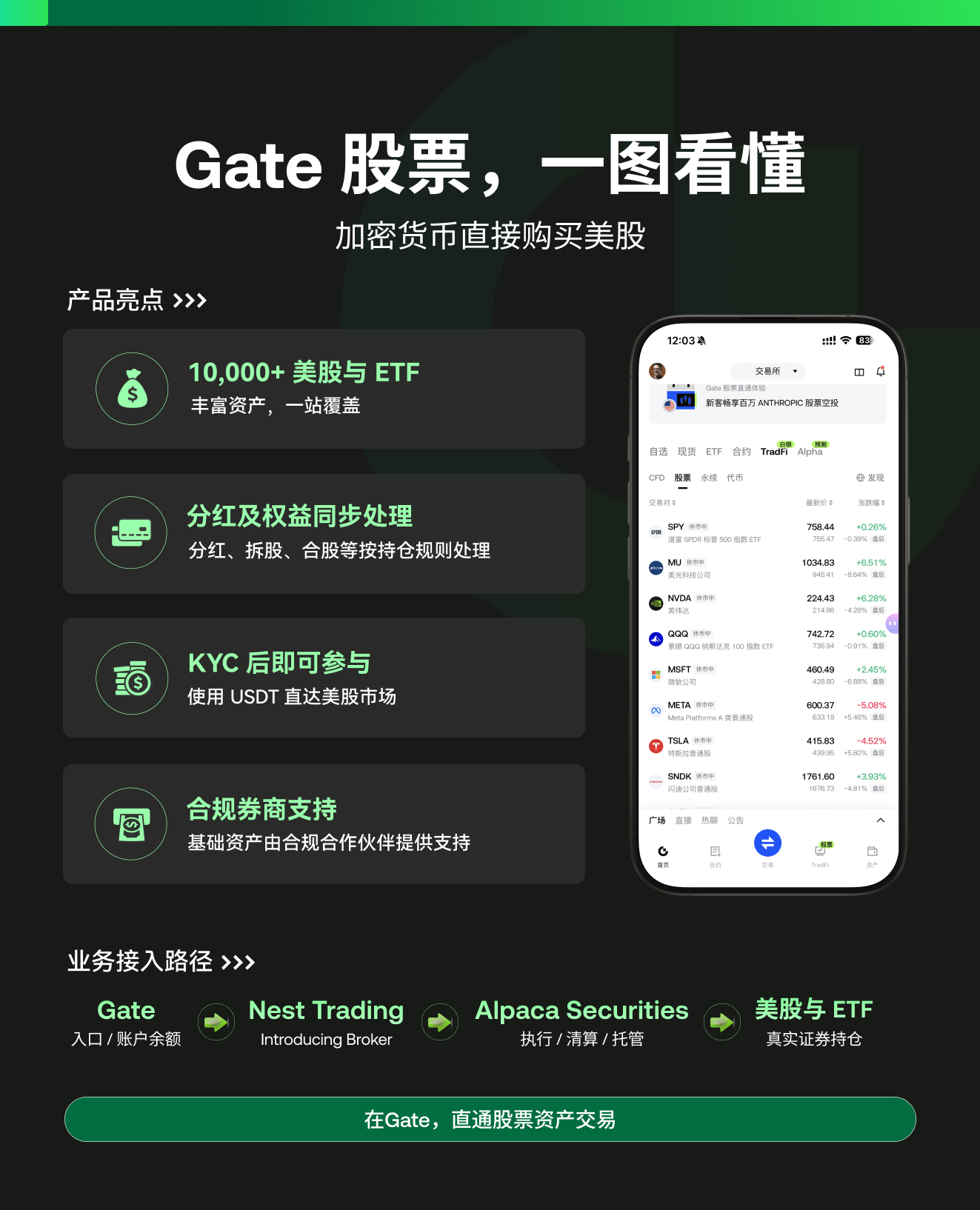
△ Source: Gate
Gate TradFi CFD
CFDs represent one of Gate TradFi’s absolute core offerings. Gate has now launched over 440 TradFi CFD contracts, specifically covering:
- Forex: Major and emerging-market currency pairs
- Precious Metals: Gold, silver, platinum, palladium
- Stock Indices: NAS100, SPX500, US30, HK50, UK100, JPN225, and other major global indices
- Commodities: WTI/Brent crude oil
- Individual Stock CFDs: U.S., Hong Kong, and Chinese ADR equities
Simultaneously, Gate TradFi maintains a highly responsive listing mechanism, expanding its offering at a pace of 10–20 new instruments daily, ensuring coverage keeps pace with where user attention flows—continuously widening its breadth advantage.
Of course, merely integrating assets is insufficient to retain users long-term.
If the 10,000+ assets reflect Gate’s capacity to onboard TradFi products, then leverage options, trading tools, and cost structures test the platform’s financial service capabilities—and determine whether users will adopt it as their primary trading and investment venue.
For experienced traders, setting appropriate leverage is as critical as directional analysis.
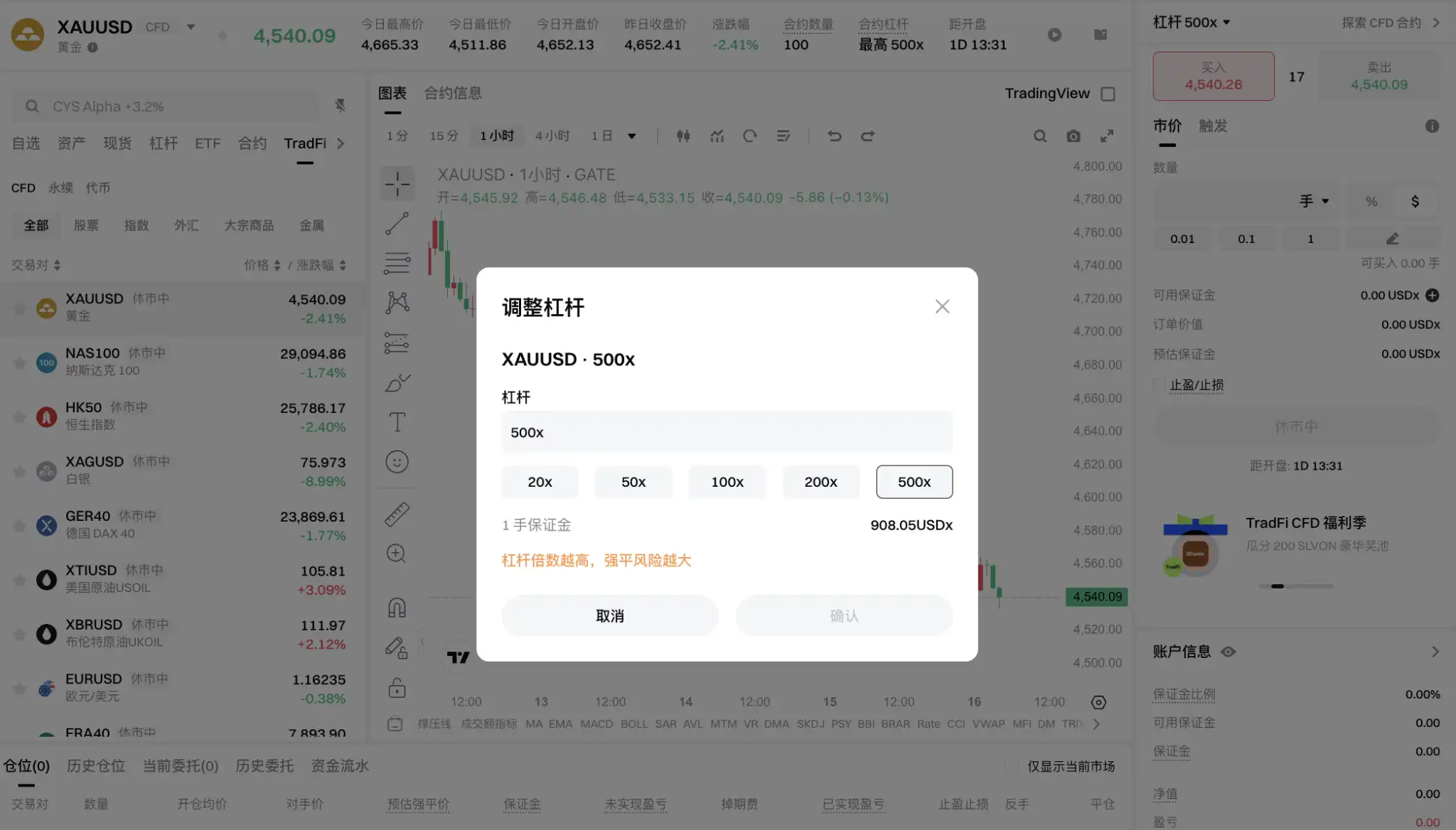
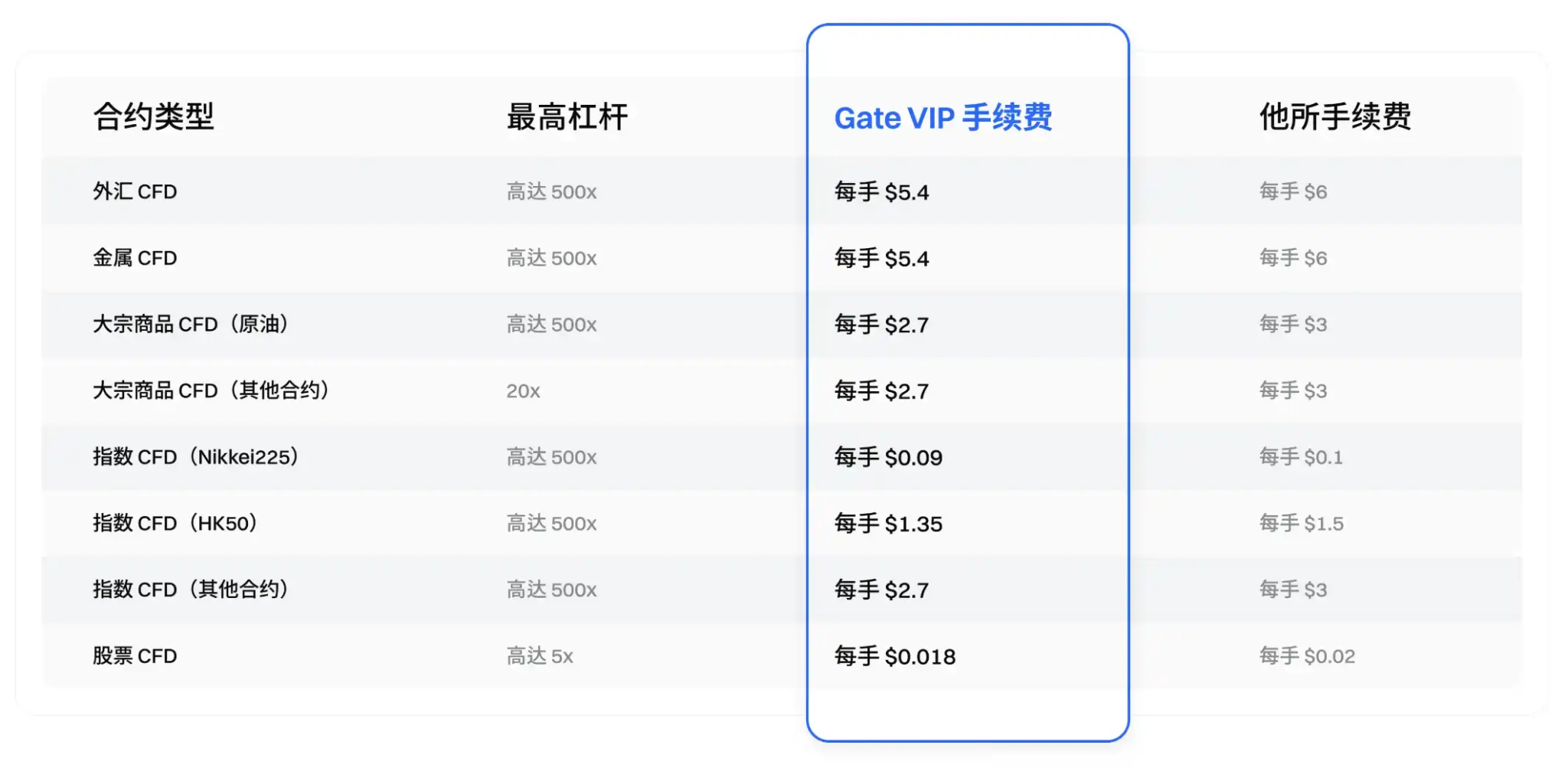
First, Gate TradFi CFDs offer differentiated leverage tiers across asset classes: up to 500× for forex, precious metals, and stock indices; generally 20×–100× for commodities; and a fixed maximum of 5× for individual stock CFDs—closer to conventional equity trading norms.
Second, beyond maximizing capital efficiency via extreme leverage, traders require fine-grained control over leverage usage to manage risk exposure precisely.
Hence, beyond fixed-leverage contracts, Gate TradFi CFD innovatively introduces multiple independent CFD contracts for the same underlying asset—each with distinct leverage ratios—enabling multi-tiered, adjustable leverage functionality. Currently, Gate supports adjustable leverage across gold, silver, crude oil, and other assets. For gold, for example, Gate TradFi CFD offers options of 20×, 100×, 200×, and up to 500×—delivering more flexible position sizing, more precise risk exposure management, and higher capital utilization efficiency.
Note that Gate TradFi CFD’s leverage adjustment remains pre-set by the platform in fixed tiers—not fully customizable by users.
△ Source: Gate TradFi CFD
For professional traders and quantitative teams, Gate TradFi CFD provides multidimensional tooling support:
First, Gate TradFi’s underlying trading engine is MetaTrader 5 (MT5), one of the most widely adopted execution environments globally among professional traders—supporting 21 timeframes, 38+ built-in technical indicators, and full Expert Advisor (EA) automated trading capabilities for a professional-grade environment.
Second, Gate has opened dedicated TradFi trading APIs, enabling order execution, market data retrieval, and account management across metals, forex, indices, and commodities—ideal for quant teams and high-frequency traders deploying proprietary strategies, implementing cross-asset algorithmic trading, market-making, or market-neutral models. Additionally, official data indicates Gate TradFi’s minimum single-trade cost reaches as low as $0.018—further optimized for high-volume institutional traders via Gate’s VIP fee discounts.
△ Source: Gate Website
In April 2026, Gate launched CFD/TradFi-specific Copy Trading: professional users act as Lead Traders sharing strategies and earning commissions, while retail users act as Followers—replicating high-win-rate macro-trader positions with one click, eliminating the need for independent technical analysis.
RWA, Pre-IPO, and Beyond
Gate TradFi also supports over 70 tokenized equities in spot trading, with cumulative trading volume surpassing $140 billion—and select popular tokens now available as perpetual contracts;
The Pre-IPO section has launched high-interest projects like SpaceX, providing retail users a novel channel to capture potential upside ahead of unicorn IPOs;
ETF offerings include XAU (gold), XAG (silver), and XAUT (Tether Gold), delivering direct exposure for users preferring simplified portfolio construction.
Naturally, further innovation is expected from Gate.
Recall that Gate serves over 54 million global users.
Years of deep focus on “trading” itself have endowed Gate with profound insight into trader needs, precise timing in functional iteration, and the ability to transform complex financial instruments into usable, intuitive, and practical tools.
This foundation enables richer gameplay extensions for Gate TradFi:
Reportedly, Gate has progressively rolled out options, wealth management, Alpha services, instant swaps, copy trading, decentralized exchange (DEX), and quant robots—steadily pushing outward the boundaries of TradFi functionality.
Meanwhile, Gate TradFi supports synchronized trading across both web and mobile apps—resolving cross-device friction and enabling position opening anytime, anywhere, on any device.
What lies ahead remains undisclosed by official channels.
Yet one thing is certain:
This TradFi trading ecosystem will continue evolving and expanding.
One Account, Unified Access
Assets have been onboarded; gameplay diversified—but a fundamental user-experience challenge remains.
Users want global access—not because entry points are unavailable, but because there are too many.
Too many entry points mean high barriers, high friction, and high capital requirements.
Hence, Gate’s first step was consolidating those fragmented micro-entry points into a single, interconnected macro-gateway—integrating assets previously scattered across brokers, FX platforms, and precious metals markets into one familiar user account.
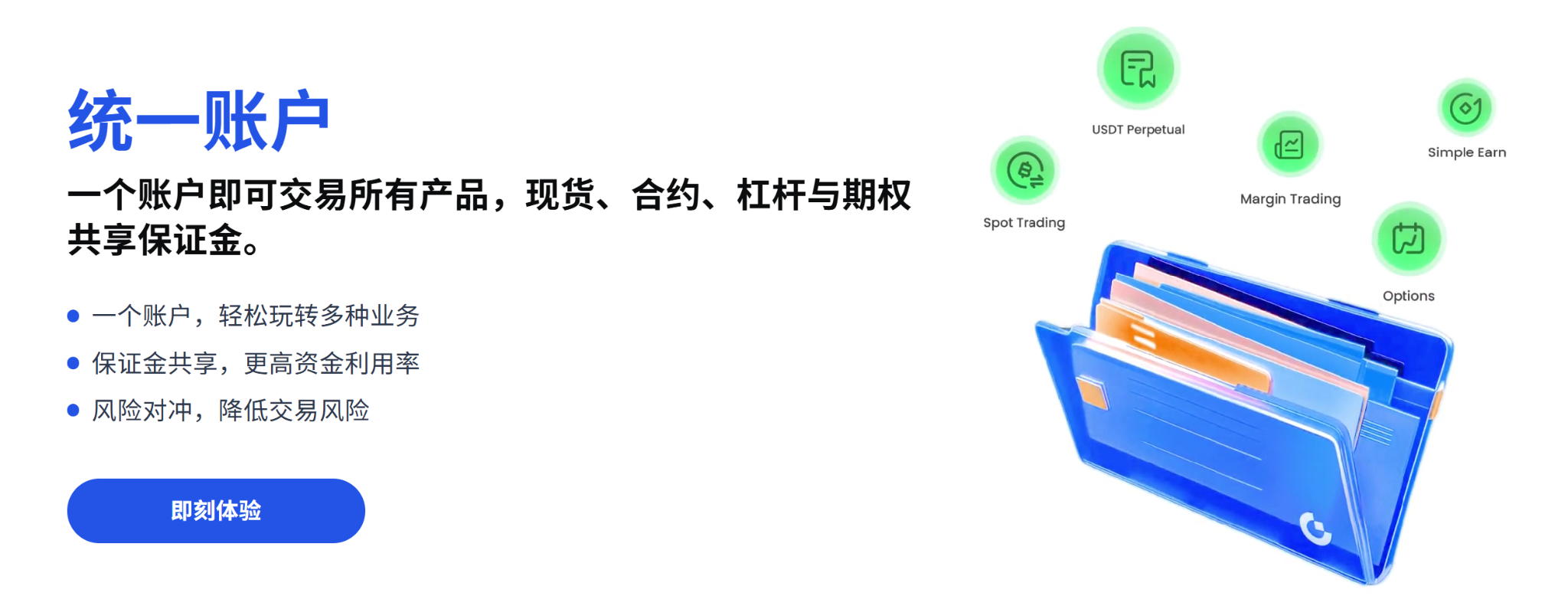
This is Gate’s Unified Account feature:
Within a single master account framework, users can trade U.S. equities, gold, commodities, indices, and ETFs using USDT—without needing separate accounts at traditional brokers, without undergoing repeated KYC processes, and without maintaining multiple high-capital threshold deposits across platforms.
No longer N assets → N accounts. Instead: one account powers everything—genuinely lowering the barrier to global asset allocation.
△ Source: Gate Website
A Sustained Race of Speed and Stamina
Returning to our opening point: CEXs without TradFi offerings are already behind.
But “everyone doing it” doesn’t mean “everyone doing it the same way.”
The CEX landscape has long featured a “one-dominant, many-strong” structure.
We may thus better discern Gate’s differentiation strategy—and its current positioning—within this hierarchy.
The “one-dominant” player, Binance, leverages its unassailable scale, massive user base, abundant liquidity, and top-tier market maker resources—guaranteeing depth for every newly listed asset.
This is the playbook of the CEX veteran.
Within the “many-strong” cohort, Gate focuses squarely on CFDs and equities.
This emphasis stems partly from the unique advantages of the CFD model:
CFDs settle solely on price differentials—eliminating actual asset ownership or physical delivery—and constitute a mature, widely adopted product format across global traditional brokerage firms, operating under clear regulatory frameworks in numerous jurisdictions. As such, they align closely with traditional traders’ habits and offer clearer compliance pathways.
Equally, the equity market remains one of the world’s most closely watched financial domains—especially U.S. equities. Focusing here delivers dual momentum: traffic generation and Real World Asset (RWA) narrative synergy.
At this juncture, a new question arises:
Most CEXs in the “many-strong” group have indeed chosen the CFD + equities path.
In this context, Gate’s differentiation rests on speed of response and functional innovation.
First, it prioritizes “speed to win”: rapidly scaling asset coverage to keep pace with user demand, while simultaneously accelerating expansion of tools and features—ensuring users always discover fresh possibilities within Gate’s TradFi ecosystem.
Second, it develops differentiated functionalities rooted in real trader needs—such as the widely discussed multi-tier adjustable leverage feature, and the launch of Gate Stocks enabling real-equity allocation—effectively addressing core pain points in multi-asset portfolio construction.
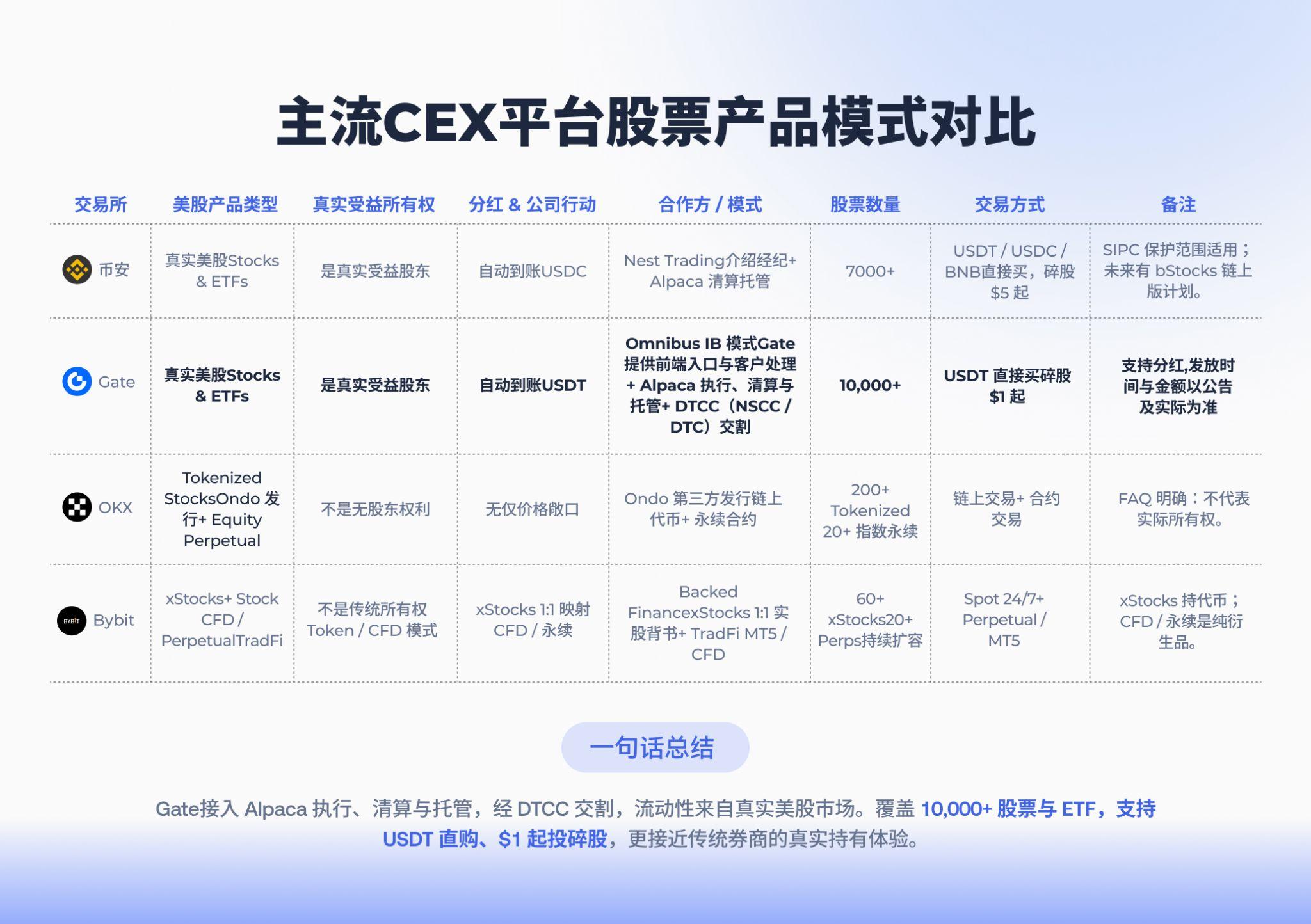
△ Source: Internet
The logic is straightforward: deploy assets, enrich functionality, capture mindshare.
During this window—before users develop absolute brand loyalty—and as every CEX vies to become the definitive global asset trading platform, this is a sustained race of speed and stamina.
Conclusion
Of course, who will ultimately reach the finish line remains unknown.
Yet at this early stage of the race, the barrier to “global asset allocation” has already dropped.
Previously, too many assets and too many fragmented gateways rendered asset allocation choices largely theoretical.
Now, whether professional or retail, users can open a single account on Gate TradFi—and trade over 10,000 assets—including gold, U.S. equities, FX, and crude oil—under one unified margin system.
And the efficacy of this system is already validated by a $30 billion single-day trading volume.
As traders, amid the rising prominence of TradFi and intensifying efforts by leading platforms, we enjoy the benefits, welcome healthy competition—and eagerly anticipate witnessing the continued lowering of barriers to “trading globally.”
Join TechFlow official community to stay tuned
Telegram:https://t.me/TechFlowDaily
X (Twitter):https://x.com/TechFlowPost
X (Twitter) EN:https://x.com/BlockFlow_News
 深潮TechFlow