The Unknown Agony Behind ChangXin's Bell Ringing: Betting a City, Exhausting Half a Lifetime's Reputation
TechFlow Selected TechFlow Selected
The Unknown Agony Behind ChangXin's Bell Ringing: Betting a City, Exhausting Half a Lifetime's Reputation
As a participant, what I saw was not a myth of getting rich overnight, but a group of people who sat on the cold bench for ten years.
 Navigating Web3 tides with focused insights
Author: Xie Zhifeng, Chip Observation
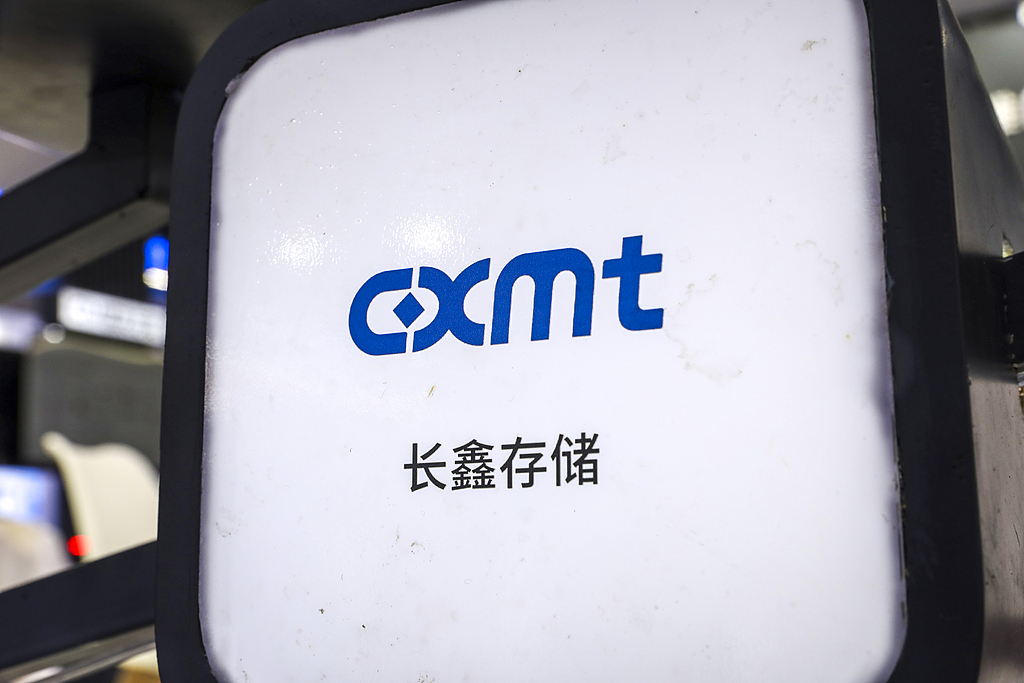
On July 27, Changxin Technology officially listed on the STAR Market.
Opening figures, closing market cap, and fundraising scale became the keywords flooding the financial circle that day. Some calculated the gain, some estimated the valuation, some discussed how much liquidity it would drain, while others shouted the slogan of an "epic victory for domestic storage."
But as a witness who participated in Changxin's construction, and as an old friend of Zhu Yiming and Zhao Lun, watching the bell-ringing scene, no number came to my mind. Instead, what emerged was a training seminar I had with Changxin Memory executives at a resort in Hefei in 2018, and the look on everyone's face after the management training ended: "No matter how hard this is, we have to gnaw it down."
When Zhu Yiming wrote the preface for my book "Chip Matters" in 2018, he ended with: "At this new historical starting point, this is just the right time." Back then, he was talking about popular science education for integrated circuits and industry talent cultivation. Looking at it now from the node of Changxin's bell-ringing, it seems more like a prophetic footnote—China's semiconductor industry needs one or even two generations of "still waters run deep," and Changxin's past decade has solidly turned the four characters "still waters run deep" into enduring the hardship of the cold bench.
I. 2016, A Gamble No One Dared to Accept
Time rewinds to 2016.
At 44, Zhu Yiming had just taken GigaDevice to the A-share market, with a net worth in the hundreds of millions. Following the safest commercial path, guarding the core business of NOR Flash, running an asset-light, high-margin chip design company, life could have been very comfortable. But he insisted on choosing a path everyone thought was suicidal: starting a business again to make DRAM.
What is DRAM? It is the "workbench" of all electronic products; mobile phones, computers, servers, data centers—none can do without it. But since the technology was born in the 1970s, the global market has been firmly grasped by three companies: Samsung, SK Hynix, and Micron. At their peak, they collectively consumed over 95% of the share. China launched multiple attacks starting from the 1980s, none succeeded. A 12-inch DRAM production line requires an investment of tens of billions, at least five years from R&D to mass production, a failure rate exceeding 90%, and patent barriers are impregnable.
I met Yiming in 2006; back then, he had just returned to China to start a business, and I was still responsible for sales in the China region at SMIC. After dealing with each other for over a decade, I know his character too well—appearing gentle, but fundamentally an extreme engineering student. Once he identifies a task and calculates the accounts, nine cows couldn't pull him back.
His desire to make DRAM was not a momentary impulse. From 2016 to 2017, DDR4 memory prices tripled in one year. The three giants joined hands to control volume and harvest profits. The Xiaomi 6 lost money on every unit sold due to memory shortages. Huawei phones were forced to mix multiple flash memory specifications, resulting in a threefold performance difference for the same model. In 2017, China spent $88.6 billion importing storage chips, equivalent to paying a "$240 million memory tax" to the three giants every day, and often money couldn't even buy it.
Other industries are being choked off; storage is having the entire neck in someone else's hands.
But ideals cannot fill the hole of real-world capital. He took the proposal to Beijing, Shanghai, and Shenzhen, but no one dared to make the decision—hundreds of billions thrown in, no return visible for five or six years, and if it failed, no one could bear the responsibility.
In the end, it was Hefei that caught him.
In a three-hour closed-door meeting, Hefei made the decision on the spot: invest 14.4 billion, accounting for 80% of the total first-phase investment, listed as the city's "No. 1 Project," no pursuit of short-term returns, no interference in daily operations, with land, tax, and talent policies fully supported in place.
Many people later spoke of the "Hefei Gamble," but I have never agreed with this statement. Hefei was not gambling; it truly understood the industry. As early as 2013, Hefei released a semiconductor industry plan, 8 months earlier than the national outline; in 2014, it set up a 10-billion industry fund, 1 month earlier than the national big fund. Previously betting on BOE solved the "screen" problem; now betting on Changxin fills the "chip" gap. The so-called "Chip, Screen, Auto, Hefei" was never a slogan, but an industrial map built step by step.
More crucially, Hefei's logic: the government acts as the "junior tranche," bearing the earliest and most fatal risks, leaving all profits and autonomy to the enterprise and entrepreneurs. 14.4 billion was equivalent to a quarter of Hefei's disposable income in 2016, averaging nearly 2,000 yuan per citizen, but Hefei never thought about managing operations or demanding short-term returns.
I wrote specifically about the Hefei Model in "Chip Matters": Many local governments treat semiconductors as a political achievement project; Hefei treats semiconductors as the city's future. This is why, despite both throwing money, the results are worlds apart.
When the meeting ended that day, I could only say, "The money is secured, but the real hard battle has just begun."
II. Borrowed Spark, Own Empire
Changxin's technical starting point cannot bypass Qimonda.
There are always people who mock this as "starting by scavenging trash." Those who say this understand neither industry laws nor technical logic.
Qimonda was the world's second-largest DRAM manufacturer back then. It fell in a price war with Samsung in 2009, but when it fell, it held a BWL (Buried Word Line) architecture more advanced than the three giants—burying the word line inside the silicon wafer, fundamentally solving the leakage and interference problems of traditional stacked architectures, theoretically extendable to nodes below 10nm. Before bankruptcy, Qimonda's 46nm BWL process had successfully taped out, while Samsung was still stuck above 50nm at the time.
In early 2016, Yiming legally obtained authorization for about 7,000 Qimonda patents and usage rights for 2.8TB of core technical documents through the Canadian company WiLAN. He handled this extremely steadily, keeping negotiations low-key throughout, only disclosing it externally after landing. It was not "scavenging trash," but a legal technical base bought with real money—catching up for late-moving enterprises is never about repeating wheel invention from zero. Being able to stand on the shoulders of giants and move upward is true wisdom.
But blueprints are dead; people are alive. The core secrets of semiconductor manufacturing are never in documents, but in the tacit knowledge in engineers' brains: adjusting a parameter by one degree, speeding up a process by ten seconds, yield can differ by ten percentage points. These things cannot be written into patents; they can only be passed down by people.
So his second step was headhunting: inviting core engineers from Qimonda's Xi'an R&D center to Hefei in batches, and also inviting Qimonda's former Vice President of Technology, Kuster, to serve as a technical consultant. These people brought not just experience, but the engineering capability to turn "dead blueprints" into "live production lines."
After obtaining the technical base, Changxin made an extremely critical decision: skip-generation R&D.
In Qimonda's documents, the technical difficulties, yield bottlenecks, and cost curves for each node 38nm, 28nm, and 20nm were written clearly. After assessment, the team believed that 38nm and 28nm were transition nodes with no commercial value, so they skipped them directly and tackled 19nm in one step. This step saved at least two to three years.
Mastering the technology is just the first step; being able to mass produce, stabilize yield, and have customers willing to use it is the life-or-death line.
Changxin did not rush into the brand market immediately but chose the most pragmatic path: entering from the white-label market. Knockoff memory sticks, set-top boxes, TV boxes, monitoring equipment... These fields are price-sensitive and do not require extreme performance, which precisely gave Changxin room for trial and error. Shipping products to regain cash flow, collecting real-world scenario feedback, and polishing processes to improve yield simultaneously.
I wrote in "Chip Matters": "The primary task of a semiconductor enterprise is to survive. First occupy the low-end market, exchange market for data, exchange data for yield, exchange yield for technology. This is the only feasible breakout path for late-moving enterprises."
This path sounds not glamorous enough, not "high-end" enough, but it is the only path late-moving players can successfully walk.
Grinding down year by year like this, yield climbed from failing to industry mainstream levels; products iterated from DDR4 to DDR5, LPDDR5/5X; customers moved from white-label manufacturers to domestic PC brands, then to mobile phone manufacturers, and finally broke into the server supply chains of Alibaba Cloud and Tencent Cloud.
The borrowed spark eventually burned into its own empire.
III. Technology is Bone, Organization is Blood: Management Remediation I Witnessed Personally
Around 2018, Zhu Yiming always asked friends to call me, inviting me to stay in Hefei for a while to conduct several closed-door training sessions for Changxin's core management. "Dr. Xie, you are one of the founders of SMIC. You must tell us how SMIC controlled costs back then."
Those training sessions were fully closed-door. The core team monitored production lines and rushed progress during the day, then crowded into the conference room for classes at night. I truthfully recounted the years when I started a business at SMIC back then, how we were extremely generous with equipment but extremely harsh on ourselves. Printing paper must be reused on both sides; when going out for business, walk if possible, take the subway if not walking, do not take a taxi if taking the subway. Every penny saved was folded into the precision of the equipment. It was not stinginess; it was solemnity. We knew what we held in our hands was not a budget, but the most precious spark in the early stage of the entire industry.
This matter is rarely mentioned by the outside world, but I always believe that valuing cost management was a very critical step for Changxin to reach where it is today.
IV. Ten Years of Endurance to the Card Table
In 2025, Changxin turned losses into profits; in the first quarter of 2026, revenue was 50.8 billion, net profit 24.76 billion, almost wiping out the losses of the past eight years in one quarter.
Many people exclaimed "sudden explosion," but in the eyes of those of us who watched it walk step by step, where was it sudden? It was the accumulation of ten years of technology, capacity, and customers, just colliding with the trend of AI reconstructing storage demand.
The essence of this round of DRAM market trends is that AI has turned storage from "consumer electronic accessories" into "computing power infrastructure." The three giants threw all their highest quality capacity into higher-profit HBM and high-end server memory, creating a huge gap in general DRAM capacity. And Changxin happened to be at this node with capacity, qualified products, and mature customer certifications, naturally catching the market vacated by the giants.
Reuters reported that Changxin signed a long-term supply agreement worth over 3 billion USD with Tencent and is discussing deep cooperation with other domestic cloud vendors. This signal is more important than profit figures: Changxin is no longer the "backup option when goods cannot be bought," but has become one of the core suppliers of China's AI infrastructure.
From the perspective of the capital market, Changxin's listing also threw an anchor into the A-share market. In the past, investors wanting to layout domestic DRAM could only take detours to buy shadow stocks of equipment, modules, and materials; now that the core asset itself has landed, funds will naturally concentrate on companies with real orders and industrial status. Short-term liquidity disturbances and valuation restructuring are inevitable, but in the long run, with Changxin as this anchor, the investment logic for domestic storage will only become more solid.
Of course, this is just a footnote of the capital market, never the core purpose of Changxin's Long March.
V. Ringing the Bell is Not the End, But the First Step of the Long March
On the listing day, many people said, "Congratulations, finally endured through it."
I instead feel that ringing the bell is not the end, but a coming-of-age ceremony. From this day on, Changxin truly stands at the global DRAM card table and must face all winds and waves head-on.
I listed the seven crises Changxin had to face in "Chip Matters," which still hold true today: pressure from geopolitical controls, reversal of industry cycles, generation gap in the high-end HBM market, choking off of core equipment and materials, risk of patent litigation, challenge of talent poaching, pressure of short-term assessments from the capital market... None of these levels are easy to pass.
But I always have confidence in Changxin, not because of how much money it makes now, but because from the first day, it has been on a correct path: respecting industry laws, respecting technical logic, respecting long-term value.
More importantly, Changxin's value has never been limited to itself. What it needs to do in the future is not be an isolated island, but the "leader" of the entire domestic semiconductor supply chain in China—turning its huge capacity into a testing ground for domestic equipment, materials, and components, giving local manufacturers like Naura Technology and AMEC the most precious online verification opportunities.
Only when the roots of the entire ecosystem are plunged into local soil can Changxin's supply chain security be truly stable as Mount Tai; only when the entire industry chain becomes strong can China's storage truly stand up.
Conclusion
Ten years ago, no one believed Chinese people could make their own DRAM.
Ten years later, Changxin rang the bell and listed, firmly staying in fourth place globally.
In these ten years, Fujian Jinhua stopped, Unigroup fell, Wuhan Hongxin was a scam, and most competitors in the same track broke their spears and sank into the sand. Only Changxin, step by step, went from blueprints to production lines, from white-label to servers, from losses to profits, and finally walked into the spotlight of ringing the bell.
I have known Yiming for twenty years, watching him return from Silicon Valley to start a business, watching GigaDevice list, watching him bet his entire fortune on DRAM, watching him transform from a high-spirited middle-aged man into an industry veteran with frost on his temples. He wrote in the preface of "Chip Matters" that "history is a mirror," and he himself is the most vivid witness to the ten-year history of China's storage.
The semiconductor industry has never had miracles, only trajectories.
Behind all seemingly sudden successes are over ten years of enduring the cold bench and investment regardless of return.
The bell sound will dissipate, the heat will recede, but Changxin's Long March has just completed the first step.
China's semiconductor Long March has also just reached the place where it can be seen by the world.
Join TechFlow official community to stay tuned
Telegram:https://t.me/TechFlowDaily
X (Twitter):https://x.com/TechFlowPost
X (Twitter) EN:https://x.com/BlockFlow_News