DeFAI Tools Roundup: How to Drive On-Chain Asset Management with AI Agents
TechFlow Selected TechFlow Selected
DeFAI Tools Roundup: How to Drive On-Chain Asset Management with AI Agents
For teams capable of mastering both Web3 and AI dimensions simultaneously, the current moment represents a critical window of opportunity.
 Navigating Web3 tides with focused insights
Author: GO2MARS
Before diving into the analysis, it is essential to clarify a core concept: DeFAI.
DeFAI is a portmanteau of DeFi (Decentralized Finance) and AI (Artificial Intelligence), referring to the integration of AI Agents into on-chain financial scenarios—enabling them to perceive market conditions, autonomously formulate strategies, and directly execute on-chain operations. This allows financial activities traditionally requiring professional personnel—such as asset allocation, risk management, and protocol interaction—to be completed without real-time human intervention.
In short, DeFAI is not merely an AI-powered upgrade of DeFi tools; rather, it aims to build an autonomous financial execution layer on-chain.
This sector began gaining rapid traction in Q4 2024, driven by three landmark events—each representing one of three ascending layers through which AI Agents are entering Web3: narrative breakout, assetized infrastructure development, and tangible execution capability.
The first event occurred in July 2024. Developer Andy Ayrey’s Twitter bot Truth Terminal went viral after receiving a $50,000 BTC donation from Marc Andreessen, co-founder of a16z, sparking viral adoption of the GOAT token. This marked the first time an AI Agent entered public awareness as a genuine participant in on-chain economics.
The second event unfolded in October of the same year. Virtuals Protocol exploded in popularity on the Base network by tokenizing AI Agents themselves, reaching a peak ecosystem market cap exceeding $3.5 billion—making it a quintessential representative of the assetization infrastructure-building phase in DeFAI.
The third event involves projects such as Giza, HeyAnon, and Almanak progressively deploying on the on-chain execution layer—shifting the industry from narrative-driven hype toward productization. AI Agents have begun truly “taking action” to execute on-chain operations—not just engaging in information exchange.
From a global market-sizing perspective, multiple research institutions hold remarkably consistent growth expectations for the AI Agent sector:
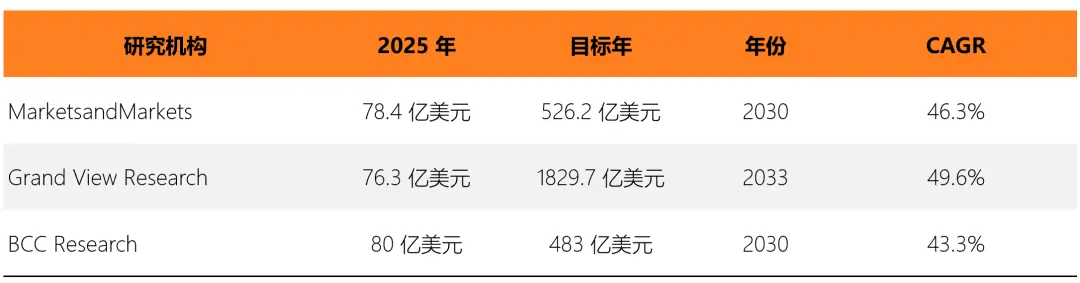
Figure 1: Comparative Forecast of Global AI Agent Market Size. Sources: MarketsandMarkets (2025), Grand View Research (2025), BCC Research (Jan 2026)
However, a significant gap remains between capital enthusiasm and industrial implementation. According to McKinsey’s November 2025 report, The State of AI in 2025—based on surveys of 1,993 respondents across 105 countries—88% of organizations are already using AI in at least one business function, yet nearly two-thirds remain at the experimental or pilot stage. Specifically for AI Agents: 62% of organizations have initiated experiments; 23% are scaling deployment in at least one function; but fewer than 10% have achieved scaled deployment in any single function.
These figures signal that the narrative momentum behind DeFAI currently outpaces actual implementation progress. Recognizing this gap is a prerequisite for objectively evaluating the sector’s value.
The Technical Foundation of DeFAI: How AI Agents Interact with the On-Chain World
To understand how DeFAI operates, we must first answer a critical question: Through what mechanism does AI intervene in on-chain financial operations?
The core execution unit of a DeFAI system is an AI Agent built upon large language models (LLMs). As summarized academically by Wang et al. (2023), its core capabilities can be distilled into a three-layer architecture—each layer fulfilling a specific functional role within on-chain contexts:
- The planning layer, responsible for goal decomposition and path optimization, maps to strategy generation and risk assessment in on-chain settings;
- The memory layer, leveraging external storage such as vector databases to accumulate cross-cycle information, hosts historical market data and protocol states;
- The tool layer, extending model capabilities to invoke external systems—including DeFi protocols, price oracles, and cross-chain bridges.
One crucial point must be clarified: LLMs themselves cannot interact directly with blockchains. Virtually all current DeFAI systems adopt a separation of off-chain reasoning and on-chain execution. AI Agents perform strategy computation off-chain, then translate results into on-chain transaction signals executed by dedicated modules. This architectural choice reflects current technological constraints—and simultaneously introduces security challenges around private key authorization and permission management.
AI Agents are fundamentally autonomous decision-making systems based on LLMs, achieving closed-loop execution via task decomposition, memory management, and tool invocation. Interaction between AI Agents and on-chain assets has already taken initial shape.
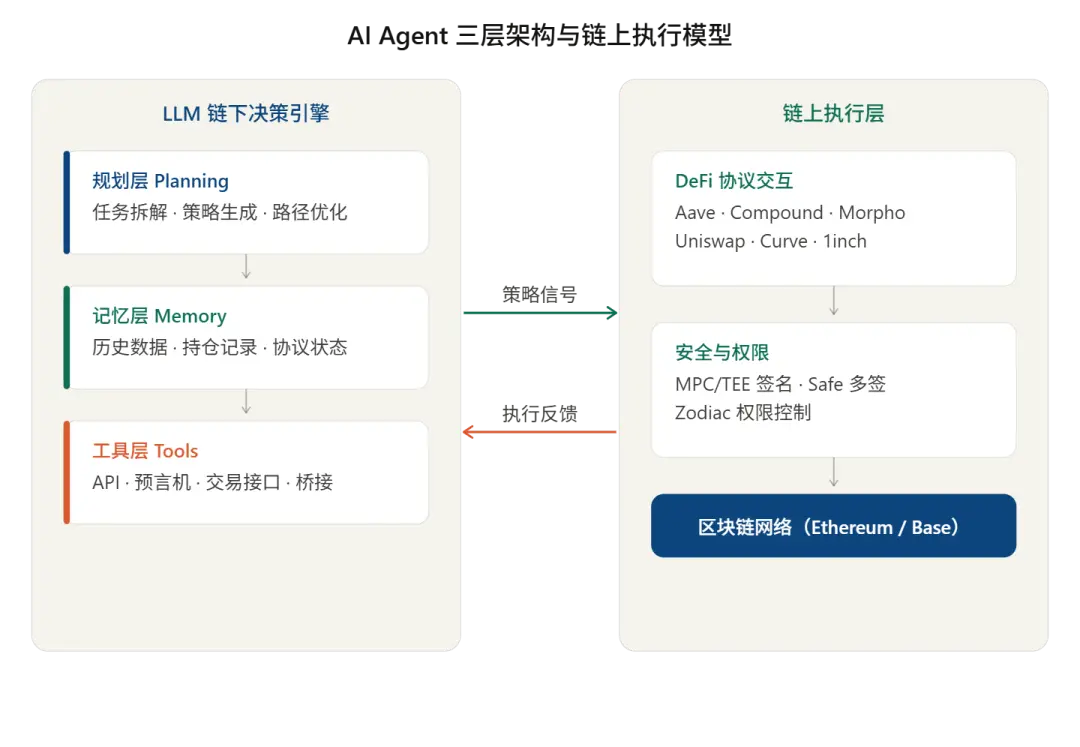
Figure 2: Three-Layer Architecture of AI Agents
The Evolution of DeFAI: From Information Interaction to Execution Closure
Having established DeFAI’s technical foundation, a natural follow-up question arises: How did this system evolve step-by-step to its current state?
According to research by The Block, DeFAI’s evolution was neither abrupt nor linear—it progressed through two distinct phases: from early information-processing-focused interactive Agents, to today’s execution-capable systems actively intervening in on-chain operations.
These two phases differ fundamentally in objective orientation, technical approach, and risk profile.
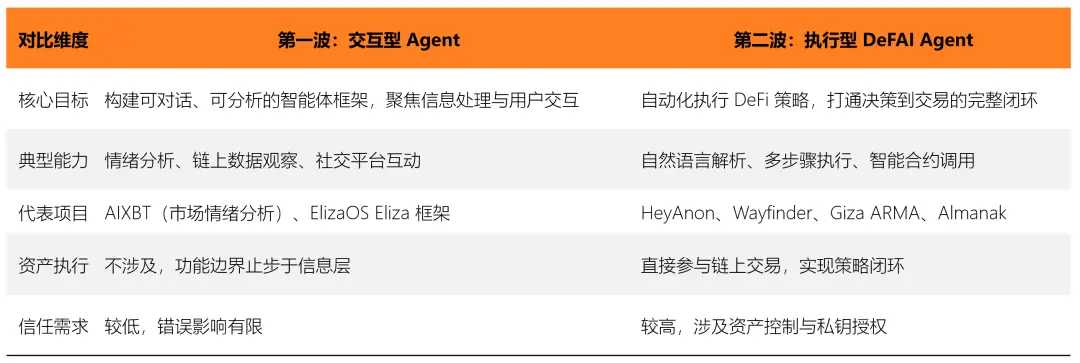
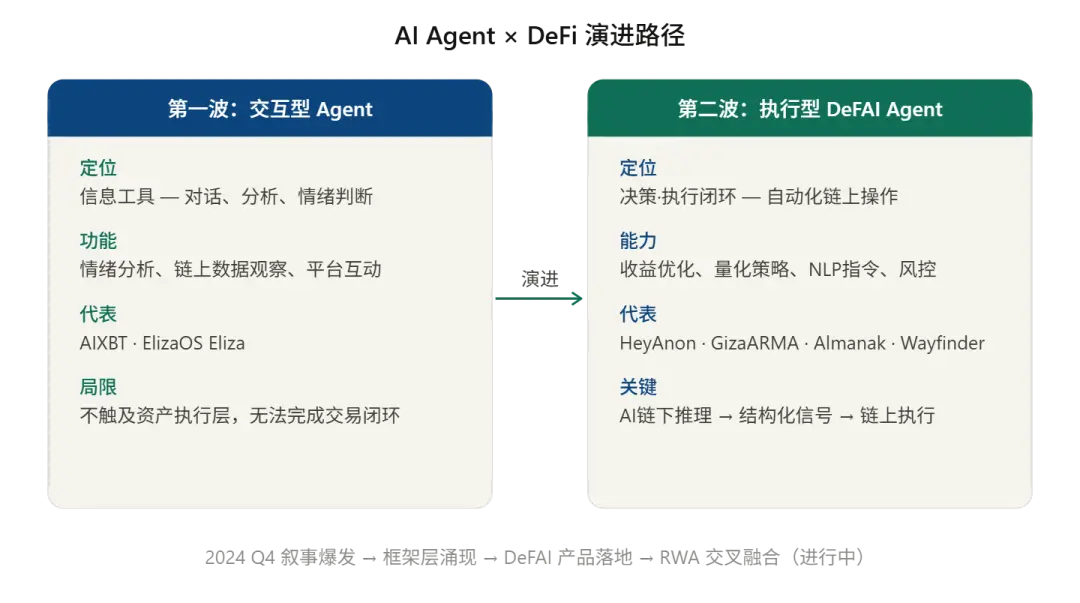
Figure 3: Comparative Timeline of DeFAI’s Two Evolutionary Waves
The evolution across these two waves can be understood as follows:
The first wave comprises interactive Agents, focused on building conversational, analytically capable agent frameworks. Representative projects include ElizaOS (formerly ai16z)’s Eliza framework and Virtuals’ G.A.M.E. At its core, this phase remains an information tool—Agents can read, speak, and analyze, but their functional scope stops at the information layer, never touching asset execution.
The second wave consists of execution-oriented DeFAI Agents, which genuinely enter decision-execution closed loops. Key representatives include HeyAnon, Wayfinder, Giza (ARMA Agent), and Almanak. These systems share a common trait: AI runs off-chain, outputs structured strategy signals, and relies on on-chain execution modules to carry out transactions. They do not replace existing DeFi protocols; instead, they introduce an AI-driven decision layer atop them—transforming the operational flow from “humans issuing instructions” to “Agents executing autonomously.”
The fundamental distinction between the two waves lies not in technical complexity, but in whether assets are actually touched. This also determines why the second wave faces far more complex challenges in trust mechanisms, permission design, and security architecture than the first—a central theme explored in the next section.
DeFAI’s Real-World Deployment Landscape: Four Main Application Scenarios
From technical architecture to evolutionary trajectory, DeFAI’s “what it can do” has gradually become clear. So, at the product level, what real problems is it solving?
Overall, current DeFAI application exploration has matured around four core directions—each addressing one of four primary pain points in on-chain operations: yield efficiency, strategy execution, user interaction barriers, and risk control.
Yield Optimization: Cross-Protocol Automated Rebalancing
Yield optimization is currently the most mature DeFAI application scenario. Its core logic continuously scans annualized yields across major DeFi protocols—including Aave, Compound, and Fluid—assesses whether rebalancing is warranted based on preset risk parameters, and performs transaction cost analysis before each operation. Funds are only transferred when projected yield gains exceed total gas and trading fees—enabling automated, cross-protocol optimal allocation.
Take Giza as an example: its ARMA Agent launched a stablecoin yield strategy on Base in February 2025, continuously monitoring interest rate fluctuations across Aave, Morpho, Compound, and Moonwell. By factoring in protocol APY, fee costs, and liquidity, ARMA intelligently reallocates users’ funds to maximize returns. Public data shows ARMA currently serves approximately 60,000 unique holders, with over 36,000 deployed Agents managing over $20 million in assets under management (AUM).
In markets where DeFi protocol yields fluctuate constantly, manual monitoring and manual rebalancing cannot match the efficiency and timeliness of automated systems—this is precisely the core value proposition of this use case.
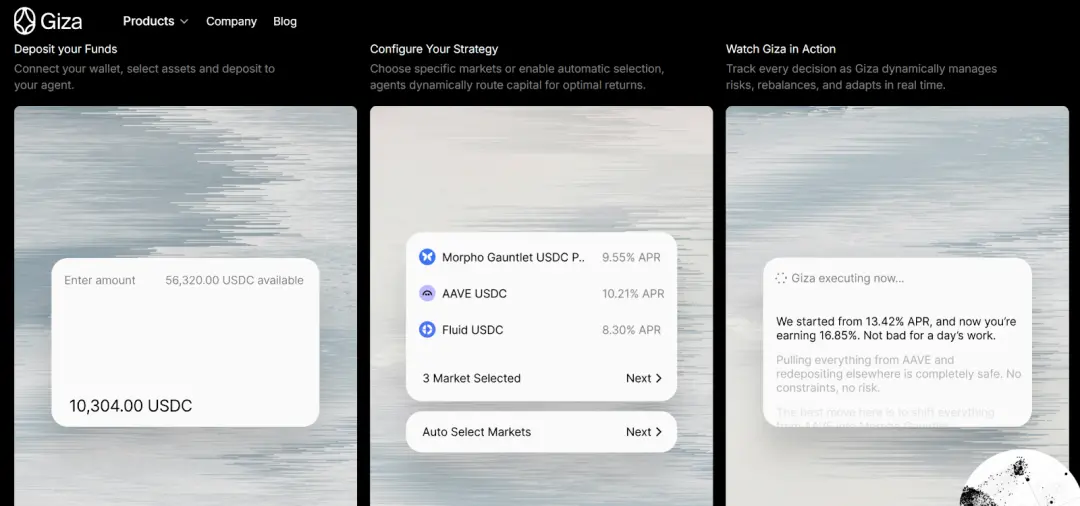
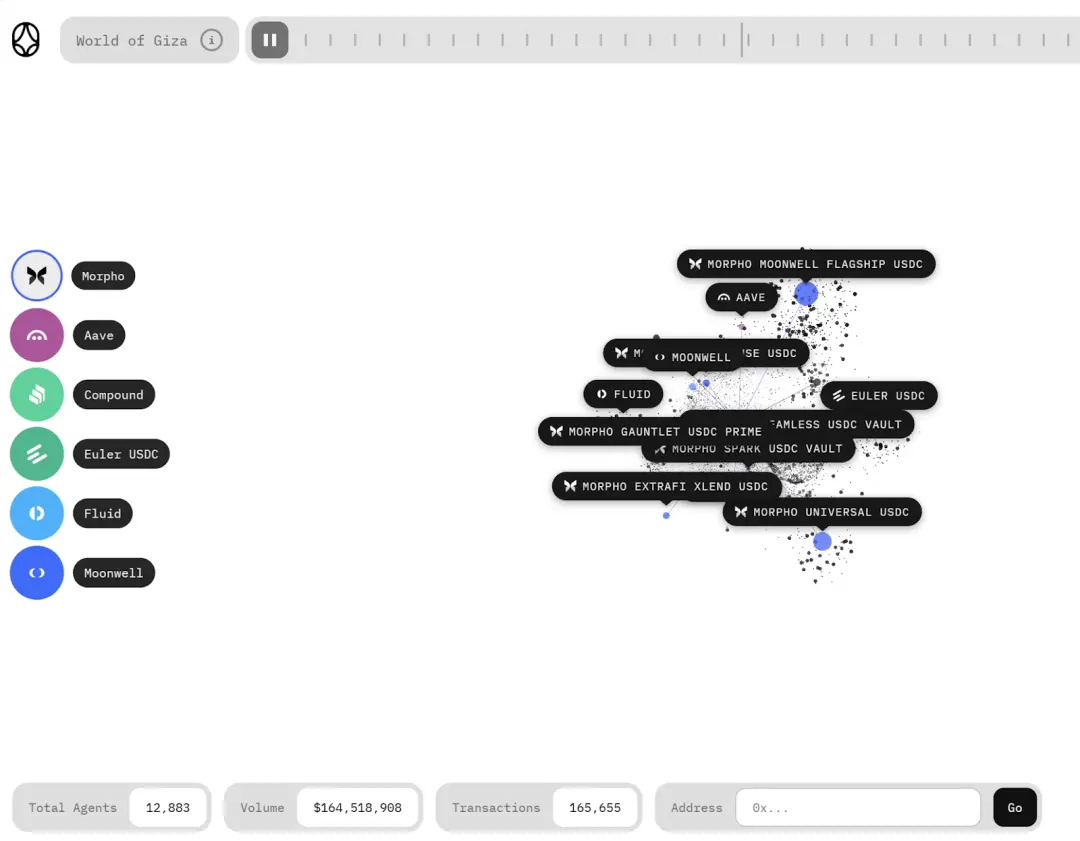
Figure 4: Example Interface of Giza’s ARMA Agent
Quantitative Strategy Automation: Democratizing Institutional-Grade Capabilities
In quantitative strategy automation, DeFAI platforms aim to modularize and automate the full workflow traditionally performed by quant teams—enabling individual users to access institutional-grade strategy execution capabilities.
Take Almanak—backed by Delphi Digital—as an example. Its AI Swarm system decomposes the quant process into four components:
- The strategy module supports writing investment logic and backtesting via Python SDK;
- The execution engine automatically runs pre-approved strategy code and triggers DeFi calls upon user authorization;
- The secure wallet builds a multisig system on Safe + Zodiac, granting strategy execution rights to AI Agents via role-based permissions—ensuring funds remain under user control;
- The strategy vault packages strategies as ERC-7540-compliant tradable vaults, enabling investors to participate in strategy returns akin to mutual fund shares.
The significance of this architecture lies in delegating data analysis, strategy iteration, and risk management to AI agents, while users only need to conduct final review of system outputs—eliminating the need to assemble specialized quant teams. This enables so-called “democratization of institutional-grade strategies” (as claimed by the project).
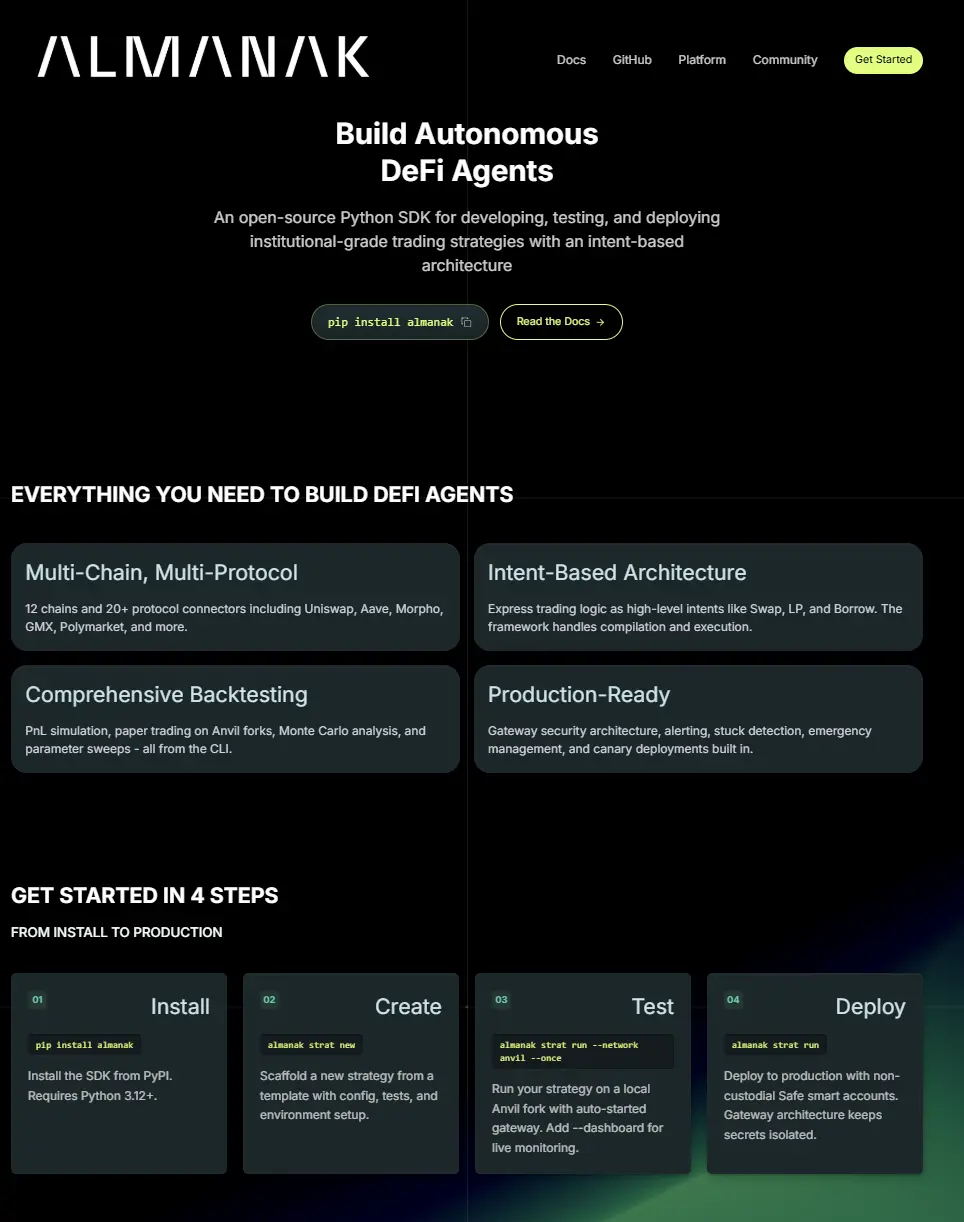
Figure 5: Homepage Screenshot of Almanak Platform
Natural Language Instruction Execution: Making DeFi as Simple as Sending a Message
The core of this scenario is intent-based DeFi: leveraging natural language processing (NLP), users issue trading instructions in everyday language, and AI parses and translates them into multi-step on-chain operations—dramatically lowering the barrier to entry for ordinary users.
HeyAnon has built a DeFAI chat platform where users input commands via a chat interface, and AI executes token swaps, cross-chain bridging, lending, staking, and other on-chain actions. It integrates LayerZero cross-chain bridges and Aave v3, supporting multi-chain deployment across Ethereum, Base, Solana, and more.
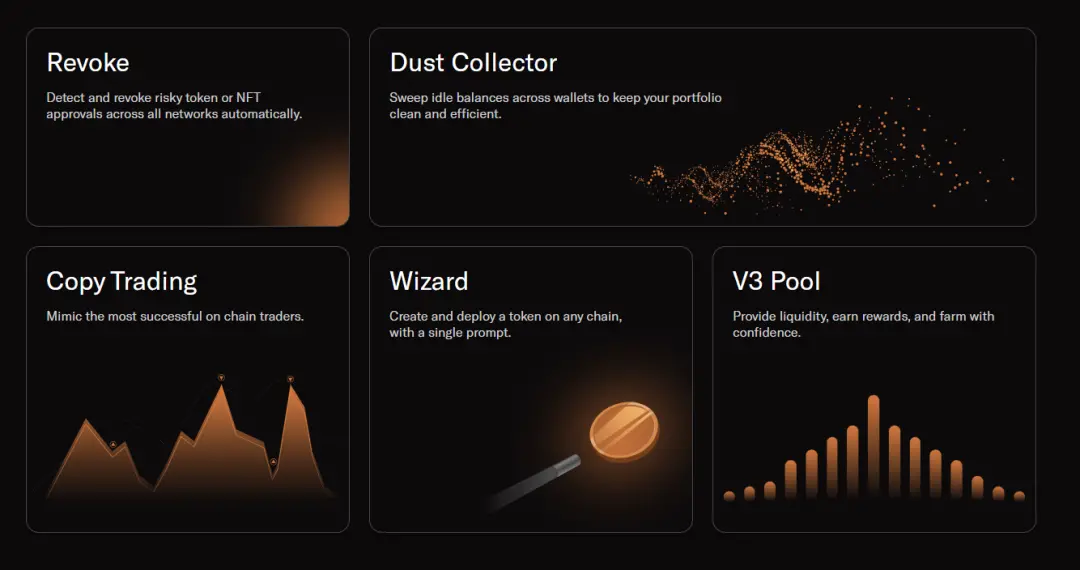
Figure 6: Homepage Screenshot of HeyAnon Platform
Wayfinder—funded by Paradigm—offers even broader cross-chain transaction services. Its AI Agent (“Shells”) automatically identifies optimal trading paths across chains, executing cross-chain transfers, token swaps, or NFT interactions—freeing users from concerns about underlying gas fees, cross-chain compatibility, and other technical details.
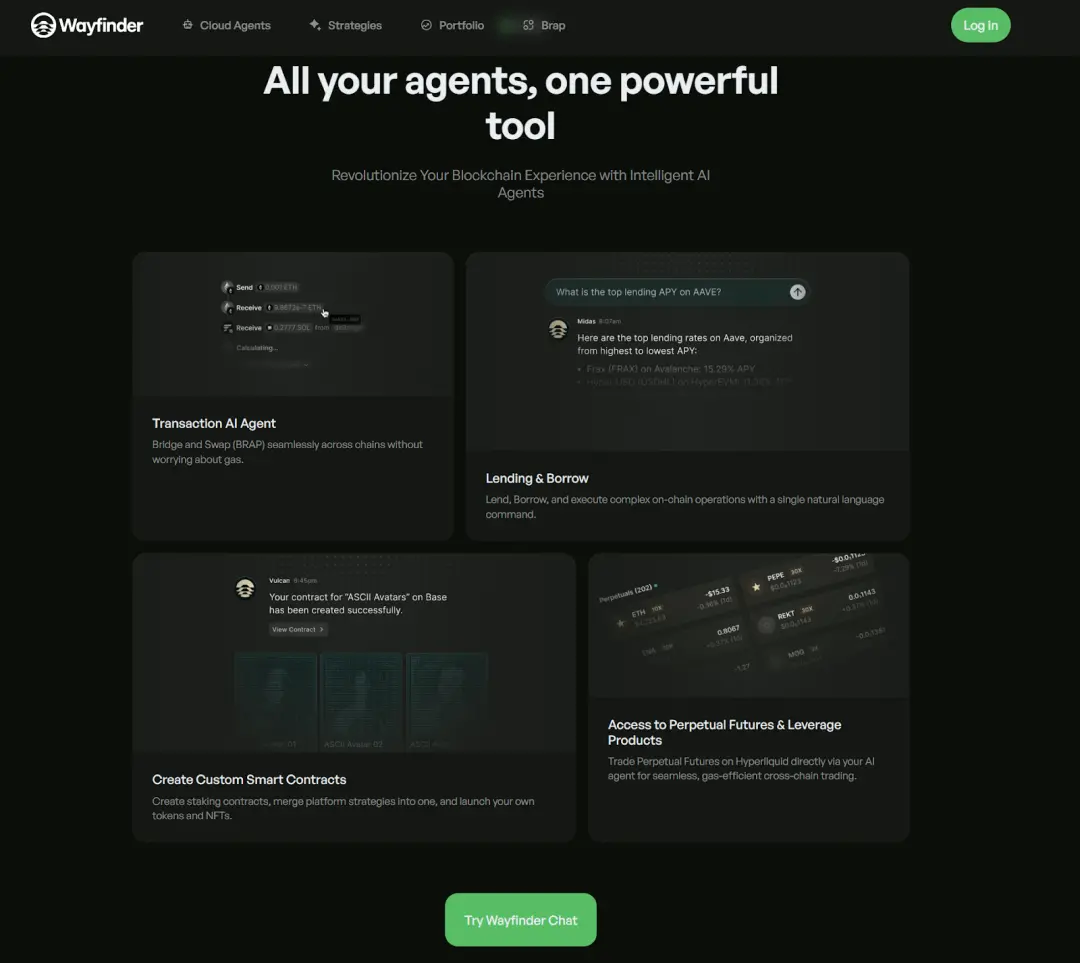
Figure 7: Homepage Screenshot of Wayfinder Platform
In summary, natural language interfaces significantly lower DeFi’s operational threshold—but also place higher demands on the accuracy of underlying intent parsing. Any misinterpretation by AI could lead to outcomes vastly divergent from user expectations.
Risk Management & Liquidation Monitoring: Native Mechanisms Embedded Within On-Chain Protocols
In DeFi lending and leveraged positions, the most common AI Agent application is real-time monitoring of on-chain position health and automatic protective actions as liquidation thresholds approach. This critical functionality is increasingly being integrated natively into leading DeFi protocols—becoming a built-in feature of DeFi platforms.
- Aave measures position safety via a “health factor”; positions become eligible for liquidation once the health factor falls below 1.0;
- Compound uses a “liquidation collateral factor” mechanism: liquidation triggers when the borrower’s outstanding balance exceeds the limit set by this factor. Specific parameters for each collateral asset are governed separately via on-chain governance.
Human monitoring struggles to maintain consistent response efficiency in 24/7, highly volatile on-chain markets. AI Agents excel here—delivering continuous tracking, intelligent evaluation, and automatic intervention—raising risk control efficacy beyond levels achievable by humans or rule-based automation alone.
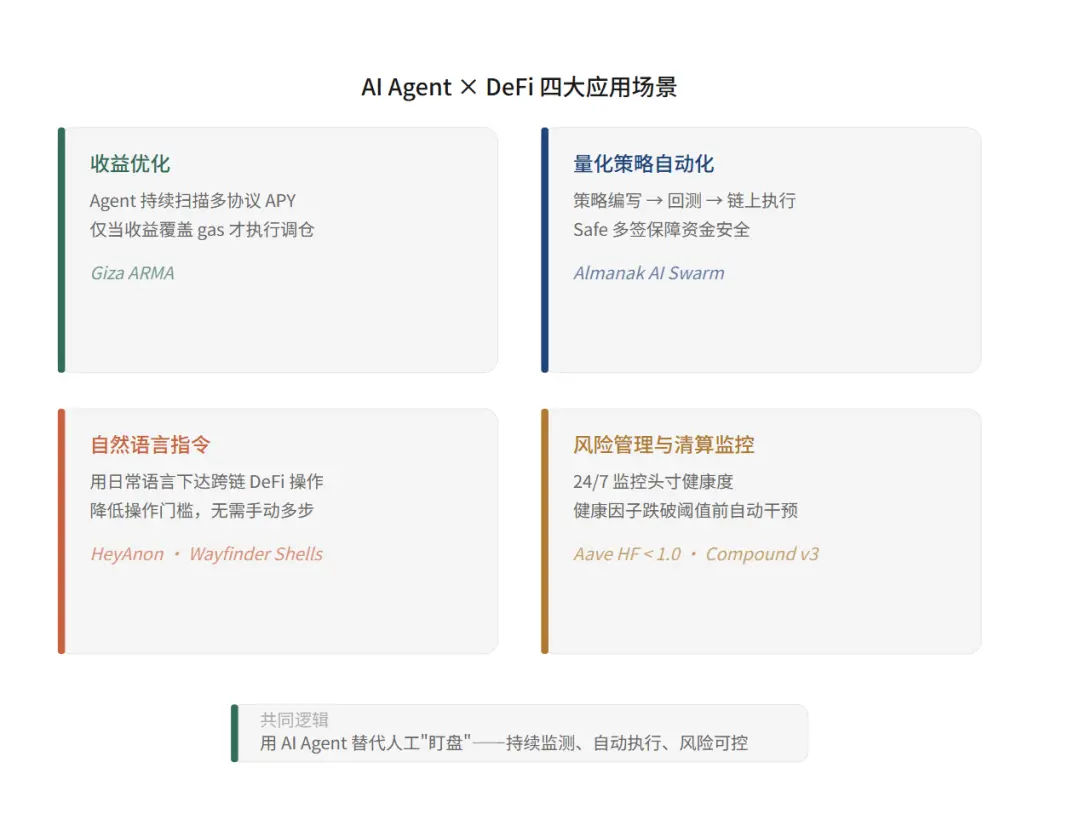
Figure 8: Four Main Application Scenarios of Agent × DeFi
In summary, these four application scenarios are not isolated but interdependent—complementing each other along a unifying thread. Yield optimization and quantitative strategy automation target advanced users with meaningful asset holdings, emphasizing execution efficiency and strategy precision. Natural language interaction focuses on lowering operational barriers for mainstream users. Risk management serves as the foundational security layer permeating all scenarios. Together, they constitute DeFAI’s current ecosystem deployment landscape—and lay the groundwork for more sophisticated on-chain Agent applications ahead.
DeFAI’s Security Baseline: Private Key Management & Permission Control
All four application scenarios described above—whether yield optimization or quantitative strategy automation—share one prerequisite: AI Agents must possess some form of signing authority—that is, access to private keys. This is the most critical—and most easily obscured by narrative hype—technical challenge facing the entire DeFAI sector. Should the signing mechanism prove vulnerable, all upper-layer strategic capabilities become meaningless.
Currently, the industry’s dominant private key security management approaches fall into two categories: MPC (Multi-Party Computation) and TEE (Trusted Execution Environment). Each differs in security model, automation level, and engineering complexity.
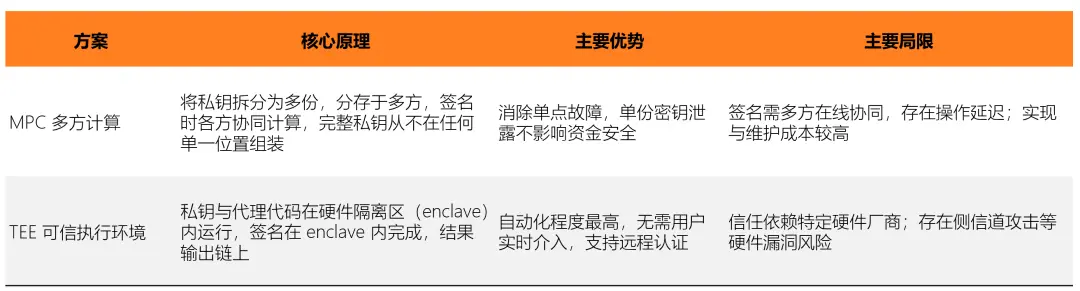
Figure 9: Comparative Overview of Two Mainstream Private Key Security Approaches
- MPC (Multi-Party Computation) eliminates single points of failure by splitting keys. In a typical 2-of-3 threshold signature scheme, even if one key shard is compromised, attackers cannot independently generate a valid signature—leaving funds unaffected. Vultisig exemplifies this approach: an open-source, multi-chain self-custodial wallet built on MPC/TSS technology, employing a no-single-mnemonic architecture that merges key security with user self-custody.
- TEE (Trusted Execution Environment) takes another path: sealing both private keys and agent code inside hardware-protected, isolated enclaves. AI Agents perform strategy computation and signing entirely within the enclave, outputting only signatures to the blockchain—rendering private keys completely invisible to external environments. Mainstream chips—including Intel SGX, AMD SEV, and ARM CCA—provide hardware-level isolation and encryption. Chainlink has already introduced TEE into its oracle network to process sensitive data, using remote attestation to cryptographically prove enclave integrity to external parties.
However, key security is merely the first line of defense. In practice, regardless of the chosen key management approach, permission controls must be layered on top to prevent Agent privilege escalation. Almanak’s implementation offers a relatively comprehensive reference framework: the platform employs TEE to protect strategy logic and confidential parameters, and inserts a Zodiac Roles Modifier permission layer between the deployment engine and users’ Safe smart accounts. Every transaction initiated by the AI Agent undergoes strict whitelisting checks against pre-approved contract addresses, functions, and parameters—automatically rejecting any unauthorized transactions.
This implementation of the principle of least privilege has become an important security design benchmark for DeFAI systems. It reveals a deeper truth: DeFAI’s security challenge is not merely about selecting the right technology—it is a systems engineering problem involving coordinated alignment among key management, permission boundaries, and execution auditing. Any missing component risks becoming the weakest link in the chain—precisely the starting point for the next section’s risk analysis.
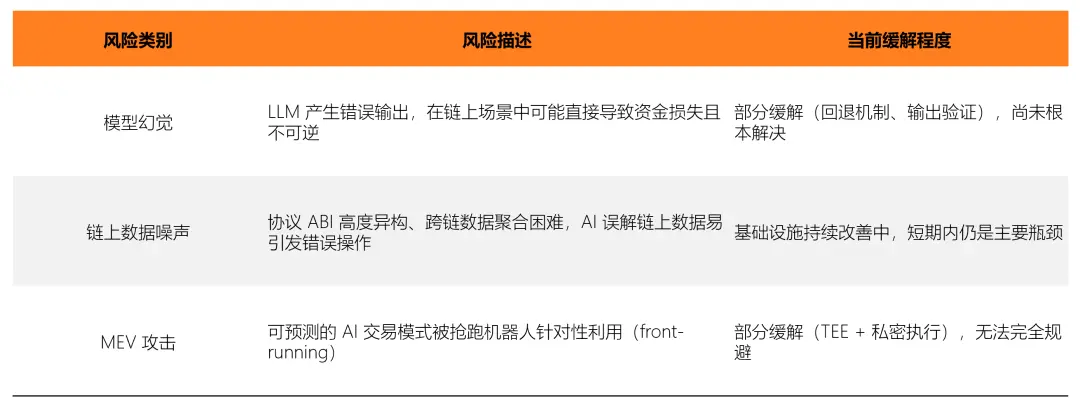
The Gap Between Reality and Narrative: Core Risk Analysis of DeFAI
The preceding analysis leads to a core conclusion:
VCX does not command a premium due to superior asset selection or higher return expectations—it sells access itself. This raises a fundamental question: What kind of product is VCX, really?
Legally, it is a registered, closed-end fund with the SEC—transparent in holdings and compliant in structure—no different in essence from any standard equity ETF on the market. Functionally, however, it does not sell traditional “expected investment returns.” Instead, it sells access rights to the asset class—previously available only to top-tier venture capital firms and accredited investors—which are packaged into tradable units listed on the NYSE.
Therefore, the market’s willingness to pay a 16–30x NAV premium reflects pricing of this access right—not an assessment of underlying asset returns.
Viewed this way, comparing VCX with MicroStrategy (MSTR) proves instructive. On the surface, both achieve similar things: packaging scarce assets difficult to acquire directly (Bitcoin / top-tier pre-IPO equity) into securities tradeable on secondary markets—and both exhibit premiums far exceeding underlying asset valuations. Yet their capital mechanics differ fundamentally:
- MSTR continuously raises capital via convertible bonds and preferred stock issuance, then uses proceeds to buy more Bitcoin. This mechanism grants MSTR dynamic balance-sheet expansion and sustained accumulation capacity—giving its stock premium a degree of endogenous sustainability.
- VCX, constrained by its closed-end fund structure, locks in asset size post-issuance—unable to finance new acquisitions via further fundraising. Liquidity for its holdings depends heavily on portfolio companies’ IPOs or M&A exits. Once retail sentiment cools—or six-month lockup periods expire, increasing circulating supply—the pressure for premium compression will far outweigh that faced by MSTR.
Comparison of VCX vs. MSTR (Strategy) Models
In other words, MSTR’s premium is supported by a self-sustaining capital mechanism, whereas VCX’s premium stems primarily from scarcity + sentiment. This product logic is neither inherently right nor wrong—but the associated risks are harder for markets to price correctly than those of ordinary closed-end funds:
When retail investors buy at prices far exceeding NAV, they are not paying for the assets themselves—but for the premium attached to access rights. And this premium faces strong downward pressure once portfolio companies go public and direct trading channels emerge in public markets.
Trend Assessment
Synthesizing the foregoing analysis, we can make a phased judgment on DeFAI’s evolutionary trajectory. Overall, this sector stands at a pivotal juncture—transitioning from proof-of-concept to productization—with its evolution expected to unfold across three progressive stages:
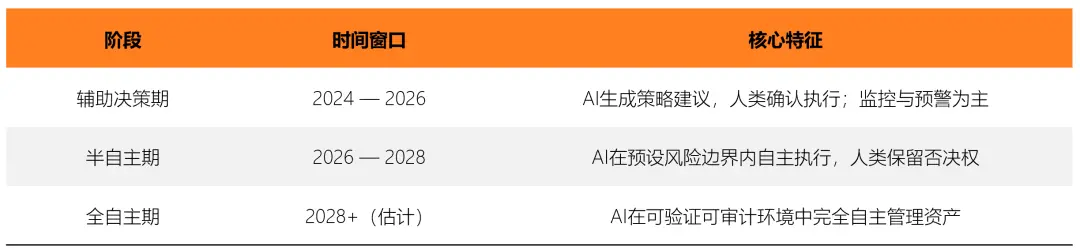
Figure 11: Projected Stages of DeFAI Development
Note: The table above represents a synthesis of industry public reports, project progress, and technology maturity—not a deterministic timeline.
At the present juncture, DeFAI overall resides in the transitional phase between assisted decision-making and semi-autonomous operation—some projects have begun assuming limited autonomous execution capabilities, yet human review and fallback mechanisms remain the dominant deployment paradigm. Against this backdrop—and considering current technology maturity and market realities—three judgments warrant particular attention.
First, most current DeFAI projects remain automation tools—not true autonomous Agents. Products currently branded as “DeFAI” predominantly translate human instructions into predefined DeFi operation sequences. Their essence leans closer to high-efficiency execution interfaces—not autonomous systems possessing independent reasoning and decision-making capabilities. Per McKinsey’s 2025 report, even in general enterprise contexts, fewer than 10% of organizations have achieved scaled AI Agent deployment in any single function. On-chain environments impose even higher trust barriers and operational complexity—so moving from tech demos to genuine commercial closure remains a considerable distance.
Second, the most mature—and institutionally trusted—application direction for AI Agents today is not high-risk autonomous trading, but on-chain monitoring, alerting, and governance assistance. Use cases like 24/7 position monitoring, liquidation alerts, and governance proposal analysis tolerate LLM hallucination relatively well—errors do not directly trigger financial loss—while effectively compensating for humans’ innate limitations in sustained attention. This represents a more realistic pathway for DeFAI to move from “technology showcase” to “institutional adoption.”
Third, the convergence of AI Agents with Real-World Assets (RWA) is the next high-potential cross-sector frontier worth close attention. According to RWA.xyz data, as of early April 2026, the total value of tokenized RWAs on-chain (excluding stablecoins) exceeded $27 billion—spanning U.S. Treasuries, private credit, commodities, and corporate bonds. If AI Agents can manage hybrid portfolios containing Treasury RWAs and stablecoins—for instance, automatically adjusting allocations between them based on market conditions—their addressable asset scale would far surpass today’s DeFi-native asset focus. This could meaningfully bridge on-chain and off-chain asset ecosystems—enabling synergistic Web3 + AI + TradFi integration and dramatically expanding market imagination.
Conclusion
AI Agents and on-chain asset management stand at a critical inflection point—transitioning from conceptual validation to productization. Technical feasibility has been preliminarily validated. Yet challenges—from LLM hallucination risks and on-chain data heterogeneity to the absence of trust infrastructure—cannot be resolved solely through technological iteration. They demand systematic advancement across project architecture design, compliance roadmap planning, security system construction, and business model validation.
Precisely because of this, the sector remains in its early infrastructure-building phase—and the true competitive landscape has yet to crystallize. For teams capable of navigating both Web3 and AI dimensions, the current moment presents a window of opportunity—whether building more reliable on-chain Agent systems at the execution layer, or unblocking critical bottlenecks in data, permissions, and trust at the infrastructure layer, substantial white space remains to be filled.
DeFAI’s competitive moat will ultimately not rest on singular model capability or protocol integration depth—but on the ability to forge a truly self-consistent, closed loop across technology, compliance, and security.
Join TechFlow official community to stay tuned
Telegram:https://t.me/TechFlowDaily
X (Twitter):https://x.com/TechFlowPost
X (Twitter) EN:https://x.com/BlockFlow_News
 Go2Mars Capital