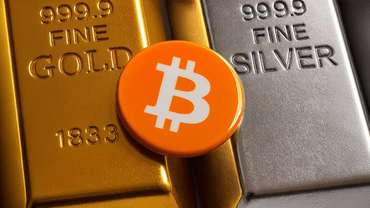
Rhenium fraud—gold has its own山寨 coin
TechFlow Selected TechFlow Selected
Rhenium fraud—gold has its own山寨 coin
True gold fears no fire; fake gold forms an industrial chain.
 Navigating Web3 tides with focused insights
Author: Kuli, TechFlow
The saying “True gold fears no fire” has started to lose its validity this year.
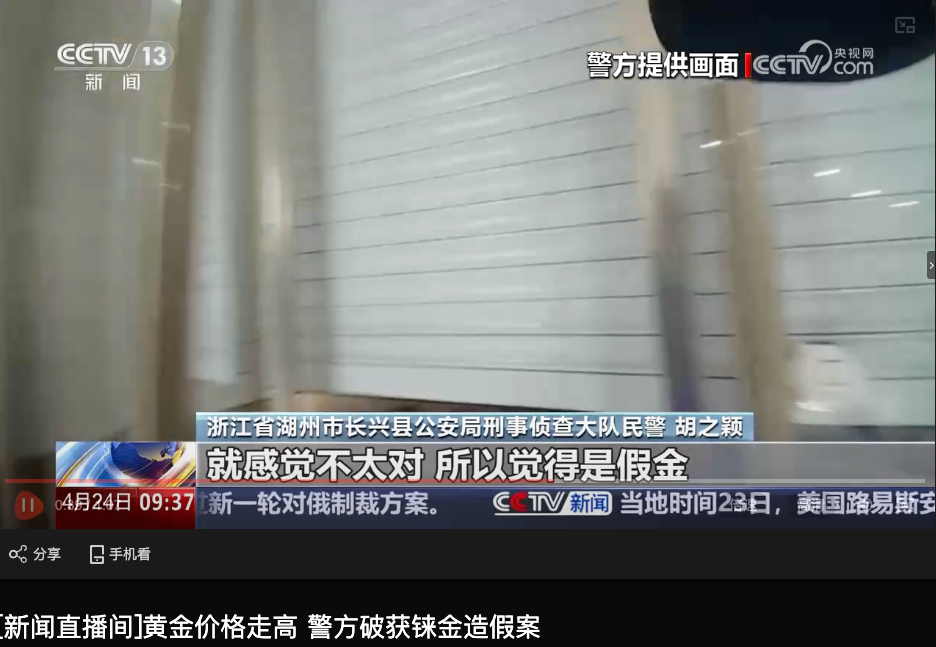
China Central Television (CCTV) exposed a new gold-fraud technique yesterday. A jewelry store in Changxing County, Huzhou City, Zhejiang Province, purchased a gold necklace last year from a seller who claimed it was crafted from previously bought gold. Following standard procedures, the shop owner inspected it visually—no abnormalities were detected; it did not discolor under a blowtorch flame; and its weight matched expectations on the scale. With gold priced at over RMB 800 per gram, the owner paid promptly.
That afternoon, however, an experienced craftsman who had worked at the store for many years sensed something was off. He cut open the necklace and examined its cross-section: the texture appeared coarse—not the smooth, droplet-like fracture surface characteristic of pure gold.
After reporting to police, investigators traced financial flows and discovered that the fraud ring’s transaction records spanned multiple provinces, and more than one jewelry store had fallen victim. Ultimately, two core members were apprehended at a gold-processing workshop in Wuhu City, Anhui Province. According to disclosures by Changxing police, the total value involved exceeded RMB 800,000.
The workshop contained a high-temperature melting furnace, molds, hammers—and a silvery-white powder.
This powder is rhenium, element number 75 on the periodic table. It possesses one property that has thrown the entire gold industry into disarray:
Its density is nearly identical to that of gold, yet its melting point is three times higher. You cannot detect it by burning; you cannot detect it by weighing; and—as Song Jiangzhen, Director of the Guangdong Southern Gold Market Research Center, told CCTV—you cannot reliably detect it with spectrometers either. Rhenium and gold differ by only four positions on the periodic table, meaning their spectral signals overlap heavily on instruments, causing ordinary gold-testing devices to misidentify rhenium as gold.
The gold industry’s millennia-old verification methods have been simultaneously breached by a single metallic powder.
This isn’t limited to Changxing. According to CCTV reports and public security bulletins across China, cases involving rhenium-adulterated gold have occurred since 2024 in Xiangtan (Hunan), Hebi (Henan), Quanzhou (Fujian), Shanghai, Chongqing, and Ningbo (Zhejiang). The Quanzhou Jewelry & Gold Association reported receiving related complaints intermittently, noting that the fraud techniques are growing increasingly covert.
With gold now selling for over RMB 1,000 per gram—and rhenium powder available online for just dozens of yuan per gram—the price gap is enormous, and detection remains ineffective. Naturally, some people seize the opportunity.
After all, anything valuable enough tends to attract imitators.
Rhenium Powder: Easy to Produce, Hard to Detect
The barrier to entry for this counterfeit business is far lower than imagined.
A veteran gold-recycling shop owner in Quanzhou told reporters that earlier rhenium-adulteration methods used small granules, which still left visible inconsistencies when mixed into gold jewelry. Today’s rhenium powder, however, is ground as finely as flour. Once melted together with gold at high temperatures, its surface becomes indistinguishable from genuine gold—even the owner himself has been duped more than once.
The raw materials and formulas used for counterfeiting are no longer secret.
CCTV journalists searched for “rhenium powder” on e-commerce and secondhand trading platforms—and found product listings openly advertising it. Descriptions explicitly stated “rhenium-doped gold,” “passes flame and spectrometer tests,” and “increases gold weight.” Some sellers even specified mixing ratios—e.g., “75% gold to 25% rhenium.” When journalists contacted one such seller, the vendor guaranteed near-perfect deception: adding 20–23% rhenium would render the item undetectable by market-standard spectrometers.
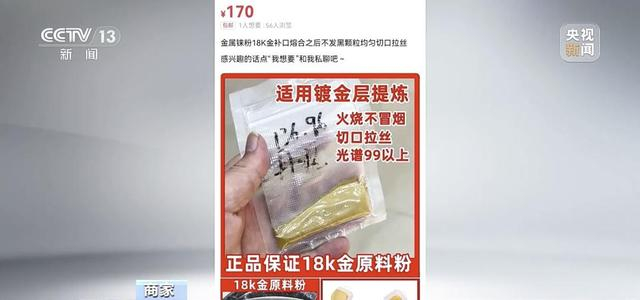
One phrase on these product pages struck us as particularly interesting: “gold amplification.” “Amplification” sounds almost like rhenium powder functions as a kind of leverage tool.
How much does this rhenium powder cost? Some vendors list high-purity rhenium powder at RMB 29 per gram; others specifically label theirs “for gold blending” and charge RMB 150 per gram. According to confessions from suspects in the Changxing case, their procurement cost was approximately RMB 100 per gram.
Are there technical means to uncover such fraud? Yes—but they’re far beyond the reach of ordinary jewelry stores.
Based on testing experience from the Shaoxing Municipal Market Supervision Administration in Zhejiang Province, high-precision imported spectrometers can separate rhenium and gold signals. Another method is more definitive: melt the jewelry into liquid gold and send it to an authoritative institution for analysis. Yet, according to an industry practitioner in Shenzhen’s Shuibei district speaking to Beijing News, most of the hundreds of testing facilities in Shuibei use domestically produced instruments costing only tens of thousands of yuan—limiting their precision. Meanwhile, authoritative institutions do not accept individual submissions for destructive testing.
The equipment capable of detecting rhenium is unaffordable for ordinary jewelry stores; the equipment affordable to them cannot detect rhenium.
For millennia, gold’s fundamental rule has been: hard to fabricate, easy to verify—a simple flame test sufficed. Rhenium powder has inverted this relationship: forging fake gold takes just a few hours, but verifying genuine gold now requires sending it to a lab—and waiting days for results.
Hard to verify, easy to produce—it feels almost like reverse Bitcoin.
High Gold Prices Fuel Fraud Activity
A quick calculation reveals why so many risk it all.
Current gold recycling prices hover around RMB 1,040 per gram. To fabricate a 100-gram “pure gold” necklace with 20% rhenium, you need 80 grams of real gold and 20 grams of rhenium powder. At RMB 1,040 per gram, the 80 grams of real gold costs RMB 83,200; at the suspects’ stated procurement price of RMB 100 per gram, the 20 grams of rhenium powder costs RMB 2,000. Total production cost: RMB 85,200. Selling it as pure gold yields RMB 104,000.
Profit per necklace: nearly RMB 20,000.
This assumes only the recycling price. As CCTV reported, some gangs specifically target small- and medium-sized recycling shops—whose outdated equipment and lax safeguards leave them reliant on flame tests and tactile judgment. Fraudsters even stage performances: reciting lines like “passed down from elders” or “need cash urgently after losing at mahjong”—creating a sense of urgency to lower the shop owner’s guard.
This is exactly how the Hebi (Henan) case unfolded. According to local police bulletins, two individuals visited three recycling shops in one day, successfully defrauding over RMB 60,000. The second shop hadn’t yet reacted when the third shop owner noticed irregularities and refused the transaction—the scammers simply walked out. From entering to exiting, the entire process took less than half an hour.
Profits aren’t limited to counterfeiters alone. Rhenium powder prices are also surging.
According to Pengpai News citing Wind data, the daily average price of rhenium powder stood at RMB 18,000 per kilogram in June 2025—by late July, it had soared to RMB 33,000.
An 83% increase in one month.
Rhenium is legitimately used in aerospace engine superalloys—industrial-grade material subject to extreme heat. Globally proven reserves stand at roughly 2,400 tons, concentrated mainly in Chile, the U.S., and Russia; 80% of global rhenium consumption goes to aerospace applications. Yet, as Pengpai News quoted analysts observing, part of this price surge stems from speculation and illicit demand from gold fraudsters.
The higher gold prices climb, the stronger the “unofficial demand” for rhenium grows—pushing rhenium prices upward in tandem.
A metal designed to withstand extreme heat inside jet engines now finds its most lucrative application: adulterating gold necklaces to fool recycling-shop owners.
Counterfeits Are Everywhere
We’re all familiar with the term “counterfeit.”
Bitcoin’s code is open-source; tweak a few parameters and you can launch a new chain—Litecoin was born this way. Near-zero cost, yes—but at least it has its own name, its own price, and buyers know precisely what they’re purchasing: a “shitcoin.”
Rhenium-gold is also counterfeit—except it counterfeits the periodic table itself.
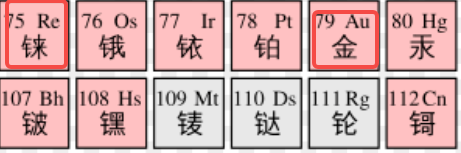
Gold’s atomic number is 79; rhenium’s is 75—just four positions apart. Those four positions happen to fall within the blind spot of conventional spectrometers. Melt rhenium powder and gold together at the right ratio, and the resulting alloy declares itself “pure gold” to every standard test available.
But unlike shitcoins, rhenium-gold carries an added layer of malice.
When you buy Litecoin, you know it’s not Bitcoin; when you hold USDT, you know it’s not USD. Rhenium-gold buyers have no such awareness—the instrument tells them it’s real, the invoice tells them it’s real, and even cutting open the necklace may not reveal the truth.
Shitcoins counterfeit openly. Rhenium-gold counterfeits—and then replaces the label with the genuine article’s branding.
According to an analysis cited on Zhihu—drawing on industry sources—a key issue is that current national standards for precious-metal jewelry testing contain no upper limit for rhenium content, leaving law enforcement without a legal basis. Rhenium is a legitimate industrial material whose trade is lawful; you cannot ban a metal essential to aircraft engines from circulating in the market.
Gold prices continue rising. Rhenium powder remains on sale. Spectrometer blind spots persist.
Many buy gold for peace of mind: no account opening required, no internet needed—just store it at home, and decades later, it retains value. But that peace of mind rests on one prerequisite: certainty that what you hold is real.
Once, a flame test sufficed. Now, you might need to melt your jewelry into liquid gold and ship it to a lab.
If verifying a piece of gold becomes as cumbersome as verifying an on-chain transaction, then how much trust remains in the word “physical”? Perhaps every gold saver should recalculate that value.
Join TechFlow official community to stay tuned
Telegram:https://t.me/TechFlowDaily
X (Twitter):https://x.com/TechFlowPost
X (Twitter) EN:https://x.com/BlockFlow_News
 深潮TechFlow