Matr1x's Divine "Gun" Shatters the Shackles of Web3 Gaming Development
TechFlow Selected TechFlow Selected
Matr1x's Divine "Gun" Shatters the Shackles of Web3 Gaming Development
Matr1x is an innovative breakthrough that transcends traditional Web2 gaming, introducing a completely new digital economic model and delivering an unprecedented gaming experience for players.
 Navigating Web3 tides with focused insights
Author: Florencia
The Evolution of Web3 Gaming
Since 2013, Web3 gaming has undergone a decade-long journey. Over these ten years, Web3 games have gradually evolved from their initial rudimentary forms into more playable and immersive experiences. They have also rapidly narrowed the gap with traditional games in narrative development and character design. As of August 2023, the global evolution of Web3 gaming can be roughly divided into the following stages:
-
2013–2016: Exploration and Incubation Phase
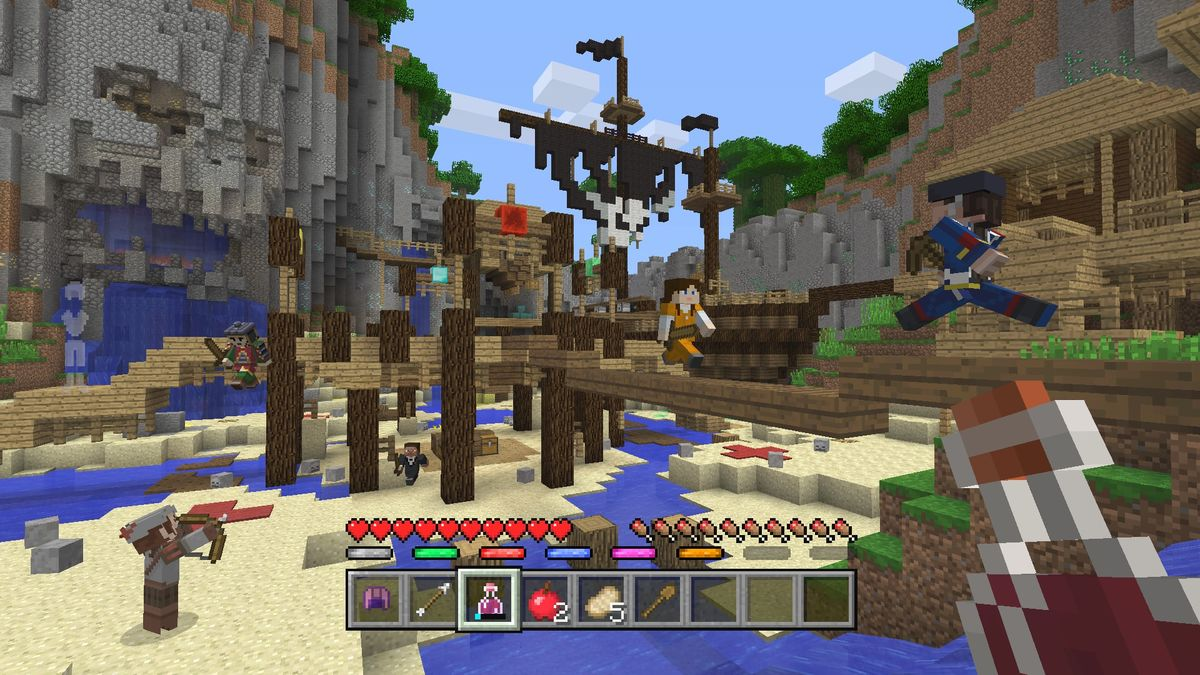
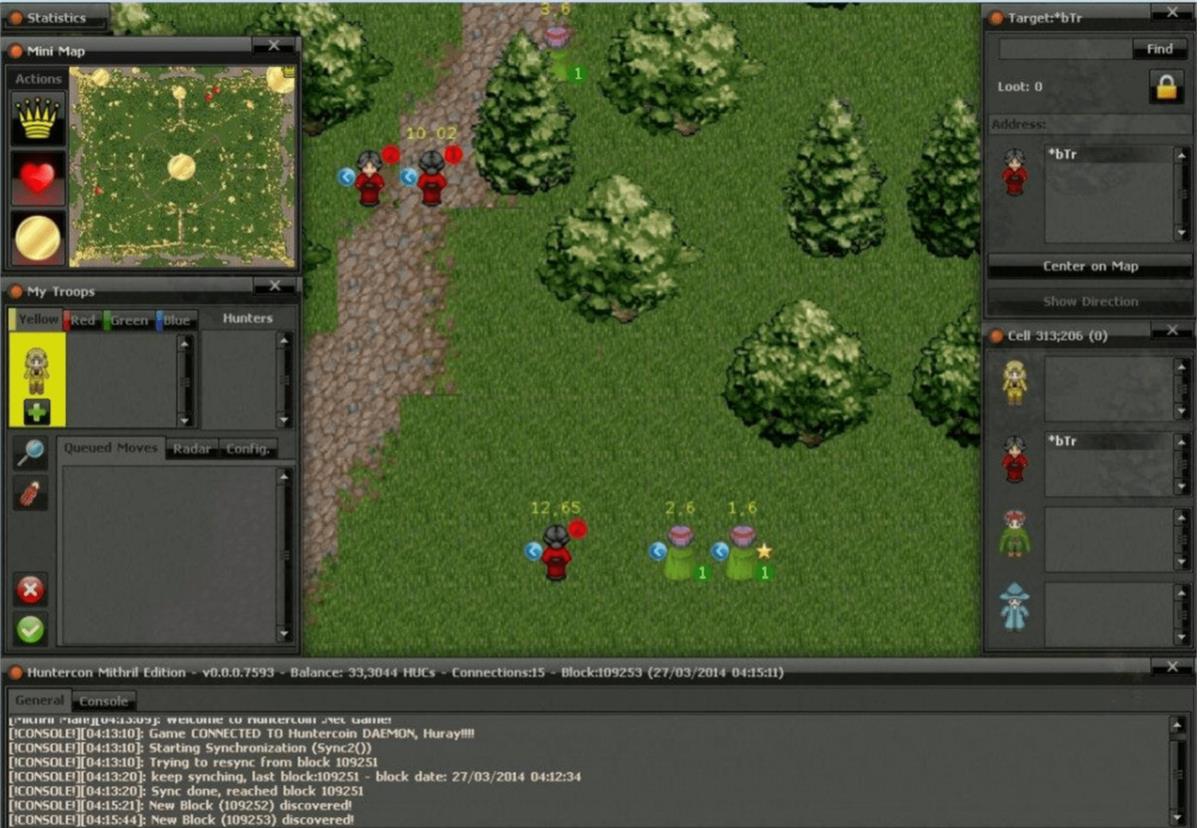
Tracing back to 2013, developers began exploring the integration of blockchain technology with gaming, initiating some early experiments. However, this sector failed to attract significant attention at the time. In 2014, BitQuest, a sandbox-style game, and Huntercoin, a mining-based game, entered users’视野.
Source: CoinPedia
Developers combined the sandbox gameplay of Minecraft with BTC, allowing players to earn, use, and trade Bitcoin through battling monsters and transactions within the game. Compared to earlier games, BitQuest’s innovation lay in incorporating cryptocurrency tokens—an early experiment in merging gaming with blockchain during the nascent phase of the industry. Although both the game's lifecycle and player engagement were short-lived, it provided valuable lessons and experience for future developers.
Source: NewsBTC
Huntercoin is a massively multiplayer online (MMO) game where players control hunters collecting coins. There are four colored tribes positioned at each corner of the map, and when encountering rival hunters, players can choose to "eliminate" them to claim treasures. Running on a fork of the Namecoin blockchain, Huntercoin allows players to mine cryptocurrency within the game world and deposit it into randomly generated “banks.” Essentially functioning as cryptocurrency wallets, they presented a novel concept for game wallets in a metaverse context. Initially an experimental live test, Huntercoin aimed to explore how blockchain technology could support fully functional virtual worlds.

Spells of Genesis (SoG) gained attention for combining blockchain-based puzzles with fantasy RPG mechanics. Featuring collectible cards, it was also described as a Collectible Card Game (CCG). SoG is playable on iOS, Android devices, or via PC. It blends the mechanics of a Trading Card Game (TCG) with arcade-style shooting elements. Players must collect and combine cards to build powerful decks for combat. By gathering, trading, and matching spheres, players form strong teams and challenge multiple opponents while exploring the fantastical realm of Askian.
However, due to insufficient infrastructure, poor playability, low-quality content, and other issues, games during this exploration phase suffered from low user stickiness, poor retention, and minimal spending—eventually falling into a death spiral.
-
2017–2020: Early On-Chain Game Formative Period
During this stage, alongside maintaining digital asset ownership for players, the playability and sustainability of various on-chain games continued to improve. In this formative period of on-chain gaming, several Web3 games attracted significant player interest and began generating cross-over effects, drawing in some traditional gamers. Below is a brief analysis of representative titles from this era.
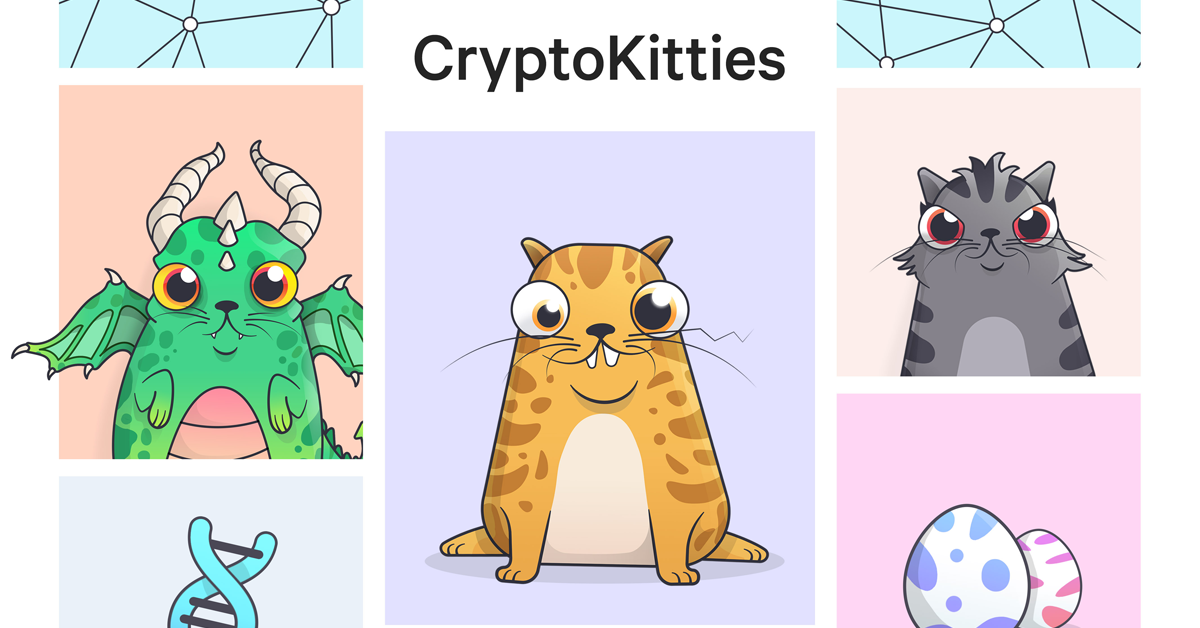
CryptoKitties is an Ethereum-based DApp requiring Ether (ETH) for purchasing or breeding. The gameplay is simple: players can adopt (only available to early users) or buy digital cats, name them, trade them, and breed them. Buying and selling kittens became a hallmark feature. Being blockchain-based, CryptoKitties players worldwide can freely trade their digital cats. The team releases a new breed every 15 minutes, with rare breeds expected to appreciate in value over time. When two cats mate, their offspring inherit a combination of 256-bit genome data affecting appearance, personality, and traits—resulting in up to 4 billion possible variations.
Source: Balthazar
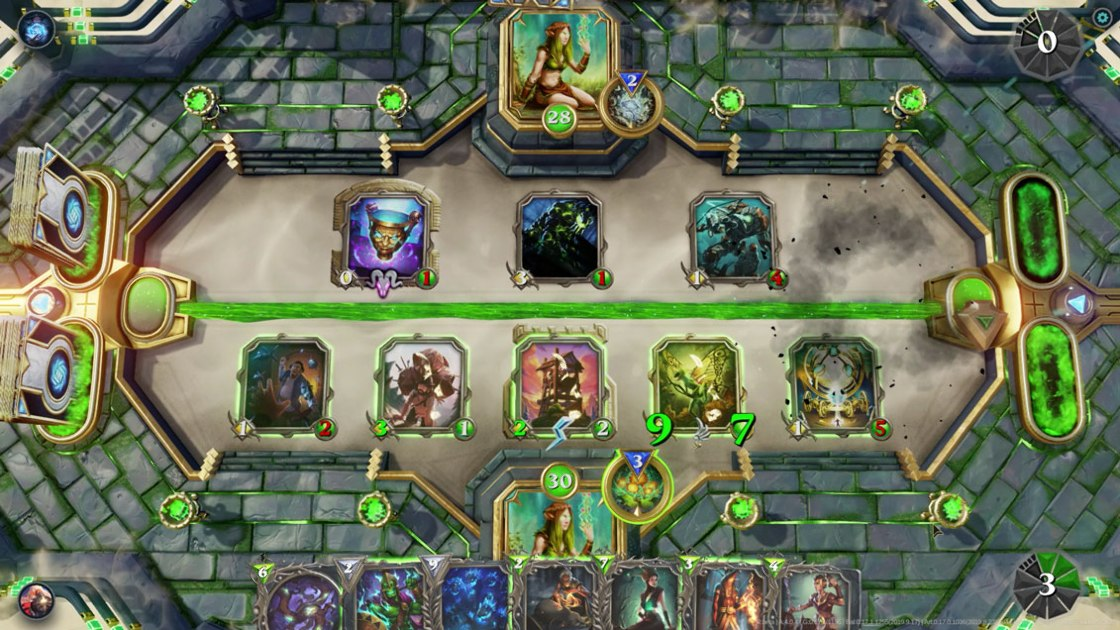
Gods Unchained, launched in 2018, is a turn-based card game similar in style and gameplay to Hearthstone. While gameplay runs off-chain, the cards themselves are on-chain assets. To reduce gas fees, most of Gods Unchained’s cards migrated to Immutable X, a Layer-2 solution. It remains one of the more active card games on the Ethereum network in terms of users and transaction volume.
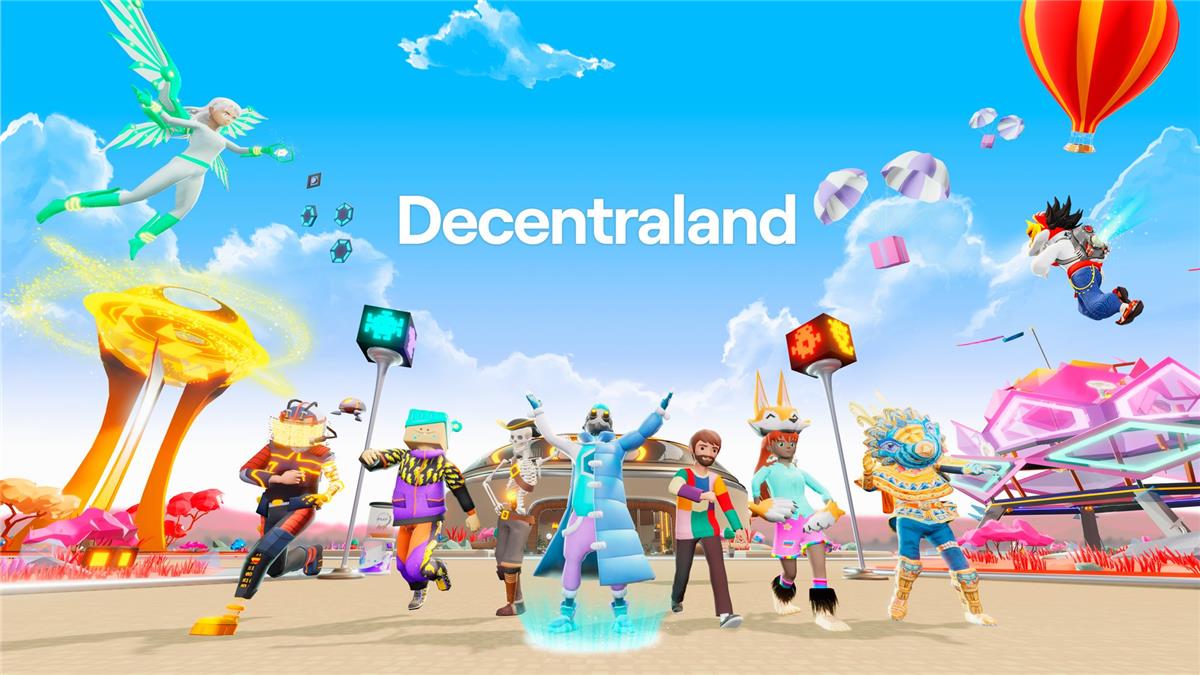
Decentraland is a virtual world powered by blockchain technology. Players can create avatars and engage in activities such as shopping, traveling, buying land, meeting others, and chatting. As a UGC-type game, ownership of in-game assets tied to player accounts is recorded on the Ethereum blockchain, making them personal private assets. After acquiring virtual land, players can construct buildings, launch brands, or even sell NFT goods.
Games from this period drew heavily from lessons learned in traditional gaming, gradually exploring diverse gameplay mechanics and boosting confidence among Web3 gamers. While there remained a significant gap in art quality and content production compared to traditional games, Web3 gaming had crossed a developmental chasm, establishing a positive feedback loop.
-
2021–Present: Takeoff Phase of Web3 Gaming
From 2021 to the present, despite some missteps in economic modeling, Web3 gaming has made substantial progress across multiple dimensions. Several Web3 game projects achieved breakout success, attracting large numbers of Web2 gamers. For example, StepN, a Move-to-Earn app, recorded over 67 million miles (108,017,738 km) of user exercise activity. It reached a historic high of one million users on June 2, 2022, with a total registered user base of 4.72 million. Specific case studies include:
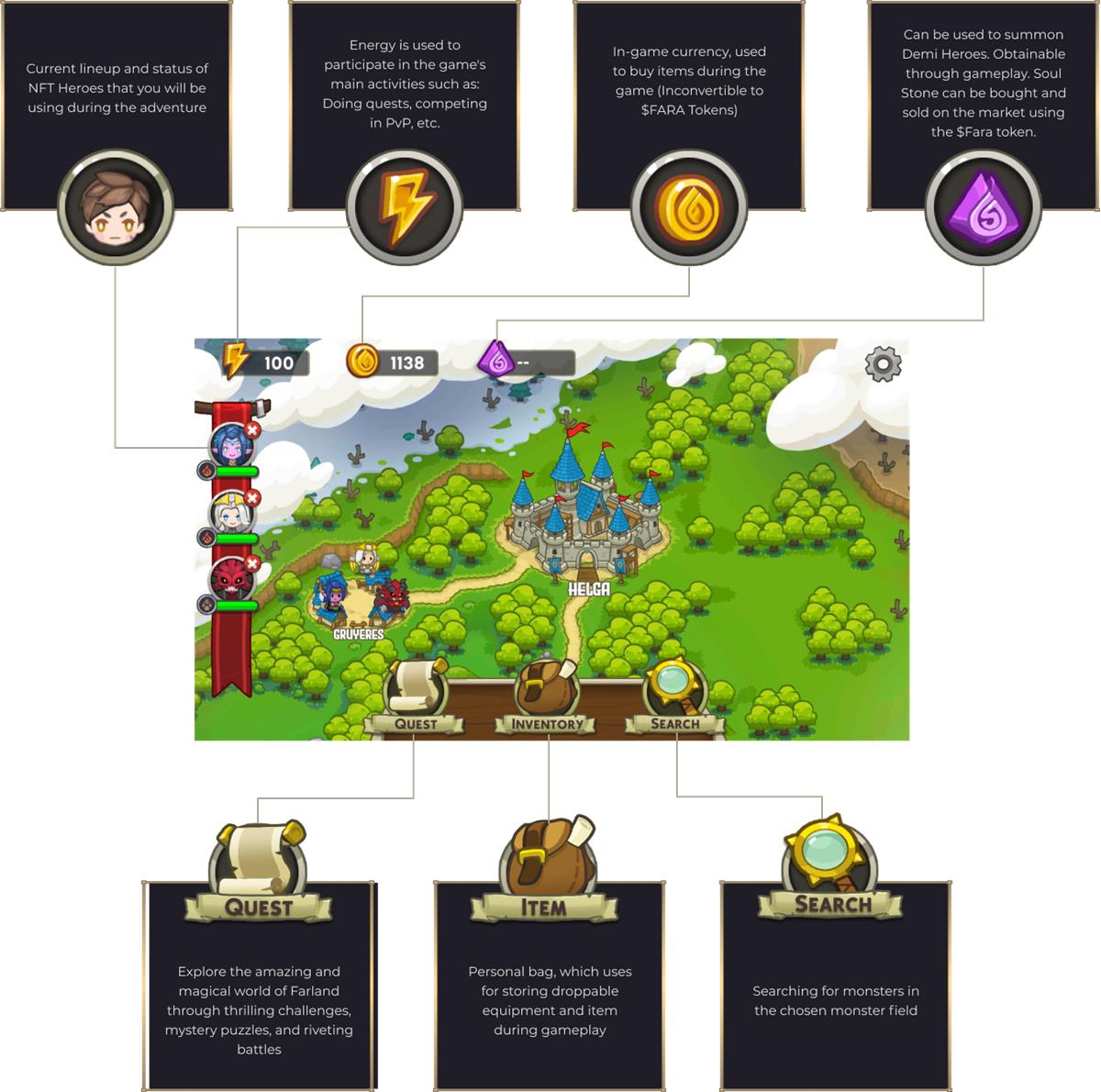
Faraland is a role-playing strategy war game developed by Vietnam-based MoonKnight Labs on the blockchain, compatible with Android and iOS. Players control characters from seven races—humans, orcs, elves, fairies, dragonborn, angels, and demons—each possessing different abilities, strength, intelligence, and agility, battling other players in the universe of Faraland. The game launched in Q4 2021.
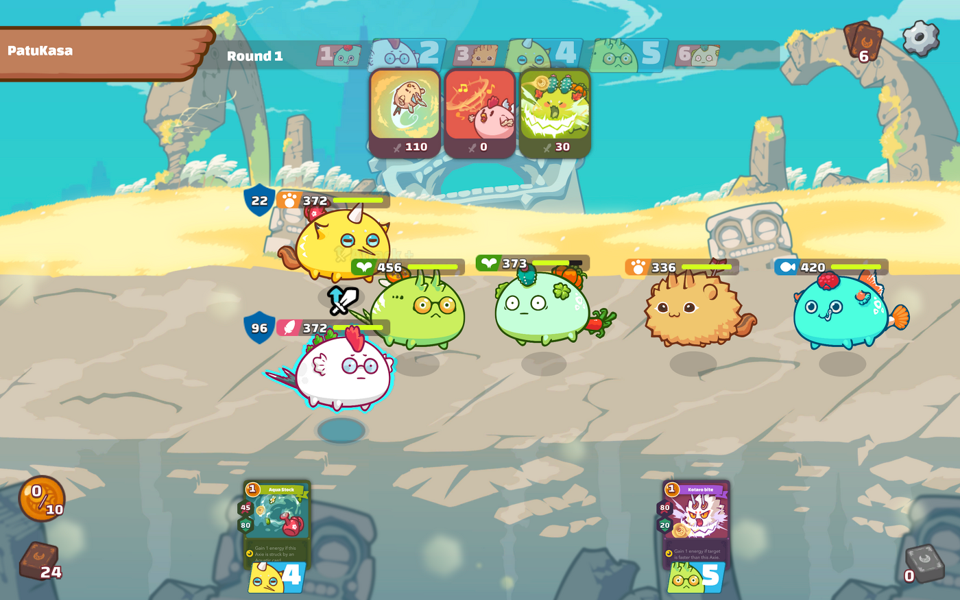
Axie Infinity is a video game featuring customizable fantasy creatures that players train for battle. Each Axie serves as an adorable pet in the game, with over 500 customizable body parts offering endless fun. Players can create infinite combinations and adjust combat strategies accordingly. Created by Vietnamese startup Sky Mavis, Axie Infinity is one of the most popular Web3 gaming projects.
Source: Mediaverse

Source: José Gómez Analysis
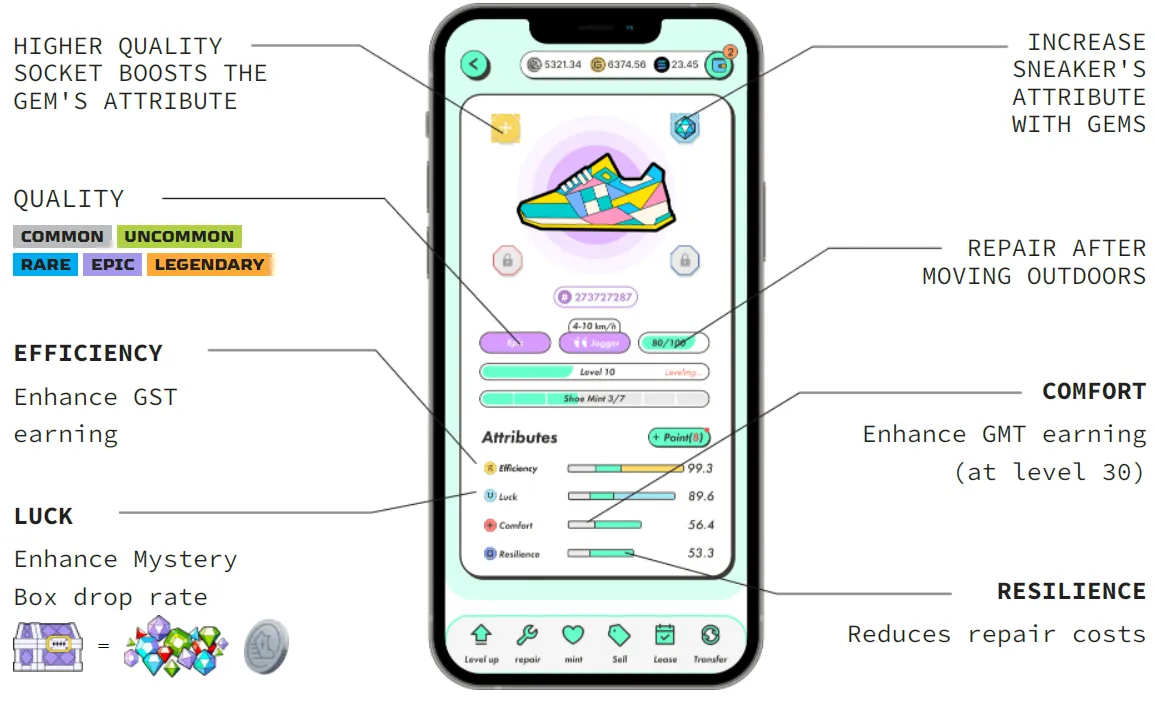
StepN is a blockchain game using NFT sneakers to earn rewards through physical movement—an attempt to extend gamified decentralized models into real-world domains. Originally built on Solana, StepN won fourth place in the Solana Hackathon’s GameFi category. Its defining feature is the integration of GameFi with offline fitness—Move-to-Earn. After downloading the app and registering, users create an in-app wallet, transfer SOL or BNB cryptocurrencies into it, then purchase an NFT virtual sneaker to start earning by running outdoors. Earnings depend on user activity and shoe attributes. Sneakers have varying stats, types, qualities, and levels. Users run within effective energy windows at designated paces to earn infinitely minted GST tokens, which can upgrade shoes and gems, unlock slots, craft new shoes, or be exchanged directly for stablecoins.
Currently, Web3 games have elevated gameplay, content, and artistic production to new levels, though still lagging behind traditional games. At the tokenomics level, some Web3 games have leveraged Ponzi-like revenue models to rapidly acquire new users and achieve breakout growth. From a timeline perspective,
It is expected that within the next 1–2 years, certain niche segments of Web3 gaming will see rapid improvements in content quality and playability, surpassing previous Web3 games in user scale and player spending. Below is a brief analysis of lessons learned from past Web3 games.
Challenges Facing Web3 Games
-
Lack of Playability and Fun, Leading to Poor User Retention. Fun in game design does not necessarily mean humor or lightheartedness—it refers to the overall entertainment experience and sense of enjoyment delivered to players. For instance, in horror games, the fun lies in tension and exploration, broadening the definition beyond mere amusement. Creating engaging experiences involves three key steps, akin to how potential customers are drawn into a game store. First, the customer’s eyes land on the screen—they pause and watch. At this point, visual elements like background, graphics, aesthetics, characters, and genre serve as primary attractors. Second, the customer (player) tries the game and evaluates it. Here, playability and content quality are crucial. The game must deliver immediate pleasure through excellent gameplay and performance, avoiding any negative reactions. The trial phase aims to let players feel enjoyment within a short session. Finally, the game must consistently deliver satisfaction and fulfill players’ desires, creating addiction. Developers must skillfully design content, pacing, structure, immersion, and interactivity to sustain players’ pursuit of fun. Playability is a holistic issue requiring comprehensive consideration of content, interaction, social features, challenges, and rewards. Through continuous improvement and innovation, developers can enhance playability to attract and retain users long-term. Crafting engaging experiences is central to game development—focusing on these three stages and emphasizing appeal and playability.
-
Ponzi-like Token Economies Cause Selling Pressure and Price Volatility. DeFi economic models based on “robbing Peter to pay Paul” rely on constant influxes of new users whose capital inflows support NFT and token prices, leveraging the “investment” aspect to attract players and arbitrageurs. Once marginal user growth slows and fails to sustain NFT and token valuations, player and investor expectations resonate collectively, amplifying greed and fear, accelerating both price surges and crashes. This volatile cycle severely impacts gameplay experience. From a token perspective, tokens act as general equivalents in exchange and vehicles for wealth transfer (wealth isn’t created out of thin air). Prices above intrinsic value indicate emotional bubbles. Moreover, if liquid NFT assets are linked to a Web3 game’s economy and numerical systems, designing the game becomes extremely challenging. Some projects now use three- or four-token models to rebalance internal economies. However, increasing token count isn’t the solution—it adds friction without resolving fundamental asset-token relationships. Addressing the underlying asset system, economic model, and utility is key. Regarding asset design, current NFT models lack sufficient consumption scenarios and gameplay mechanisms. Game mechanics refer to “interactions and relationships remaining after stripping away aesthetics, technology, and story,” encompassing seven elements: “space, time, object states, actions, rules, skills, probability.” Current explorations focus on creating atmospheric depth via mechanics like “survival needs,” “gathering,” “scanning and navigation,” “research and building,” “movement,” “vehicles,” “equipment and tools.” In today’s Web3 games, financial attributes are growing stronger, while gaming and consumer aspects are weakening. The gamification of DeFi undermines Web3 gaming’s inherent entertainment and consumption value. As previously stated: wealth cannot be created from nothing. In a zero-sum market, not everyone can profit from the game (in fiat terms).
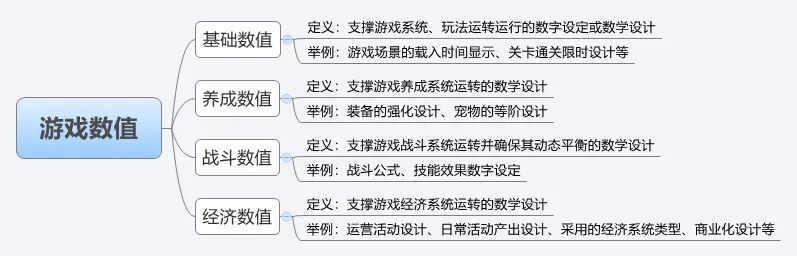
Web3 game projects have not adequately prioritized numerical systems. One key difference between Web2 and Web3 games is cash-in/cash-out capability. In Web2 games, purchased in-game items like skins, gear, or pets cannot be withdrawn as real money; to sell them, you’d need to sell your entire account. But in Web3 games, assets and tokens are liquid. Poorly designed economic systems—including progression, combat, and numerical balance—are exploited by farming studios, causing financial losses to the project. Though measures like time locks, exit taxes, and high staking yields may help, they don’t solve core problems. Ultimately, downward pressure on token prices persists, risking systemic collapse.
Source: José Gómez Analysis
Taking the RPG numerical system below as an example, reward structures, gold consumption, and time investment across subsystems like quests, equipment, levels, and pets require comprehensive balancing. Additionally, given that content creation competes for attention, and heavy games demand balanced allocation of player attention toward high-engagement entertainment scenarios. In RPGs, while adjusting numerical systems, developers must not overlook player expectations regarding expression mechanics, game systems, narrative coherence, and entertainment value. The diagram below roughly illustrates the framework of an RPG-type game’s numerical system:

Source: José Gómez Analysis
Therefore, when adjusting numerical systems, game designers might consider the following process:
Research game numerics. Analyze competitors and your own game to enhance player experience. Game numerics involve attributes, parameters, and interrelations among game elements, profoundly impacting balance, difficulty, flow, and enjoyment. Development teams must precisely define attribute values for characters, items, levels, skills, etc., as these numbers directly determine player behavior and interactions in the game world. Well-balanced numerics make gameplay tighter, more enjoyable, and sustainably challenging. Achieving balance is a critical challenge requiring repeated testing and tuning to ensure ideal interactions among elements. Teams must deeply understand player behavior patterns and feedback, continuously refining and optimizing. Game numerics also relate to economic balance and progression control. Pricing of items, distribution of rewards, and task difficulty must be carefully designed so players face meaningful challenges without becoming overwhelmed or bored.
Design game numerics. Use mathematical modeling and empirical data to iteratively refine numeric designs. Balancing isn’t about simple numerical differences but adjusting based on players’ subjective experiences. Thus, all balancing efforts should center on player experience. Balance stems from perceptual feedback—game designers reverse-engineer logical relationships from experiential outcomes. This process involves rigorous reasoning and sensitivity to player perception. Therefore, balancing shouldn’t be done for its own sake but to enhance user experience. Absolute balance doesn’t exist—different design goals yield different balances. Design combat, progression, and economic numerics, build holistic numeric models, and ensure playability, balance, sustainability, and scalability. Numeric design generally follows several steps: first, identify all explicit and implicit attributes in the game. Then study their patterns and variation methods, exploring potential formulas and interdependencies. Next, use visualization tools to verify results and determine whether further edits or adjustments are needed. All design decisions aim to optimize gameplay experience.
Optimize game numerics. Going forward, Web3 game numeric designers must pay greater attention to visualization tools and reflective processes. Visualization tools intuitively display results, aiding understanding of data and trends. Another key aspect is reflection—questioning why specific approaches are taken, what purposes they serve, and whether they align with original game visions. Designs should be simple and elegant rather than complex and confusing. Balancing and numeric tools are merely aids—the ultimate goal is better experiences meeting player needs and expectations. Always prioritize user experience, focusing on crafting simple yet effective solutions that make game or product design more elegant and satisfying.
After analysis by José Gómez and hands-on experience with over 30 Web3 games, highly playable ones remain rare—only a few Web3 games show positive retention and capital gains. Below is a brief analysis of one such standout title—Matr1x, notable for its high playability. Scheduled to launch on August 8, interested players and Web3 gaming enthusiasts are encouraged to try it.
Matr1x: Innovator and Pioneer in Web3 Gaming
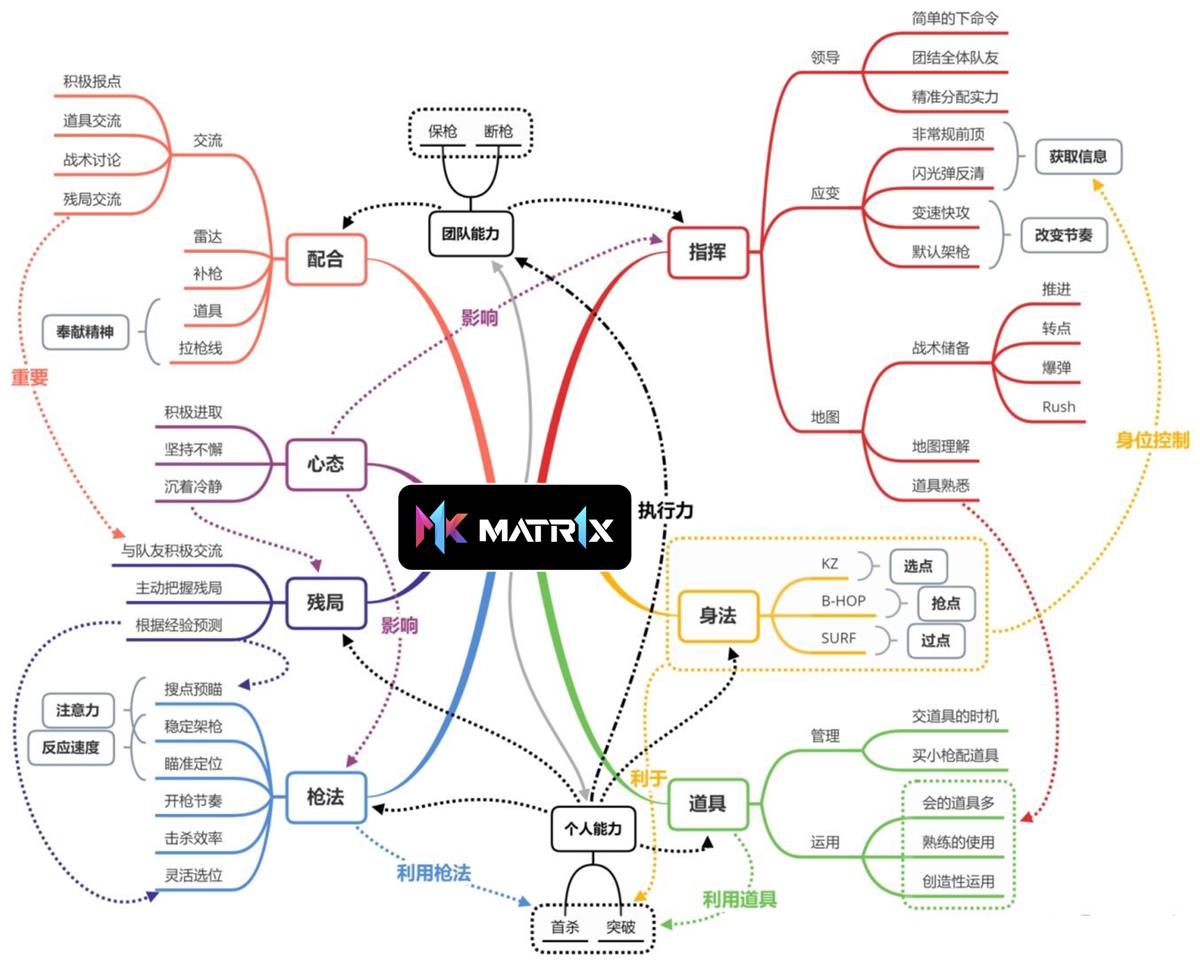
Matr1x is a groundbreaking new Web3 game. As a cyberpunk-styled FPS mobile shooter, it boasts high-quality visuals. Matr1x emphasizes fair PVP multiplayer competition while offering strategic休闲 PVE modes. It also hosts various Matr1x tournaments reaching offline audiences, enhancing player identity and consensus. Below is a multi-angle analysis of the Matr1x shooter project.
Source: José Gómez Analysis
-
Target Gamers: Player Base in the Shooter Subgenre
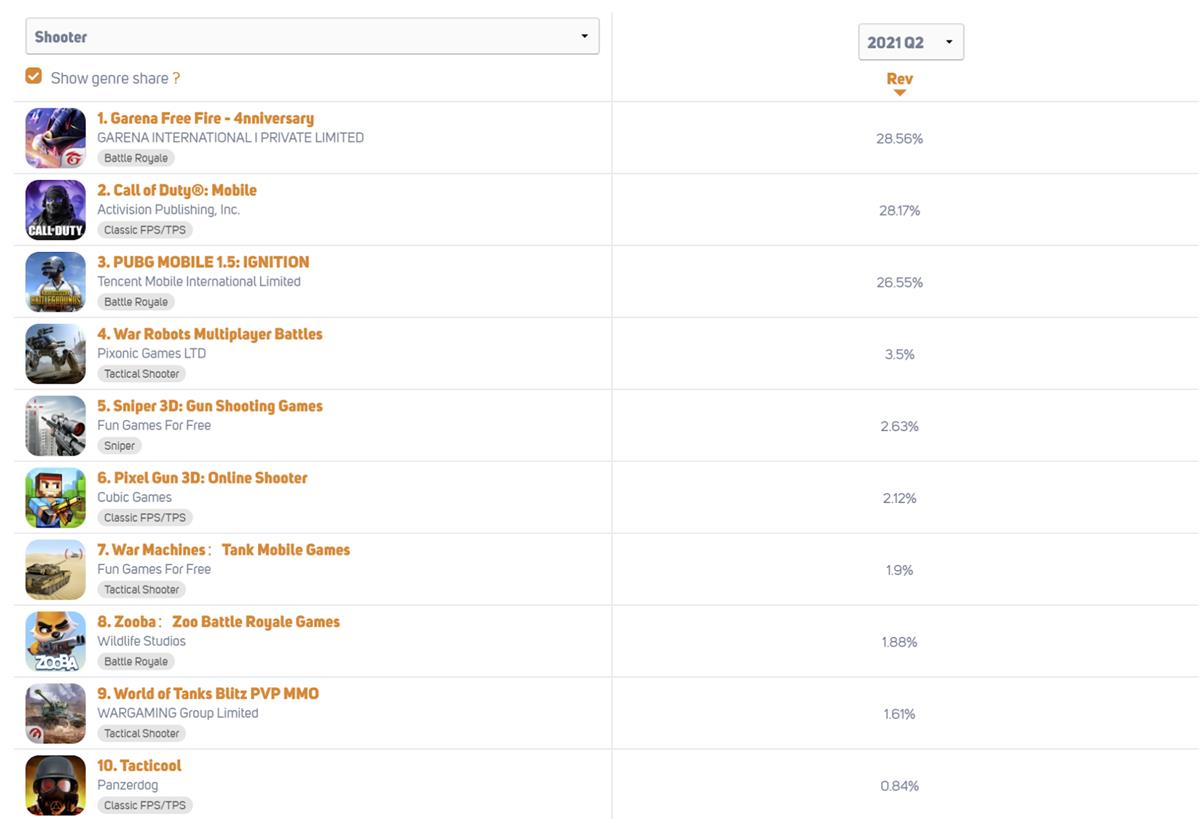
According to industry data, shooter games have been a vital mobile game category over recent years, ranking sixth in the US iOS market and generating around 6% of total revenue. Despite a drought of major new hits recently, the massive success of Call of Duty Mobile spurred many AAA developers to shift focus to mobile platforms. With over two years since the last breakout shooter release, leading studios are launching promising contenders including Valorant, Apex Legends, Battlefield, and Final Fantasy VII: The First Soldier mobile editions. With limited fresh entries in recent years, the market eagerly anticipates a high-profile shooter game.
The chart below compares current mainstream shooter games. Compared to top-tier titles, Call of Duty Mobile and PUBG emphasize stronger social features, with robust guild and cooperative systems, whereas Knives Out offers simpler guild mechanics. Meanwhile, PUBG deepens the “exploration: treasure hunting” driver through its “Showroom” and “Season Gallery” collection systems. Currently, the top three market-share leaders in mobile shooters are Knives Out, Call of Duty, and PUBG.
Source: GameRefinery
From a player perspective, GameRefinery surveyed over 7,000 respondents, revealing that shooter gamers are motivated by various factors. Primary drivers include social aspects (cooperative and competitive combat), skill mastery, and entertainment (excitement and pleasure), while exploration (collecting items, map discovery) and self-expression are secondary influences. Comparing the top three shooter games, all prioritize these factors in design.
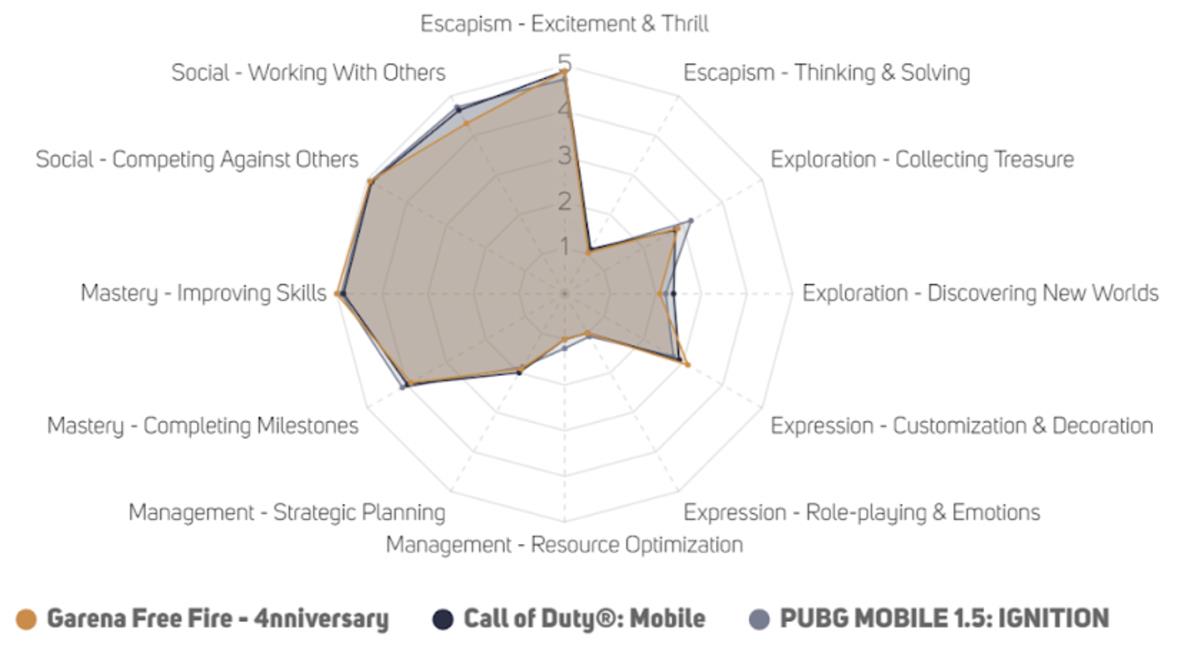
Source: GameRefinery (Survey participants were mobile gamers from English-speaking Western countries—USA, UK, Canada, New Zealand, Australia—representing smartphone users across age, gender, income, and household size.)
-
Gameplay and Experience: Mechanics and Level Design
Layout and Routing: Maps offer rich shooting and strategic gameplay experiences. Map design styles vary widely, including three-lane layouts (Dust2, Cache, Mirage), and asymmetric stacked designs like Inferno, Nuke, and Vertigo. Main paths are central to gameplay, essential for reaching objectives and ensuring smooth action flow. Once main routes and choke points are established, connections and loops can be added. Players dislike spending excessive time navigating—they want faster access to destinations, feeling greater control. Hence, Matr1x ensures connectivity between all zones, linking main paths via connecting routes to provide strategic and tactical opportunities. Based on intel reports, players can converge toward alternate paths. Attackers don’t need to return to spawn when changing targets, and defenders can quickly rotate via connecting paths. Additionally, the game pace is relatively fast, with similar times to reach first engagement points across different routes, increasing player focus and immersion.
Choke Point Design and Planning: Choke points are critical locations where attackers frequently encounter defender resistance, dividing maps into distinct areas. These typically feature tight passages like corridors, tunnels, doors, and hallways. Attackers must breach these points to control rear zones. Timing is crucial—both sides often arrive simultaneously. Thus, Matr1x considers choke point entry counts, transitional zones, arrival timing, attack values, and tactical conditions. The design provides dual-entry choke points for both sides, expanding strategic and tactical options. Players can safely throw grenades, rush, wait, exchange fire, and plan next moves, adapting dynamically to battlefield situations. Multiple combined cover positions at single locations allow quick concealment, heightening tension during bomb planting and evasion sequences.
Vertical Space: In Matr1x, characters cannot fly, and jumping reduces shooting accuracy—around 80% of engagements occur at horizontal levels. Thus, player differentiation largely depends on understanding vertical space. Players can stand on chairs to spot enemies’ heads or perform high jumps onto boxes where opponents hide. Effective use of verticality increases offensive options. Accordingly, controlling jump height and collision object elevation is a key detail for Matr1x designers. The game encourages teamwork and smart use of vertical space—adding fun while significantly increasing uncertainty, transforming rigid positional warfare into calculated risk-reward dynamics. On certain Matr1x maps, multiple spinning jumps are required; failure means falling, missing timing, and easier enemy detection. Success grants positioning advantage ahead of choke points, enabling surprise attacks with teammates. Tactical coordination highlights the importance of vertical space.
Bomb Site Design and Selection: After role reversal, defenders can attack from any entry. Matr1x not only considers cover for CTs defending against Ts but also covers for Ts defending against CTs after planting the bomb. Thus, T-side defensive positions near bomb sites and connecting corridors are meticulously designed. However, even with cover, complete protection from all enemy angles is impossible. At least one exploitable angle or entry must remain, encouraging tighter team coordination and strategic choices. This design demands close cooperation, proper role assignment, and full defensive coverage. Offensively, players must carefully select optimal paths and tactics. This sophisticated design enriches and deepens the gameplay experience. Players need not only quick reflexes and accurate shooting but also tactical intelligence and teamwork to succeed in Matr1x’s challenging arena. On the battlefield, wisdom and skill are equally important—this is what draws countless players striving for excellence.
-
Numerical System Design
Attributes and Numerics: Attributes and numerical values are common in FPS game design. In FPS games, factors like bullet count, ammo, rate of fire, recoil, spread, etc., significantly impact gameplay and strategy. FPS games emphasize precision in shooting, bullet trajectory, and target hit registration, involving point attacks (single bullets) and area attacks (explosive grenades). Some characters may specialize in single-target damage, while others possess area-effect skills. Matr1x’s map design has been refined over time with extensive gameplay data, approaching optimal balance. Many design philosophies and level details warrant careful examination. Key elements analyzed below:
TTK (Time to Kill): The time required to eliminate an enemy assuming immediate fire and full bullet accuracy (TTK). A shorter TTK indicates higher theoretical weapon power. Key influencing factors include base damage, fire rate, distance falloff, penetration reduction, armor mitigation, and hitbox-specific defense parameters. However, actual combat introduces additional variables affecting real-world TTK. For dual-wield weapons and shotguns, multiple pellets per shot increase effective damage (per pellet × number of pellets). Smaller intervals between shots increase fire rate, jointly determining theoretical TTK with damage. Typically, fire rate and damage are balanced to maintain overall TTK equilibrium. Additionally, damage diminishes with increased engagement distance due to range attenuation.
Bullet Trajectory and Projectile Speed: A weapon’s theoretical TTK defines its upper performance limit, while bullet trajectory determines its lower bound and affects how easily actual TTK approaches theoretical TTK. Factors influencing trajectory and projectile speed include recoil (horizontal and vertical), burst-fire mechanics, spread parameters (randomization and correction), among others. Together, these shape a weapon’s real-world performance and the challenges players face when wielding it.
Crosshair Design: In FPS games, the crosshair is a vital visual cue and feedback mechanism. Parameters include color, spread intensity, offset, hit feedback, and other response indicators. The Matr1x team considered numerous fine details: crosshair expansion speed synchronized with firing animation, contraction speed aligned with recoil recovery, and matching spread area with crosshair gaps. For advanced players, the team enhanced recoil control experience—different guns exhibit distinct spray patterns. Non-expanding crosshairs visually trick players into perceiving less visible spread, improving handling feel. Perfect non-expanding crosshairs can even clearly display tracer effects, helping players master recoil control.
Mobility: Mobility plays a crucial role in FPS games, covering movement speed (initial displacement and acceleration), weapon switch speed, reload speed/ammo capacity, and scope-in speed. In Matr1x, mobility directly impacts gameplay. For example, when grounded, switching weapons changes movement speed to match the new weapon’s handling speed. But mid-air weapon swaps retain the previous weapon’s speed until landing. During starts and stops, speed transitions aren’t instantaneous—they follow corresponding acceleration and deceleration curves. The magnitude of acceleration/deceleration directly affects maneuverability, with extremes impairing flexibility.
-
Other Elements: Art, Sound, and Events (Competitive Tournaments)
Players seek immersive and enjoyable experiences. Therefore, game development must consider not only mechanics and gameplay but also art, sound, and other elements. Additional offline events strengthen community consensus and belonging among players and NFT holders. Below is a brief analysis of art, audio, and event design.
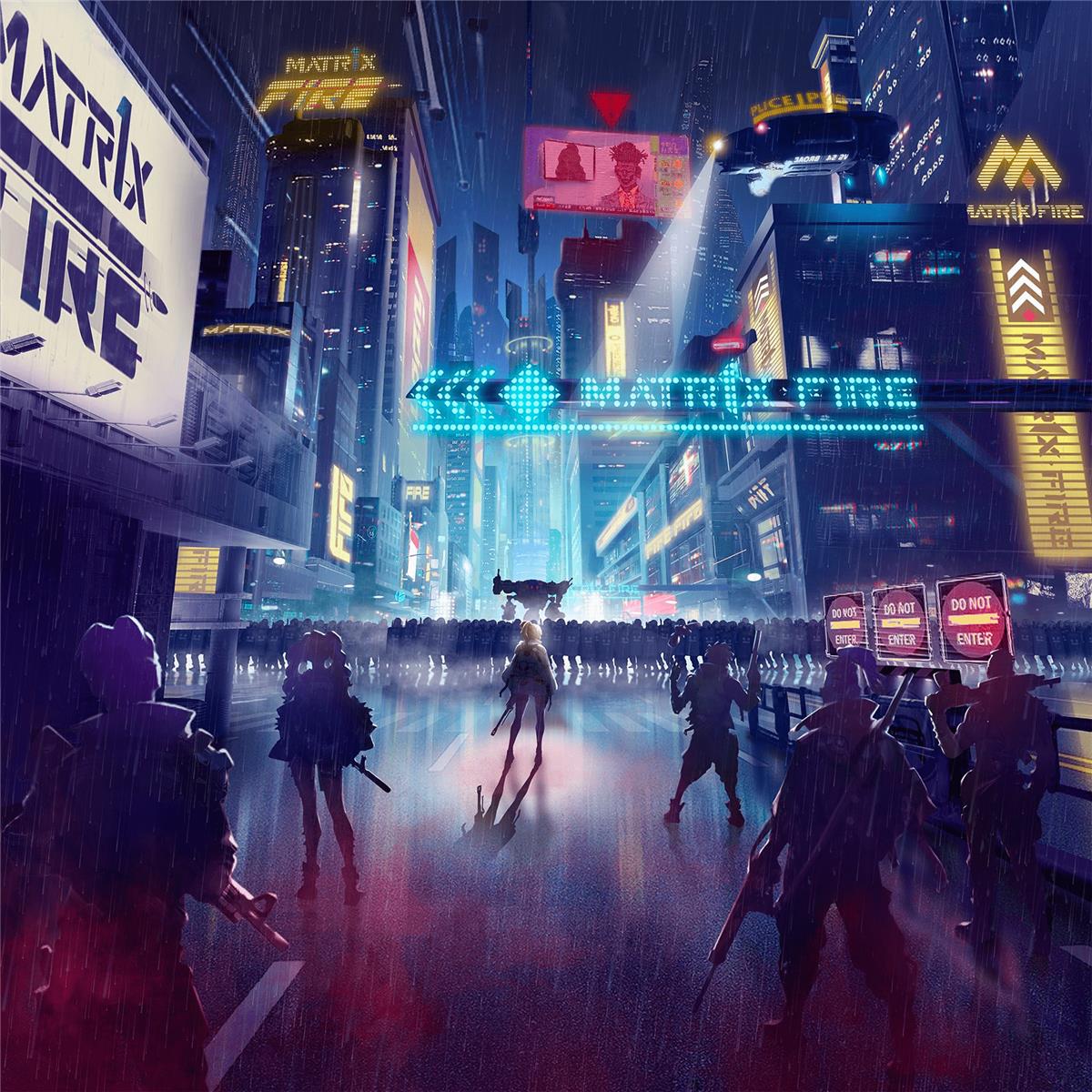
Visuals and Art Direction: Matr1x maintains highly consistent map design with saturated daylight colors, creating a clear, bright environment. Path planning emphasizes fluidity, with guide markers helping players easily locate directions and objectives. This improves navigation and enhances playability and convenience. Matr1x maps are expansive and detailed, incorporating elevation changes and undulating terrain for rich layering. This not only offers diverse landscapes but also expands tactical possibilities. High ground serves as advantageous positions—players can use elevation for hiding and ambushes, deepening tactical complexity and intensifying atmosphere. Matr1x maps also embed interactive mechanisms waiting to be discovered, such as hidden treasures or special triggers. These encourage exploration and boost replayability, enticing players to uncover secrets and surprises.
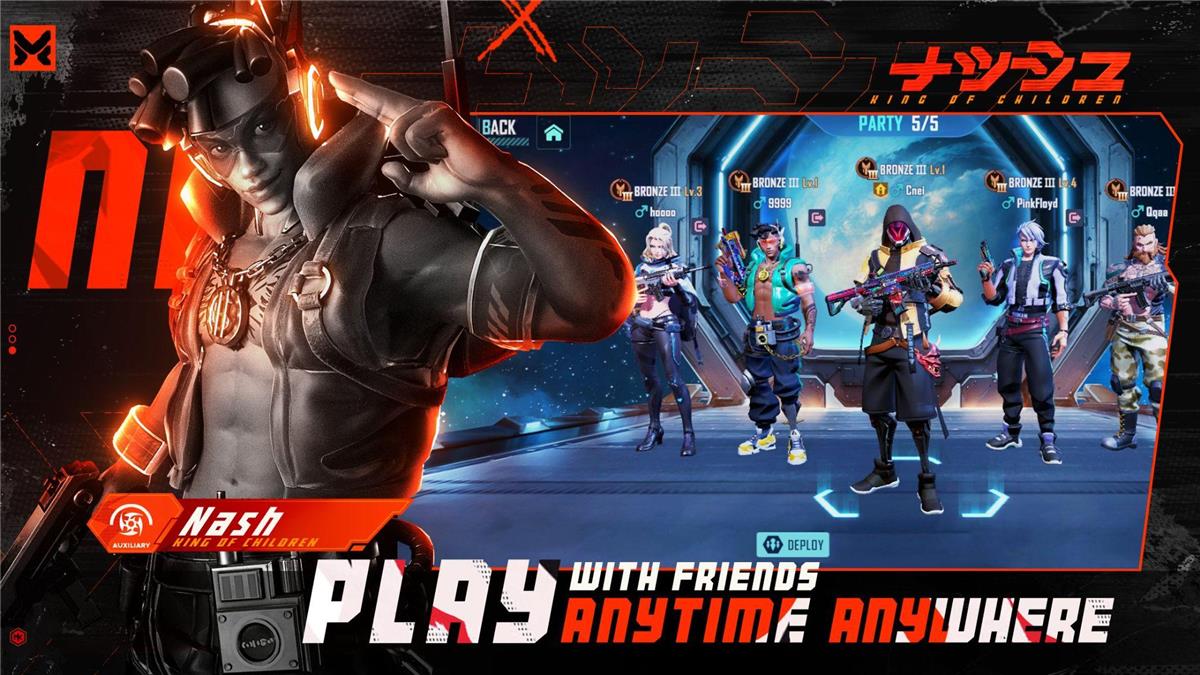
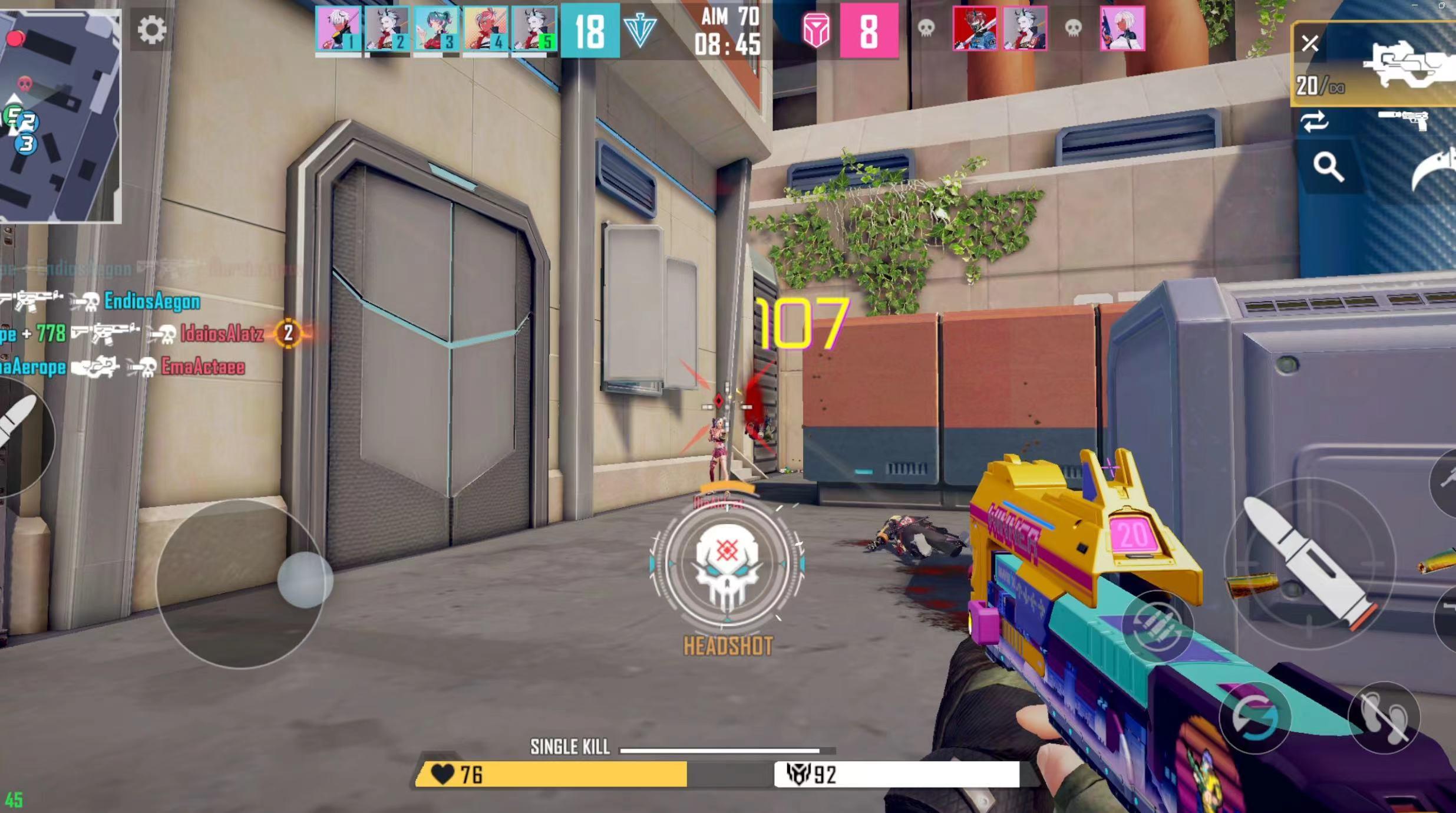
In architectural, obstacle, and cover design, Matr1x skillfully uses straight lines and sharp angles to create realistic scenes, enhancing immersion. Every element is meticulously crafted to give players a truly lifelike experience, minimizing artificial interference and ensuring natural, seamless gameplay. Enemy silhouettes are partially obscured when behind cover, adding unexpected tactical depth. Players can exploit occlusion to hide, feint, or ambush foes, increasing strategic richness and surprise.

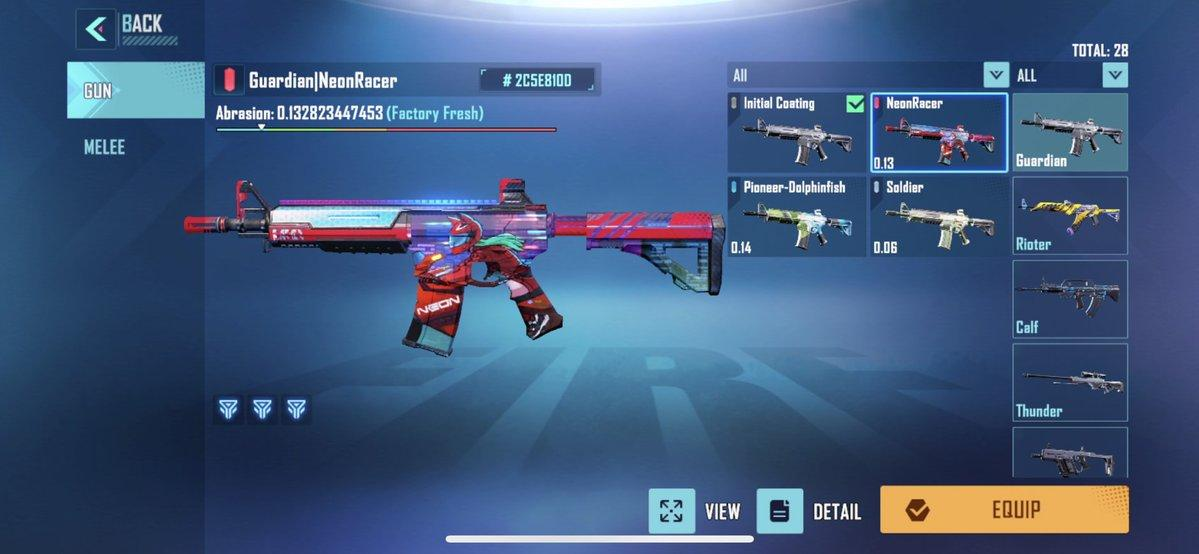
Weapon design is highly realistic and detailed. In-game firearms are faithfully modeled after real-world counterparts. Appearance, detailing, and textures are finely tuned, giving players a tangible sense of weight and realism. Additionally, Matr1x’s weapon skin system offers abundant customization—each gun can have unique appearances, fulfilling personalization needs while supporting the in-game economy. Ammo and accessory designs are also exceptionally detailed. Magazines, scopes, and supply crates appear lifelike, enriching realism. Accessories integrate both visual fidelity and gameplay mechanics, influencing tactical decisions. Grenades, flashbangs, smoke bombs—all feature distinctive visual effects, making combat more dynamic and varied. These tools affect not just visuals but also tactical gameplay and team coordination.
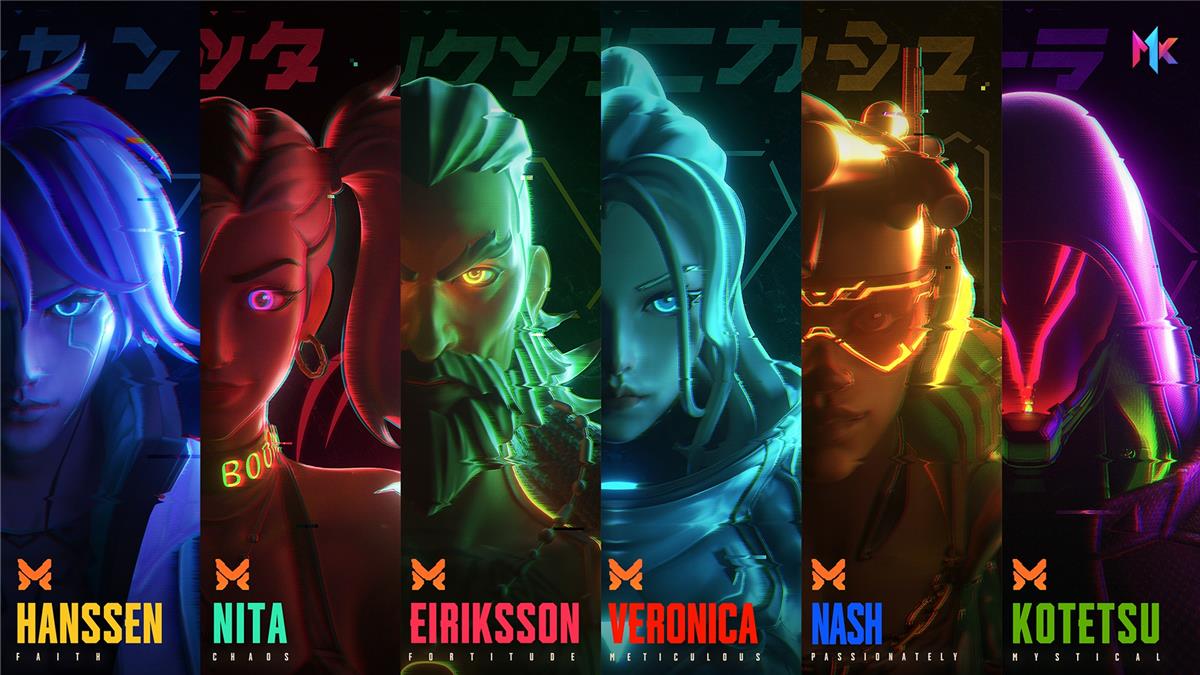
Character design reflects Matr1x’s exceptional attention to detail and creativity, making its 2,061 sold combat character designs beloved by players. Characters are diverse and distinctive, each with unique looks, outfits, and accessories, standing out with individual flair. The development team meticulously crafted facial expressions, postures, and animations, delivering highly realistic character performances and immersive presence. Character design also integrates closely with lore and narrative. Each character’s accessories reflect their background and identity, deepening storytelling and player immersion. Choosing characters lets players experience different warriors’ styles and backstories, adding emotional depth and enjoyment. As of August 6, 2023, Matr1x NFT floor price rose from 1.08 ETH to 1.59 ETH in the past month—a 47.22% increase.

Auditory and Sound Effects: Audio design in Matr1x maps incorporates precise sound propagation. Each location is accurately tagged with audible sounds—door openings, footsteps, gunfire—with carefully implemented attenuation effects. This allows players to accurately perceive surrounding sounds under varying distances and obstructions, enhancing tactical depth and immersion. Even materials producing footstep sounds are considered. By altering surface materials—hard floors, grass, sand—footstep audio varies realistically. Such attention to detail makes environments more authentic and keeps players alert during combat, as terrain affects enemy-heard footsteps, prompting richer tactical choices. By listening to gunfire or footsteps, players infer opponent positions and intentions, making smarter decisions. This auditory design deepens tactical layers and delivers richer gameplay.
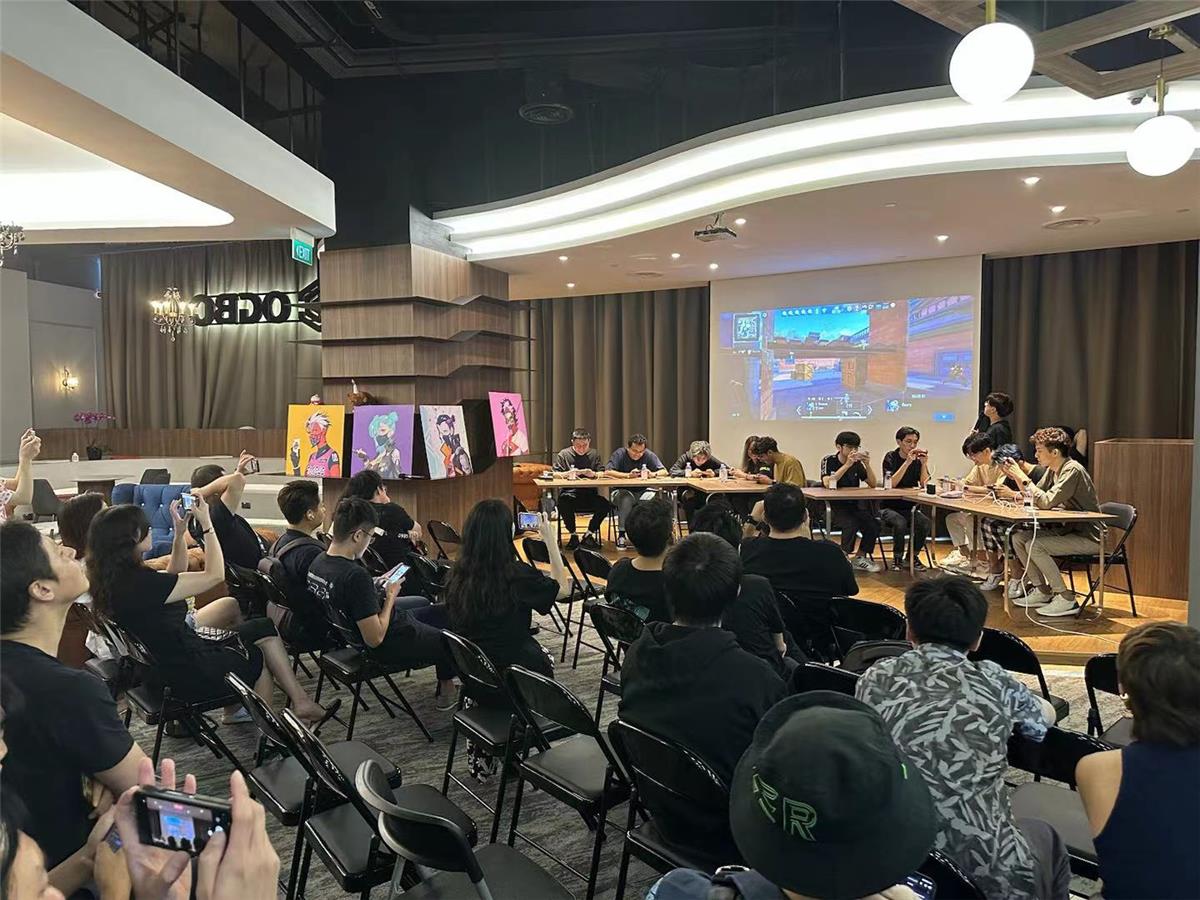
Offline Events: Matr1x actively organizes numerous offline events and tournaments, offering global players real-world interaction opportunities. These events vary in type and scale, drawing widespread participation. Regional offline gatherings bring Matr1x teams and community members together for engaging activities. These not only enable face-to-face交流 but also strengthen community cohesion, forming tight-knit social circles. Through diverse offline events and competitions, Matr1x expands its influence and deepens emotional bonds between players and the game. This holistic interaction builds a vibrant, passionate gaming community, securing Matr1x a foothold in the competitive gaming landscape. Looking ahead, Matr1x aims to establish high-profile esports tournaments, attracting elite pro players and gaming clubs. Covering various formats—from solo duels to team battles—these events provide platforms for skill development and competition. Spectacular matches draw large audiences and fans, boosting Matr1x’s visibility and impact, delivering more exciting and joyful experiences.
Overall, Matr1x is an innovative masterpiece transcending conventional Web2 gaming, introducing a novel digital economic model and unprecedented gameplay experiences. In this imaginative world, players not only immerse themselves in thrilling entertainment but also have real earning opportunities through gameplay and trading. Free in-game and external trading creates new value conversion mechanisms. Furthermore, Matr1x encourages active community participation and competitive events, showcasing talents and team synergy. Breaking traditional boundaries, Matr1x seamlessly integrates gaming with blockchain technology, overcoming Web3 gaming bottlenecks and illuminating a viable path forward for other Web3 games.
Join TechFlow official community to stay tuned
Telegram:https://t.me/TechFlowDaily
X (Twitter):https://x.com/TechFlowPost
X (Twitter) EN:https://x.com/BlockFlow_News