








Matr1x FIRE's IP and Esports Ambitions: Can It Become the CSGO of Web3?
TechFlow Selected TechFlow Selected
Matr1x FIRE's IP and Esports Ambitions: Can It Become the CSGO of Web3?
Shooting + mobile might be a good combination to attract incremental Web3 users.
 Navigating Web3 tides with focused insights
Author: David
Web3 gaming is still here.
And our understanding of Web3 games has evolved: from initial curiosity, to obsession with optimal ways to earn, to doubt and reflection after the entire sector entered a downturn—what exactly defines a good Web3 game? Where does its path forward lie?
In the next cycle, only "good" projects may survive. But how should "good" even be defined?
In the Web2 world, we have an example of "good": CSGO.
The game itself has remained popular for over a decade. And don’t forget, it was also one of the earliest games to introduce in-game assets and a secondary market—CSGO’s cosmetic item marketplace generated massive revenue and active users, without causing the game to collapse. More importantly, CSGO’s esports scene created attention, discourse, industry chains, and fanbases, transforming it from just a game into a cultural phenomenon with real influence.
From gameplay to digital assets, then to competitive impact… CSGO’s success offers some guidance for Web3 games still learning to walk: having assets and earning mechanics doesn’t necessarily doom a game. In the second half of Web3 gaming, combining gameplay, asset economics, and esports might be a viable path toward “elevation.”
So, who could become the CSGO of Web3? Matr1X Fire, another FPS title, may be worth watching. Despite the overall NFT market winter, its two NFT collections—Matr1x 2061 and YATC—have seen their floor prices rise against the trend. Beyond resilient asset prices, Matr1x is also exploring culture, IP development, cross-media entertainment, and esports integration.
On August 8, Matr1x Fire launched its second round of testing, while simultaneously updating its whitepaper. This presents an opportunity to better understand what Matr1x is doing, where it’s headed, and whether it aligns with our definition of “good.”
Matr1x Fire: Viewing "Gameplay" Through Incremental Thinking
Matr1x Fire is a mobile-based first-person shooter (FPS) Web3 game featuring competitive gameplay similar to CSGO. Unlike some complex Web3 games, if you’ve played or watched any shooter before, you can quickly grasp Matr1x Fire’s core mechanics.
Intuitive shooting via tap-to-fire makes everything simple and straightforward.
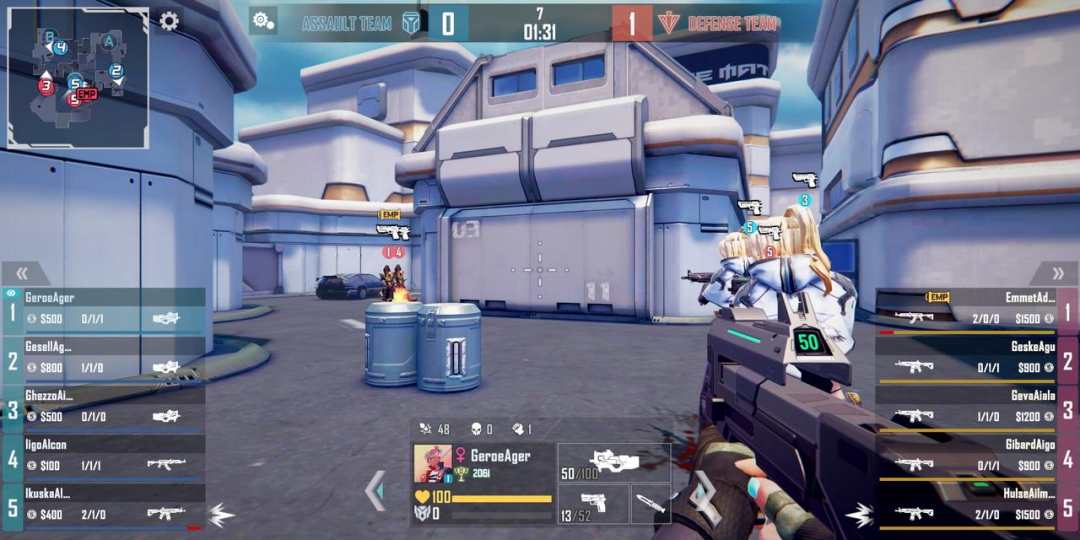
But beyond simplicity, winning requires precise aiming, strategic thinking, and team coordination. Players can also customize tactics based on preferences and in-game situations, ensuring points per round and ultimately victory in matches.
Additionally, as a native Web3 game, Matr1x Fire rewards players post-match with tokens and NFTs under various conditions. The most important and visible assets are cosmetics similar to those in CSGO—skins for different weapons in the game.
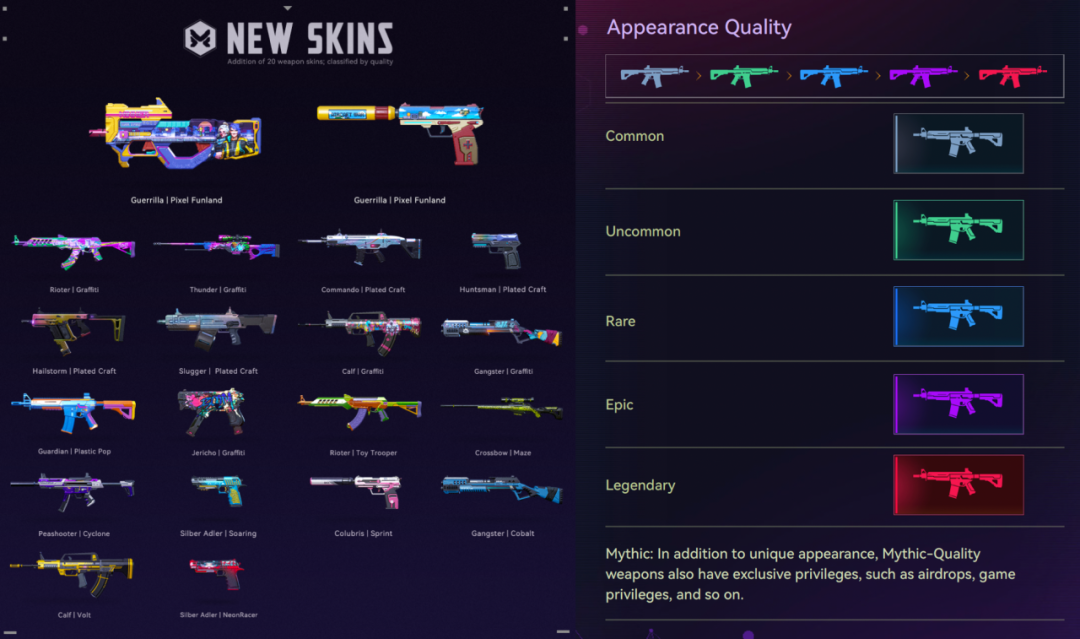
According to Matr1x Fire’s latest whitepaper, over 30 different weapons each have multiple skins across various rarity tiers. Beyond weapon skins, characters, avatars, trophies, and other items will also exist as NFTs.
Clearly, Matr1x Fire fully replicates CSGO’s skin system: weapon skins feature wear levels, and knives, stickers, sprays, badges, and more are all present—and now represented as NFTs.
Evidently, this is a Web3 game that combines both gameplay (competitive matches) and economic attributes (NFT assets). These two elements inevitably lead us back into the familiar debate: Game vs. Fi—which comes first?
But given today’s broader crypto market landscape, perhaps a more practical question should be asked: Are more people actually playing Web3 games?
The dilemma between gameplay and economics often stems from a “存量思维” (“stock thinking”) mindset: How should I adjust my game’s economy to avoid death spirals, user loss, or asset price collapses?
But prior to that, I believe “incremental thinking” matters more—the number of Web3 users is limited; relying solely on existing圈内 players grinding for income will never raise the ceiling high enough. What methods can attract new, incremental users continuously?
Without sufficient new players trying the game, it may die out before anyone even gets to discuss NFT assets. Therefore, in today’s market environment, a good Web3 game must prioritize attracting new users over discussing assets and economies.
So, what kind of game attracts new users? A combination of shooting + mobile platform might be a strong formula.
At a macro level, shooter games are an ideal entry point into Web3. As the genre with the largest player base, FPS games boast over 1 billion global players; a game with familiar mechanics and controls feels much more approachable at first glance.
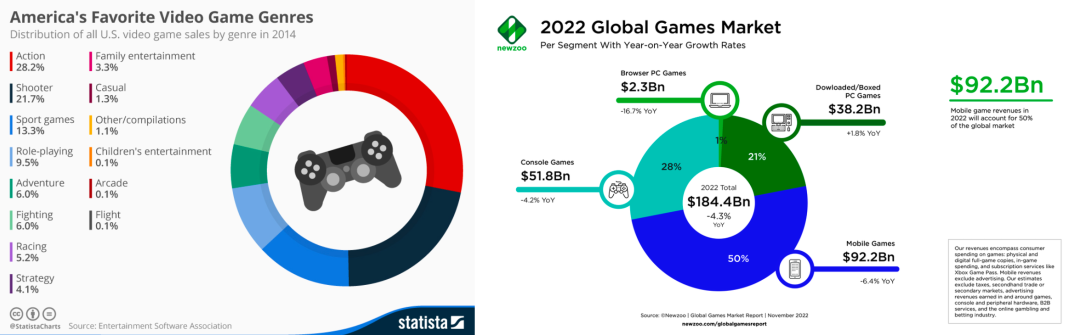
Looking at devices, the rise of mobile gaming is undeniable. Last year, mobile games accounted for half of global gaming revenue, totaling around $90 billion. Using a smartphone to play is far more accessible for average users. Meanwhile, the abundance of traditional mobile shooters opens vast imaginative space for Web3 shooters.
At the micro level, Matr1x Fire includes specific elements that appeal to new users:
-
Easy Transition: Compared to traditional shooters, Matr1x Fire features simpler, more intuitive controls, lowering the barrier for newcomers.
-
Gameplay Depth: Offers ranked modes, casual play, battle royale variants, etc., catering to diverse player types—even non-hardcore players can find enjoyment.
-
Low Entry Barrier: Mobile-friendly interface, free-to-play model, with crypto asset systems introduced gradually. Players earn loot boxes after gameplay time, which may contain NFT weapon skins. Not using these skins doesn’t affect match fairness.
Clearly, Matr1x Fire prioritizes accessibility—first attracting new users with frictionless gameplay, then gradually introducing them to the asset system, enabling a smooth transition from casual to core users.
In short, a project must first demonstrate consistent ability to attract new users before building a sustainable asset economy. Once acquisition is achieved, a well-designed economic system can serve to boost engagement.
Cosmetic Economy: The Key to Engagement in Matr1x Fire
We’re deeply familiar with the death spiral narrative in blockchain games or Web3 games: asset price fluctuations are tightly bound to gameplay experience and objectives. Hence, any game with an asset system is believed to eventually fail.
But this may be a misconception. The game + asset model isn’t doomed—it might actually energize the user base significantly.
Will Matr1x Fire follow the same death spiral? Before answering, let’s look to history.
Farming, botting, and secondary markets aren’t exclusive to Web3. CSGO—a game over a decade old—mastered this long ago:
-
August 14, 2013: CSGO introduced weapon skins in the Arms Deal update;
-
2016: Steam Marketplace launched, providing an official channel for pricing, evaluating, and trading CSGO skins;
Since Steam officially enabled trading in 2016, skin transactions became safer and easier, further fueling the prosperity of CSGO’s skin economy.
To this day, rare CSGO skins maintain high prices. In Web3 parlance, top-tier skins’ “floor prices” exceed 10 ETH—solidly in blue-chip territory.
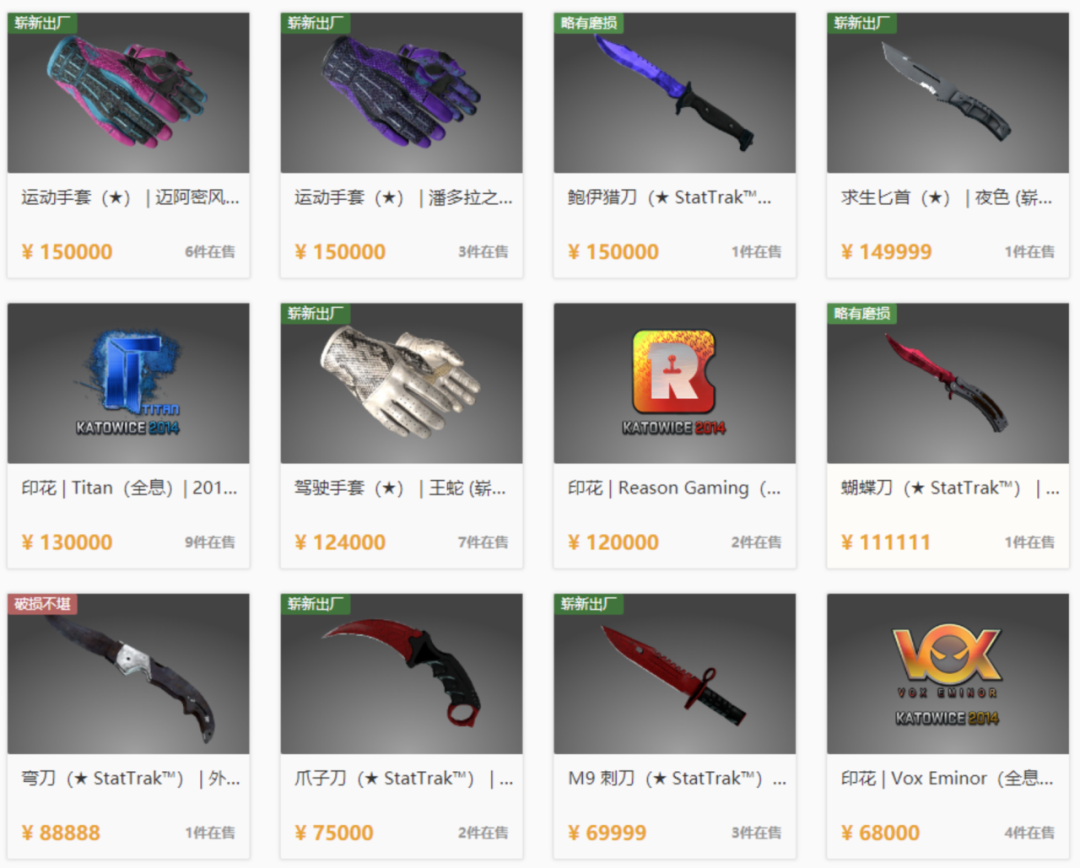
A dedicated ecosystem emerged around skins: full-time traders and studios focused on buying/selling skins and cracking open cases. Skins also vary by “wear,” so identical designs fetch vastly different prices depending on condition—almost like “digital antiques.”
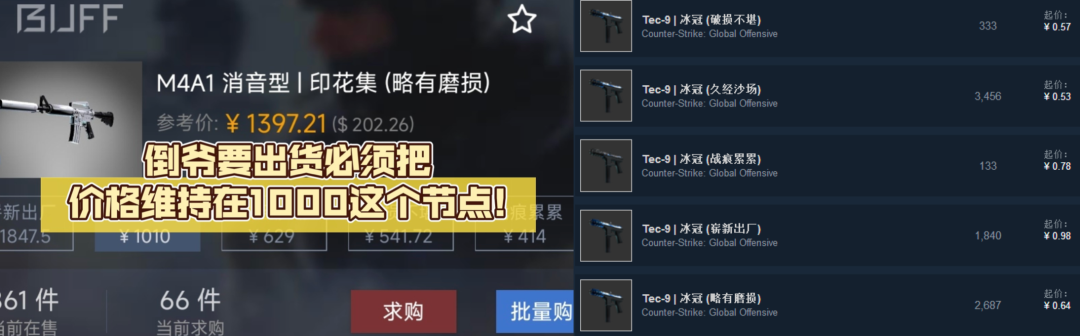
Overall, CSGO’s skin system has existed for nearly 10 years, with its official Steam Marketplace operating for about 7. A robust trading ecosystem has grown around it, expanding the vitality and influence of digital collectibles.
Doesn’t this sound familiar—a bit like NFTs? Native digital assets, varying values by quality, scarcity-driven appreciation, professional speculators due to volatility… Yet CSGO and its cosmetics have fared far better than most Web3 games and NFTs—the cosmetic economy revitalized the game.
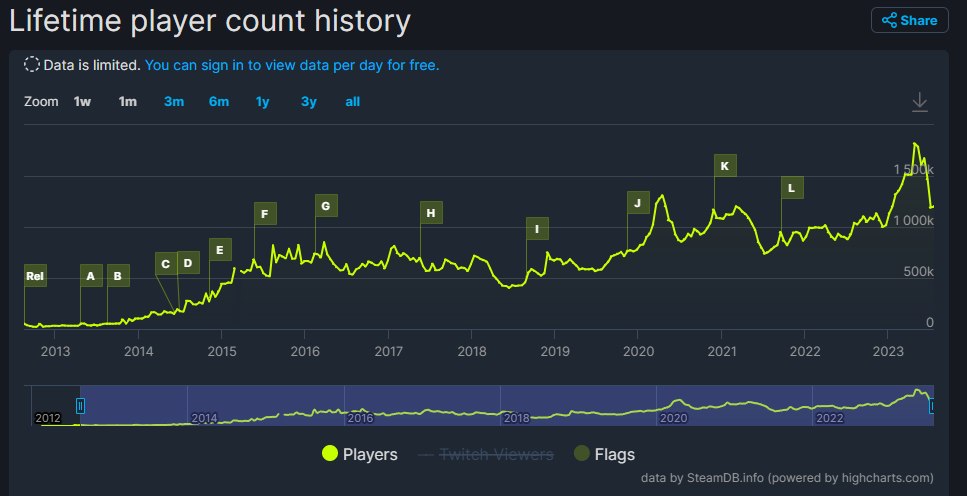
Source: Official Steam CSGO Daily Active Users Chart
Official Steam data shows CSGO’s average monthly active users surged after launching the skin marketplace—from ~1.2 million in 2015, to 2.6 million in 2017, exceeding 5 million by 2019…
In 2020 alone, CSGO’s skin market saw $3.5 billion in transaction volume—one of the highest-earning cosmetic markets. Valve and Steam earned nearly $500 million in fees (15% cut) that year.
CSGO didn’t die because of thriving in-game assets—on the contrary, it thrived.
Why such a stark contrast with Web3 games and NFTs? CSGO’s cosmetic economy acts as a booster, while Web3 game NFTs often feel like deadweight. The root cause lies in the relationship between assets and gameplay.
-
Assets don’t compromise core gameplay: Whether you own skins or not, matches remain fair. Even the priciest skin won’t help if your aim is poor.
-
Assets provide emotional value through repetition: Competitive matches repeat, but players express individuality through rare skins, injecting fresh fun into every game. This “I have what others don’t, I show off better” emotional reward drives market heat.
-
Low ROI for farming: CSGO doesn’t encourage mass grinding. Rare skins aren’t guaranteed—they drop randomly over playtime, making returns unpredictable. This prevents mining-like repetitive behavior, preserving match quality.
-
Assets inspire creativity, community, and culture: Players can submit skin designs for official consideration, earning royalties if selected. This continuous influx of high-quality content keeps the game fresh.
This symbiotic, integrated cosmetic economy has clearly been a key driver behind CSGO’s longevity.
Understanding this, we can see Matr1x Fire deliberately learned from CSGO’s success—designing its economy to boost engagement rather than recklessly incentivizing farming that destroys the ecosystem.
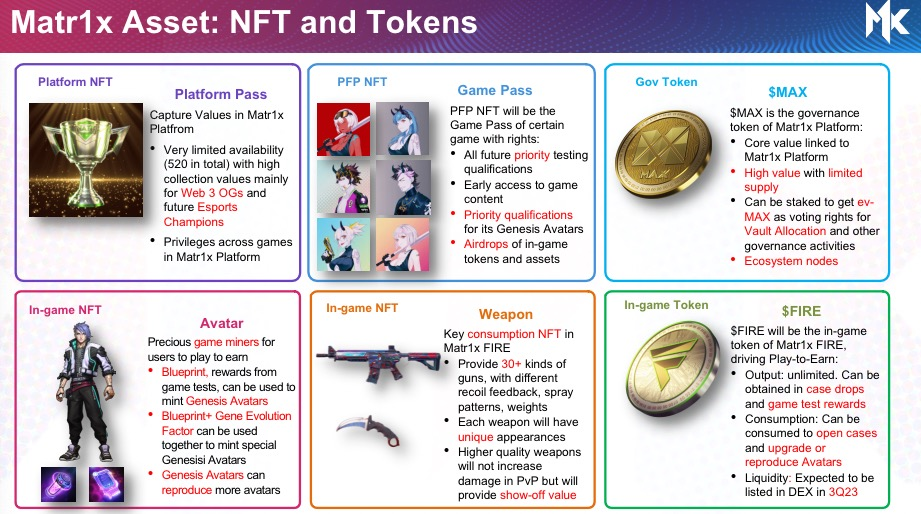
In Matr1x Fire, key assets include:
-
FIRE Token: In-game currency, uncapped supply, scales with player count. Used in burn mechanisms like character upgrades, opening crates, and weapon synthesis;
-
MAX Token: Governance token for the Matr1x platform, fixed supply of 1 billion, never increases;
-
Character NFTs: Earn FIRE Coins and crates during matches;
-
Chests: Opening yields rare cosmetic NFTs.
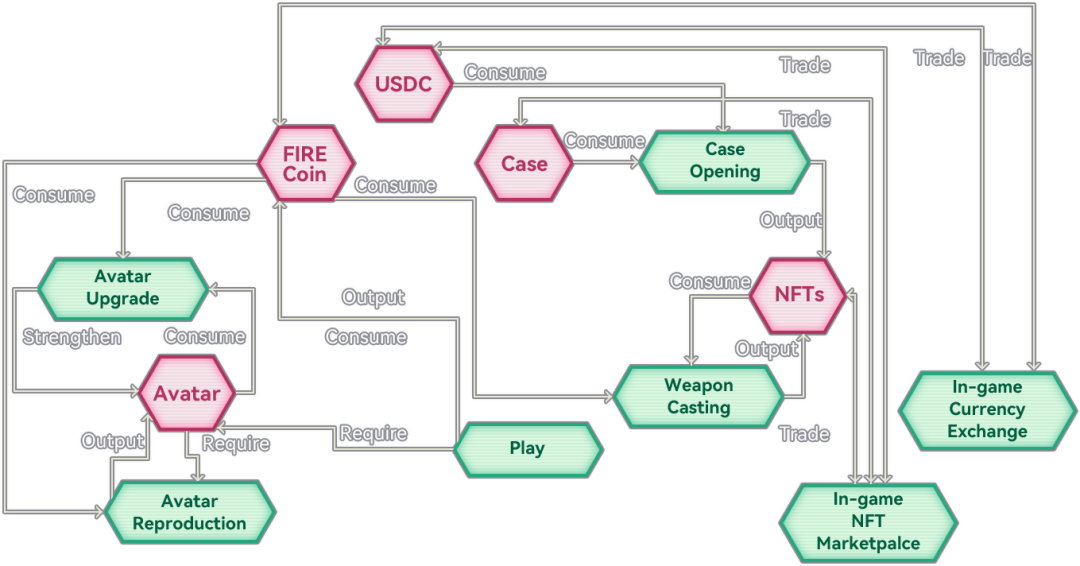
Overall, aside from governance MAX tokens, all other assets revolve around the cosmetic economy. We won’t dive deep into granular economic modeling here, but broadly, the behaviors outlined in the Matr1x Fire whitepaper can be summarized as follows:
-
Playing Matches: Players with premium NFT characters earn FIRE and chests during gameplay.
-
Character Upgrades: Spend FIRE and merge characters to enhance stats and increase in-game output.
-
Character Breeding: Combine genetic profiles of two characters to create a new one, consuming FIRE.
-
Opening Chests: Requires USDC and FIRE to unlock in-game items.
-
Weapon Synthesis: Combine same-rarity weapons to craft higher-tier ones.
Regardless of complexity or variety, actions like spending FIRE or upgrading characters are ultimately aimed at acquiring more weapon cosmetics faster (increasing chest drop rates or alchemizing low-tier items).
From these economic designs, we can distill the underlying intent:
-
Core shooting gameplay doesn’t depend on owning virtual assets;
-
Weapon skins offer personalization and collectible value;
-
Rare cosmetics require active gameplay, not passive mining;
-
Players are incentivized to actively spend, synthesize, and engage to obtain rarer items.
Through this approach, Matr1x Fire integrates its economy with gameplay, avoiding the risk of assets becoming a burden. But a more critical question remains: How can the game thrive and gain wider attention?
Esports: The Elevation Tool for Web3 Games
For Matr1x, the answer lies in esports.
Some games naturally lend themselves to competitive formats and spectator appeal. Leveraging esports to expand influence and build related industries represents an “elevation” for Web3 games:
You no longer need to struggle within the confines of the crypto bubble, wrestling with the Game-Fi dilemma. Instead, you can leverage more regulated resources, broader audiences, and established industry chains to achieve the long-sought Mass Adoption.
Esports serves as a perfect breakout ramp for Web3 games.
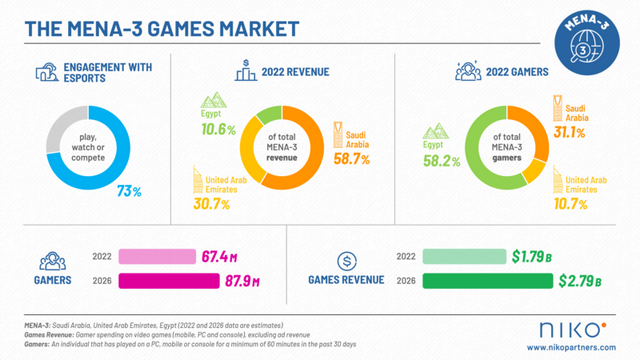
Externally, gaming and esports are emerging as strategic industries globally. In April, Saudi Arabia’s Public Investment Fund (PIF) subsidiary Savvy Games Group announced plans to develop, publish, and acquire top-tier games, supporting the Kingdom’s gaming ambitions. The government plans to invest $38 billion, aiming to position Saudi Arabia as the next major hub for gaming.
Saudi Arabia aims to become a global esports center by 2030. Its investments come primarily from sovereign funds—government-controlled capital. The “Vision 2030” plan sets clear GDP targets for gaming and esports, aiming for these sectors to contribute 0.8% to 1% of national GDP by 2030.
Last year, Singapore added esports as a demonstration event at the 2022 Asian Games, including titles like League of Legends and DOTA2. In June this year, the inaugural Olympic Esports Week opened in Singapore on June 22—an offline event co-hosted by the IOC, Singapore’s Ministry of Culture, Community & Youth, and the Singapore National Olympic Council.
Governments increasingly recognize esports’ potential to drive economic growth and connect with youth. The rise of esports transforms games from isolated entertainment into catalysts for venues, merchandise, advertising, clubs, and new media.
Moreover, esports is inherently a powerful celebrity-making machine.
Competitive games are inherently skewed—few play, many watch. Skill gaps create a pure, extreme form of admiration: I can’t beat you, I see an insurmountable gap in skill and awareness, and thus endlessly admire elite players.
This sense of awe is central to esports’ massive youth appeal and identification. Top players become idols—“ten thousand watching, one playing”—because they represent us achieving what we cannot.
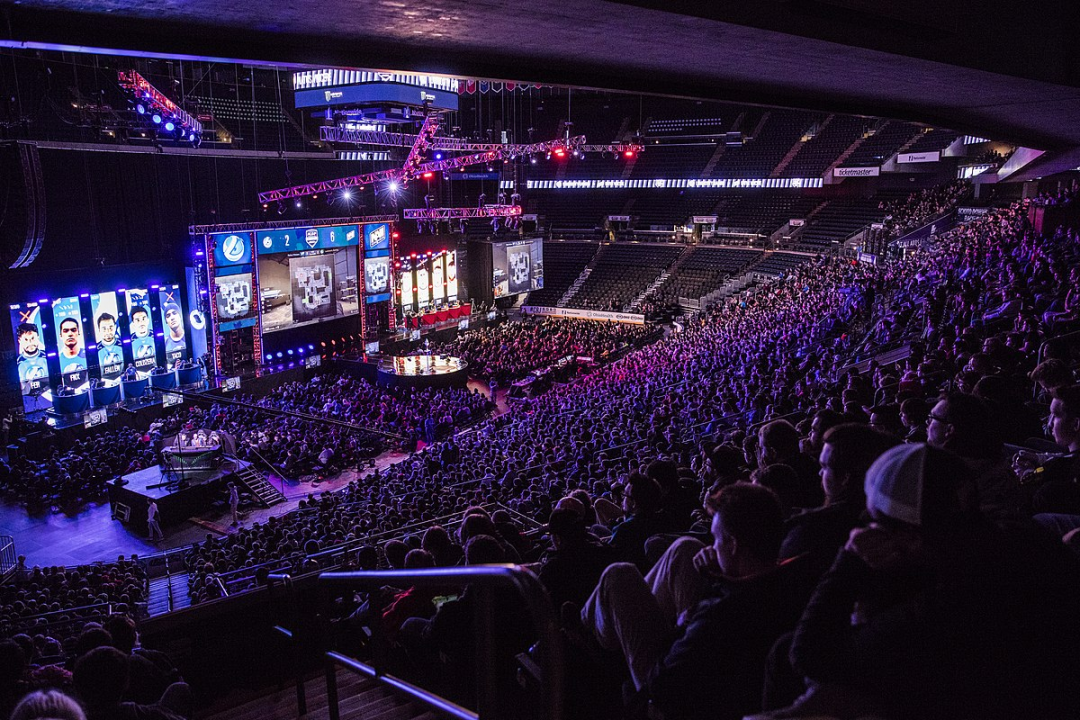
Image source: CSGO Major Championship现场
The ability of esports to rapidly capture attention and evoke emotional resonance is something most Web3 games currently overlook.
Why? Most Web3 games are still telling the same story: “better quality, stable economy”—without expanding into cultural or influence domains. More importantly, not every Web3 game genre suits esports.
Games like Matr1x Fire, modeled after CSGO, enjoy thematic advantages. Shooters are naturally tests of skill and reflexes, and when balanced well, are inherently suitable for competition.
From an influence standpoint, games capable of esports have a far higher ceiling than those that aren’t.
Traditional esports organizations can host large events but struggle with monetization—“audience without money.” Web3 games have limited user bases but high individual net worth, willing to spend heavily on in-game assets—“money without audience.”
If Matr1x Fire can bridge these groups through Web3-native esports, its potential and narrative surpass the tired “gameplay over finance” trope.
Beyond tournaments, Matr1x Fire’s updated whitepaper outlines integrating Web3 incentives across the ecosystem, creating a complete structure for teams, players, and fans.
For example, the game will partner with global teams; clubs gain tournament slots by staking MAX tokens, sharing event revenues, and receiving custom NFTs.
Players receive exclusive NFTs, with sales and trading revenue shared directly. A portion of in-match tipping also goes to teams and players. Web3-powered tipping ensures greater transparency and ease of distribution.
Fans and supporters who tip or buy team/player items gain deeper interaction opportunities. Here, NFTs become the link to fan economies.
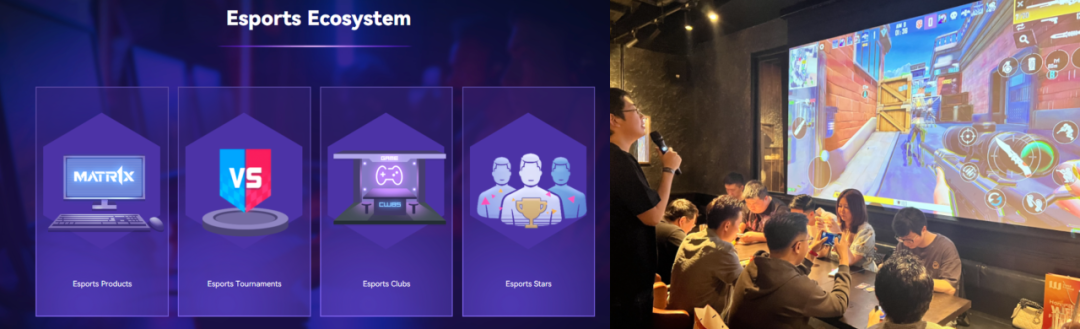
Finally, leveraging Web3 features, esports can evolve into an “Esports to Own” model. Watching events might require an NFT PASS; on-chain data from registrations, predictions, and voting could earn participants relevant NFTs or tokens. This enhances interactivity and incentive design beyond traditional esports.
Building Web3 Culture: Beyond a Single Game
Matr1x Fire is a mobile competitive shooter, but its developer, Matr1x, has ambitions far beyond a single product.
Many game studios treat individual titles as one-off products—invest upfront, recoup costs fast, reuse code/assets for the next “reskin,” repeating the cycle.
In contrast, Matr1x chooses to build around a fixed IP, pursuing sustainable, long-term growth.
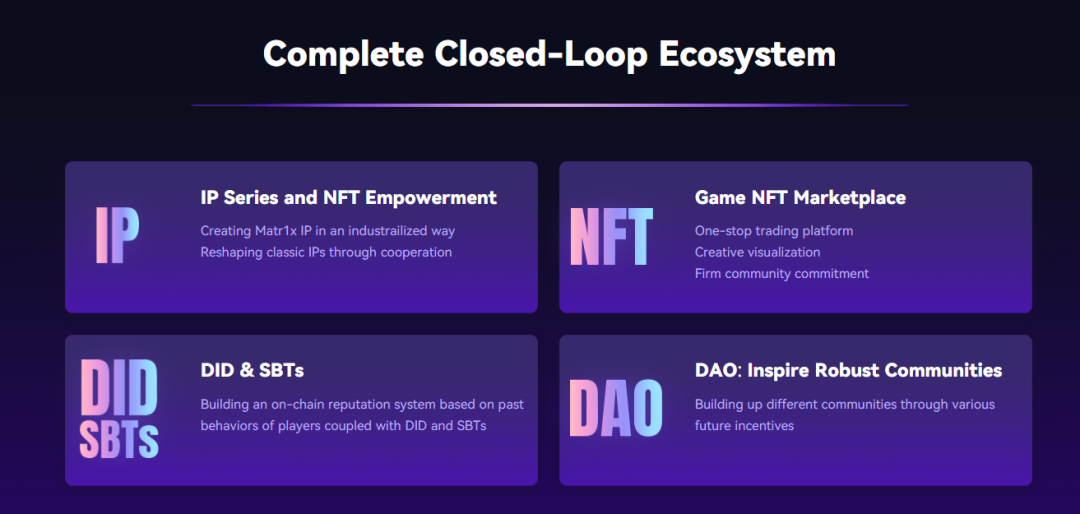
Matr1x positions itself as a cross-media entertainment platform, integrating games, NFTs, and novel IPs to explore synergies. Matr1x Fire is just one piece of a larger strategy, with efforts across multiple fronts to build a cohesive IP and culture.
On Matr1x Fire’s website, you’ll find over 100,000 words of original fiction centered on characters and the game’s universe—depicting humanity’s struggle for data sovereignty. Additionally, community collaboration allows players to shape storylines, increasing fan engagement.
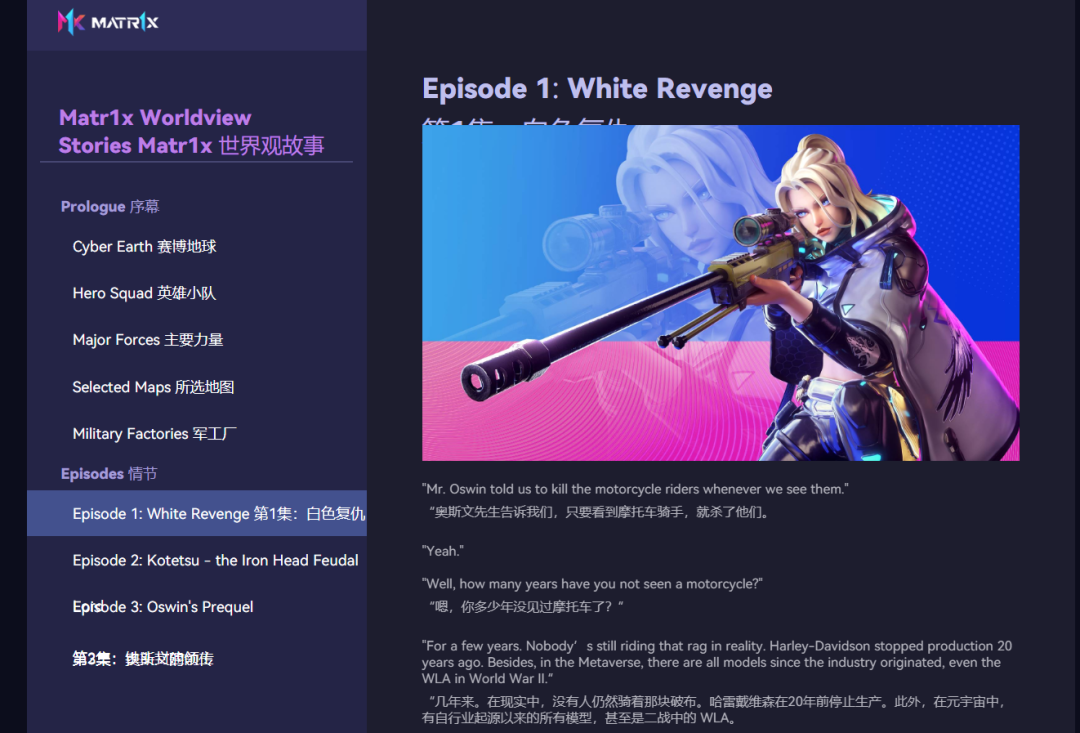
Furthermore, the whitepaper plans collaborative worldbuilding and an encyclopedia: All community members can co-write lore and determine narrative directions. Contributions can range from character backstories and fan art to setting expansions.
Through community voting, the best content is selected and rewarded with exclusive NFTs and MAX tokens. Creators and their works are permanently archived on the official site.
Beyond curated stories, the platform records everything happening in the community—epic matches, user creations—all preserved forever in the MATR1X Encyclopedia. This resonates deeply with player and viewer participation. Classic examples from CSGO already exist as unspoken shared memories among players:
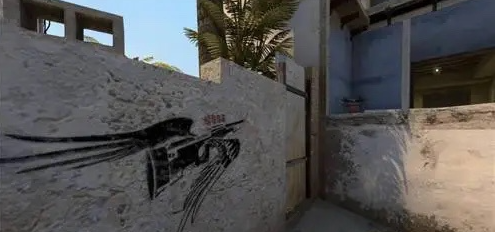
For instance, legendary sniper K’s iconic jump-scope kill was commemorated by the developers, who placed a permanent jump-scope logo on the map for all players to remember and relive that insane moment.
How do you convince users to hold NFTs? Beyond speculation and hype, the key is community recognition of the cultural value behind the NFT.
Thus, Matr1x invests heavily in peripheral content—writing novels, releasing themed NFT series—all rooted in the core theme of data sovereignty, aligning perfectly with Web3 ideals, expressed through diverse mediums.
Eventually, when the community embraces this core, assets gain early traction. With asset momentum comes consensus and cohesion, amplifying influence—a viable path for any Web3 game or IP aiming for scale and longevity.
By observing core users’ holding and trading behavior of Matr1x platform NFTs, we can validate the importance of cultural building in fostering user认同感. Despite market downturns, Matr1x 2061 and YATC series maintain high holding rates and trading prices.
Clearly, successful Web3 games and platforms go beyond standalone products. Constructing a unique worldview and cultural core, embedded organically across all aspects, is essential to attracting core users and ensuring long-term growth.
The Right Path Forward for Web3 Games
Based on our analysis of Matr1x Fire and its ecosystem, we can now answer the opening question: What is the “good” path forward for Web3 games?
-
First, the ability to continuously attract new users. This depends on game design factors like accessibility and social features;
-
Second, motivating core users to stay engaged. This hinges on depth of gameplay and community management;
-
Third, achieving broader societal impact through esports and IP development. This brings external traffic and sustained exposure;
-
Beyond the game, building a distinct worldview and cultural core is essential. It forms the foundation for user认同感 and commercial success.
For individual projects, Matr1x is actively exploring these dimensions. Whether it succeeds depends on execution and operations going forward. But for the broader Web3 gaming sector—can we do more?
Ideally, if Matr1x can successfully execute this model—establishing mature R&D, marketing, and supply chain relationships—it could open up its platform, offering these capabilities to third-party projects to replicate proven Web3 gaming and entertainment models. For users, the most immediate benefit remains being able to play the game.
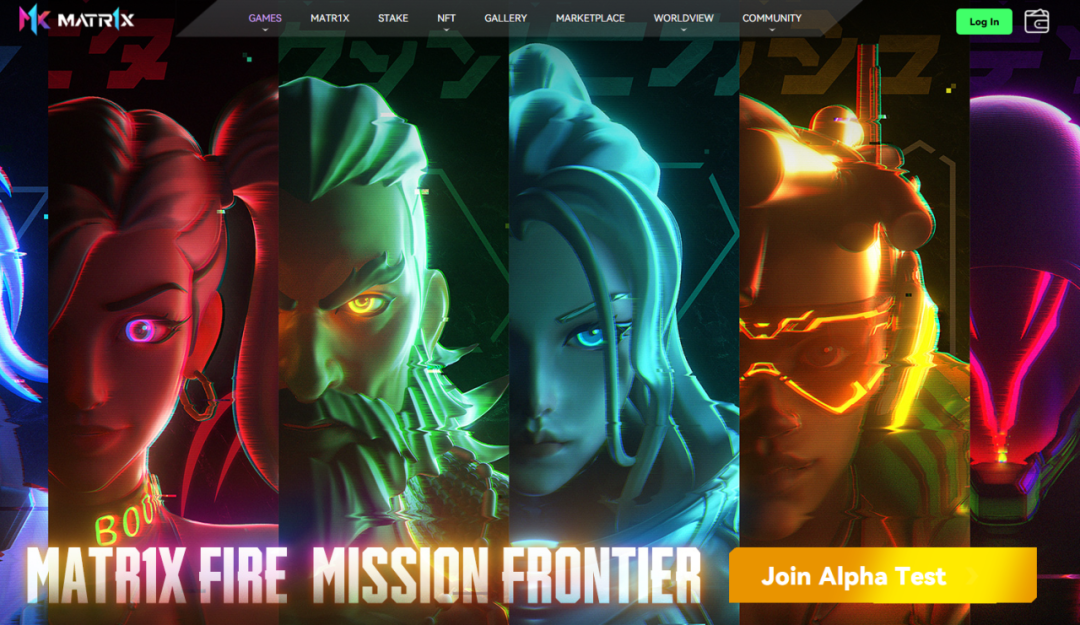
With Matr1x Fire’s second test phase now live, why not jump in and experience this Web3 CSGO firsthand?
Join TechFlow official community to stay tuned
Telegram:https://t.me/TechFlowDaily
X (Twitter):https://x.com/TechFlowPost
X (Twitter) EN:https://x.com/BlockFlow_News
 深潮TechFlow






