When GameFi tokens have all dropped out of the TOP100, can COC reignite the narrative using Bitcoin's economic model?
TechFlow Selected TechFlow Selected
When GameFi tokens have all dropped out of the TOP100, can COC reignite the narrative using Bitcoin's economic model?
On November 27, $COC mining begins. The first-month 42% output window lasts only 30 days. The opportunity to mine early rewards won't wait.
 Navigating Web3 tides with focused insights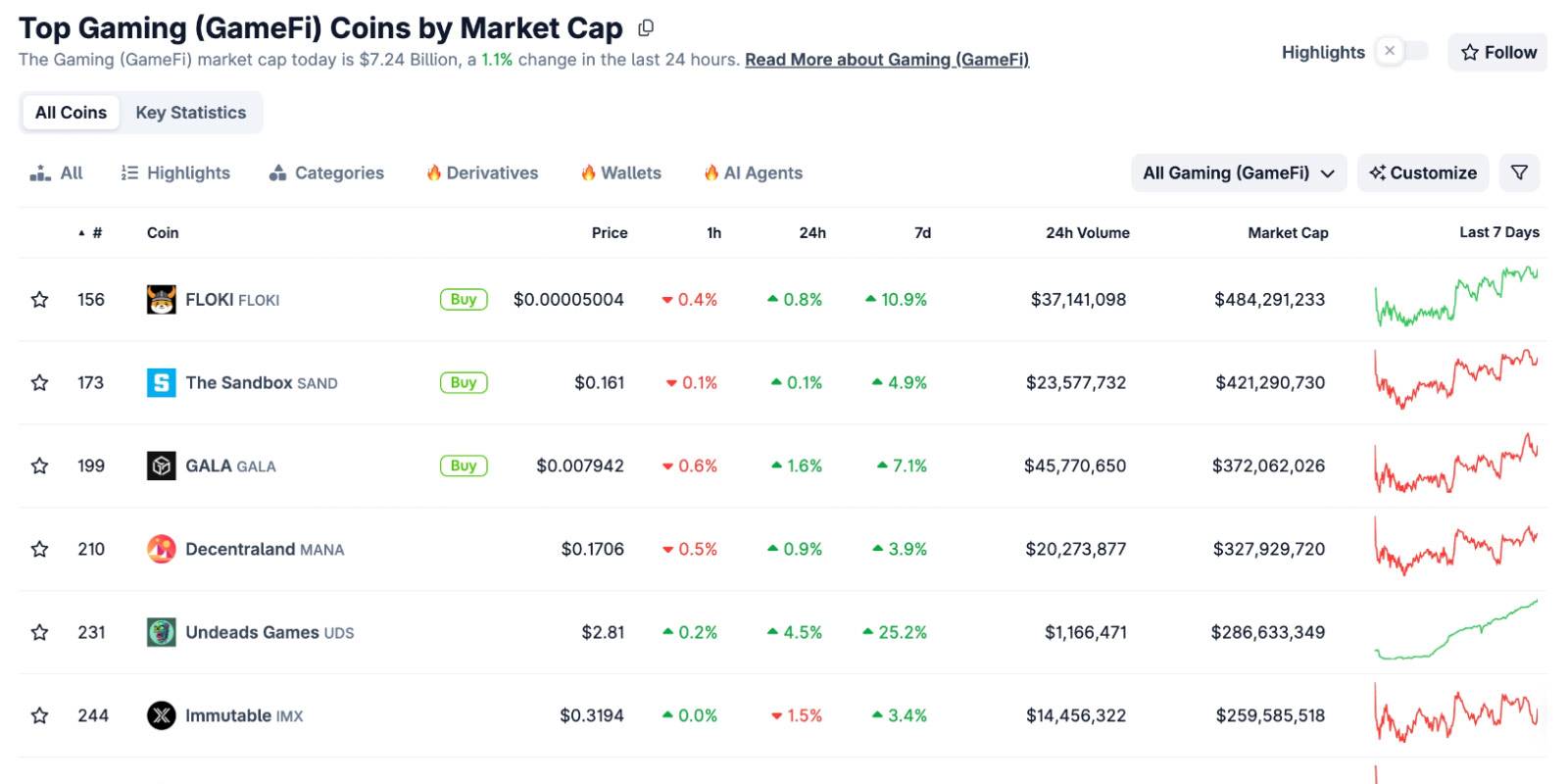
On November 28, 2025, according to Coingecko data, the top GameFi token by market cap, $FLOKI, ranked 155th.
The once-thriving GameFi sector has now completely fallen out of the market cap TOP100. This is a story of an entire sector's collective collapse.
Yet this sector once came so close to changing the world.
Looking back to 2021, Axie Infinity’s daily active users briefly surpassed 2.8 million, SLP token’s single-day trading volume exceeded $360 million, and stories of Filipino players supporting their families through gameplay spread widely in the crypto community. At that time, everyone believed "play-to-earn" would transform the gaming industry. GameFi was seen as blockchain’s most exciting application, attracting massive capital and countless imitators.
But within less than a year, the bubble burst. Axie’s AXS token dropped over 90% from its peak, SLP nearly collapsed to zero, and its once-thriving player community instantly disintegrated.
Over the next three years, this story repeated itself again and again. StepN and various X-to-Earn projects surged forward one after another, yet all met the same fate.
In 2024, Telegram’s gaming ecosystem brought new hope. Hundreds of millions of users poured in, and NOTCOIN, DOGS, and Hamster Kombat achieved unprecedented user scale. But after the excitement faded, the same problems remained—players came for airdrops and left immediately after TGE.
Why did previous Play-to-Earn models fail? Where lies the breakthrough?
On November 24, a game called COC (Call of Odin's Chosen) offered its answer—the world-first VWA (Virtual World Asset) mechanism, which puts all key in-game economic data on-chain for verification.
This might be the true breakthrough key for Play-to-Earn 3.0.
I. Play-to-Earn 1.0: Trust Collapse Inside a Black Box
The failures of Axie Infinity and StepN stem from the same fundamental issue: players cannot verify project promises and must blindly trust—until that trust collapses, causing the economic model to implode.
Axie’s economy fundamentally relied on continuous influx of new players. Existing players earned money by breeding Axies, while new players had to purchase Axies to enter. When user growth slowed, the system spiraled into collapse. The entry cost of buying three Axies once reached thousands of dollars, locking out most potential players. Ultimately, participants became pure speculators rather than actual gamers. SLP tokens were primarily earned through battles but could only be consumed for breeding. Once player numbers peaked, token output vastly exceeded consumption, leading to uncontrollable inflation.
Behind these symptoms lay a deeper problem: all drops and rewards were calculated on the project’s servers, leaving players unable to verify fairness and forced to trust officials unconditionally—a setup that planted the seeds for future trust crises.
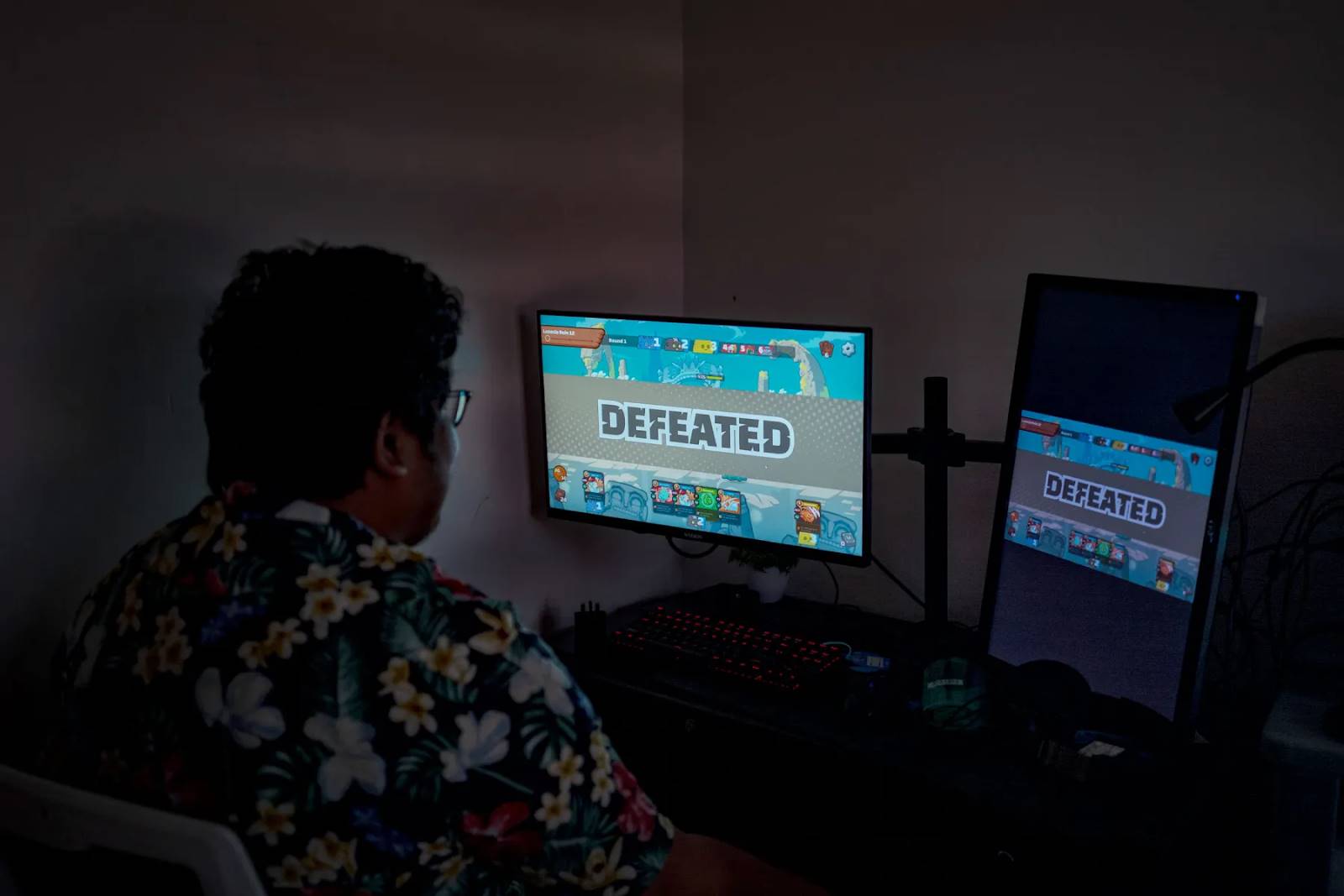
Actively participating Axie Infinity players
StepN was also part of Play-to-Earn 1.0. Although it attempted to fix Axie’s flaws by extending “play-to-earn” into running, lowering entry barriers, and making “earning money” easier, it ultimately used the same formula—new players paying for old ones—just repackaged as a “healthy lifestyle.” GST tokens still surged and crashed violently, and players didn’t come for fun but for profit. As soon as earnings declined, players left. And the core issue remained: the project team still controlled all critical data, with data validation and reward calculations happening in centralized black boxes, leaving players perpetually disadvantaged due to information asymmetry.
The fatal flaw of Play-to-Earn 1.0 wasn’t poor economic design, but rather that even the most perfect economic model is just a castle in the air within a non-transparent system. Once trust collapses, so does the token price.
II. Play-for-Airdrop: The Illusion of Traffic Boom
By 2024, Telegram’s gaming ecosystem experienced explosive growth. From NOTCOIN to DOGS, from Hamster Kombat to Catizen’s 35 million users, the TON ecosystem proved Telegram could become Web3’s strongest traffic gateway. Within just one year, hundreds of millions of users entered the on-chain world—an achievement far beyond traditional game developers’ reach—effortlessly enabled by Telegram mini-apps’ magic.
This time, GameFi seemed to have found a new direction.
Low barriers, no downloads, social virality—Telegram mini-apps introduced hundreds of millions of Web2 users to the crypto world for the first time. Clicker games, though simple, attracted massive audiences. Airdrop mechanisms delivered real rewards, and players actually received tokens.
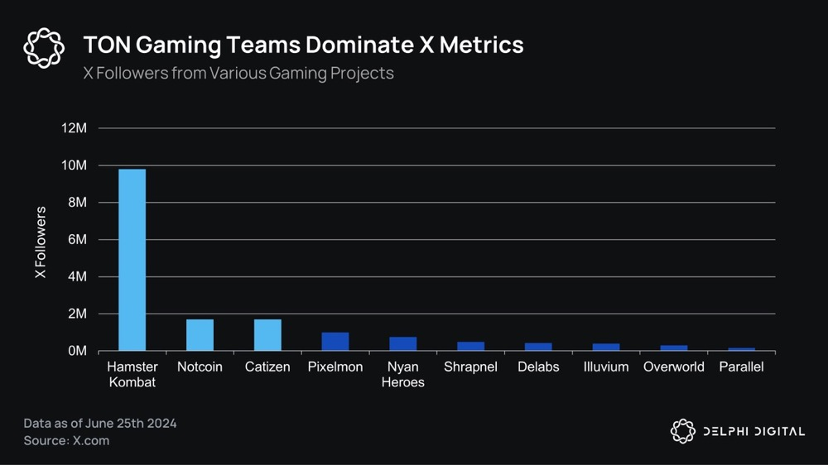
In 2024, TON games experienced explosive growth. Leading projects attracted nearly 10 million followers on X.
But after the hype, a fatal issue emerged.
Players came for airdrops and left immediately after TGE. Controversial airdrops like Hamster Kombat’s and DOGS’s rapid price decline point to the same dilemma:Airdrop equals endpoint—players simply can’t be retained.
This isn’t economic collapse like Axie or a Ponzi scheme like StepN. Telegram games made a completely different mistake.
Clicker games themselves lack any real playability. While the tap-to-earn mechanism enables rapid user growth, players’ sole goal is obtaining airdrops, not enjoying the game itself. No one stays because it’s “fun.”
Players came for airdrops and left after TGE. Hamster Kombat’s controversial airdrop and DOGS’s sharp price drop reveal the same core issue: when the game ends at the airdrop, what comes next?
This isn’t a flaw of any single project but a fundamental bottleneck of the “Play-for-Airdrop” model itself. Project teams gain short-term traffic but fail to retain users; players dump tokens immediately after receiving them. Both sides deplete trust in a zero-sum game.
More critically, data remains opaque. Despite issuing tokens on-chain, in-game reward calculations, probability mechanics, and distribution rules are still controlled by centralized servers. When Hamster Kombat’s airdrop controversy erupted, the team couldn’t produce any verifiable evidence, struggling to explain amid public backlash. Players still can’t verify whether they were treated fairly.
Play-to-Earn 1.0 died from economic collapse; Play-for-Airdrop dies from being fundamentally unable to retain users.
From Axie to Hamster Kombat, two generations of GameFi projects made different mistakes but arrived at the same outcome.
III. VWA: The Breakthrough Key to Play-to-Earn 3.0
On November 24, a Telegram-based game named COC (Call of Odin's Chosen) officially launched. Set in a Viking-themed universe, it’s a strategy-building and real-time raiding game incubated by the Catizen ecosystem.
More importantly, it systematically addresses the above issues. In its whitepaper, COC defines itself as “Play-to-Earn 3.0”—not just an empty slogan, but a fundamental solution to GameFi’s trust problem based on the world-first VWA (Virtual World Asset) mechanism.
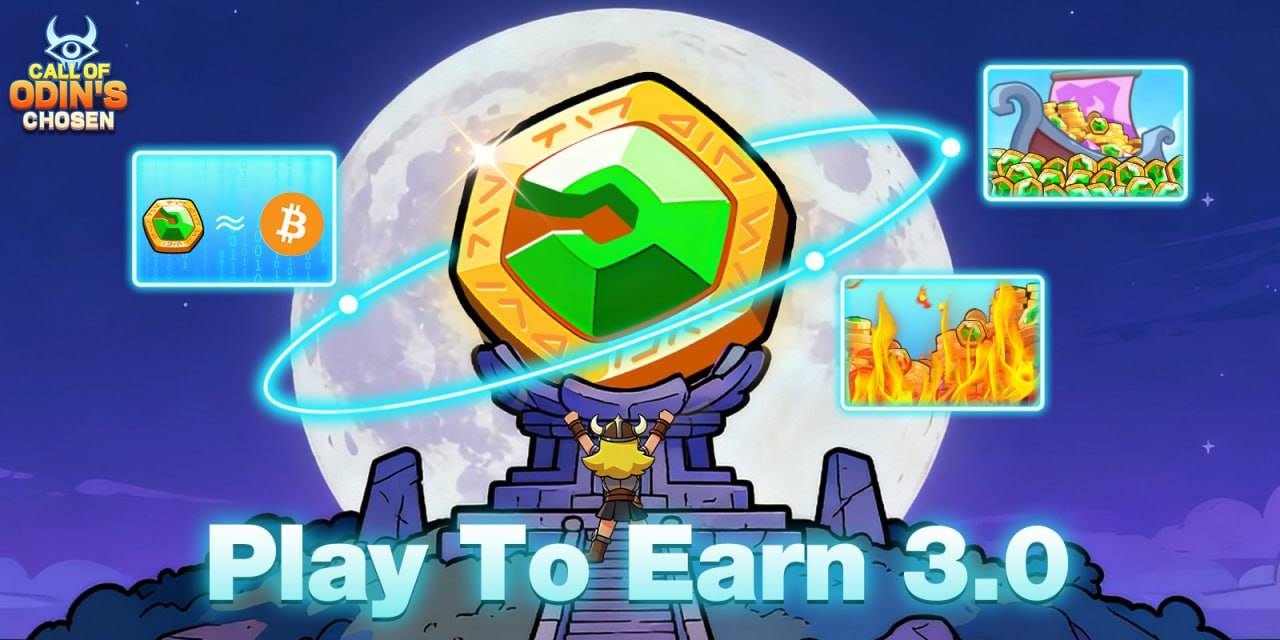
What is VWA? What does Play-to-Earn 3.0 truly mean?
Simply put, VWA means putting all key in-game economic data on-chain for recordkeeping. Specifically, it includes:
- Deposit/withdrawal records
- Naval mining outputs
- Raid mining outputs
- $COC consumption records
- Time blind box lottery results
Unlike traditional games where “the project team decides everything,” every output, every consumption, and every lottery draw in COC generates a verifiable on-chain record.
Players can verify for themselves: Did my naval mining reward match the stated probabilities? Are the time blind box lottery results genuine? Were the burned tokens actually destroyed?
Project teams can’t cheat: they can’t secretly alter drop rates, mint extra tokens for insiders, or hide real burn data.
This level of transparency is unprecedented in GameFi history. Axie’s “trust us,” StepN’s “data is on our servers,” and Telegram games’ “believe our airdrop rules” are finally replaced by “on-chain verifiability.”
VWA isn’t just a technical innovation—it’s a redistribution of power—from project teams to players.
This is the definition of Play-to-Earn 3.0: when players can verify everything, trust ceases to be GameFi’s weakness and becomes an on-chain fact.
IV. A Verifiable Economic Model Based on VWA
Leveraging VWA’s transparent mechanism, COC builds a truly verifiable economic model: 84% of tokens return to players, Bitcoin-style halving controls supply, and consumption-value cycles drive deflation. The goal is to create a player-driven, verifiable, and sustainable gaming economy.
Specifically, this economic model includes several core components:
Bitcoin-Style Halving: Reshaping the “Early Mining” Narrative
Unlike most projects, COC directly adopts Bitcoin’s token distribution mechanism.
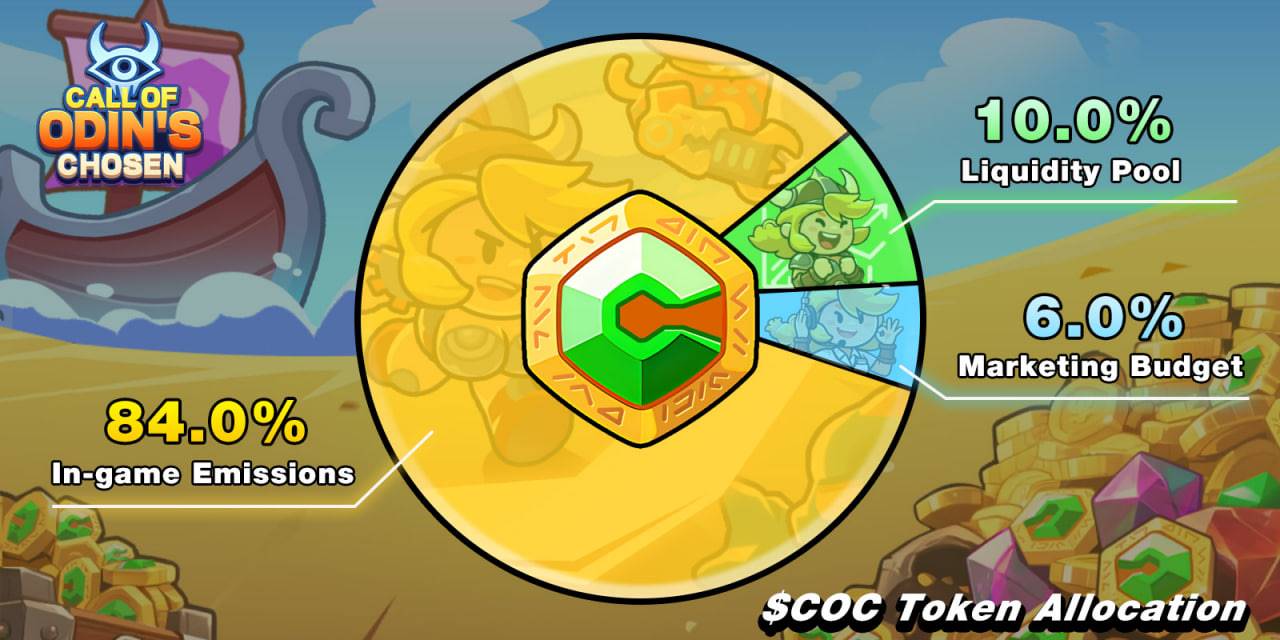
COC sets a fixed total supply of 210 billion tokens, with no further issuance. Output follows Bitcoin’s pattern: 88.2 billion tokens released in the first month (42% of total), halving every 30 days thereafter. Of this, 84% goes to players via in-game mining, with the team’s initial allocation set at 0%.
This design directly tackles GameFi’s biggest past pain point—uncontrolled inflation. With monthly decreasing token output, “earlier participation = higher returns” becomes a hard fact, not marketing rhetoric.
The 42% allocation in the first month means early players receive nearly half of the entire lifecycle’s token output. This isn’t “pie-in-the-sky,” but guaranteed returns coded into smart contracts.
Even more crucial is the 84% allocation to players. Compared to traditional GameFi projects where teams and institutions often take 30–40%, COC truly returns power to the community. The project team is no longer the “house” but an auxiliary player aligned with the community.
Dual-Mining Tracks: Balancing Gameplay and Earnings
COC’s token output splits into two modes: naval mining (75.6%) and raid mining (8.4%).
Naval Mining: Players send ships on “exploration voyages,” settling rewards every 10 minutes. Similar to Bitcoin mining—the more ships you deploy (higher hash power), the greater your chance of earning rewards. The system uses a “weighted lottery” mechanism to ensure fair token distribution.
The design here is clever: 90% of in-game output goes to naval mining, while 10% flows into the “raid pool.” This means even casual players who only send ships without PvP can earn steady rewards.
Raid Mining: Players spend “battle stones” to complete PvE stages and share a prize pool funded by 10% of all naval mining output. This emphasizes actual gameplay—you must genuinely play, beat challenges, not just tap the screen mindlessly.
This design breaks the past binary of “pure AFK vs. hardcore grind.” Casual players can peacefully sail; hardcore players can earn extra rewards through raiding. For the first time, gameplay and token earnings are deeply intertwined.
More importantly, COC borrows mature Web2 game design principles. Strategy building, resource management, and real-time raids—addictive mechanics proven in WeChat mini-games—are fully transplanted into the Web3 environment.
Players aren’t clicking for mining—they naturally earn tokens while enjoying the game. This is what Play-to-Earn should look like.
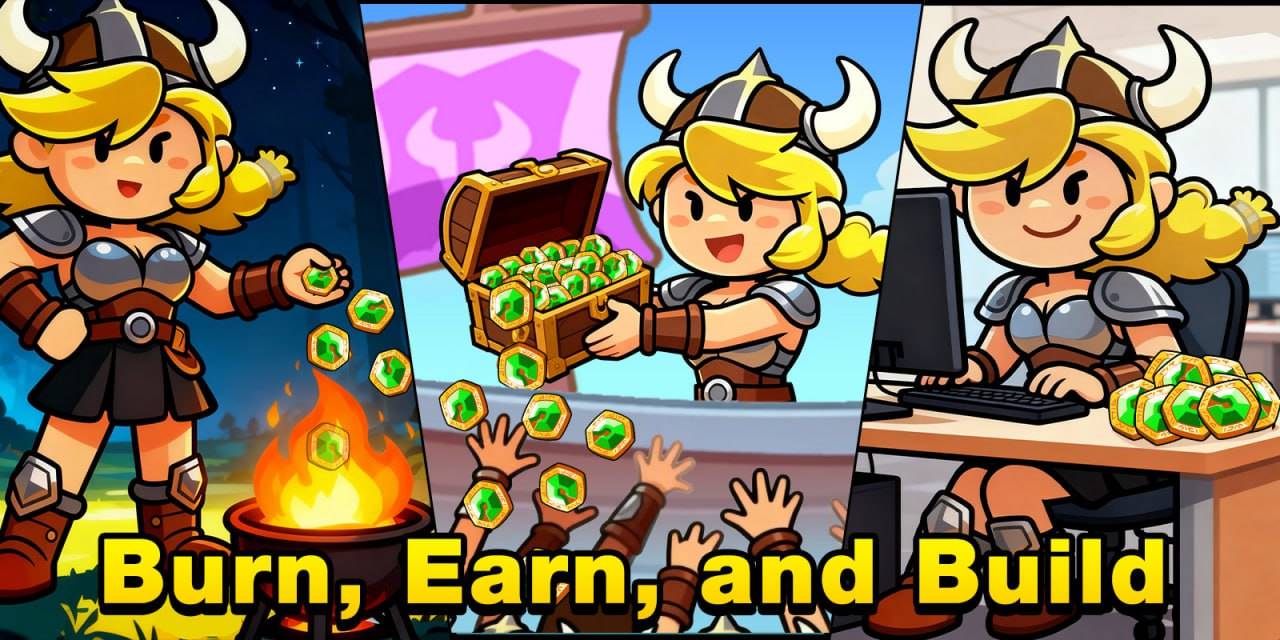
Consumption-Burn-Return Flywheel: A Sustainable Economic Cycle
Past GameFi death spirals stemmed from unbalanced token economies—output far exceeding consumption, leading to runaway inflation. COC constructs a complete token circulation system.
When players spend $COC to buy items, speed-ups, or gacha pulls, the system automatically divides spending into four parts:
- 36% permanently burned to a black hole address
- 36% rebated to players (via time blind box lottery)
- 18% to team operations
- 10% for promotional commissions
The core of this design is ensuring every $COC spent serves a purpose.
36% permanently burned. The simplest and most direct deflationary mechanism—as the game runs, circulating supply continuously decreases, increasing token scarcity over time.
36% enters the blind box rebate pool. Spending equals lottery entries—every expenditure offers a chance to win, creating positive incentives. This keeps tokens circulating among players instead of flowing out one-way.
18% to team operations. This is the most noteworthy aspect of COC’s economic model—the team uses this revenue for continuous content development and updates. While most GameFi projects fall into the “no new content → player loss → token decline” death spiral post-TGE, COC invests real money to secure development resources, turning player spending directly into improved game quality.
10% for promotional commissions. Expands the player base through KOL collaborations and community incentives.
Additionally, withdrawal fees use a time-decay mechanism: 50% fee for immediate withdrawal, decreasing by 3% daily, reaching 5% after 15 days. This effectively filters out short-term arbitrage capital, keeping tokens in long-term players’ hands.
From an economic standpoint, COC aims to build a virtuous cycle: “gameplay drives spending → spending funds development → development enhances gameplay.”
The fundamental difference between COC and all past GameFi projects—everything here is verifiable.
Was halving executed on schedule? Checkable on-chain. Were 84% of tokens truly distributed to players? On-chain verifiable. Is the naval mining weight calculation fair? On-chain checkable. Is the raid pool distribution rule transparent? On-chain verifiable. Were 36% of tokens really burned? The black hole address balance is crystal clear. Are time blind box lottery results genuine? Every record is traceable.
When Axie says “trust our economic model,” when StepN says “we burned X tokens,” players can only choose to believe.
When COC says the same, players can verify it themselves.
This is the change VWA brings—not better promises, but verifiable facts. This is the core evolution from Play-to-Earn 1.0 to 3.0.
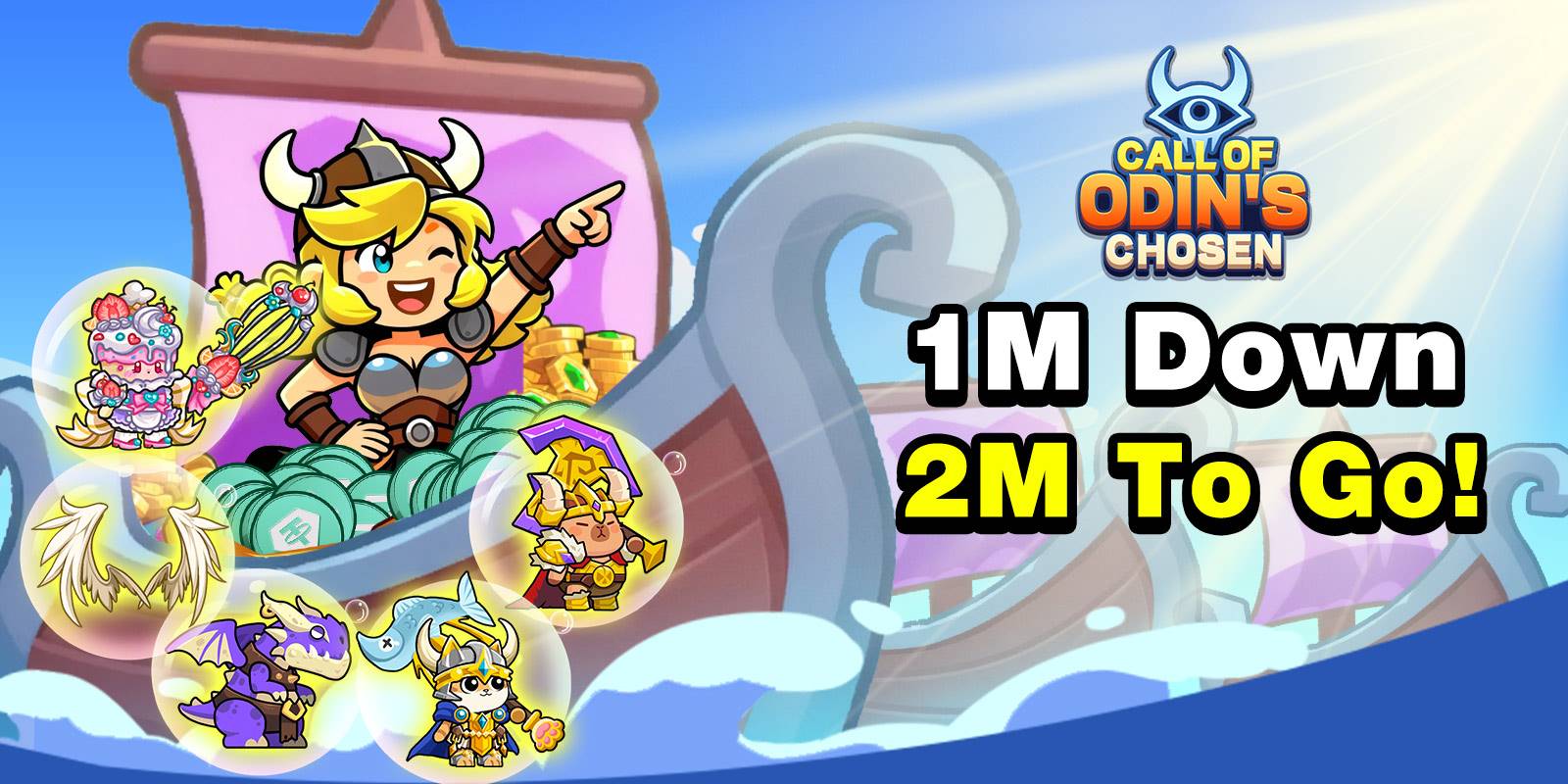
V. From 0 to 1 Million: Verified Growth Potential
Before the official launch, COC’s pre-registration users already exceeded 1 million. What does this number signify? It shows the market still has huge demand for “real games.”
COC isn’t a clicker game or a simple “tap-to-earn.” Though it appears to be an idle game on the surface, its strategic depth far exceeds expectations. Players must wisely allocate resources, choose upgrade paths, decide when to sail and when to raid. Its art style is polished, the Viking theme visually immersive, and the gameplay genuinely engaging—this is what a real game should be.
Notably, COC allocates 18% of team income into its tokenomics, securing funding for ongoing version updates. Many GameFi projects die mid-way because teams run out of development funds. COC’s design is long-termist—retaining players through continuous content updates, not a one-and-done approach.
No complex narrative packaging, no flashy metaverse concepts—just a humble pursuit of playability. Letting players feel growth with every choice, experiencing excitement in every battle—that’s the essence of gaming.
This dedication to gameplay may be exactly what past GameFi lacked most.
COC defines itself as Play-to-Earn 3.0—not a marketing gimmick, but a systematic response to three core questions:
How to make “playing the game” more valuable than “making money”?
By borrowing mature Web2 game design, create genuinely playable strategy-building + raiding gameplay. Make players stay because it’s “fun,” not because it “pays.”
How to sustain the economy without relying on new players?
Through Bitcoin-style halving + consumption-burning mechanisms, build a sustainable deflationary model. Existing players’ spending supports new output value, eliminating reliance on new players to take over.
How to make players truly trust the project team?
Through VWA on-chain verification, make all key data transparent. The project team no longer says “trust me,” but “verify it yourself.”
These three answers collectively point to one conclusion: the core of Play-to-Earn 3.0 isn’t “earning money,” but “sustainability.”
Sustainable gameplay—deep enough mechanics to keep players engaged long-term.
Sustainable economic model—deflationary mechanisms ensuring token value grows over time.
Most importantly—VWA’s transparency lets players verify everything, truly returning to Web3’s essence of “trustlessness.”
From Axie’s “play-to-earn,” to StepN’s “X-to-earn,” to Telegram games’ “play-for-airdrop,” we finally see a model that doesn’t rely on new players taking over, constant team funding, or narrative bubbles.
This might be GameFi’s future.
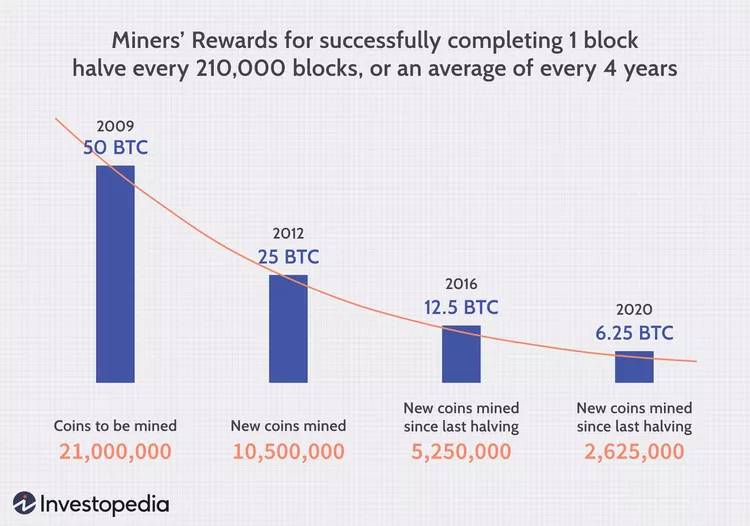
Bitcoin supply halves every four years
Conclusion: The Next Chapter of Play-to-Earn
GameFi has come this far, proving Web3 can achieve Web2-scale user numbers. NOTCOIN, DOGS, Catizen—each project has contributed to this ecosystem.
But the next question is: Can we truly retain these users?
Play-for-Airdrop brought traffic, but traffic eventually fades. Only genuine value creation can turn users into residents and ecosystems into homes.
COC attempts to write the next chapter—not attracting players with “airdrops,” but retaining them with “games”; not hyping tokens with “narratives,” but earning trust through “transparency.”
On November 27, $COC mining begins.
The first-month 42% output window lasts only 30 days.
The chance to mine early won’t wait.
About COC (Call of Odin's Chosen):
COC is a Viking-themed strategy-building and raiding game built on the TON ecosystem, incubated by Catizen. The game uses Bitcoin-style periodic halving, with 84% of tokens distributed to players via mining. It pioneers the VWA (Virtual World Asset) mechanism, enabling full on-chain verification of deposits, withdrawals, outputs, consumption, and lotteries.
Pre-registration users near 2 million. The game officially launched on November 24, with mining starting on November 27.
First-month output: 88.2 billion $COC (42% of total), halving each subsequent month.
For more information, refer to the project whitepaper
Call of Odin’s Chosen Telegram Channel:https://t.me/COC_Web3_News
Call of Odin’s Chosen Telegram Game Bot:https://t.me/COC_Web3_bot
Join TechFlow official community to stay tuned
Telegram:https://t.me/TechFlowDaily
X (Twitter):https://x.com/TechFlowPost
X (Twitter) EN:https://x.com/BlockFlow_News
 @amanda0x