From "Dual Shadows" to the GameFi Dilemma: Purity and Loss in Game Creation
TechFlow Selected TechFlow Selected
From "Dual Shadows" to the GameFi Dilemma: Purity and Loss in Game Creation
"Games are a form of art, and 'pure passion for games' should be the core driving force behind creation."
 Navigating Web3 tides with focused insights
Text: TechFlow
Recently, the sequel to *It Takes Two*, titled *Milo & Mili*, officially launched—have you embarked on this new adventure with your partner?
Across social media and major game livestreams, reviews have been overwhelmingly positive. Many players believe this title could take home Game of the Year at The Game Awards (TGA), just as *It Takes Two* did in 2021.
Talking about the success of the *It Takes Two* series inevitably leads us to its creator, Josef Fares.
In the gaming world, Josef Fares is known as the "angry bro" or the "Quentin Tarantino of gaming," famous for his blunt and unfiltered opinions.
At The Game Awards in 2017, his infamous "Fuck the Oscars" rant—criticizing the Academy for overlooking video games—went viral and became a popular internet meme.
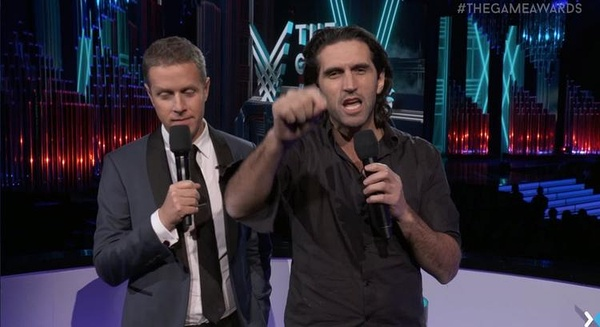
In terms of game design philosophy, Josef Fares champions absolute purity in gaming.
He staunchly opposes any form of microtransactions in games. He believes that capital infiltration distorts the essence of game creation—when developers start asking, "How can we make players pay more?" narrative pacing and character development become mere tools to drive spending.
This principle was fully realized in *It Takes Two*: no character skins for sale, no artificially extended repetitive content. Instead, through ingenious cooperative level design, it achieved a sales miracle of 23 million copies—with half of those sales coming from Chinese players.
Josef Fares’ passion for games, especially co-op experiences, may also stem from his childhood.
Born in Lebanon in 1977 during the civil war, his early years were colored by gunfire and smoke—games being the only splash of color in an otherwise bleak reality.
"If my friend's house didn’t have a console, it felt as uncomfortable as having no toilet."
Josef has an older brother named Fares Fares. The two quickly adapted to life in Sweden, learning Swedish within just three months.
They lived in Örebro, an inland Swedish city known for its punk rock bands and strong artistic atmosphere. There, the brothers began performing with a local theater group.
Young Josef developed a deep interest in film. Self-taught and driven, he made 50 short films during adolescence, submitting them to international film festivals. In 1998, he enrolled at the Stockholm Academy of Dramatic Arts to study film directing. During this time, he completed his first feature film, *Jalla! Jalla!*, which became a box office hit in Sweden. He went on to create other acclaimed works such as *Kopps*, *Zozo* (winner of the Nordic Council Film Prize), and *Leo*, establishing himself in the film industry.
In 2013, Fares made a pivotal career shift—leaving filmmaking behind to enter game development. Drawing inspiration from his relationship with his brother, he created his debut game, *Brothers: A Tale of Two Sons*, which sold over 10 million copies worldwide and cemented his reputation in gaming.
Unlike the now-familiar titles *A Way Out* and *It Takes Two*, *Brothers: A Tale of Two Sons* features dual protagonists but is actually a single-player experience. Players control both brothers simultaneously using each thumbstick—an unconventional mechanic insisted upon by Josef: "We've seen many great stories in games, but I wanted to explore a kind of storytelling only games can deliver."
Josef explained: "At the end of *Brothers*, when the older brother dies and you're left controlling only the younger one with one hand—you truly feel the loss. That moment is the climax, exactly what I was aiming for."
Beyond having an older brother, Josef also had a younger brother who died during the war—an emotional layer that may add deeper meaning to the game.
Later, he founded Hazelight Studios, dedicated exclusively to story-driven cooperative games.
In 2018, he released *A Way Out*. In 2021 came *It Takes Two*.
Josef’s pursuit of gameplay purity borders on obsession. He has openly criticized the industry's obsession with "replayability."
Most game developers focus heavily on making their games "replayable," which is why we see so many unlockables, trinkets, and collectibles. But Josef sees this as a flaw—developers spend too much energy chasing replay value instead of focusing on making the game genuinely fun.
"Replayability is such a weird thing. Do you know how many people actually replay a game? I don't know exact numbers, but I bet more people never finish a game than replay one. Yet we keep catering to that tiny minority."
As for the once-hyped NFT trend, Josef declared he'd rather be "shot in the knee than put NFTs in a game."
He insists games are an art form, opposing all forms of microtransactions and "pay-to-win" models. True "love for pure gaming" should be the core driving force behind creation.
This echoes Daniel Wu (Wu Dan), the first investor in *Black Myth: Wukong*, who previously criticized Web3 gaming in an interview.
"Whenever a new technology emerges, there's always this 'tech + gaming' trend—like Web3 games or AI games—but they rarely succeed. It should always be about games first, then something else. Investors should focus on the team, not get distracted by flashy tech trends."
Wu said he's seen many game entrepreneurs pivot to Web3 after its rise, but he would "never invest under any circumstances." His reasoning: "If they don’t truly love games, how could they ever make a good one?"
Perhaps this is also the core problem with GameFi—it lacks purity.
Many GameFi developers don’t genuinely love games. To them, games are merely shells to package financial products, narratives designed to appeal to investors.
The blockchain gaming space is rife with self-deception and mutual deception.
Developers deceive themselves, believing adding NFTs or economic systems improves the game. They deceive investors and users by claiming to build "revolutionary and fun" experiences. Investors deceive themselves into thinking these projects will disrupt the industry. Players deceive themselves into believing they're "earning while playing," rather than participating in a zero-sum game. This multi-layered deception forms the fragile foundation of the entire ecosystem.
There’s never just one path to success: *Genshin Impact* succeeds with open-world exploration and gacha mechanics; *Black Myth: Wukong* with AAA visuals and intense combat; Tencent-style games thrive on monetization that makes players stronger through top-ups; *It Takes Two* wins by pursuing极致 gameplay and co-op interaction.
But trying to be both fun and financially profitable—while offering nothing substantial, lacking both solid gameplay and sound economic design—is destined to fail.
GameFi developers might as well be direct and honest: just say, "We’re building a gamified Ponzi scheme, using games to wrap our tokens." Drop the pretense of "making great games." Be more authentic, more focused—and ironically, more likely to succeed.
Join TechFlow official community to stay tuned
Telegram:https://t.me/TechFlowDaily
X (Twitter):https://x.com/TechFlowPost
X (Twitter) EN:https://x.com/BlockFlow_News
 深潮TechFlow