Interview with Bombie COO: From Social + Game to Play + Earn, the Methodology for Web3 Games to Break into the Mainstream
TechFlow Selected TechFlow Selected
Interview with Bombie COO: From Social + Game to Play + Earn, the Methodology for Web3 Games to Break into the Mainstream
Building on the foundation of Xun Dao Da Qian, Bombie represents an evolution into the Web3 era.
 Navigating Web3 tides with focused insights
Author: TechFlow
For a long time, many Crypto players have considered gaming to be the sector closest to—yet farthest from—Web2.
Close, because with over 3.4 billion global players, games represent one of the most promising gateways to bring billions of new users into Web3;
Far, because when Web3 games deviate from the original purpose of "Play" and focus solely on unsustainable "Earn" mechanics, they fall significantly short of Web2 games in terms of user experience, scale, and willingness to pay.
This is a massive gap. However, as the blockchain-based casual game Bombie surpasses 11.1 million global users and generates over $20 million in total revenue, we appear to be witnessing the bridging of this divide.
With Bombie's TGE countdown underway and the upcoming launch of CapyBomb, a new title within the Bombie ecosystem, we had the privilege of conducting an in-depth interview with Barry Lau, COO of Bombie Foundation.
As both are idle games deeply rooted in social platforms, many players view Bombie as a perfect homage to WeChat’s breakout hit “Xun Dao Da Qian.” Regarding this, Barry stated:
The Social + Game model captures two key elements for rapid breakout success: traffic and interaction. Building upon Xun Dao Da Qian, Bombie represents an evolution into the Web3 era.
Of course, discussing Web3 gaming inevitably leads to the ultimate question: how to balance playability and profitability.
The community often marvels at Bombie’s impressive ARPPU (average revenue per paying user) figures: $319 within the Kaia ecosystem and as high as $804 in the Japanese market. Why do players specifically choose to spend heavily in Bombie?
Meanwhile, CapyBomb has recently unveiled its IAS (in-app staking) mechanism and multi-layered earning mechanisms such as "one fish, multiple ways to eat."
Faced with the challenge of avoiding a flash-in-the-pan fate and achieving sustainability, Barry’s stance is firm:
From the outset, we had a clear understanding: first, ensure the game itself is fun; second, make earnings a natural extension. CapyBomb does not simply choose between "Play" and "Earn," but genuinely pursues dual sustainability in both experience and rewards.
In this edition, let’s follow Barry’s insights to uncover the secrets behind Bombie’s millions of users, its status as the top earner on both Telegram and LINE, and the new growth trajectory enabled by its latest game, CapyBomb.
Social + Game Is the Key to Breakout Success: Dominating Revenue on Both TG and LINE
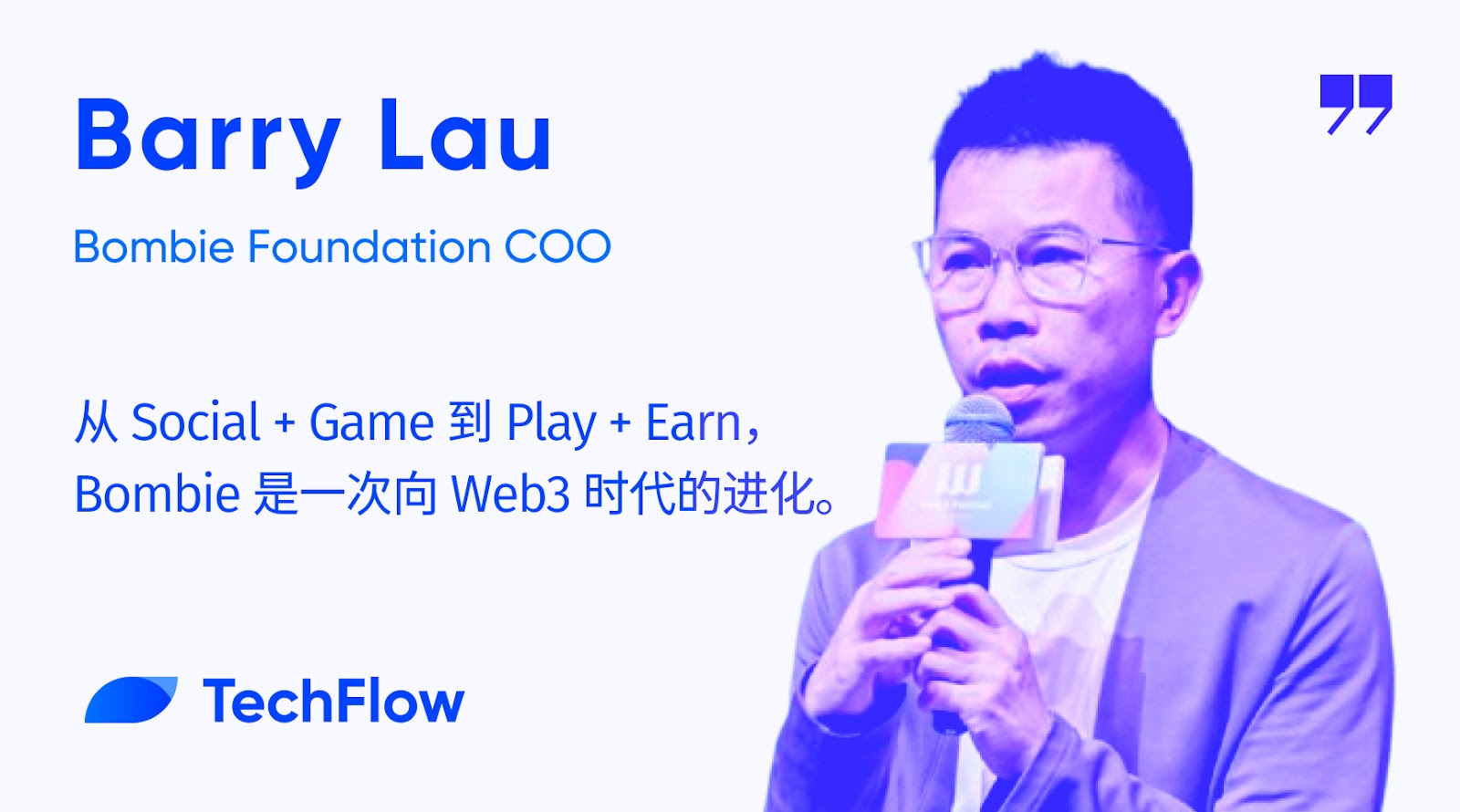
TechFlow: It’s great to have the opportunity for an in-depth conversation. To start, could you please introduce yourself (feel free to share your educational background, professional/entrepreneurial experiences, and what led you to join Bombie)?
Barry:
Hello everyone, I’m Barry Lau, COO of Bombie Foundation. I’m glad to have this opportunity to engage deeply with all of you.
I joined Yahoo! in 2000 as a product manager, so you could say I entered the internet industry during the Web1.0 era. In 2009, I started my own venture focused on game publishing via social platforms, officially transitioning into Web2.0. The company went public on Korea’s KOSDAQ in 2016, and in 2020, I led the team to acquire a mobile game development company and successfully completed a second listing.
After exiting in 2022, I began exploring Web3, aiming to integrate my years of gaming experience into GameFi. At that time, I realized that combining the already proven mini-game model from WeChat with Web3 technology and economic models—allowing players true ownership of in-game assets—was a highly promising direction.
Later, I connected with my current team, and we launched the Bombie project around mid-last year.
TechFlow: Many people describe Bombie as the Web3 version of Xun Dao Da Qian. What do you see as the similarities and differences between Bombie and Xun Dao Da Qian?
Barry:
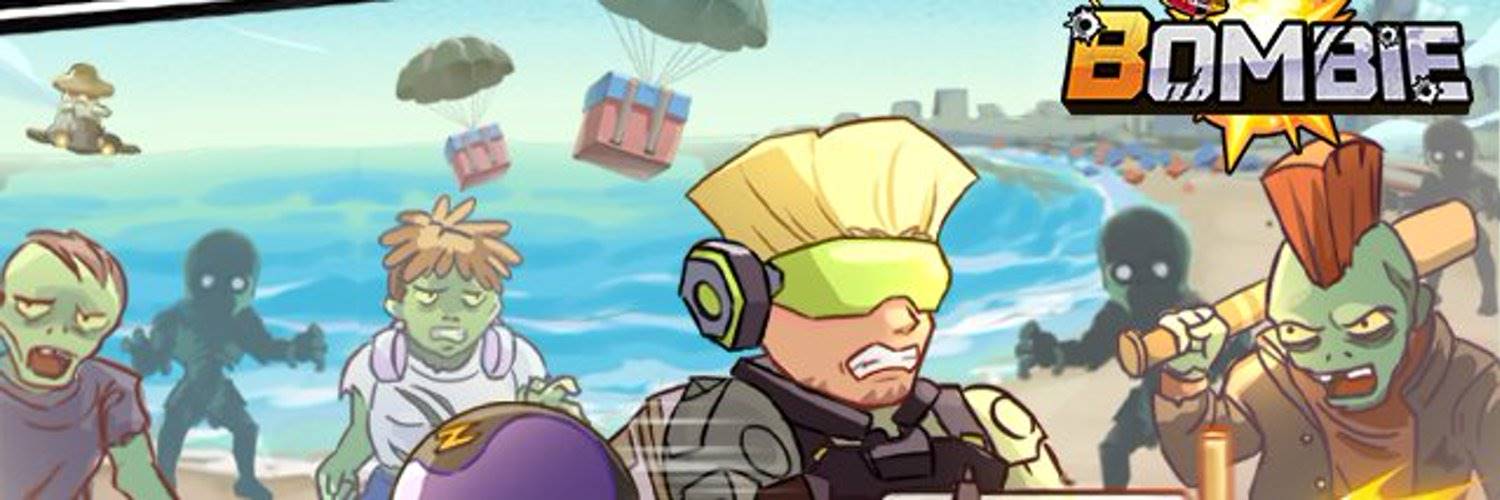
Indeed, many draw comparisons between Bombie and Xun Dao Da Qian, which is understandable given certain gameplay similarities. For example, Bombie adopts Xun Dao Da Qian’s lightweight loop mechanics like “opening boxes to level up” and “endless monster fighting,” emphasizing low barriers to entry, easy accessibility, and strong feelings of achievement—perfectly aligned with today’s trend toward light entertainment.
However, Bombie goes beyond mere replication. We’ve integrated Web3 elements into the core gameplay, such as airdrop rewards, asset tokenization, and a Token economy, allowing players to truly own the assets they accumulate within the game while enjoying its entertainment value.
Additionally, we’ve explored new directions in content updates, incentive mechanisms, and cross-platform deployment (such as on Telegram and LINE), aiming to let players enjoy effortless gameplay while also receiving tangible value in return.
In short, Bombie builds upon Xun Dao Da Qian as an evolution into the Web3 era.
TechFlow: With millions of players, why do you think casual mini-games like Bombie achieve greater success compared to 3A blockbusters like Black Myth: Wukong?
Barry:
I believe the core reasons lie in “user barrier” and “scale effect.”
Games like Black Myth: Wukong are excellent in production quality and depth of world-building, but they often require significant time investment, effort, and high-end devices to fully experience. This model naturally appeals to a niche group of hardcore gamers, but presents a relatively high entry barrier for the broader population of casual users.
Bombie focuses on “lightweight” and “low-barrier” casual experiences. Users can play anytime with zero learning curve, without needing sustained long-term engagement or facing cognitive overload. These characteristics suit the fragmented usage patterns of the mobile internet era and align well with the habits of IM platform users on LINE and Telegram.
Moreover, lightweight games are inherently easier to spread rapidly through social virality and referral incentives, creating a powerful scale effect. Once a critical mass is reached, growth accelerates quickly—this is a major reason why Bombie was able to attract millions of users in a short period.
TechFlow: Just as Xun Dao Da Qian achieved massive success leveraging WeChat’s traffic, Bombie leverages Telegram and LINE to reach global markets, capturing millions of players from day one. Do you believe the Social + Game model is key to breaking out of niche circles?
Barry:
Absolutely. The Social + Game model captures two essential factors for rapid breakout: traffic and interaction.
Xun Dao Da Qian benefited from WeChat’s massive social traffic, enabling users to seamlessly encounter the game during chats and social interactions, drastically lowering customer acquisition costs and dissemination barriers. Bombie follows the same logic by establishing presence on two major messaging platforms—LINE and Telegram. This connects us with vast global audiences while leveraging social networks to enable organic content spread.
More importantly, the usage scenarios of social platforms are inherently fragmented, perfectly matching the nature of lightweight, fast-paced games that can be started and paused anytime. This natural alignment makes it easier for mini-games to reach broad audiences and achieve viral growth.
Therefore, based on Bombie’s real-world validation, the Social + Game model is not only crucial for breakout success but also a vital direction for future mini-games in the Web3 and global landscape.

TechFlow: Given the repetitive nature of leveling and grinding, how does Bombie maintain player engagement and continuously stimulate endorphins to encourage long-term retention?
Barry:
That’s an excellent question. When designing Bombie, we placed special emphasis on keeping players fresh and consistently rewarded throughout the leveling and grinding process, avoiding boredom.
First, we implemented a “random drop + instant reward” mechanism—for example, opening treasure chests or receiving item drops after defeating enemies. These random small surprises continually trigger endorphin release, making every session full of anticipation.
Second, each level-up gradually increases rewards and token output. As players progress through stages, seeing their earnings grow visibly provides direct positive feedback, reinforcing motivation and commitment.
We also regularly roll out new content and special events—limited-time challenges, themed levels, additional airdrops—to keep the experience fresh and boost activity.
Overall, Bombie aims to ensure that every level-up and monster fight brings visible progress and rewards, while continuous updates and enriched gameplay sustain long-term user enthusiasm and retention.
TechFlow: As the top-earning game on both Telegram and LINE, why are users more willing to spend money in Bombie compared to other Web3 mini-games?
Barry:
I believe the answer lies in three aspects: experience, perceived value, and trust.
First, experience. At its core, Bombie is a relaxing and enjoyable game that delivers consistent feelings of accomplishment. As players defeat monsters, open boxes, and level up, they naturally develop a desire to accelerate progression. Paying moderately enhances growth speed, delivering immediate satisfaction—this willingness to pay feels smooth and organic.
Second, perceived value. Bombie uses a genuine Token reward system. While enhancing their experience through spending, players also accumulate $BOMBIE tokens through gameplay, creating a virtuous cycle of “having fun and earning real value.” More importantly, players have strong confidence in future Bombie token airdrops,, further strengthening their trust in spending.
Finally, trust. Bombie is a flagship project officially supported by both Telegram and LINE, receiving extensive official resources and exposure. Such platform endorsement not only validates Bombie’s compliance and potential in product and operations but also greatly enhances player confidence in the game’s stability and longevity, making them more willing to invest time and money.
TechFlow: Many paid games face the issue of “pay-to-win players dominating the economy while free players leave.” How does Bombie balance paying and non-paying players?
Barry:
This was a major consideration from the beginning of Bombie’s design. To achieve healthy balance between paying and non-paying players, the key is “tiered incentives” and “everyone enjoys their own way.”
First, non-paying players can fully earn $BOMBIE tokens and various rewards through daily grinding, task completion, and event participation, following a stable progression path. Even without spending, they can enjoy continuous upgrades and a sense of achievement.
Second, paying players primarily gain accelerated progression and access to rare resources—such as faster leveling and more efficient combat—but this doesn’t compromise overall fairness. Spending improves experience but doesn’t allow them to outright dominate non-paying players, ensuring ecosystem health and playability.
We also promote positive interactions between paying and non-paying players through social referral rewards, arena matchmaking, and level-based challenges—rather than pure opposition. Non-paying players can also gain solid rewards and progression through active participation.
In short, Bombie aims to build a positive loop where “paying players progress faster, non-paying players stay longer,” and both enjoy fun and rewards.
TechFlow: Successfully avoiding the “flash-in-the-pan” fate common among Web3 mini-games, beyond the advantages discussed, what else did you and your team get right?
Barry:
Beyond the previously mentioned product positioning and platform strategy, several key factors contributed to Bombie’s sustained and stable growth.
First, our commitment to a “long-term operation mindset.” From day one, we never treated Bombie as a one-off project. Instead, we designed it for long-term operation—including sustainable tokenomics, planned content updates, and consistent event scheduling—avoiding the boom-and-bust cycle seen in many Web3 games.
Second, our investment in gameplay experience. While incorporating Web3 elements, we always prioritize user experience—lowering entry barriers, simplifying mechanics, and meeting Web3 players’ reasonable expectations for real asset returns. This design allows players of all backgrounds to participate comfortably, rather than being deterred by complex financial logic.
Third, effective extension of proven success. Bombie’s core gameplay has already been validated in the WeChat ecosystem, proving that lightweight, closed-loop, high-retention designs work well on high-traffic platforms. Telegram and LINE, as emerging social ecosystems, share similar user behaviors and usage contexts, giving us confidence to extend this model to broader international markets.
Finally, close collaboration with platform partners. On Telegram and LINE, Bombie has not only gained traffic support but also participated in numerous official events. This deep partnership helped establish strong brand credibility and user trust early on.
Overall, Bombie’s sustained development stems from solid game fundamentals, a deep understanding of diverse user needs in Web3 environments, and a balanced integration of experience and rewards.

New Game CapyBomb: A New Growth Curve
TechFlow: As the newest addition to the Bombie ecosystem, what kind of game is CapyBomb?
Barry:
CapyBomb retains Bombie’s core appeal of easy access and lightweight monster grinding, while introducing more cute and fun elements—such as the popular Capybara character—with a friendlier visual style suitable for a wider audience.
More importantly, CapyBomb introduces a new “Stake-to-Earn” mechanism. Players can stake $BOMBIE tokens to unlock additional in-game rewards, such as rare equipment, exclusive items, and extra airdrop opportunities. This design strengthens user incentives to hold $BOMBIE tokens and helps players gradually learn and engage with Web3 staking through intuitive gameplay.
Overall, CapyBomb is not just a content upgrade for the Bombie ecosystem, but also a systematic iteration in gameplay and economic modeling aimed at user education and long-term retention.
TechFlow: Why was the capybara chosen as the main character for the game?
Barry:
Our choice of the capybara for CapyBomb was carefully considered, for several reasons:
First, capybaras are immensely popular worldwide. Their cute, gentle, and healing image resonates strongly with younger audiences. On social media, capybaras have become a representative “healing IP,” capable of transcending age and cultural boundaries, helping the game form emotional connections globally.
Second, from a product perspective, Bombie centers on relaxed, low-barrier, high-achievement experiences. The capybara’s naturally “slow-paced, laid-back” vibe aligns perfectly with our product vision, further enhancing the player’s sense of relaxation, healing, and steady rewards.
Lastly, partnering with the original developers of “Capybara Go!” allows us to leverage an established, well-known IP to give CapyBomb stronger initial buzz and brand recognition, accelerating its ability to overcome the cold-start problem common in traditional Web3 mini-games.
TechFlow: CapyBomb introduces the IAS (in-app staking) mechanism. How does this feature empower players?
Barry:
The IAS (In-App Staking) mechanism in CapyBomb is an innovative upgrade over traditional Web3 staking, specifically tailored for gamers.
Specifically, players can directly stake $BOMBIE tokens earned from the main Bombie game into CapyBomb—no additional funding or asset consumption required. This low-cost participation unlocks rare in-game items, special bonus rewards, or even additional assets, significantly boosting progression efficiency and overall experience.
The IAS mechanism offers players several clear advantages:
-
It effectively reduces immediate sell pressure on the token, as players are incentivized to use tokens within the game instead of selling them outright.
-
It establishes a truly “closed-loop game economy,” circulating tokens internally and enhancing ecosystem stability.
-
For players, the entry barrier is low—no large investments needed—and they can continuously enjoy extra rewards, reducing the psychological burden of participating in Web3 games.
-
Additionally, the IAS mechanism helps mitigate the common “peak at launch” phenomenon in the TON ecosystem, leading to a healthier, more sustainable economic model for Bombie.
In summary, IAS is more than just a staking gateway—it deeply integrates staking into everyday gameplay, allowing players to enjoy entertainment while genuinely understanding and engaging with Web3’s value system.
TechFlow: The “one fish, multiple ways to eat” mechanic has also drawn attention. What layers of benefits can players gain in CapyBomb?
Barry:
In CapyBomb, we’ve specially designed the “one fish, multiple ways to eat” mechanism to allow players to earn rewards across multiple dimensions—not just single-token payouts. There are four main aspects:
First, base token earnings. By staking $BOMBIE tokens earned in Bombie, players receive ongoing additional rewards in CapyBomb, enabling secondary value utilization of their tokens.
Second, rare in-game item rewards. Through IAS staking, players unlock rare gear, limited skins, and special functional items—scarce resources that enhance gameplay and combat power.
Third, ecosystem-level rewards. As the Bombie and CapyBomb ecosystems expand, staking may grant additional airdrop eligibility or cross-game asset exchange opportunities, increasing asset liquidity and potential value.
Fourth, asset value management. By recycling tokens within the game economy, players actively contribute to the Bombie ecosystem’s economic foundation, indirectly stabilizing their token holdings and avoiding the rapid price declines common in traditional GameFi projects.
In short, CapyBomb’s “one fish, multiple ways to eat” approach lets players enjoy fun while accumulating asset value and achievement through multiple pathways, enriching the overall experience.
TechFlow: There's ongoing debate about whether blockchain games should emphasize 'Play' or 'Earn.' Amid strong profit incentives, how does CapyBomb balance playability and profitability for sustainable growth?
Barry:
Regarding the balance between “Play” and “Earn,” we had very clear principles from the start of CapyBomb’s design.
We believe sustainable development requires two things: first, ensuring the game itself is fun; second, making earnings a natural extension—not the sole objective.
In CapyBomb, we first ensured the core gameplay is enjoyable—through the capybara character, the thrill of progression, and the surprise of random chest drops—all designed purely for “fun.” Even players indifferent to earnings can enjoy a complete progression journey.
Simultaneously, we introduced the IAS (in-app staking) mechanism, allowing players to naturally earn rare items, extra rewards, and future airdrop rights by staking $BOMBIE. The reward logic is “the deeper you engage, the more you gain,” without disrupting normal gameplay rhythm—avoiding issues caused by relying solely on high yields to attract short-term speculators, which destabilizes the ecosystem.
More importantly, through low-barrier, low-pressure design, CapyBomb treats earnings as an “incremental incentive” rewarding long-term participation—not letting financial returns overshadow gameplay from the start.
In summary, CapyBomb doesn’t simply pick between “Play” and “Earn.” It builds on fun gameplay and naturally integrates earning into long-term experience, achieving true dual sustainability in both enjoyment and rewards.
TGE Countdown: Delivering a True “Fair Launch”
TechFlow: The WeChat mini-game ecosystem frequently produces hits, offering valuable lessons and endless inspiration for Web3 mini-game teams. Starting with CapyBomb, will Bombie release more mini-games in the future?
Barry:
Indeed, the success of the WeChat mini-game ecosystem offers valuable references for Web3 mini-games. For Bombie, however, our future direction will be more focused.
First, we’ll continue deepening our existing games, such as Bombie and CapyBomb, constantly updating and optimizing gameplay, reward systems, and user experience to keep existing players engaged while attracting new users.
Second, we plan to expand the Bombie original IP by extending its universe and characters into new genres—such as strategy, simulation, or social interactive mini-games—so players can experience a rich, unified Bombie ecosystem across varied formats.
Third, we’ll actively pursue collaborations with other well-known IPs. Leveraging our existing social platform presence on Telegram and LINE, we aim to build a larger, interconnected Web3 gaming network, enriching content depth and boosting user stickiness and ecosystem vitality.
Overall, Bombie’s future growth won’t be about stacking quantity, but about refining content, expanding IP influence, and fostering multi-IP synergies to create a truly sustainable, lightweight Web3 gaming ecosystem with continuously growing user value.
TechFlow: From original album Bombie Rise to animated series Fake Elon, Bombie frequently explores IP integration. What do these efforts bring to players? Will there be more initiatives toward building a multidimensional IP ecosystem?
Barry:
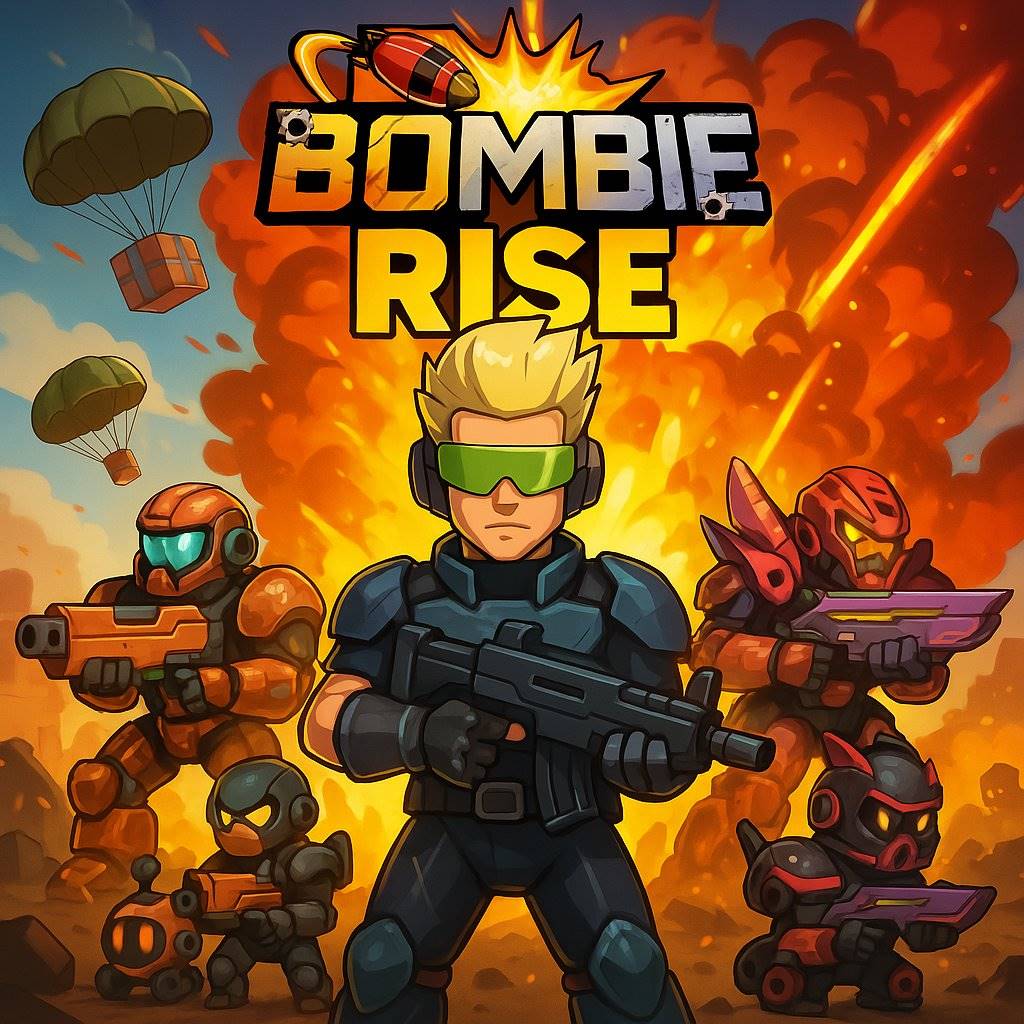
Indeed, initiatives like the original album Bombie Rise and the animated series Fake Elon are part of our long-term strategy in IP integration and content diversification.
Our goal is to extend Bombie beyond gaming into broader cultural domains—music, animation, comics—reaching users across different communities. These efforts help make Bombie’s universe, character stories, and brand identity more vivid and tangible, enabling players to maintain emotional connections with Bombie beyond the game itself.
Looking ahead, in gaming, we’ll develop more game series under the Bombie IP and actively collaborate with other renowned IPs to build a rich, interconnected cross-game ecosystem.
In content, we’ll increase investment in music, animation, and social media content, using multidimensional, lightweight products to position Bombie as a truly influential and enduring native Web3 IP.
In short, Bombie won’t remain confined to games. Through continuous innovation and cross-boundary exploration, we aim to expand the IP’s value and deepen players’ emotional attachment and sense of belonging to the Bombie brand.
TechFlow: According to Fortune magazine citing two sources, Trump is reportedly collaborating with business partners on a real estate-themed crypto game under his brand, with gameplay similar to Monopoly Go!. If true, what are your thoughts on Trump entering the blockchain gaming space?
Barry:
If this news is accurate, I believe from an industry standpoint, Trump’s entry into blockchain gaming—especially with a real estate theme—is a highly symbolic event.
First, it signifies that blockchain gaming (Web3 Gaming) is gradually expanding beyond the crypto niche into mainstream commerce and entertainment. Regardless of the project’s final outcome, the mere involvement of such a high-profile public figure and brand will significantly raise public awareness and interest in blockchain gaming and the broader Web3 ecosystem.
Second, from a product perspective, basing the game on a familiar, lightweight, socially shareable format like Monopoly Go!, combined with blockchain asset mechanics, aligns perfectly with the current trend of Web3 games moving toward lightweight, low-barrier, mass-market adoption. Blockchain gaming is no longer limited to complex financial models for niche audiences but is becoming increasingly accessible and understandable to average players.
Of course, the real challenge lies in converting brand influence into long-term user retention. Ultimately, Web3 games must deliver on experience and value. Brand power may drive initial traffic, but retaining players depends on solid gameplay design and a healthy, sustainable economic model.
From Bombie’s perspective, we welcome more external forces entering the blockchain gaming space, as this expands the industry’s user base and imagination. Our own strategy remains focused on seamlessly integrating game experience with Web3 value design to deliver truly sustainable and enjoyable products for players.
TechFlow: According to CoinGecko data, none of the top 100 cryptocurrencies by market cap are now gaming tokens—a phenomenon sparking widespread community debate on whether “Web3 gaming is a false premise.” What’s your take on this discussion?
Barry:
I believe this phenomenon reflects some阶段性 challenges in the current Web3 gaming sector, but it doesn’t justify concluding that “Web3 gaming is a false premise.”
In the short term, the decline of gaming tokens in market cap rankings stems largely from past Web3 gaming projects overly emphasizing financial attributes while neglecting the core element of “playability,” resulting in poor user retention and ecosystem instability. As liquidity recedes and macro conditions tighten, markets demand higher accountability for real project value—this culling is actually healthy.
But in the long run, the convergence of gaming and blockchain technology remains logically compelling. In traditional gaming, players have never truly owned their assets. Web3 enables verifiable on-chain ownership, open economies, and cross-game interoperability—features that offer real value improvements for players. The industry simply needs more time and refinement to mature.
Take Bombie: we insist on prioritizing gameplay, treating Web3 elements as value enhancements rather than replacing the core entertainment experience. This approach—making “fun” the foundation, then naturally layering on asset ownership—I believe is the path to lasting, mainstream success.
So personally, I see current Web3 gaming as being in an early phase of trial, error, and structural adjustment—not a false premise. Truly outstanding content-driven Web3 games will demonstrate stronger resilience in the next industry upcycle.
TechFlow: Bombie’s TGE is approaching. Can you share more specific details with players?
Barry:
Regarding Bombie’s TGE, here’s what we can currently share:
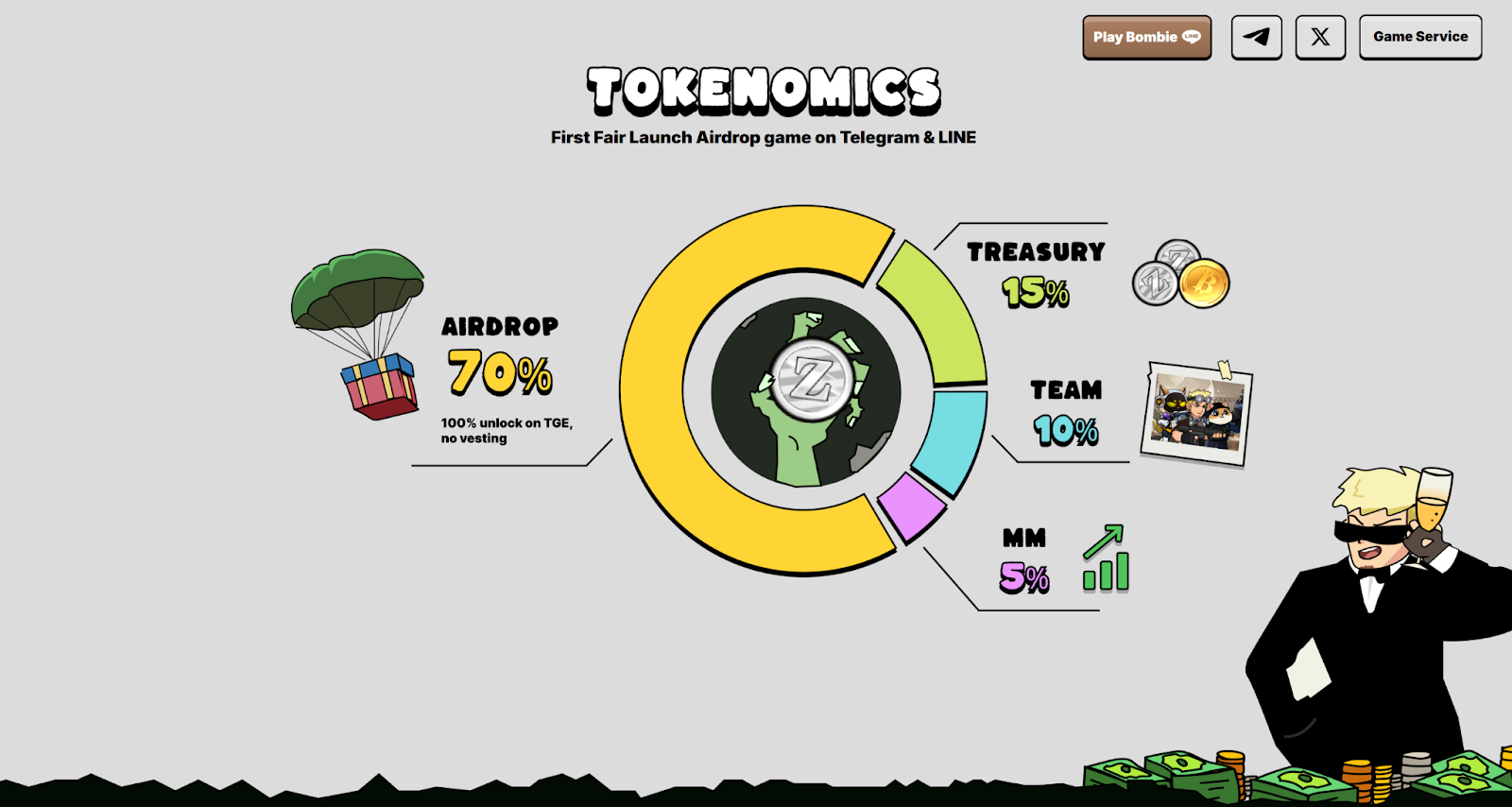
$BOMBIE token $BOMB is a true “Fair Launch” project. Of the total token supply, 70% will be directly airdropped to real players who actively participated in the game and ranked accordingly—rather than being pre-allocated to private investors or presales. This ensures maximum fairness and incentive alignment within the ecosystem.
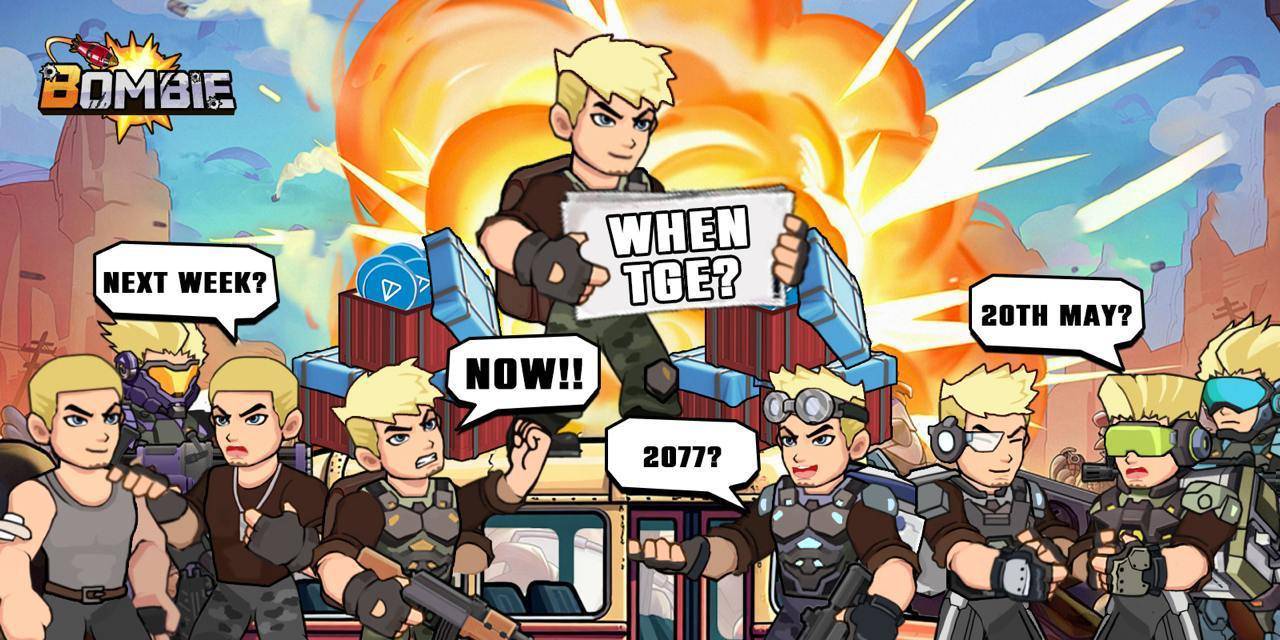
TGE is nearing activation—not months away, but on a “weekly timeline.” We aim to deliver a swift, transparent TGE process so players can immediately claim ownership of their $BOMB tokens. For specific listing details, airdrop rules, and event schedules, please stay tuned to Bombie’s official announcements—we’ll keep you updated!
Join TechFlow official community to stay tuned
Telegram:https://t.me/TechFlowDaily
X (Twitter):https://x.com/TechFlowPost
X (Twitter) EN:https://x.com/BlockFlow_News
 深潮TechFlow