








ERC-6551 Token Bound Accounts: Enabling NFTs to Have Their Own Wallets
TechFlow Selected TechFlow Selected
ERC-6551 Token Bound Accounts: Enabling NFTs to Have Their Own Wallets
Azuki disappointed the market, but ERC6551 has given it hope—just how popular is it?
 Navigating Web3 tides with focused insights
Author: Chen Jian Jason Wanwu Research Institute
If you were to ask what two things have been hottest in the NFT space recently, the answer would be Azuki and ERC6551. Azuki disappointed the market, but ERC6551 has given it hope. How popular is ERC6551? At the recent ETHGlobal Waterloo hackathon in Canada, 4 out of 11 projects were related to ERC6551—covering social, marketplace, NFTfi, and gaming sectors. ERC6551 appears poised to form an ecosystem of its own.
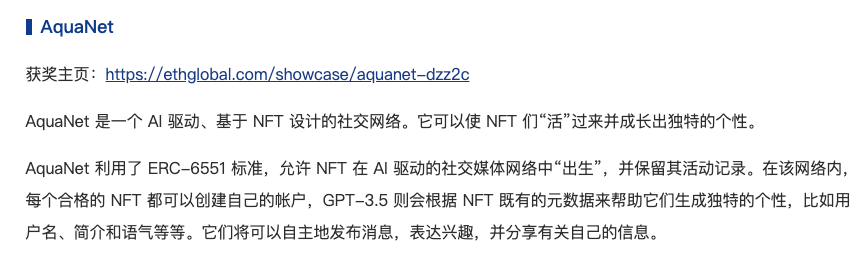
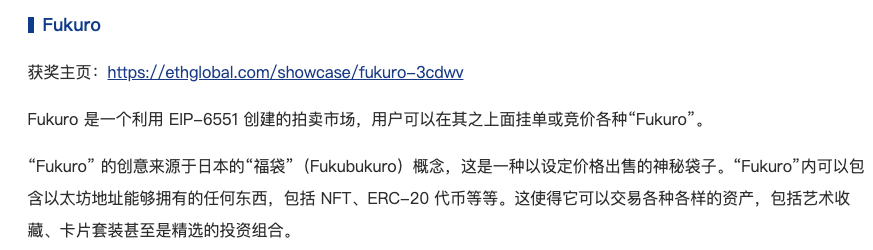
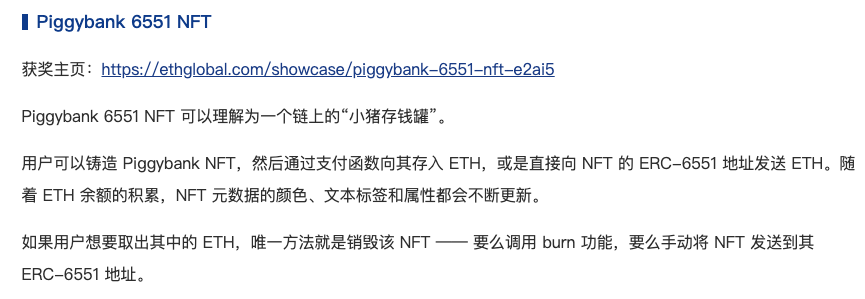
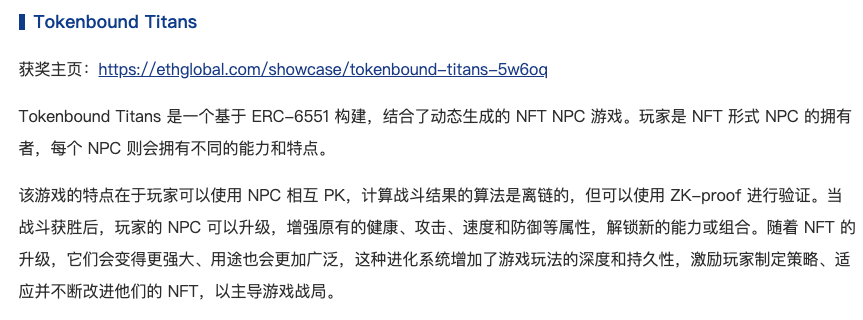
Despite being only first submitted at the end of February this year and still in Draft status, ERC6551 has ignited tremendous market enthusiasm. As the overall NFT market remains deep in a bear cycle, the space desperately needs fresh narratives. So what exactly is ERC6551? What innovations does it bring? Does it truly hold industry significance, or is it merely hype?
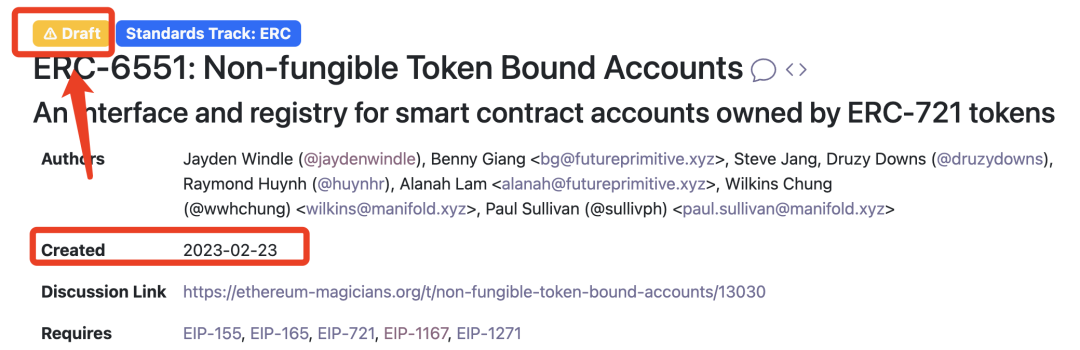
ERC6551 enables the creation of smart contract accounts for every ERC721-type NFT. These accounts possess full Ethereum account functionality, granting bound NFTs composability—the ability to own NFTs and tokens, interact with DApps, and maintain on-chain state. Crucially, all of this is forward-compatible and permissionless, meaning any existing ERC721 NFT can adopt an associated smart contract account without requiring changes to its original contract.
Composable and interoperable NFTs aren't new concepts. Earlier standards like ERC998 and ERC3664 enabled nesting and decomposing NFTs, while blockchains like Flow and RMRK natively support such features at the protocol level. So why has ERC6551 generated so much excitement? The key lies in its permissionless and backward-compatible nature. Previous solutions required modifying ERC721 contracts, meaning only newly minted NFTs using those specific standards could benefit—leaving the vast universe of existing NFTs stranded. This created massive adoption barriers, requiring extensive business development efforts to onboard new projects. ERC6551 bypasses this entirely.
Rather than altering the ERC721 standard itself, ERC6551 takes an "add-on" approach—attaching a smart contract account to an existing NFT. Even legacy NFTs can be retrofitted with ERC6551 capabilities. But how exactly does it work?
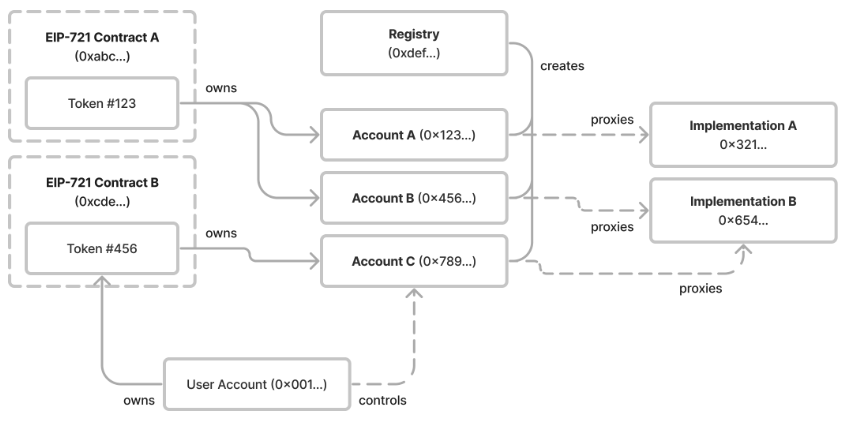
The diagram below illustrates the relationship between NFTs, user accounts, bound wallet accounts, and the registry contract. Let me walk through it—it’s slightly complex.
A user account owns two NFTs: #123 from contract A and #456 from contract B. NFT #123 is linked to two separate accounts (A and B), demonstrating that ERC6551 allows one NFT to control multiple wallets. NFT #456 controls account C. All three accounts are created via the Register contract. However, deploying fully independent contracts for each would incur prohibitive gas costs, especially since most logic is identical—only parameters differ. To solve this, ERC6551 uses ERC1167 minimal proxy contracts: a single "master" implementation contract contains the core logic, and lightweight proxies delegate calls to it with specific parameters.
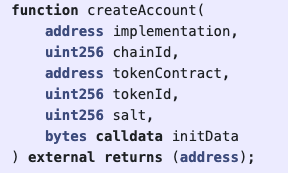
Creating an ERC6551 account requires several parameters: the implementation contract address, chainId (target blockchain), tokenContract (NFT’s parent contract), tokenId (specific NFT ID), and a salt value for address derivation.
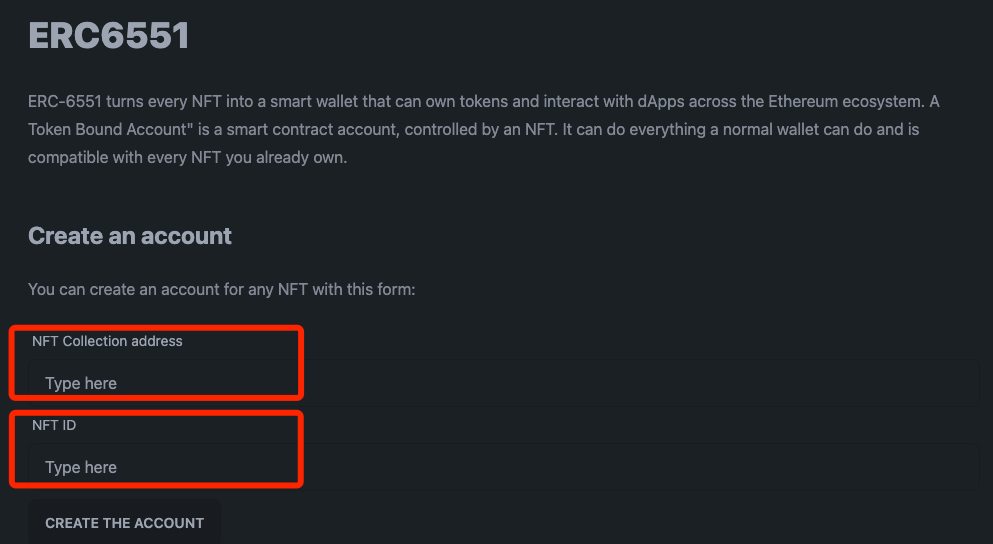
According to Fast Dapp's demo, creating an NFT account only requires entering the NFT contract address and token ID—the rest are auto-generated. The process is remarkably simple.
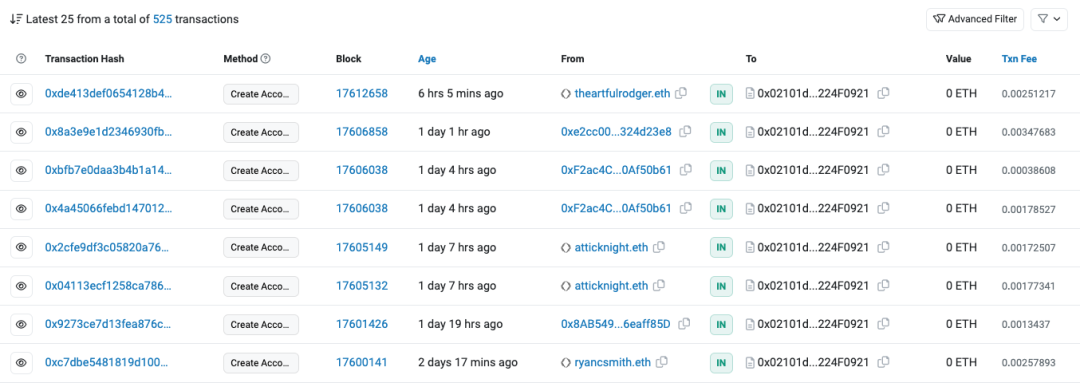
The current Register contract address on Ethereum mainnet is:
0x02101dfB77FDE026414827Fdc604ddAF224F0921
As of now, it has already generated 525 wallet addresses.
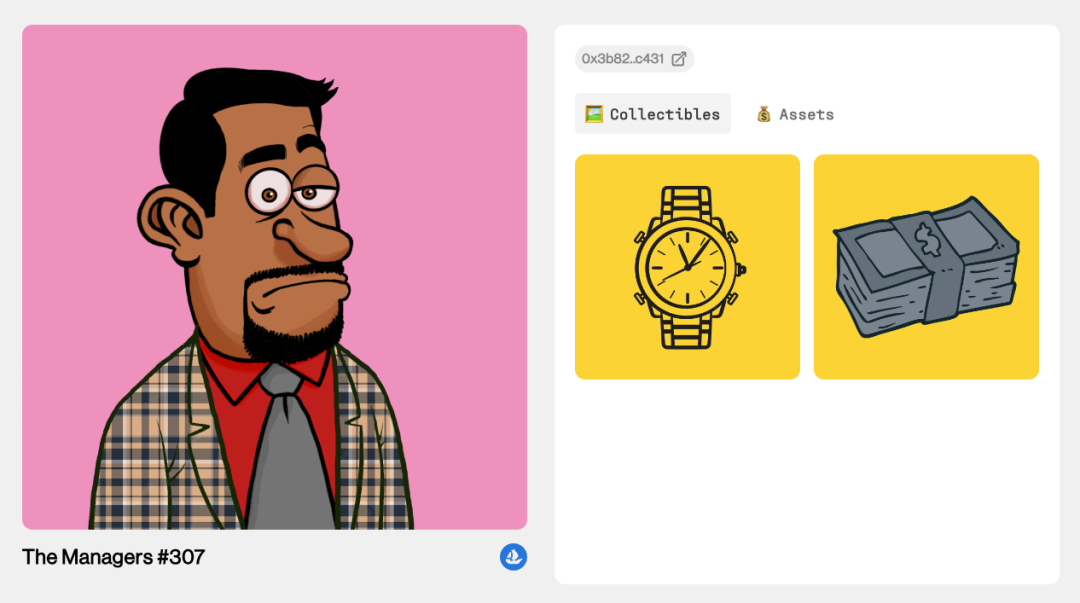
A typical use case for ERC6551 is NFT composability—for example, equipping accessories onto an NFT avatar. In the image below, the man on the left is an NFT. The address 0x3b...c431 in the top-right corner represents the wallet owned by this NFT, and the table and cash beneath represent assets held within that wallet. This forms a complete composable NFT kit. Platforms like OpenSea already support ERC6551: if an NFT owns a wallet with assets, they will be displayed directly on its page—proof that ERC6551 is rapidly gaining mainstream adoption.
Since last year's NFT summer, the narrative around static NFT profile pictures has grown stale. The massive price declines among blue-chip PFP projects reflect widespread market disillusionment. More interactive NFTs—especially in gaming, music, AR/VR, and beyond—may be the next frontier.
With ERC6551, NFTs gain their own on-chain identities and can interact directly with DApps. Interaction data accumulates on the NFT itself rather than its owner’s wallet, giving each NFT a distinct "legal person" status on-chain. This creates differentiation and growth potential across NFTs—making them feel more alive within the blockchain world.
For instance, in a Web3 Pokémon-style game, your Pikachu NFT could battle monsters and level up, accumulating 300 on-chain actions and $200 worth of in-game assets—all tied directly to the Pikachu NFT, not its owner.
However, attaching wallets to NFTs may increase risk—if an NFT is stolen, attackers also gain access to all assets stored within its associated wallet. This security consideration must not be overlooked.
Finally, it’s worth noting that ERC6551 was co-founded by Benny and Steve. Benny is also one of the creators of ERC721 and CryptoKitties—the original NFT phenomenon. This gives ERC6551 strong legitimacy. As true pioneers of NFTs, they possess deep insight into the current limitations and future evolution of the space.
Let’s hope ERC6551 can breathe new life into today’s stagnant NFT market.
Join TechFlow official community to stay tuned
Telegram:https://t.me/TechFlowDaily
X (Twitter):https://x.com/TechFlowPost
X (Twitter) EN:https://x.com/BlockFlow_News


