








ERC-6551: NFT as Wallet, Bringing a New Paradigm to SocialFi
TechFlow Selected TechFlow Selected
ERC-6551: NFT as Wallet, Bringing a New Paradigm to SocialFi
Through ERC-6551, one or more smart contract wallets can be created for NFTs, making them more composable, dynamic, and interactive.
 Navigating Web3 tides with focused insights
In today's crypto world, an increasing number of people are using NFTs as a form of on-chain identity. However, current ERC-721 tokens (NFTs) lack agent capabilities and cannot own other on-chain assets, which is misaligned with real-world use cases for non-fungible assets. This gap led to the proposal of ERC-6551. It addresses this issue by granting each NFT full functionality of an Ethereum account, while maintaining compatibility with existing ERC-721 contracts.
What Is ERC-6551?
The ERC-6551 proposal introduces a new token standard that significantly enhances the functionality of ERC-721 (i.e., NFTs). Launched on the Ethereum mainnet on May 7, 2023, ERC-6551 enables the creation of one or more smart contract wallets for each NFT, making them more composable, dynamic, and interactive. Simply put, ERC-6551 turns an NFT itself into a wallet with its own address.
These wallets are known as "Token Bound Accounts" (TBAs)—short for TBA. Control of a TBA is delegated to the NFT holder, meaning the NFT owner can use the TBA to initiate on-chain operations. With a TBA, you can store any crypto assets within the NFT you own. For example, previously when purchasing a BAYC, you would store it in MetaMask; with ERC-6551, a dedicated TBA is created for your BAYC to hold associated assets. Not only can ETH be stored in the BAYC’s TBA, but also other NFTs. As a “wallet,” a TBA can also interact directly with dApps. Notably, a single NFT can have multiple token-bound accounts via ERC-6551—meaning one NFT can now contain multiple wallets and more.
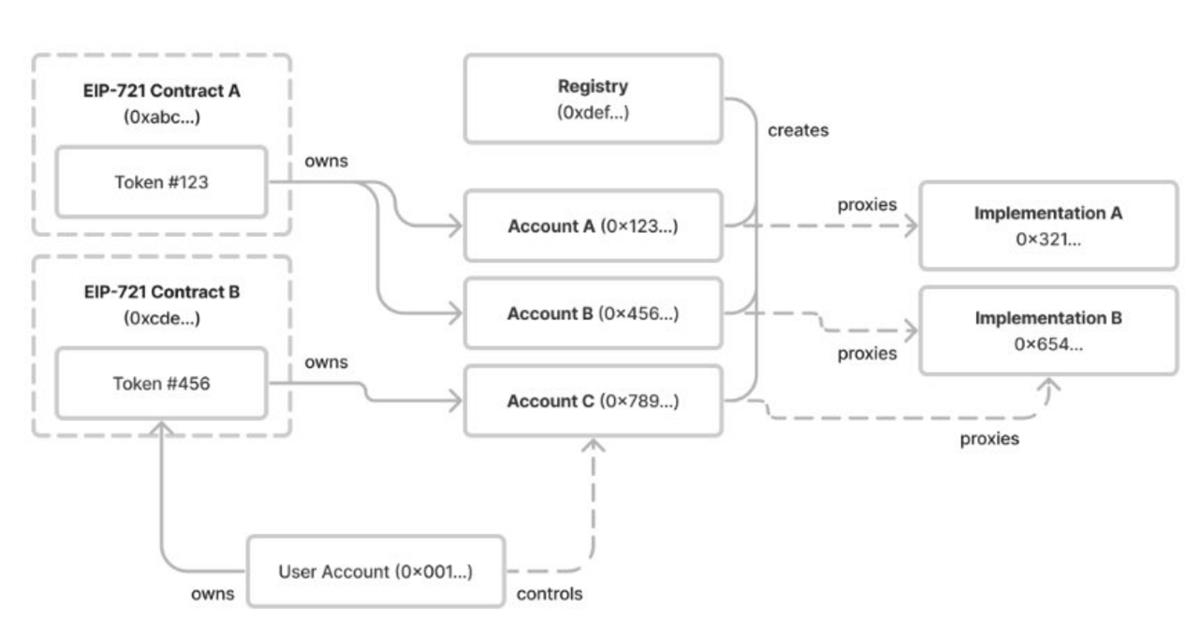
The system introduced by ERC-6551 consists primarily of two components: a permissionless registry for deploying token-bound accounts and a standardized interface for interacting with these accounts. The diagram below illustrates the relationship between ERC-721 tokens, their owners, Token Bound Accounts (TBA), and the registry:
Changes Brought by ERC-6551
With the ERC-6551 standard, users can do anything with an NFT that they could normally do with a regular Ethereum wallet. You can bundle all related assets (NFTs, tokens, identity traits...) into a single NFT, making it easier to manage and transfer across different platforms. If you sell or transfer the NFT, all contained assets are transferred together. TBAs solve the current limitation where NFTs fail to provide detailed provenance, history, or transaction records—beyond basic information shown on some marketplaces, buyers usually cannot directly access such data. NFT marketplaces and lending protocols can leverage TBAs to assess user reputation and streamline processes.
TBAs also introduce a new paradigm for decentralized identity. Prior to TBAs, Vitalik proposed SBTs (Soulbound Tokens), which verify identity through wallet holdings. In contrast, TBAs do not require identity verification—instead of binding an NFT to a wallet, they bind a wallet to an NFT. This transformation turns NFTs from static assets into dynamic asset management systems. This means a particular NFT could become your on-chain identity, and its transaction history via TBA can serve as proof of credibility. An NFT with a TBA can directly interact with dApps. In GameFi and SocialFi, users can instantly recognize asset identities through NFTs, greatly reducing authentication costs, and enabling broad applications in airdrops, loyalty programs, and in-game rewards.
A New Catalyst for SocialFi Breakthroughs
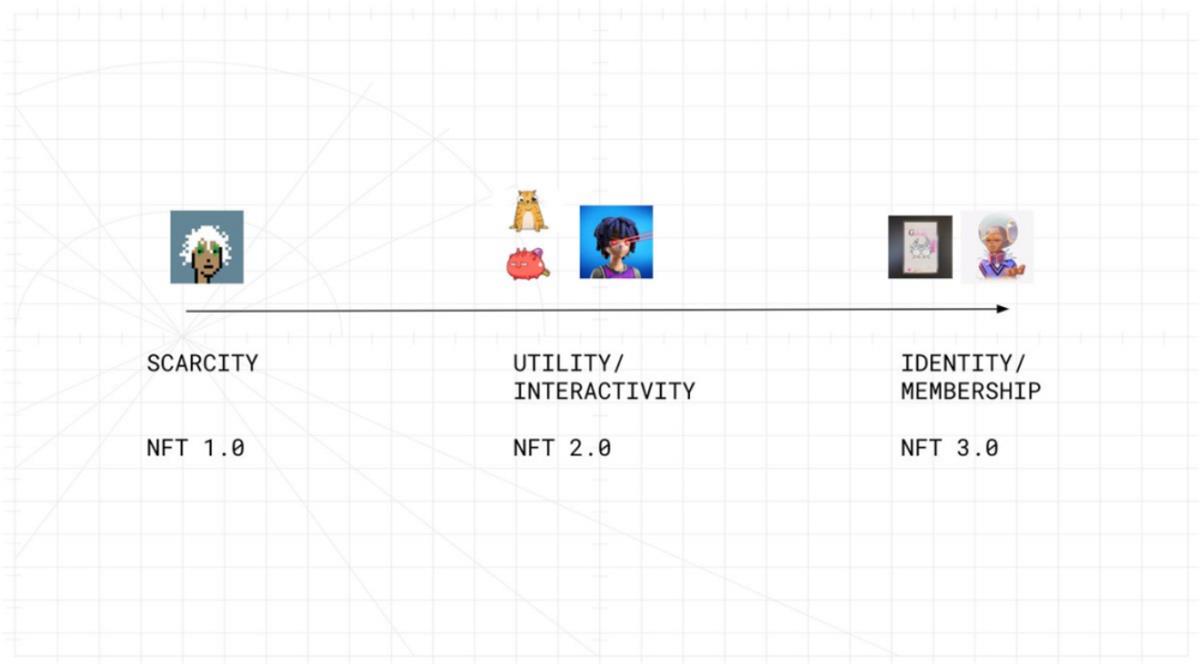
The continuous evolution of NFTs has brought SocialFi into the spotlight. Social interaction in the Web3 world is inevitable, and many teams are actively exploring how to integrate Web3 social features into a decentralized economic framework. The innovation of ERC-6551 provides even stronger momentum directly to the SocialFi space.
Let’s examine the characteristics of SocialFi. The core narrative of SocialFi is Web3 socialization, which differs from Web2 in three defining aspects:
First, it is platform-agnostic. Without centralized platforms, no third party owns the content created by users. Instead, creators are also the owners. By extension, Web3 social networks are censorship-resistant—meaning social relationships cannot be deleted or restricted by any platform.
Second, Web3 social data is portable. Web3 has a key advantage: it uses wallets, enabling direct relationships between users and creators. This means creators don’t need to constantly rebuild their audience. Even if a specific social protocol shuts down, the wallet—and thus the connection—remains intact. As a result, neither fans nor creators are locked into any single platform. Unlike Web2, where creators repeatedly build audiences only to lose access due to platform changes, Web3 eliminates this pain point.
Third, Web3 socialization is highly composable—SocialFi protocols gain value and utility by building atop decentralized social primitives. The early days of Web2 were similar to today’s Web3: platforms weren’t the focus—creators and users were. Over time, however, Web2 platforms often shifted from collaborating with builders to competing against them. In contrast, Web3 networks are inherently more composable because they are optimized for cooperation, further enhanced by tokens as decentralized incentives.
The fast and low-cost verification mechanism of TBAs will significantly improve trust mechanisms and reduce transaction costs in Web3, making it easier for SocialFi to onboard Web2 users into the Web3 ecosystem. Through this, TBAs enable project creators to implement novel use cases they’ve long wanted to add but lacked a simple way to achieve:
-
Equipping digital wearables and items (RTFKT — CloneX, Doodles)
-
ERC-20 token earning/airdrop models (BAYC, Cool Cats, SupDucks)
-
POAPs or badges earned through participation (Azuki, FWB, Moonbirds)
-
Trading entire collections as a single unit (OpenSea bulk transfers)
-
Using NFTs as on-chain identities capable of layering on top of social network models (CryptoPunks, Nouns)
-
All these use cases can serve as new catalysts for SocialFi to break into the mainstream.
Join TechFlow official community to stay tuned
Telegram:https://t.me/TechFlowDaily
X (Twitter):https://x.com/TechFlowPost
X (Twitter) EN:https://x.com/BlockFlow_News
 @TrendX_official


