








ERC-6551: The Game Changer for NFTs
TechFlow Selected TechFlow Selected
ERC-6551: The Game Changer for NFTs
Thanks to the ERC-6551 standard, you can now do anything with an ERC-721 NFT that you could do with a regular Ethereum wallet.
 Navigating Web3 tides with focused insights
By WILLIAM M. PEASTER
Compiled by TechFlow
The new token standard ERC-6551 pushes NFTs into new realms of utility and functionality. It transforms NFTs into full Ethereum accounts, enabling them to interact with Web3 applications and gain enhanced capabilities. Collectibles within these accounts can now own assets, trade with other NFTs, or even be used in games. This marks a significant advancement in NFT evolution, creating fresh opportunities for creators, collectors, and developers.
However, as with any emerging standard, vulnerabilities and risks may arise, which we must understand and address proactively.
This article explores the fundamentals of ERC-6551, its potential applications and associated risks in the NFT space, and provides currently available products and resources for hands-on experience.
ERC-721 is the token standard that popularized NFTs on Ethereum as unique, verifiable digital assets. What if we could transform simple NFTs into full Ethereum accounts? Now it’s becoming possible. A new token standard, ERC-6551, has just emerged, pushing Ethereum NFTs into new frontiers of utility and functionality.
Your favorite collectibles can now directly own assets, interact with Web3 apps, and serve more effectively as your on-chain identity. We are entering an exciting era, and in this article, Bankless will walk you through all the basics of ERC-6551!
Basics of ERC-6551
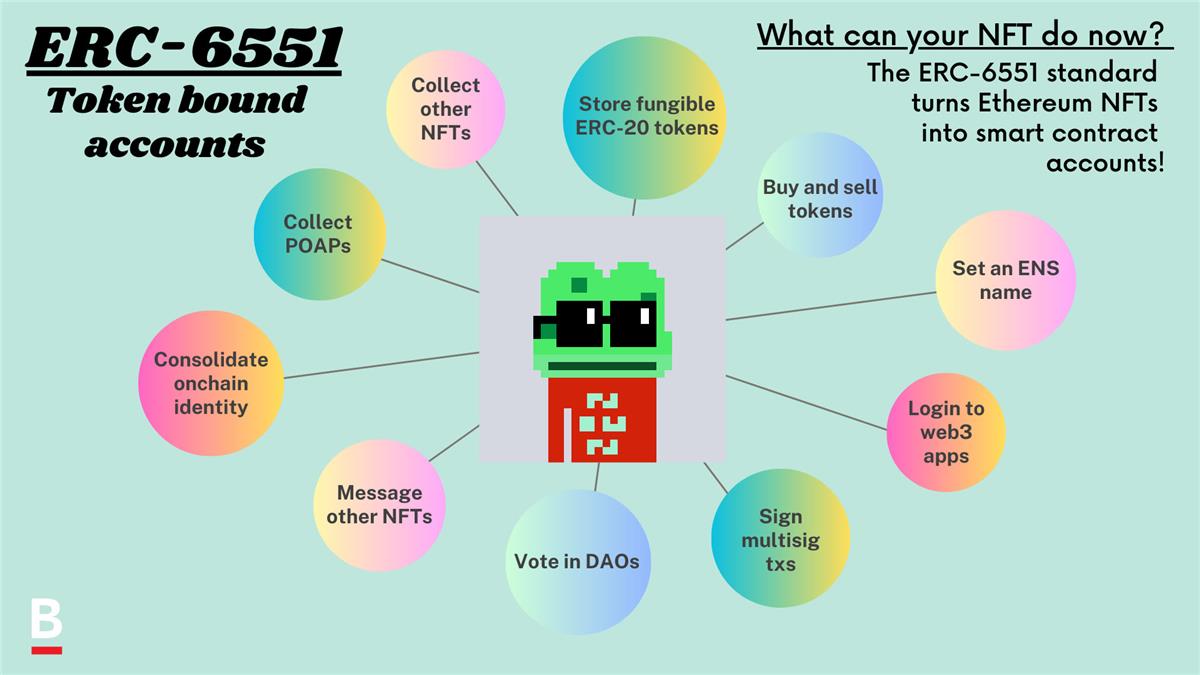
ERC-6551 is a new token standard launched on the Ethereum mainnet on May 7, 2023. It significantly enhances the functionality and versatility of ERC-721 NFTs by allowing them to operate as their own smart contract accounts.
The motivation behind ERC-6551 stems from the growing use of NFTs as forms of on-chain identity. Until now, ERC-721 tokens couldn’t act as agents or own other on-chain assets—a limitation inconsistent with real-world non-fungible asset use cases.
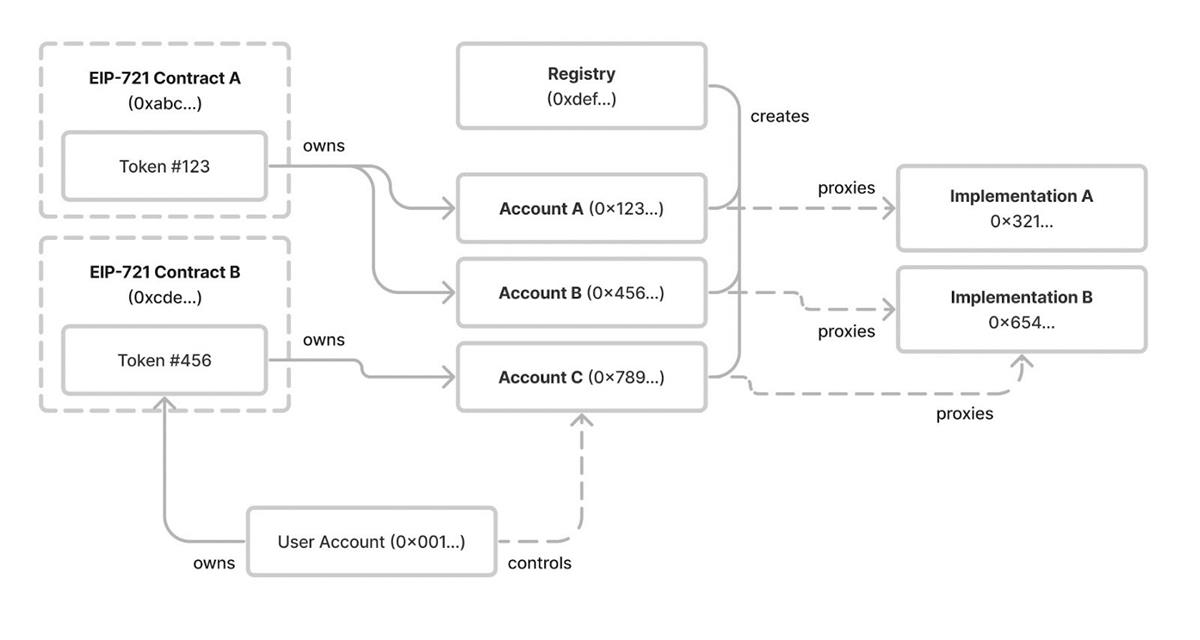
Thus, ERC-6551 grants each ERC-721 token full Ethereum account functionality by deploying a unique smart contract account—called a “token-bound account”—for every ERC-721 token via a permissionless registry, while maintaining compatibility with existing ERC-721 contracts.
It’s important to note that under ERC-6551, a single NFT can also have multiple token-bound accounts. In this sense, one NFT can now contain multiple wallets.
The system introduced by ERC-6551 primarily consists of 1) a permissionless registry for deploying token-bound accounts and 2) a standardized interface for interacting with these accounts.
Thanks to the ERC-6551 standard, you can now do with an ERC-721 NFT anything you can do with a regular Ethereum wallet. Basic use cases include storing other NFTs in your NFT or trading ERC-20 tokens. But this is just the tip of the iceberg!
For example, suppose you accumulate wearable-item NFTs in a new Web3 game. Now, instead of storing them in your regular Ethereum wallet, you can keep them within your chosen NFT—such as your player avatar from the same game. This is not only psychologically more engaging and intuitive but also allows you to sell both the avatar and accumulated wearables as a unified bundle on an NFT marketplace via ERC-6551 when you're ready to exit the game.
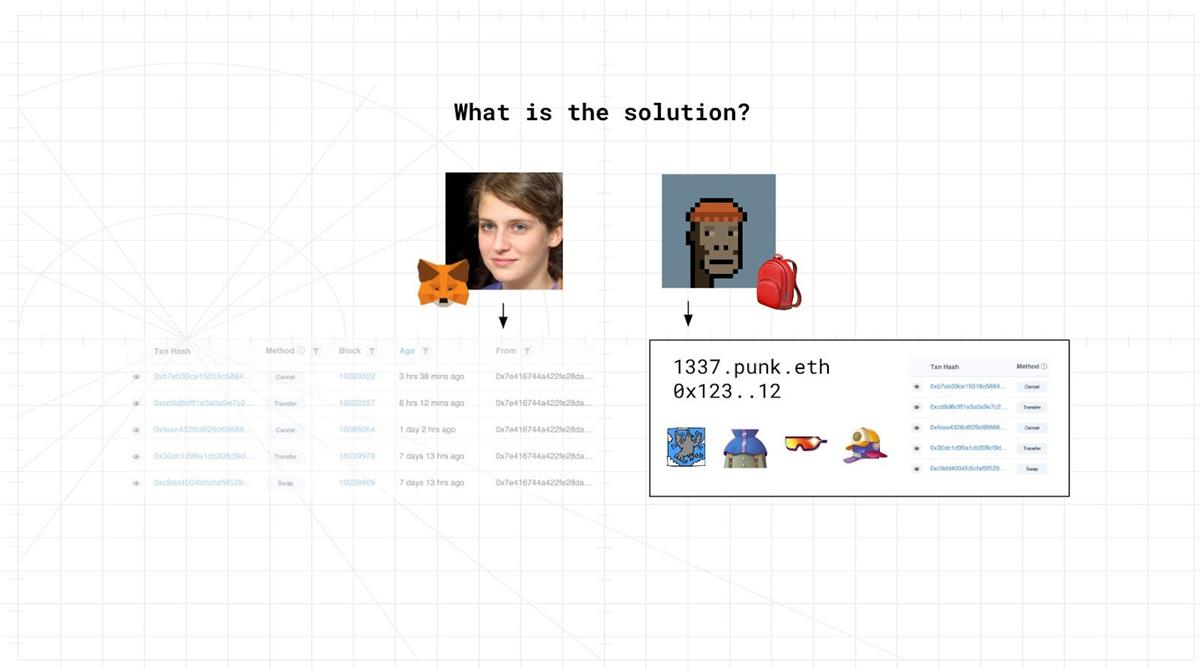
This is just a hypothetical example, but the possibilities here are vast. Another example: PFP projects can now incentivize and reward holders who utilize token-bound accounts within their collections, thereby encouraging extended utility.
Moreover, ERC-6551 allows NFTs to have multiple token-bound accounts and supports cross-chain token-bound accounts, adding further layers of utility and likely sparking a new wave of experimentation and innovation across the entire NFT ecosystem.
Considerations
Not all NFT projects are supported. Projects whose smart contracts do not rely on the ownerOf method are incompatible with the ERC-6551 standard—for instance, CryptoPunks.
Beyond limited ERC-721 support, ERC-6551 raises two major security concerns requiring vigilance across the NFT ecosystem:
-
Preventing fraud: Decentralized marketplaces need to guard against potential fraud. For example, a user might sell an NFT claiming it holds a certain amount of ETH, then withdraw the ETH after the sale, leaving the buyer with an empty account. Suggested anti-fraud measures include tracking the nonce of the token-bound account and ensuring asset commitments remain intact during transactions. However, ERC-6551 does not directly address fraud prevention; solutions must be implemented at the marketplace level or via external smart contracts.
-
Preventing ownership loops: ERC-6551 could allow an NFT to be transferred to its own token-bound account, resulting in permanent loss of access to all assets within that account. This creates an "ownership loop," which is difficult to prevent on-chain due to the potentially infinite search space required. While preventing such loops is beyond the scope of ERC-6551, application-level interface safeguards are recommended to restrict such transfers.
Perspectives on ERC-6551
• Benny Giang, co-author of ERC-6551 and co-founder of Future Primitive: “The idea was simple… what if NFTs had their own wallets? Inspired by Soul Bound Tokens (SBTs), we flipped the concept—we call them Token Bound Accounts (TBAs). Instead of binding NFTs to wallets, we bind wallets to NFTs.”
• Gami, member of Nouns DAO and founder of Gnars DAO and Tings DAO: “Since joining [Nouns DAO], ERC-6551 (token-bound accounts) has been exactly what I wanted to do with my Nouns. Hoping to see us support it in some way… making the concept of ‘entrepreneurs’ fully possible. Nouns can be sold along with everything they’ve acquired and built during their journey.”
• 0xBeans.eth, Solidity engineer: “ERC-6551 might be one of the most interesting application-layer Ethereum improvement proposals… Many interesting properties emerge, such as tradable accounts… ENS was a step toward on-chain identity, and I believe full Ethereum accounts owned by NFTs are the next step. This EIP is closely related to EIP-4337 (account abstraction). The reference implementation essentially creates two ETH accounts and binds them to a single token.”
How to Use ERC-6551
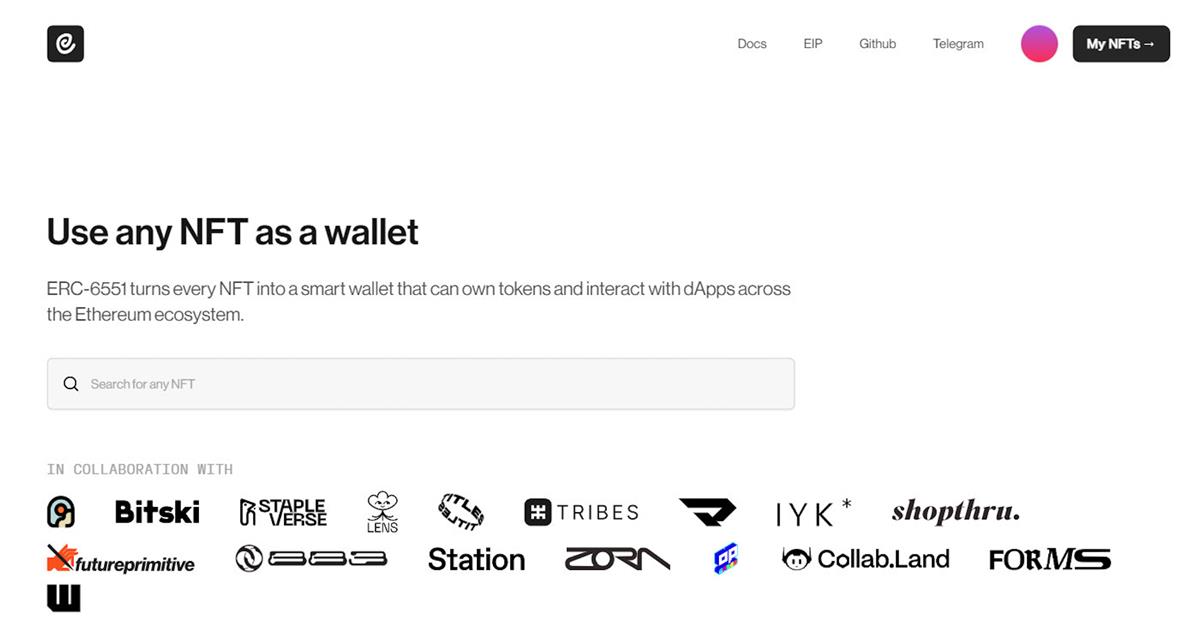
Tokenbound is an open-source toolkit built around the ERC-6551 standard. One of its services is an account browser interface, which allows you to deploy and interact with ERC-6551 accounts.
If you want to deploy a token-bound account onto your chosen NFT, follow these steps:
-
Go to Tokenbound and connect your preferred wallet;
-
Click the “My NFTs” button;
-
Select your desired NFT and choose “Deploy Account”;
-
Confirm the deployment transaction using your wallet and wait for it to complete.
-
After completing the above steps, you’ll see a “Use Wallet” option in the dashboard of your selected NFT.
Final Thoughts
Indeed, remember that ERC-6551 has only recently launched on mainnet, so tools around it are just beginning to develop. Expect progress in “user experience” and “user interface” aspects. In the meantime, I recommend spending time reviewing the FAQ section at the bottom of Tokenbound before getting started.
The emergence of token-bound accounts marks a historic milestone in the NFT space, transforming NFTs into their own smart contract accounts. This brings greater flexibility to NFTs and aligns them more closely with real-world usage, making them more practical and intuitive for users. Looking ahead, we can expect increasing adoption and experimentation with ERC-6551 over the coming months!
Furthermore, whenever skeptics claim NFTs are worthless because you can simply “right-click save” an image, we now have a strong rebuttal: while you can copy and save a picture, you cannot replicate the contents inside a token-bound account, which may hold valuable assets and data. In sum, ERC-6551 represents a significant leap forward in NFT development and potential applications. It opens new avenues for exploration and innovation for creators, collectors, and developers, paving the way for even more exciting advancements. As the NFT space continues to evolve and mature, we can look forward to more innovations like this, expanding the boundaries of blockchain technology.
Join TechFlow official community to stay tuned
Telegram:https://t.me/TechFlowDaily
X (Twitter):https://x.com/TechFlowPost
X (Twitter) EN:https://x.com/BlockFlow_News
 Bankless


