








Understanding ERC-6551: A New NFT Standard for Social and Gaming Innovation
TechFlow Selected TechFlow Selected
Understanding ERC-6551: A New NFT Standard for Social and Gaming Innovation
ERC-6551 is a refreshing proposal and innovation in the NFT space.
 Navigating Web3 tides with focused insights
By Ishanee, IOSG Ventures
ERC-6551 is a new proposal introduced by a third-party team (Future Primitive) that has recently made waves in the NFT community. The reason is simple—it unlocks vast possibilities for both new and existing NFT projects without requiring wrappers, complex combinations of multi-contract ERC standards, or reliance on centralized companies.
The Beginning of the Story
Benny Giang, the lead author of ERC-6551, has years of experience in crypto consumer products and working with NFTs. He was an early team member of CryptoKitties and NBA Top Shot, and even co-founder of Bistki. A few years ago, he founded FP with Jayden Windle to serve as creative consultants for brands and projects looking to launch new NFT collections. While working on one such project, the team encountered a challenge that sparked the idea behind ERC-6551—clients wanted an NFT collection where each NFT inherently contained all future benefits granted to it, and those benefits would not be lost if the original NFT were later traded.
While developing 6551, the team adhered to several core principles, which they shared at ETH Lisbon:
-
It should be backward compatible with existing NFTs
-
It should be decentralized and permissionless
-
It should involve a simple (ideally one-time) implementation so that NFT projects don’t need to rewrite codebases that could introduce security risks.
Particular attention should be paid to the third point, as NFT projects often have limited resources (compared to the broader crypto market), resulting in smaller budgets for security audits. Teams typically copy and use industry “standards,” leaving little room for innovation and experimentation.
Brief Overview of the ERC-6551 Proposal
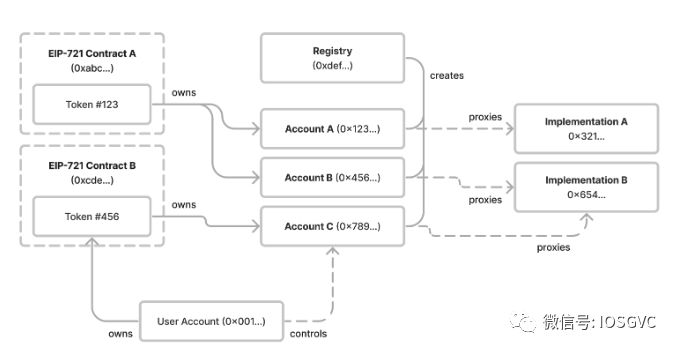
The proposal introduces a registry contract deployed on each chain to empower all NFTs on that chain. This registry contract uses the Create2 function to assign a deterministic wallet address to each NFT. Create2 allows developers to deploy smart contracts to predetermined addresses.
The deployed smart contract (account) is known as a Token Bound Account (TBA). This address is bound to an NFT, and any parent wallet holding the NFT can fully access it. Since TBAs themselves are wallets/accounts, they are more than just attributes—they possess full functionality like any other wallet and can hold other NFTs, ERC-20 tokens, POAPs, and/or any future token standard adopted.
Data Tracking
Since the first TBA was activated in May 2023, the Ethereum and Polygon communities were among the first to rapidly adopt this standard. Across all EVM chains, there are now 64k activated TBAs, 1.7k transactions related to TBAs, and 18k NFTs held within activated TBAs.
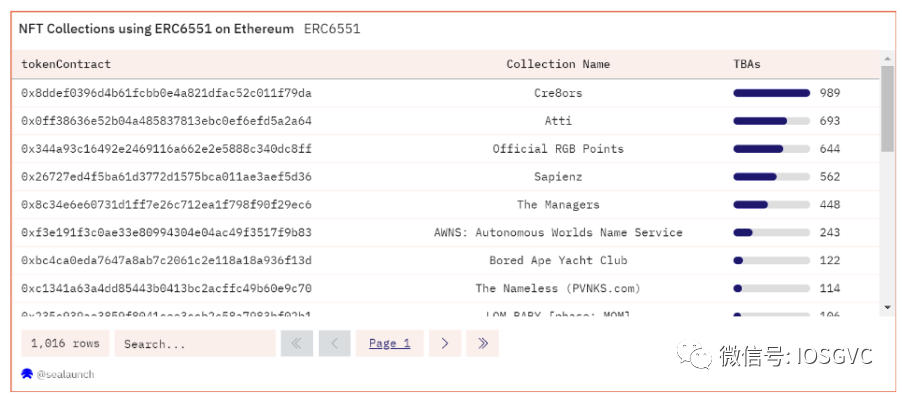
Top NFT collectors with active TBAs
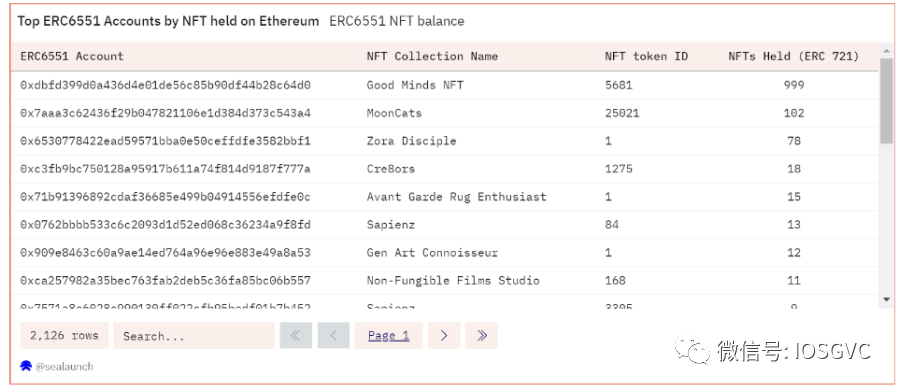
Most active TBA on Ethereum, Source: Dune
The most active TBA (linked to Good Minds #3206) owns many other NFTs from the same collection, visible by tracking the TBA’s activity on Etherscan—a unique use case of TBAs. The NFT wallet continues collecting additional pieces from the same series, thus accumulating a certain percentage of the total tokens from that collection within a single wallet.
Any bid on this NFT (3206) must technically account for the value of all assets stored in its TBA (assuming these assets aren't traded or transferred out before sale).
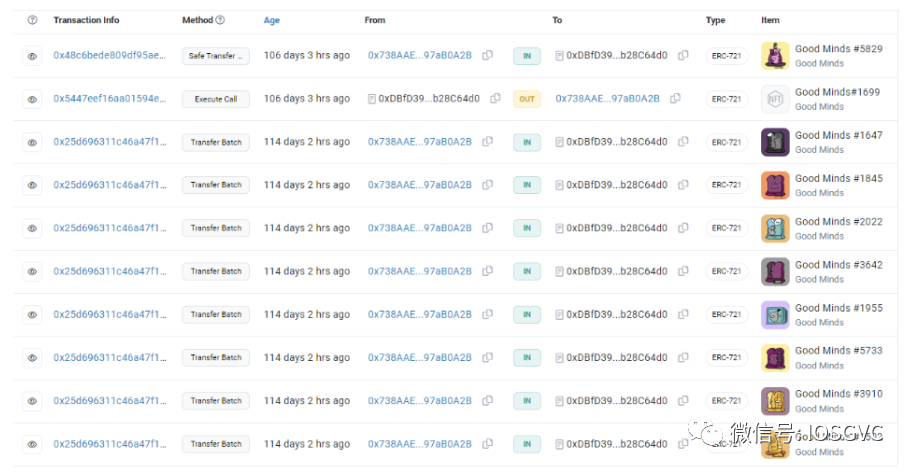
A Good Mind NFT’s TBA holds a certain percentage of other NFTs from the same collection nested under its TBA. The development of the TBA standard is led by tokenbound.org, collaborating with multiple teams aiming to integrate this standard into their products.
Comparison with Other NFT Standards and Companies
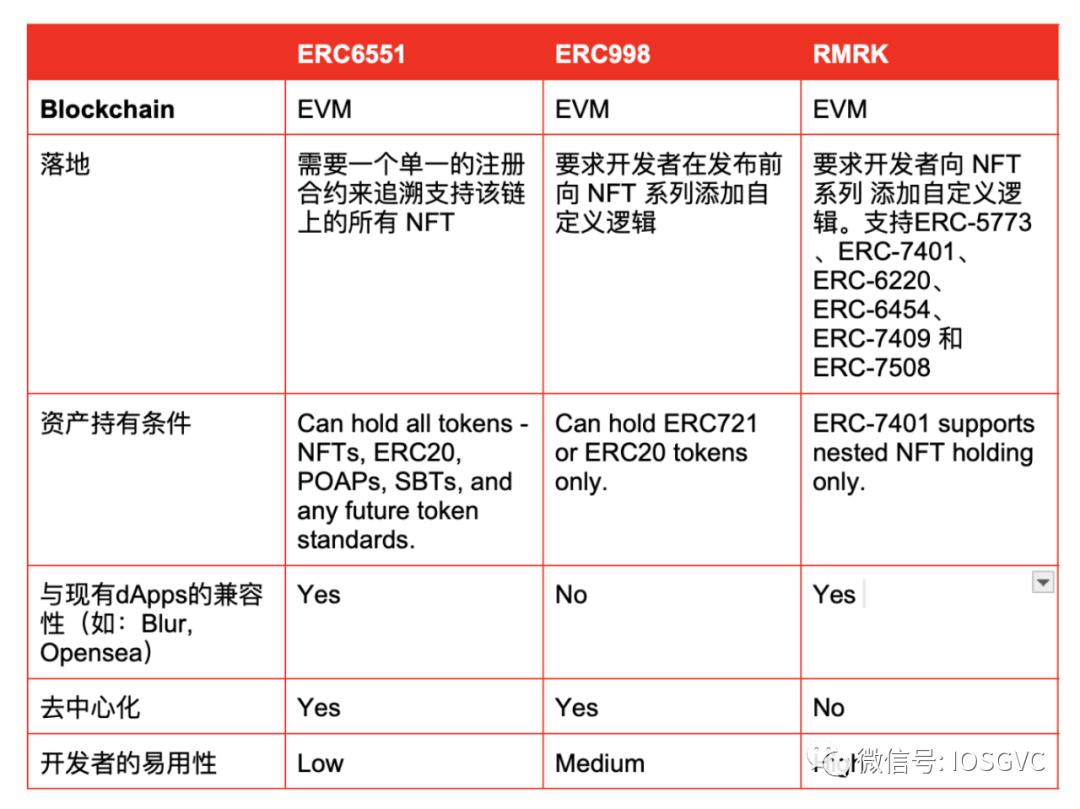
Although various NFT solutions have existed in the past, none offer the same advantages as TBA/6551. Key criteria to consider include:
-
Can the NFT hold other assets such as NFTs, ERC-20s, ERC-1155s, POAPs, etc.?
-
Does the NFT require wrapping or additional steps?
-
Is the new standard compatible with existing dApps?
-
Is it decentralized?
Source: IOSG Ventures
Use Cases of ERC-6551
Gaming
Collectible games like Illuvium and Colony incentivize players to accumulate in-game assets. Typically, as players progress, their wallets accumulate various assets. However, when trading characters, associated assets do not seamlessly transfer to the new owner. Instead, players often opt to sell the entire wallet to ensure the main character and related assets are sold together.
With TBA-enabled character NFTs, players can now sell experienced character NFTs without needing to sell the entire wallet or go through complex multi-step or bundle sales processes. Assets held in the TBA seamlessly transfer to the new owner upon completion of the sale.
A second benefit of using 6551 is that the pricing mechanism for characters and their associated assets becomes on-chain and transparent. Bids and sales now occur on-chain, providing a transparent and secure transaction environment.
Social
Lens Profiles, like your ENS address, are NFTs. Activating TBAs for both allows users to cultivate on-chain identities tailored to their social profile NFTs rather than their wallets. While this difference may seem trivial to end users, it is highly significant for organizations seeking to build and leverage social or interest graphs.
Social protocols like Hats—which create NFTs with built-in access controls to DAO functions (and serve as verifiable LinkedIn-style job records)—can utilize TBA-enabled NFTs. NFTs distributed to core community members (non-paid contributors) can act as markers for future airdrops, discounts, and other benefits.
Brand Campaigns
Aligned with the concept of creating TBA-based social/interest graphs, brands can instantly target entire communities (e.g., BAYC, Pudgy Penguins, etc.) without continuously indexing and updating wallet addresses eligible for benefits. TBAs eliminate the need for "snapshots" and streamline many database and bookkeeping functions that brands would otherwise need to perform manually.
Others
TBAs could potentially support industries such as digital fashion, real estate, DeFi, and NFTFi in the future. However, their application scope remains unclear, as many of these sectors are either still emerging or already mature enough that the invention of 6551 does not currently bring a 10x improvement over existing practices.
Impact on Existing NFT Markets
The introduction of TBAs represents a significant enhancement in user experience but also brings notable changes to bidding, pricing, and execution dynamics in NFT markets.
Market Bidding
A normal bid on Blur reflects a valuation of a single NFT based on factors such as the collection's trading volume, floor price, item rarity, and overall project quality. However, for TBA-enabled NFTs, buyers must evaluate not only these metrics but also the value of assets held within the TBA. Now, NFTs can command premiums based on their level of engagement with other assets or activities, and buyers are willing to pay for that.
Interestingly, if sellers are dissatisfied with a particular offer, they can transfer some assets out of the TBA given its holdings. Then, they might accept what was initially considered a low bid—an approach that shifts fair pricing responsibility onto end users.
Execution
As illustrated earlier, when buyers change their understanding of a purchase due to changes in the assets held by a TBA, markets must implement buyer protection measures to prevent exploitation of end users. This could involve escrow mechanisms for NFTs with active TBAs or incorporating dual confirmations—such as signatures—for accepted bids and deliveries to ensure a safer transaction environment.
Conclusion
ERC-6551 is a refreshing innovation in the NFT space. Today’s stagnant NFT market has been a painful experience for many NFT collectors from 2021. That era promised too much—overpromising on CC0s, interesting IPs, and token utility—but delivered too little. It created millionaires but ultimately left many scarred. ERC-6551 brings new functionality to NFTs, and we hope the next generation of NFT projects will make full use of it!
Join TechFlow official community to stay tuned
Telegram:https://t.me/TechFlowDaily
X (Twitter):https://x.com/TechFlowPost
X (Twitter) EN:https://x.com/BlockFlow_News
 IOSG Ventures


