Doubling in Two Weeks: What Gives Trader Joe's Liquidity an Edge?
TechFlow Selected TechFlow Selected
Doubling in Two Weeks: What Gives Trader Joe's Liquidity an Edge?
This article will introduce six common ways to add liquidity on Trader Joe.
 Navigating Web3 tides with focused insights
Original author: JX, Old Fashion Research
Most Arbitrum airdrops have been claimed, and prices will likely fluctuate around current levels in the short term. One of the best strategies might be earning yields from liquidity pools. An APR of 981% on Trader Joe is the highest I've seen so far. Thanks to its efficient liquidity model, the platform’s metrics have grown rapidly since launching on Arbitrum.

There are six common ways to provide liquidity on Trader Joe. Below is a brief guide on how to add liquidity.
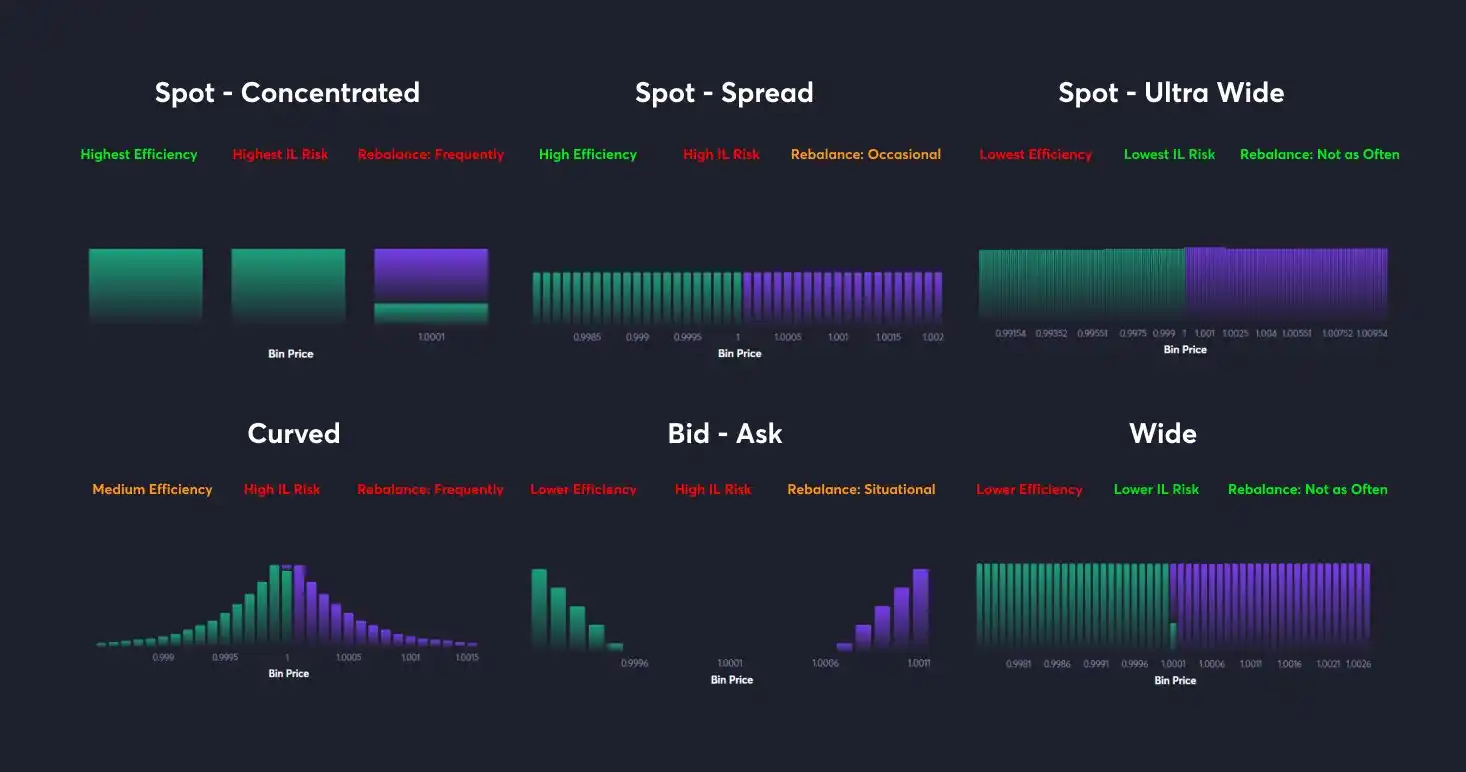
1) Spot-Concentrated:
Liquidity is concentrated within 1–3 bins, covering a very narrow price range. This is ideal for trading pairs with extremely low volatility, such as stablecoins. The advantage is high capital efficiency; the downside is significant impermanent loss (IL) if the price moves outside the set range.
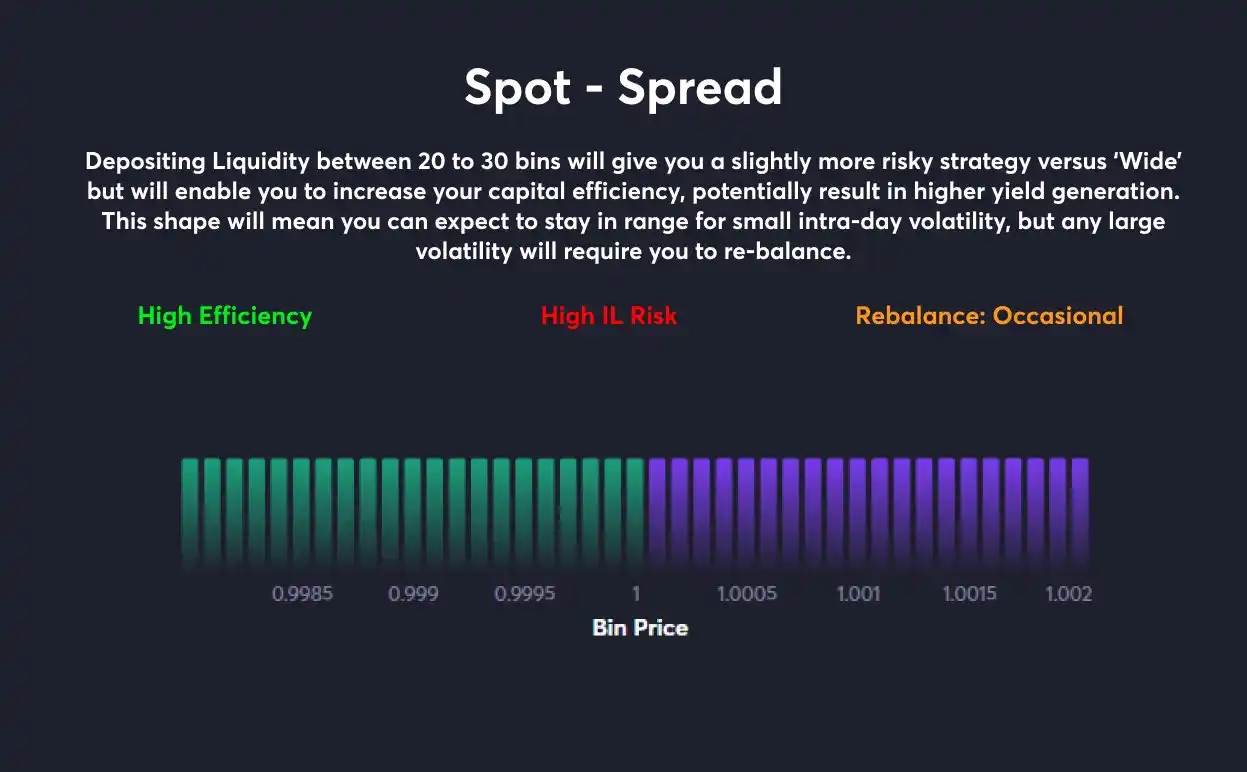
2) Spot-Spread:
Liquidity is evenly distributed across 20–30 bins. Offers good capital efficiency, provided the price stays within the defined range. Significant IL may occur if the price moves beyond this range. Suitable for tokens expected to oscillate within a certain price band over the short term.
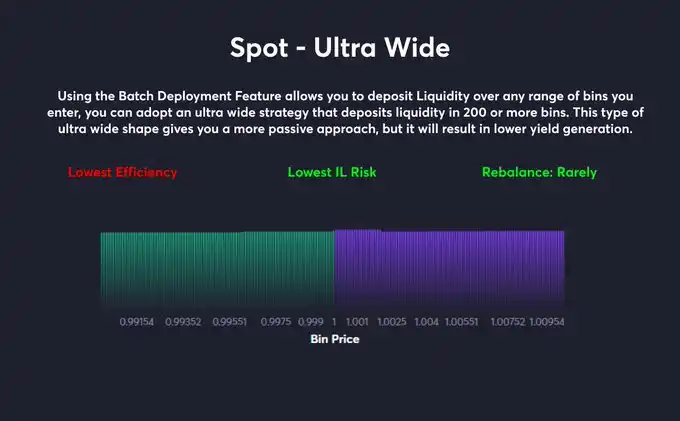
3) Spot-UltraWide:
Liquidity is spread across more than 200 bins, creating broad price coverage. As a result, capital efficiency is lower, but it suits tokens with high price volatility.
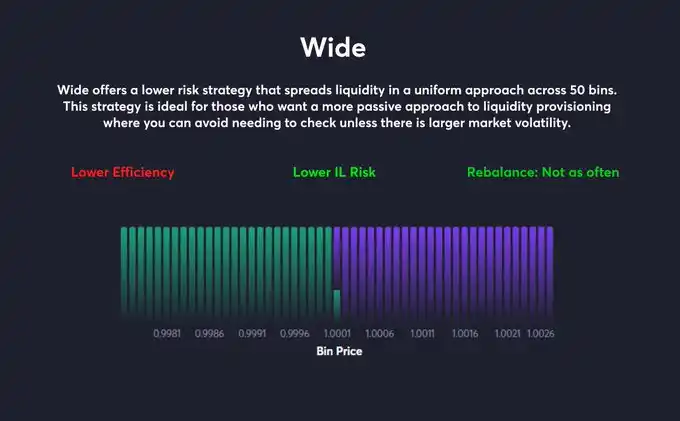
4) Wide:
Slightly higher capital efficiency compared to UltraWide, with liquidity distributed across approximately 50 bins. Suitable for tokens with moderate volatility—less volatile than those suited for UltraWide.
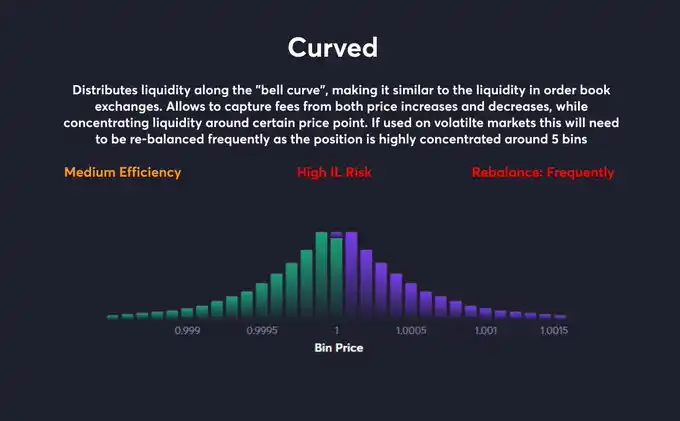
5) Curved:
Resembles a bell-shaped normal distribution curve. Ideal for tokens that oscillate around a specific price point. Large IL can occur if the price deviates significantly from the center. Due to its similarity to the orderbook structure of CEXs, this setup is highly suitable for market makers using bots to provide liquidity.
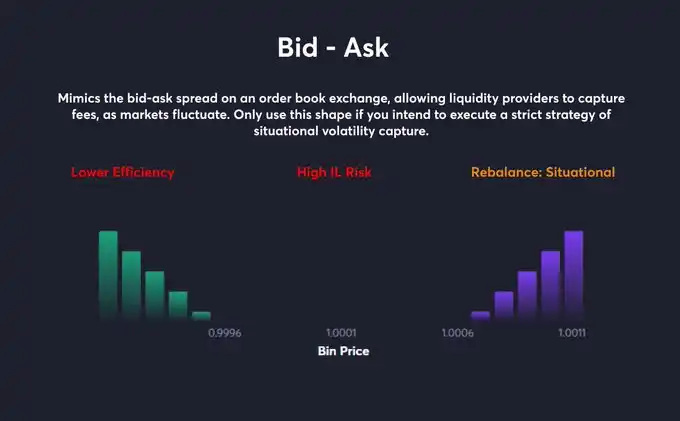
6) Bid-Ask:
The opposite of the Curved model. Liquidity is concentrated at both ends of the central price, making it ideal for market makers who anticipate increased volatility.
Summary:
Retail users are advised not to attempt the last two liquidity provision methods. For stablecoins, use Spot-Concentrated. For non-stablecoins, choose based on your expectation of price volatility: UltraWide for maximum volatility, Wide for moderate, and Spread for minimal. Personally, I'd choose Spread for the Arb-ETH pair; if concerned about IL, Wide would be a safer option.
Join TechFlow official community to stay tuned
Telegram:https://t.me/TechFlowDaily
X (Twitter):https://x.com/TechFlowPost
X (Twitter) EN:https://x.com/BlockFlow_News
 Old Fashion Research