Bear Market Shadow War: Can ZK EVM End the Public Chain Wars?
2022.11.03
Share Share to X (Twitter) Navigating Web3 tides with focused insights
Share to WeChat
Share to WeiboShare to WeChat
Share by Link
Share by Image
TechFlow Selected TechFlow Selected
Bear Market Shadow War: Can ZK EVM End the Public Chain Wars?
Any product whose main selling point is technical features is a half-finished product.
2022.11.03 - 09:41:53
ZKEVM公链
Navigating Web3 tides with focused insightsAny product whose main selling point is technical features is a half-finished product.
Every product primarily marketed on technical features alone is incomplete.
The hype and debate around EVM and ZK-EVM have persisted for some time, especially since Vitalik categorized different types of ZK-EVMs. A flood of explanatory articles has emerged on concepts like bytecode, virtual machines, and compatibility—terms that remain poorly understood. What do these terms actually mean? And where will the widespread adoption of ZK-EVM lead the public blockchain landscape?
The ZK赛道 (ZK sector) has now officially heated up. If ZK-Rollups previously confined zero-knowledge technology to L2 solutions, it now shows signs of becoming a universal infrastructure across the entire blockchain ecosystem. R3PO believes that, to some extent, ZK-EVM could bring an end to the current multi-chain coexistence paradigm.
Throughout this transformative process, many new projects are bound to emerge. Committed to uncovering latent value, R3PO begins by intuitively understanding EVM to explore the future trajectory of public blockchains.
To Understand Others, One Must First Understand Oneself:The Essence of an Ecosystem Is a Mutual Pursuit Between Developers and Users
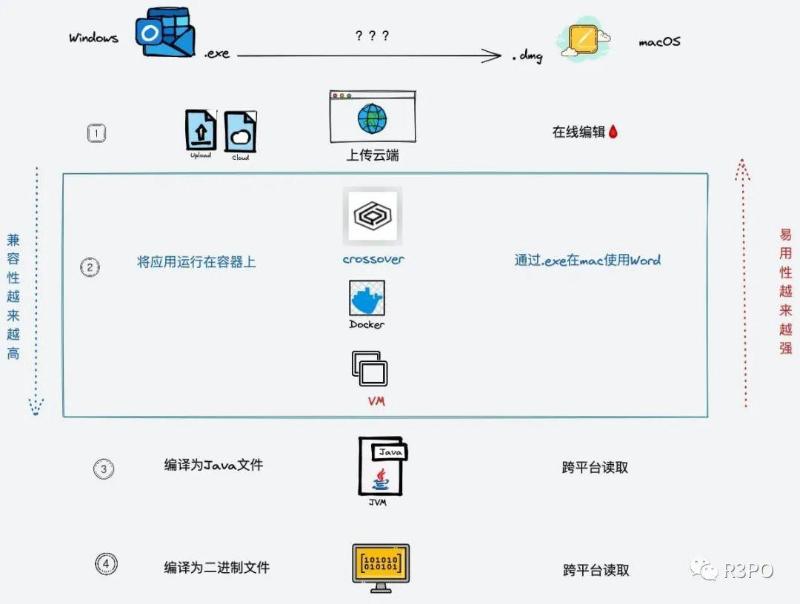
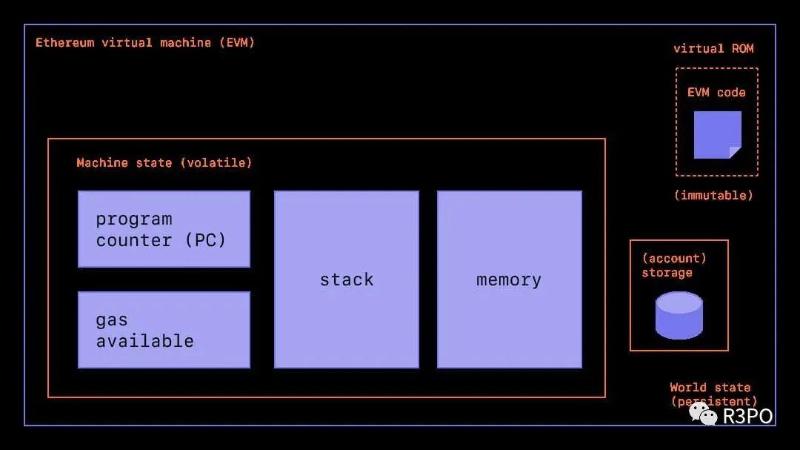
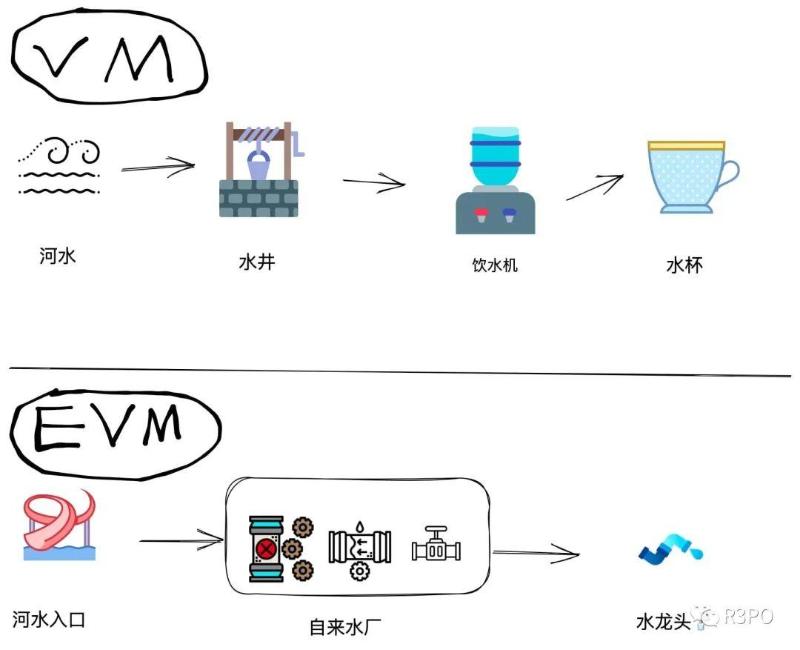
EVM contributed significantly to Ethereum’s victory in the public chain competition—not due to superior computational performance, but mainly because of compatibility. Competitors like EOS (an earlier "Ethereum killer"), Solana (a previous-generation contender), and Aptos (a newer challenger) all boasted ultra-high TPS speeds. Yet Ethereum remains unshaken, maintaining absolute dominance in TVL and number of Dapps despite single-digit TPS. This advantage stems from network effects—but why hasn’t the gap narrowed, even as other chains adopt EVM compatibility and build extensive cross-chain bridges? Why does the disparity appear to widen further during bear markets? R3PO suggests starting from a clear foundational point to find the answer. That starting point is developer experience. Web3 today remains in its earliest stages—comparable to the internet before 2000—still dominated by tech enthusiasts and early adopters. Despite token incentives, most users remain within CEXs and CeDeFi structures built by TradFi institutions. True on-chain users are scarce: Ethereum has only about 400,000 active addresses, yet its TVL exceeds $32 billion and market cap surpasses $200 billion. Given this stark contrast between user numbers and capital depth, attracting developers becomes the key to sustaining an ecosystem. The logic is simple: whichever chain persists until the emergence of truly billion-user applications will become the foundational infrastructure of the next-generation internet—much like the World Wide Web and Netscape Browser defined the early internet era. And Ethereum offers developers the most complete development experience. In a sense, this mirrors Java’s success. Before Java, C/C++ required programmers to manage software-hardware compatibility—for example, 32-bit data types couldn’t directly run on 16-bit machines.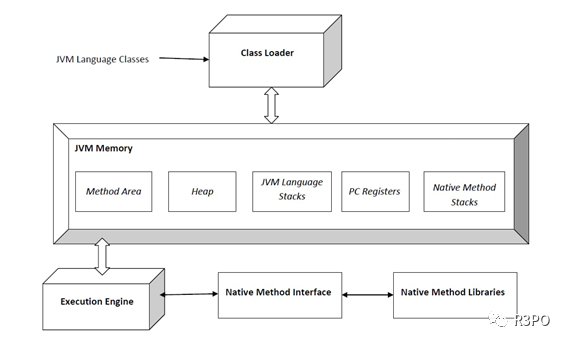
To Judge Others, One Must First Judge Oneself:EVM Compatibility Does Not Empower Challengers to Win
EVM fueled Ethereum’s success—but why haven’t other EVM-compatible chains, including so-called "vampire projects" siphoning Ethereum’s ecosystem, succeeded? **The challengers’ logic:** - To developers: Offer EVM compatibility to reduce migration costs, plus enhanced features like higher TPS; - To users: Provide token incentives to encourage migration; - Goal: Replace Ethereum. **Flaws in their logic:** - For developers: EVM compatibility ≠ native EVM—hidden migration costs still exist; - For users: Ethereum offers the highest security after Bitcoin, something short-term rewards like farming or airdrops cannot match; - Result: Ethereum retains its dominant position. In reality, competing chains face a dilemma: embracing EVM risks becoming de facto sidechains of Ethereum, while rejecting it leads to isolation. Amid universal demand for traffic, EVM compatibility becomes a reluctant compromise.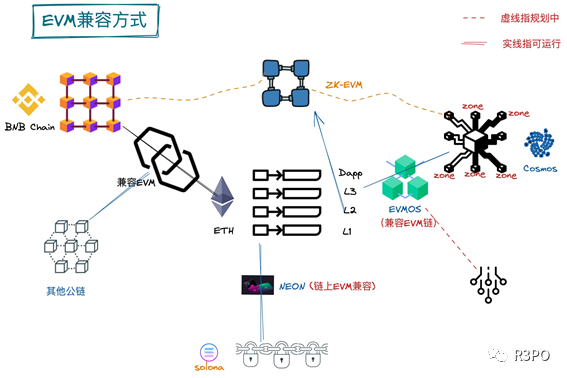
Native EVM Implementation – Represented by BNB Chain.
Exchange-led blockchains like BNB Chain and OKX Chain leverage their large user bases and strong project operational capabilities. Their TVL and ecosystems are significant. For instance, according to DeFi Llama, BNB Chain hosts 492 protocols with a TVL of $6 billion—making it the second-largest public chain after Ethereum in scale. Their primary model is to mimic Ethereum. PancakeSwap, BNB Chain’s largest DEX, originated as a fork of Uniswap. The same Dapp can switch seamlessly between chains—thanks to EVM compatibility. Projects can thus focus on operations rather than rebuilding products from scratch.On-Chain EVM Compatibility – Represented by Solana.
Solana is a PoH-based monolithic blockchain and was long the only top-ten market cap chain not natively EVM-compatible. Yet it can still interoperate with EVM chains—via Neon, a project running on Solana that provides EVM compatibility. This can be seen as a "matryoshka doll" approach—compatibility layered atop the chain rather than implemented at the base layer. Neon delivers a development experience highly similar to native EVM: Solidity support, seamless smart contract deployment, direct integration with MetaMask and Truffle.Dedicated EVM-Compatible Chains – Represented by Evmos.
Modular blockchains like Cosmos or Polkadot offer more flexibility—applications can become standalone L1 chains. Evmos is both a Cosmos zone and an EVM-compatible chain. This means Evmos can propagate EVM compatibility not just within Cosmos, but potentially across any blockchain ecosystem. Beyond providing EVM compatibility, Evmos also serves as a standalone chain hosting DeFi applications—Exswap, its native DEX, is a fork of Uniswap. **Summary:** This broad compatibility has enabled connectivity across the blockchain space, with EVM compatibility, cross-chain bridges, and exchanges acting as key enablers. Based on this, R3PO outlines the major compatibility paradigms—to set the stage for ZK-EVM’s potential role as a game-changer.To Defeat Others, One Must First Overcome Oneself:ZK-EVM Is Ethereum's Counteroffensive
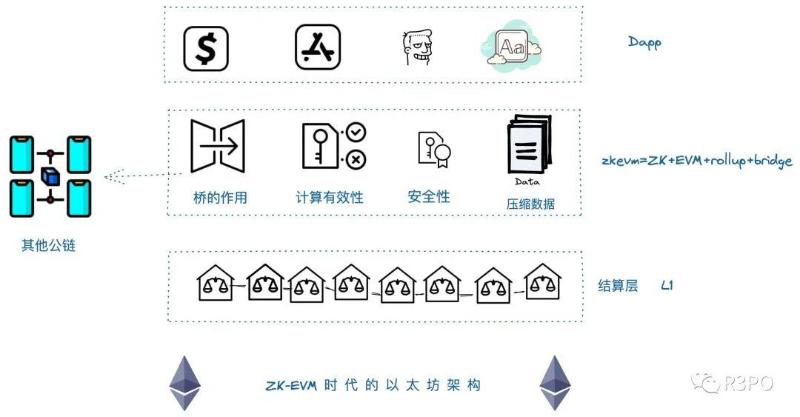
While other chains scrambled to achieve EVM compatibility, Ethereum focused inward. But after successfully completing the PoS merge and finalizing its L2 strategy, ZK technology has emerged as a universal primitive across the blockchain landscape. The convergence of ZK and EVM will complete Ethereum’s modular architectural evolution. ZK is not limited to L2—it has applications across layers, from Dapps to base protocols. Yet the booming ZK-EVM space is somewhat chaotic. R3PO aims to clarify and distill the signal from the noise.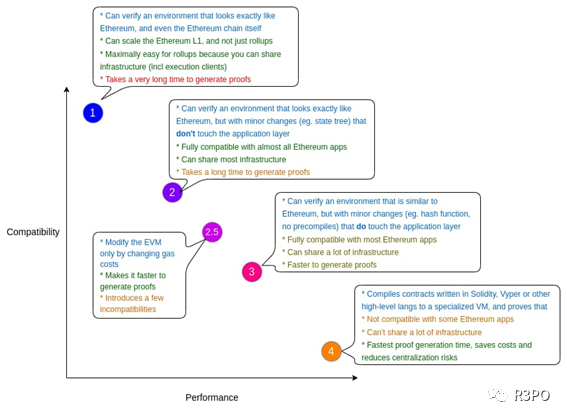
Conclusion
A public chain’s market success depends not only on effort, but also on historical momentum. In the evolution of ZK-EVM, we clearly sense the intense struggle behind the scenes. The tug-of-war between Ethereum and competing chains has generated endless narratives. Now, the decisive moment has arrived—a life-or-death clash between emerging paradigms like Evmos, Move VM, and ZK-EVM. R3PO believes the future blockchain landscape must be based on interoperability driven by EVM compatibility. Users and developers remain the heart of the story. If ZK-EVM progresses smoothly, Ethereum could become the “Windows” of the blockchain world—hosting the richest application layer and serving as the most secure and stable settlement layer. ZK technology still needs at least five years to mature broadly. With massive capital and market acceleration, this timeline may shorten to around three years. Then, we will see whether today’s predictions come true.Join TechFlow official community to stay tuned
Telegram:https://t.me/TechFlowDaily
X (Twitter):https://x.com/TechFlowPost
X (Twitter) EN:https://x.com/BlockFlow_News
Add to Favorites
Share to Social Media
AuthorR3PO