From City Hall to Cheongwadae: Lee Jae-myung's Ten-Year Experiment with Cash Handouts
TechFlow Selected TechFlow Selected
From City Hall to Cheongwadae: Lee Jae-myung's Ten-Year Experiment with Cash Handouts
He believes that when labor is no longer the sole means of survival, the dividends of technological advancement should be shared by all.
 Navigating Web3 tides with focused insights
Author: Wang Chao
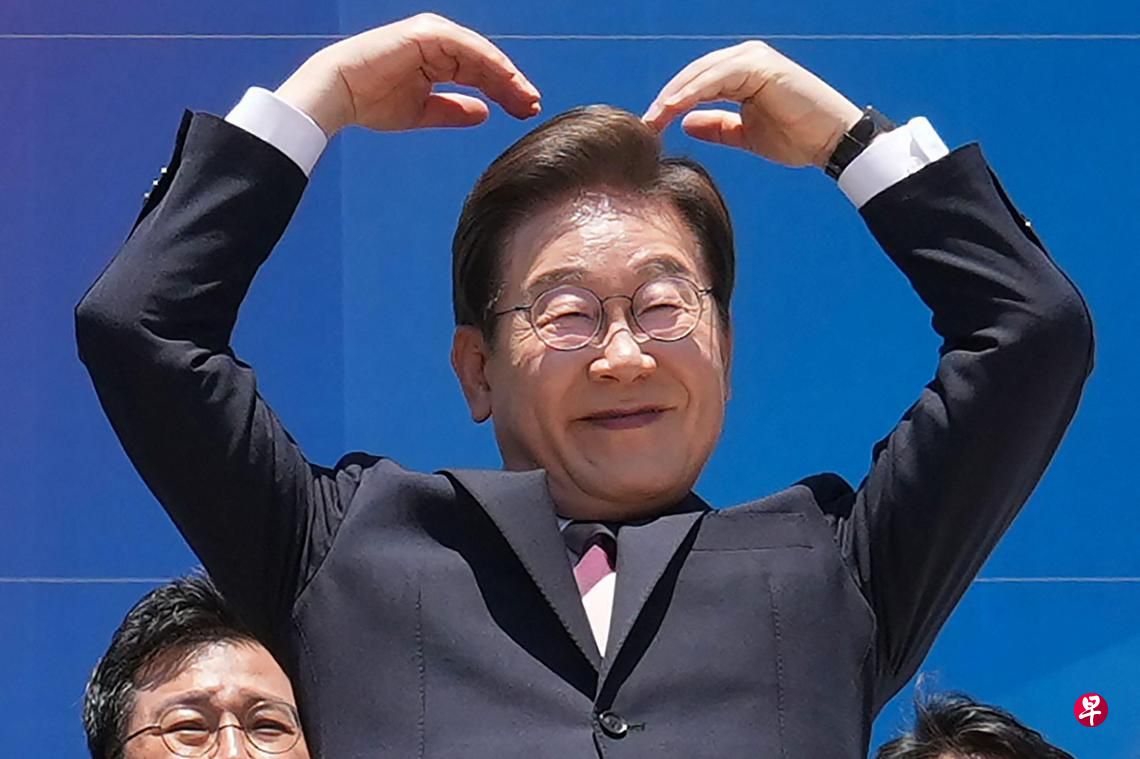
South Korea's new president, Lee Jae-myung, carries many labels: Soda Mayor, 20-day hunger striker, idol figure, live-streaming lawmaker who stormed the National Assembly. Beyond these widely recognized tags, a closer look at his decade-long political career reveals another crucial label: money giver. From distributing funds in Seongnam to Gyeonggi Province, from payments for 24-year-olds to support for farmers and artists, and now extending to all citizens nationwide.
In ten years, Lee has gradually turned what once seemed a radical idea into reality. His central question is simple: In the age of AI, does every individual have the unconditional right to share in societal wealth?
Basic income refers to regular cash payments distributed unconditionally to all individuals, regardless of income or employment status. Commonly known as Universal Basic Income (UBI) or unconditional basic income, it provides financial support on a per-person basis without means testing or work requirements.
Although UBI appears futuristic, it is actually a concept debated for centuries. As early as the 16th century, Thomas More proposed a similar idea in his book "Utopia." In the 1960s, Nobel laureate economist Milton Friedman introduced the concept of a "negative income tax," while Martin Luther King Jr. advocated for a guaranteed income system in his final book. In the 1970s, the Nixon administration nearly passed a family assistance program resembling UBI. Entering the 21st century, with advances in artificial intelligence, an increasing number of figures—from Silicon Valley tech leaders to Nobel-winning economists—have begun seriously discussing the feasibility of UBI. Dozens of countries have launched pilot programs to test this concept in real-world settings.
In South Korea, Lee Jae-myung stands out as the most prominent advocate and practitioner of UBI.
In January 2016, then-mayor of Seongnam, Lee did something considered "radical"—he gave money to all 24-year-olds. Each received 1 million won with no strings attached, except that it had to be spent locally. Criticized by Park Geun-hye’s government as "populism," the policy surprisingly succeeded. Young people gained tangible financial support, local businesses benefited from increased spending, and Lee earned broad political backing. This bold experiment became a pivotal step toward higher office.
After being elected governor of Gyeonggi Province in 2018—a region home to 13 million people, a quarter of South Korea’s population—he quickly expanded the youth basic income program, originally limited to Seongnam, across all 31 cities and counties in Gyeonggi. In 2022, he launched an even more ambitious trial in rural areas: through a lottery, an entire village was selected where all 3,880 residents would receive 150,000 won monthly for five years without conditions. The goal was to study the impact of basic income on health, local economies, employment, and inequality.
During the 2022 presidential election, Lee unveiled a comprehensive, step-by-step UBI plan. Its core proposal was economic support for all South Korean citizens, starting at 250,000 won per person annually, with plans to increase it to 1 million won during his term. The total annual cost was estimated at 58 trillion won. Lee proposed funding this primarily through land value taxation and carbon taxes. However, this plan faced strong criticism from his opponent Yoon Suk-yeol. Moreover, under President Moon Jae-in, sharp increases in property-related taxes triggered public resistance to any new real estate levies. Although Lee’s proposed land value tax targeted only land appreciation—not buildings—and aimed to benefit the majority, he failed to clearly communicate this distinction. Polls showed most people rejected his argument that the "land dividend" scheme would leave the majority better off. Faced with this opposition, Lee had to retreat, stating that if public consensus wasn’t reached, he wouldn’t implement universal basic income or the land value tax. Still, he insisted on maintaining basic income support for specific groups such as youth and farmers.
Ultimately, Lee lost the 2022 election by a narrow margin of just 0.7%—perhaps the political price he paid for his UBI vision.
Learning from that defeat, Lee significantly adjusted his stance and messaging on UBI during the 2025 presidential campaign. For much of the race, he deliberately avoided the topic, instead emphasizing pro-business policies, R&D investment, and AI development. Nevertheless, UBI remains a key component of his progressive reform agenda and continues to define his political identity.
On May 22, just 11 days before voting day, perhaps emboldened by a clear lead, he re-embraced a grand vision called "Basic Society"—the "UBI Uncle" was back.
"Basic Society" isn't a detailed new UBI plan but rather a milder blueprint incorporating strong UBI elements—an income support framework intended to cover citizens from birth to old age. The name has changed, but the core idea remains. Lee argues that in an era dominated by AI and robotics, the traditional assumption that "everyone can work continuously" is obsolete. The benefits of technological progress should not be monopolized by a few but shared by all.
To understand Lee’s UBI vision requires examining the deeper philosophical and historical insights behind it. He sees UBI as a central solution to social polarization, the disruptions of the Fourth Industrial Revolution, shrinking consumption, and securing national economic rights. He believes modern capitalism faces structural crises, especially under rapid technological change, leading to rising "jobless growth" and widening inequality. By boosting household incomes, UBI stimulates consumption and creates a virtuous economic cycle, serving both welfare and macroeconomic stimulus purposes.
Furthermore, Lee emphasizes that UBI aims to guarantee citizens' "economic basic rights" and enable a dignified life. When labor is no longer the sole means of survival, the gains from technological advancement should belong to everyone. UBI can redefine work—freeing people from "painful labor" and enabling them to pursue "meaningful work" and self-fulfillment.
The Broad Debate and Real Challenges of UBI in South Korea
In South Korea, Lee Jae-myung is not the only political figure supporting UBI. The concept enjoys widespread public support and even led to the formation of a political party named the "Basic Income Party." Founded in 2020, primarily online, its slogan is "600,000 won per month for everyone," and it successfully won a seat in the National Assembly in subsequent elections.
Meanwhile, other forms of income support experiments are underway. In July 2022, Seoul Mayor Oh Se-hoon launched a three-year randomized double-blind trial of an "assured income" program in his jurisdiction—a household-based negative income tax initiative. Negative income tax is often seen as a key variant of UBI: above a certain income threshold, individuals pay taxes; below it, they receive subsidies instead of paying. Surprisingly, even Lee’s political rival, the People Power Party, included basic income principles in its official platform, explicitly stating: "The state should provide basic income to ensure every citizen can live safely and freely in preparation for the coming era of the Fourth Industrial Revolution."
All this shows that UBI has moved from the fringes to the mainstream in South Korea. Yet, widespread implementation of UBI—both in Korea and globally—still faces major challenges, including fiscal sustainability, building social consensus, and political and administrative coordination. The future of Lee’s "Basic Society" will depend not just on the strength of the idea, but on whether these practical obstacles can be overcome. Regardless of the outcome, Lee’s persistent advocacy for UBI has already provided valuable lessons for social policy innovation in South Korea and beyond.
In an era of immense material abundance and technology capable of replacing human labor, what should be the ultimate measure of social progress? When machines take over production lines, Lee’s journey forces us to ask: Can humanity transcend passive adaptation and actively shape a future society defined by dignity and purpose?
Perhaps this is his most enduring political legacy—not offering definitive answers, but posing the timeless question of how humans can preserve dignity and value amid the tide of technological change.
Join TechFlow official community to stay tuned
Telegram:https://t.me/TechFlowDaily
X (Twitter):https://x.com/TechFlowPost
X (Twitter) EN:https://x.com/BlockFlow_News