ICM Narrative Explained: Tweets as Tokens, Believe Makes VC More Democratic
TechFlow Selected TechFlow Selected
ICM Narrative Explained: Tweets as Tokens, Believe Makes VC More Democratic
ICM is a hybrid model powered by blockchain that combines crowdfunding, structured markets, and online communities.
 Navigating Web3 tides with focused insights
Author: Pink Brains, Blockworks Research
Translation: TechFlow
In recent days, the emergence of Believe has not only created a wealth effect around Launchcoin but also drawn market attention to ICM (Internet Capital Markets), a fresh new narrative.
Some say it's no different from crowdfunding; others argue it revitalizes Web2 company fundraising by allowing social media posts to directly finance and price businesses through attention markets.
We’ve compiled various interpretations from overseas sources to help you quickly grasp this narrative from a data-driven perspective.
Sources: @PinkBrains and @Blockworks
The crypto market has never stopped redefining token issuance:
ICO/IEO → IDO → Fair launches/Launchpads → Points farming → Bonding Curves
If you missed out, the new trend might be ICM (Internet Capital Markets).
@believeapp is disrupting project fundraising on Solana with its "tweet-as-token" model, enabling anyone to issue a token simply by replying to a tweet.
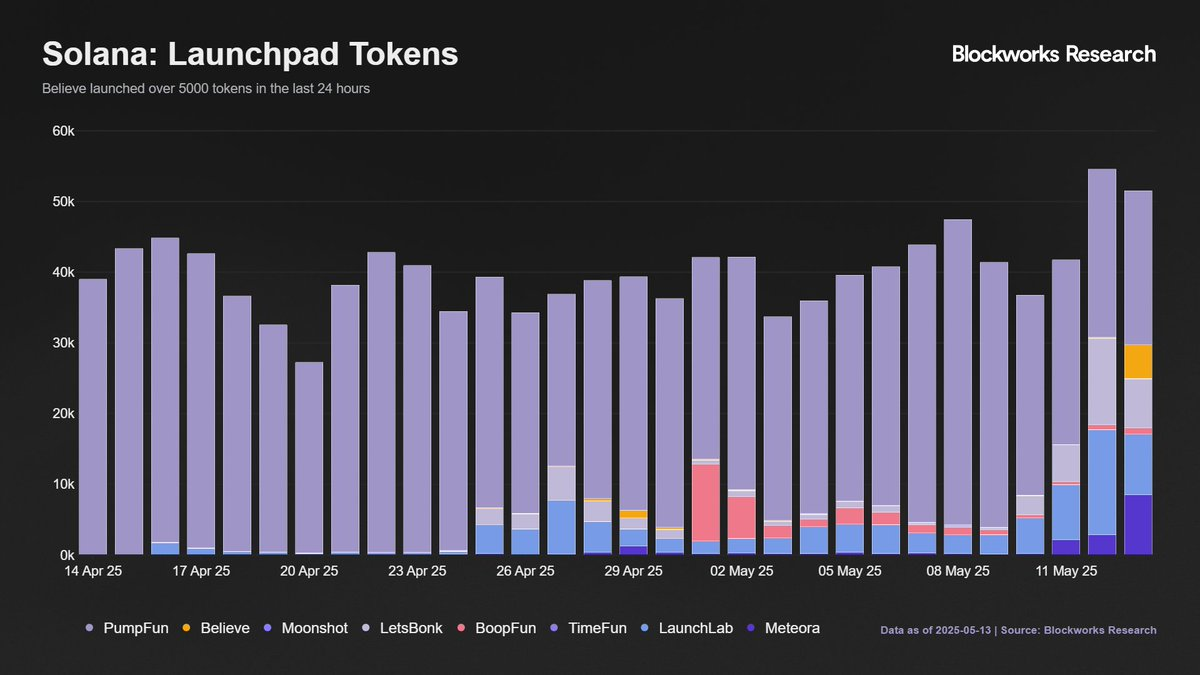
It is now the third-largest memecoin issuance platform, trailing only @pumpdotfun and @MeteoraAG.
What is ICM?
-
2017-2022: Anonymous users created Memecoins.
-
2023-2024: Anyone can issue their own token, though mostly for entertainment.
-
2025: Everyone can tokenize ideas and raise funds via the internet—a "decentralized Y Combinator."
It’s a hybrid model combining blockchain-powered crowdfunding, structured markets, and online communities.
What does ICM look like?
Suppose you've built a cool app that goes viral and want to raise funds for the next stage. You have these options:
-
Schedule VC meetings, endure 50 rejections, and possibly lose control of your project;
-
Launch on Kickstarter and hope strangers believe in you;
-
Or go straight to "tweet-as-token," getting real-time funding from your community—no middlemen. Those who love your project become early backers.
This is the appeal of Internet Capital Markets (ICM).
How does @believeapp make this happen?
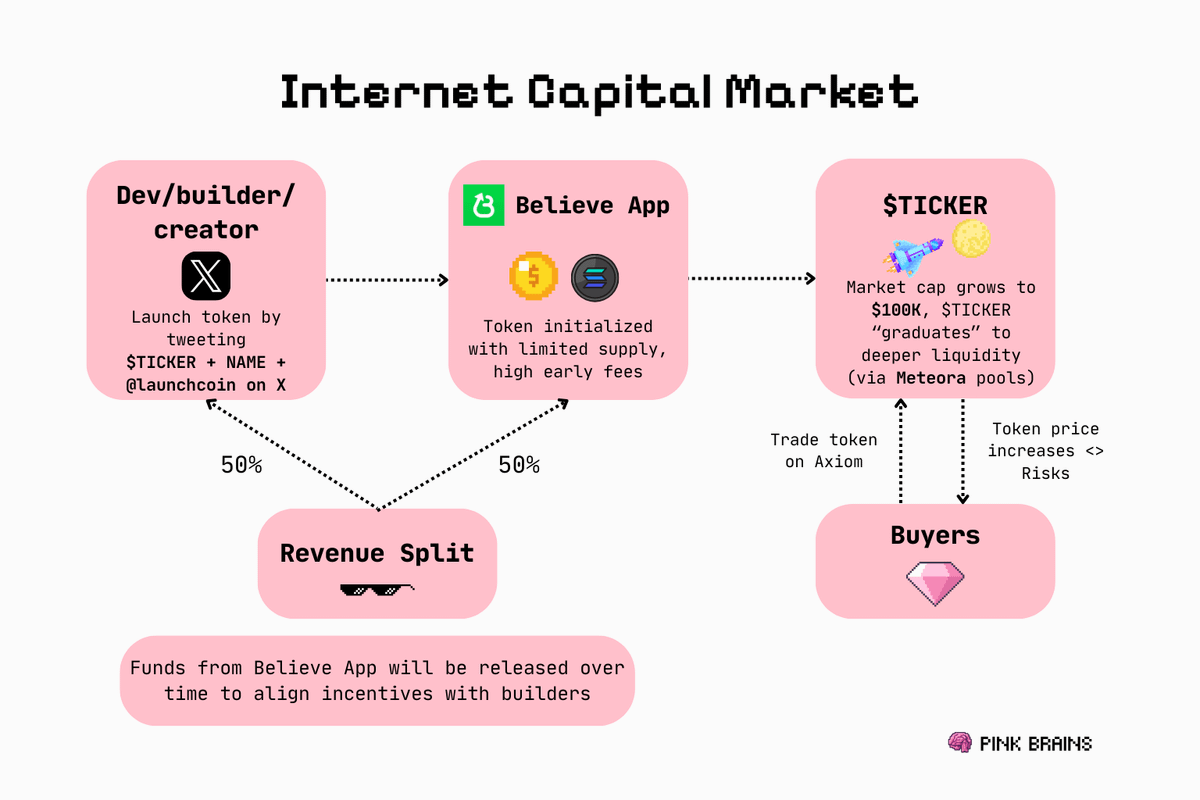
The answer lies in its "tweet-as-token" model and flywheel effect:
-
You post a tweet to create a token;
-
A bonding curve enables trading;
-
When the token reaches $100K market cap, it “graduates” into Meteora’s deep liquidity pool;
-
Fees are split 50/50 between creator and Believe;
-
If your project stands out, Believe App promotes it on-platform;
-
Founders receive funds in stages.
Unlike points systems or private sales, Believe lowers the barrier to token creation to just one tweet.
This permissionless capital creates a reflexive loop:
More creators → Better issuance → More traders → Higher fees → More creators.
Vision: Democratizing venture capital
Users simply reply to a tweet with "@launchcoin + name" to mint a new token, aiming to convert online attention into permissionless capital.
This drastically reduces the barrier to launching tokens on Solana.
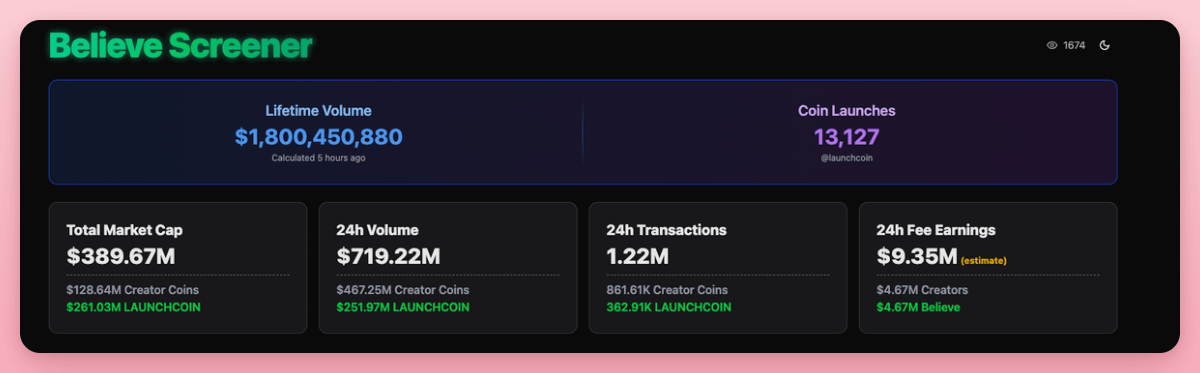
In the past 24 hours alone, over 5,000 tokens were launched on Believe.
This achievement places it third in token issuance volume, capturing 14% market share.
New tokens start with a bonding curve and anti-snipe fees.
If market cap hits $100K, they can “graduate” into a Meteora DEX pool for deeper liquidity.
Creators claim 50% of trading fees, incentivizing participation.
@believeapp is growing fast, targeting "utility coins" and focusing on Web2 developers.
There’s a gap in underpriced venture financing, and Believe aims to fill it.
Yet regulatory uncertainty remains high. Believe refers to tokens as "digital merch," not equity, but SEC scrutiny is still a key unknown.
Market volatility is extreme—similar to memecoins—meaning potential for quick gains alongside severe losses.
Believe’s "tweet-as-token" is a compelling SocialFi experiment, offering unprecedented ease in token issuance.
However, its sustainability depends on creating real value beyond hype.
Why is everyone interested?
ICM arrives at the right time:
-
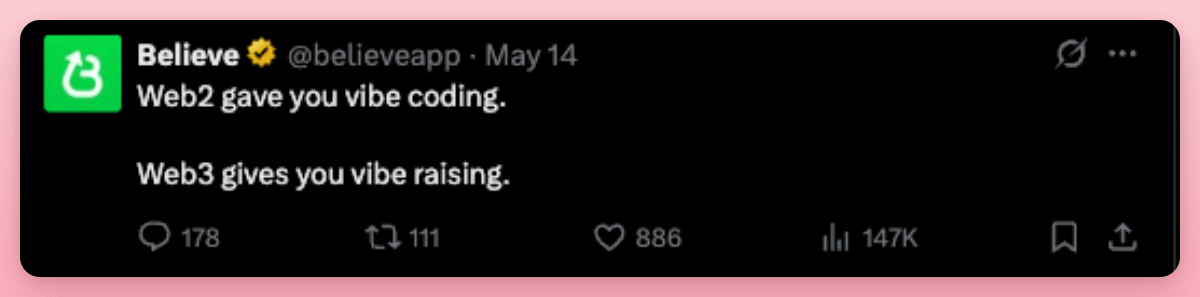
We're in the era of "vibe coding"—ICM fills the gap where low-cost internet ideas don’t fit traditional VC models;
-
Social media acts as a distribution engine;
-
Memecoins have proven the power of community;
-
Solana is driving this new narrative.
How is @believeapp performing?
Performance is outstanding.
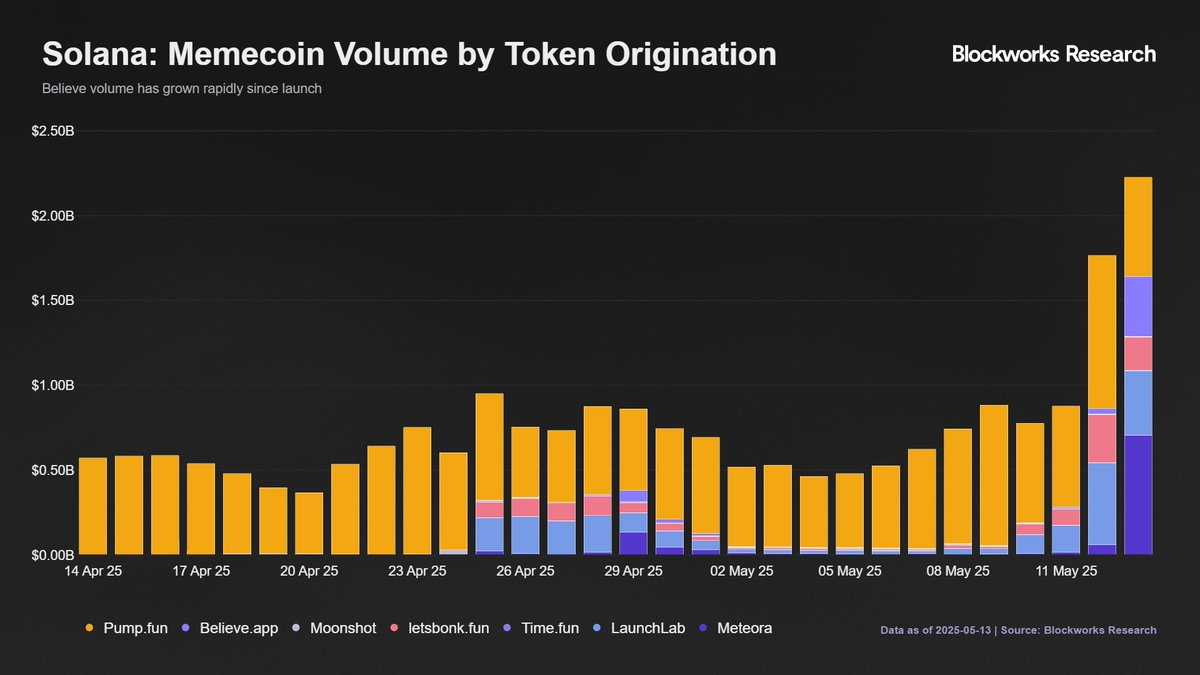
Believe App ranks third in issuance volume, behind only @pumpdotfun and @MeteoraAG.
Over 13,000 tokens issued, 14% market share, and 24-hour fee revenue exceeding $9 million—an astonishing figure.
ICM Projects
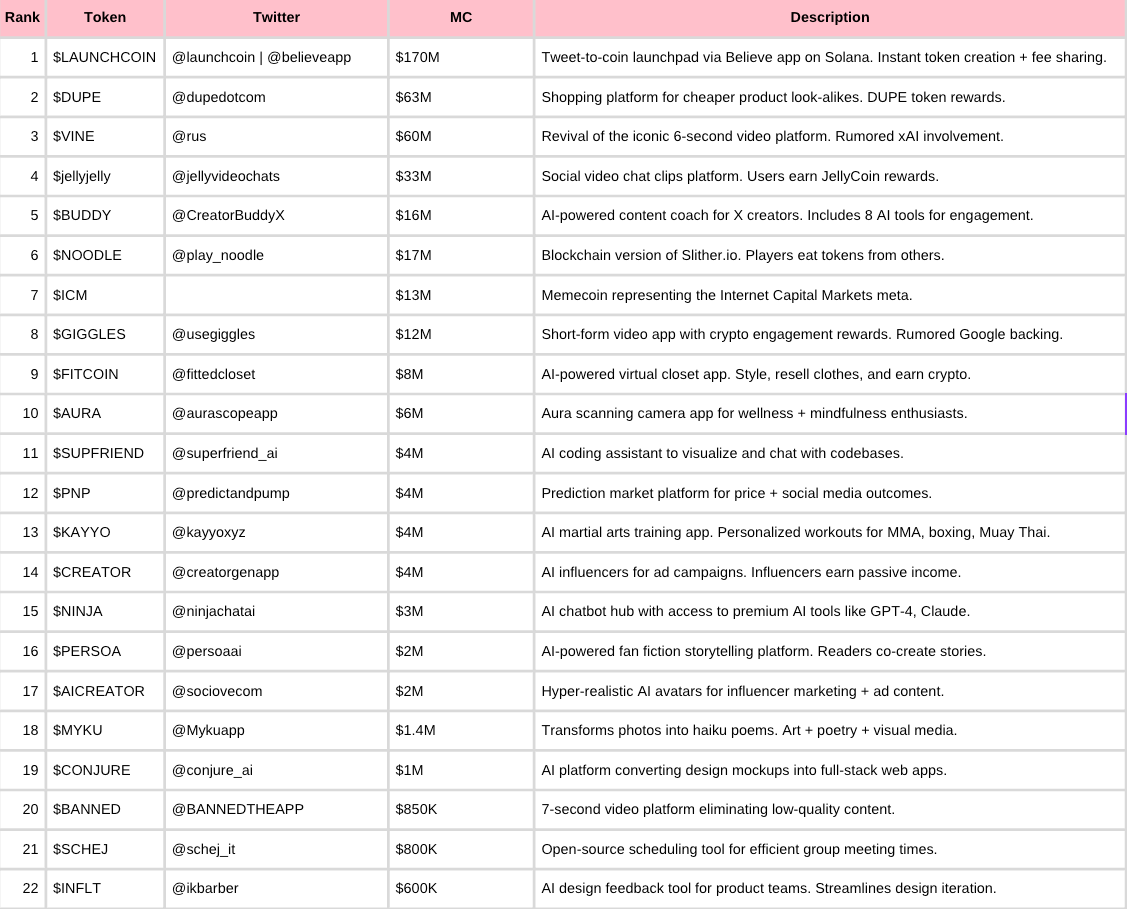
Here are some popular projects launched via @believeapp’s Launchcoin:
$LAUNCHCOIN (launched by @launchcoin) peaked at a $352M market cap (up 50x in 3 days).
Data may have changed by the time you read this.
Other token launch platforms on Solana:
-
@pumpdotfun, @MeteoraAG, @RaydiumProtocol: Solana’s original memecoin factories;
-
@boopdotfun: A newer, KOL-focused launchpad offering structured rewards including airdrops and fee shares for $BOOP stakers.
What Believe App is building radiates SocialFi energy:
Can frictionless token creation build real ecosystems—or will it collapse under its own hype cycles?
We don’t know yet.
But explore cautiously—everyone is watching how this unfolds.
Join TechFlow official community to stay tuned
Telegram:https://t.me/TechFlowDaily
X (Twitter):https://x.com/TechFlowPost
X (Twitter) EN:https://x.com/BlockFlow_News
 @blockworksres