ICM: Solana's Strategic Upgrade Core Narrative and Popular Project Overview
TechFlow Selected TechFlow Selected
ICM: Solana's Strategic Upgrade Core Narrative and Popular Project Overview
For Solana, ICM is not just an extension of performance competition, but a redefinition of its ecosystem structure.
 Navigating Web3 tides with focused insights
Recently, Solana's meme ecosystem has heated up once again. The Chinese meme "Suolarar," initiated by the community and recognized by Solana, has seen its market capitalization surpass $15 million in a short period. Its launch platform, Trends.fun, has also become a new focal point. Meanwhile, Pump.fun, a leading meme launching platform within the Solana ecosystem, recently launched a new X account named "Spotlight," which announced an accelerated push toward building ICM infrastructure.
This series of market movements is no coincidence but reflects a strategic shift at the systemic level for Solana. ICM (Internet Capital Markets) has been positioned by Solana as a core future strategy, aiming to elevate the internet from an information transmission layer to a value circulation layer. By bringing issuance, pricing, and settlement fully on-chain, ICM seeks to reconstruct the foundational logic of global capital markets, enabling funds and users to circulate directly over open networks without intermediaries and with high efficiency. For Solana, this is not merely a performance race at the technical level, but rather a complete ecosystem reconstruction. Below, CoinW Research will explore ICM’s roadmap and recent ecosystem developments.
1. Overview of ICM
1. Concept of ICM
ICM (Internet Capital Markets) refers to a new financial infrastructure based on blockchain and decentralized technologies, aiming to bring the entire process of issuance, pricing, and trading on-chain so that any user with internet access can directly participate in capital markets. Unlike traditional models reliant on brokers, investment banks, and other intermediaries, ICM uses smart contracts to enable trustless fundraising and investing, significantly lowering the barriers to asset issuance and investment. This concept can be seen as an evolution of crypto fundraising—progressing from ICO, IEO, IDO, and Launchpad models—with each iteration enhancing transparency and liquidity. ICM further integrates these mechanisms to build a unified on-chain capital market. The chairman of the Solana Foundation stated that ICM’s ultimate vision is “to use blockchain to create a global financial infrastructure, allowing anyone with internet access to participate in asset investment and trading.”
In May this year, the ICM concept rapidly gained popularity due to the launch of new platforms like Believe within the Solana ecosystem. Believe operates under the core principle of “attention as capital,” leveraging social sharing to trigger on-chain issuance, allowing users to create tokens, set prices, and begin trading within minutes. ICM not only continues the trend of disintermediation in the crypto market but also represents a deep restructuring of financing frameworks and value discovery mechanisms. Its potential lies in advancing on-chain markets from isolated innovations to system-level financial infrastructure.
2. ICM Roadmap
In July 2025, the Solana team, together with institutions including Anza, Jito Labs, and Drift, released the “Internet Capital Markets Roadmap.” According to this document, ICM’s technological development is divided into three phases: short-term, mid-term, and long-term.
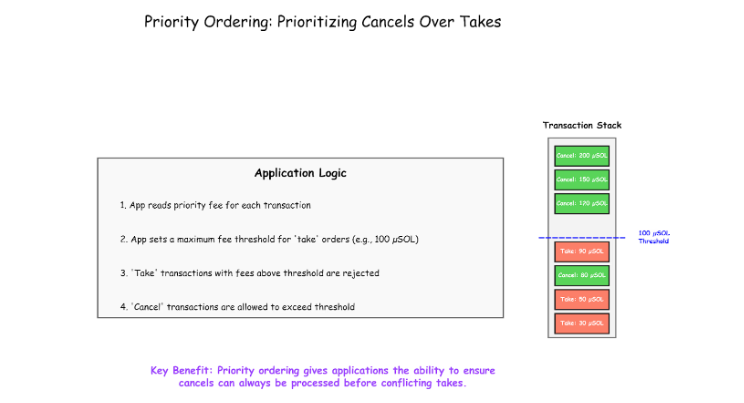
• Short-term: Focus is on launching BAM (Block Building Market), developed by Jito Labs, and advancing transaction landing via Anza. BAM is a next-generation high-performance transaction execution system operating within a Trusted Execution Environment (TEE), providing verifiable and privacy-preserving execution space for validators and developers. It enables applications to customize transaction ordering logic, achieving performance close to ACE. BAM allows on-chain Central Limit Order Books (CLOBs) to match the execution efficiency of centralized exchanges while maintaining transparency and determinism, significantly improving fairness and trust in execution. BAM went live on mainnet at the end of September. Concurrently, Anza is continuously improving transaction landing mechanisms by optimizing the QUIC protocol and introducing a unified scheduling system, enabling transactions to be stably included within the same block cycle, thus establishing a low-latency, highly reliable execution layer foundation for Solana.
• Mid-term: The mid-term plan focuses on the DoubleZero fiber network, the Alpenglow consensus protocol, and the Asynchronous Program Execution (APE) mechanism. DoubleZero is a high-performance fiber network designed specifically for distributed systems, capable of reducing transaction latency to sub-hundred milliseconds and increasing bandwidth by approximately tenfold. With multicast acceleration and traffic filtering layers, it enhances network stability and resistance to attacks. Alpenglow is a new consensus protocol that reduces block confirmation time from around 12.8 seconds to 150 milliseconds, simplifies consensus logic, and lays the groundwork for Multi-Concurrent Leaders (MCL) and asynchronous execution. APE further shortens transaction landing time by eliminating the need for execution replay. These three upgrades will jointly build a low-latency, high-bandwidth execution foundation for Solana, providing more efficient infrastructure for decentralized capital markets.
• Long-term (beyond 2027): The long-term goal is to implement the Multi-Concurrent Leader (MCL) model and Application-Controlled Execution (ACE) enforced at the protocol layer. The MCL model allows multiple validators to produce blocks simultaneously, reducing geographical latency and censorship risks while improving global information synchronization efficiency. ACE will empower applications at the protocol layer to define custom matching logic and transaction ordering, creating a truly open and programmable microstructure. At that stage, Solana could become the foundational technical infrastructure supporting the deepest liquidity in a decentralized global capital market, enabling the full realization of Internet Capital Markets.
Source:anza.xyz
2. Recent Popular Projects in the ICM Ecosystem
1. MetaDAO
MetaDAO is currently the highest-market-cap project under the ICM concept, backed by Paradigm and viewed as a new engine for decentralized fundraising. Its core innovation lies in adopting the Futarchy governance model proposed by economist Robin Hanson, where market prices—not token-holder voting—decide whether project proposals are approved, enabling more efficient and market-driven governance. All USDC raised by the platform is held in an on-chain treasury. The system uses prediction markets to allow participants to bet on a proposal’s potential impact. If most believe a proposal will boost the token price, the “Yes” position price rises above the “No” position. When the “Yes” market price exceeds the “No” price by at least 1.5%, strong market consensus is reached, indicating a positive impact on token value, and only then can the team access treasury funds. This design ensures fund usage undergoes market validation, preventing subjective decisions, fund misuse, or short-term profiteering.
At the same time, MetaDAO implements strict anti-Rug and performance-based incentive mechanisms to balance security and motivation. Specifically, 20% of raised funds and 50% of project tokens are locked in a protocol-controlled liquidity pool to prevent early team dumping. Team incentives unlock gradually as the token price reaches predefined milestones. Notably, MetaDAO introduces a “3-month average price verification mechanism,” requiring the token price to remain above the target average for three consecutive months before unlocking corresponding incentives. Combined with an 18-month lockup period, this reinforces a long-term development orientation and protects investor and community interests. Through the triple mechanism of Futarchy governance, on-chain treasury custody, and performance incentives, MetaDAO ensures investor safety while driving teams to focus on long-term value growth and sustained operations. Currently, its platform token META has a market cap of approximately $173 million.
2. Believe
Believe pioneered the “tweet-as-token” model, drastically lowering the barrier to token issuance. Users need only reply “@launchcoin + token name” under any tweet to automatically mint a token. Once created, the token automatically generates a trading pool via a bonding curve, enabling initial price discovery. When a token’s market cap reaches $100,000, the project “graduates” and qualifies for Meteora’s deep liquidity pool on Solana’s decentralized exchange, gaining stronger trading capacity. The platform’s revenue distribution is also innovative: transaction fees are split equally between creators and the Believe platform, creating ongoing incentives. Project funding follows a staged unlocking mechanism to ensure long-term and transparent fund usage. The platform token LaunchCoin once surpassed a $400 million market cap, fueling rapid popularity for the ICM concept.
However, Believe still faces uncertainties. The LaunchCoin flywheel mechanism remains undisclosed, and multiple promised updates from the founding team have yet to materialize, causing market enthusiasm to cool and community sentiment to turn cautious. Weak sniping protection and insufficient liquidity absorption mean most tokens remain small-cap with limited depth, unable to support significant price breakthroughs. Overall liquidity remains concentrated in on-chain markets, lacking dominant leaders driven by strong sentiment. Believe has generated 53,720 tokens, but only about 104 are active. Aside from LaunchCoin itself, other tokens face constrained upside potential. Currently, LaunchCoin has a market cap of $67.02 million.

Source:believescreener
3. Trends.fun
On October 20, the Chinese meme “Suolarar,” initiated by the community and endorsed by Solana, was launched on Trends.fun, quickly sparking market interest. Other related tokens issued by Trends.fun have also become new PVP focal points. Trends.fun is a rising content-monetization platform whose core idea is enabling social content to achieve “instant posting, instant token.” Users can tag any post on X via the Trends.fun social tokenization bot to automatically generate a corresponding token, directly linking social reach, community consensus, and token price. Unlike traditional ICM platforms, Trends.fun emphasizes a social-data-driven value discovery mechanism—higher content attention leads to more active trading, and price fluctuations better reflect real market sentiment and consensus, thereby building a new economic model where content equals assets.
Trends.fun’s economic model is based on bonding curves, using social热度 to drive dynamic price adjustments and directly link content influence with market value. The fee structure is clear: creating a token costs approximately 0.016 SOL, covering both Solana’s on-chain creation fee and Metaplex’s metadata storage fee, with no additional charges from the platform. Buying, selling, and DEX transactions incur a 1% fee on transaction volume. In terms of revenue distribution, “Creators” receive 20% of transaction fees from trades involving their associated trend tokens, while “Trendors” earn 5% of fees from every transaction linked to the X posts they triggered. The remainder supports system maintenance and ecosystem development. Unclaimed rewards expire automatically after three months, creating time-bound incentives and deflationary effects.
4. ICM.RUN
ICM.RUN is a decentralized project incubation platform built on ICM principles, aiming to establish an open创业 and fundraising system within the Solana ecosystem. Governed as a DAO, ICM.RUN allows anyone to submit fundraising and incubation proposals; investors can participate in crowdfunding and gain governance rights. The overall process includes founder application submission, mentor voting evaluation, DAO onboarding for incubation, token deposit into treasury, and subsequent distribution. Accepted projects must allocate around 1% of their token supply to the DAO treasury for proportional distribution to future ICM token holders. All operations occur on-chain, ensuring transparency and traceability.
ICM.RUN’s core mechanisms revolve around value capture and ecosystem collaboration. The platform uses a three-layer structure to recycle token value: the first layer is incubation, where the DAO screens projects via mentor voting and shares early token gains; the second is the ecosystem layer, where the platform partners with multiple Solana-based Launchpads to assist quality projects with incubation and launch; the third is the NFT incentive layer, offering whitelist access, airdrops, and presales to community members. Overall, ICM.RUN aims to replace traditional venture capital models with decentralized incubation and market-driven governance, lowering early-stage fundraising barriers and increasing funding transparency. The team is now planning to launch a Venture Arm under the DAO to expand on-chain incubation channels for traditional startup teams. Currently, its platform token ICM has a market cap of approximately $17.9 million.

Source:icm.run
5. DoubleZero
DoubleZero is an infrastructure project focused on optimizing underlying network performance within the Solana ecosystem and serves as a key technical component in realizing the ICM vision. DoubleZero proposes the IBRL (Increase Bandwidth, Reduce Latency) architecture, aiming to significantly reduce consensus latency and improve system throughput by optimizing node communication paths and reducing network jitter and congestion. DoubleZero aims to achieve an average latency below 10 milliseconds and several-fold increases in throughput on the Solana mainnet, providing performance support for capital market applications such as high-frequency trading and real-time settlement.
Technically, DoubleZero is a high-performance dedicated fiber network layer designed for distributed systems, serving as a foundational performance enabler within the Solana network and ICM ecosystem. Beyond performance optimization, DoubleZero also functions as a robust data filtering layer, protecting the network from denial-of-service (DoS) attacks and abnormal traffic, reducing overload pressure on validators and RPC nodes, and allowing node resources to focus on execution tasks and block expansion—thereby improving overall network efficiency and scalability. Through this architecture, DoubleZero provides ICM with essential underlying communication and defense capabilities.
3. Conclusion
ICM represents Solana’s most strategic long-term direction, aiming to upgrade the internet from an information transmission layer to a value circulation layer, bringing asset issuance, price formation, and settlement fully on-chain to build an open, transparent, and low-friction global capital network. This system seeks to lower capital formation barriers and enhance market efficiency and verifiability, pushing blockchain beyond being a transaction medium toward becoming a financial infrastructure. For Solana, ICM is not just an extension of performance competition, but a redefinition of ecosystem structure, integrating network performance, market mechanisms, and governance into a cross-layer capital operation framework.
However, ICM remains in its early stages and has not yet formed a closed-loop system. While Solana has outlined a clear technical roadmap—including key modules like the BAM execution layer and DoubleZero network layer—these infrastructures are still undergoing performance validation. On the application side, projects like MetaDAO, Believe, and Trends.fun have demonstrated diverse experiments, but ecosystem coordination and liquidity integration remain limited. Currently, ICM resembles more of a systemic consensus than a mature market structure. Its ultimate success will depend on the delivery of underlying performance, the sustainability of market mechanisms, and the maturity of institutional environments. As these elements gradually align, Solana may evolve from a high-performance public chain into a financial infrastructure supporting global value circulation.
Join TechFlow official community to stay tuned
Telegram:https://t.me/TechFlowDaily
X (Twitter):https://x.com/TechFlowPost
X (Twitter) EN:https://x.com/BlockFlow_News
 @CoinWOfficial