Behind the China-U.S. Joint Statement: A 250-Year Cycle of Power Game
TechFlow Selected TechFlow Selected
Behind the China-U.S. Joint Statement: A 250-Year Cycle of Power Game
Constructive forces can always help us navigate through cycles better than destructive ones.
 Navigating Web3 tides with focused insights
Author: Liu Run
Introduction
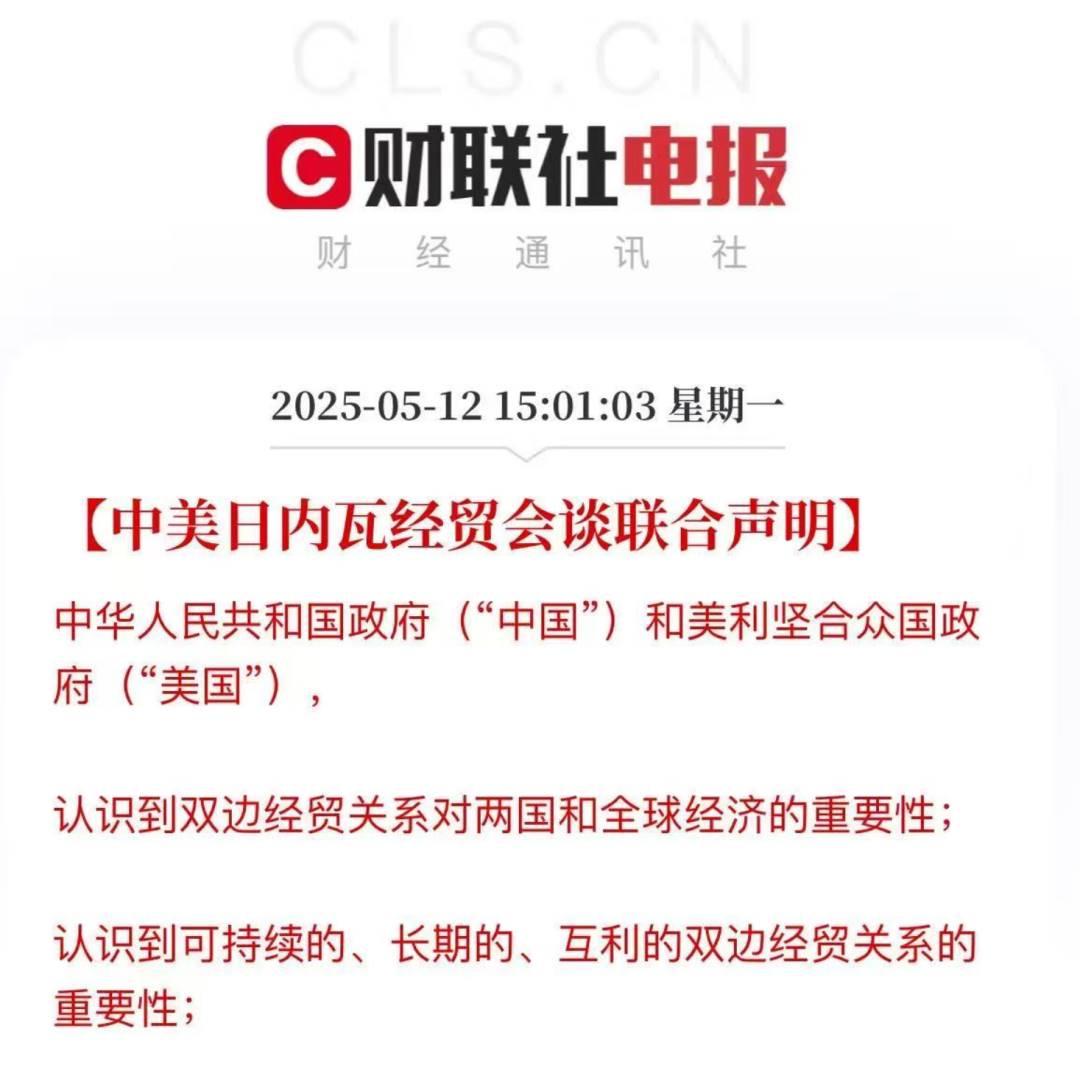
Yesterday, China and the U.S. issued a joint statement.
(Image from the internet)
There are many online reports about specific numbers in the tariff negotiations. One widely circulated version states: China retains a 10% tariff on the U.S., while the U.S. retains a 10% reciprocal tariff and an additional 20% "fentanyl tariff" on China. As for the proposed 24% tariffs, whether they will be imposed by either side will depend on the results of further negotiations after 90 days.
The trade war has finally reached a阶段性 outcome. It’s no longer as tense as it was a month ago—this is somewhat of a relief.
But how long will this relief last? After 90 days, will we see mutual satisfaction or a new round of escalation?
It's hard to say.
On the surface, the China-U.S. rivalry is about tariff barriers. But in reality, the competition between China and the U.S. is over话语权 in the economic order, even dominance in shaping a new global landscape.
Why do I say that?
This is a big topic—one that can't easily be explained in just a few words. Fortunately, I know someone who can help: Ray Dalio.
You may have heard of him—the founder of Bridgewater Associates, managing hundreds of billions in assets, author of the bestseller *Principles*. But what impresses me most isn’t just his achievements, but his ability to make extremely macro-level topics crystal clear.
This time, I recommend his video, *The Changing World Order*. In it, Ray Dalio examines the past 500 years of history, sharing deep insights and thoughtful perspectives on great power rivalry.
Understanding this video might greatly help you grasp the underlying implications of the recent China-U.S. joint statement, and where this rivalry is headed.
So, I’ve picked out several key concepts from the video and will try to explain them for you.
Ready? Let’s begin.
01 The Big Cycle
The Big Cycle.
This is the concept mentioned most frequently in the video.
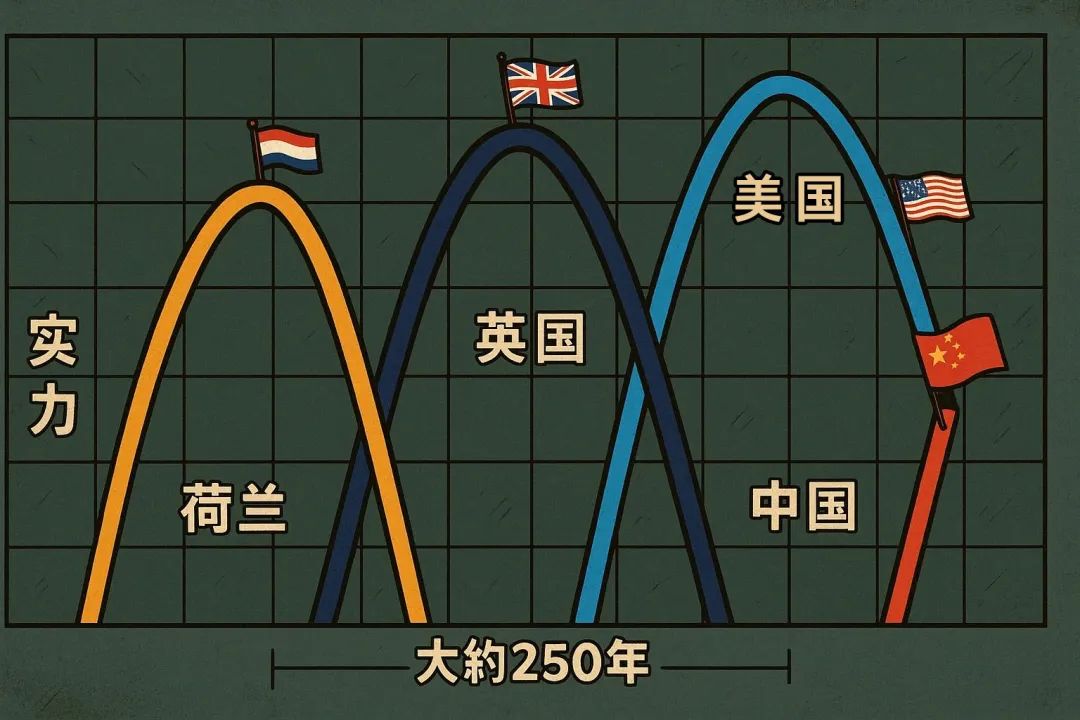
A person’s life has periods of youth and strength, followed by aging and decline. Nations are similar. Looking back at the past 500 years, the full cycle of a great power’s rise and fall typically lasts around 250 years.
(Source: *The Changing World Order*)
This 250-year span usually includes three phases: rise, peak, and decline.
Rise is like adolescence.
The population works hard and values education—just as the Dutch did when they rapidly became Europe’s knowledge hub. Innovation flourishes—like Britain during the Industrial Revolution. The economy grows quickly and moves toward its peak.
Peak is like adulthood.
Economic, military, and cultural strength reach world-leading levels. The nation’s currency becomes a hard currency—whether it was the Dutch guilder, the British pound, or today’s U.S. dollar. People start enjoying life and borrowing to consume, planting seeds for future decline.
Decline is like old age.
The cost of maintaining “top dog” status keeps rising, leading to deficits. Just as colonial expansion eventually dragged down the Dutch and British empires. Wealth inequality widens, and rising powers watch closely. Amid internal unrest and external threats, the once-dominant power must eventually step aside.
With this model in mind, does today’s world seem a bit clearer?
The U.S. today may have passed its peak and begun showing signs of aging, while China has matured and is striving for leadership.
The root cause of recurring conflicts isn’t tied to any single leader (e.g., Trump) or policy (e.g., 200% tariffs).
Because shifts in leadership inevitably bring conflict. A dominant power, before declining, always puts up a struggle.
Alright. Now let’s zoom in closer and examine this process more carefully.
02 Rise of a Great Power
What does it take for a great power to rise?
Imagine you’ve just won a war. Peace prevails at home, and no one dares challenge you.
At this point, there’s one critical task: invest in education.
Because education drives higher productivity.
Take the Netherlands as an example. After defeating the Habsburgs, they used mass education to unleash waves of innovation, contributing a quarter of the world’s major inventions at the time—including advanced sailing ships capable of circumnavigating the globe.
Higher productivity makes your products more competitive. Selling more goods generates revenue that can be reinvested in education. This process snowballs.
To accelerate this snowball effect, you need an “accelerator”: capital markets.
Instruments like loans, bonds, and stock markets allow savings to be converted into investments, funding innovation and enabling shared success. Thus, the Dutch founded the first publicly traded company—the Dutch East India Company—and the stock market that financed it.
All rising powers develop global financial centers to attract and allocate capital.
During the Dutch era, Amsterdam was the world’s financial hub. During Britain’s reign, it was London. Today, it’s New York. China is now rapidly building its own financial center.
As a country becomes the world’s largest trading nation, its currency naturally becomes the preferred medium of exchange globally.
This is known as: reserve currency.
03 Reserve Currency
A reserve currency is the Dutch guilder during Dutch dominance, the British pound when the British Empire claimed the sun never set on its territories, and the green U.S. dollar from WWII to today.
It rests on strong economic and military power, and a stable financial system.
When a nation’s currency becomes a “reserve currency,” it gains a kind of “cheat code” privilege.
For example, you can borrow money much more easily than other countries—because everyone wants to hold your currency.
This means that when you run short on funds, you can simply fire up the printing press, churn out money, and spend freely abroad—and others will still accept it.
Feels great.
However, when a country becomes accustomed to “prosperity,” its internal structure often develops crises.
04 Wealth Inequality
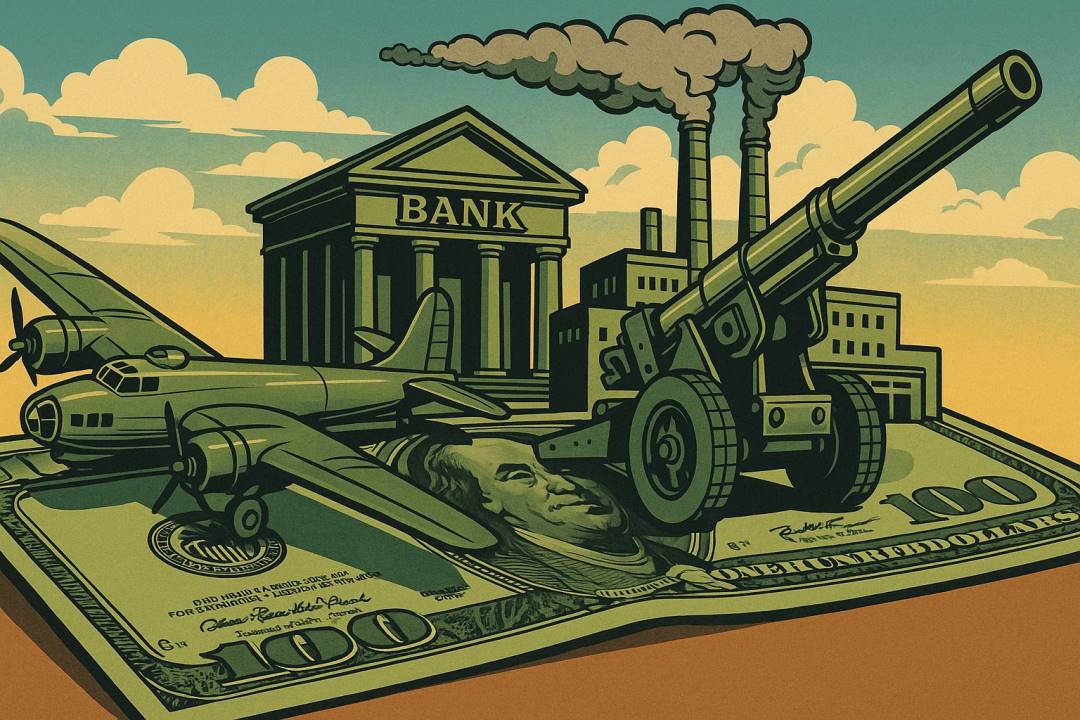
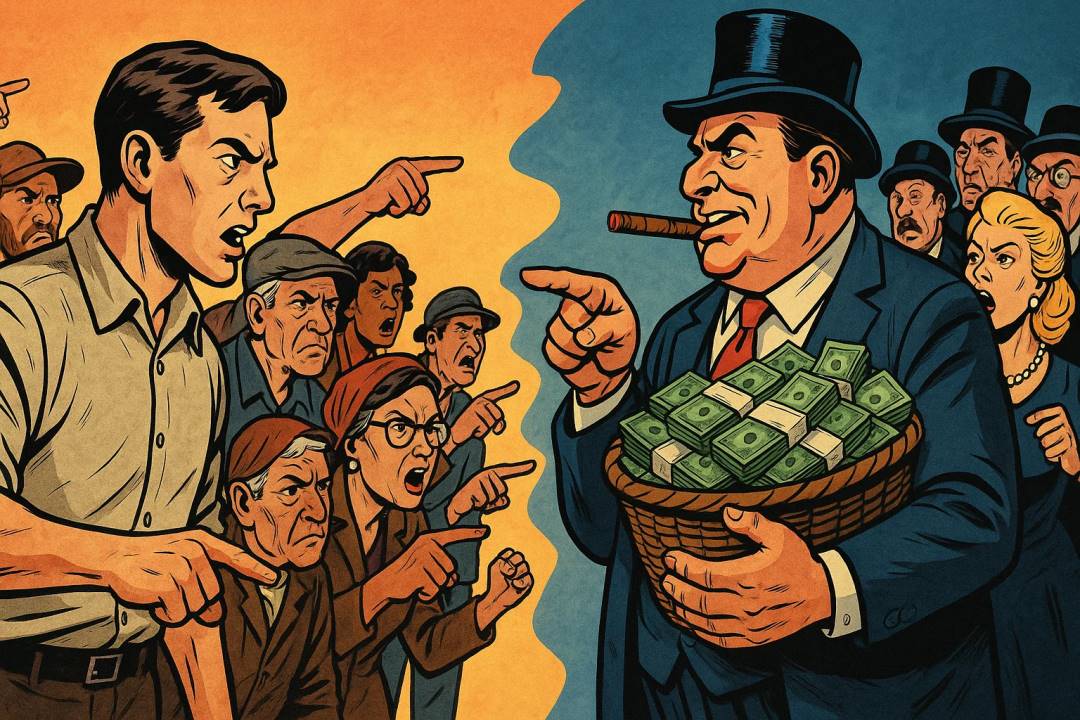
When a dominant power enters late midlife, one problem begins to grow like cancer cells, reinforcing itself:
Wealth inequality.
Once you’re wealthy, you naturally want to give your children better education and a higher starting point. You’ll also want to diversify your assets—buying funds here, purchasing property there.
This is much faster than earning through labor.
When governments notice this trend and attempt to tax the rich, the wealthy feel their assets are threatened and move them to safer jurisdictions, further weakening the national economy and tax base—a vicious cycle.
Over time, social classes become rigid.
It becomes increasingly difficult to rise from nothing to achieve upward mobility.
When most people start feeling the game is rigged and effort doesn’t match reward, resentment and discontent spread like wildfire.
Then what? Society begins to fracture.
The line between “us” and “them” grows sharper.
The political left calls for wealth redistribution, while the right demands protection of private property.
This division drains immense national energy.
Look back at the later stages of the Dutch “Golden Age” and the end of Britain’s Victorian era. Escalating internal contradictions were key signs of imperial decline.
Now you can probably understand why U.S. politics today is so polarized and society remains locked in endless debate over social issues.
These are classic symptoms of a nation in late midlife—they not only hinder domestic policy execution but also weaken the unity and strength needed for long-term competition with China.
The former hegemon, burdened by debt from abusing its reserve currency status and weakened by growing inequality, grows frail.
Facing this predicament, what “treatment” is it most likely to resort to for survival?
05 Printing Press
History has told us again and again. That treatment is most likely called:
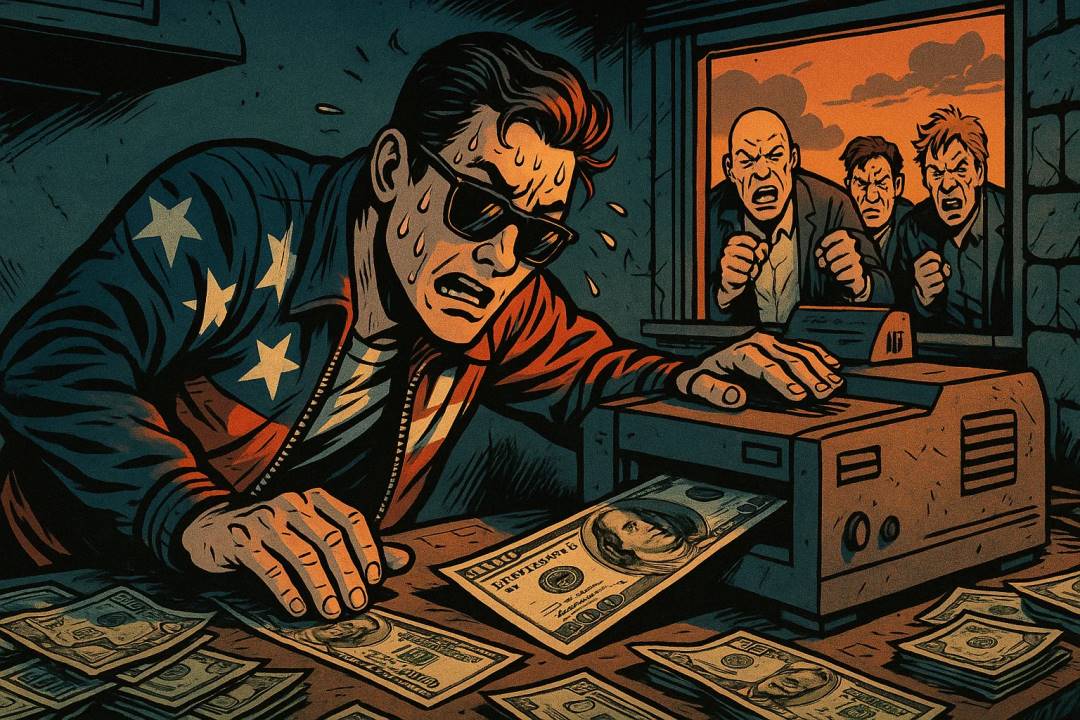
Printing press.
Well, why not tighten the belt, implement fiscal austerity, or just declare bankruptcy and default on debts?
Theoretically possible, but politically impossible.
Fiscal tightening means cutting welfare and public spending—people won’t stand for it. What about votes?
Defaulting on debt means total collapse of national credit, possibly bringing down the entire financial system. Who would lend to you then?
By comparison, printing money becomes the seemingly “least painful” option.
Everyone knows it’s “drinking poison to quench thirst,” but at least it pushes the debt crisis into the future.
What comes after? We’ll cross that bridge when we come to it—let future generations figure it out.
And the pain of inflation? Share it among all holders of the currency—both domestic citizens and foreign creditors—which seems “fair.”
But is printing money really a magic solution?
Of course not. It leads to a series of negative consequences.
For instance, money loses value.
Today’s 100 units might buy only 80 units’ worth tomorrow. Food, clothing, and daily goods keep getting more expensive.
Also, asset bubbles inflate further.
The newly printed money doesn’t flow into the real economy to create jobs, but floods into stocks, real estate, and gold, pushing up asset prices.
Asset owners grow richer. Those without assets fall further behind due to inflation.
Now you can understand why the U.S. responded to the 2008 subprime crisis and the 2020 pandemic-induced economic crisis with such massive fiscal stimulus.
Because faced with unsustainable debt and the need to maintain global competitiveness, printing money became the easiest choice.
Even though it risks fueling inflation, creating bubbles, and eroding the dollar’s credibility over time.
Once your strength declines and you can’t repay debts, yet keep printing money, who will still trust you? Fewer and fewer. People start dumping your currency and assets—financial collapse begins.
The histories of the Dutch guilder and the British pound confirm this. The U.S. dollar, while still dominant, carries ever-heavier debt and faces looming trust issues—signs of trouble ahead.
In 2024, U.S. merchandise imports totaled $3.3 trillion, exports $2.1 trillion. Last year, Americans spent $1.2 trillion more than they earned—about 9 trillion RMB.
At this point, the world enters an extremely unstable phase:
Transition period.
06 Transition Period
As mentioned earlier, each big cycle lasts roughly 250 years, typically including a 10–20 year transition period—a time of intense conflict.
The China-U.S. rivalry lies at the heart of this current transition.
For today’s United States, three major developments have already emerged.
The first is “money can only be printed.”
The nation lacks sufficient funds to repay debts—even with interest rates at zero. The central bank starts printing money to cover obligations. Annual fiscal spending must be funded entirely by borrowing.
The second is “social cohesion is breaking down.”
Society is filled with tension. The root cause? Extreme wealth inequality. The rich seek stability, the poor demand redistribution—politics becomes a battlefield of mutual attacks.
The third is “a rising external power watching closely.”
China is rising.
When the balance of power shifts, the existing world order becomes obsolete.
Yet there’s no global mechanism—like a court—to peacefully resolve disputes. Ultimately, dominance is often decided through contests of strength, sometimes even war.
Similar situations have occurred multiple times in history.
The last time was between 1930 and 1945. After WWII, the U.S.-led establishment of the UN, World Bank, IMF, and Bretton Woods system created a postwar world order centered on the dollar.
An old cycle ended, and a new one began.
History rolls forward through these cycles of rise and fall.
Now, understanding these patterns, what should ordinary people do?
07 Two Suggestions
Dalio’s research isn’t merely academic curiosity or investment advice.
He hopes that by revealing these patterns, we can better understand our era and make wiser choices.
At the end of the video, Ray Dalio offers two suggestions.
1) Live within your means. 2) Treat each other well.
What do these mean exactly?
Living within your means means: act according to your capabilities, avoid excessive debt.
For a nation, consistently spending more than it earns and living on borrowed money will inevitably lead to crisis. For individuals, managing cash flow and debt is fundamental to navigating future uncertainty.
In an era where uncertainty is the only certainty, having cash in hand brings peace of mind.
Treating each other well means: show more kindness, less hostility.
For a society, intense internal conflict consumes enormous energy and leads to fragility. Only through fairness, unity, and cooperation can a society maintain cohesion and competitiveness. For individuals, in a diverse and pluralistic society, we should strive for understanding and dialogue—not polarization.
Constructive forces are always more powerful than destructive ones in helping us endure cycles.
Standing in 2025 and looking back over 500 years, today’s “chaotic” world begins to look a little clearer.
The world is undergoing a profound transformation.
When a great power no longer proves itself through innovation and progress, but instead asserts strength through taxes, sanctions, and suppression; when it no longer solves problems through unity and wisdom, but maintains rule by printing money and stoking division—its future may already be clear.
Like a once-mighty ship that ruled the seas. The captain keeps pouring fuel into the engine, hoping to go faster. But he forgets the hull is leaking, the crew is blaming each other, and a storm is approaching.
This isn’t about who’s right or wrong—it’s about patterns, the force of cycles.
As individuals, all we can do is stay清醒, live within our means, and treat each other well.
In this uncertain era, perhaps the most important thing isn’t arguing over right and wrong, but preserving inner peace and rationality.
The storm will pass. The sun will rise.
Until then, we wait and observe.
Join TechFlow official community to stay tuned
Telegram:https://t.me/TechFlowDaily
X (Twitter):https://x.com/TechFlowPost
X (Twitter) EN:https://x.com/BlockFlow_News