








DePAI: When Robots Meet Web3, Can a New Narrative Begin?
TechFlow Selected TechFlow Selected
DePAI: When Robots Meet Web3, Can a New Narrative Begin?
Digital AI is replacing white-collar jobs, while physical AI is transforming the landscape of blue-collar work.
 Navigating Web3 tides with focused insights
Author: peaq
Translation: TechFlow
NVIDIA introduced the concept of "Physical AI" at CES. Today, "Decentralized Physical AI (DePAI)" has become a hot topic in the crypto space. So, what exactly is DePAI? How is it related to robotics? And what conditions do robots need within peaq's proposed Machine Economy to operate as Decentralized Physical AI?
DePAI: When C3PO Meets Web3
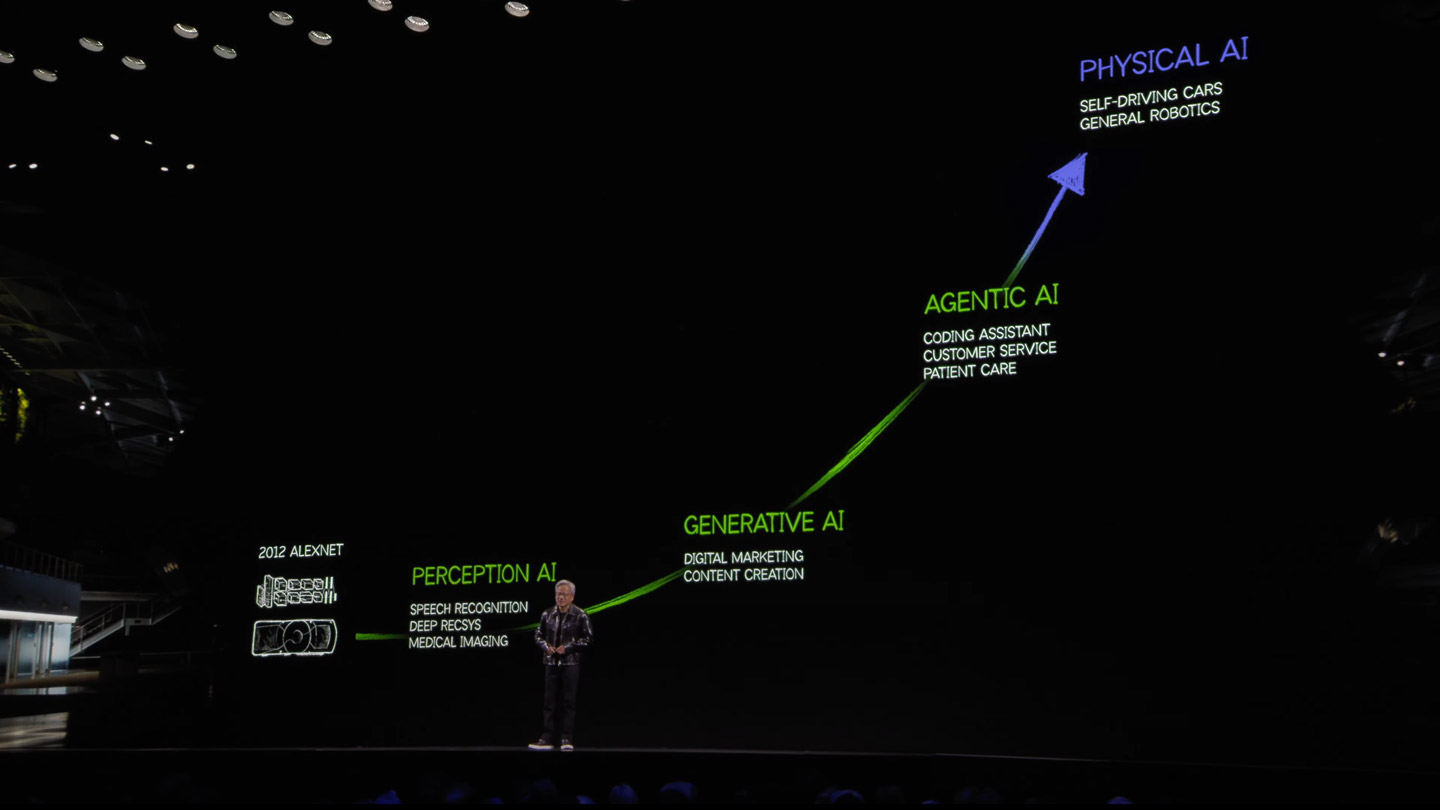
Another new term has emerged. DePAI, short for Decentralized Physical AI, has recently become a focal point in the crypto industry. The concept was coined by Messari, following NVIDIA CEO Jensen Huang’s promotion of the term “Physical AI” at CES in January 2025. This newly coined term has sparked widespread discussion across the industry—and rightfully so.
DePAI is a convergence of cutting-edge fields including AI, robotics, Web3, and DePIN (Decentralized Physical Infrastructure Networks). It organically integrates these emerging domains into a powerful new paradigm. This fusion not only demonstrates their synergistic potential but also signals a transformative shift that could fundamentally reshape the global economy.
So why should you care? If you're part of the workforce, you may already be concerned about AI and robots replacing human jobs. DePAI emerges as a solution to these very challenges. It holds the promise of becoming a major driver of the future global economy, offering a way to manage and mitigate the disruptive impact of AI.
But what exactly is DePAI? How does it differ from traditional physical AI—i.e., robots? And why is it so significant?
Let’s dive in.
What Is DePAI?
At first glance, “Decentralized Physical AI” might not seem entirely novel. After all, decentralized physical hardware networks already exist to provide computing power for AI models. However, DePAI goes far beyond just decentralized computation.
DePAI is a broader concept involving real-world machines—especially robots—leveraging artificial intelligence to survive and thrive in the physical world, all underpinned by Web3 infrastructure. It also relies on crowdsourced data that enables machines to perceive and interact with their environment, along with a full-stack infrastructure supporting the economic model built around this new paradigm.
In simple terms, DePAI fuses robotics, intelligent AI, spatial intelligence, and DePIN into one cohesive vision. It envisions a future where robots—embodied AIs—not only operate autonomously but also possess autonomy and sovereignty within a Web3-powered machine economy.
From AI to DePAI
ChatGPT is now universally recognized. For most people, OpenAI’s large language model (LLM) has become as commonplace as Google, Netflix, or daily social media use. Yet just two years ago, almost no one had heard of ChatGPT.
Even more astonishing is how rapidly AI has evolved—from generative AI focused on content creation to agentic AI capable of independent decision-making. Consider this:
-
Generative AI: You input a weekly meal plan, and the AI generates a shopping list.
-
Agentic AI: It analyzes your health data, creates an optimized meal plan, recommends daily recipes, tracks fridge inventory, and automatically orders groceries when supplies run low—ensuring your kitchen never runs empty.
The leap from reactive generative AI to proactive agentic AI is massive. But the possibilities expand even further when agentic AI gains a physical “body” and begins executing tasks in the real world. Yes, the robot era is here, and AI giants like NVIDIA are leading the charge.
Yet centralized AI—especially centralized physical AI—brings serious risks. For instance, where will the data needed for AI to understand and interact with the physical world come from?
This question extends directly to robotics. Who will own these robots? Which hardware provider will dictate compatibility and interoperability standards? Ultimately, who will profit? Are we headed toward a future where big corporations reap massive profits while ordinary people rely solely on universal basic income (UBI)? Or is another path possible?
The answer lies in DePAI.
DePAI is to physical AI what DePIN is to physical infrastructure—a transformative upgrade that returns control from corporate monopolies back to individuals. That said, DePAI and DePIN aren’t separate; rather, DePIN is a foundational component of the DePAI model.
DePIN provides essential data and services for both digital and physical AI, while peaq builds the core infrastructure layer enabling DePIN and decentralized hardware to function. Beyond these, robots require several other critical layers to operate efficiently as decentralized physical AI in a global machine economy. As we’ll see, DePIN plays a pivotal role across them all.
The Seven Core Layers of DePAI
You’ve likely realized by now that DePAI is an extremely complex system. Building a functional Machine Economy isn’t as simple as putting a Ledger into an Optimus robot.
Truly autonomous physical AI (DePAI) requires support across seven key layers:
-
Hardware Layer: The foundation—robotic devices that allow AI models to interact with the physical world. Without hardware, physical AI remains theoretical.
-
Software Layer: Agentic AI models running on robots, granting them autonomy to perform complex tasks.
-
Data Layer: The fuel for learning and evolution. Without high-quality data, AI cannot adapt to real-world dynamics.
-
Spatial Intelligence Layer: Enables robots to understand and navigate environments—recognizing objects, planning paths, sensing hazards.
-
Infrastructure Network Layer: Supplies essential resources like storage, computing power, and energy—critical for sustained operation.
-
Machine Economy Layer: Integrates all components via specialized protocols, ensuring seamless collaboration among different DePINs, AI models, and robots.
-
Governance Layer: Such as DePAI DAOs—providing decentralized governance so individuals, communities, and businesses can equally own and benefit from DePAI.
These seven layers form the complete DePAI ecosystem. Let’s now examine each in detail.
AI Agents
We’ve already touched on the importance of agentic AI. To recap: agentic AI refers to systems that autonomously plan, decide, act, and execute tasks without human intervention.
These agents often specialize—such as logistics optimization or home assistance—but advanced setups can integrate multiple agents within a single machine for diverse task execution. In the context of DePAI, AI agents serve as the machine’s “mind.” Indeed, we’re moving steadily in that direction.
Robots
Robots embody the “physical” in “Physical AI.” They are the hardware platforms hosting AI systems and serving as bridges between AI and the real world. From self-driving cars and industrial arms to surgical assistants and Tesla’s humanoid Optimus robot, they’re increasingly embedded in our lives. They’re not just carriers of physical AI—they’re the key to turning AI theory into practical reality.
Data Networks
AI runs on data—especially vast amounts of high-quality data. Fortunately, DePINs like MapMetrics, Silencio, Teneo, SkyX, and Hyperway have already amassed rich real-world datasets that can power advanced AI models. By leveraging this existing information, agentic AI can learn real-world patterns and make decisions based on precise, verifiable datasets. For example, a self-driving car can use such data to assess urban traffic and optimize its route in real time.
Spatial Intelligence
If data networks help AI understand how the world works, spatial intelligence allows AI-driven machines to navigate and interact with it in real time. Simply put, this layer constructs a virtual replica of the real world—a digital environment where AI can simulate and coordinate actions.
Think of it as a video game world synchronized with reality—or even a decentralized “metaverse” version of the physical world powered by autonomous AIs. Within this simulated space, physical AI agents can learn object recognition, path planning, and hazard prediction.
This layer also depends on spatial data from DePINs, but its role extends further. Some specialized DePINs can create virtual training environments—digital playgrounds that help physical AI better grasp real-world complexity.
Infrastructure Networks
Infrastructure networks—like DePINs—are the backbone of the entire physical AI ecosystem. They provide all underlying resources required for AI and robots to function: computing, data storage, energy supply, decentralized internet, and even energy grid networks.
Machine Economy
In the Machine Economy, a Layer-1 blockchain serves as the central pillar. It supports infrastructure DePINs, data collection DePINs, spatial sensing DePINs, robot DAOs, and DePAI itself. This blockchain establishes machine standards (like unique IDs) and protocols enabling autonomous robots to collaborate efficiently in the physical world. It also provides the infrastructure for applications and transactions, allowing seamless composability across all apps and machines—effectively creating a global machine economy marketplace.
Crucially, this blockchain uses incentive and penalty mechanisms to ensure robots act in humanity’s best interest—interests defined through human voting. Moreover, it enables global governance through an open participation system, allowing everyday people—not just big corporations—to join the machine economy. This paves the way for decentralized resource allocation and fairer wealth distribution.
DePAI DAO
To address the looming employment crisis, DePAI aims to ensure everyone can participate in owning physical AI and earn from the machine economy. But robots are expensive. Whether industrial robotic arms, drone fleets, or autonomous vehicles, most individuals can’t afford them outright.
This is where decentralized autonomous organizations (DAOs) come in—especially those focused on robotics and physical AI. They enable ordinary people to invest in DePAI regardless of purchasing power or location, while establishing frameworks for collective funding and decision-making with industry experts.
For example, the XMAQUINA DAO focuses specifically on robotics and physical AI. Not only did they anticipate the rise of DePAI, but they also pioneered a framework allowing individuals and communities to seize opportunities in this technological shift.
XMAQUINA—Your DePAI Mentor
The global economy is undergoing two profound transformations: Digital AI is displacing white-collar jobs, while Physical AI is reshaping blue-collar work. Digital AI is smart, efficient, and tireless; physical AI never complains, rests, or loses focus. Both operate 24/7. In such a fast-changing world, how can humans secure economic participation and capital returns?
This is precisely where DAOs shine. Take XMAQUINA DAO: it creates a framework for shared ownership, governance, and development of decentralized robotics. Through this platform, communities, entrepreneurs, and investors co-fund and co-develop projects, ensuring all contributors share in the economic value they generate.
DAOs matter not just for ownership, but for governance. Real-world machine decisions require oversight. If a centralized company sets the rules, they’ll likely prioritize corporate interests. DAOs offer transparency—communities collectively decide how machines operate, interact with humans, and distribute benefits. All decisions happen publicly, not behind closed doors.
Facing automation’s impact on jobs, DAOs empower active participation. Individuals can fund, manage, or profit from physical AI instead of passively accepting displacement. Rather than watching corporations monopolize everything, DAOs let people claim their stake.
How Is a DePAI DAO Different From a Regular DAO?
Most DAOs focus on digital assets, DeFi, or purely online governance. DePAI DAOs, however, center on real-world operations and machines—robots, sensor networks, autonomous vehicles. These machines require ongoing maintenance, coordination, and management, meaning DePAI DAOs face challenges far beyond token staking or governance proposals. They must delegate day-to-day operations to companies capable of executing tasks in the physical world.
Moreover, DePAI DAO governance differs significantly. Unlike financial DAOs managing only digital transactions, DePAI DAOs must balance AI ethics, machine decision-making, and real-time operations. They need governance systems addressing robot behavior in public spaces, transparent data usage, and fair revenue distribution. For instance, a DAO managing delivery drones must coordinate flight paths for safety and establish profit-sharing rules for members. These complex demands make DePAI DAOs function more like real-world enterprises.
XMAQUINA DAO exemplifies this: a physical AI-focused DAO enabling shared ownership, shared governance, and shared creation. By investing in physical AI startups, XMAQUINA gives regular members access to robotics investments without needing venture capital or private equity status. It also operates a development lab focused on open-source projects and incubating new physical AI ventures. Its distributed governance ensures funding decisions remain fully in the hands of DAO members—true decentralization in action.
As AI-driven machines become part of daily life, questions of funding, management, and governance grow ever more critical. DePAI DAOs offer a radical new approach—not just distributing ownership and control, but sharing both the risks and rewards of automation with a broad community. In doing so, they keep the machine economy open, transparent, and community-driven.
Why DePAI Matters
Now that we understand what DePAI is and how it works, why does it matter?
AI’s rapid advancement offers immense potential to improve human life, but it also raises serious concerns—chief among them, centralization. Today, the data, models, and infrastructure powering AI are largely controlled by a handful of giant corporations. Do we really want such a transformative technology concentrated in so few hands?
DePAI rewrites the rules by democratizing robotics. It ensures communities served by robots can collectively own, govern, and benefit from them—rather than letting profits flow exclusively to a few companies. This decentralized model empowers more people with tools and data to drive innovation in physical AI, potentially accelerating breakthroughs. More importantly, it directly addresses two global crises: job displacement and economic inequality.
By enabling ordinary people to own a piece of physical AI and participate in the machine economy, DePAI paves the way for a more inclusive future—one where AI doesn’t just serve corporate elites, but enhances well-being for all humanity.
Challenges Facing DePAI
As an emerging technology, DePAI faces inevitable hurdles on its path to realization.
First is scalability—both in data volume and computational capacity. Current infrastructure still falls short of supporting large-scale physical AI applications. While some DePINs already provide necessary data and compute, much more investment is needed for widespread adoption.
Second is infrastructure development. Physical AI requires real-time processing of vast real-world data—collection, analysis, and action. Self-driving cars must navigate complex urban environments, delivery drones need coordinated routes, and agricultural robots must respond to sensor network inputs. All demand ultra-fast data transmission.
While some computations can be handled off-chain via edge computing, many transactions and critical validations still depend on on-chain processing. This hybrid model requires both robust off-chain computing and a highly efficient blockchain network to sustain operations.
Interoperability: A Key Challenge in the DePAI Ecosystem
Interoperability is a critical issue spanning multiple layers of the DePAI ecosystem. As more manufacturers enter the space, various machines and AI models spread across different DePIN networks and blockchains must communicate seamlessly. This requires hardware-level compatibility—ensuring machines using different protocols can interact—and software-level integration—enabling AI models to learn from and collaborate with one another regardless of architecture.
From an infrastructure standpoint, networks and protocols must enable data sharing, cross-chain transaction execution, and coordinated machine operations. These functions must overcome differences in governance, economic models, and incentive structures. Without interoperability, the DePAI ecosystem risks fragmentation, preventing it from functioning as a unified, decentralized machine economy. For example, if delivery drones and autonomous vehicles can’t share real-time traffic data, efficiency drops and safety risks rise.
The good news is progress is underway. Increasingly, peaq-based DePINs are collecting vast real-world datasets usable by AI models to optimize decisions. Meanwhile, peaq’s blockchain infrastructure supports over 500,000+ TPS (transactions per second), ensuring stable operation of these DePINs within a broader machine economy. Additionally, the peaq verify framework validates data authenticity and reliability.
Still, interoperability remains complex. Manufacturers must adopt unified standards for the growing number of physical devices. One promising standard is peaq IDs, which already provides common protocols for machines to identify, interact, and share data. For instance, with peaq IDs, smart home devices can coordinate with delivery robots for seamless package receipt and storage.
How to Dive Deeper Into DePAI
Has all this talk about DePAI sparked your interest? If you’d like to get involved and help build a better, safer, fairer future for physical AI, now is the time to act! Start today by engaging with DePINs built on peaq. These networks help collect real-world data essential for advanced AI models—and reward your contributions. For example, sharing data might earn you tokens or other economic incentives. If you’re unsure where to begin, check out the ongoing “Get Real” campaign, designed for newcomers and guiding you step-by-step into the world of DePINs.
If you want to take a more direct role in physical AI development—perhaps even own your own robot—don’t miss the latest updates from XMAQUINA DAO. Their Genesis Auction Phase 2 is launching soon—an excellent opportunity to become part of the machine economy and acquire your own physical AI asset. By participating, you gain robot ownership and secure a place in the future machine economy.
Join TechFlow official community to stay tuned
Telegram:https://t.me/TechFlowDaily
X (Twitter):https://x.com/TechFlowPost
X (Twitter) EN:https://x.com/BlockFlow_News
 @peaq
@peaq


