Four Top Investors in Heated Debate: Crypto Market Wins and Losses in 2024 and Predictions for 2025
TechFlow Selected TechFlow Selected
Four Top Investors in Heated Debate: Crypto Market Wins and Losses in 2024 and Predictions for 2025
Robot Ventures, Dragonfly, and Superstate Review and Outlook: BTC Could Reach $180,000 by 2025.
 Navigating Web3 tides with focused insights
Written by: Unchained
Compiled by: Yuliya, PANews
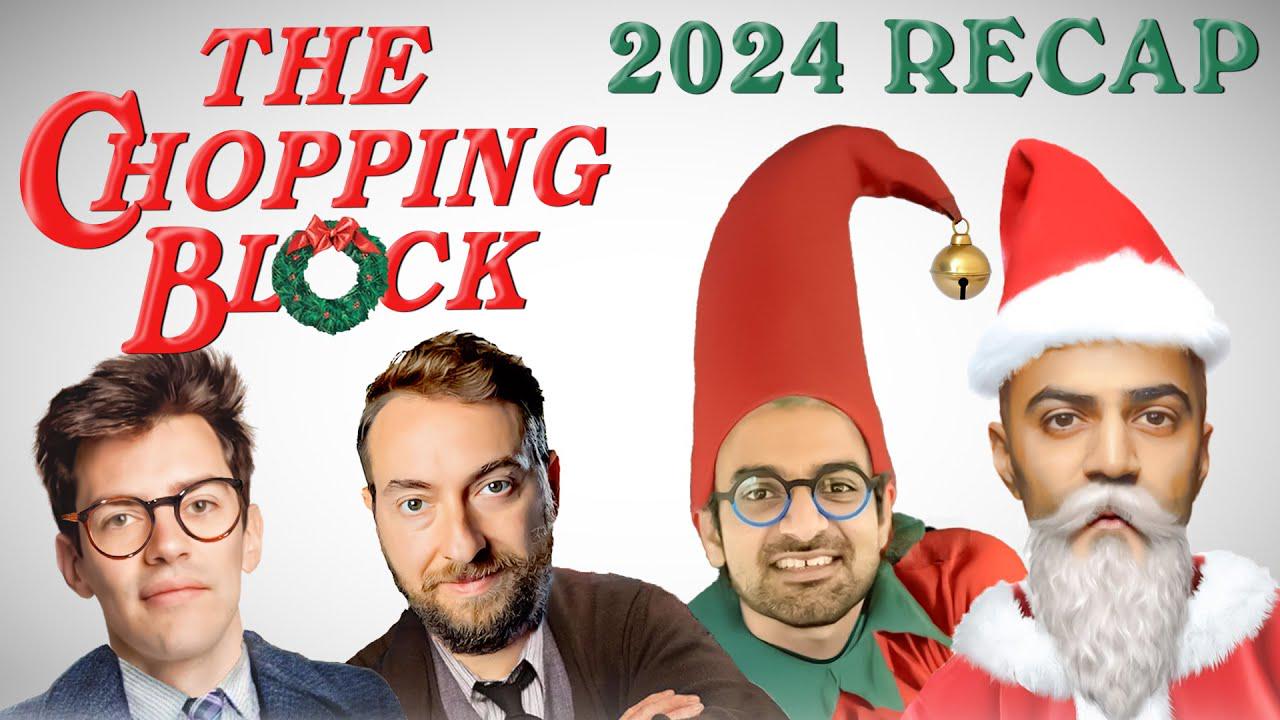
In the challenging yet opportunity-filled year of 2024, the cryptocurrency market has undergone a rollercoaster journey. As the year draws to a close, the Chopping Block show invited four industry veterans — Dragonfly Managing Partner Haseeb Qureshi, Dragonfly General Partner Tom Schmidt, Superstate CEO Robert Leshner, and Robot Ventures Managing Partner Tarun Chitra — to reflect on key moments from the past year. PANews has transcribed and translated this podcast discussion.
Biggest Winners
Haseeb:
I think the biggest winner this year was HyperLiquid. This decentralized perpetuals exchange executed the most successful token airdrop of the season — a true "Uniswap moment" for this cycle. While it still has a long way to go in terms of genuine decentralization, its token distribution and community reception were incredibly strong. As a VC, we regret not being able to invest — in fact, nearly every VC firm tried to back HyperLiquid but was politely turned down. Projects that achieve such a “perfect birth” are truly impressive, especially given their product capabilities, execution, and technical delivery.
Robert:
From my perspective, the biggest winners this year were all U.S.-based crypto founders and companies. We’ve witnessed a pivotal shift — from facing intense hostility and resistance before, to now seeing favorable momentum. As an American crypto founder, this change is exhilarating. Finally, building crypto in the U.S. no longer feels like a burden.
Tarun:
I’d pick the entire DeFi (decentralized finance) sector. Remember Degen Spartan’s prediction of a 36-month bear market? DeFi used to be seen as crypto’s problem child, while nascent blockchains with no real use cases often had valuations ten times higher than actual DeFi projects. Now, DeFi is making a powerful comeback. As someone deeply involved in DeFi, it's genuinely satisfying to see this resurgence.
Tom:
My choice might surprise you — Tether (USDT). They’ve performed exceptionally well this year and are arguably one of the most profitable companies globally. For years, many waited for Tether to collapse or face major issues, but the opposite happened — they've become more successful and more regulated. Tether continues to grow and stands as a significant case study within the crypto industry, particularly regarding stablecoin adoption and global dollarization trends.
Biggest Losers
Robert:
Without a doubt, the anti-crypto faction were the biggest losers this year — including certain members of Congress, figures within the executive branch, particularly at the SEC, and those pushing for "Operation Choke Point 2.0." They wrongly believed that cracking down on crypto would advance their political careers, but this strategy has clearly failed. I hope this changes the political landscape going forward, so that attacking crypto is no longer seen as a viable political tactic.
Tarun:
The biggest losers were numerous second-tier Layer 2 projects and app-specific chains. At the start of 2023, there was widespread belief that thousands of L2s would emerge, each spawning multiple specialized application chains. But reality proved otherwise. Just look at the ongoing turbulence in the Cosmos ecosystem. People once thought successful apps like Blur could launch their own app chains or L2s — take Blast, for example — but results have been underwhelming. Instead, users have shown clear preference for concentrating on a few top-tier L2 platforms.
Haseeb:
I believe financial nihilism was the biggest loser this year. In the first half, the narrative that everything in crypto is just meme coins and all technology is meaningless gained traction. But in reality, meme coin trading volume has dropped significantly — from 20–30% of total volume earlier to around 10% or lower now. The market has shown renewed enthusiasm and confidence in real technological innovation and substantive progress. If you believed nothing technical had value, then you definitely lost big this year.
Tom:
The biggest losers were those who abandoned crypto for AI during the downturn. This is a classic case of “game over, we’re back.” When asset prices fall, investors exit, developers switch fields, and sentiment turns extremely negative — but crypto always finds a way to come back, often stronger. I personally know many people who sold out of crypto, shut down companies, or moved into other industries. It’s unfortunate because success in this space requires conviction. Those who lacked it and jumped to AI may now be regretting their decision.
Biggest Surprises
Tarun:
Undoubtedly, Pump.fun and BonkBot were the biggest surprises for me this year. I remember discussing Pump.fun on our show back in January or February when it was just getting started, offering users an innovative way to create assets. I don’t think meme coins would have grown so fast without Pump.fun. The other is BonkBot, a Telegram bot focused on meme coin trading. In terms of revenue, BonkBot is a hidden champion — both companies achieved $100 million in revenue in their first year. The speed of infrastructure development in the meme coin space has truly shocked me.
Tom:
My surprise comes in two parts. First, the launch of World Liberty Financial — a presidential candidate linked to a DeFi token, with Trump actually holding a wallet — felt surreal. But even more surprising was its poor sales performance. Normally, any regular meme coin or NFT sells out instantly, but this politically tied DeFi token only sold 25%, and sales kept declining. Both aspects defied my expectations completely.
Additionally, regarding Tarun’s point, I’d like to add that early in 2024, I predicted massive revenue generation at the application layer. Projects like Photon, Banana Gun, and even Uniswap generated hundreds of millions in revenue — surpassing most DeFi protocols. While I didn’t specifically foresee meme coin infrastructure, applications overall performed strongly, exceeding many protocols in both income and profitability.
Haseeb:
My two biggest surprises: First, the rise of the "Tap to earn" model, which has since faded into obscurity — games like Hamster Combat even drew attention from Iran’s military. Second, the absence of any major security breaches (on L1s or in DeFi) this year indicates a significant improvement in industry security. Despite a substantial rebound in TVL (total value locked), we didn’t see the massive losses common in previous years — a very positive sign.
Robert:
I’d highlight shifts at the infrastructure level. The emergence of Solana and Base as leading meme coin infrastructures was unexpected. With low transaction fees and easy token issuance mechanisms, these platforms excelled in new user engagement, achieving adoption speed and scale beyond expectations.
Best New Mechanism
Tom:
It has to be Pump’s bonding curve and LP lock mechanism. I’m glad I get to speak first — I suspected this would be a popular pick.
Robert: I believe the best mechanism is the "yield amplification" model, seen in several stablecoin projects like Ethena and Usual. The core idea is allocating returns from an underlying asset — whether arbitrage trades, Treasuries, or others — to only a subset of users, thereby dramatically increasing their yield. For instance, if the base strategy yields 5% annually, limiting distribution to just a quarter of users boosts their effective return to 20%. This mechanism played a crucial role in Ethena’s growth, and I expect to see many more projects adopt similar models in the coming months.
Tarun:
From my view, two standout mechanism innovations emerged this year. First, liquidity bootstrapping mechanisms for meme coins; second, innovations in basis trading, especially Market Maker Lending Pools. These pools trace back to GMX’s GLP pool launched in late 2021 and have since evolved into Jupiter’s JLP pool on Solana and HyperLiquid’s HLP pool.
The key innovation solves a critical problem in decentralized exchanges: while centralized exchanges can directly provide collateralized loans to market makers, DEXs previously lacked such functionality. Through these lending pools, yield-seeking users deposit assets, and perpetual traders borrow them for market making, paying fees back to depositors. This greatly improves capital efficiency in decentralized perpetual trading — a major reason why volumes have hit record highs recently.
Projects like HyperLiquid owe much of their rapid growth to this mechanism. Jupiter’s JLP pool alone has reached $1.5 billion in size, providing vital support for on-chain basis trading. While decentralized perpetuals may never fully match CEXs in capital efficiency, this innovation has significantly narrowed the gap.
Haseeb:
This is indeed a major innovation. Regarding how these pools operate — say JLP or HLP — is there a specific third party managing them?
Tarun:
It varies by project. GMX’s liquidity provision is programmatic, with target weights set via governance or multisig. HyperLiquid’s HLP is directly managed by the team. JLP and GLP function similarly to AMMs — anyone can perform arbitrage. The key is that these mechanisms effectively connect LPs seeking yield with traders needing capital for market making.
Best Meme
Haseeb:
I vote for Justin Sun’s birthday photo. Everyone probably remembers this highly visible figure in our industry — said to be beloved by employees — posting a birthday picture clearly generated by AI, where he had 14 fingers. It may have been the most awkward moment for one of crypto’s most prominent entrepreneurs, but the meme stuck with me — I’ll remember it for a long time.
Robert:
Technically not a typical meme, but I’m giving Best Meme to Pudgy Penguins. Maybe because they just launched the PENGU token, opening with a fully diluted valuation of $5 billion. Though I don’t hold any Pudgy Penguins or PENGU tokens, I must acknowledge their achievement: persistently building through the bear market, turning a simple meme into massive success through consistent marketing and deep community operations. Now they’ve released plush toys, meme coins, and expanded their ecosystem — a thriving community built from scratch.
Tarun:
I choose Bonk. Mainly because BonkBot was a genius marketing move, helping Bonk grow from near-zero to multi-billion-dollar market cap in a year. If there’s one “blue-chip” meme coin in the Solana ecosystem, it’s Bonk.
Tom:
This one is tough, but I’ll nominate Hugo Martingale, the Polymarket intern Twitter account. Their content is fresh and witty, with brilliant replies in comment sections — a truly high-quality account.
Haseeb:
I’m glad not everyone picked a meme coin. Honestly, we may have talked too much about meme coins this year — hopefully we can tone it down next year.
Best / Worst Pivot
Robert:
I’m combining “Best Pivot” and “Best Comeback Story” into one award for MicroStrategy. Although their strategic shift from a mediocre business intelligence software company to a leveraged Bitcoin ETF began five years ago, 2024 was the year this transformation finally gained full market recognition. Not only did they break past their dot-com bubble-era highs, but they also created an astonishing business model: issuing convertible bonds at a premium above Bitcoin’s price to raise capital, then using that capital to buy more Bitcoin — forming a self-sustaining funding loop.
Tarun:
I nominate the Babylon protocol. Though technically initiated in 2023, their pivot materialized fully in 2024. Initially providing Bitcoin timestamping services for Cosmos chains, they later developed “remote staking,” allowing users to stake Bitcoin as collateral. Their TVL (total value locked) now stands at $6 billion. Transitioning from a niche timestamping service to a business of this scale is one of the most successful model pivots I’ve ever seen.
Tom:
I give the “Worst Pivot” to the Democratic Party. From the Mar-a-Lago incident involving Trump, to Biden’s digital asset executive order, to Kamala’s vague stance on crypto investments — the whole process was chaotic. In contrast, Trump took a simple, direct approach: saying what people want to hear and doing what they want — like “Free Ross.” The Democrats’ handling of the issue was like missing a shot from two inches away — utterly disappointing.
Haseeb:
My pick for best pivot is the transition of NFT communities into meme coins. Examples include Miladys launching the CULT token and Pudgy Penguins releasing PENGU — tokens whose market caps now exceed those of the original NFT collections. Interestingly, this shift faced little community backlash; no one accused them of abandoning NFTs. Though these tokens seem to lack utility, the pivot strategy surprisingly worked. Perhaps due to chain differences — quality NFTs mostly on Ethereum, meme coins flourishing on Solana — this natural friction explains why the transition came relatively late.
Tom:
Interestingly, we’ve observed that in crypto, sometimes simple “vibe coins” gain more traction than tokens attempting to deliver serious value. This suggests a lesson: when launching new tokens, don’t overcomplicate things. People prefer owning multiple simple tokens rather than navigating complex conversion mechanisms.
Most Disappointing Project
Tom:
I believe it’s MakerDAO’s rebranding to Sky. The clearest evidence of failure? Even after the rebrand, everyone still calls it Maker, not Sky. While DAI remains vastly larger than USDS, reports suggest they’re considering reversing the rebrand — clearly an unnecessary and ineffective move.
Haseeb:
I select Bitcoin L2 projects as the biggest failure. At the beginning of the year, there was huge optimism — expectations of billions in TVL and hopes that Bitcoin’s ecosystem would embrace DeFi. But reality painted a different picture: despite multiple launches, these projects became ghost towns. Almost no one talks about them anymore, and few founders express interest in building on Bitcoin L2s.
Besides that, celebrity coins were another major disappointment. There was a time when people believed celebrity-backed tokens would outperform ordinary meme coins — MOTHER being one example. But these are essentially social tokens, and over time, their performance has been abysmal. What once seemed like a massive opportunity has clearly failed to materialize.
Robert:
I nominate the collapse of Friend.tech and the broader Social Fi trend. Earlier this year, Friend.tech was hailed as the hottest startup in crypto, but its lifecycle was extremely short-lived. From initial concept to viral fame, V2 rollout, and the launch of the Friend token — it quickly faded into silence. Today, both the product and token are nearly worthless. It may be one of the rare examples of a project that truly self-destructed. While projects like Farcaster continue evolving, the entire crypto social space faces enormous challenges.
Best Comeback Story of 2024
Tom:
I nominate Coinbase. During crypto downturns, Coinbase often becomes the market’s scapegoat. In 2023, they laid off thousands, and many thought they might fail. But with the approval of Bitcoin ETFs, Coinbase gained new momentum as a custodian for these ETFs. While their international business isn’t a standout, it’s steadily growing. Plus, they won a stay in their lawsuit against the SEC. All in all, they’ve achieved a series of important victories in 2024. Notably, this marks the second consecutive year Coinbase has been named Best Comeback Story — a “double comeback” that’s truly remarkable.
Haseeb:
I nominate Magic Eden. Once considered a secondary NFT marketplace behind OpenSea and Blur, they made a stunning turnaround by expanding into the Bitcoin ecosystem — particularly through BRC-20 tokens and Ordinals — achieving remarkable trading volumes. They’ve also performed well within the Solana ecosystem. Recently launching their platform token completes what could be described as a perfect transformation.
Robert:
Besides MicroStrategy, I also nominate the entire Bitcoin ETF ecosystem. After years of rejection and setbacks, 2024 finally brought breakthroughs. Grayscale’s legal victory over the SEC paved the way, and the success of Bitcoin ETFs has opened doors for Ethereum ETFs. These products have performed exceptionally well — a textbook example of rising from the dead. Some might argue this is more of a “winner” than a “comeback,” but institutions like BlackRock have certainly demonstrated immense strength throughout this process.
Tarun:
I choose the Move ecosystem as the best comeback story. Sui reached a $50 billion market cap, Movement secured over $5 billion in funding, and numerous DeFi protocols launched on these blockchains. During Q3 and Q4 of 2023, when Solana captured most of the spotlight, the Move ecosystem seemed overlooked. Now, through improved UX and functional optimizations, they’ve clearly staged a strong recovery.
Host: These cases show that even projects that hit rock bottom can stage powerful comebacks with the right strategy and execution. This reflects the resilience and innovation inherent in the crypto industry.
Predictions for 2025
Haseeb:
I have three predictions. First, Bitcoin will reach $150,000 before pulling back; second, DeFi tokens will experience explosive growth; third, AI-related tokens will surge in price, though actual use cases at the protocol layer may remain limited.
Robert:
I’m more bullish on Bitcoin — expecting it to reach $180,000 without a sharp correction. Second, I predict the U.S. will pass its first dedicated crypto legislation, a major milestone for the industry. Lastly, I foresee a high-profile AI-crypto scam capturing media attention.
Tarun:
My predictions focus on three areas. First, consolidation in the app chain and L2 space — we’ll likely see several mergers due to high operating costs and concentrated trading volume. Second, the market cap of AI agent-related tokens will grow at least fivefold, rising from today’s $10 billion baseline. Third, Solana’s inflation rate will be reduced by at least 25%.
Tom:
I also have three predictions. First, money-based games akin to Farcaster or “buttons” will go mainstream, spreading virally on platforms like TikTok. Second, new crypto asset ETFs will be approved — but likely for more traditional assets like XRP or Litecoin, not the newer ones the community hopes for. Third, we may witness a major security incident at the application layer, possibly stemming from supply chain attacks or library vulnerabilities.
Join TechFlow official community to stay tuned
Telegram:https://t.me/TechFlowDaily
X (Twitter):https://x.com/TechFlowPost
X (Twitter) EN:https://x.com/BlockFlow_News
 @Unchained_pod