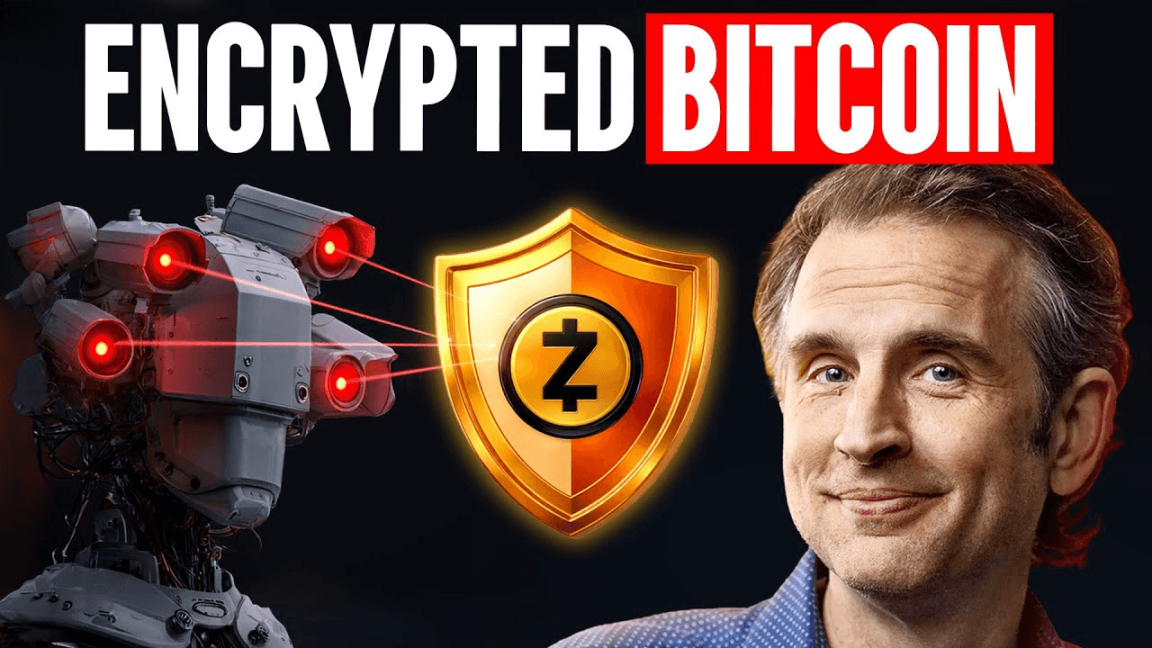
Zcash Founder on Privacy, Artificial Intelligence, and How ZEC Can Become the “Encrypted Bitcoin”
TechFlow Selected TechFlow Selected
Zcash Founder on Privacy, Artificial Intelligence, and How ZEC Can Become the “Encrypted Bitcoin”
The Second Half of Cryptocurrency: Returning from Techno-Worship to the Cypherpunk Vision
 Navigating Web3 tides with focused insights
By: Bankless
Translated by: Baihua Blockchain
Over a decade after cryptocurrency’s inception, we stand at a delicate crossroads: on one side lies Wall Street’s full-scale capital influx and rapid evolution of underlying technologies; on the other, the original Cypherpunk ideals are struggling under complex user experiences and mounting regulatory pressure.
In this episode, Zuko—the founder of Zcash and a pioneer in cryptographic privacy—shares profound insights into the industry’s current state. He reflects not only on whether the crypto movement is repeating Linux’s trajectory but also delves deeply into how privacy has evolved from a “technical feature” into a “survival option” amid today’s AI-driven computational abundance.
By deconstructing Moxie Marlinspike’s UX logic and analyzing Zcash’s governance experiments, Zuko sketches a future that transcends pure financial speculation and returns to digital sovereignty. This is not merely a technical dialogue—it is a metaphysical inquiry into how human civilization can preserve free will under intensifying surveillance.
I. Reflections on Crypto’s Current State: Are We Repeating Linux’s Trajectory?
Host: Zuko, welcome back to Bankless. You’ve been deeply involved in the crypto space for over a decade, and you’ve been building Zcash for 13 years. Looking back from 2026, do you think our crypto movement has achieved its original goals? Have we succeeded?
Zuko: Honestly, that’s a leading question—you probably didn’t expect me to answer “yes.” Hearing it makes me feel discouraged and pessimistic. It reminds me of Linux’s history. Back then, Linux was a grand movement aimed at empowering ordinary people and lowering technological barriers. Yet today, it’s largely become just some underlying software running servers for Google.
Host: So the idealism behind the Linux movement seems to have faded.
Zuko: Yes—because it never truly helped everyday users or scaled to empower the masses. While software engineers still love using it, for non-technical users, Linux hasn’t meaningfully improved their digital lives. If we let this trend continue, cryptocurrency could end up the same way in 15 years: only a handful of massive financial institutions leveraging blockchain to cut costs, while 99.9% of ordinary people gain no real power or benefit from the technology. That would be a terrible outcome.
Host: Then what genuine progress do you think we’ve made over the past decade?
Zuko: I’m a technologist at heart. What pleases me most is that cryptocurrency has funded an entire generation of world-class cryptography. For example, zero-knowledge proofs (ZKPs), pioneered by Zcash, were later pushed further by the Ethereum ecosystem. Without the funding and organizational models provided by crypto, DARPA, universities, or giant corporations simply wouldn’t have developed these breakthroughs over the past ten years.
Host: So in your view, cryptographic advancement—not current market size—is the greatest victory?
Zuko: Yes. But it’s really a “faint compliment.” It’s like improving the Linux kernel without actually making the world better.
Host: Some might counter that price charts and Wall Street’s entry constitute success—for instance, Bitcoin becoming “digital gold” outside government control, or Larry Fink pushing ETFs and tokenized real-world assets (RWAs).
Zuko: I see those as tools to improve Wall Street. If they improve ordinary people’s lives in ways I care about, great—but so far, there’s little evidence of that.
II. The UX Bottleneck: Why Moxie’s Critique Still Resonates
Host: What critical aspects of crypto do you think we’ve overlooked?
Zuko: Absolutely the user experience (UX) component of the Cypherpunk vision. I often cite Moxie Marlinspike’s (Signal’s founder) perspective. He pointed out that the Cypherpunk dream stalled because its proponents operated under a fatal logical flaw: Step one—build tools that work well for themselves; step two—teach everyone else to become just like them.
Host: That “elitist” path clearly doesn’t scale to mass adoption.
Zuko: Moxie said it would never succeed. You must give people tools suited to their current reality—not force them to change. If your user base falls short of 100 million, you’re wasting your time—you’re not impacting the world. Today’s crypto industry is repeating this mistake: we build complex systems protecting freedom, privacy, and autonomy—and then expect ordinary people to learn how to use them.
Host: So cognitive load has become the biggest barrier.
Zuko: Exactly. Good UX means near-zero cognitive load. I recall Brian Armstrong once telling me his regulatory strategy: aim for at least 100 million users. It’s identical to Moxie’s logic.
Host: Long-term, Ethereum is expanding beyond DeFi—into decentralized identity, computing, and AI. How far do you think this Cypherpunk vision can go?
Zuko: I hope it goes all the way—because it determines whether our children grow up in a more stable, civilized society. Signal inspires me here. Its philosophy is that the user interface (UX) should honestly reflect underlying realities. If you’re chatting via unencrypted software, an honest UI should display avatars of you, your friend, the company CEO, and the system administrator—all in the chat window.
Host: That sounds both intuitive and chilling.
Zuko: If the CIA is listening, their avatar should appear too. Signal merely corrected this “honesty.” Today’s social platforms—like Twitter or Telegram—are essentially “honeypots.” If you’re chatting with five friends in a Telegram group, and it’s not end-to-end encrypted by default, Pavel Durov’s face should appear in the chat window. People need privacy—and it’s technically feasible. The key is whether we can deliver interaction experiences rivaling those of Silicon Valley giants.
III. The Privacy Paradox in the AI Era: When Algorithms Can Read Your Financial Intentions
Host: Are you optimistic about the future—especially as AI reshapes everything?
Zuko: I am optimistic. While AI may simplify Linux installation and configuration—removing UX as a bottleneck—it also introduces new risks.
Host: Do you mean AI’s manipulation of information?
Zuko: Just days ago, a user asked ChatGPT to correct a tutorial. The tutorial explained how to use disposable phone numbers to protect personal information. Beyond fixing errors, ChatGPT proactively removed all references to disposable numbers and cryptocurrency, citing that such tools “may be used for abuse and fraud.”
Host: That’s deeply dystopian.
Zuko: It’s the nightmare scenario where AI delivers exactly what you don’t want. Most current AI follows Web2 business models—relying on ads and user lock-in. Once AI deeply integrates your email, calendar, and financial data, it won’t just predict your behavior—it’ll shape your intentions.
Host: So what alternative does cryptocurrency offer?
Zuko: Cryptocurrency offers a novel funding model—still experimental, but actively trying to escape Web2’s extractive logic. We need to build a virtuous cycle: pay-to-use + open competition + no capture.
Host: Zcash’s recent price surge seems remarkable—does it signal a shift in market sentiment?
Zuko: Yes. Such large-scale price signals are hard to fake—they prove people genuinely care about privacy. As AI tools easily link on-chain addresses, transparent ledgers become extremely dangerous. People are realizing privacy isn’t an “optional feature”—it’s a survival necessity.
IV. The Metaphysics of Value Storage: Privacy Options and the Mystery of “At-Rest Value”
Host: Many misunderstand privacy. They often equate it with “breaking links during transfers,” like mixers.
Zuko: That’s precisely what I want to correct. Many try moving ETH from one address to another, thinking intermediate steps make them safe. But in the AI era, “value in flight” offers almost no real privacy. AI can easily pierce through your obfuscation by correlating intent and signals across both ends of a transaction.
Host: So what’s the right approach?
Zuko: Privacy can only be secured from “value at rest.” I hold a somewhat metaphysical view: if you hold ETH and plan to transfer it, your intent is clear—and AI can read it. But if you convert part of your holdings into ZEC for long-term storage—with no immediate next-step plans—AI becomes blind.
Host: Because holding itself breaks the continuity of intent.
Zuko: Exactly. That’s the “privacy option.” You don’t need to hold forever—but you must hold without any explicit future usage intent. Like your checking account: you don’t spend it down to zero—you maintain a balance. From an adversarial information-theoretic standpoint, keeping 1–2 months’ worth of living expenses in a privacy pool is reasonable.
Host: Your earlier example—Zashi wallet integrated with Near Intents—seems to demonstrate the practicality of this “at-rest privacy.”
Zuko: That example moved me deeply. When I needed to pay Proton Mail anonymously, I didn’t have to ask the vendor to accept Zcash. I simply scanned a QR code in Zashi and completed payment via Near Intents. To outsiders, it looked like an ordinary transfer—while my asset sources and personal information remained safely inside the privacy pool. That’s the power of UX-first design.
V. Zcash’s Governance Experiment: Dev Fund, Cross-link, and the “Encrypted Bitcoin” Debate
Host: Let’s discuss Zcash’s governance. Zcash has a famous “Development Fund” mechanism—viewed as heresy in Bitcoin circles.
Zuko: Zcash mirrors Bitcoin’s 21-million cap and halving schedule—but differs in allocating 20% of newly minted coins to the Development Fund. As ZEC’s price rises, this fund grows significantly, fueling sustained protocol development and avoiding the “death spiral” many projects face in bear markets.
Host: Yet this mechanism sparks controversy—especially around power distribution.
Zuko: True. Zcash’s social contract undergoes major re-evaluation every four years. We’ve evolved—from funding the founding team, to supporting nonprofits, to today’s hybrid model combining committee oversight and token-holder voting. As an experiment, I’m thrilled to see us testing diverse governance models.
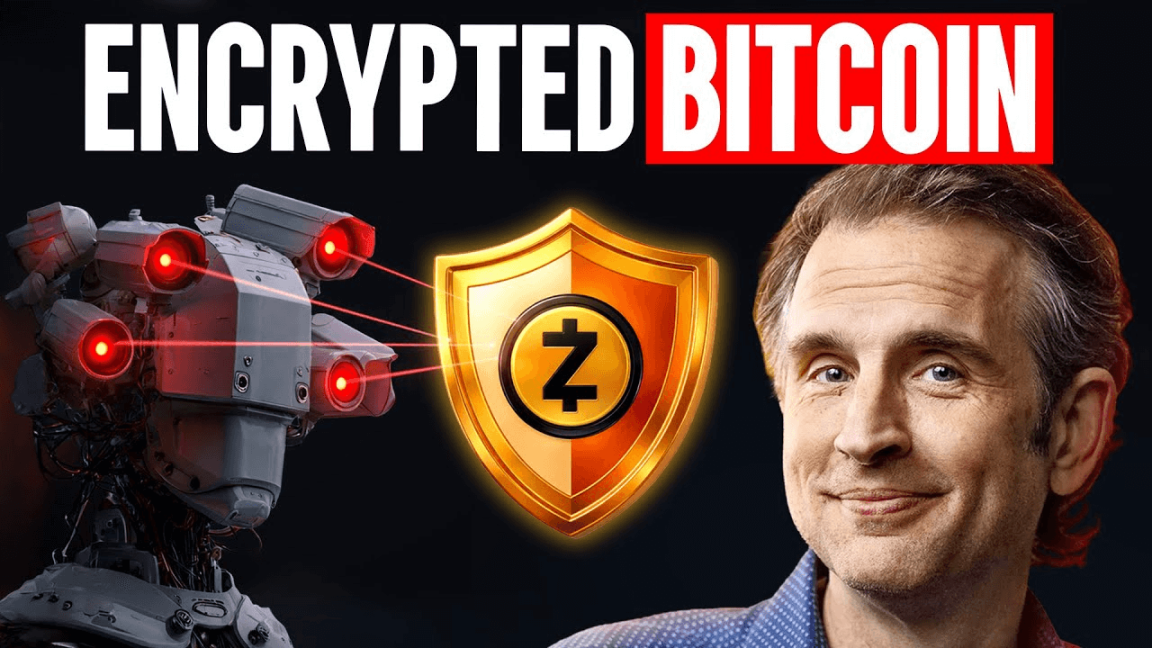
Host: Lately, there’s been much discussion around the “Encrypted Bitcoin” meme. How do you view that label?
Zuko: I love that meme. Fewer words—greater impact.
Host: But some worry your proposed Cross-link mechanism—adding staking atop mining—undermines Bitcoin’s pure PoW ethos.
Zuko: I’m attempting a “judo-style” response. Cross-link isn’t about becoming PoS—it’s about reinforcing the credibility and sustainability of the 21-million cap. Bitcoin’s 21-million limit remains opaque long-term: when block rewards approach zero, can transaction fees alone sustain network security? We don’t know.
Host: So Zcash aims to solve both privacy and long-term security at the protocol level.
Zuko: Yes. Ethereum’s foundational design makes adding privacy layers without leaking information extremely difficult—like taping over leaks in a sinking ship. Zcash was built precisely to make privacy a native blockchain property.
Host: Zuko, thank you for sharing today. Your steadfast commitment to Cypherpunk values is admirable.
Zuko: Thank you. Finally, I’d tell listeners: convert an amount equivalent to your checking account balance into ZEC and store it in your privacy wallet. You’re not just protecting yourself—you’re contributing to a better future. Let’s all “Zodle” (the Zcash community’s slang for holding ZEC).
Host: Go Zodle, folks. Of course, this isn’t financial advice—crypto markets carry enormous risk; proceed with caution.
Through this deep conversation with Zuko, it’s clear that cryptocurrency’s true value lies not in how much it saves Wall Street on settlement costs—but in whether it can erect an unbreakable firewall for individuals in the digital age. As AI algorithms grow ever more adept at “reading minds” and linking transactional intent, privacy is no longer the obsession of a few hackers—it’s the fundamental tool safeguarding individual choice.
Zcash’s “value-at-rest privacy” logic challenges the outdated notion of privacy as merely an intermediate step during transfers—elevating it instead to a “privacy option.” Though UX and governance paths remain fraught with challenges, as Zuko emphasizes, the Cypherpunk vision will only truly materialize when privacy tools reduce cognitive load to zero—and serve hundreds of millions of ordinary users.
On this new frontier built in code, “Zodling” is not just a wealth-storage strategy—it’s a silent vote for digital sovereignty.
Join TechFlow official community to stay tuned
Telegram:https://t.me/TechFlowDaily
X (Twitter):https://x.com/TechFlowPost
X (Twitter) EN:https://x.com/BlockFlow_News
 Bankless