Ethereum Enters the Stealth Era—Your Receiving Address Will No Longer Compromise Privacy
TechFlow Selected TechFlow Selected
Ethereum Enters the Stealth Era—Your Receiving Address Will No Longer Compromise Privacy
ERC-5564 and the Future of Privacy
 Navigating Web3 tides with focused insights
By Vaidik Mandloi
Translated by Luffy, Foresight News
Have you ever opened Etherscan and searched for your own wallet address—not to check transactions, but simply to see what it looks like to outsiders?
Your current balance, every token you’ve ever held, every NFT you’ve bought, every protocol you’ve interacted with, those late-night DeFi experiments, every airdrop claimed or ignored—everything is there, fully public.
Imagine sending that address to a freelancer paying you, a DAO issuing a grant, or even just someone you met at a conference. What you hand over isn’t merely a payment address—it’s an entire on-chain financial life history.
The reason is simple: Ethereum—and most public blockchains—treat each address as a publicly viewable ledger.
Most people feel this discomfort. You hesitate for a split second before pasting your wallet address; some open a dedicated “new wallet” solely for receiving payments; others shuffle funds first to avoid revealing too much about their balance.
This instinct isn’t limited to crypto-native users. A 2023 Consensys global survey of 15,000 people found that 83% value data privacy—but only 45% trust existing internet services.
ERC‑5564 was designed precisely to solve this address-linkage problem. It brings stealth addresses natively to Ethereum: a standard enabling you to receive payments without repeatedly exposing your primary wallet.
What Exactly Does ERC‑5564 Deliver?
The core issue is that a single address permanently records all your activity. So why must we reuse the same one?
Think about how you receive money in the real world: someone needs your bank account number to wire funds—and that number doesn’t change with every transaction. Over time, your bank account becomes a complete record of income, spending, and savings. The key difference? Only you and your bank can see it.
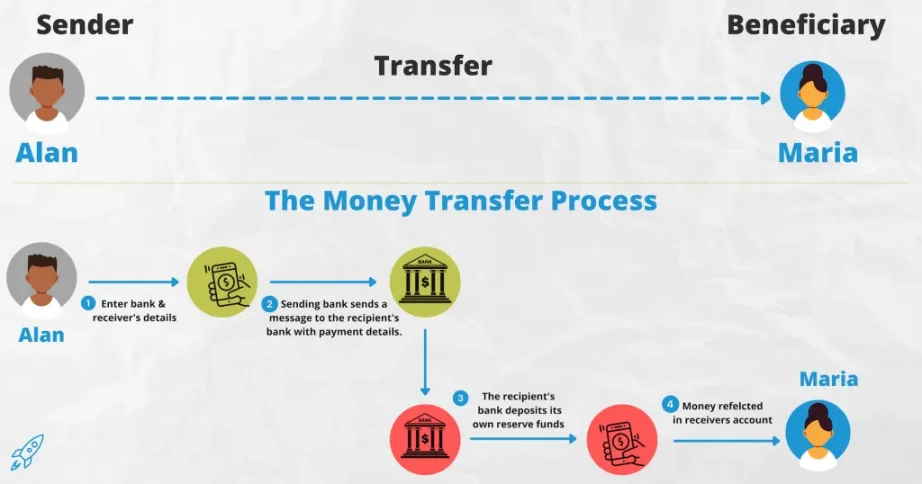
On Ethereum, wallet addresses function similarly: they’re permanent accounts within the network’s global state. Someone needs your address to send funds—and since the address remains unchanged, all transactions accumulate under the same public identifier.
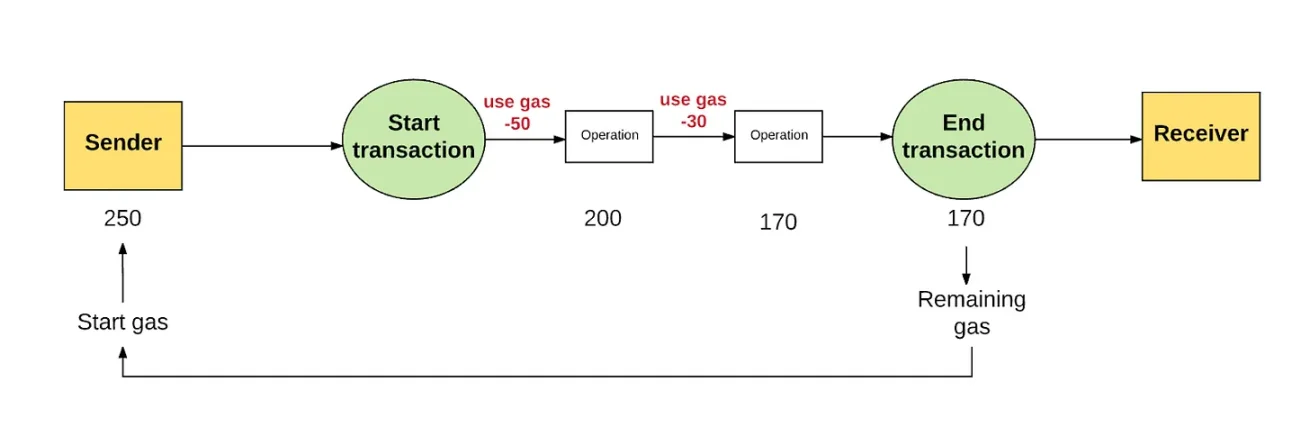
Researchers call this the “glass bank account” problem. The issue isn’t transaction visibility per se—it’s that all behavior automatically binds to a nearly immutable address.
In early crypto, this revealed only basic transfer records. But blockchain has since evolved into lending markets, NFT platforms, governance systems, payment layers, and identity infrastructures. Today, a single address exposes far more information than it did just a few years ago.
A common analogy in privacy research: imagine playing Battleship on-chain, where every move is publicly visible. Rules execute correctly; the system faithfully logs everything. Yet when both players see each other’s ship positions, strategy vanishes.
The system functions exactly as designed—but the experience transforms entirely, because transparency eliminates privacy.
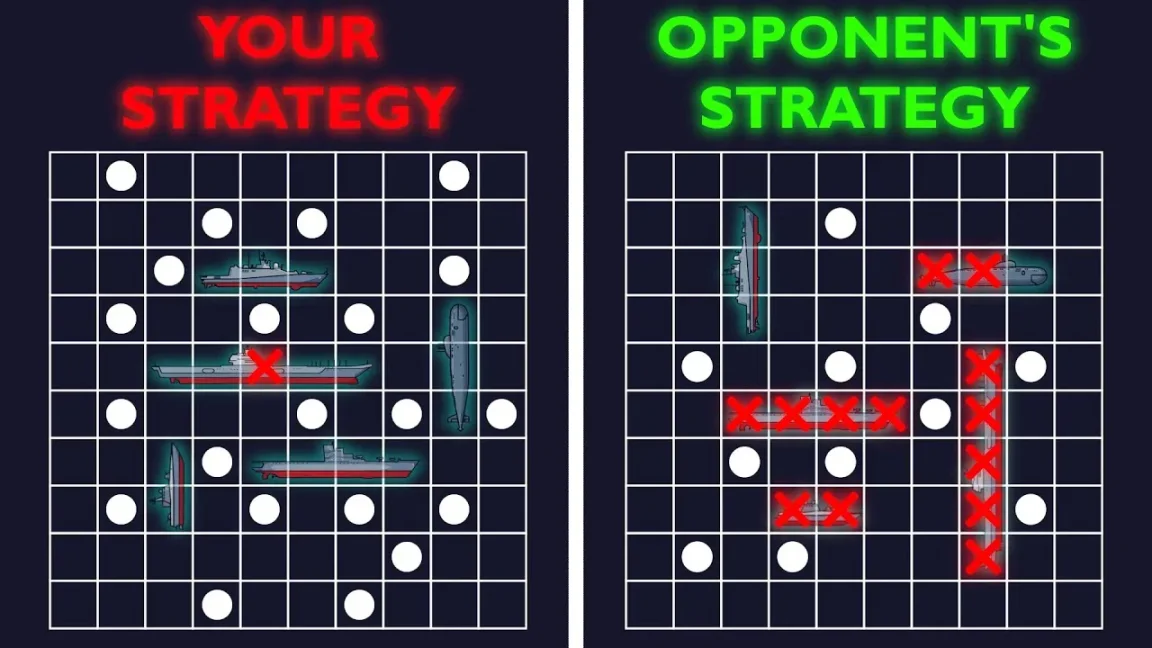
Financial collaboration works the same way. Not every incoming payment requires attaching the full history of an address.
ERC‑5564 doesn’t attempt to erase Ethereum’s transparency, nor does it introduce complex designs like encrypted balances or privacy pools. Instead, it focuses narrowly and pragmatically on reducing automatic linkage at the payment-receiving layer.
Its core logic is remarkably simple: instead of sharing your wallet address directly, you provide a “stealth meta-address.” This meta-address isn’t the final destination—it contains cryptographic public-key information used to generate a unique, one-time receiving address.
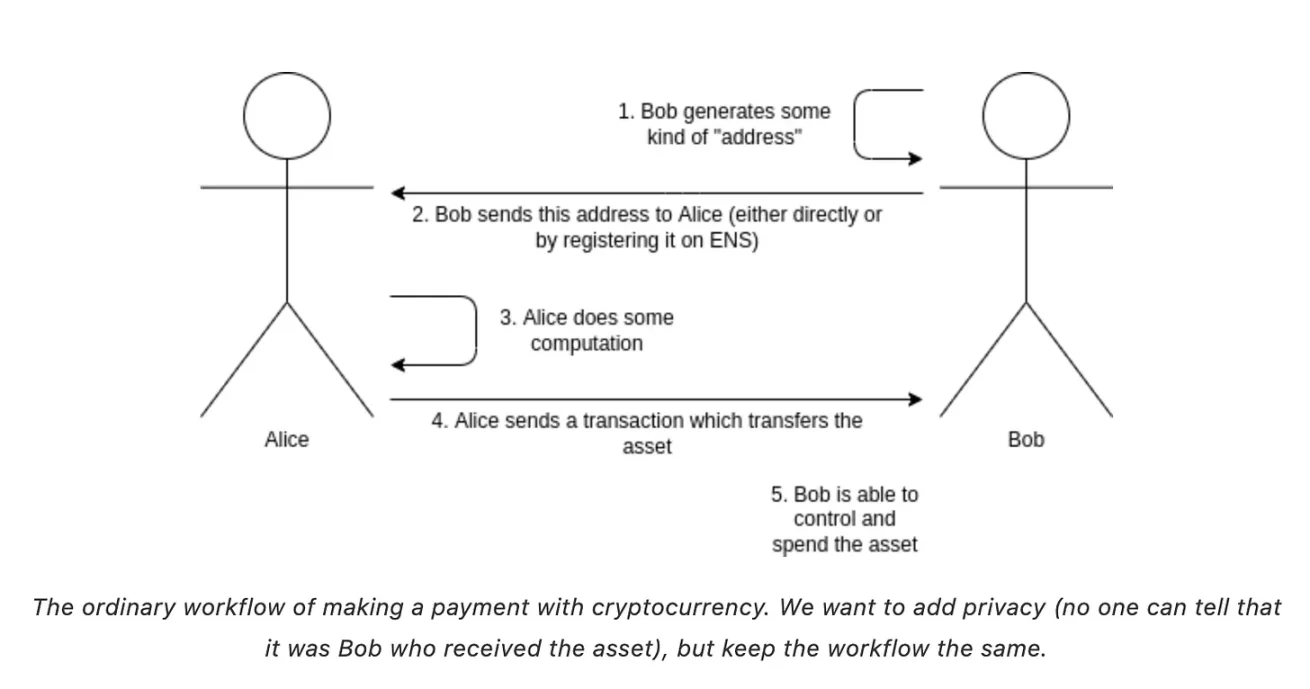
So when someone pays you, funds go not to your public main wallet—but to a brand-new address generated exclusively for that transaction. On-chain, it appears identical to a transfer sent to a never-before-used account.
To the network, everything operates normally. The change is that each incoming payment lands at a distinct address—no longer accumulating endlessly under a single permanent account.
Does Ethereum Really Need This?
User behavior tells the answer.
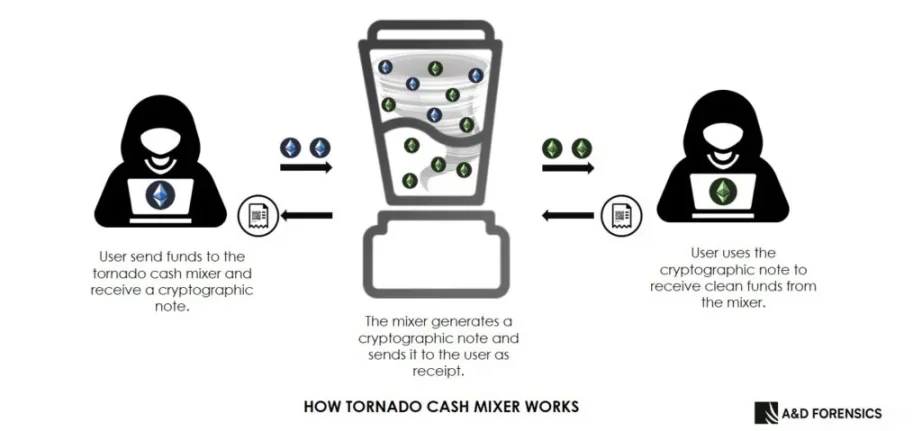
Take Tornado Cash: a mixing protocol allowing users to deposit funds into a shared pool and withdraw them to a new address—breaking sender-receiver linkages. Despite sanctions and intense regulatory scrutiny, Tornado Cash processed over $2.5 billion in 2025. This shows users are willing to bear legal and reputational risk simply to decouple transactions from their main wallets.
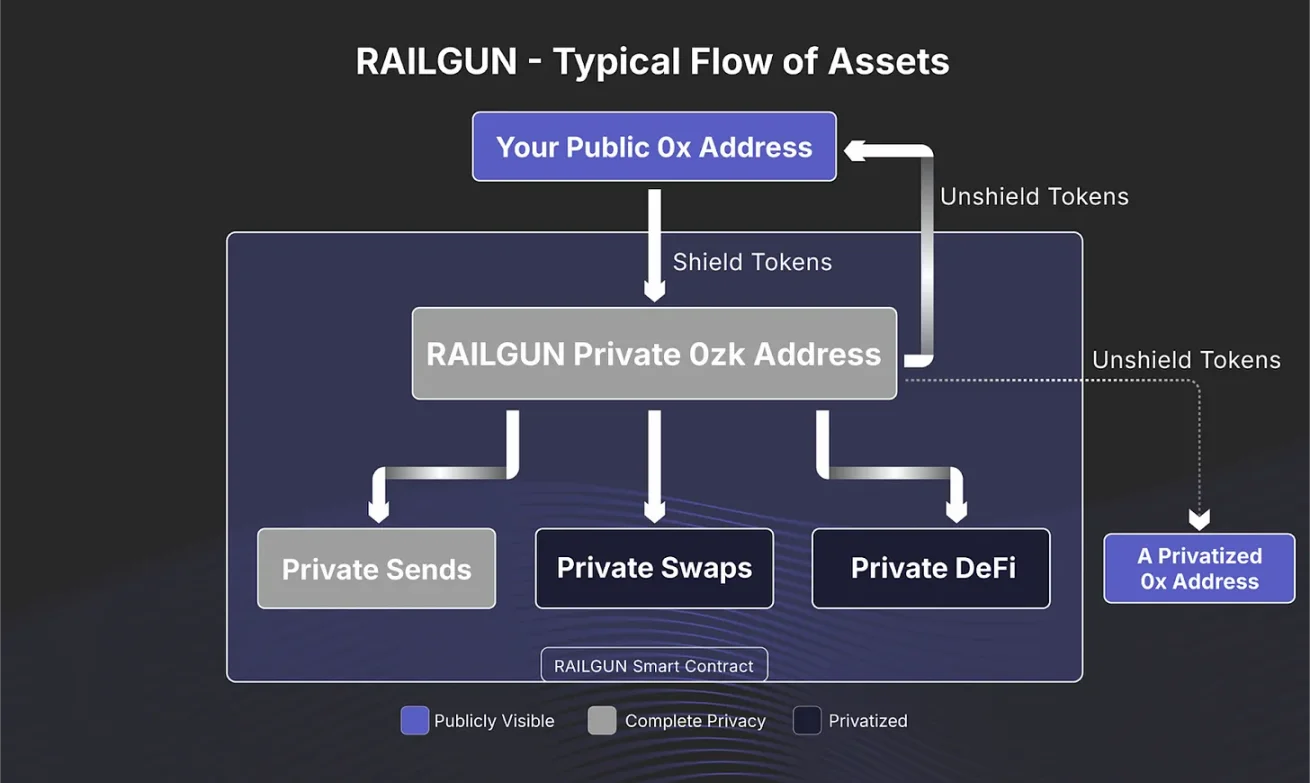
Then consider Railgun: using zero-knowledge proofs to enable private transactions—hiding balances and transfer details. In 2025, Railgun maintained $70 million in TVL and surpassed $2 billion in cumulative transaction volume.
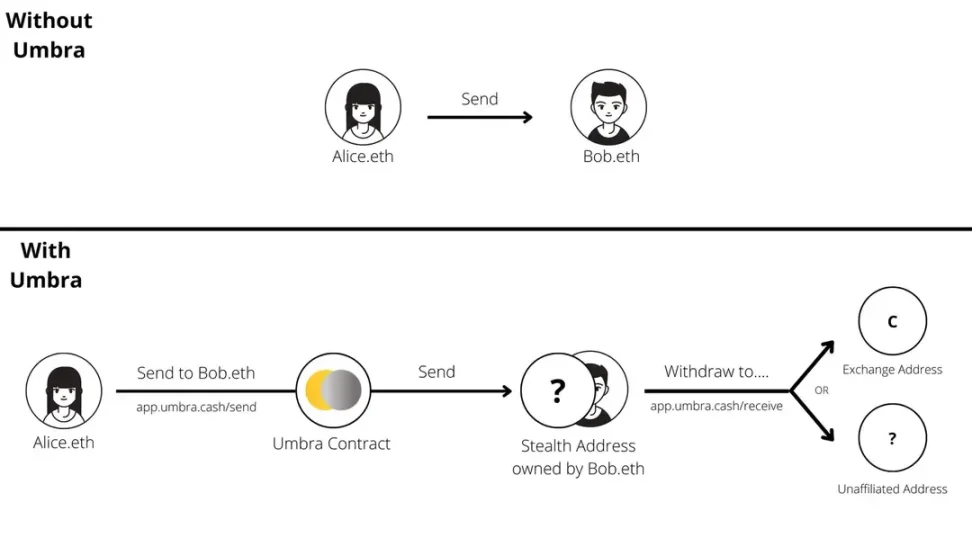
For stealth payments specifically, Umbra implements application-layer stealth payments on Ethereum: users publish stealth information and receive funds at one-time addresses. As of 2026, Umbra has generated over 77,000 active stealth addresses.
These figures may seem modest relative to the broader market—but they’re sufficient proof that users strongly desire “isolation.”
Meanwhile, each of these tools involves trade-offs:
- Mixers require separate deposit/withdrawal contracts—increasing friction, harming composability, and operating in regulatory gray zones
- ZK-based privacy tools remain an extra layer—users must actively opt in
- Umbra proves stealth payments work—but exists as a standalone app, not a wallet standard
On Ethereum, gaining privacy always demands an additional step.
ERC‑5564 charts a different path: rather than building yet another privacy protocol, it standardizes stealth payments at the wallet layer.
Where Does Ethereum Stand in the Privacy Landscape?
Privacy in crypto isn’t black-and-white—it’s a spectrum of trade-offs.
At one end sit protocols like Monero, which embed privacy directly into the base layer. Transaction amounts are hidden; sender and receiver addresses are obfuscated. Privacy isn’t optional—it’s enforced by design. Users don’t need to choose to enable privacy protection, because confidentiality is the network’s default state.
Then there’s Zcash, which introduced shielded transactions powered by zero-knowledge proofs. Zcash lets users choose between transparent and private transactions—but runs them within a dedicated shielded pool, not across the entire system. This architecture supports confidentiality, yet remains a distinct mode—not fundamental network behavior.
Ethereum is fundamentally different: it prioritized transparency and composability from day one.
That openness fueled the explosive growth of DeFi, NFTs, and DAOs. The cost? Structural linkage—privacy ecosystems must be built externally to the protocol.
ERC‑5564 signals a conceptual shift: moving away from bolt-on privacy layers toward embedding privacy as a foundational component—integrated directly into Ethereum’s existing architecture, especially at the payment-receiving layer.
If Monero treats privacy as foundational, and Zcash treats privacy as an optional mode, then ERC-5564 treats privacy as infrastructure embedded within wallet standards—not something added via independent chains or standalone apps.
Industry narratives are evolving too: the debate is no longer “Should public blockchains be fully transparent or fully private?” but rather: “Where should privacy live? How much is needed? And how can it coexist with verifiability and composability?”
What Value Does Privacy Actually Deliver—to Users and Markets?
Privacy isn’t just about hiding transactions—it fundamentally reshapes incentives and power distribution within financial systems. From this perspective, privacy unlocks three core elements, each worth examining.
On transparent blockchains, all operations are visible. That might sound harmless—but it isn’t.
When all transaction data is public, the biggest beneficiaries aren’t ordinary users—but participants equipped with the most advanced analytics tools: hedge funds, MEV bots, analytics firms, and AI models. Ordinary users’ behavior is exposed, while sophisticated actors observe, model, and extract value from it.
This creates structural asymmetry.
The issue isn’t transparency itself—but that transparency turns every economic action into a public signal, spawning strategies built around exploiting those signals for profit.
When transactions become harder to exploit, competition shifts from who has better surveillance tools to who offers better pricing and risk management. This fosters healthier, fairer market behavior. This is privacy’s first unlock: it curbs value extraction enabled purely by transaction visibility.
The second unlock is even more significant: privacy enables capital formation—something transparent systems cannot achieve.
Retail users may tolerate full transparency—but institutional users never will.
If every position can be monitored in real time, funds cannot effectively deploy capital into DeFi. If a fund holds a certain asset, markets may front-run it; if it hedges, competitors can track those hedges. Strategy protection becomes impossible. The same applies to enterprises: if supplier relationships are visible to competitors, companies cannot tokenize invoices on-chain; if salary structures are public, payroll cannot be executed on-chain. Transparent systems encourage experimentation—but undermine autonomous decision-making.
This validates the saying: “Tokens cross chains easily—but keys cross chains with difficulty.”
On public blockchains, transferring assets across networks is straightforward because all information is already public. In private systems, however, exiting the privacy domain exposes historical transaction records—creating friction. Privacy-conscious users prefer environments where transaction histories won’t leak upon exit.
This gives rise to a new kind of network effect.
Traditional blockchain competition centers on throughput, fees, and developer tooling. Privacy introduces competition in informational isolation. The larger the private anonymity set, the higher the value retained within it. Liquidity begins concentrating there too—because confidentiality strengthens with scale.
The third unlock we’ll call selective disclosure.
Today’s systems offer binary privacy choices: either fully public or fully hidden. Cryptography introduces a third option: proving something without revealing underlying data.
Protocols can prove solvency without disclosing all positions. Exchanges can prove reserves without publishing account balances. Users can prove compliance with rules without exposing full transaction histories.
This reduces systemic “data honeypots.” It also lowers the trade-off between privacy and regulation—opening doors to entirely new financial applications.
For example, private lending markets can enforce collateral rules and liquidation logic while concealing borrower identities—platforms like Aleo and Secret Network are experimenting with confidential DeFi designs.
On-chain dark pools can match orders without revealing order size or direction until execution—exactly what Renegade is building: encrypted trading infrastructure designed to prevent frontrunning based solely on visible intent.
Compliant stablecoins can grant regulators access under appropriate legal procedures—while preventing the public from mapping user behavior via transaction graphs. Private stablecoin projects like Paxos and Aleo, along with Zcash’s pioneering selective disclosure model using viewing keys, are exploring this concept.
Trade finance platforms can tokenize invoices and prove an invoice hasn’t been double-financed—without revealing supplier relationships. Enterprise networks like Canton Network are piloting such confidential infrastructure with major financial institutions, enabling businesses to share ledger efficiencies without leaking sensitive commercial data.
All of this leads to long-term behavioral impacts.
Transparent systems permanently bind identity and financial behavior. Over time, this dampens willingness to experiment—because actions cannot be disassociated from enduring identity. Privacy restores the separation between participation and permanent exposure. It allows users to act without recording every decision in an immutable public archive.
Conclusion
Transparency’s original goal was verifiability. Native privacy cryptography preserves verifiability while supporting institutional capital and selective disclosure. ERC‑5564 isn’t about turning Ethereum into a privacy chain—it’s about giving Ethereum programmable, lightweight, native payment privacy.
Join TechFlow official community to stay tuned
Telegram:https://t.me/TechFlowDaily
X (Twitter):https://x.com/TechFlowPost
X (Twitter) EN:https://x.com/BlockFlow_News