2024's New Landscape of Crypto Financing: Beyond Infrastructure, DePIN and Consumer Applications Emerge as Dark Horses
TechFlow Selected TechFlow Selected
2024's New Landscape of Crypto Financing: Beyond Infrastructure, DePIN and Consumer Applications Emerge as Dark Horses
Market prices often show a certain correlation with the deployment of venture capital.
 Navigating Web3 tides with focused insights
Author: Tiffany Monteverde
Translation: TechFlow
For over two years, I've been helping venture capitalists (VCs) identify high-quality deal flow and assisting startups with fundraising. Starting in early 2023, I began systematically tracking data related to VC investments and startup fundraising. Initially, this was just a personal management tool—I didn't dive deep into analysis because real-time interactions with startups and VCs already gave me an intuitive sense of the market.
However, after reviewing more than 1,000 startups throughout 2024, I’ve accumulated a substantial amount of valuable data. With Notion’s newly introduced charting capabilities, I was able to visualize this data and reflect on the year's market trends.
Hot Sectors
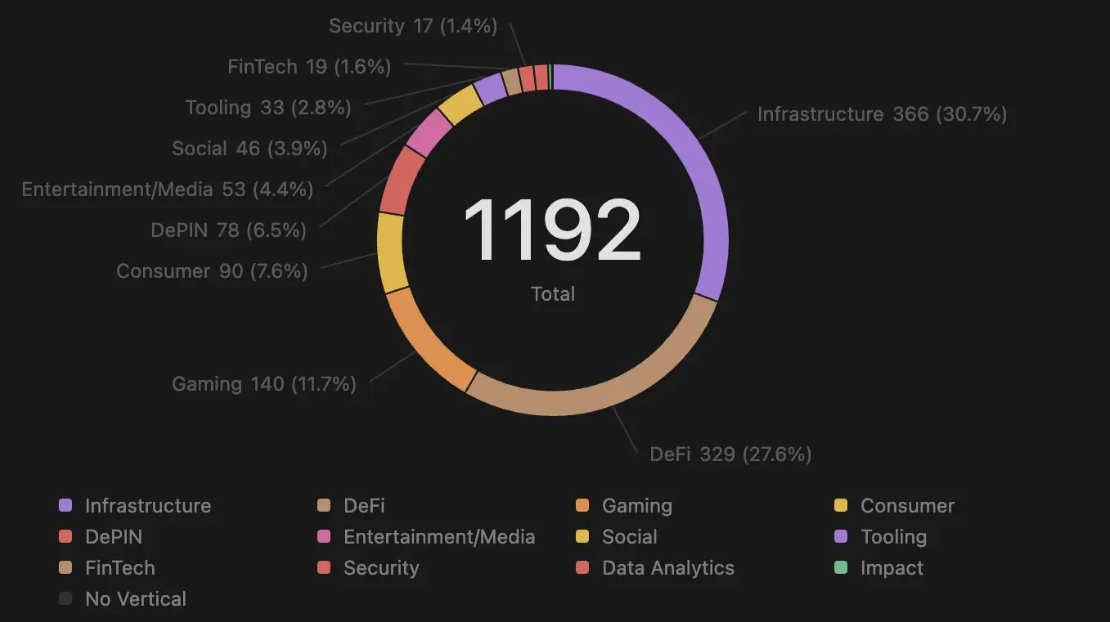
Among all reviewed funding deals, Infrastructure remains the most popular sector for investment, followed by DeFi (Decentralized Finance). Compared to 2023, financing interest in Data Analytics and Tooling has significantly declined, while DePIN (Decentralized Physical Infrastructure Networks), Gaming, and consumer-facing applications have shown strong growth this year.
This shift is largely driven by market sentiment. When markets rebound and on-chain activity surges, consumer-facing applications tend to attract greater attention.
It's also important to note that startup costs vary widely across sectors. For example, Infrastructure and DeFi projects typically require higher capital input—not only for technical development and liquidity bootstrapping but also for marketing and business development expenses. Especially prior to a Token Generation Event (TGE), additional costs are needed to generate market interest and build robust community support.
It should be emphasized that not all startups are suited for venture capital funding (see here for more details). Today, with increasingly mature infrastructure tools, startups can launch prototypes more easily and test them through iterative refinement—a method particularly common among Telegram mini-apps (discussed further below).
Top Sub-Sectors
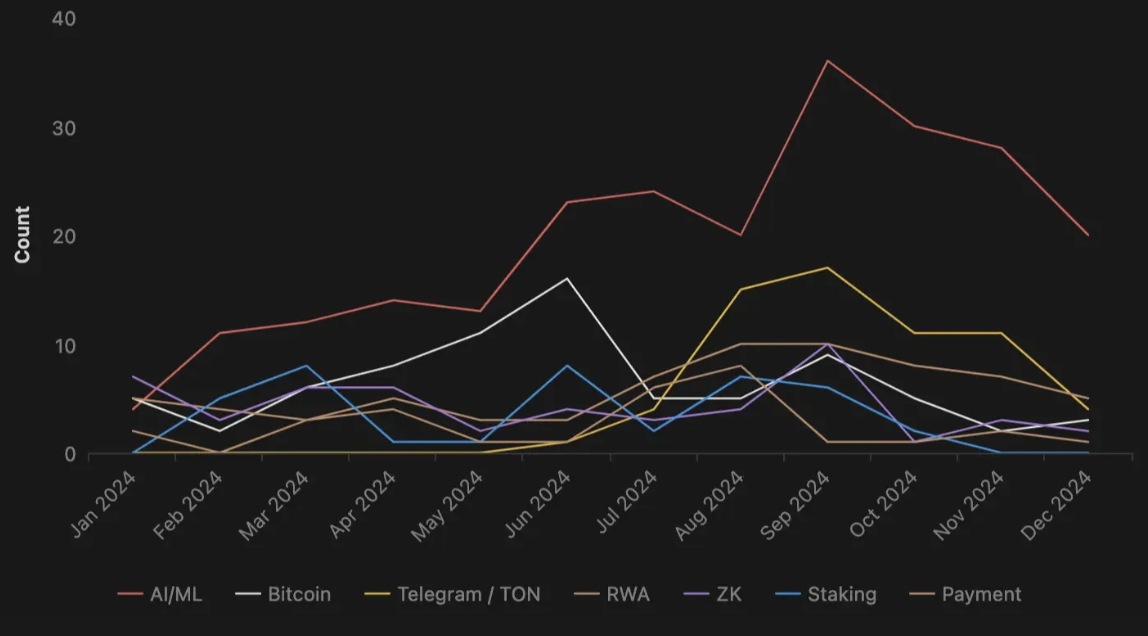
Fueled by BTC price increases in Q1, investment focus remained on Infrastructure, while the Bitcoin Ecosystem also attracted growing attention. Rising demand for specific use cases—such as staking and cross-chain liquidity—led to a significant increase in the number of startups in this space during Q2. This trend reflects the follow-on effect of VC capital allocation.
Notably, market prices (e.g., BTC) often correlate with VC capital deployment, which in turn affects the number of startup fundraisings and their valuations (explored in more detail later).
Recurring Patterns
In specific sectors, increased deal flow closely follows the direction of VC capital deployment—a pattern that repeats itself. For instance, transaction volume on the Telegram/TON ecosystem surged notably in Q3, directly linked to Pantera’s announcement of investment in May. Today, Telegram has become a popular platform for rapidly launching projects, testing user demand, and building community engagement.
A consistently attractive area is the intersection of crypto and AI. Transaction volume in the AI/ML space continues to rise, and even in 2023, startups in this domain successfully captured strong interest from both VCs and users—including both crypto-native and non-crypto audiences—amid the evolving AI landscape.
Another notable trend: although the market remained relatively quiet from Q2 to Q3, transaction volume spiked in September. This was primarily driven by expectations of a bull market arriving by late 2024 or early 2025, prompting many projects to time their token launches accordingly.
“When to launch the token?”
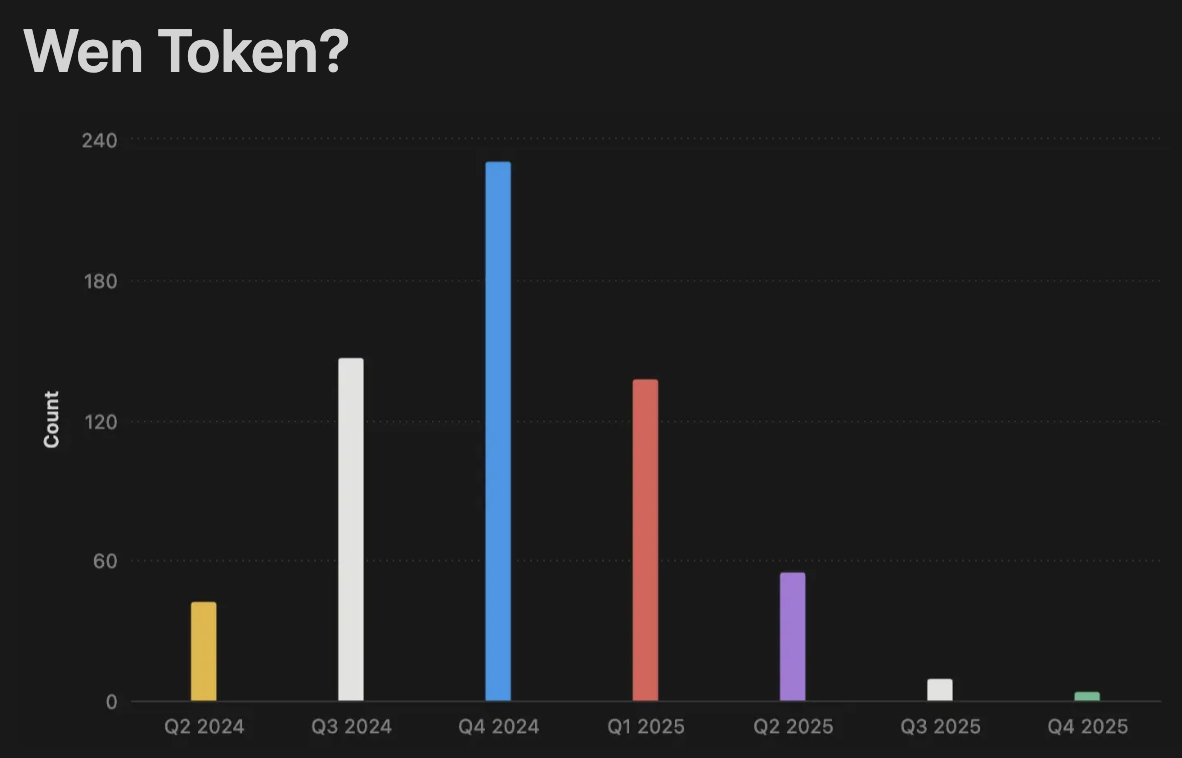
Influenced by bull market expectations, Q4 2024 emerged as the most popular timeframe for token launches, followed by Q3 2024 and Q1 2025.
Successfully launching a token requires significant expenditure—including generating community interest, gaining visibility through marketing campaigns, establishing strong partnerships, and collaborating with market makers and liquidity providers. As a result, many startups open private/pre-sale rounds and KOL funding rounds before the Token Generation Event (TGE) to raise sufficient capital.
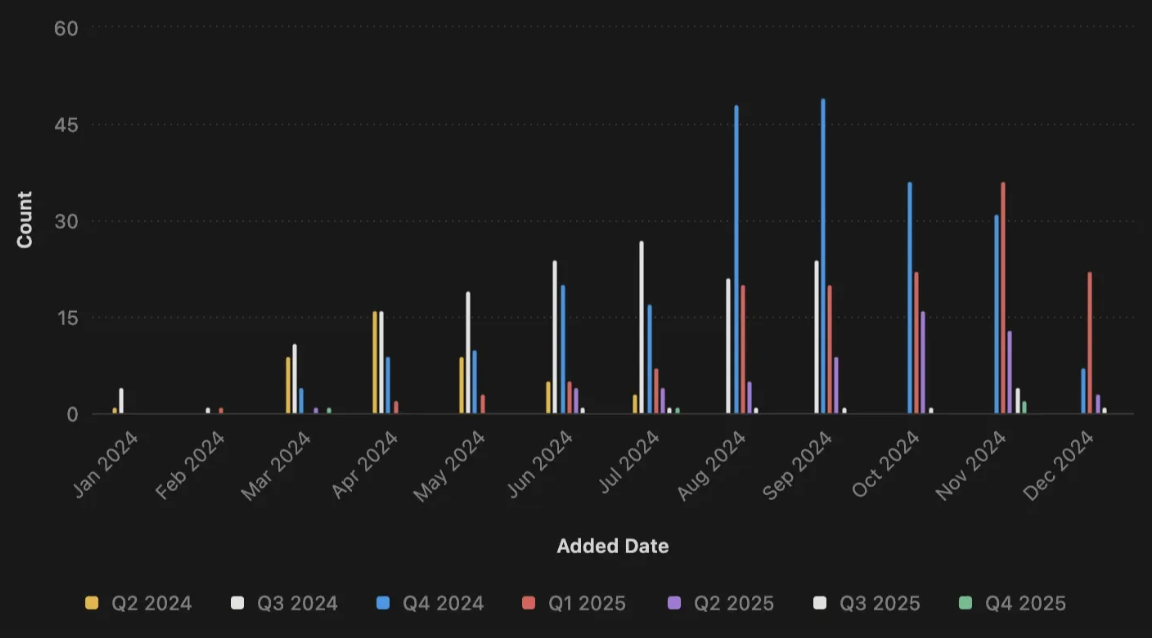
Looking at fundraising timelines ahead of TGEs, most startups begin fundraising one quarter in advance to ensure timely achievement of fundraising targets. However, data from Q3 and Q4 2024 shows that many projects’ planned TGE dates overlap with the start of their fundraising rounds. This may indicate that some startups failed to complete fundraising on schedule and ultimately had to delay their TGE to ensure all preparations were in place.
Based on my experience since 2022, despite increased VC capital deployment, overall recovery has been slow, with no significant growth observed between 2023 and 2024. This is also reflected in the comparison between deal entry dates and planned TGE dates—many startups have delayed their TGEs due to fundraising difficulties.
Valuation Trends
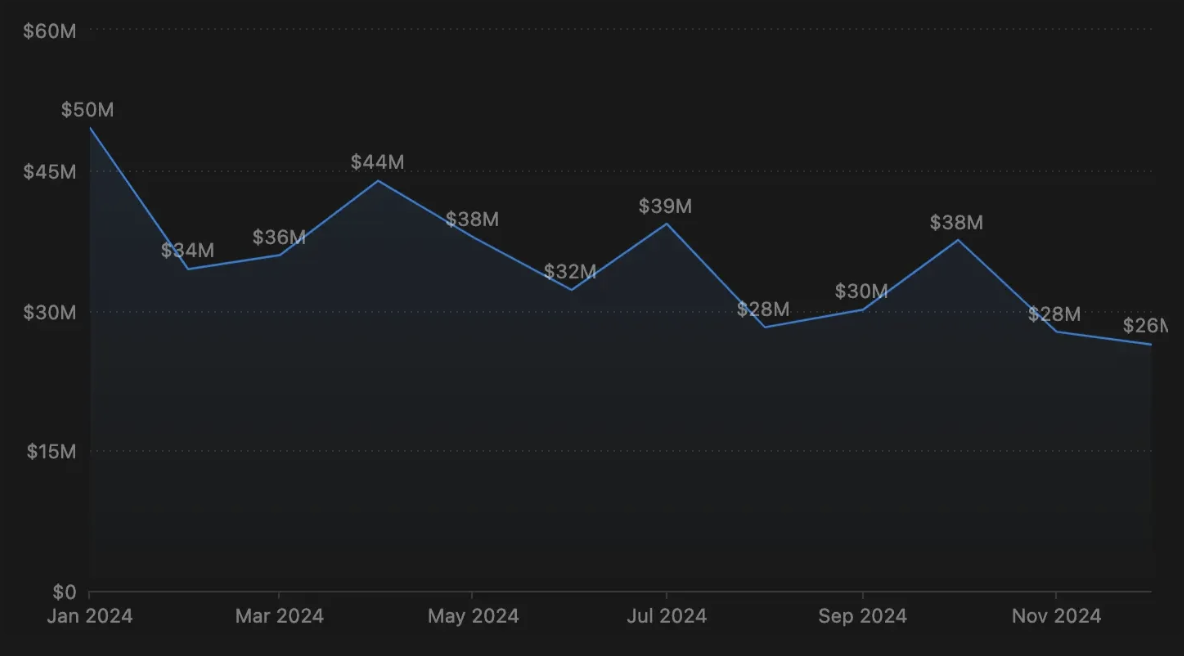
After analyzing transaction volume data alongside VC capital deployment and sector-level shifts tied to TGE trends, a downward trend in average round valuations throughout the year becomes evident.
Average valuations are typically associated with funding stage (e.g., pre-seed, seed, private sale, etc.), reflecting project maturity and prior fundraising history.
In my dataset, 45% of projects were raising at the seed stage, 32% at private/pre-sale stages, 18% at pre-seed, and the remainder at OTC, Series A, or Series B stages.
The main reasons for declining valuations include:
-
VC Capital Deployment and Investment Appetite
VC capital deployment in 2024 did not significantly increase compared to 2023 (refer to Galaxy’s report), and remains closely tied to market prices—especially BTC volatility. This made it harder for many startups to raise funds and meet fundraising goals.
-
Retail Investor Reaction to Public Token Launches
Weak market sentiment, combined with the historical trend of high Fully Diluted Valuations (FDV) at token launch, has dampened retail investor enthusiasm. Many retail participants feel that VCs get tokens at discounted rates while they are forced to buy in at inflated valuations, lowering return expectations. Most token launches earlier this year failed to maintain their initial FDV, with token prices generally declining post-launch.
To restore retail confidence, many startups are opting for lower valuations during fundraising to avoid overly high prices at TGE, aiming for more sustainable market dynamics.
Conclusion
While historical data and patterns cannot precisely predict the future, understanding the dynamics between the market, VCs, and startups—and how they influence each other—remains highly valuable.
In this industry full of uncertainty, one thing is certain: the world of crypto will always deliver surprises—the "Wild West" never fails to bring unexpected twists.
Join TechFlow official community to stay tuned
Telegram:https://t.me/TechFlowDaily
X (Twitter):https://x.com/TechFlowPost
X (Twitter) EN:https://x.com/BlockFlow_News