
Solana Officially Endorses DePIN Project Roam: Boasting Millions of Nodes, South Korea Emerges as a Mining Hub
TechFlow Selected TechFlow Selected
Solana Officially Endorses DePIN Project Roam: Boasting Millions of Nodes, South Korea Emerges as a Mining Hub
Roam currently has approximately 1.21 million devices in total, ranking first globally. What exactly is the "magic" behind this rapid growth?
 Navigating Web3 tides with focused insights
Author: Frank, PANews
On January 14, Solana's official Twitter account pinned a recommendation for a DePIN project called Roam, stating that Roam is integrating over one million Wi-Fi hotspots into the Solana network. However, prior coverage of Roam in the crypto space has been limited.
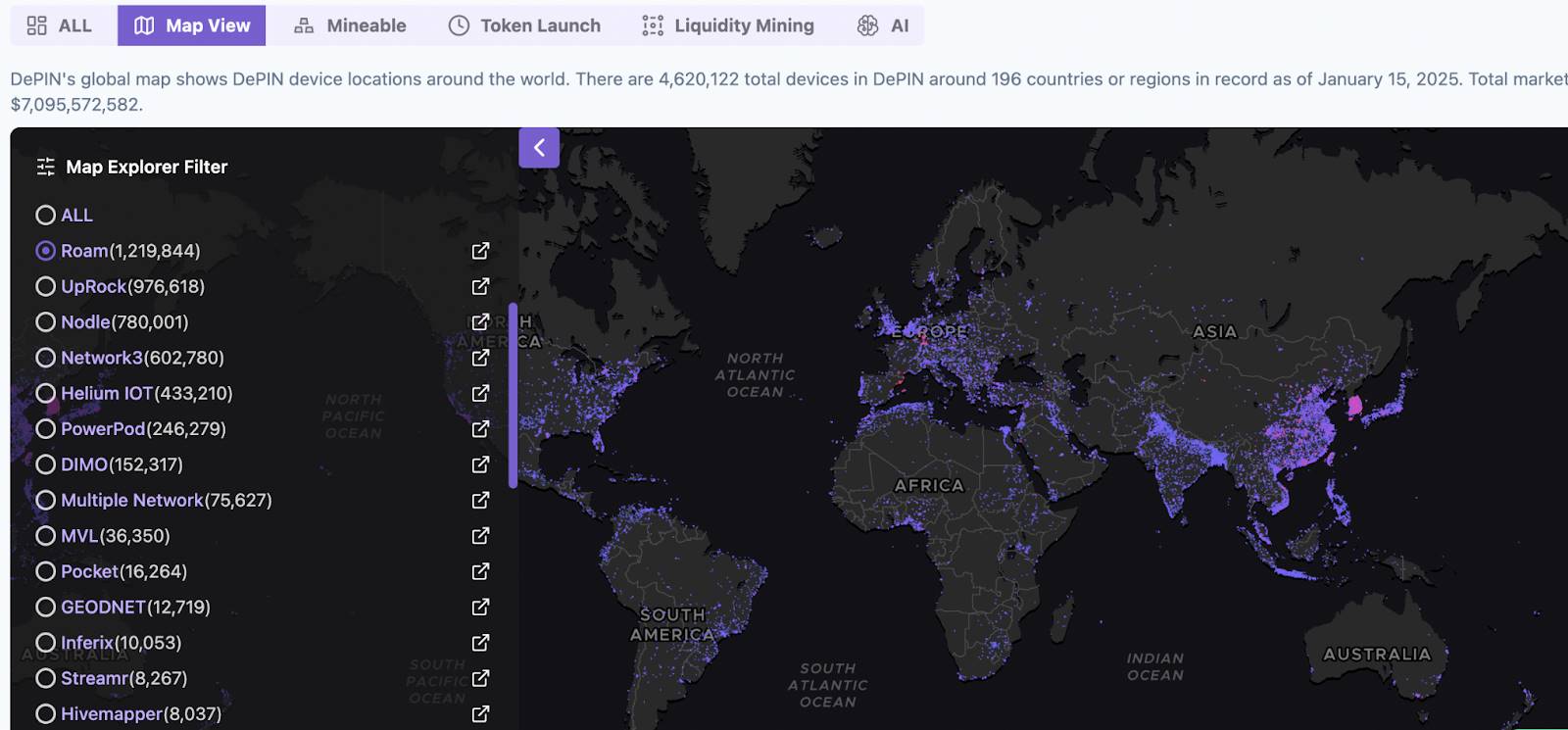
According to data from DePINscan, Roam currently boasts approximately 1.21 million devices, ranking it first globally in terms of device count. What "magic" lies behind this rapid growth? Can its core model—"low-barrier router mining + token incentives"—truly support the global expansion of a roaming Wi-Fi network?
Low-Barrier Routers and Token Expectations Attract One Million Nodes
Founded in 2021, Roam has raised a total of $7 million across two funding rounds (a $2 million seed round and $5 million in strategic financing). As a DePIN project, compared to well-funded counterparts like IoTeX, io.net, or Helium, Roam stands out as an example of achieving significant results with relatively modest capital. This efficiency may be attributed to Roam’s unique business model.
Roam operates as a decentralized Wi-Fi network provider aiming to build a global, decentralized Wi-Fi roaming network. The concept is straightforward: users contribute their home Wi-Fi networks to the Roam ecosystem, and when others connect to their hotspot, they earn reward points. These points can later be exchanged for ROAM tokens.
PANews research found that as of July 2024, Roam had only around 400,000 registered users and devices. In just seven months, that number surged by 800,000, reaching 1.21 million devices—ranking first globally on DePINscan—with total registered users hitting 2.08 million.
Besides using personal routers, Roam's economic design includes proprietary mining hardware. Users can purchase official Roam routers to receive base rewards, an NFT, and additional point bonuses—such as earning 60 extra points daily or up to 150 points whenever another user connects. Roam currently offers two models: MAX30 (priced at $199) and MAX60 (priced at $499). According to available information, only MAX60 owners are eligible for enhanced point rewards. Aside from these bonus incentives and the associated NFTs, the technical specifications of these routers do not appear particularly innovative. A domestically produced Chinese tech brand offers a device with equivalent performance to the MAX30 at an average price below 300 RMB—less than one-fifth the cost of the MAX30.
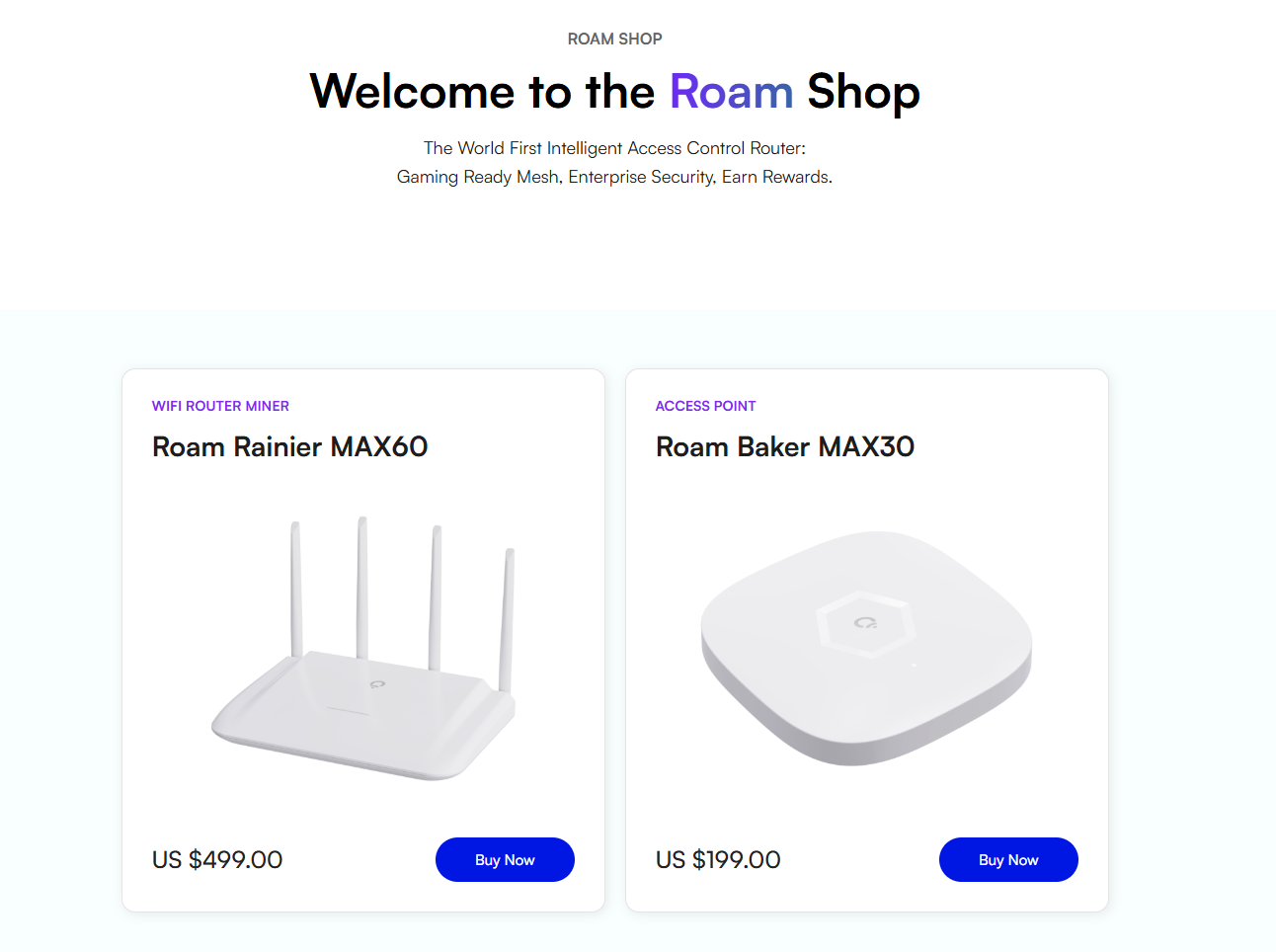
The reason Roam has rapidly attracted over a million participants likely stems from the ubiquity of routers in households. The setup process is simple, requires no specialized skills, and imposes minimal performance demands—making participation highly accessible.
In analyzing Roam’s network distribution, PANews observed the highest device density in South Korea, where coverage is nearly nationwide. High concentrations are also present in China, Southeast Asia, and Europe. Notably, device density in the United States remains relatively low. Overall, Roam’s coverage is concentrated in regions with advanced internet infrastructure, while underdeveloped areas such as Africa remain poorly served. Roam now covers more than 140 countries.
Can High-Premium Router Mining Deliver Supernormal Returns?
Official sources state that the total supply of ROAM tokens will be 1 billion, with 400 million generated at TGE (Token Generation Event), and the remaining 600 million mined thereafter. Of the initial 400 million, 280 million are allocated for sale and 120 million reserved for the team. In September 2024, Roam announced that at TGE, 20 million tokens would be distributed as airdrops to holders of MAX60, MAX30, NFTs, and early Roam OG miners.
As of January 15, Roam has issued approximately 2.139 billion points. However, the exact conversion rate between points and ROAM tokens remains unannounced, and the TGE date has not been officially confirmed.
Nonetheless, some preliminary estimates can be made. Another DePIN project, IOTX, which previously raised $85 million, currently has a circulating market cap of about $330 million. Helium’s HNT token has a market cap of approximately $867 million. If ROAM reaches IOTX’s market cap level upon launch, the average token price would be around $0.825, resulting in an airdrop pool worth roughly $16.5 million. With 2.09 million registered users, the average user holds about 1,023 points, translating to an estimated individual airdrop value of $7.80. Assuming half of the 1.21 million nodes are users who purchased hardware, then among 600,000 hardware buyers, the average airdrop per user would amount to about $27.
If the official team allocates all 280 million tokens designated for sale entirely toward point redemption, and based on current point issuance levels, the estimated conversion ratio would be approximately 7.6 points to 1 token. Should the token achieve IOTX’s market valuation, each point could be worth around $0.10. Considering hardware buyer rewards—3,000 bonus points plus 100 days of 60 daily points—the total accumulated points could reach 9,000, potentially yielding a return of $900. While this scenario represents an optimistic extreme, it still provides useful reference. The actual average airdrop value may range between $7.80 and $900. For hardware purchasers, a return of $900 after 100 days may not justify the investment, especially considering opportunity costs.
From Roam’s perspective, if half of the devices are proprietary routers purchased by users, revenue from hardware sales alone could reach at least $127 million. Even if only one-tenth of the devices are official units, revenue would still exceed $25.47 million. From this angle, Roam’s hardware sales may position the company as the biggest beneficiary of this token incentive narrative.
Beyond the decentralized Wi-Fi network and token integration, Roam has launched an international roaming eSIM service. According to official information, Roam’s eSIM currently supports 160 countries and regions. Similar to traditional telecom providers’ international roaming services, Roam’s pricing ranges from $1.19 to $1.99 per GB—slightly higher than roaming rates offered by mainland Chinese telecom operators.
Roam has emerged as a significant new player in the DePIN sector. Compared to projects raising hundreds of millions in funding, Roam has achieved remarkable scale with just $7 million—truly "achieving big results with minimal spending." However, its current coverage is largely limited to regions with robust existing internet infrastructure, where demand for additional Wi-Fi access is not essential. The current influx of devices appears primarily driven by expectations of token incentives. For Roam, the key challenge ahead lies in designing a sustainable token economy. If the airdrop fails to meet expectations, a mass exodus of nodes could follow. Moreover, maintaining current node levels post-airdrop—and continuing to incentivize new participants—remains a critical hurdle for Roam’s long-term success.
Join TechFlow official community to stay tuned
Telegram:https://t.me/TechFlowDaily
X (Twitter):https://x.com/TechFlowPost
X (Twitter) EN:https://x.com/BlockFlow_News
 PANews