The Truth About Consumption: Who Is Paying for Maotai, BAYC, and Labubu?
TechFlow Selected TechFlow Selected
The Truth About Consumption: Who Is Paying for Maotai, BAYC, and Labubu?
When bulk commodities reach an upward bottleneck, the pseudo-concept of the "middle class" might become the payer for these new "consumer goods."
 Navigating Web3 tides with focused insights
Author: Manman
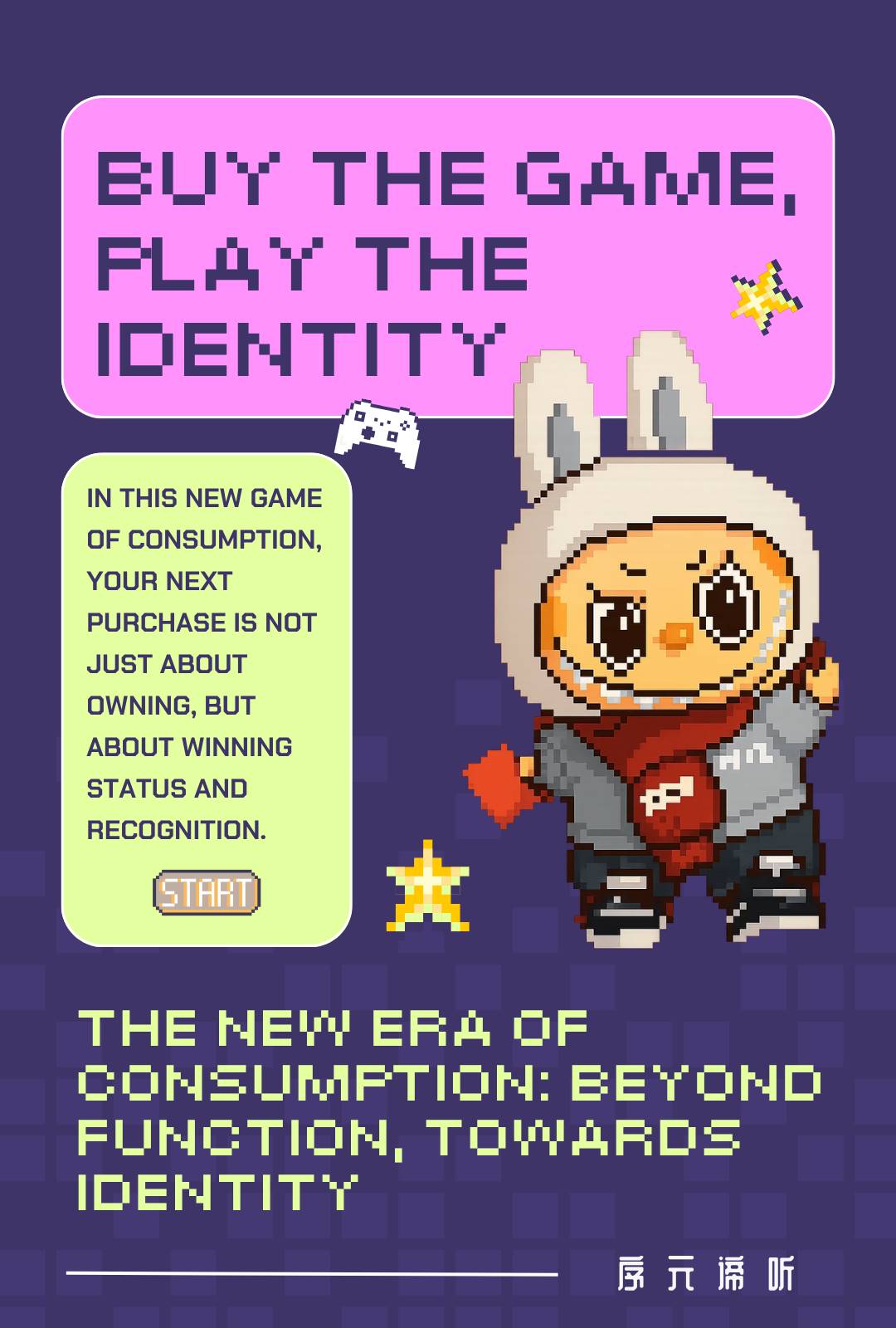
Contemporary consumption is breaking away from its original logic.
From Maotai served at state banquets, to ape avatars on the Ethereum blockchain (BAYC), to trendy Labubu figurines on young people’s desks—these seemingly unrelated items are all telling the same story: we no longer pay for “function,” but for the desire to be seen.
In this new structure, the use value of goods fades into the background. Emotion, identity, belonging, and speculation take center stage, forming a new paradigm where consumption equals symbolism.
01Micro: Consumption constructs "personas," not needs
The popularity of Labubu is less about design brilliance than its precise alignment with urban youth’s self-image of being “cute with a rebellious edge.” It's not a toy—it's a “projection tool” for self-expression.
BAYC (Bored Ape Yacht Club) makes this even more explicit: buyers aren’t purchasing an image, but a public declaration—"I belong to Web3"—a ticket into an exclusive community, a starting key for a virtual identity.
As for Maotai, its social role has long transcended that of an alcoholic beverage. You don't need to drink it for it to "speak" at dinner tables—a familiar language of institutional power, a symbolic status communicated without words.
At this level, consumption no longer addresses physical "needs," but serves emotional identification, social intent, and psychological belonging.

"Smash it!" via The Knockout
02Meso: Consumption habits are structural responses induced by mechanisms
Why do these products sustain their热度? Their staying power doesn’t stem from organic “market preferences,” but from a highly structured set of “inducing mechanisms”:
-
Artificial scarcity: Labubu relies on hidden editions, BAYC on fixed supply, Maotai on quota systems. Supply is precisely controlled; scarcity is programmatically manufactured.
-
Symbolic packaging: All three possess strong subcultural linguistic traits—they serve as carriers of cultural signaling.
-
Community amplification: Liking these products becomes part of one’s social persona. Whether “unboxing,” “showing off apes,” or “gifting Maotai,” users act as viral transmission units, enabling exponential expansion.

Labubu triggers collecting instincts, BAYC fuels dreams of wealth, Maotai sustains social obligations.
Together, they point to a reality: consumer behavior is a collectively programmed response shaped by “mechanism + emotion + culture.”
03Macro: Commodification of consumer goods and behavioral finance logic
The most popular consumer items today often share four traits: price volatility, perceived scarcity, closed communities, and emotional resonance. This means they are no longer mere goods, but “quasi-financial assets.”
When combined, these features transform them from simple commodities into “capital constructs.” Behavioral finance offers well-established explanations:
-
Anchoring bias: Early hype sets high price anchors, making premium pricing seem normal to later buyers.
-
Herd mentality: When everyone around is buying and showcasing, individuals tend to abandon independent judgment—the norm becomes following the crowd.

-
Confirmation bias: Once purchased, people actively seek information validating their decision while suppressing contradictory signals.
-
Sunk cost fallacy: The more invested one becomes, the harder it is to exit—people double down to avoid the psychological pain of admitting error.
Speculation, identity validation, and emotional fulfillment form a self-reinforcing loop within such consumption behaviors, creating a symbolic speculative market where prices easily inflate.

The surge in BAYC prices is a ritualistic collusion among speculators, holders, and KOLs; Labubu’s value inflation thrives on blind box scalpers and platform strategies working in tandem; Maotai’s “stable valuation” operates like a vast, tacitly coordinated social credit system.
What they reveal is not merely “upgraded consumption,” but “financialization trickling down”: capital logic now fully permeates our everyday emotions and decisions.
04Monetary easing and the structural collusion behind “quasi-consumption assets”
On a broader scale, this wave of consumption financialization has an undeniable systemic driver—global monetary overexpansion.
Since the pandemic, central banks worldwide have engaged in continuous quantitative easing, flooding markets with liquidity. With traditional assets already inflated, capital seeks new “structural outlets for premium extraction.” Narrative-rich, emotionally anchored “symbolic consumer goods” have become ideal vessels for absorbing this excess.

Labubu is traded like a speculative blind box, BAYC once soared in NFT markets, and Maotai consistently ranks among the top “hard currencies.” They all fulfill one mission: transforming loose monetary conditions into reservoirs of “emotional assets.”
Thus, today’s consumption bubbles are not isolated incidents, but a top-down structural collusion. They are not just market phenomena, but manifestations of financial mechanisms capitalizing cultural symbols.
05The less something resembles a commodity, the more expensive it becomes
As biological beings, humans’ primary evolutionary task was simply to obtain 2,000 calories per day.

“Damn, wild life” via Xiaohongshu
But after the Industrial Revolution, productivity leaped forward. Basic survival ceased to be the “main quest” and became taken for granted.
In today’s world of advanced production, what we consume may no longer be products themselves, but outcomes of self-projection and emotional attachment.
Labubu answers loneliness with cuteness, BAYC indexes a futuristic self-identity, Maotai echoes the unspoken language of power. Each occupies a different corner of the consumption pyramid, yet together reveals a trend: consumption has become, or already is, a pet raised by capital.
No matter how products morph in form, the final bill is always paid by the inner “persona”—that part of us longing to be understood, recognized, and distinguished.
That’s why the things that least resemble commodities end up being the most expensive.
Because they carry too much of our expectations about “who we are,” and expectations—have become the very anchor of today’s consumer society.
When mass-market growth hits its ceiling, perhaps it’s the pseudo-"middle class" chasing superficial concepts who will foot the bill for these new “consumer goods.”
Join TechFlow official community to stay tuned
Telegram:https://t.me/TechFlowDaily
X (Twitter):https://x.com/TechFlowPost
X (Twitter) EN:https://x.com/BlockFlow_News