In a Web3 world packed with meetings every day, how can you improve your meeting efficiency?
TechFlow Selected TechFlow Selected
In a Web3 world packed with meetings every day, how can you improve your meeting efficiency?
We certainly hope for conflict in meetings, but it should be a conflict of ideas, not a conflict of personalities.
 Navigating Web3 tides with focused insights
Guest: Steve
Translation: zhouzhou, Ismay, BlockBeats
Editor's Note: Against the backdrop of the recently concluded Token2049, this discussion explores how to improve meeting effectiveness—especially given that meeting content often appears redundant. Truly excellent meeting agendas should be framed as problems to solve, enhancing participants’ sense of purpose and engagement. Additionally, attendees should be relevant to the topic at hand; excessive attendance undermines efficiency. A productive meeting atmosphere depends on active leadership—leaders must monitor team dynamics and foster exchanges between differing viewpoints. Moreover, regular one-on-one meetings are crucial for boosting employee engagement and retention, particularly when managers genuinely listen to and understand their employees' needs. In sum, improving meeting quality requires attention to its core purpose, structural design, participant selection, and feedback mechanisms, ensuring each meeting delivers tangible value.
Key Discussion Points Summary:
-
The necessity of meetings and keys to successful ones
-
Meeting frequency and agenda setting
-
Managerial mindset and attendee selection
-
Meeting duration and feedback follow-up
-
Meeting formats and the importance of one-on-one meetings
-
The relationship between coaching and feedback
The Necessity and Purpose of Meetings
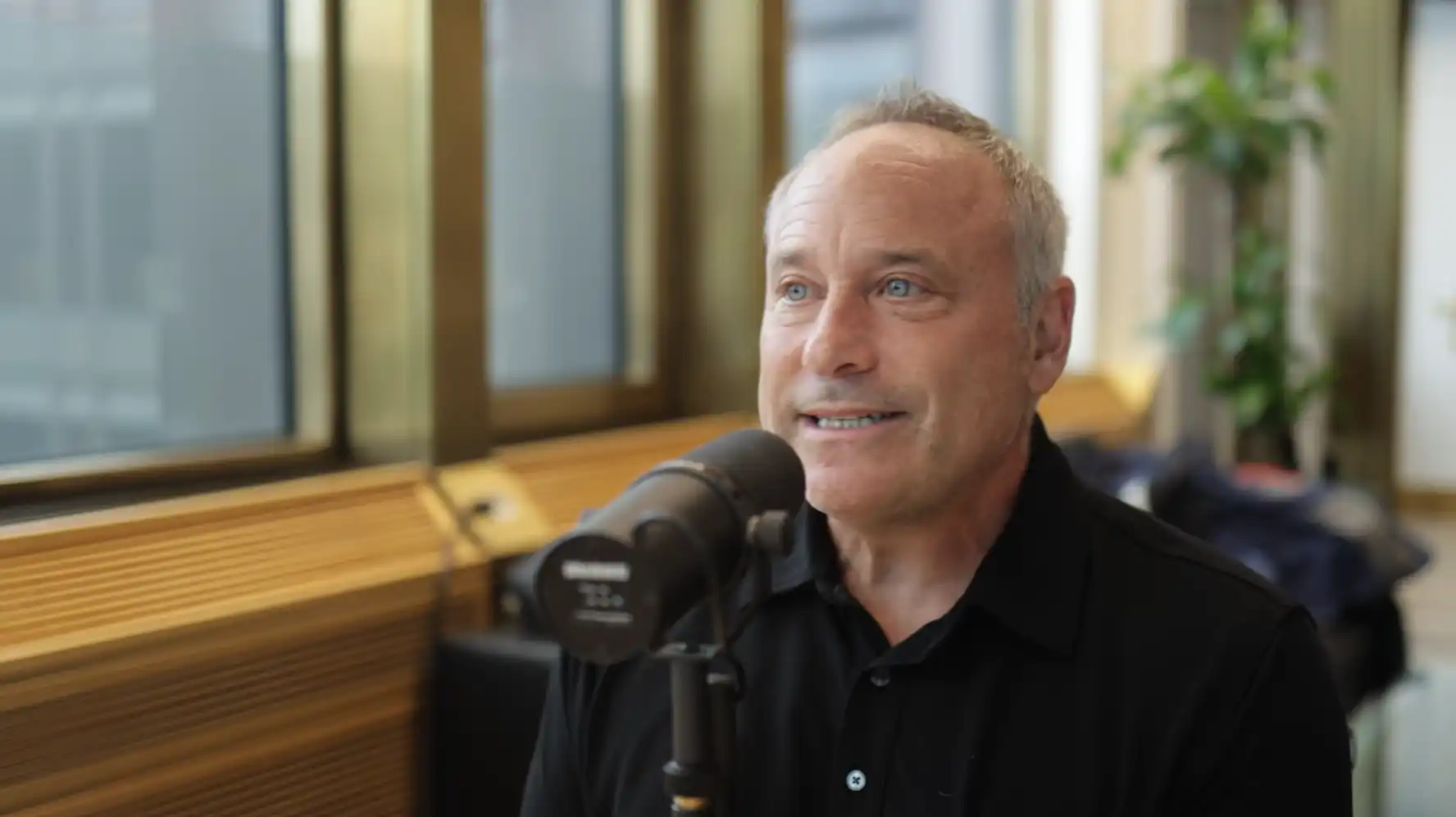
Host: Are there really that many meetings now? In the U.S., over 100 million meetings may occur daily, some successful, others not so much. Today we’ll explore how to improve them. Steve, did you come to Oslo specifically for this meeting?
Steve: Yes, this is a meeting I’ve always wanted to attend.
Host: How did you become interested in meetings?
Steve: Honestly, I’m not sure—it’s just that my days were completely filled with meetings, yet I never felt accomplished. That was frustrating. Is this feeling common among workers everywhere? Absolutely. Days packed with meetings leave people exhausted.
Host: What are the keys to a successful meeting?
Steve: There are several key factors. First, clarity of purpose. Research shows top meeting leaders share one trait: they see themselves as stewards of others’ time. When you adopt this mindset, every decision—about whether to meet, how to structure it, guide it, or end it—becomes more intentional. We usually maintain this awareness with high-stakes stakeholders, but let it slip during team or peer meetings. Let’s discuss how to apply this purposeful mindset concretely.
Meeting Frequency and Format
Host: So when should a meeting be held?
Steve: Only when there’s a clear purpose requiring interaction and participation.
Host: Should we schedule recurring meetings, like every Monday?
Steve: Only if there’s a strong justification. Don’t do it out of habit. We should be more cautious and only schedule meetings when absolutely necessary.
Host: When should we send an email instead?
Steve: Some emails could be better as meetings, and some meetings could be replaced by emails—the deciding factor is whether interaction is needed. If participation matters, a meeting is ideal. Let me introduce a practical technique tied closely to agendas. Everyone knows agendas are important, but I suggest an alternative method to help decide when to meet—and when not to.
Instead of listing topics, frame your agenda as questions to be answered. By defining the agenda as questions, you’re forced to pause and ask: Why am I holding this meeting?
This makes it clearer who the essential participants are—those directly connected to these questions. It also helps assess success: if the questions are answered, the meeting worked. If you can’t think of any questions, maybe no meeting is needed.
Attendee Selection, Size, Timing, and Full-Cycle Meeting Management
Host: What is a stewardship mindset?
Steve: It means respecting people’s time when inviting them. With this mindset, you make thoughtful choices, ensuring the time invested feels valuable—not draining, but enriching.
Host: Who should attend meetings?
Steve: Those who can answer the critical questions at hand. During the pandemic, we often invited too many people to avoid excluding anyone. This tendency stems from three sources: first, good intentions—to include everyone; second, laziness—just filling others’ calendars; third, insecurity—especially in remote work, leaders lacking confidence use larger meetings to assert control.
Host: What’s the ideal meeting size?
Steve: It depends on the desired level of interaction. For real dialogue, beyond eight people becomes difficult unless the host has strong facilitation skills.
Host: How long should meetings last?
Steve: As short as necessary. But due to Parkinson’s Law—work expands to fill available time—a 60-minute slot will be fully used. We can leverage this: shorten meetings to 25 minutes, and tasks still get done. Studies show reducing scheduled time by about five minutes creates positive pressure, increases focus, and improves team performance.
Host: Is documenting meetings helpful for those who couldn’t attend?
Steve: Yes. Recording content reassures absentees they didn’t miss out.
Host: How do we make meetings effective and engaging?
Steve: It starts with agenda-setting and intentionality—question-based agendas capture attention. Research confirms the host’s mood is the best predictor of meeting tone. A negative mood reduces participation and openness to new ideas. Therefore, meetings must start well.
The host is the meeting’s host. They should welcome participants, make introductions, express gratitude, and help people transition into the session. For example: “I haven’t heard from you yet, Gern—what do you think?” Or: “Sandy, I know you’re working on something similar—can you share?” This encourages diverse perspectives and sets up a closing summary.
Host: You mentioned the importance of conflict in meetings. We once hosted Pixar co-founder Ed Catmull, who spoke about Steve Jobs firing two board members because they never disagreed with him. He said, ‘If you don’t challenge me, you’re not contributing.’ How do we create an environment where people feel safe voicing disagreement?
Steve: We want conflict—but intellectual conflict, not personal. To build such a culture, leaders must explicitly state their expectations and encourage constructive debate. Also, silence can be powerful. When groups interact silently—like co-editing a document—brainstorming improves. Everyone contributes simultaneously, avoiding dominance by early speakers, leading to more diverse input.
Host: How can one become a better listener?
Steve: Listening has multiple components, but the core is caring about what the other person says. Active listening means truly engaging with their words and striving to understand. Phrases like “Help me understand” or “Tell me more” deepen interaction.
Host: How often should one-on-one meetings happen?
Steve: We have one-on-ones daily, but I mean something specific. My book is titled *We Need to Talk: The Art and Science of One-on-One Meetings*. Here, one-on-ones are between a manager and direct report—and they’re not for the manager. It’s a dedicated space for employees to share thoughts, while the manager responds. Research shows that when managers hold regular one-on-ones focused on their employees’ challenges, ideas, concerns, and opportunities, engagement rises and top talent stays longer.
We studied this in two ways. First, we asked people how frequently they’d prefer one-on-ones—most chose weekly. Then we analyzed the link between frequency and engagement, finding weekly or biweekly meetings work best. Monthly meetings lack continuity and lead to fragmented, outdated discussions.
Host: How many people should a manager have one-on-ones with?
Steve: With every direct report. Ideally, no more than ten direct reports. Duration matters less than consistency—a high-quality 20-minute weekly meeting performs as well as a 60-minute one. As a manager, if you say you don’t have time for one-on-ones, you’ll lose your best people.
Host: If one-on-ones are so important, why do people hesitate to hold them?
Steve: Because everyone manages busy schedules and constantly looks for meetings to cancel. One alternate title for my book was *The Meeting You Should Never Replace with an Email*—because that’s exactly what one-on-ones are.
Host: Can you elaborate on one-on-one meetings and their significance?
Steve: One-on-ones are deep conversations between two people, vital for building trust, solving problems, and advancing personal growth. They enable direct communication, helping both sides better understand each other’s needs and challenges. Typically, senior leaders speak most in meetings, yet they often misread the room. The higher the leader, the more likely they are to dominate, assuming it’s going well. They equate more speaking with better experience. So they may feel the meeting succeeded—even if others didn’t.
Host: What role does coaching play here?
Steve: Coaching fits perfectly with one-on-ones. Great mentors have no personal agenda—they engage authentically. These meetings offer coaching opportunities, but the employee drives the process. If an employee raises a problem, a manager might give a solution, while a mentor would ask: “How do you think you should solve this?”
Host: Which is better—internal or external mentors?
Steve: It depends on the role and how new the employee is. Generally, internal mentors offer more context-specific insights, while external mentors may be preferable in certain situations.
Host: How should a meeting conclude?
Steve: Meetings often end without closure. The best ones stop three to five minutes early to summarize: “Here’s what we discussed.”
Alternative Meeting Formats
Host: In our foundation, we rate meetings and publish a leaderboard afterward. Is that a good idea?
Steve: Great idea, but data usage must be nuanced. As I mentioned, leaders often believe they’re better at running meetings than others do—creating blind spots. When they think meetings go well, they resist change. That’s why feedback and data are critical—they raise awareness.
Host: Should we stand during meetings?
Steve: Sometimes, but not always. Research shows standing meetings take about half the time with similar outcomes. But for long sessions, no one wants to stand. As a meeting leader, you have options: stay silent, have people stand, or begin group discussion with paired talks. A 15-minute check-in can be standing; an eight-hour retreat clearly shouldn’t.
Host: What’s the difference between virtual and in-person meetings?
Steve: Pre-pandemic, virtual meetings were poorly rated; people preferred face-to-face. Over time, adaptation improved, and effectiveness rose. Now, virtual meetings perform about as well as in-person ones.
Interestingly, virtual meetings have unique advantages. They’re inherently democratic—everyone is equal, eliminating the “head of table” effect. Chat functions amplify quieter voices, and tools like anonymous voting or quick consensus plugins make discussions more efficient and reduce dominance by louder participants. Virtual meetings have many strengths—and in some ways, outperform in-person ones.
Host: What’s your view on multitasking during meetings?
Steve: When people multitask in meetings, they’re often doing actual work. While this may hurt meeting quality, it benefits the organization. In a way, multitasking is a symptom of poor meetings.
Join TechFlow official community to stay tuned
Telegram:https://t.me/TechFlowDaily
X (Twitter):https://x.com/TechFlowPost
X (Twitter) EN:https://x.com/BlockFlow_News
 BlockBeats