Dialogue Wang Qiao: Hunting for Treasures in Consumer-Grade Crypto Applications
TechFlow Selected TechFlow Selected
Dialogue Wang Qiao: Hunting for Treasures in Consumer-Grade Crypto Applications
Let's explore the weak infrastructure in the crypto space, the Fat App Thesis, and cultural differences between blockchains.
 Navigating Web3 tides with focused insights
Compiled & Translated: TechFlow
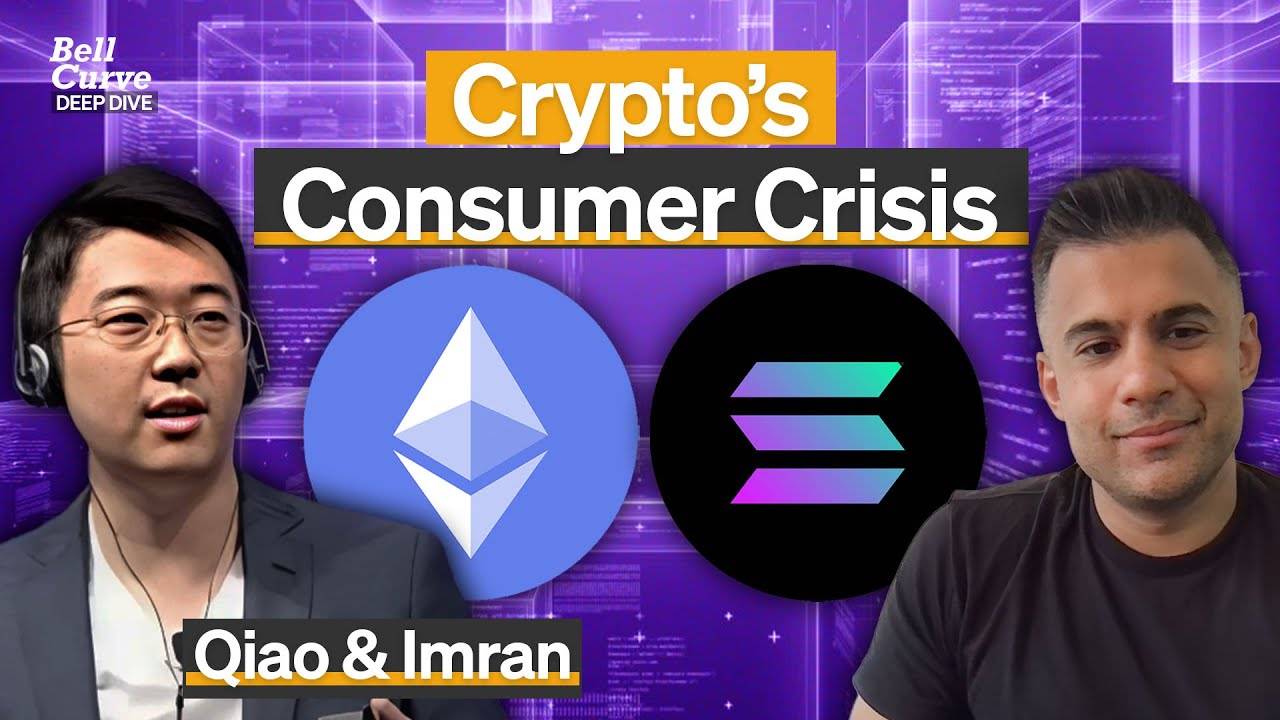
Guests: Imran Khan, Founding Support at @alliancedao; Wang Qiao, Customer Support at @alliancedao
Host: Michael Ippolito
Podcast Source: Bell Curve
Original Title: Finding Consumer Gems in Crypto | Qiao & Imran
Air Date: September 3, 2024
Background Information
In this episode, we invited Qiao and Imran from AllianceDAO to discuss infrastructure weakness in crypto, the Fat App Thesis, and cultural differences between blockchains. We also explored whether L1s have long-term bullish potential and where consumer app developers are building today. Finally, we analyzed how TikTok could intersect with crypto and how crypto might solve the broken business models of traditional media.
Weak Infrastructure in Crypto
-
Michael expressed concern about the weak infrastructure landscape in crypto. Despite years of development, there remain few real applications, with markets flooded by infrastructure tokens that often lack customers and are hard to understand. He hopes to see more actual applications emerge, rather than endless discussions about infrastructure.
Challenges in Building Infrastructure vs. Applications
-
Qiao shared a founder's perspective: infrastructure projects are relatively easier to build because they resemble pure engineering tasks, while apps require deep understanding of user psychology and pain points. He emphasized that although launching chains has become simpler than before, creating consumer products that attract millions remains extremely difficult.
VC Focus on Infrastructure vs. Consumer Projects
-
Imran noted that despite market demand for both infrastructure and consumer apps, many infrastructure projects still get launched. Many founders seeking funding don't connect with VCs focused on consumer apps, and those VCs may lack understanding of consumer markets, leading to negative bias toward consumer projects.
Adaptability of the VC Ecosystem
-
Michael believes the VC ecosystem must adapt by learning how to evaluate and support consumer product development. He pointed out excessive focus on infrastructure, auctions, and mechanism design, while discussion around product-market fit and user acquisition remains insufficient. VCs should pay more attention to go-to-market strategies and user growth when evaluating startups.
Relative Valuation of Apps vs. Infrastructure
-
Michael raised concerns about the relative valuation between infrastructure and applications. While infrastructure is often seen as durable "picks and shovels" deserving high valuations, he questioned whether such valuations are justified without sufficient application-level customers—since ultimately, applications are the customers of infrastructure.
Historical Precedents and Value Capture
-
Qiao explained that historically, applications tend to capture more value. For example, during the dot-com era, infrastructure companies like Intel and cable firms performed well initially, but over time, consumer-facing giants like Amazon, Apple, and Google captured far greater value. This trend will likely repeat in crypto: though infrastructure tokens currently trade higher than consumer apps, long-term value will shift toward consumer applications.
The Cyclical Relationship Between Apps and Infrastructure
-
Imran referenced Nick Grossman’s essay “The Myth of the Infrastructure Phase,” emphasizing that app development drives infrastructure creation, which in turn enables new apps. This cycle continues today—we may be at an infrastructure trough transitioning into an app-building upswing.
Founders Building Infrastructure Alongside Apps
-
Michael discussed how some founders end up building infrastructure to meet their own needs, citing AWS as an example developed by Amazon for internal use.
-
Qiao argued founders should focus on one area initially—either infrastructure or application—and only expand later once that domain matures.
Sustainability and Resource Balance
-
Qiao stressed the importance of balancing resources and focus, especially in early stages. Founders should prioritize building applications first and consider infrastructure only after achieving success.
Fat App Thesis
-
Michael introduced the “Fat App Thesis,” referencing Stan Shih’s 1992 “Smiling Curve” concept describing PC value chains—where maximum value is captured at the design and marketing ends, not in manufacturing. Modern apps follow a similar pattern. He cited Joel Monegro’s 2017 thesis suggesting apps will capture most value, while protocols and on-chain primitives get squeezed.
Defining the Middle Layer and Value Capture
-
Qiao emphasized the importance of defining the middle layer. If DeFi protocols are considered middleware, he agrees apps will capture more value. Using Uniswap as an example, he noted that Uniswap Labs owns the users—not just the protocol—giving it dominance. Owning end users is key to success.
Transaction Costs and User Experience
-
Michael highlighted differences in transaction costs, particularly between Ethereum and Solana. On Ethereum, high fees significantly affect user behavior, whereas low-cost Solana makes aggregator-based trading more attractive. Qiao agreed, noting MetaMask earns massive revenue from transaction fees, underscoring the power of user ownership.
Vertical Integration of Applications
-
Imran offered a contrasting view: apps may vertically integrate entire infrastructures, especially within DeFi. He cited Friend Tech V2, where all functions were bundled, forcing trades inside the app and capturing all fees. Effective vertical integration could threaten traditional DEXs.
Do L1s Have Long-Term Bullish Potential?
-
Michael questioned whether L1 blockchains (aside from Bitcoin) can maintain long-term bullish prospects. As apps increasingly minimize value extraction from L1s, cash flows like MEV (Miner Extractable Value) may eventually be captured by applications instead.
MEV and Value Capture
-
Michael argued that while MEV value capture sounds good in theory, in practice, L1 value may erode over time. He noted rising L2 activity doesn’t necessarily drive ETH purchases, since L2s allow payment in any currency.
-
Qiao added that he focuses less on 10–20 year predictions and more on who wins the current cycle. While MEV capture theory holds, many other factors influence L1 performance. In the long run, value storage may dominate—potentially favoring platforms like Bitcoin, Ethereum, or Solana.
Short-Term vs. Long-Term Outlooks
-
Imran believes any L1 could rise in the future. Though Solana performs well now, every Ethereum L2 could catch up if a breakout app emerges.
-
Michael observed growing ETH liquidity on Ethereum, signaling strong network effects beneficial for L2s. He speculated that only three or four major L2 frameworks might suffice, enabling good interoperability within app ecosystems.
Future L2 Frameworks
-
Discussing future L2s, Michael mentioned Arbitrum, Base, and ZK Sync as potentially dominant. Imran highlighted Polygon CDK for its promising architecture.
Where Are the Consumer App Developers?
-
Michael asked where the next generation of consumer app founders are building and what types of apps they’re focusing on. Imran noted Solana and Ethereum still dominate, with Base attracting significant founder investment recently. Most game development remains concentrated on Base and Solana.
Telegram and TON’s Distribution Advantage
-
Michael brought up TON (Telegram Open Network) and its relationship with Telegram, discussing its vast user base and distribution potential. Imran shared a striking case: a developer spent heavily on Web2 ads for a year and a half to gain 1,500 monthly active users—but achieved 15 million MAUs in just three days after launching the same game on Telegram. This demonstrates Telegram’s powerful network effects.
-
Imran added that Telegram offers a unique distribution channel akin to Zynga’s early opportunity on Facebook. Developers building on Telegram could rapidly become dominant players on the platform.
User Types and Application Challenges
-
Despite distribution advantages, Imran raised questions about user quality and motivation—are they using apps due to incentives or genuine interest? He also noted TON’s potential speed and cost issues handling on-chain activity. As a result, many founders now build hybrid infrastructures—keeping most game logic off-chain while preserving select on-chain features to leverage Telegram’s reach.
Cultural Differences Between Blockchains
-
Michael addressed cultural differences between blockchain communities, particularly Ethereum and Solana. He observed that Base feels like an extension of Ethereum culture—optimistic and encouraging for builders—while Solana’s community appears more pragmatic and engineering-focused.
Founder DNA Shapes Culture
-
Qiao traced these cultural differences back to founder DNA: Vitalik Buterin’s idealism shaped Ethereum, while Solana’s founders are more pragmatic. Imran added that during bear markets, Solana founders showed stronger unity and pragmatism, emphasizing community strength, whereas Ethereum’s community focused more on spreading ideology.
Community Reactions and Challenges
-
Michael mentioned how Ethereum’s community reacts to criticism—such as Bankless’ critiques—as reflecting internal tensions. He suggested blockchain communities should reflect internally rather than exclude dissenting voices.
Branding Strategies for App Platforms
-
Michael discussed branding challenges for emerging L2s and L1s. Many chains try to differentiate by restricting app types—an unwise strategy. He advised welcoming all kinds of app developers, as it’s hard to predict which apps will succeed in today’s environment.
-
Qiao expressed disappointment with Ethereum’s core team, believing biases against certain founders could cause them to miss top talent. Imran noted the Ethereum Foundation’s conservative grant approach, especially toward speculative applications, which may stifle innovation.
Speculation and Financial Principles
-
Michael made an insightful point: many people entering crypto rediscover finance’s essence. Financial markets fundamentally rely on speculation and gambling. The aversion to speculation may actually reflect a re-learning of how finance works.
-
Qiao added that U.S. stock market performance is an outlier globally—most countries’ markets underperform. They discussed financial complexity and differing views on speculation, reflecting varying levels of financial literacy.
What Can Blockchain Actually Achieve?
-
Michael made a key observation: people often focus on what blockchain *can’t* do, overlooking what it uniquely enables. Using mobile phones as an analogy, early critics fixated on limitations, yet convenience ultimately made phones indispensable.
Blockchain’s Core Capabilities
-
Qiao believes blockchain excels at creating new markets and enabling micropayments. Creator tokens and novel marketplaces are prime examples. Blockchain also shines in cross-border and micro payments, making small transactions feasible where traditional systems fail.
-
Imran added that while blockchain enables specific functionalities like privacy and data verification, these are usually components of larger applications, not standalone products.
New Opportunities for Old Ideas
-
Michael revisited ideas from the 2017 ICO era, suggesting they deserve reevaluation. He cited earn.com—a micropayment concept that failed then due to high blockchain costs. Now, with lower fees, micropayments are viable, opening doors for new application ideas.
Gaming and Micropayments
-
Michael discussed the potential of on-chain gaming—not every action needs to be on-chain, but integrating micropayments could add real value. Young gamers making small in-game purchases face less friction without credit cards, greatly improving UX.
-
Qiao elaborated that ideals like data sovereignty, ownership, and composability matter in theory, but aren’t primary drivers for early users. What users care about first is speculation and practical micropayments.
From Speculation to Awareness
-
Imran noted many enter crypto for speculation, but over time come to appreciate broader blockchain benefits. While Vitalik Buterin’s vision of decentralization remains important, adoption timelines and acceptance vary across individuals.
Future Users and Technology
-
Michael concluded that future crypto users may not care about decentralization ideals like early adopters did. Technology should be so seamless that users enjoy its benefits without needing to understand underlying principles.
TikTok Meets Crypto
-
Michael explored potential intersections between TikTok and crypto, particularly how younger generations (Gen Z and Alpha) interact with crypto.
Entrepreneurial Spirit of a New Generation
-
Qiao and Imran discussed Gen Z and Alpha’s entrepreneurial mindset—they prefer non-traditional income streams like livestreaming and content creation. Imran observed declining interest in traditional jobs, yet youth find innovative ways to earn, such as engaging audiences via live platforms.
Livestreaming and Micropayments
-
Qiao noted that on current livestream platforms, fans tip creators through virtual gifts—a form of micropayment. Traditional credit cards can’t handle tiny transfers, so virtual gifts act as a workaround. This model resembles a “Layer 2” solution: creators accumulate virtual assets and cash out once thresholds are met.
Challenges Adapting Content to TikTok
-
Michael admitted that while advised to be active on TikTok, adapting their financial/crypto-focused content to TikTok’s style is challenging. The platform favors light, entertaining formats, and shifting tone risks alienating their core audience.
The Future of Livestream Platforms
-
Imran continued exploring livestream potential, mentioning emerging apps like Pump. As creators reveal more authentic selves, entirely new content forms—like “complete degeneracy”—might emerge, appealing to niche audiences.
Can Crypto Save Traditional Media’s Business Model?
-
Michael made a bold prediction: crypto and media could converge. As traditional media business models collapse, crypto might offer a new path forward.
The Crisis in Traditional Media
-
Michael pointed out that traditional media has been severely disrupted, especially by social media, which siphoned ad revenue to giants like Facebook and Google. Media outlets lost access to first-party data, crippling their ability to understand and engage audiences. In contrast, crypto addresses serve as new first-party data sources, enabling more precise advertising.
Integrating Crypto and Media
-
Michael proposed that crypto’s properties could reshape media economics. Tokens can facilitate audience interaction, and advertisers could target users based on on-chain behaviors (e.g., DEX trading history). He stated, “Tokens are the new content, market cap is the new engagement metric,” indicating crypto’s economic models can create new incentives for creators.
Livestreaming and Community Engagement
-
Imran expanded on crypto’s potential in livestreaming. On some platforms, viewer-creator interactions can be tokenized, allowing direct feedback to shape content direction. This enhances community cohesion and opens new revenue streams for creators.
Emergence of New Media Phenomena
-
Qiao noted a new trend: viral internet memes now spread via decentralized trading platforms like Dex Screener, rather than traditional social media like TikTok or Twitter. This suggests blockchain and crypto could become key channels for future media content dissemination.
How Will Founders Change Over the Next Decade?
-
Michael and guests discussed how founder profiles may evolve over the next decade, particularly in crypto and tech.
Evolution of Founder Traits
-
Michael suggested that as crypto and technology mature, founder backgrounds will diversify. Elite university graduates may no longer dominate; more founders from non-traditional paths will rise, bringing fresh perspectives and styles.
Difference Between Infra and App Founders
-
Qiao analyzed differences between infrastructure and application founders. Infra builds involve slower iteration, while apps require rapid updates and constant refinement. Thus, app founders need deeper user empathy and market responsiveness.
Psychological Traits of Founders
-
Imran identified common psychological traits among successful app founders—many possess a strong “need to prove themselves,” often rooted in personal background. They tend to distrust purely technical founders, believing app builders better understand users and market dynamics.
Emotional Resilience
-
Michael emphasized that founders must endure extreme emotional swings. Success requires not just intelligence and creativity, but also resilience and composure under uncertainty and pressure.
Join TechFlow official community to stay tuned
Telegram:https://t.me/TechFlowDaily
X (Twitter):https://x.com/TechFlowPost
X (Twitter) EN:https://x.com/BlockFlow_News
 深潮TechFlow