Comprehensive Analysis of Parallel EVM: Hype or the Ultimate Evolution of EVM Blockchains?
TechFlow Selected TechFlow Selected
Comprehensive Analysis of Parallel EVM: Hype or the Ultimate Evolution of EVM Blockchains?
Parallel Ethereum Virtual Machine (Parallel EVM) is an upgraded version of the traditional Ethereum Virtual Machine (EVM).
 Navigating Web3 tides with focused insights
Author: Cha Guan Xiao Er
1. What is Parallel EVM?
Parallel Ethereum Virtual Machine (Parallel EVM) is an upgraded version of the traditional Ethereum Virtual Machine (EVM), enhancing blockchain transaction throughput by simultaneously processing multiple non-conflicting transactions, thereby improving transaction processing speed and efficiency.
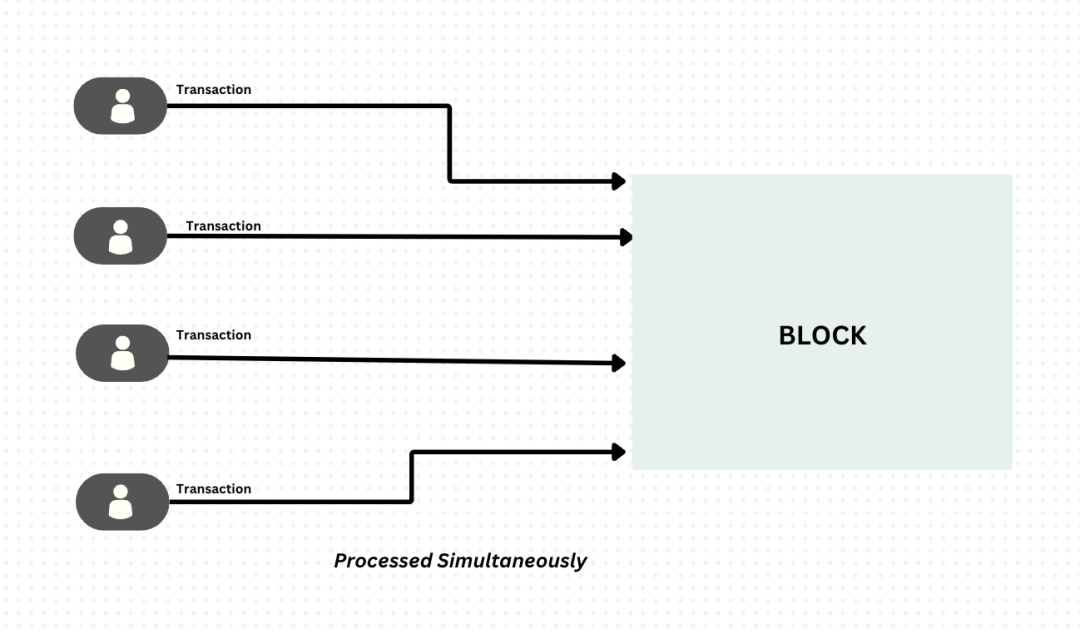
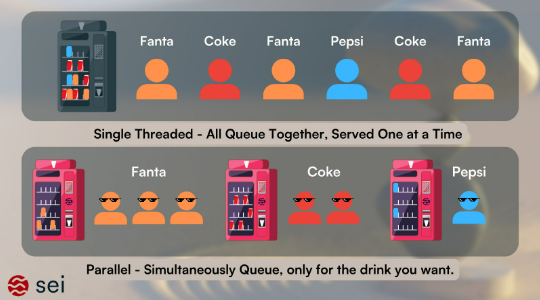
The Ethereum Virtual Machine (EVM) serves as the consensus and execution engine of the Ethereum network, responsible for processing and executing transactions. However, in traditional EVMs, transaction and smart contract execution are conducted sequentially. Each transaction must be processed one after another, forming a linear, ordered process. While this method is simple, it can lead to bottlenecks, especially as transaction volume increases. Every transaction must wait its turn, potentially increasing processing time and causing delays and higher costs in terms of gas fees.
Parallel EVM significantly improves blockchain throughput and execution speed by simultaneously processing multiple non-conflicting transactions. For example, if Bob wants to perform a swap, Alice wants to mint a new NFT, and Eric wants to stake funds to a validator, these transactions can be processed concurrently instead of sequentially, reducing transaction processing time and cost. This parallel processing capability allows blockchains to handle more transactions in less time, addressing congestion issues in traditional blockchain systems.
2. How Does Parallel EVM Work?
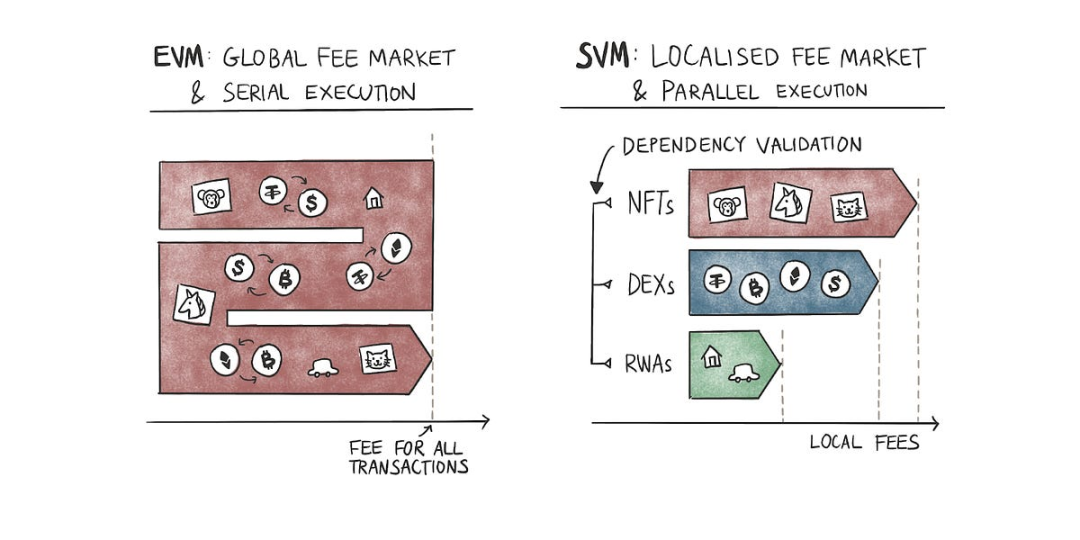
In the current EVM architecture, the finest-grained read and write operations are sload and sstore, used to read from and write to the state trie, respectively. Therefore, ensuring that different threads do not conflict on these two operations is a direct entry point for achieving parallel/concurrent EVM. In fact, Ethereum has a special type of transaction containing a structure called the "access list," which allows transactions to carry the storage addresses they will read and modify. This provides a strong foundation for implementing scheduler-based concurrency methods.
From a system implementation perspective, there are three common forms of parallel/concurrent EVM:
1. Scheduler-Based Concurrent Execution
-
Access List: Before executing a transaction, the access list predefines the storage addresses the transaction will read and modify. The access list includes all state information each transaction needs to access.
-
Scheduling Algorithm: The scheduling algorithm assigns transactions to different threads based on their access lists, ensuring that concurrently executed transactions do not access the same storage addresses, thus avoiding conflicts.
-
Concurrent Execution: During actual execution, multiple transactions can run simultaneously across different threads, with the scheduling algorithm ensuring no dependencies or conflicts exist between them.
2. Multi-threaded EVM Instances
-
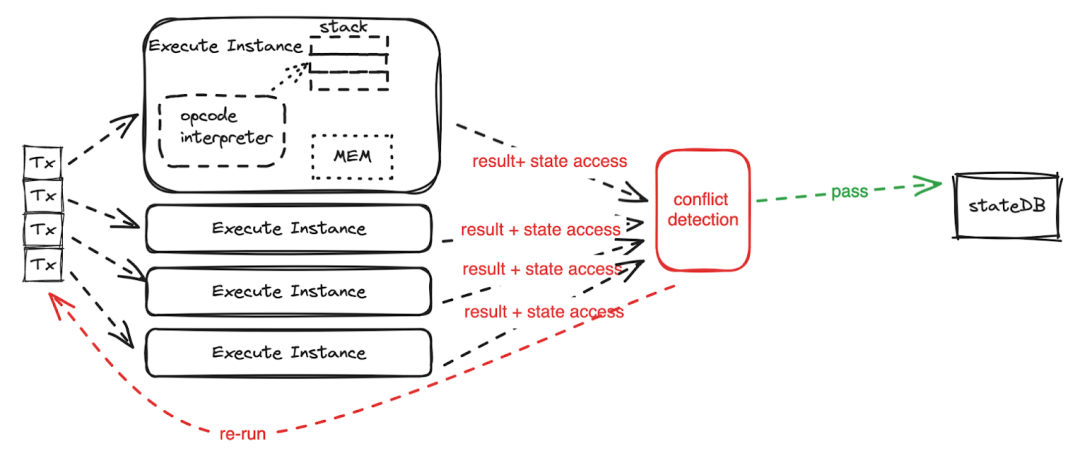
Multiple EVM Instantiation: Create multiple EVM instances on a single node, each capable of independently running and processing transactions.
-
Transaction Assignment: Allocate pending transactions to different EVM instances using a strategy such as hash values or timestamps.
-
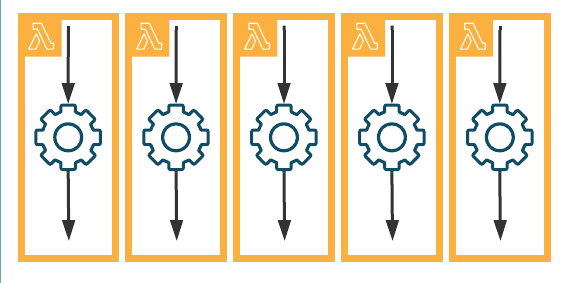
Parallel Execution: Each EVM instance executes assigned transactions within its own thread, allowing multiple instances to operate simultaneously and achieve parallel processing.
3. System-Level Sharding
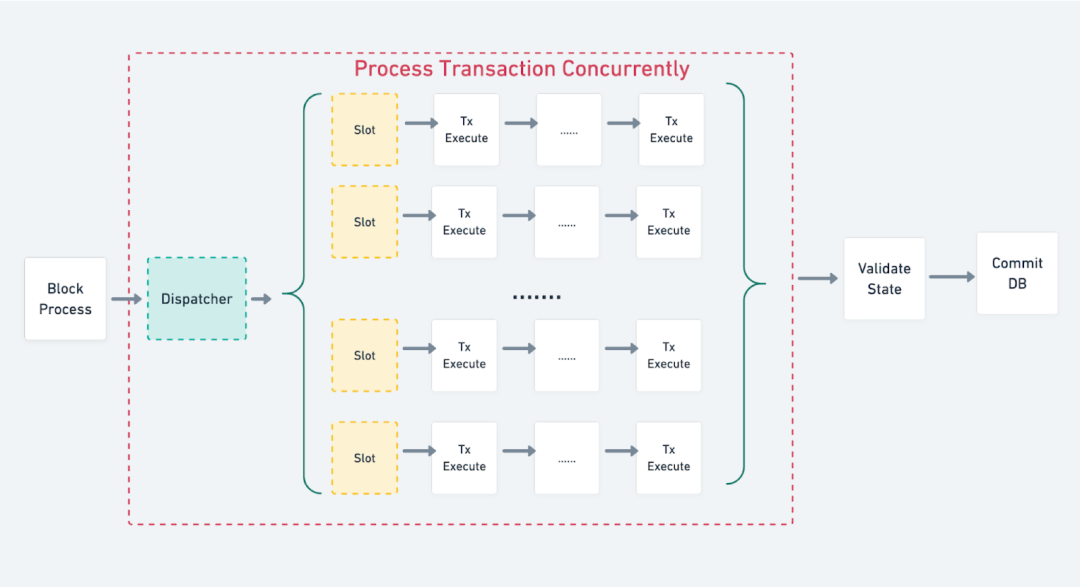
-
Data Sharding: Divide the entire blockchain state into multiple shards, each containing a portion of the global state information.
-
Shard Nodes: Run multiple nodes per shard, each responsible for maintaining and processing transactions and states within that shard.
-
Cross-Shard Communication: Ensure data consistency and global transaction ordering across shards through cross-shard communication protocols. Cross-shard messaging and locking mechanisms can be used to implement this.
-
Parallel Processing: Nodes within each shard can independently process intra-shard transactions, while multiple shards can run in parallel, enabling system-wide parallel processing capabilities.
3. Leading Projects
3.1 Monad: A Layer 1 with Native Parallel EVM
Monad is a Layer 1 blockchain project based on EVM, aiming to significantly enhance blockchain scalability and transaction speed through unique technical features. Monad can process up to 10,000 transactions per second, with a one-second block time and instant finality. This high performance is enabled by the unique Monadbft consensus mechanism and compatibility with the Ethereum Virtual Machine (EVM).
Application of Parallel EVM in Monad:
1. Implementation of Parallel Execution
-
Optimistic Execution Approach: Begin executing subsequent transactions before earlier ones in the block are completed, which may occasionally result in incorrect execution outcomes. To address this, Monad tracks inputs used during transaction execution and compares them with outputs from prior transactions. Discrepancies indicate the need for re-execution.
-
Static Code Analysis: Monad uses static code analyzers to predict dependencies between transactions during execution, preventing invalid parallel execution. In optimal cases, Monad can predict many dependencies in advance; in worst-case scenarios, it falls back to sequential execution.
2. Monadbft Consensus Mechanism
-
Efficient Communication: Uses paired BLS signatures to solve scalability issues, allowing signatures to be incrementally aggregated into a single signature proving shared message signing associated with public keys.
-
Mixed Signature Scheme: BLS signatures are only used for aggregatable message types (e.g., votes and timeouts), while message integrity and authenticity are still guaranteed by ECDSA signatures.
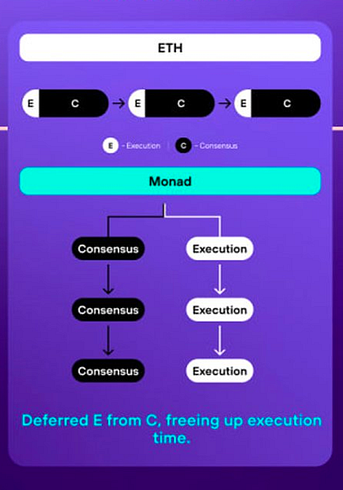
3. Deferred Execution
-
Greater Fault Tolerance: Since execution only needs to keep pace with consensus, this approach is more tolerant of variations in computation time.
-
Delayed Merkle Root: To ensure state machine replication, Monad includes a Merkle root delayed by d blocks in block proposals. This ensures network-wide consistency even in the presence of node execution errors or malicious behavior.
Currently, Monad's parallel EVM supports processing 10,000 transactions per second, with a block time of just one second. It uses a PoS mechanism to enhance network security and energy efficiency and is expected to launch its mainnet in Q3 2024.
Its official account has also accumulated 283,000 followers on Twitter, leading an enthusiastic and active community. The Ethereum community, in particular, appears highly excited about the upcoming Monad launch, positioning it favorably to capture early hype and adoption.
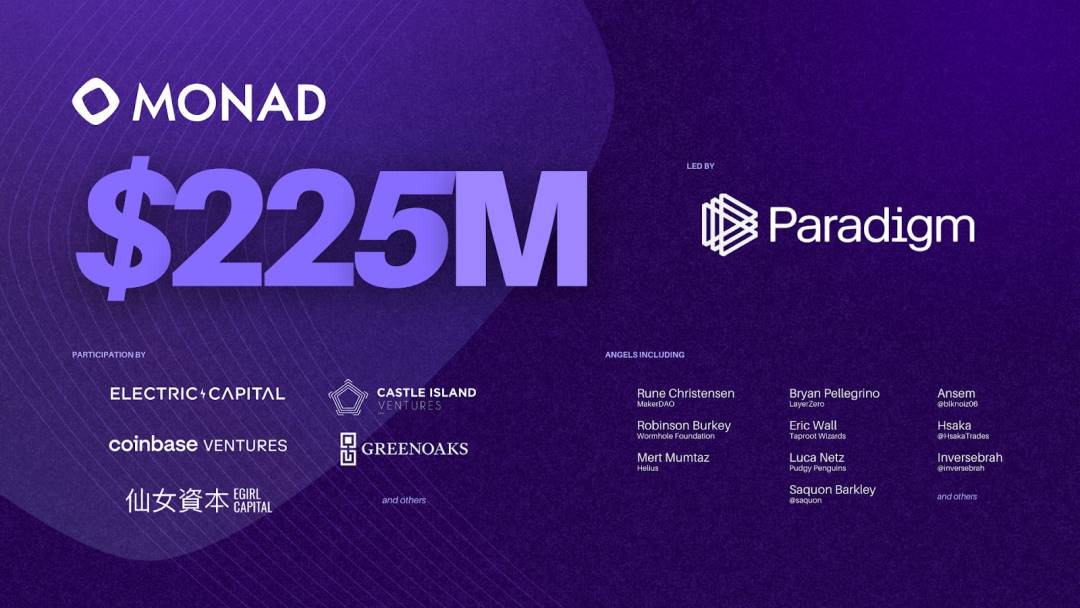
In terms of project background, Monad Labs has completed two funding rounds—in February 2023 and April 2024. On April 9, 2024, it raised $225 million led by Paradigm, with other investors including Electric Capital. The $19 million seed round in 2023 was led by Dragonfly Capital, with participation from Placeholder Capital, Lemniscap, Shima Capital, Finality Capital, and angel investors Naval Ravikant, Cobie, and Hasu.
The Monad team boasts strong credentials, with members from top-tier blockchain projects and robust technical and financial backing. Keone Hon, co-founder and CEO of Monad, previously led a high-frequency trading division at Jump Trading and is a graduate of MIT. Another co-founder, James Hunsaker, was a senior software engineer at Jump Trading and graduated from the University of Iowa. Additionally, Eunice Giarta, co-founder and COO of Monad, brings extensive experience from traditional fintech. She previously worked in payments and infrastructure licensing at Shutterstock and led development teams building enterprise trading systems at Broadway Technology.
3.2 SEI Network: A Layer 1 with Native Parallel EVM, Planning Parallel EVM Integration in V2
SEI Network is a Layer 1 blockchain focused on decentralized finance (DeFi) infrastructure, primarily emphasizing order book development.
By adopting parallel EVM mechanisms, SEI Network enables parallel order matching, achieving goals of high speed, low fees, and dedicated functionality supporting various trading applications. Sei has an average block time of 0.46 seconds and hosts over 80 applications.
Application of Parallel EVM in SEI Network:
-
Smart Block Propagation and Optimistic Block Processing: Accelerates transaction processing time and reduces latency while increasing throughput by providing hashes of all relevant transactions.
-
Native Order Matching Engine: Unlike commonly used Automated Market Maker (AMM) systems, SEI uses on-chain order books to match buy and sell orders at specific prices. All Cosmos-based decentralized applications (dApps) can access SEI’s order book and liquidity.
-
Frequent Batch Auctions (FBA): Groups transactions into batches and executes orders simultaneously within each block to prevent frontrunning and MEV.
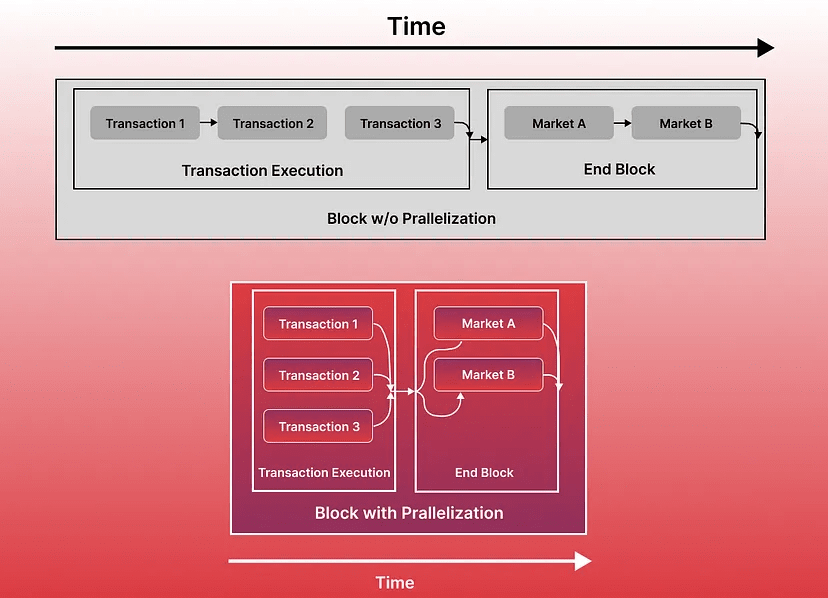
SEI Network has already issued its native token SEI. Within the Sei ecosystem, SEI plays multiple roles, including:
-
Transaction Fees: SEI is used to pay transaction fees on the Sei network. These fees serve as incentives for validators and contribute to network security.
-
Staking: Users can stake SEI tokens to earn rewards and enhance the overall security of the Sei network.
-
Governance: SEI token holders have the ability to actively participate in the governance of the Sei network, including voting on proposals and electing validators.
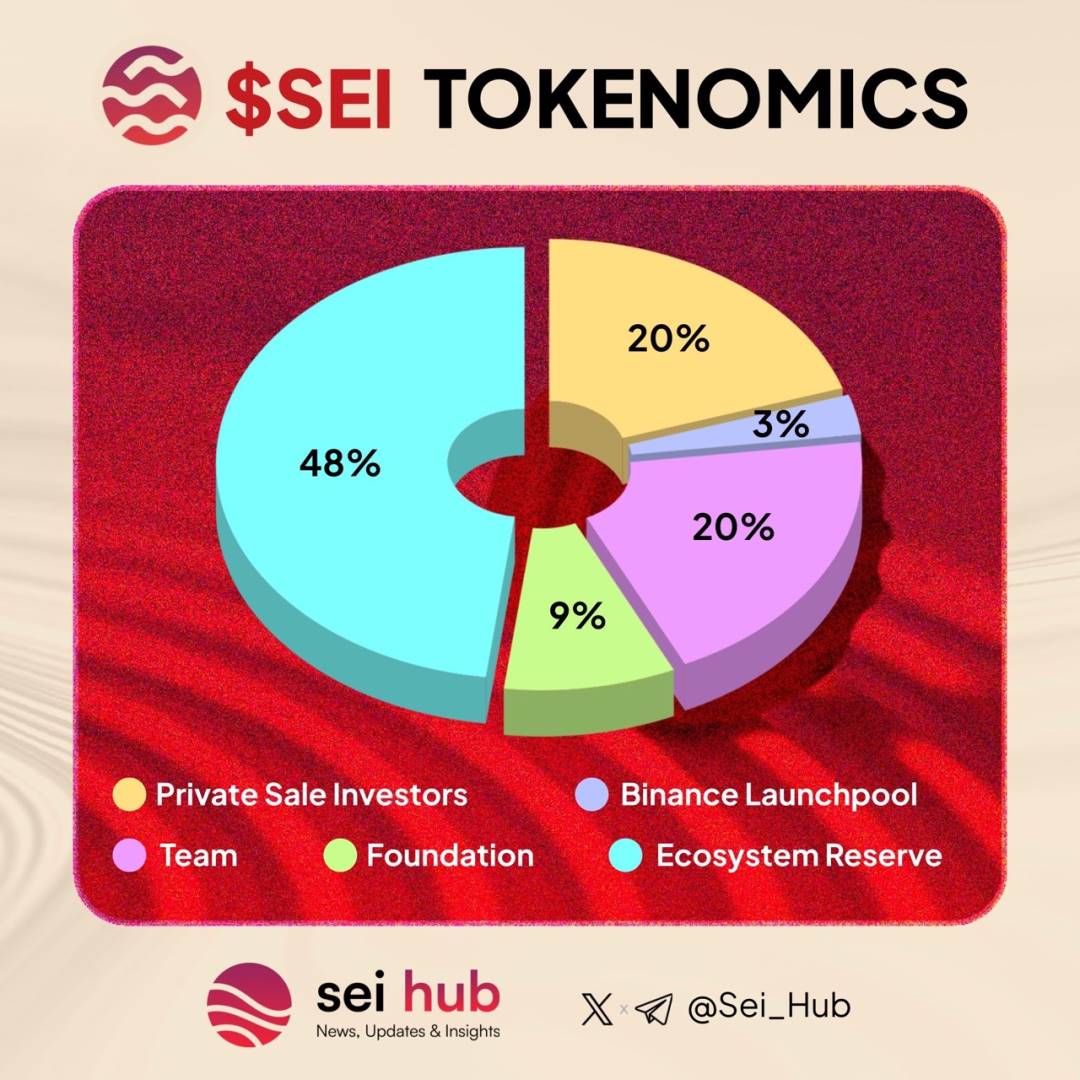
SEI has a total token supply of 10 billion, with 51% allocated to the Sei community. Of this, 48% is reserved for the ecosystem, rewarding stakers, contributors, validators, and developers. Another 3% (300 million SEI) is designated for Season 1 airdrops, with the remainder distributed among private investors, the foundation, and the Sei team.
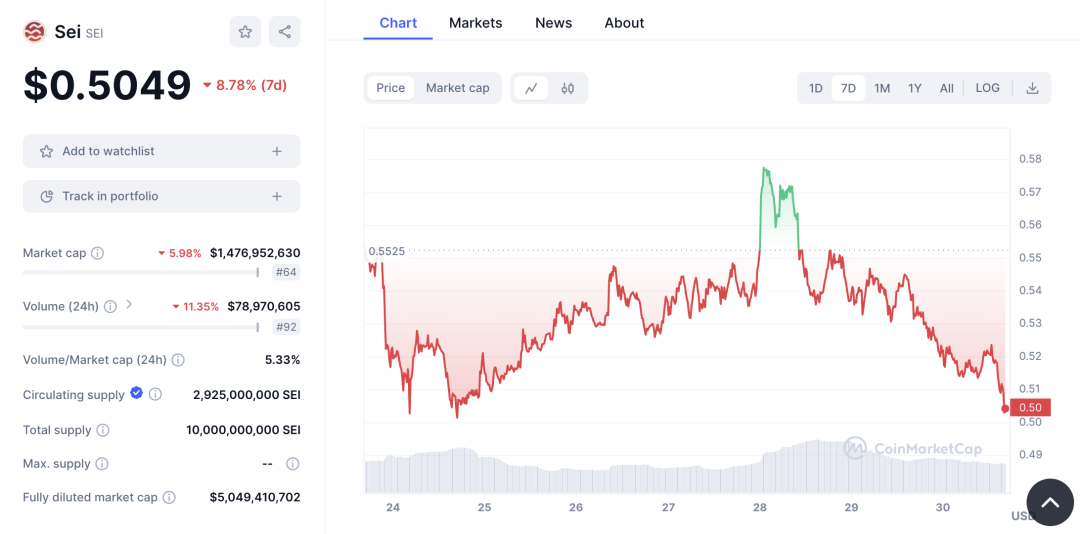
As of May 30, the SEI token price was $0.5049, with a market cap of $1,476,952,630, ranking 63rd on the cryptocurrency leaderboard. Its 24-hour trading volume reached $78,970,605, indicating high market engagement.
SEI Network currently has a TVL of $18 million, has raised approximately $55 million in funding, has an FDV of $8.2 billion, and its official Twitter account has 666,000 followers.
SEI Network's co-founder Jeff Feng graduated from UC Berkeley. Before joining Coatue Management in venture capital, he spent three years as a technology investment banker at Goldman Sachs. The other co-founder, Jayendra, graduated from UCLA and was a software engineering intern at Facebook.
3.3 Eclipse: The Pragmatist, Bringing SVM to Ethereum’s L2
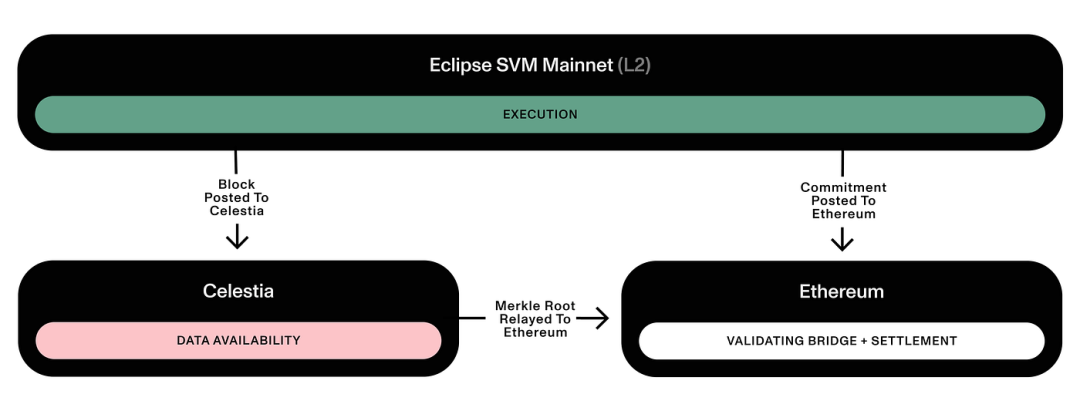
Eclipse is a next-generation optimistic Layer 2 solution built on Ethereum, powered by the Solana Virtual Machine (SVM). By bringing SVM into the Ethereum ecosystem, Eclipse combines Ethereum settlement, SVM execution, Celestia's data availability, and RISC Zero's zero-knowledge proofs to create a massively parallel execution environment. This allows multiple operations to proceed simultaneously, increasing network throughput and efficiency while reducing congestion and transaction fees. Through this architecture, Eclipse aims to improve dApp scalability and user experience.

Key Features of Eclipse
1. High Transaction Throughput:
Eclipse leverages SVM and parallel execution technology to achieve extremely high transaction processing capacity, supporting thousands of simultaneous transactions.
2. Instant Finality:
Achieves immediate completion and finality of transactions within each block through pipelined consensus mechanisms.
3. Ethereum Compatibility:
Eclipse is fully compatible with the Ethereum Virtual Machine (EVM), allowing developers to easily port existing Ethereum applications onto Eclipse.
4. Data Availability:
Utilizes Celestia's data availability solution to ensure data security and verifiability while maintaining high throughput.
5. Zero-Knowledge Proofs:
Employs RISC Zero technology to implement zero-knowledge fraud proofs, enhancing system efficiency and security.
Application of Parallel EVM in Eclipse
Eclipse achieves parallel EVM by integrating the Solana Virtual Machine (SVM), a technology that significantly boosts transaction processing speed and efficiency.
1. Parallel Execution:
-
Technical Principle: Eclipse uses SVM’s Sealevel runtime, which allows transactions with non-overlapping states to execute in parallel rather than sequentially.
-
Implementation Method: By explicitly specifying all states each transaction will read or write during execution, SVM can parallelize transactions that do not involve overlapping states, significantly increasing throughput.
2. Ethereum Compatibility:
-
Neon EVM Integration: To achieve EVM compatibility, Eclipse integrates Neon EVM, enabling the Eclipse mainnet to support Ethereum bytecode and Ethereum JSON-RPC.
-
Native Fee Markets: Each Neon EVM instance has its own native fee market, allowing applications to gain the benefits of app-specific chains without compromising user experience, security, or liquidity.
3. Modular Rollup Design:
-
Infrastructure Layer: Eclipse aims to serve as the infrastructure layer for Layer 3 ecosystems, enabling high performance and scalability through dApp-specific Layer 3 rollups.
-
Simply put, Eclipse’s design logic is: transaction execution occurs in Solana’s SVM, while transaction settlement remains on Ethereum.
Regarding project background, Eclipse raised $15 million in September 2022 from investors including Polychain, Polygon Ventures, Tribe Capital, Infinity Ventures Crypto, and CoinList. Additionally, on March 11 this year, it secured a $50 million Series A round co-led by Placeholder and Hack VC, bringing its total funding to $65 million.
Eclipse co-founder & CEO Neel Somani previously worked at Airbnb, Two Sigma, and Oasis Labs. Chief Commercial Officer Vijay was formerly Head of Business Development at Uniswap and dYdX.
4. Challenges
1. Data Races and Read-Write Conflicts:
In parallel processing environments, different threads simultaneously reading and modifying the same data can cause data races and read-write conflicts. This requires sophisticated technical solutions to ensure data consistency and conflict-free operation.
2. Technical Compatibility:
New parallel processing methods must be compatible with existing Ethereum Virtual Machine (EVM) standards and smart contract code. This compatibility requires developers to learn and adopt new tools and methods to fully leverage the advantages of parallel EVM.
3. Ecosystem Adaptability:
Users and developers need to adapt to the new interaction patterns and performance characteristics brought by parallel processing, requiring sufficient understanding and adaptability from all ecosystem participants.
4. Increased System Complexity:
Parallel EVM requires efficient network communication for data synchronization, increasing system design complexity. Intelligent management and allocation of computing resources are also critical challenges to ensure efficient resource utilization during parallel processing.
5. Security:
Security vulnerabilities in parallel execution environments may be amplified, as a single issue could affect multiple concurrently executing transactions. Therefore, stricter security audits and testing procedures are required to ensure system security.
5. Future Outlook
1. Enhancing Blockchain Scalability and Efficiency:
Parallel EVM significantly improves blockchain throughput and processing speed by executing transactions simultaneously across multiple processors, breaking through the limitations of traditional sequential processing. This will greatly enhance the scalability and efficiency of blockchain networks.
2. Promoting Blockchain Adoption and Development:
Despite facing technical challenges, parallel EVM holds immense potential to significantly enhance blockchain performance and user experience. Successful implementation and widespread adoption will drive broader blockchain adoption and technological advancement.
3. Technological Innovation and Optimization:
The development of parallel EVM will go hand-in-hand with continuous technological innovation and optimization, including more efficient parallel processing algorithms, smarter resource management, and more secure execution environments. These innovations will further improve the performance and reliability of parallel EVM.
4. Supporting More Diverse and Complex Applications:
Parallel EVM can support more complex and diverse decentralized applications (dApps), particularly in scenarios requiring high-frequency transactions and low latency, such as decentralized finance (DeFi), gaming, and supply chain management.
Join TechFlow official community to stay tuned
Telegram:https://t.me/TechFlowDaily
X (Twitter):https://x.com/TechFlowPost
X (Twitter) EN:https://x.com/BlockFlow_News