Interview with Founders Fund's Chief Marketing Officer: Exploring the Future of Web3 and Cryptocurrency Brand Building
TechFlow Selected TechFlow Selected
Interview with Founders Fund's Chief Marketing Officer: Exploring the Future of Web3 and Cryptocurrency Brand Building
The fear inherently associated with something new is part of the brand.
 Navigating Web3 tides with focused insights
Host: Imran Khan, Co-founder of Alliance
Guest: Mike Solana, Chief Marketing Officer at Founders Fund
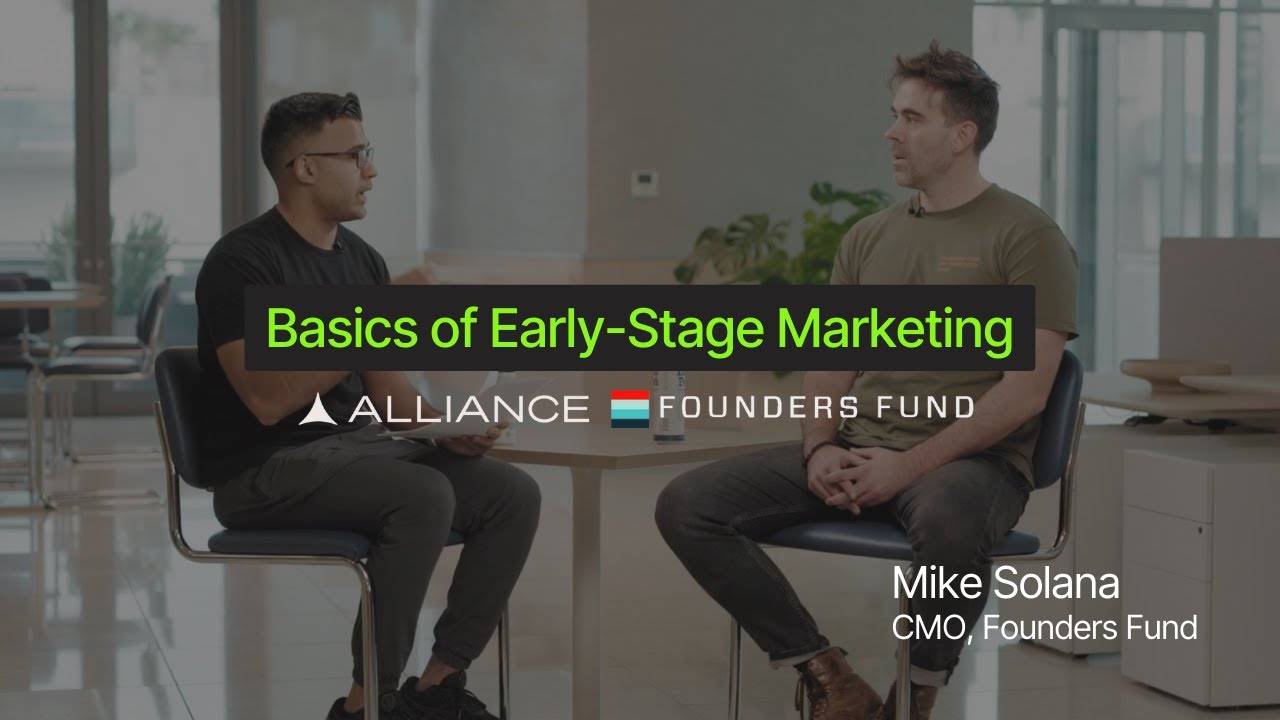
In the world of venture capital, Founders Fund is nothing short of legendary.
In 2002, Peter Thiel, known as the "godfather of Silicon Valley," sold PayPal—the company he co-founded—for $1.5 billion to eBay. In 2005, he established Founders Fund, primarily investing in consumer internet companies. Its portfolio includes iconic Silicon Valley success stories such as Facebook, SpaceX, Palantir, LinkedIn, and Spotify. Today, Founders Fund manages over $12 billion in assets.
In April 2024, Alliance, the largest accelerator in the crypto space, announced a strategic long-term investment from Founders Fund. The size of the investment was not disclosed. As part of the deal, Founders Fund will provide support to Alliance’s portfolio companies.
As a “bonus” from this collaboration, Imran Khan, co-founder of Alliance, sat down with several partners and the CMO of Founders Fund—many of whom are former founders themselves—to discuss how founders can drive sales and growth, build crypto-native brands, find the right co-founders, and more. The conversation is packed with practical insights for entrepreneurs.
TechFlow has compiled and translated this dialogue series into Chinese for our readers.
Overview
In this interview, Mike Solana, Chief Marketing Officer at Founders Fund, engages in an in-depth discussion with Imran Khan, co-founder of Alliance, about building and growing brands in the Web3 and cryptocurrency industry. They explore innovative thinking, the importance of brand-building, and how to effectively leverage existing communication channels under restrictive conditions. Mike offers practical advice on building strong networks and personal brands through Twitter, podcasts, press releases, and other platforms.
-
Mike's Background: Mike Solana is the Chief Marketing Officer at Founders Fund, responsible for brand operations and creative marketing, with over 10 years of experience. Before joining Founders Fund, Mike worked in publishing. He currently runs Pirate Wires, a media company focused on writing, social media, and podcasting.
-
Brand Building: Mike emphasizes that fear is inherently tied to new ideas—and that this fear is part of branding. Founders must confront it and boldly express unique, even heretical, perspectives. He highlights the need for new types of conversations in tech, which inspired their Hereticon event.
-
The Importance of Writing: Not everyone is a natural writer, but everyone should find their own mode of expression. For those less comfortable with writing, Mike suggests leveraging strengths like video or podcasting. Still, he stresses the value of writing skills, especially in creative marketing and content creation.
-
Platform-Specific Marketing: Due to advertising restrictions on platforms like Facebook and Instagram, Mike recommends alternatives such as Twitter and YouTube for crypto-specific marketing. He also highlights newsletters as powerful tools, using video or audio interviews to amplify reach.
-
Finding Your Network: Building relationships with people who share your values is crucial when establishing a personal or company brand. Mike advises that connecting with such individuals makes your social media presence and overall market strategy far more effective.
-
When to Post: For founders hesitant to share concerns publicly, Mike recommends waiting until you're fully prepared and willing to accept the consequences. He underscores the risks involved and urges careful consideration before posting.
-
A Silver Lining in Low-Noise Moments: Periods of low engagement on social media or public forums—when attention is scarce—can be opportunities to form deeper connections with like-minded individuals. Mike sees these as ideal moments for mutual understanding and encourages making the most of them.
-
Mike's Interview Strategy: In hiring, Mike prioritizes candidates’ real-world experiences and capabilities over academic credentials. He focuses on project experience, personal achievements, and the ability to work independently.
-
Write in Your Own Voice: Writing should reflect the author’s personality and style. Mike advocates embracing individuality so readers can sense the author’s unique voice. He encourages authenticity and expressing genuine opinions and emotions.
-
Surround Yourself with Excellence: Mike stresses the importance of the people around you, both professionally and personally. Being surrounded by talented individuals who share your values not only elevates you but also drives collective growth.
Here is the full transcript of the conversation:
Mike’s Background
Imran: Mike, could you give our audience a quick background?
Mike:
I'm the CMO at Founders Fund, handling creative marketing—I've been doing this for over a decade. I used to work in publishing, but for most of my adult career, I've worked with Peter. I also run a media company called Pirate Wires. So my work involves writing, tweeting, and podcasting.
Brand Building
Imran: One concept from your writing really stood out to me—the idea of heretical thinking, of thinking outside the box and opposing mainstream views. I feel this is often overlooked. What drew me to crypto is that it's an industry nobody really wanted to build. Many of our founders are creating spaces where they’re nervous about sharing opinions publicly. So what key factors should one consider when building a brand?
Mike:
We might notice the heretical part first, and people may worry about having to speak up. But this is part of brand-building. If we're talking about creative marketing—if you want people to see what you're doing and believe it matters—then why do you think it matters? Probably because it doesn’t exist yet. Like Pirate Wires—I felt what we were doing didn’t exist. That’s why I care about it.
At Founders Fund, I’ve found many of our ideas sit at the edge of heresy. I see this as a way of debating, especially in tech fields that don’t yet exist. That’s scary—and new things are usually scary. If you’re building one of them, that *is* your brand. What you’re building *is* your brand. You might be afraid to speak, but the only way forward is straight through it. You don’t have to loudly proclaim every heretical idea. Generally, if I have thoughts I want to share online, I get nervous too. And I usually advise against it. Just like a crypto founder has no reason to talk about abortion or similar topics. But if there’s a publicly contested belief in economics or crypto, and you believe in it and are actively building it, then yes—you should absolutely dive in.
The Importance of Writing
Imran: When it comes to writing and building a brand on Twitter, how did you get started? How do you view writing?
Mike:
I’ve always written—I started young. Twitter is kind of like when a stand-up comedian goes to an unrecorded club and just sets down a small recorder to test material. I come up with something, throw it out, and see what I can do—how I can play with my ideas. But longer-form writing was something I had to build up to. I found journaling really helpful. In 2020, I launched a newsletter called Pirate Wires, and suddenly I had an audience expecting content weekly. It just spreads; the more you write, the easier it gets.
Imran: Do you have general guidelines for founders who want to enter the market through writing?
Mike:
Not everyone is a good writer. When I first started at Founders Fund years ago, I was a writer and editor—I knew how to write. But I was surrounded by people brilliant in other areas—business, engineering, inventors I deeply respected. Everyone I met in San Francisco, everyone I thought was amazing, was doing things I couldn't do. It made me uneasy. During my first free summer after moving to SF in 2011 or 2012, I tried teaching myself to code because of that insecurity. I played with Javascript, thought I could handle Ruby on Rails and Python. After a month or two, I realized I could work hard at it for a long time—but I was already ahead in writing. I already had an advantage there. When people said, “Oh, you’re a good writer,” or compared me to others in tech, they weren’t complimenting me. I realized I already had a slight edge in something I should focus on—something I was already better at than others. So I should double down on that.
When shaping your brand, learn to use media. Some excel at Instagram, some at short videos, some at podcasts. Not everyone will become a long-form writer—even on Twitter, I love short-form writing. There are many Twitter users I admire who couldn’t turn a tweet into a full article. So my first piece of advice: just because you have a talent for writing doesn’t mean you must write. Audit your communication skills, identify what you’re best at and enjoy most—maybe it’s podcasts, maybe YouTube. There are countless formats. As technology evolves, new mediums emerge. It could be anything.
Marketing Across Platforms
Imran: In crypto, we know many channels are off-limits—marketing on Facebook or Instagram is banned. Our main channel is Twitter, partly YouTube. So for crypto founders, brand-building comes down to podcasts and writing. If a founder isn’t good at writing or tweeting, should they go into podcasts? What creative elements haven’t been explored yet, or what would you recommend?
Mike:
There’s an assumption here that Twitter will always be available—but I’m not sure that’s true. If you think, “This is the only place we can be creative,” that’s already problematic. You shouldn’t put all your eggs in one basket, because if you build everything there and tomorrow Elon decides crypto-related content isn’t allowed, you’re done. So you need to be very flexible. And you don’t even need to be a writer to use writing in marketing.
Take newsletters, for example—they’re extremely powerful. Nothing stops a newsletter author from interviewing you via video or audio and sending it to all their subscribers. Same as reaching out to others. I think crypto founders have many opportunities: Facebook, Substack, newsletters, video, audio, long-form, short-form. Pick what you’re good at, focus on it consistently—or find someone skilled and empower them. You don’t have to be the one doing it. Maybe you don’t want to communicate at all, but your colleague or co-founder excels at it—give them the resources to do it.
Finding Your Network
Imran: So the consensus in crypto is to use Twitter as a launchpad. Another approach is to think differently—use newsletters, podcasts, and other methods to play to your strengths. What tools do founders have for distribution, and how should they use them? Should they pick one? Your earlier answer suggested Twitter or writing might not be best—it depends on natural communication skills, so it could be podcasts or any other channel. How should founders use these mediums? You mentioned newsletters—should they consider launching their own?
Mike:
You can become friends with people who run newsletters—that’s how Twitter works. You get amplified by your Twitter friends. That’s how everything functions: you’re stronger within a scene than alone. So I think, before discussing how to shape a personal brand online, you need to be active in the space and have friends in it. The network part comes first.
Who you’re friends with—on Twitter, you mostly talk to them. In the early days, growth almost always happens through conversations with friends, amplifying each other. Then it expands from there. I think much of media works this way. So focus on what you’re doing and people doing things you enjoy—then go talk to them.
Imran: So the idea is for founders to build their network with like-minded people.
Mike:
Exactly. Especially in crypto—there are many people now. I think it might be better to do this now than during the bull market peak a few years ago, because those still in crypto truly care about it—they’re genuine enthusiasts. So I think it’s a great time to make friends in the space, engage online, join conversations, contribute, share information. I only pay attention when someone mentions something smart or interesting. If they’re interesting, I engage. If they teach me something, I engage. Generally, those two things—having fun online and sharing valuable, authentic information you care about—are the path to success.
When to Publish
Imran: Alliance runs an accelerator program. One thing we tell founders is to talk publicly about what they’re building—up to a point. Many founders are actually afraid to post their first tweet. They worry about backlash, as you mentioned earlier. What would you say to founders concerned about this?
Mike:
If you don’t like it, don’t do it. I believe you have the right to say anything you want—but you’re accountable for what you say. I run a media company and work for Peter—I don’t worry much about the consequences of speaking my mind. In fact, it’s my job. It’s easy for me to encourage people to speak up. I think you should be more thoughtful and strategic about the conversations you want to have. If you truly believe something is important and you’re the one talking about it, then be brave—say it. But if you’re a crypto founder, do you really need to talk about the war in Israel right now? Personally, if you’re already worried about what might happen online, I’d probably avoid that topic.
A Silver Lining in Low-Noise Moments
Imran: You raised a crucial point—crypto moves in bull and bear cycles. Bull markets attract many profit-driven people. Bear markets leave only those passionate about the space. Many of my closest friendships were formed during bear markets—we genuinely care about each other. How do you maximize these relationships?
Mike:
Something similar happened to me when I became a writer—mainly on Twitter, later through my own company—but it was when my visibility and surrounding noise dropped significantly. Now, if I tweet, I can’t really track all comments. People ask, “How do you handle the hate?” I don’t see it all as noise. But early on, I got zero likes or comments. So when one or two people responded, truly understanding me—and me understanding them—it mattered deeply.
I think in these low-noise moments, it sometimes feels like failure—but it’s a huge gift. With less noise, signals are easier to catch—whether it’s a person worth connecting with, or a concept or idea. Sharing feels easier in these moments. So I’d say: reframe it as a gift. Use it fully. Make as many friends as possible, because once the noise returns, it’ll be harder—you won’t make friends.
But I think in bull markets, you see this—huge crowds of narcissistic sociopaths only caring about profits. It might be exciting, wild things happen, but you won’t make friends. Now, focus on this. On maximizing—it’s not how I think. I think it’s about following your interests, connecting with people doing similar things, and then benefits naturally emerge. It just happens. I don’t see it as a math problem. I think if you just water the garden, beautiful things grow from it.
Mike’s Interview Strategy
Imran: I think hiring is crucial for crypto founders, especially since you don’t care about their background—you care about their writing. When reading someone’s writing, what are you evaluating?
Mike:
I care about their personal background—experiences, where they’ve spent their time—but not where they went to school. At Founders Fund, it depends on the role. If they’re applying for video or design work, I don’t care how good a writer they are. But at Pirate Wires, where roles are writing-focused, they must be strong writers. What matters is what projects they’ve engaged in, what excites them, what they’ve achieved, whether they can do things most people can’t. But there’s a hidden truth: average people don’t act—they wait to be told what to do. You should figure out what needs doing without being told. That’s important to me.
Write in Your Own Voice
Mike:
When I read a creator’s work, I want to know who this person is. You can feel their personality—even if they’re writing about an empty bag of Doritos at Subway. I sense their character. It’s a niche area. For crypto founders wanting to write well, good writing should give the impression that only this person could have written it. Tech celebrities believe good writing strips away style to reveal pure information—the most famous advocate of this is Hemingway. That’s a style. When you read someone’s work, you recognize their voice. “I only write essential things”—others can do that too, but it won’t sound like him. He has his own style.
Good writing has style. You don’t just state something valuable—you present it in an engaging way, especially if it’s persuasive. But I also believe a piece that people remember, return to, and share with friends must have life. My writing improved when I stopped worrying. We all have natural impulses in communication—we think, “I shouldn’t do this.” That’s the path to finding your personal style, especially at the start. To me, writing is like music—it has rhythm and flow. I don’t just want to say something—I want to take you on my journey. I look for that in other writers too.
Surround Yourself with Excellence
Imran: You mentioned intuition, which I think is vital—sometimes I write something, then delete it. You could post a Twitter thread about what you’re doing, and it’s okay to follow your instinct and create the feedback you want, since you just talked about following the process.
Mike:
Some writers want to know others’ takes on events—not just facts, but their personal views. It’s not just about their opinion, but their framework, their way of speaking. You care more about the person than what they said. When a writer produces something great, readers connect. That connection—between writer and reader—is human. It’s not just information gathering. We want to hear what our friends think. So in writing, your job is to become that friend.
Imran: So the key is to be yourself, right?
Mike:
You want to be yourself—but a heightened version of yourself. I think that’s another part: you must amplify those aspects of yourself that feel authentic. You’re doing something others aren’t—that’s your specialness.
Imran: One signal I picked up from you is that founders who want to build a brand online can write, go on podcasts—but one thing less common in our circles is actively seeking out people with strong networks. What are you trying to convey? I recall your example of befriending newsletter operators—it’s not a common practice. Can you elaborate on using this as a marketing or growth strategy?
Mike:
Yes, again, I can’t speak strategically about it—this is just my assumption about how the world works. I want to be around people doing cool things, who share my values and my taste in people. Talking with them is fun and effective for me. This network—if you want to learn math, if you want to think like an engineer—that’s your network, that’s your distribution channel. These are the people you’ll collaborate with, who will sell your product. But they’re also like friends. Befriend people doing what you think matters, people you admire. Being around them pushes you to grow, helps you, and you help them. You want your friends to become their best selves. You want the best people in the world around you—because together, you’re stronger. That’s how human networks work.
Join TechFlow official community to stay tuned
Telegram:https://t.me/TechFlowDaily
X (Twitter):https://x.com/TechFlowPost
X (Twitter) EN:https://x.com/BlockFlow_News
 Alliance