Understanding Fantasy: A New Social Project on Blast, Combining Card Games with Celebrity Influence
TechFlow Selected TechFlow Selected
Understanding Fantasy: A New Social Project on Blast, Combining Card Games with Celebrity Influence
Fantasy is both a TCG and a fantasy sports activity.
 Navigating Web3 tides with focused insights
Author: TPAN
Translation: TechFlow
Introduction
Recently, the SocialFi space has witnessed a new transformation—merging traditional fantasy sports models with social media influence into an innovative format. Fantasy.top and Perl, as pioneers of this trend, are not only redefining how users interact with content creators but also offering fresh perspectives on monetizing social platforms. This article will delve into the mechanisms, innovations, and potential impact of these two platforms on the future of social finance.
Main Content
Ever since I covered friend.tech six months ago, I've been patiently waiting for another SocialFi product that could excite me just as much.

Now, it seems that day has finally arrived—a new category is bringing a fresh twist to the well-established "fantasy" model commonly seen in sports.
Fantasy
I first encountered Fantasy last week when the platform launched on the Blast testnet. Their announcement video was absolutely hilarious:

After signing up, I immediately understood Fantasy's intent upon seeing this:
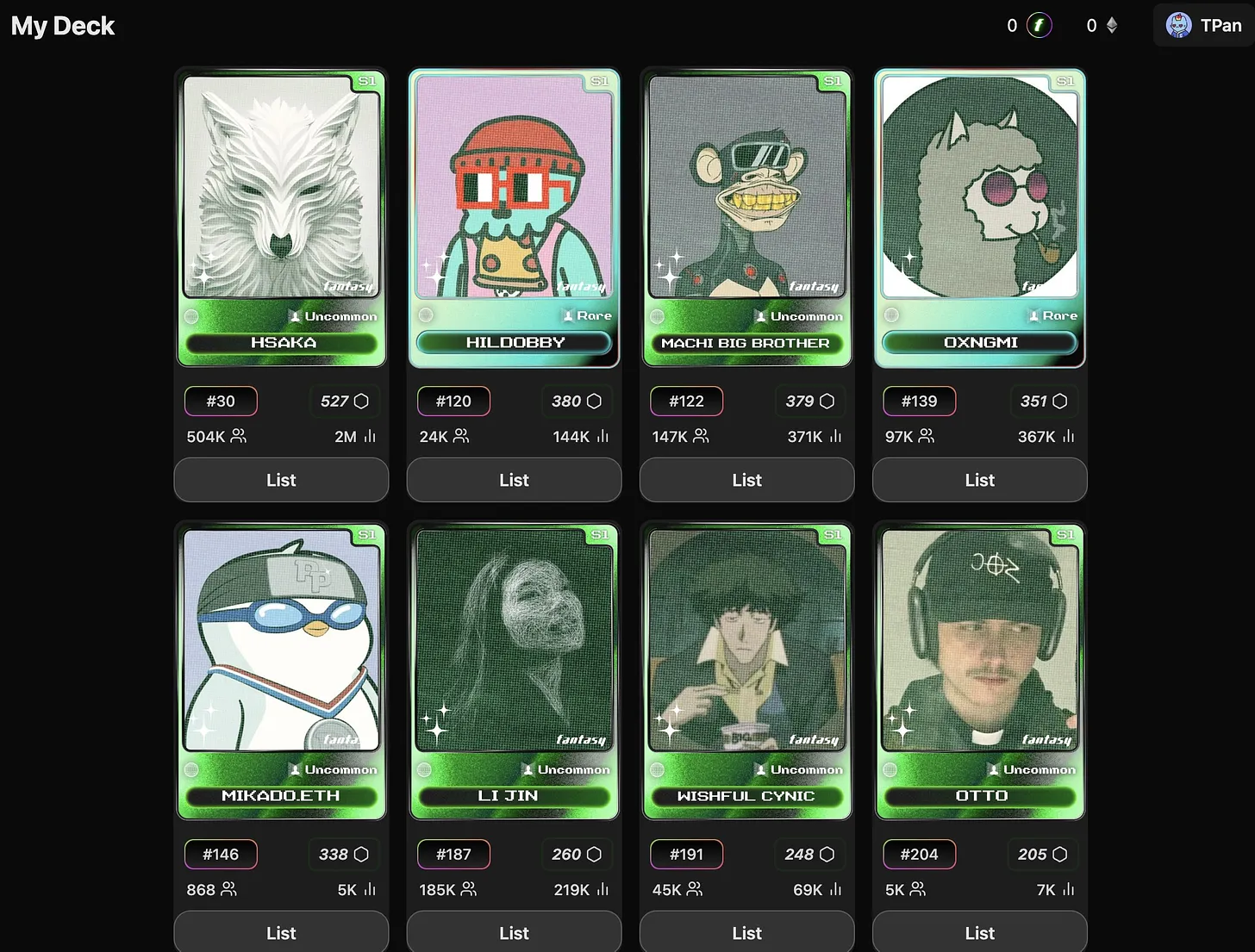
At its core, Fantasy combines fantasy sports × Twitter influencers, starting with crypto Twitter.
Editor’s note: Fantasy sports refers to online games where participants form virtual teams composed of real athletes. A famous example is the football management game FM.
How does it work?
-
Build your fantasy lineup by collecting influencer cards and set your team for weekly matches
-
A marketplace allows buying and selling influencer cards to improve your lineup
-
Participants can earn rewards such as BLAST, ETH, FAN points, and influencer packs
That's all. For anyone familiar with fantasy sports (player stats, optimal lineup creation, waiver wires, etc.), this is particularly easy to grasp.
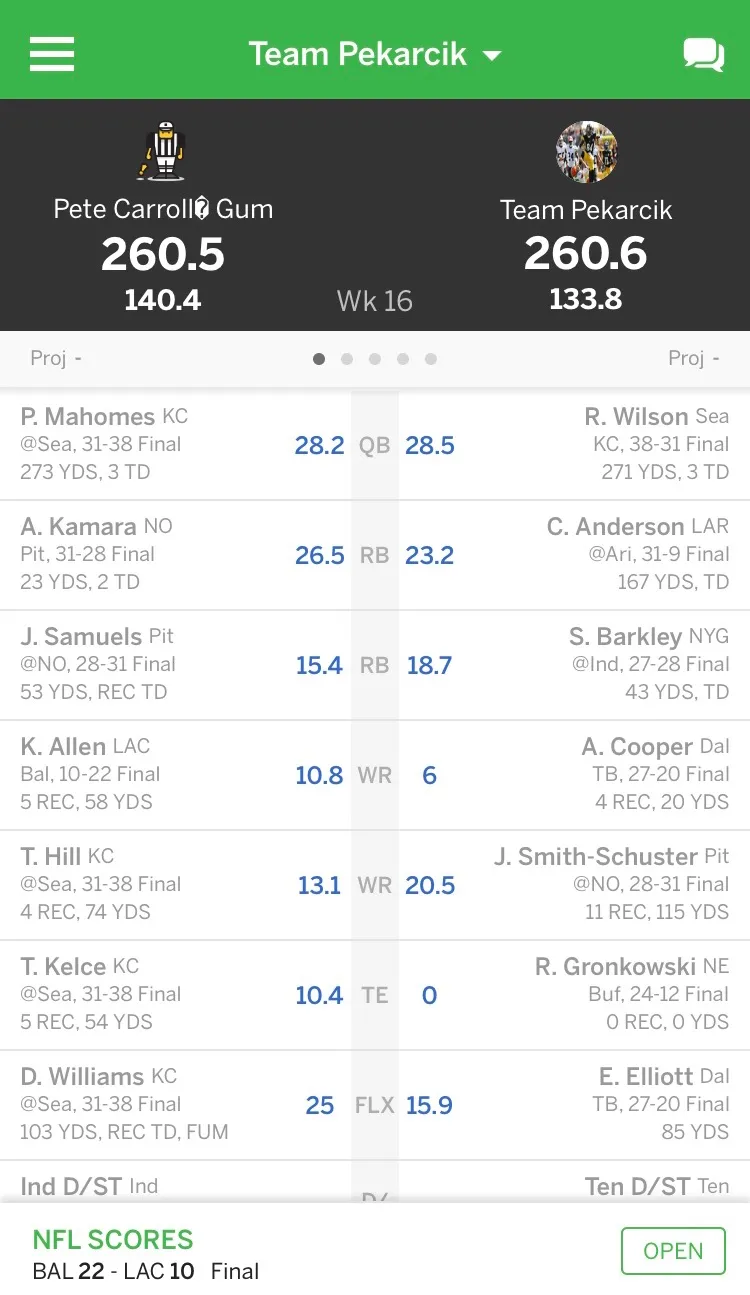
The SocialFi aspect of Fantasy provides clear incentives through its marketplace and match-based rewards. But what about the influencers themselves (whom Fantasy calls "heroes")?
-
Passively earn 1.5% of ETH from trading volume on their cards—on top of the 4% native yield earned on the Blast L2
-
Earn additional FAN points, which unlock extra benefits and claims
-
Receive regular free mints of their own cards to gift to their community or supporters
Imagine if professional athletes received bonuses based on performance and how often they were placed in starting lineups. While impractical for real athletes, this concept isn't far-fetched for influencers on emerging platforms like Fantasy.
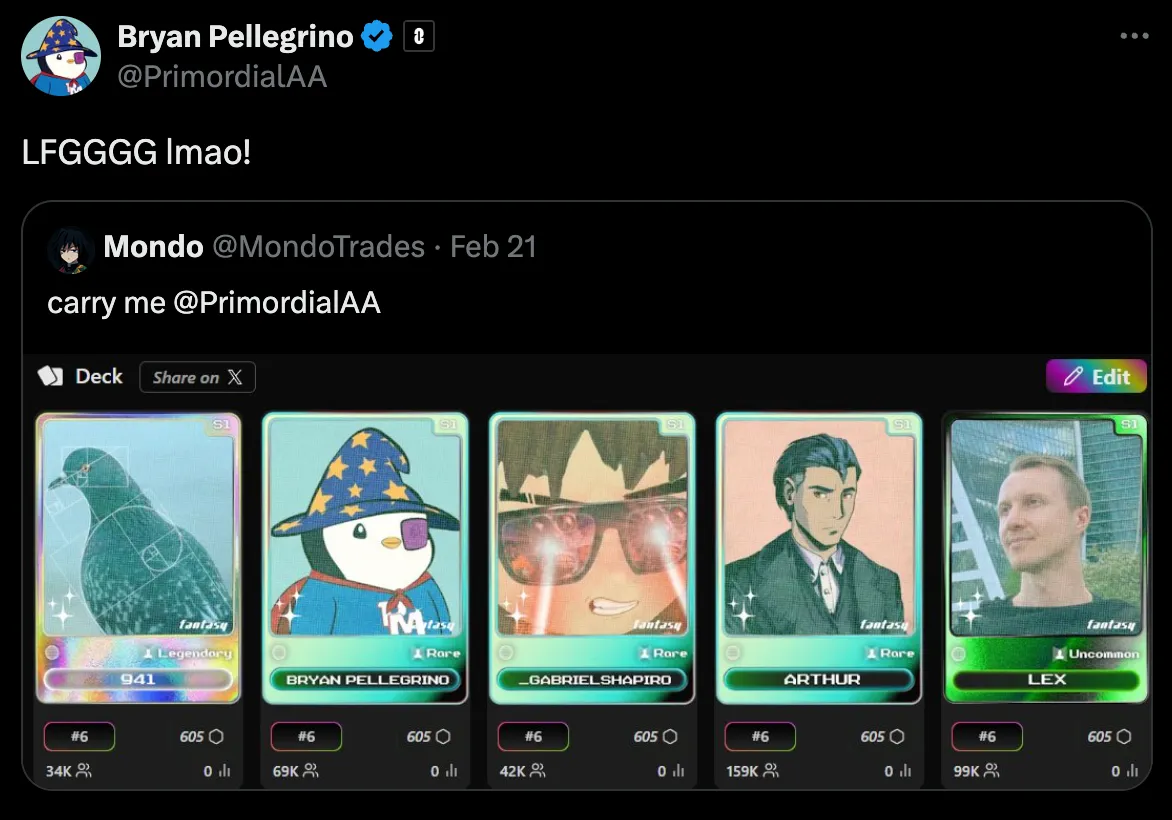
What do the heroes think of Fantasy? At least some of them find it amusing.
What else makes Fantasy interesting?
Fantasy is both a TCG and a fantasy sports game.
While I’ve compared Fantasy to fantasy sports (a popular Western online game), the product also has a strong trading card game (TCG) element—which is how the team itself describes it.
Fantasy is a SocialFi trading card game (TCG) where players use tradable cards of crypto Twitter influencers to play online games, thereby monetizing their social capital and research expertise.
Hero cards come in different rarities (Uncommon, Rare, Epic, Legendary) and seasons (all cards currently are S1). Rarity affects the circulation of hero cards, while the role of seasons remains unclear (possibly future point-based incentives to drive more trading activity?).
Hero Ratings
Each hero has a rating that determines how well your lineup performs in matches. This is a composite score based on factors including (but not limited to):
-
The hero’s viewership ranking (compared to others)
-
The hero’s influence ranking (relative to other heroes)
-
The hero’s total view count
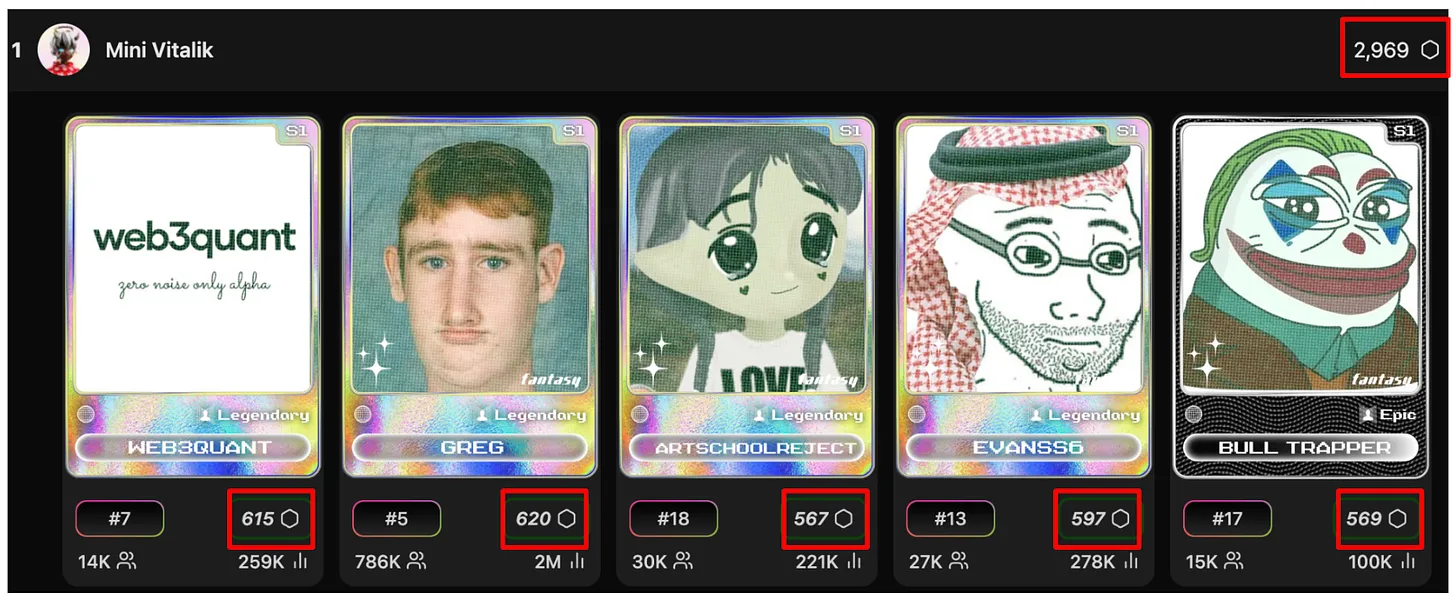
Naturally, this makes lineup decisions far more complex than simply “I’ll pick the influencer with the most followers.” Serious players will analyze these metrics to build optimal lineups and increase their chances of winning.
If Fantasy becomes popular enough or offers attractive enough prizes, it will be fascinating to see whether players employ subtle strategies to boost their heroes’ stats—and how Fantasy responds to such tactics.
Take an extreme example: what if a player hacks into an influencer’s account and posts absurd but viral content, causing their hero score to skyrocket to the top?
Lineup Optimization
The behavior of users optimizing their lineups is familiar, but the mechanics behind optimization differ significantly.
There are no fixed match dates—creators post whenever they want. If an influencer doesn’t post during a Fantasy event window, they’re effectively “injured.”
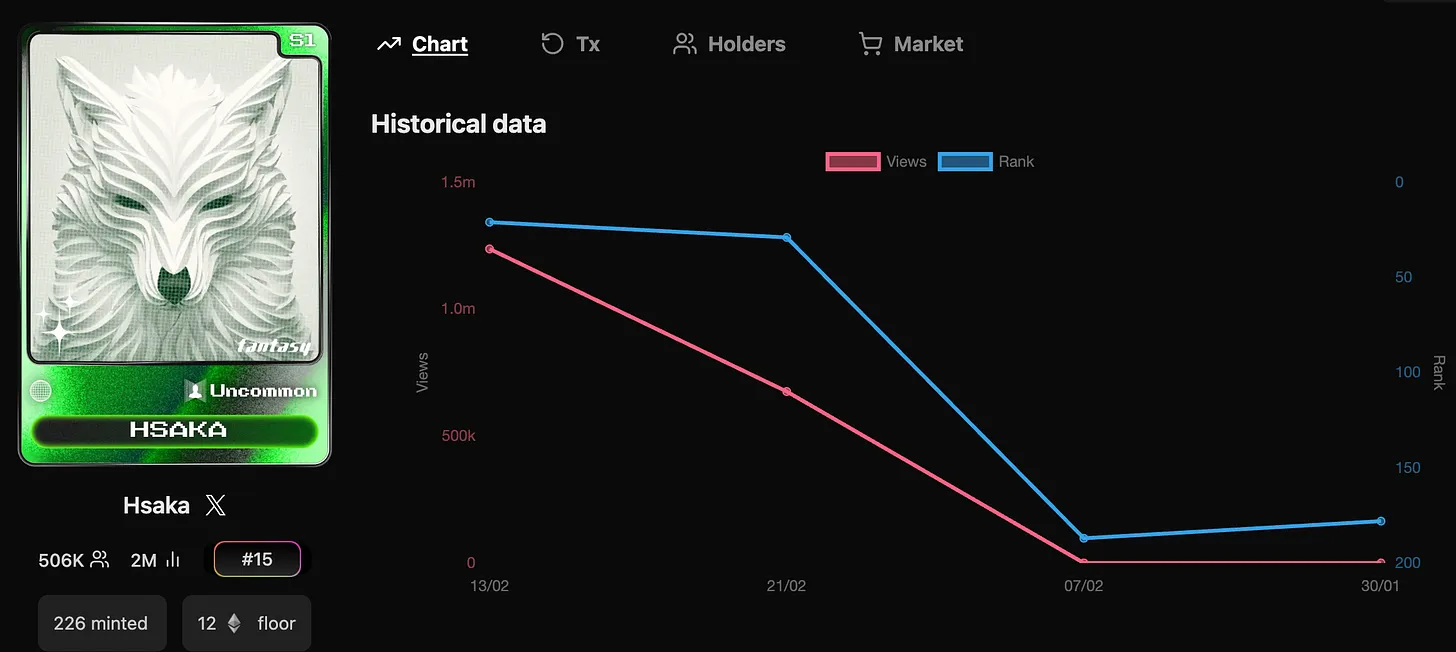
On the flip side, some influencers stay “injured” (i.e., inactive) for weeks before suddenly returning—like Hsaka. Unlike sports, there’s no injury report. Sometimes, creators simply decide to post again, or a catalyst emerges.
At the other extreme, what if you “bribe” an influencer to post—or to create content more likely to go viral? That’s a very different assumption, one that might not even violate rules, or at least would be harder to detect.
Creator Incentive Alignment
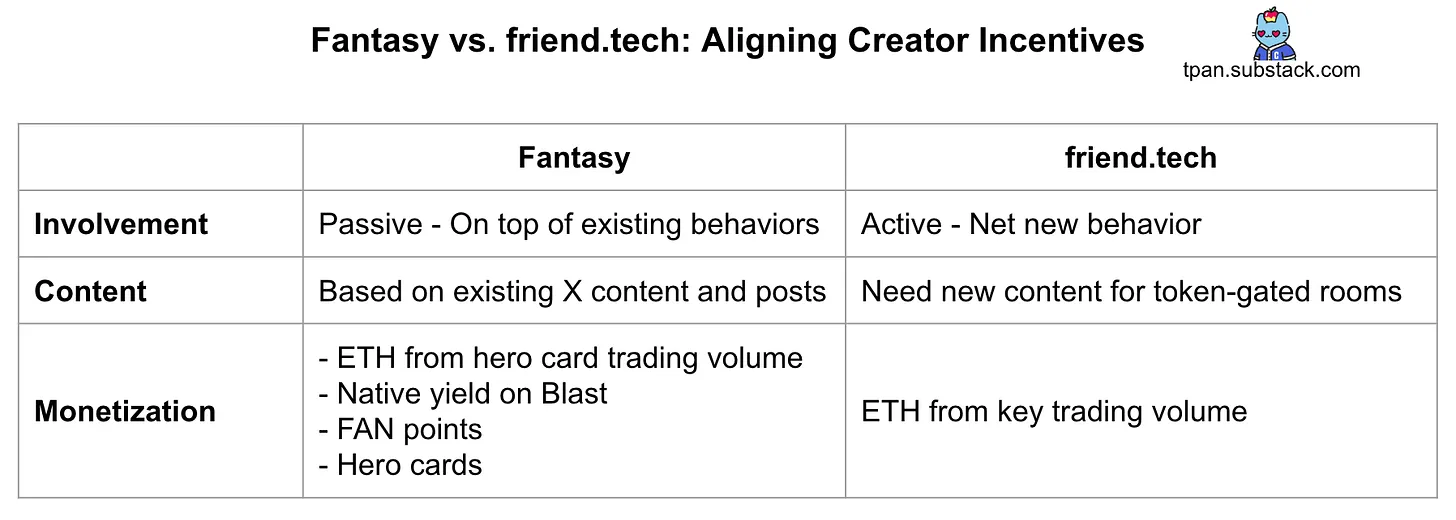
This is where platforms like Fantasy may prove more sustainable, compared to friend.tech, which has struggled with user retention over time.
The magic of platforms like Fantasy (and fantasy sports in general) lies in the fact that influencers/players don’t need to do anything extra. In contrast, friend.tech requires creators to regularly log in across platforms and produce exclusive content for key holders—or face sell-offs.
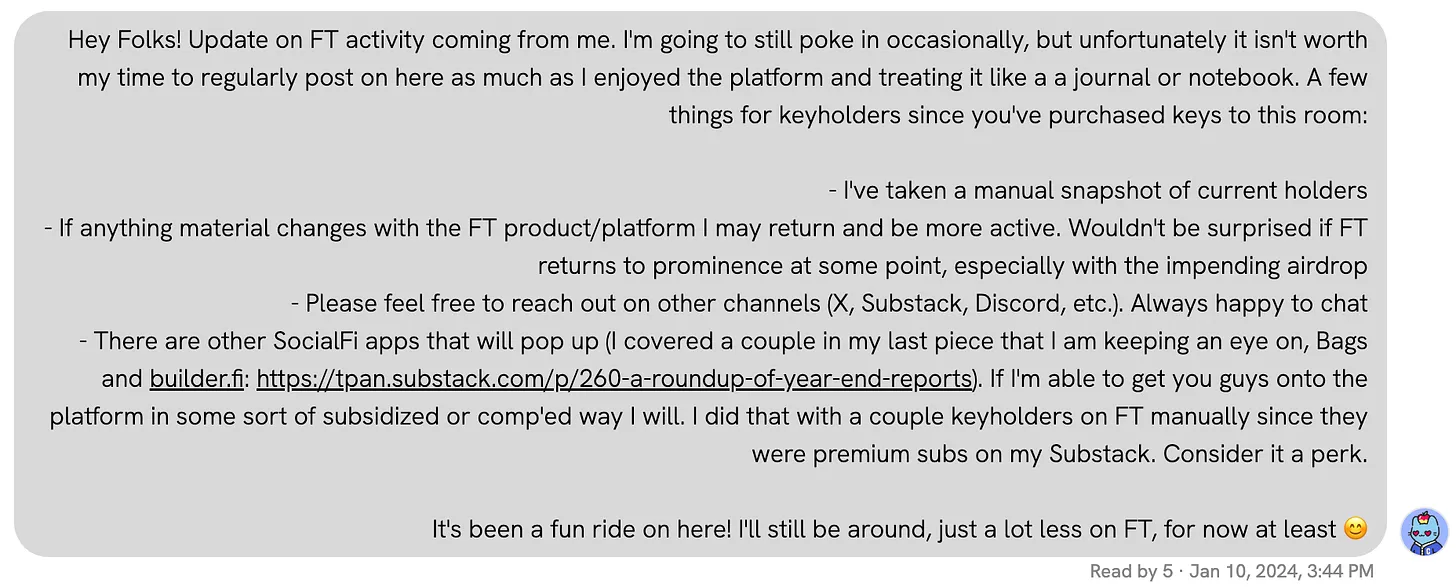
For someone like me, friend.tech was an exciting new SocialFi narrative—but after posting consistently for five months, I eventually became inactive.
As Fantasy inevitably grows in popularity, it will be interesting to observe how the platform encourages users to keep coming back, while maintaining neutrality in its scoring methodology.
Despite these challenges, why do I believe Fantasy will “inevitably grow”? It was one of the 47 winners in the Big Bang competition, earning marketing support and a significant airdrop allocation.
Beyond that, between last Friday and yesterday, 4,491 new players (connected X accounts + new wallets) joined Fantasy’s testnet version.
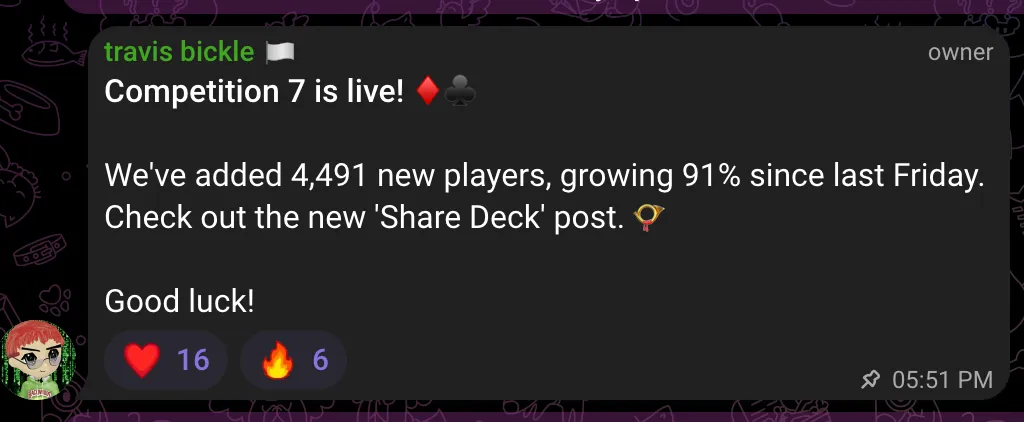
Invites are currently closed, so stay alert for when they reopen if you’d like to join.
Perl
Fantasy isn’t the only product exploring this genre of SocialFi. Perl is a SocialFi platform built on Farcaster that allows players to bet on users and their social engagement. Perl’s mechanism is even simpler than Fantasy’s.
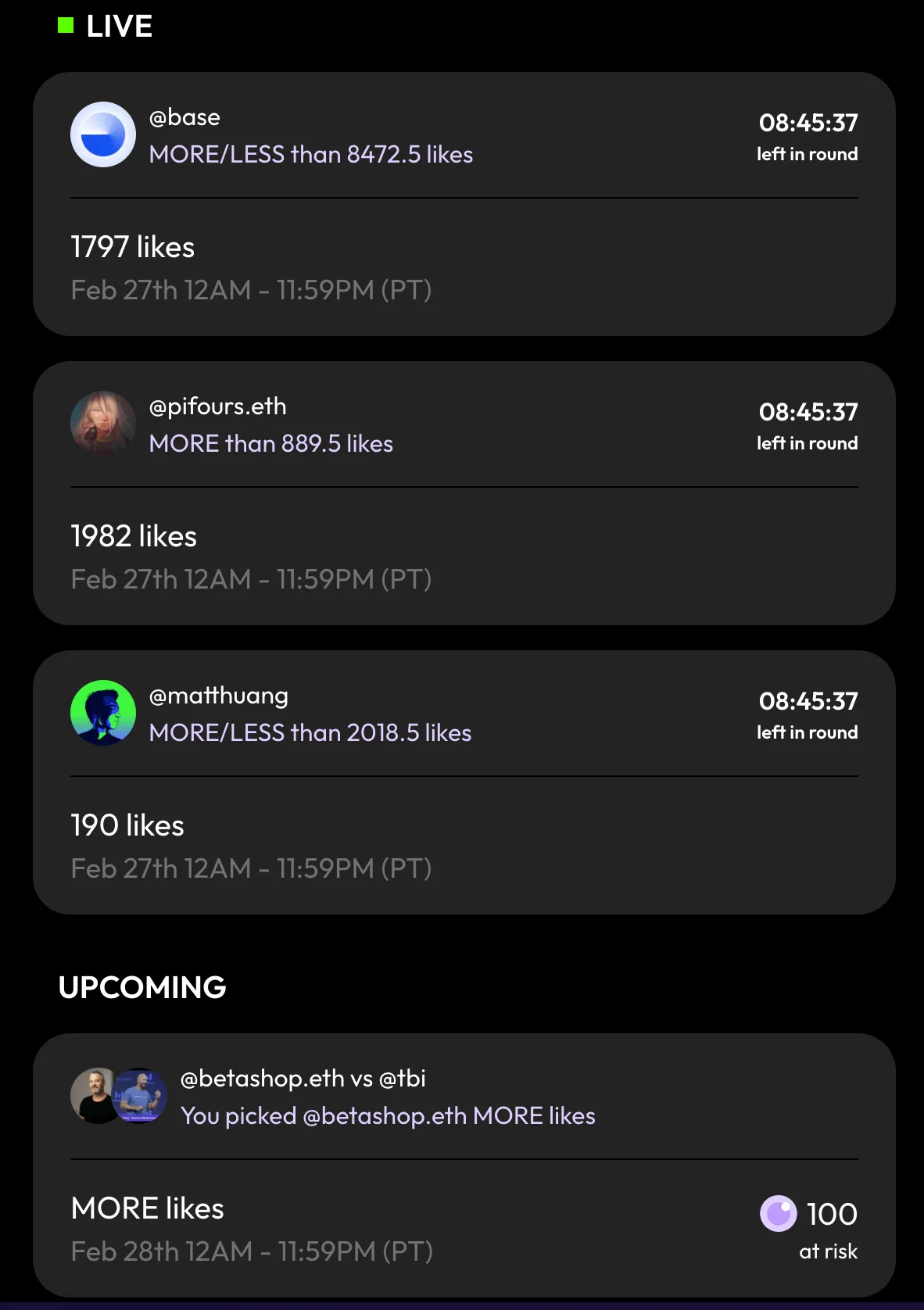
How does Perl work?
-
Perl is a free, skill-based prediction game
-
Two game modes: MORE/LESS and VERSUS (e.g., who will get more likes: X or Y?)
-
$PERL is the in-game currency used for betting
-
Perl may eventually offer a decentralized, on-chain version of its token (meaning potential airdrops)
Farcaster Frames enables users to make selections directly within the Farcaster client, making it easy to attract new users or maintain engagement among existing ones.
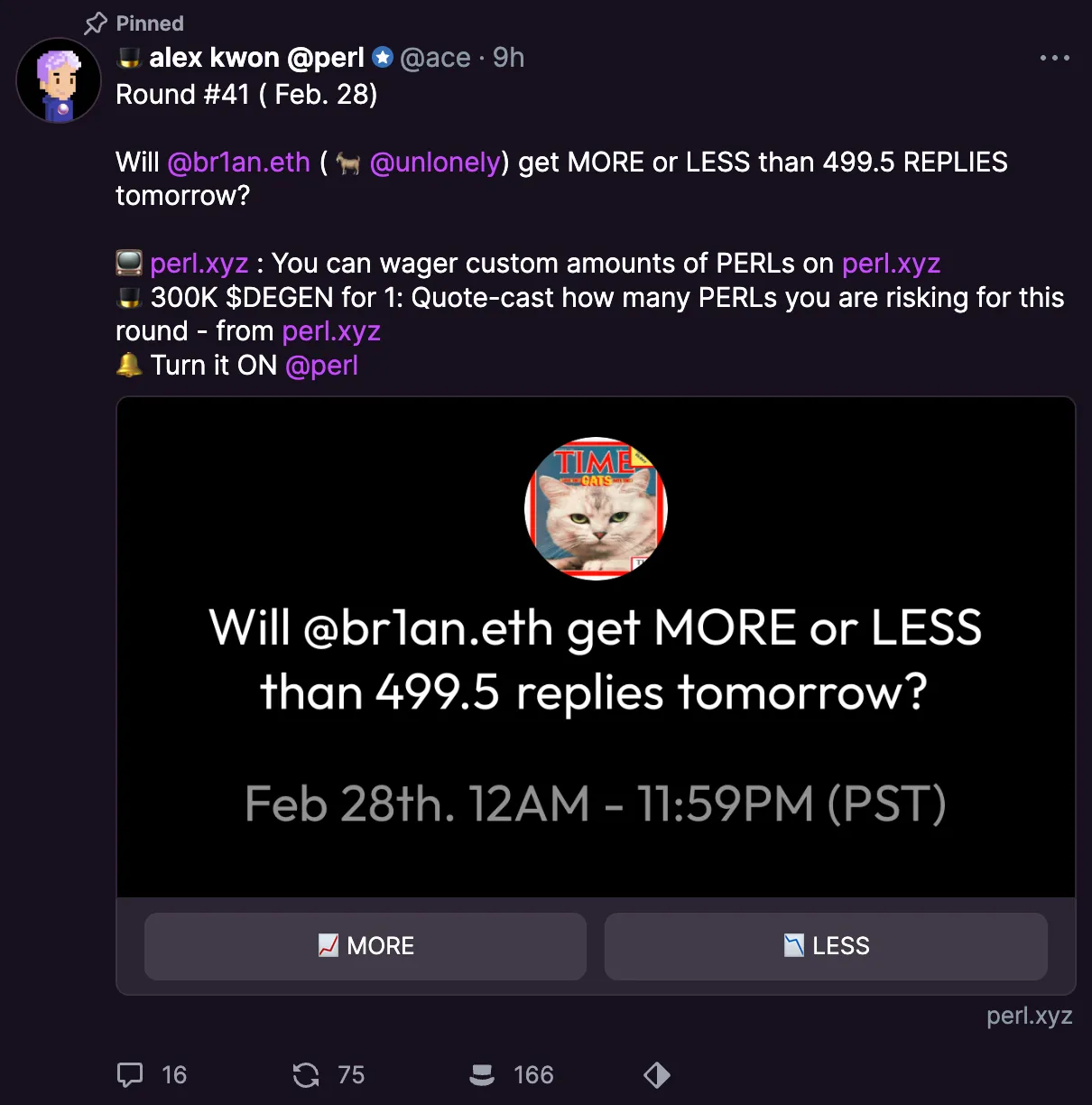
Perl reminds me of PrizePicks, a daily fantasy app that also uses a simple MORE/LESS mechanism.
Where does SocialFi go from here?
I have no idea. (I really enjoy asking myself these big questions and then disappointing you with a silly answer—sorry.)
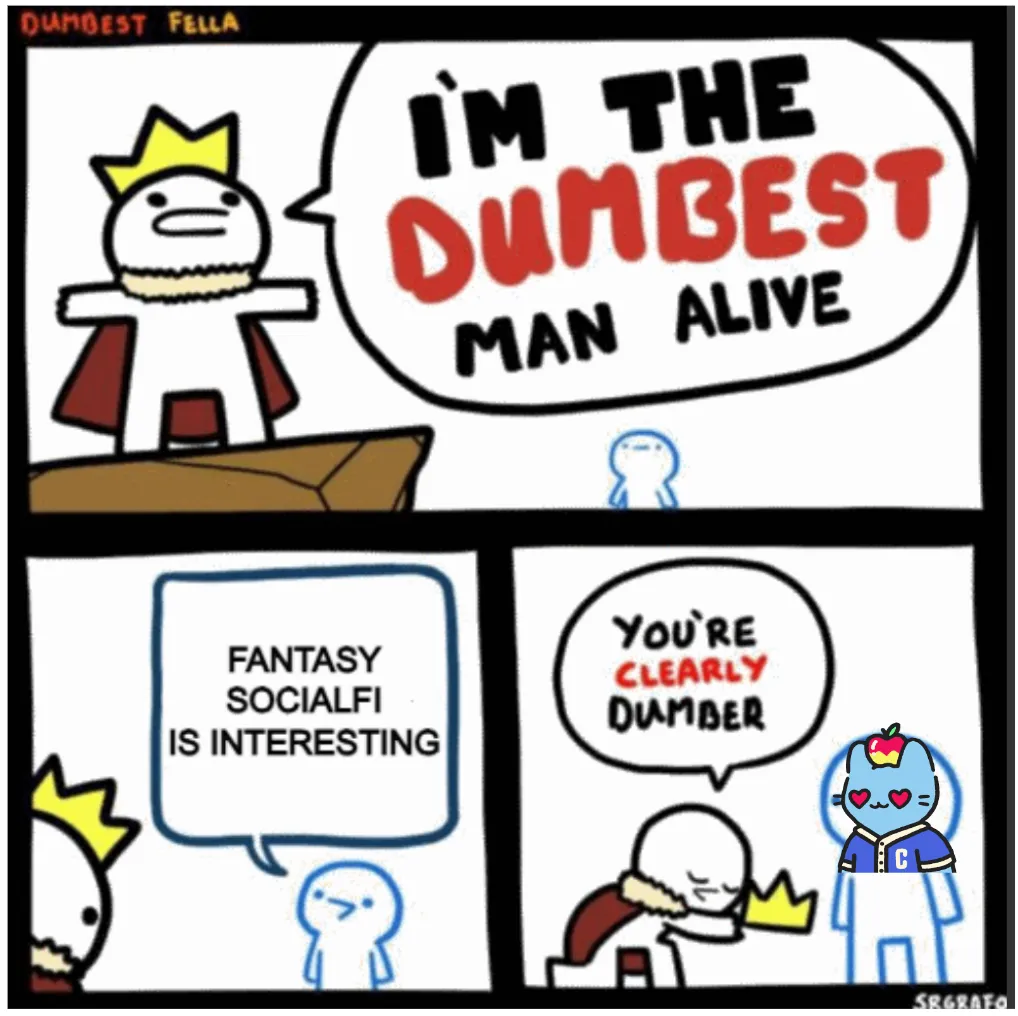
However, proper incentives, easy-to-understand mechanics, and unique features like Farcaster Frames are bringing new energy to this category of SocialFi unlike anything we’ve seen before. These platforms are built atop existing social networks rather than attempting to create entirely new ones. This is similar to fantasy sports, which are based on real sports rather than being sports themselves (though some treat them as seriously as actual sports, haha).
And it’s not just me thinking this way—venture capitalists are also paying attention. At the very least, this serves as a great thought experiment, challenging the conventional notion of “fantasy sports for X.”
As for friend.tech, despite tough conditions, they haven’t exited the market yet. They’re preparing for an airdrop and quietly building v2.
Join TechFlow official community to stay tuned
Telegram:https://t.me/TechFlowDaily
X (Twitter):https://x.com/TechFlowPost
X (Twitter) EN:https://x.com/BlockFlow_News
 @TPan_Web3