Lessons from Blast Token TGE: Airdrop Experience Matters More Than the Claiming Process
TechFlow Selected TechFlow Selected
Lessons from Blast Token TGE: Airdrop Experience Matters More Than the Claiming Process
TGE is an opportunity to sow the seeds of a new behavioral cycle.
 Navigating Web3 tides with focused insights
Author: TPAN
Translation: TechFlow
Alright, let's continue talking about Blast's TGE (Token Generation Event).
Blast’s TGE (Token Generation Event)
Over the past few months, we've seen multiple high-profile projects conduct TGEs (Token Generation Events—think of them as IPOs if you're unfamiliar). These moments are like Christmas for airdrop farmers, who receive token airdrops and make money. And just like Christmas, these “gifts” can either make Airdrop Season the most wonderful time of the year or a disappointing day, depending on how many tokens they receive or how the token price performs post-launch.
As someone who has participated in several recent TGEs, I’m more interested in how the event itself unfolds, and Blast’s TGE was by far the most interesting. So, what did the team actually do?
TGE Announcement
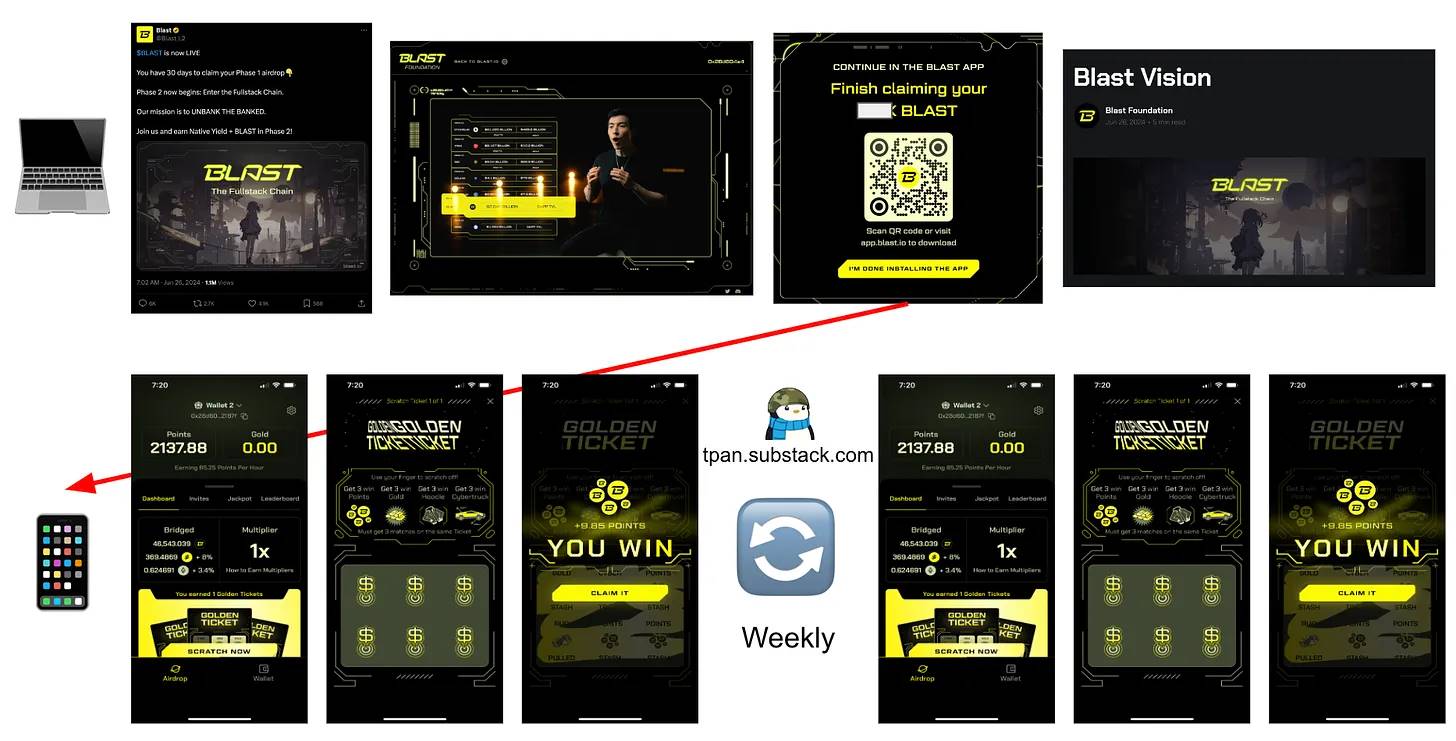
Like other TGEs, Blast announced the event on X and Discord.

But one critical detail was missing…
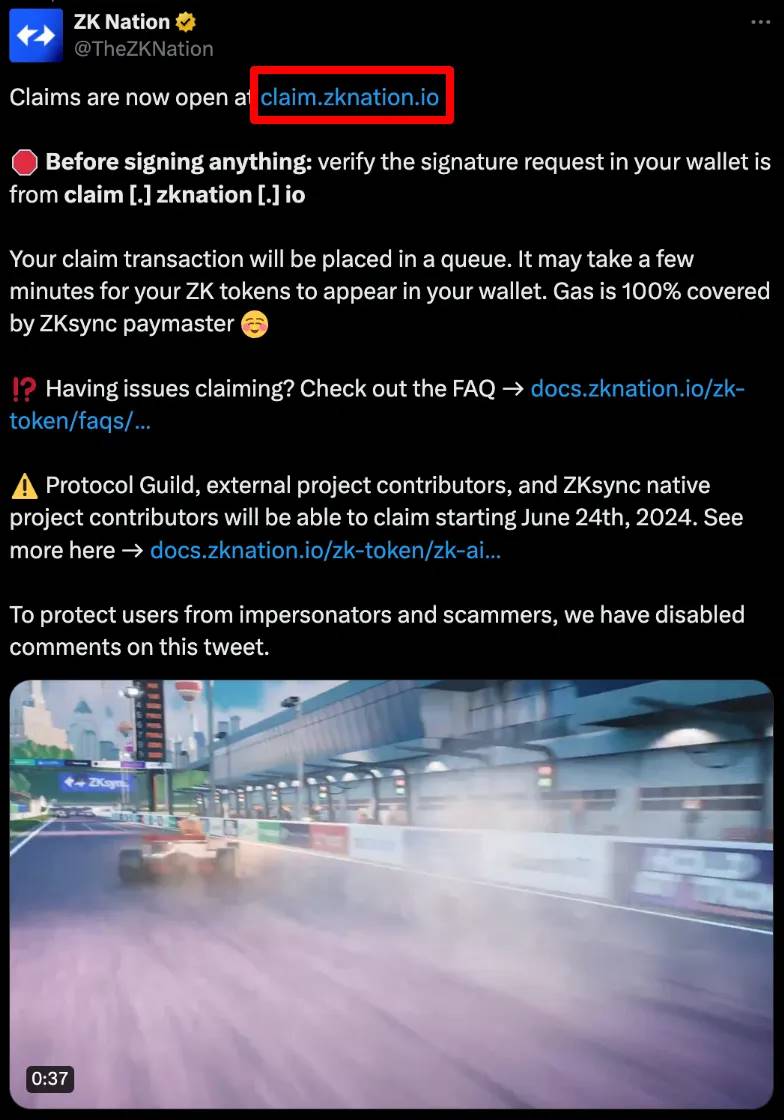
Compare this to last week’s ZKsync TGE announcement, where the first line is the claim link—clearly highlighted.
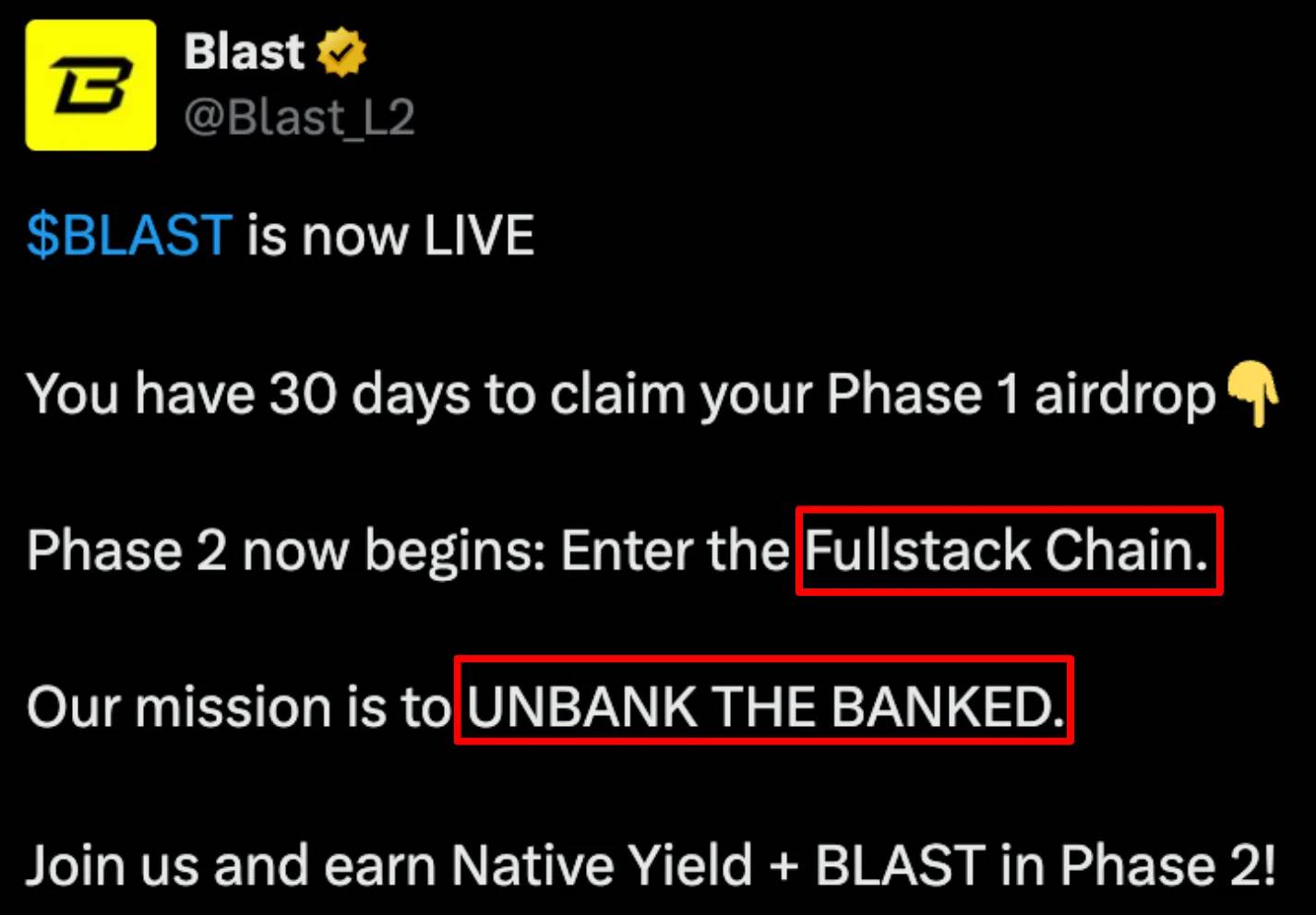
So where was the Blast claim link? It was buried at the bottom of the thread—the 9th tweet contained the actual instructions. Why?
Blast used the TGE moment to deliver more context—highlighting chain achievements, upcoming plans, and introducing new terminology and slogans. If users came from Discord, they saw this message three times (via: Discord announcement text, X post preview, and X post content).
Claim Process
Alright, found the claim link (which is just blast.io)—what next? Users were first shown a non-skippable video featuring founder Pacman explaining the chain’s achievements, future roadmap, and introducing new terms and slogans, etc…
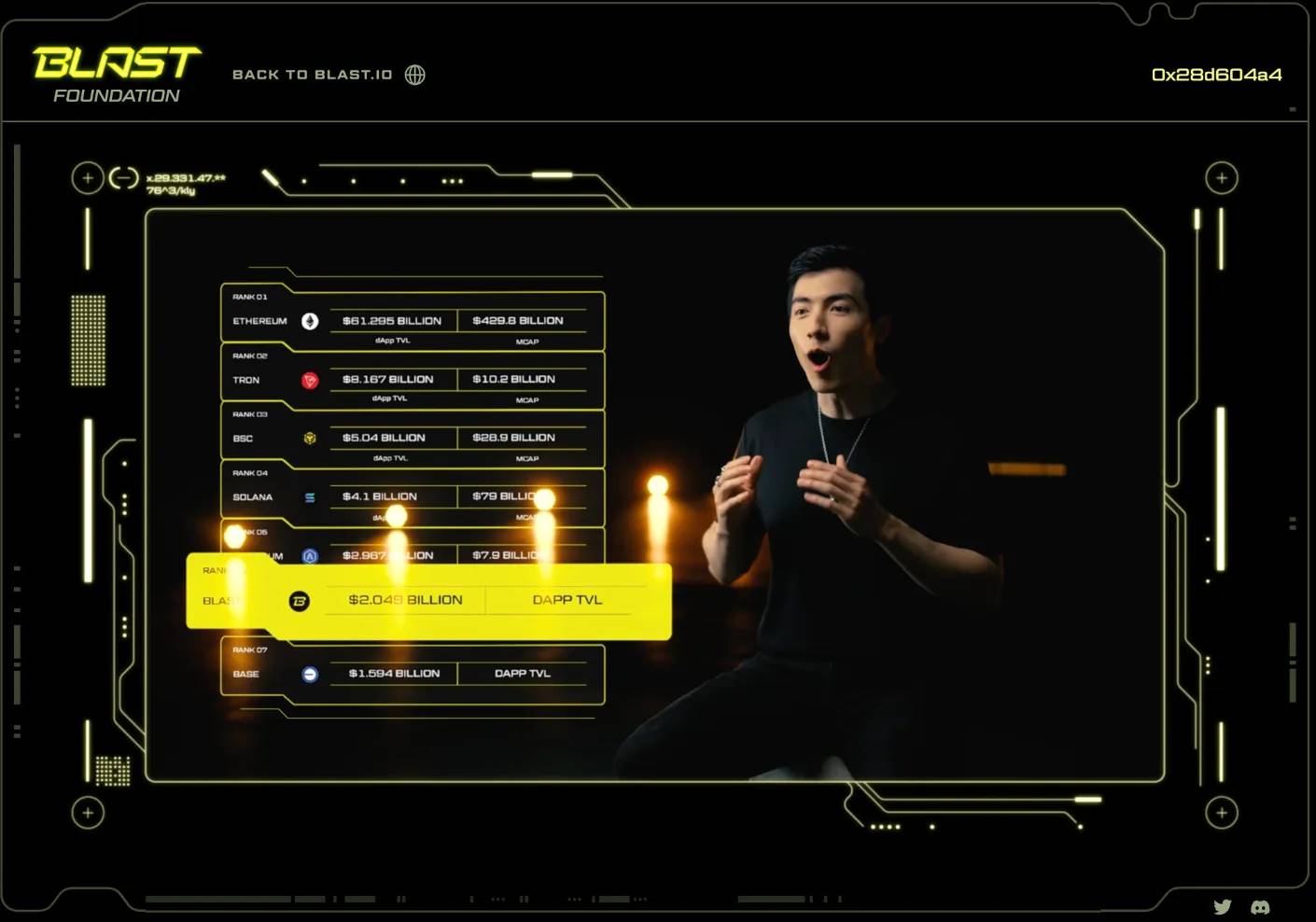
After watching the video, users were prompted to install the Blast app on their mobile device. Meanwhile, the desktop screen redirected to a Blast blog post sharing the team’s vision for the chain (you can probably guess what it covered).
The Blast App
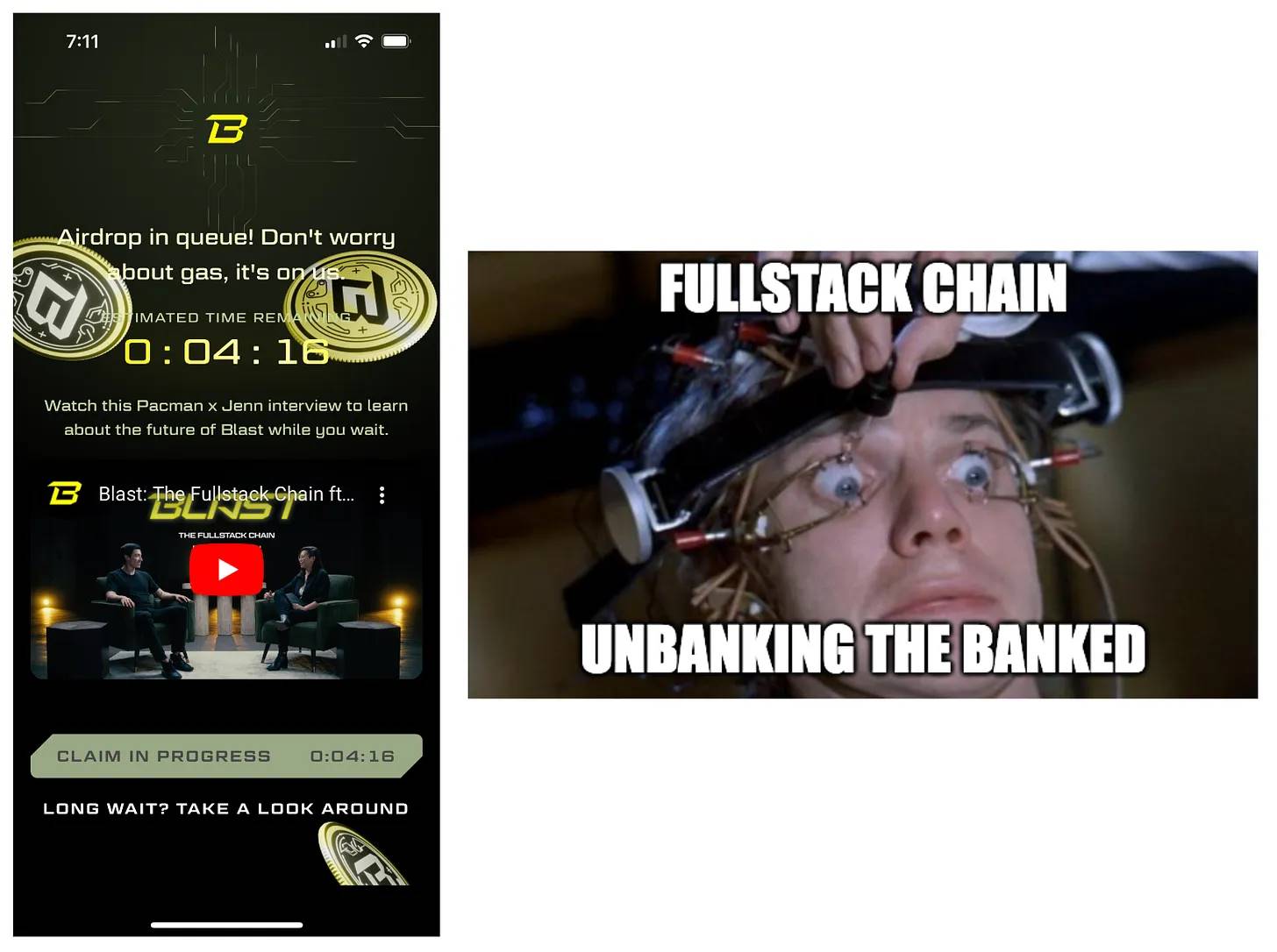
The Blast app isn’t a full native mobile app—it’s a PWA (Progressive Web App, popularized by friend.tech). After installing the app, users could finally claim their airdrop after waiting in a queue (I waited about 5 minutes; others waited longer, likely due to larger allocations).
But hey, don’t get bored while waiting—you can watch a video titled “Blast: THE FULLSTACK CHAIN.”
Golden Tickets and the Blast Wallet
After claiming $BLAST tokens, the app displayed a dashboard similar to the desktop version, but with one new mobile-exclusive feature: Golden Tickets.
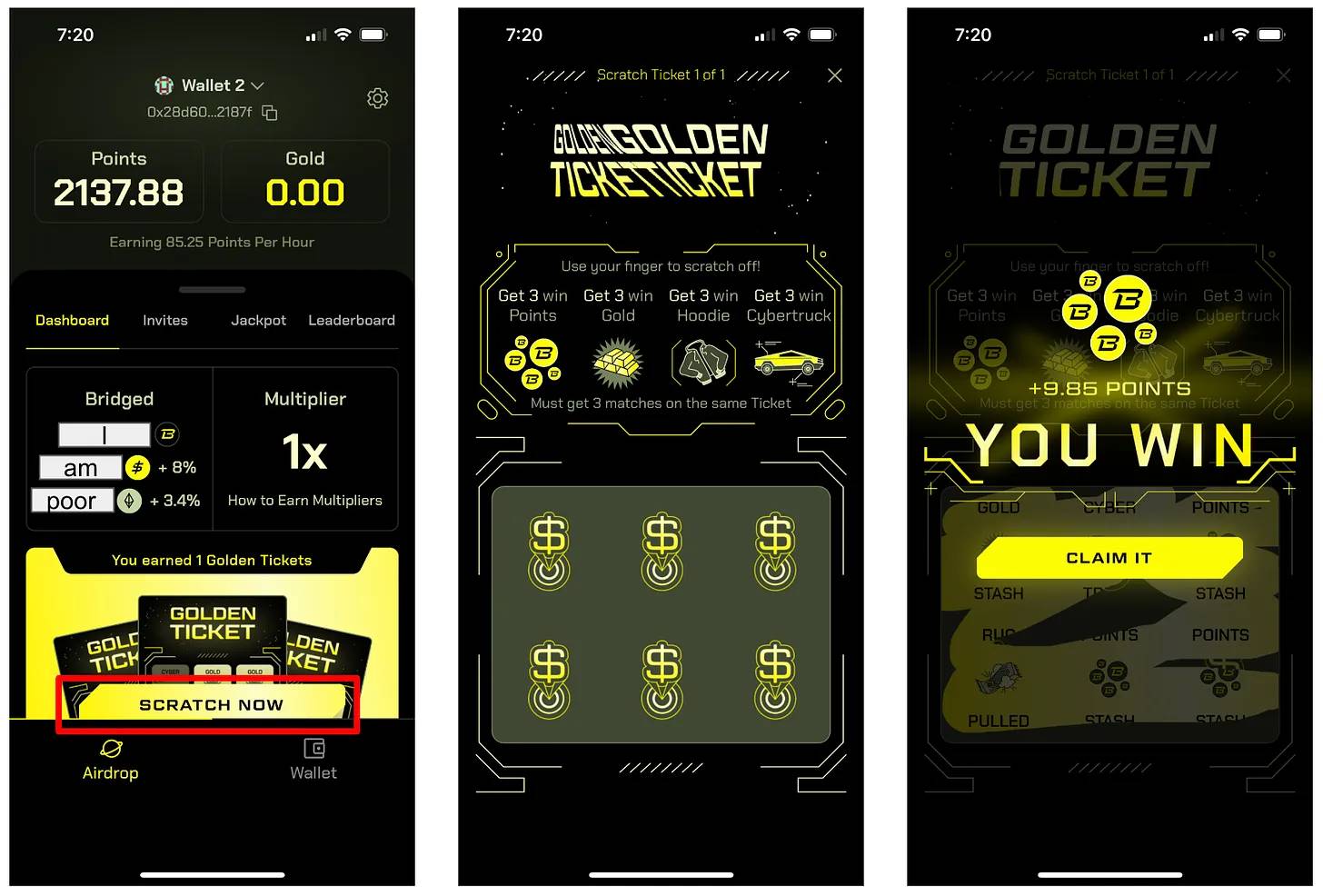
Golden Tickets are essentially scratch-off lottery cards—but in this case, every ticket I scratched (4 total) seemed to win. Each prize varied in value, with some being physical items including merchandise and even a Cybertruck (they clearly know their audience). The number of tickets received weekly depends on bridging volume and app usage. Every airdrop-receiving wallet gets at least one Golden Ticket, giving users an instant dopamine hit and familiarizing them with the mini-game mechanic.
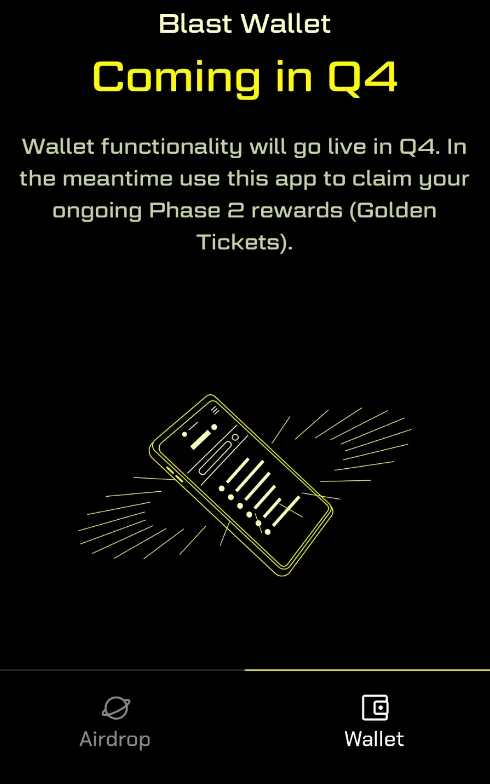
The final section of the app is the wallet, where Blast shared news that its mobile wallet will launch in Q4.
The Theme of Blast’s TGE
Putting aside price reactions and airdrop complaints (there will always be complainers), this was another impressive performance by the Blast team.
TGE: From Token Generation Event to Token Generation Experience
Historically, TGEs have been treated as events (after all, it’s in the acronym), but not truly experienced as such. Blast seized this rare moment when the project had users’ full attention:
-
Hiding the claim link deep within the announcement thread
-
Including a non-skippable video
-
Auto-redirecting desktop users to the Blast blog post when switching to mobile, maximizing every piece of digital real estate
-
Requiring users to download the Blast mobile app to claim
The closest comparable experience I can think of is Azuki’s real-life “check your wallet” moment, where NFTs were airdropped live to Azuki holders during an event. Not as flashy, perhaps, but still an experience.
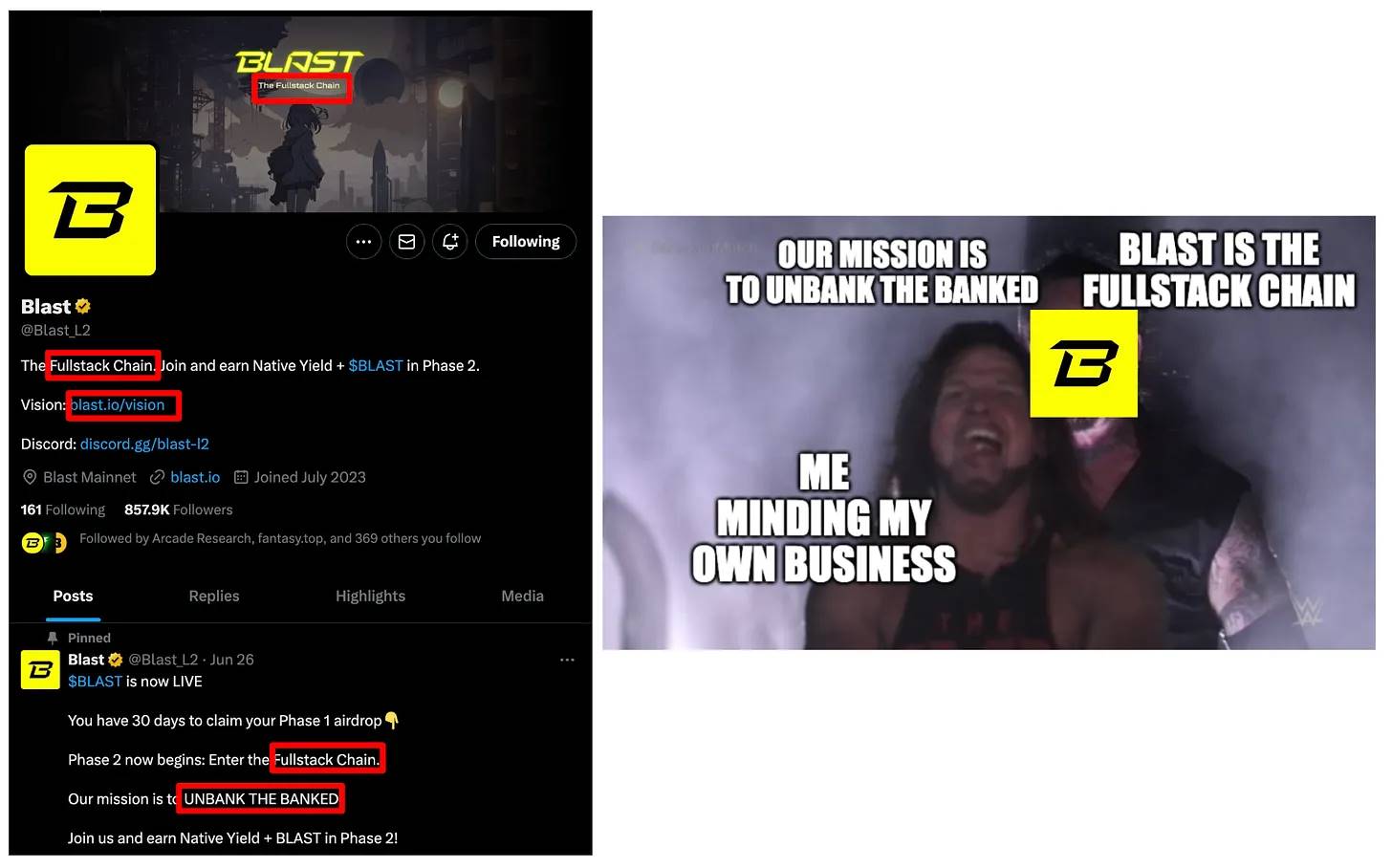
Of course, users could mute the video or rush through steps—and most did. Yet, Blast mitigated this by repeatedly emphasizing two core themes:
-
The Fullstack Chain
-
Deposits, Not Withdrawals
Even if users aren’t consciously paying attention, their brains subconsciously process these messages. Check out their updated Twitter bio.
Claim Moments Are Getting More Complex
The days of simple airdrop claims are over. Now it’s either X-to-claim (complete X to claim) or claim-and-X (do X after claiming to unlock everything)—a variation of the X-to-mint concept I’ve discussed before. We’re seeing this across other recent TGEs:
-
Pirate Nation, a web3 game, uses a "claim and stake" mechanism—the earlier you stake your airdrop, the higher your future reward multiplier
-
LayerZero introduced the concept of “donate-to-claim”
-
Blast brought “download-to-claim,” introducing its mobile app
Future TGEs will follow this trend, possibly becoming even more demanding. As a far-out hypothetical, Blast could even force users to grant microphone access and repeat “Blast is the best” 100 times to proceed.
Would people be angry? Yes (though I’d find it hilarious).
Would they do it? Absolutely—that’s the whole point of the fullstack chain!
Projects and teams will begin thinking of Token Generation Events (TGEs) not as single moments, but as high-attention experiences. The key will be balancing freshness with avoiding the feeling of yet another tedious “task.” Blast nailed this by rewarding users who completed the process with the surprise element of Golden Tickets.
TGEs Are an Opportunity to Seed New Behavior Loops
Blast turned its TGE into more than a one-time event—it launched a mobile app and introduced a new mobile behavior loop, complete with Golden Ticket incentives. As a result, Blast now joins Coinbase and Base as multi-platform Layer 2 blockchains (though admittedly, it’s somewhat apples-to-oranges).
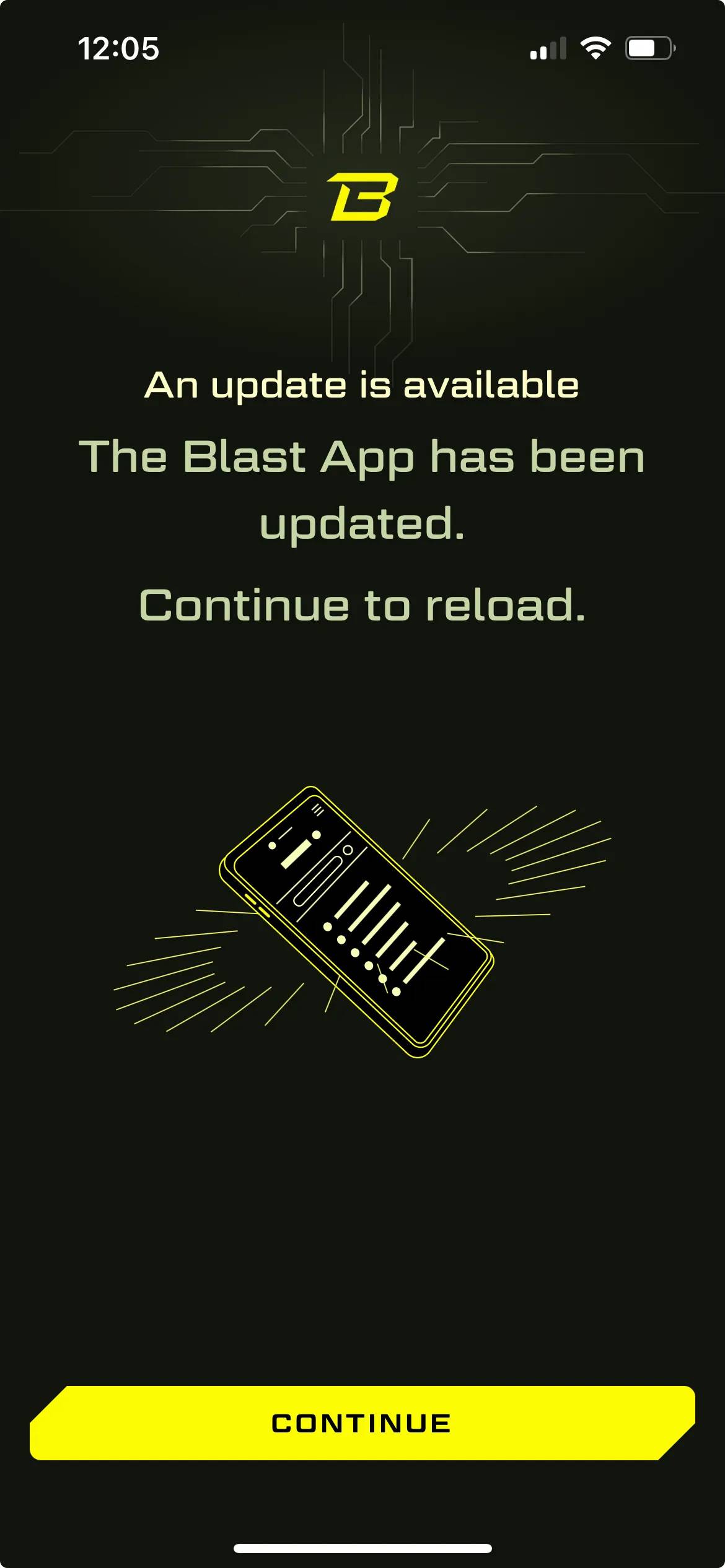
Although the Blast app is a Progressive Web App (PWA), the team treats it like a full mobile app, using terms like “download,” “app,” and “install.” The app even features an update screen resembling forced updates.
When the Blast wallet launches, user adoption friction will be lower because it will feel like a new feature rather than an entirely new onboarding experience—the heavy lifting has already been done.
So there you have it—once again, Blast and Pacman delivered. We’ll see whether their approach inspires other teams in the coming months to borrow from—and expand upon—this TGE playbook.
Join TechFlow Official Community
Telegram Subscription Group:
Twitter Official Account:
Twitter English Account:
Join TechFlow official community to stay tuned
Telegram:https://t.me/TechFlowDaily
X (Twitter):https://x.com/TechFlowPost
X (Twitter) EN:https://x.com/BlockFlow_News
 @TPan_Web3