Podcast Notes | Interview with Former President of Polygon Labs: Is Web3 Gaming a Misguided Expectation or the Right Path to Mass Adoption?
TechFlow Selected TechFlow Selected
Podcast Notes | Interview with Former President of Polygon Labs: Is Web3 Gaming a Misguided Expectation or the Right Path to Mass Adoption?
Ryan believes gaming will be a key factor in driving the mainstream adoption of cryptocurrency.
 Navigating Web3 tides with focused insights
Compiled & Translated by: TechFlow
Ryan Wyatt is the former Head of Gaming at YouTube and President of Polygon Labs—an expert in business development, strategy, and product.
In this episode, Ryan explains why crypto gaming is here to stay, shares his experiences at YouTube, discusses the path to Web3, and explores what cryptocurrency unlocks for gaming.
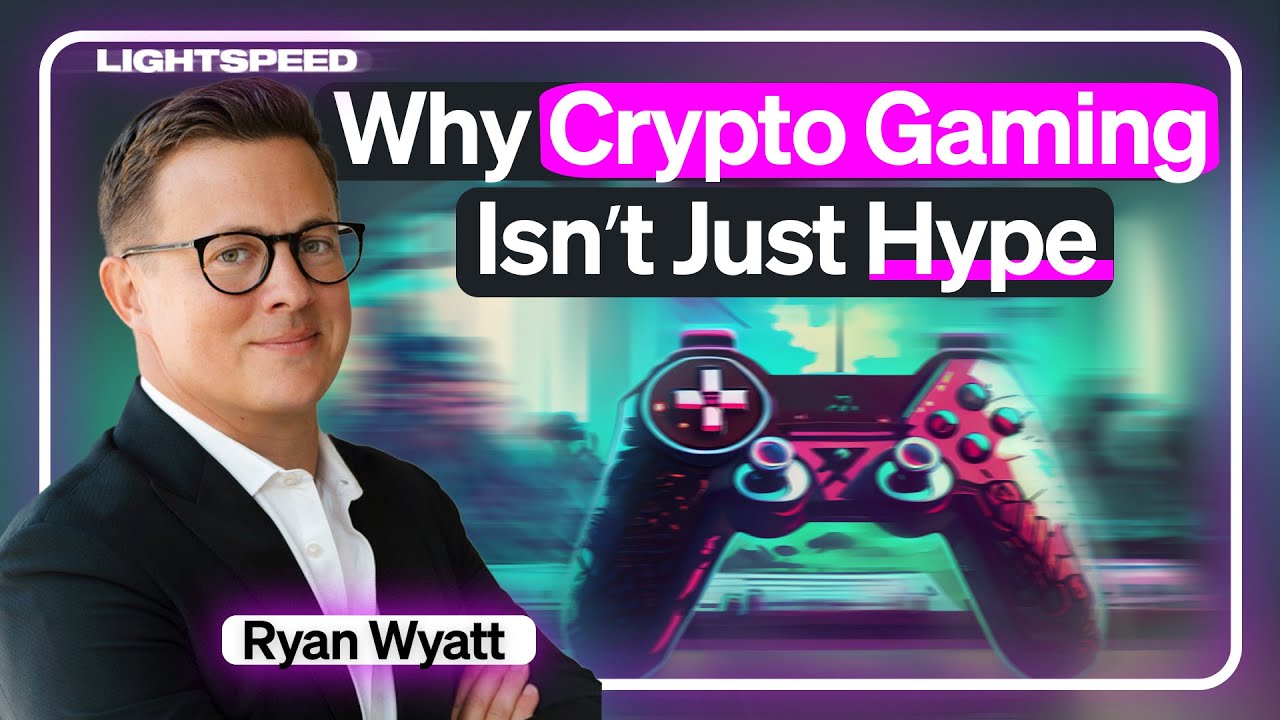
Hosts: Mert & Garrett
Guest: Ryan Wyatt, Former Head of Gaming at YouTube and President of Polygon Labs
Podcast Source: Lightspeed
Original Title: "Web3 Gaming: A False Hope or Crypto's Path to Mass Adoption?"
Episode: Link
Release Date: September 21
Ryan’s Early Career in Gaming
-
Ryan began his career at Major League Gaming (MLG), organizing tournaments and serving as a referee. He later joined Machinima, a company focused on building the first gaming video network on YouTube, delivering online video content to gamers.
-
During his time at Machinima, the company received investment from Google Ventures, which helped Ryan build close ties with Google. His experience at both Machinima and MLG gave him deep insight into the gaming video industry. He frequently sent detailed emails to YouTube and Google teams pointing out shortcomings and how those issues negatively impacted companies like Machinima.
-
After Susan Wojcicki became CEO of YouTube, she noticed Ryan’s emails. Recognizing that YouTube needed someone who deeply understood video gaming, and after multiple interviews, Ryan was appointed as the head of YouTube’s gaming division.
-
Although Ryan was very familiar with YouTube’s products and had strong relationships with many creators, he was relatively young compared to other team members. He learned from senior colleagues how to become a better leader, lead teams effectively, and think strategically at scale.
-
Ryan initially collaborated with Polygon as an advisor, providing guidance on gaming-related strategies. Through conversations with Sandeep Nailwal, co-founder of Polygon, Ryan developed a deeper interest and passion for Polygon and the broader crypto space.
-
Ryan felt that missing the opportunity to join Polygon and dive into crypto would be like missing the early days of YouTube and gaming videos. This sense of urgency led him to seriously consider fully committing to the cryptocurrency field. After careful thought, Ryan decided to join Polygon full-time, seeing it as a space filled with limitless possibilities and opportunities worth dedicating his time and energy to.
-
Ryan joined Polygon as CEO of Polygon Studios, responsible for hiring and building its team—a division focused on NFTs, gaming, and the metaverse. He began assembling his team, including hiring the current CEO of Polygon Labs, working together to advance Polygon’s growth.
The Potential and Challenges of Cryptocurrency and Blockchain in Gaming
-
Ryan believes virtual worlds and metaverse-style games are ideal environments for integrating cryptocurrency. These games offer immersive, continuously evolving virtual spaces where players can interact, trade, and build communities. Within these worlds, cryptocurrencies can be used to buy, trade, and manage digital assets.
-
Ryan expressed a desire to know the history of his in-game items—such as who previously owned them or whether they were used in specific game events—as such information could enhance their value and appeal. He mentioned third-party platforms like Skinport and CS:GO Float, which act as intermediaries for digital item trading outside games. However, these systems remain imperfect because they are centralized and controlled by game developers.
-
Ryan believes blockchain and cryptocurrency can enable better ownership and control over digital assets. He envisions a system where players store all their in-game items in a single wallet, allowing items to move across different games.
-
He emphasized that current systems are controlled by game developers who are reluctant to share data or relinquish control. Blockchain and crypto can shift this dynamic, creating a more balanced power relationship between players and developers. With blockchain technology, players truly own their digital assets—assets that developers cannot arbitrarily alter—increasing both asset value and player control.
-
Ryan acknowledged that there are currently no high-quality Web3 games. To gain player acceptance, compelling games must be developed. He noted that significant capital is being invested in Web3 game development, but many projects may revert to Web2 models, prioritizing game quality first.
How Crypto Technology Enhances Game Development and Player Experience
-
As the market sees more high-quality games, attracting players away from their current favorites becomes increasingly difficult. Ryan stressed that people have limited time, so game quality and appeal are critical to capturing their attention and engagement.
-
User experience (UX) plays a crucial role in attracting and retaining players. Ryan believes that even if current UX has flaws and friction, a truly great game can overcome these issues. Creating an outstanding game is key—the quality and gameplay will ultimately determine whether it attracts and retains players.
-
Ryan sees generative AI as a powerful tool for creating richer, more complex content. Humans will continue advancing into specialized domains, using AI as an enhancer. He doesn’t believe AI will fully replace humans, but rather foresees a future where humans and AI collaborate to drive innovation and progress.
-
The hosts brought up Unity game engine’s challenge in effectively tracking and collecting usage fees. This issue revolves around accurately and fairly calculating charges for games built using the Unity engine.
-
Ryan suggested that cryptocurrency and blockchain technology might offer a solution. Using blockchain, game usage and distribution could be tracked more precisely and transparently, helping Unity and other developers streamline payment processes and track usage efficiently.
-
With cryptocurrency and blockchain, payments and transactions can become simpler and faster. This not only helps solve Unity’s fee-tracking problem but also offers developers and players more convenient transaction methods.
Reasons Behind Gamers’ Resistance to NFTs and Possible Solutions
-
Ryan noted that resistance to NFTs primarily stems from lack of understanding and distrust toward this new technology. Many players don’t understand how NFTs and blockchain work, or their security and reliability. Negative media coverage and irresponsible behavior or scams have further fueled skepticism among gamers.
-
Some fear that NFTs could lead to “pay-to-win” scenarios, undermining competitive integrity and fun. Players worry about fairness and balance being compromised. Because NFTs introduce new economic models and change how players acquire and trade in-game items, some feel uncomfortable or dissatisfied with this shift.
-
Ryan believes overcoming gamer resistance requires education and communication to increase understanding and trust in the technology. Game developers and NFT projects must address player concerns, ensuring NFTs do not compromise game balance or fairness, while also protecting player interests.
-
He emphasized that NFTs and blockchain hold immense potential to transform the gaming industry by giving players greater ownership and control. But realizing this vision will take time and collective effort. Developers, NFT projects, and players must work together to build a fair, transparent, and sustainable NFT and gaming ecosystem.
Future Outlook for Crypto and Gaming
-
Ryan believes the crypto industry is in an interesting phase of development. He sees enormous potential and future opportunities, despite existing challenges and uncertainties. He believes it will take years for the full potential of crypto and blockchain to be realized.
-
Ryan sees gaming as crypto’s savior. He recognizes a strong connection between gaming and cryptocurrency and believes gaming will be a key driver of crypto’s mainstream adoption. Games can make crypto more appealing while offering players real-world use cases and tangible value.
-
Ryan emphasized the importance of DeFi in gaming—liquidity is vital for game success, and DeFi can provide the necessary financial tools and liquidity infrastructure.
-
Ryan predicts that the crypto industry and gaming will undergo significant transformations in the coming years. Technological advancements and increased capital investment will be key drivers of progress in this space.
Join TechFlow official community to stay tuned
Telegram:https://t.me/TechFlowDaily
X (Twitter):https://x.com/TechFlowPost
X (Twitter) EN:https://x.com/BlockFlow_News
 深潮TechFlow