








Podcast Notes | Interview with PayPal's Senior VP of Cryptography: Will PYUSD Shake Up the Stablecoin Market Landscape?
TechFlow Selected TechFlow Selected
Podcast Notes | Interview with PayPal's Senior VP of Cryptography: Will PYUSD Shake Up the Stablecoin Market Landscape?
When stablecoins achieve broader adoption, PayPal will generate profits through tools that are closer to its traditional payment business.
 Navigating Web3 tides with focused insights
Compiled & Translated by TechFlow
Last week, PayPal dove into the crypto rabbit hole with PYUSD, its Ethereum-based stablecoin.
The dollar-backed stablecoin now positions PayPal in direct competition with companies like Tether and Circle to rapidly send value across global blockchains.
José Fernández da Ponte, PayPal’s Senior Vice President of Crypto, recently joined the Unchained podcast to reveal how the fintech giant is shaping its long-term blockchain-based payment strategy.
Spend 5 minutes reading this podcast summary—it’ll save you 40 minutes.
Below are the key takeaways from the conversation, transcribed and compiled by TechFlow:
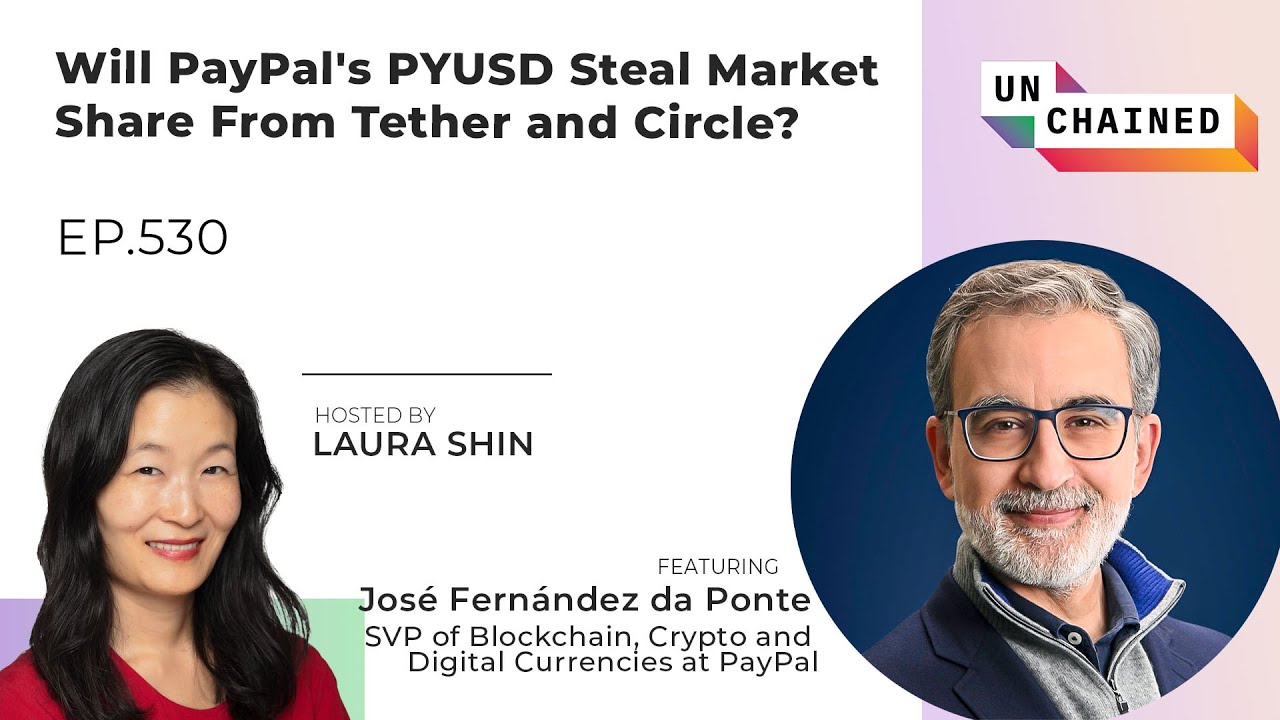
Host: Laura Shin, Host of Unchained
Guest: José Fernández da Ponte, Senior Vice President of Crypto at PayPal
Video Credit: Unchained Podcast
Original Title: “Will PayPal's PYUSD Steal Market Share From Tether and Circle?”
Episode: Link
Release Date: August 12
Motivation Behind PYUSD and Differentiation from Competitors
-
On PayPal’s vision for launching PYUSD on Ethereum: José explained that PayPal has been actively exploring ways to bridge fiat money and Web3 to drive mainstream adoption in payments. They believe stablecoins are currently the killer application of blockchain, closely aligned with the payment markets they care about.
-
José predicts that while widespread daily use of stablecoins in payments may still take a few years, certain industries are already well-suited for them—such as remittances, B2B payments, and digital goods transactions.
-
When asked how PYUSD differs from other popular stablecoins like USDT and USDC, José highlighted several key points: the uniqueness of the PayPal ecosystem, integration with fiat currency, and compliance and regulation.
-
Uniqueness of the PayPal Ecosystem:
-
PYUSD is the only stablecoin accepted within the PayPal ecosystem. This includes not just PayPal but also Venmo, soon.
-
This provides millions of consumers and merchants with access to PYUSD.
-
PYUSD can be used as a funding source for PayPal transactions. This means that if a consumer shops at one of the millions of merchants accepting PayPal and holds a PYUSD balance, they can choose to pay directly with PYUSD—a feature unavailable with other stablecoins.
-
-
Fiat Currency Integration:
-
Since PYUSD is accepted within PayPal, it benefits from the extensive banking connections PayPal has built over the years.
-
Transferring from fiat to stablecoins is typically a complex process involving transfers between wallets and exchanges, fees, and withdrawals that can take days. But because PYUSD is supported on PayPal, users can easily move funds into PayPal and quickly withdraw to their bank accounts.
-
-
Compliance and Regulation:
-
PYUSD is issued by a trust company based in New York and approved by the New York Department of Financial Services (DFS).
-
New York enforces very clear and strict requirements regarding KYC (Know Your Customer) and anti-money laundering regulations, requiring robust control mechanisms.
-
PYUSD leverages PayPal’s two decades of experience in combating online fraud and financial crime.
-
Regulation, Legislation, and Enforcement
-
On stablecoin legislation, José said they’ve been closely monitoring legislative developments and see a growing global trend toward regulatory clarity. He noted that PayPal chose to issue PYUSD in New York because it offers the most rigorous and comprehensive regulatory framework for stablecoins.
-
José emphasized that payments are regulated at the state level, not the federal level. He believes that if stablecoins are tied to payment activities, they should fall under existing state-level payment regulations.
-
When asked whether Facebook’s Libra project influenced PayPal’s decisions, José stated there was no direct connection. He stressed that PayPal follows a “regulation-first” approach, meaning they may move slower than others but place high importance on regulatory and compliance frameworks.
-
Paxos will publish monthly reserve reports for PYUSD, as required by the New York regulatory framework. These reports will resemble those issued for other Paxos stablecoins, verified by third parties, and disclose the quantity and composition of reserves.
PYUSD’s Business and Product Strategy
-
José mentioned that PYUSD is already live in the PayPal wallet, with plans to roll it out to the Venmo wallet next.
(TechFlow note: Venmo is a widely used payment app and social platform in the U.S., offering peer-to-peer payments, easy bill splitting among friends, and convenient online and in-store checkout.)
-
They are considering international expansion, but currently have no plans to launch stablecoins pegged to other fiat currencies. When asked about potential euro or pound-pegged stablecoins, José confirmed there are no such plans at present.
-
José emphasized strong interest in payments within the video gaming industry. He believes many payment innovations will first emerge in video games.
-
He cited potential use cases such as streaming payments and real-time purchases of digital goods in games. He also mentioned innovative scenarios like non-player characters (NPCs) connected to wallets.
-
On product design, José explained why Ethereum was chosen initially—due to the established developer community. However, he noted that PYUSD is designed to be multi-chain, meaning they may consider other protocols in the future. While Ethereum has many advantages, its high fees can make it costly for certain use cases.
-
Regarding monetization, José noted that stablecoins traditionally generate revenue through yield on reserves. But in today’s low-interest-rate environment, this model may be less attractive.
-
Once stablecoins gain broader adoption, PayPal will monetize through tools closer to traditional payment services. He also clarified that PayPal will not charge fees for buying or selling PYUSD.
Current User Experience on PayPal and Future Outlook
-
Within the PayPal app, PYUSD appears in two places:
-
First, in the crypto section of the app, where PYUSD appears as an additional token alongside other supported cryptocurrencies like Bitcoin and Ethereum. Users can buy, sell, or transfer PYUSD to external wallets from here.
-
PayPal gives users choice without defaulting to any specific payment method.
-
-
José Fernández da Ponte made it clear during the discussion that PayPal views stablecoins as the killer application in the crypto and blockchain space. He cited several reasons:
-
Settlement Speed, Cost, and Efficiency: José emphasized that stablecoins offer significant advantages over traditional financial systems. Transactions settle in seconds rather than days, and transaction costs are drastically lower—especially for cross-border payments. This speed and efficiency deliver substantial value for both merchants and consumers.
-
Mainstream Payment Adoption: Despite these advantages, José expects mainstream adoption in everyday payments will take time. While stablecoins are technically ready, market readiness, regulation, and other external factors may affect the pace.
-
Crypto-First Strategy: Given these considerations, PayPal has opted for a “crypto-first” strategy. Even though they recognize the potential of stablecoins in mainstream payments, they’re focusing first on the crypto space to leverage existing technology and market dynamics.
-
Exploring Retail Use Cases: José mentioned that over time, they’ve begun exploring how to apply stablecoins to retail payments. He believes retail is where stablecoins can truly shine, offering faster, cheaper, and more efficient payment methods for both consumers and businesses.
Overall, José remains optimistic about the future of stablecoins and believes they will fundamentally reshape the payments landscape in the years ahead.
Join TechFlow official community to stay tuned
Telegram:https://t.me/TechFlowDaily
X (Twitter):https://x.com/TechFlowPost
X (Twitter) EN:https://x.com/BlockFlow_News
 深潮TechFlow


